Ken Research Logo

APAC Cryogenic Equipment Market Outlook to 2030

Region:Asia

Author(s):Shubham Kashyap

Product Code:KROD5212

Published On

December 2024

Total pages

88

About the Report

APAC Cryogenic Equipment Market Overview

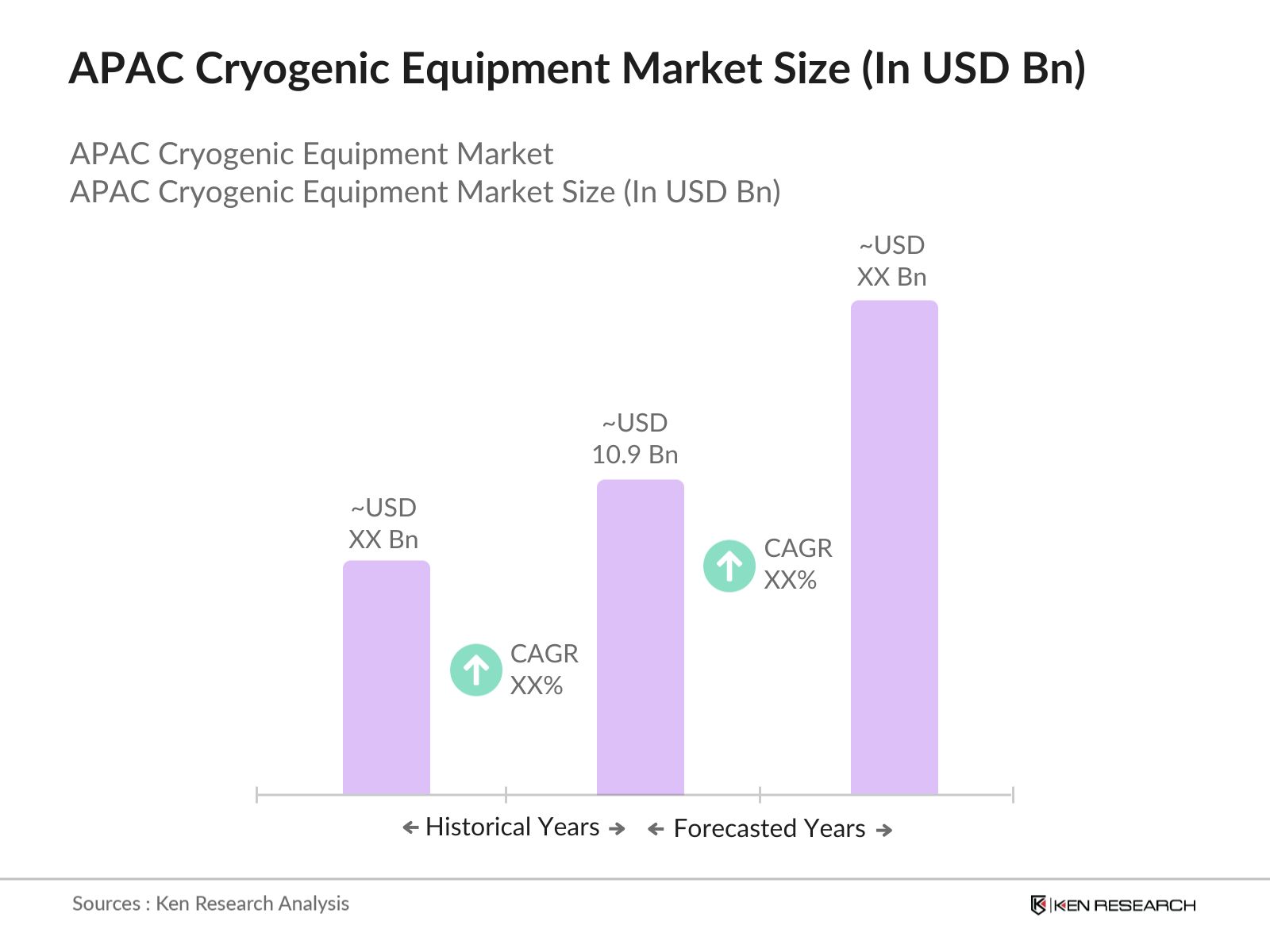
  • The APAC Cryogenic Equipment Market is currently valued at USD 10.9 billion, according to recent analysis. The market is primarily driven by the rising demand for liquefied natural gas (LNG) storage and transportation across the region, alongside growing applications in healthcare, particularly for cryopreservation and cryotherapy. The expansion of energy infrastructure, coupled with advancements in cryogenic technologies, is driving substantial demand for cryogenic equipment in both industrial and medical sectors. Moreover, government support for cleaner energy alternatives like LNG is further boosting market growth.

APAC Cryogenic Equipment Market Size

  • Leading markets such as China, Japan, and India are spearheading the APAC cryogenic equipment sector. China is a dominant player due to its large-scale investments in LNG production and transportation infrastructure. Japan, with its advanced healthcare system and energy-efficient technologies, significantly contributes to the market, particularly in cryopreservation applications. India is also experiencing growth in the sector due to increased industrial demand and government focus on expanding LNG capabilities. Emerging markets in Southeast Asia are seeing rising demand as they enhance energy storage infrastructure and healthcare applications.
  • Governments across the APAC region are implementing clean energy transition plans that are boosting the demand for cryogenic equipment. Japans Strategic Energy Plan, revised in 2023, outlines a roadmap for increasing the countrys reliance on LNG and hydrogen by 2050, requiring large-scale cryogenic storage infrastructure. Similarly, South Koreas Hydrogen Economy Roadmap includes specific provisions for cryogenic technology to support hydrogen fuel storage.

APAC Cryogenic Equipment Market Segmentation

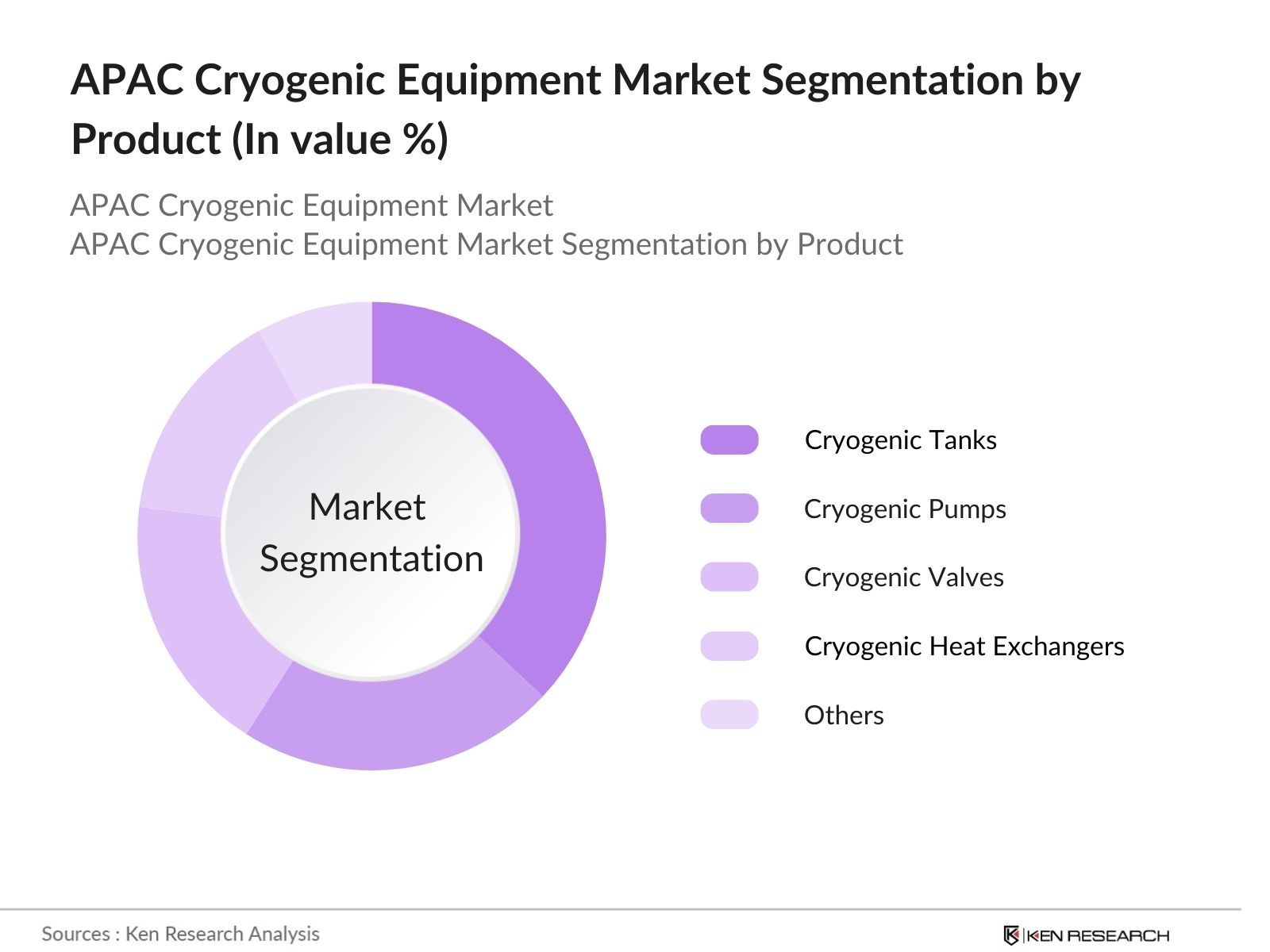
  • By Product Type: The Market is segmented by product type into cryogenic tanks, cryogenic pumps, cryogenic valves, cryogenic heat exchangers, and others. Cryogenic tanks hold the dominant market share in 2023, owing to their extensive use in LNG storage and transportation. The rising demand for LNG as a cleaner energy alternative is the key factor driving the adoption of cryogenic tanks. Additionally, these tanks are widely used in healthcare facilities for the storage of biological materials like blood and tissues, further contributing to their significant share in the market.

APAC Cryogenic Equipment Market Segmentation by Product Type

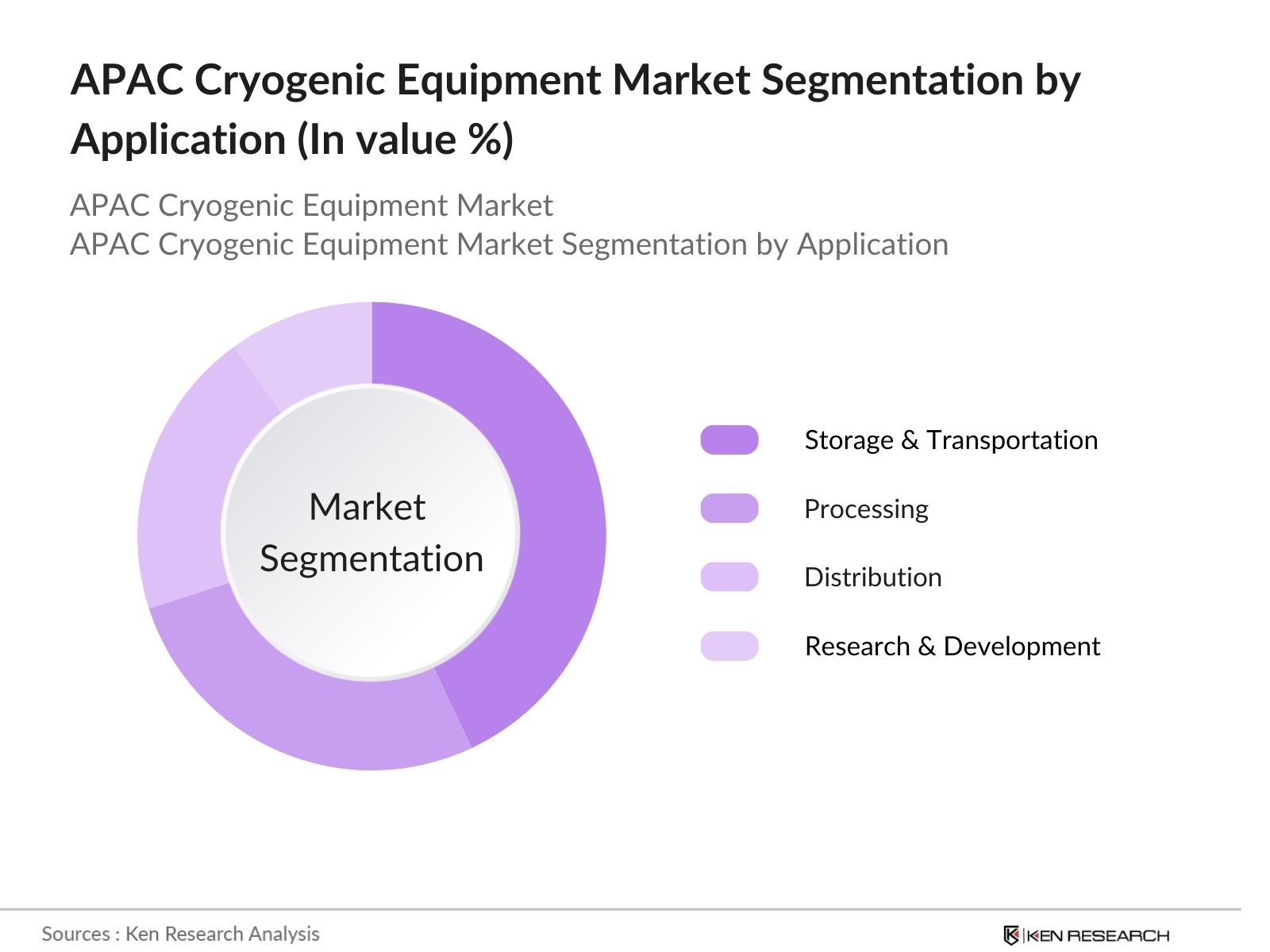
  • By Application: The Market is further segmented by application into storage & transportation, processing, distribution, and research & development. Storage & transportation dominates the market share in 2023, driven by the increasing need for safe and efficient storage of LNG and industrial gases across various sectors. This segment has seen substantial growth due to government investments in energy infrastructure and the expansion of LNG facilities across key markets like China, Japan, and India. Furthermore, the healthcare sectors reliance on cryogenic storage for organ preservation and pharmaceutical research boosts this segment's demand.

APAC Cryogenic Equipment Market Segmentation By Application

APAC Cryogenic Equipment Market Competitive Landscape

The APAC Cryogenic Equipment Market is highly competitive, with key players focusing on expanding their production capacities and developing innovative technologies to meet the rising demand for cryogenic solutions. Leading companies such as Air Liquide, Linde Group, and Chart Industries dominate the market with their extensive product portfolios and strong regional presence. These players are increasingly investing in research and development to improve the efficiency and safety of cryogenic equipment, particularly in LNG and healthcare applications.
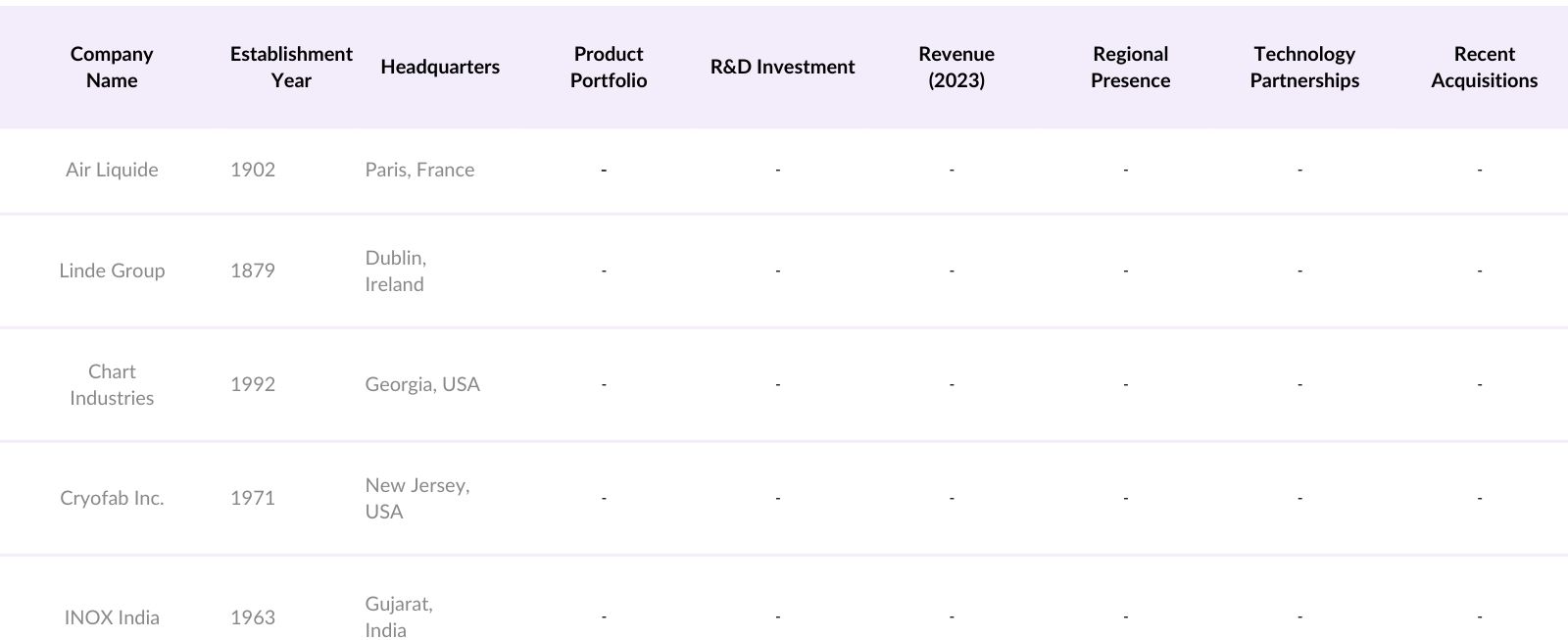
market overviews

APAC Cryogenic Equipment Industry Analysis

Growth Drivers:

  • Industrial Gas Expansion: The industrial gas market in APAC is experiencing significant growth, driven by the increasing demand for liquefied natural gas (LNG), oxygen, and nitrogen. LNG is crucial for energy transition efforts in countries like China, Japan, and South Korea, contributing to a rise in cryogenic equipment for its storage and transport. In 2023, LNG imports in China reached 71.3 million tonnes, a 11.7 % increase from 2022, bolstering the need for cryogenic storage solutions. Additionally, the growing use of oxygen and nitrogen in the healthcare and manufacturing sectors has intensified the adoption of cryogenic equipment. This is in line with China's target to reduce carbon emissions by 65% by 2030, propelling clean energy initiatives that further expand the demand for cryogenic gases.
  • Healthcare Advancements: The healthcare sector in APAC is undergoing rapid advancements, particularly in areas like cryopreservation and cryotherapy. In 2024, the region's healthcare expenditure is expected to surpass USD 2 trillion, with a significant portion dedicated to advanced medical technologies such as cryopreservation of organs and cryotherapy for cancer treatment. Japan, a leader in medical technology, has expanded its investment in cryogenic equipment for storing biomedical materials. This trend aligns with the region's aging population, which is driving the demand for innovative healthcare solutions that require cryogenic technology. Government healthcare reforms in countries like India and China are supporting the integration of cryogenic systems in hospitals and research centers.
  • Expansion of Cryogenic Energy Storage Systems: The need for large-scale energy storage is increasing across the APAC region as governments push for clean energy solutions. In 2023, Japan and South Korea announced new projects aimed at expanding cryogenic energy storage systems as part of their long-term plans for carbon neutrality. Cryogenic energy storage can hold up to 10 times more energy than traditional methods, making it a valuable solution for energy grid stability, especially as renewable energy sources like wind and solar become more prevalent. With South Koreas hydrogen economy plan targeting USD 37 billion in investment by 2030, cryogenic storage systems are a critical component for managing energy demands and efficiency.

Market Challenges:

  • High Initial Costs: Cryogenic equipment, such as storage tanks, pumps, and valves, requires substantial initial capital investment, which can be a significant barrier for small and medium enterprises (SMEs) in the APAC region. The high upfront cost is further compounded by the need for specialized materials, such as stainless steel and copper, which are essential for handling extremely low temperatures. These factors often limit market participation to larger, more established companies that have the financial resources to invest in the necessary infrastructure and technology.
  • Technical Expertise and Maintenance Costs: Operating and maintaining cryogenic equipment demands a high level of technical expertise, which is not widely available in many developing APAC countries. The cost of training personnel to handle such specialized equipment is significant, and ongoing maintenance for cryogenic systems can place additional financial burdens on companies. These challenges are particularly pronounced in regions like India and Vietnam, where access to technical expertise is more limited compared to developed markets like Japan or South Korea, making it difficult for some companies to manage the operational complexities involved.

APAC Cryogenic Equipment Market Future Outlook

The APAC Cryogenic Equipment Market is poised to witness robust growth over the next five years, driven by the expansion of LNG infrastructure, advancements in healthcare applications, and increased industrial demand for cryogenic solutions. As governments across the region invest in clean energy and healthcare, the demand for cryogenic equipment is expected to rise, creating opportunities for market players to innovate and expand their product offerings.

Future Market Opportunities:

  • Technological Innovations in Cryogenic Insulation: Advancements in cryogenic insulation technology are providing new growth opportunities for the cryogenic equipment market in the APAC region. Innovations such as multi-layer insulation (MLI) and advanced foam materials have drastically reduced heat transfer, improving the efficiency of cryogenic storage systems. Companies in Japan and South Korea are leading in the development of these technologies, with insulation systems capable of reducing energy loss by up to 50%. These innovations are being adopted in industries such as LNG storage, aerospace, and healthcare, where energy efficiency and temperature control are critical.
  • Expansion in Aerospace & Space Exploration: The growing interest in space exploration across the APAC region is opening new opportunities for cryogenic equipment in rocket fuel storage. Japans space agency, JAXA, and Indias ISRO are increasingly relying on cryogenic propulsion systems for their satellite launches and lunar missions. In 2024, ISRO successfully tested its cryogenic engine for the Gaganyaan mission, marking a significant milestone in Indias space program. The need for advanced cryogenic tanks to store liquid hydrogen and oxygen for rocket propulsion is driving demand for specialized cryogenic equipment, with projected investments in the aerospace sector exceeding USD 50 billion in the coming years.

Scope of the Report

Product Type

Cryogenic Tanks

Cryogenic Pumps

Cryogenic Valves

Cryogenic Heat Exchangers

Others

Application

Storage & Transportation

Processing

Distribution

R&D

End User

Energy & Power

Healthcare & Medical

Food & Beverage

Chemicals

Aerospace

Material Type

Stainless Steel

Copper Alloy

Aluminum

Others

Region

China

Japan

South Korea

India

Rest of APAC

Products

Key Target Audience

  • LNG Producers and Distributors

  • Energy and Power Companies

  • Healthcare Institutions

  • Industrial Gas Suppliers

  • Government Agencies and Regulatory Bodies (Japan Ministry of Economy, Trade, and Industry; India Ministry of Petroleum and Natural Gas)

  • Investors and Venture Capitalist Firms

  • Banks and Financial Institutions

  • Cryogenic Equipment Manufacturers

Companies

Major Players Mentioned in the Report

  • Air Liquide

  • Linde Group

  • Chart Industries

  • Cryofab Inc.

  • INOX India

  • Wessington Cryogenics

  • Taylor-Wharton

  • Cryostar

  • Parker Hannifin

  • Technifab Products

  • Herose GmbH

  • VRV S.p.A.

  • Demaco Holland BV

  • Auguste Cryogenics

  • GCE Group

Table of Contents

1. APAC Cryogenic Equipment Market Overview

1.1. Definition and Scope
1.2. Market Taxonomy
1.3. Market Growth Rate (Compound Annual Growth Rate, Growth Drivers, and Restraints)
1.4. Market Segmentation Overview (Products, Applications, End Users, Regions)

2. APAC Cryogenic Equipment Market Size (In USD Mn)

2.1. Historical Market Size
2.2. Year-On-Year Growth Analysis (Value-Based Trends and Key Events)
2.3. Key Market Developments and Milestones

3. APAC Cryogenic Equipment Market Analysis

3.1. Growth Drivers
3.1.1. Industrial Gas Expansion (Demand for LNG, Oxygen, Nitrogen)
3.1.2. Healthcare Advancements (Cryopreservation, Cryotherapy)
3.1.3. Expansion of Cryogenic Energy Storage Systems
3.1.4. Government Policies Supporting Clean Energy
3.2. Market Challenges
3.2.1. High Initial Investment (Capital Intensive Equipment)
3.2.2. Technical Expertise and Maintenance Costs
3.2.3. Fluctuating Raw Material Prices (Stainless Steel, Copper)
3.3. Opportunities
3.3.1. Technological Innovations in Cryogenic Insulation
3.3.2. Expansion in Aerospace & Space Exploration (Rocket Fuel Storage)
3.3.3. Growth in Food Processing and Preservation
3.4. Trends
3.4.1. Increasing Adoption of Cryogenic Equipment in Data Centers
3.4.2. Development of Next-Generation Cryogenic Pumps
3.4.3. Integration of IoT in Cryogenic Systems
3.5. Government Regulations
3.5.1. Clean Energy Transition Plans
3.5.2. Environmental Compliance for Cryogenic Gases
3.5.3. Safety Standards for High-Pressure Equipment
3.6. SWOT Analysis
3.7. Stakeholder Ecosystem (Suppliers, Distributors, End Users)
3.8. Porters Five Forces (Suppliers, Buyers, Substitutes, Competition, and Threat of New Entrants)
3.9. Competition Ecosystem

4. APAC Cryogenic Equipment Market Segmentation

4.1. By Product Type (In Value %)
4.1.1. Cryogenic Tanks
4.1.2. Cryogenic Pumps
4.1.3. Cryogenic Valves
4.1.4. Cryogenic Heat Exchangers
4.1.5. Others
4.2. By Application (In Value %)
4.2.1. Storage & Transportation
4.2.2. Processing
4.2.3. Distribution
4.2.4. Research & Development
4.3. By End User (In Value %)
4.3.1. Energy & Power
4.3.2. Healthcare & Medical
4.3.3. Food & Beverage
4.3.4. Chemicals
4.3.5. Aerospace
4.4. By Material Type (In Value %)
4.4.1. Stainless Steel
4.4.2. Copper Alloy
4.4.3. Aluminum
4.4.4. Others
4.5. By Region (In Value %)
4.5.1. China
4.5.2. Japan
4.5.3. South Korea
4.5.4. India
4.5.5. Rest of APAC

5. APAC Cryogenic Equipment Market Competitive Analysis

5.1 Detailed Profiles of Major Companies
5.1.1. Air Liquide
5.1.2. Linde Group
5.1.3. Chart Industries
5.1.4. Cryofab Inc.
5.1.5. Wessington Cryogenics
5.1.6. INOX India
5.1.7. Taylor-Wharton
5.1.8. Cryostar
5.1.9. Parker Hannifin
5.1.10. Technifab Products
5.1.11. Herose GmbH
5.1.12. VRV S.p.A.
5.1.13. Demaco Holland BV
5.1.14. Auguste Cryogenics
5.1.15. GCE Group
5.2 Cross Comparison Parameters (Product Portfolio, Revenue, Regional Presence, Partnerships, Mergers & Acquisitions, Certifications, Customer Base, Technology Adoption)
5.3. Market Share Analysis
5.4. Strategic Initiatives
5.5. Mergers and Acquisitions
5.6. Investment Analysis
5.7. Venture Capital Funding
5.8. Government Grants
5.9. Private Equity Investments

6. APAC Cryogenic Equipment Market Regulatory Framework

6.1. Safety Compliance Regulations
6.2. Certification Standards (ISO, CE)
6.3. Environmental Regulations
6.4. Compliance for Hazardous Gases

7. APAC Cryogenic Equipment Future Market Size (In USD Mn)

7.1. Future Market Size Projections
7.2. Key Factors Driving Future Market Growth

8. APAC Cryogenic Equipment Future Market Segmentation

8.1. By Product Type (In Value %)
8.2. By Application (In Value %)
8.3. By End User (In Value %)
8.4. By Material Type (In Value %)
8.5. By Region (In Value %)

9. APAC Cryogenic Equipment Market Analysts Recommendations

9.1. TAM/SAM/SOM Analysis
9.2. Customer Cohort Analysis
9.3. Marketing Initiatives
9.4. White Space Opportunity Analysis

Disclaimer Contact Us

Research Methodology

Step 1: Identification of Key Variables


The initial phase involves constructing an ecosystem map encompassing all major stakeholders within the APAC Cryogenic Equipment Market. This step is underpinned by extensive desk research, utilizing a combination of secondary and proprietary databases to gather comprehensive industry-level information. The primary objective is to identify and define the critical variables that influence market dynamics.

Step 2: Market Analysis and Construction


In this phase, we will compile and analyze historical data pertaining to the APAC Cryogenic Equipment Market. This includes assessing market penetration, the ratio of marketplaces to service providers, and the resultant revenue generation. Furthermore, an evaluation of service quality statistics will be conducted to ensure the reliability and accuracy of the revenue estimates.

Step 3: Hypothesis Validation and Expert Consultation


Market hypotheses will be developed and subsequently validated through computer-assisted telephone interviews (CATIS) with industry experts representing a diverse array of companies. These consultations will provide valuable operational and financial insights directly from industry practitioners, which will be instrumental in refining and corroborating the market data.

Step 4: Research Synthesis and Final Output


The final phase involves direct engagement with multiple cryogenic equipment manufacturers to acquire detailed insights into product segments, sales performance, consumer preferences, and other pertinent factors. This interaction will serve to verify and complement the statistics derived from the bottom-up approach, thereby ensuring a comprehensive, accurate, and validated analysis of the APAC Cryogenic Equipment market.

Frequently Asked Questions

01 How big is the APAC Cryogenic Equipment Market?

The APAC Cryogenic Equipment Market was valued at USD 10.9 billion, driven by increasing demand for LNG infrastructure and healthcare applications.

02 What are the challenges in the APAC Cryogenic Equipment Market?

Challenges in the APAC Cryogenic Equipment Market include high initial costs for installation and maintenance, as well as a shortage of skilled professionals to manage cryogenic systems.

03 Who are the major players in the APAC Cryogenic Equipment Market?

Key players in the APAC Cryogenic Equipment Market include Air Liquide, Linde Group, Chart Industries, INOX India, and Cryofab Inc., who dominate due to their advanced technology and extensive product portfolios.

04 What are the growth drivers of the APAC Cryogenic Equipment Market?

The APAC Cryogenic Equipment Market is driven by increasing demand for LNG storage and transportation, advancements in cryogenic healthcare applications, and government investments in clean energy infrastructure.

Why Buy From Us?

RRR
Refine Robust Result (RRR) Framework

What makes us stand out is that our consultants follows Robust, Refine and Result (RRR) methodology. i.e. Robust for clear definitions, approaches and sanity checking, Refine for differentiating respondents facts and opinions and Result for presenting data with story

Our Reach Is Unmatched

We have set a benchmark in the industry by offering our clients with syndicated and customized market research reports featuring coverage of entire market as well as meticulous research and analyst insights.

Research
Shifting the Research Paradigm

While we don't replace traditional research, we flip the method upside down. Our dual approach of Top Bottom & Bottom Top ensures quality deliverable by not just verifying company fundamentals but also looking at the sector and macroeconomic factors.

Insite
More Insights-Better Decisions

With one step in the future, our research team constantly tries to show you the bigger picture. We help with some of the tough questions you may encounter along the way: How is the industry positioned? Best marketing channel? KPI's of competitors? By aligning every element, we help maximize success.

Trust
Transparency and Trust

Our report gives you instant access to the answers and sources that other companies might choose to hide. We elaborate each steps of research methodology we have used and showcase you the sample size to earn your trust.

support
Round the Clock Support

If you need any support, we are here! We pride ourselves on universe strength, data quality, and quick, friendly, and professional service.

Why Client Choose Us?

400000+ Reports in repository
150+ Consulting project a year
100+ Analysts
8000+ Client Queries in 2022