Is Australia Ready for the Next Phase of E-Commerce Logistics Disruption?
Ken Research
July 22, 2025 - 5 min read

July 22, 2025
by PrachiAustralia is no longer a passive participant in global retail; it is emerging as a strategic logistics and e-commerce hub in the Asia-Pacific region. With a strong consumer base, digitally mature infrastructure, and proximity to high-growth Asian markets, it’s playing an increasingly pivotal role in regional supply chains.
Between FY 2019 and FY 2024, Australia’s e-commerce Gross Merchandise Value (GMV) more than doubled from AUD 29.0 billion to AUD 77.7 billion. This growth is expected to continue, with GMV projected to grow at a CAGR of 11.5%.
This momentum is driven not only by consumer behavior but also by infrastructure readiness and policy support for digitization and trade.
The shift is significant by 2029, over 80% of all retail transactions in Australia are expected to involve a digital interface before purchase. In parallel, logistics is moving from back office to boardroom, becoming a core competitive lever for retailers, marketplaces, and cross-border platforms operating in and through Australia.
Australia’s Shift Toward Real-Time Digital Retail
Australia has one of the most digitally integrated retail environments globally. As of 2023, there were 25.3 million internet users and 32.7 million mobile connections, outpacing the total population of 27.2 million. This digital penetration enables near real-time commerce, especially in urban areas where logistics density allows for same-day and next-day delivery capabilities.
The country’s digital payment infrastructure is equally mature. With 94% of all point-of-sale transactions now cashless, consumers are embracing Apple Pay, Google Wallet, and a growing Buy Now Pay Later (BNPL) ecosystem. This reduces friction in checkout, enabling a higher frequency of lower-ticket purchases and further accelerating parcel volume.
Consumer segmentation shows distinct behavioral trends. Gen Z (ages 18–26) is digitally native and highly sensitive to sustainability and delivery transparency, with 51% likely to return a product and 75% willing to pay more for carbon-neutral shipping.
Baby Boomers, while less return-sensitive, have the highest average basket value at AUD 112, indicating a need for reliability and premium service in fulfillment. These segmented behaviors demand personalized logistics models across geographies and channels.
Geographic and Category Shifts in Australia’s Online Market
Australia’s online retail market expanded at a 21.8% CAGR between FY’2019 and FY’2024, reaching AUD 83.3 billion. While online commerce was once dominated by electronics and fashion, the category mix has shifted toward everyday convenience and high-frequency use cases.
Today, the leading e-commerce categories in Australia by Gross Merchandise Value (GMV) are Home & Garden, accounting for 25.4%, followed closely by Variety Stores at 25.1%, and Food & Liquor at 21.0 % which highlights a shift toward convenience-driven and lifestyle-focused online purchases.
This shift has deep implications for logistics, as it increases the complexity and volume of deliveries, particularly for temperature-sensitive and scheduled deliveries (e.g., groceries).
From a geographic standpoint, New South Wales commands a 31.2% share of national e-commerce volume, followed by Victoria (25.7%) and Queensland (20.5%).
However, rural areas are gaining momentum, with order volumes from regional postcodes growing at 18% annually, faster than metro regions (16%). This signals to logistics providers and retailers that scalable growth lies beyond Sydney and Melbourne.
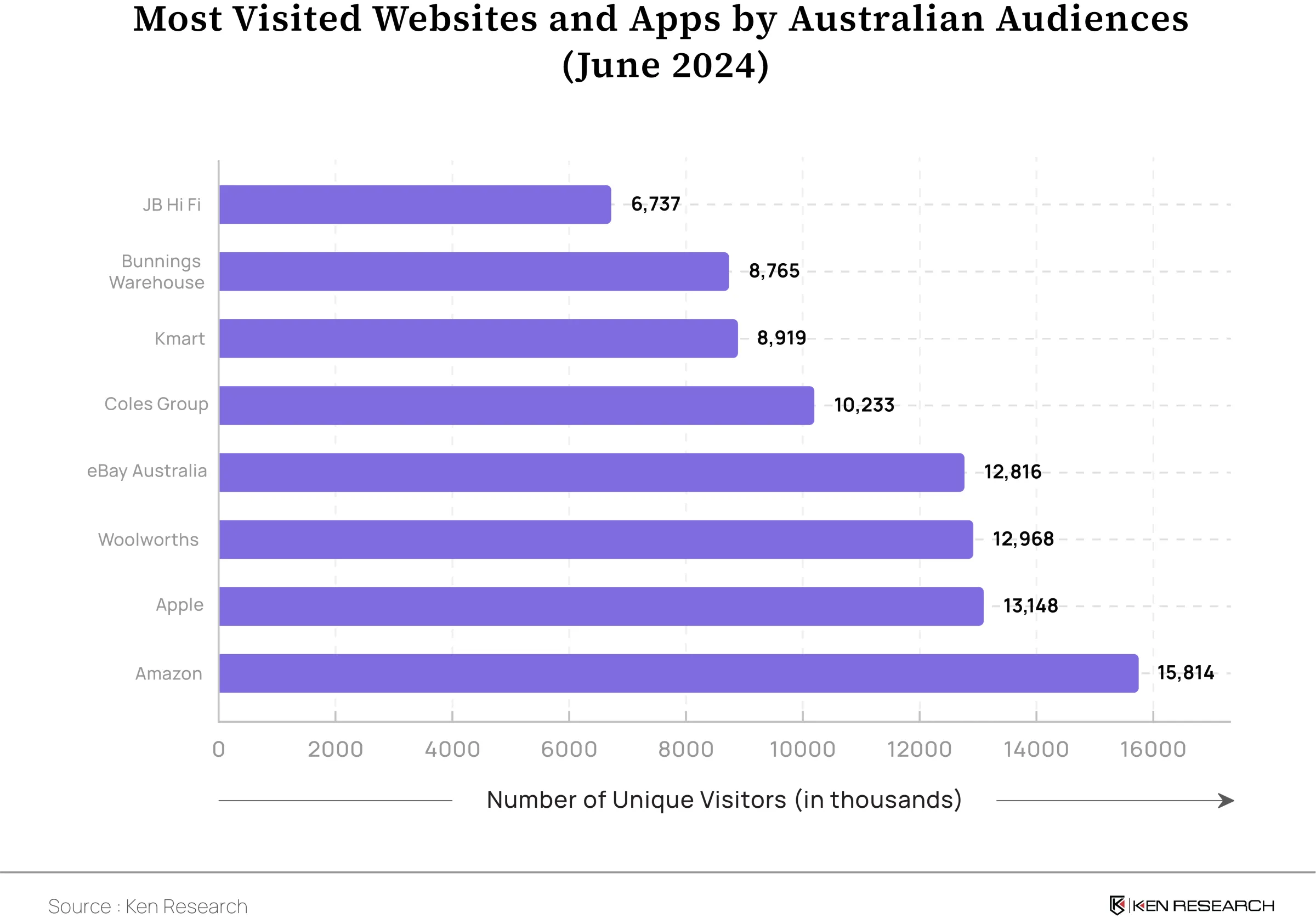
The ecosystem supporting this growth is vast over 93,000 e-commerce businesses are active in the country. In June 2024, 21.16 million Australians accessed e-commerce websites, spending an average of 6.6 hours per user per month on digital platforms like Amazon, eBay, Woolworths, and Kmart.
Factors Fueling Australia’s Logistics Sector Expansion
Australia’s logistics sector has transitioned from a supporting role to a front-line differentiator in the e-commerce value chain. This is evident in its financial trajectory: the e-commerce logistics market grew from AUD 8.13 billion in FY’2019 to AUD 18.17 billion in FY’2024, and is projected at a CAGR of 9.3%.
Parcel volume growth underscores this expansion, increasing from 344.6 million shipments in FY2019 to 623.1 million in FY2024, with projections exceeding 805 million by FY2029. This acceleration is driven by a surge in orders across high-frequency categories like groceries and lifestyle segments, such as home goods and fashion.
While domestic logistics accounts for 81.6% of total shipments, international volumes are expanding rapidly, particularly from China (40%), the USA (21%), and the UK (14%). Cross-border e-commerce is on track to grow its share, with international logistics revenue rising from AUD 11.05 billion in FY’2024 to AUD 18.77 billion in FY’2029.
However, cost pressure is rising, and the average domestic shipment cost has grown from AUD 11.6 in FY’2019 to AUD 13.2 in FY’2024, and is projected to reach AUD 14.5 by FY’2029. International delivery costs are higher and more volatile, rising from AUD 77 to AUD 93.5, and forecast to exceed AUD 110.9. These cost curves are reshaping how brands and logistics providers think about inventory placement, shipping frequency, and technology adoption.
From Centralized Warehouses to Distributed Fulfillment
Fulfillment models in Australia are evolving in response to rising customer expectations and the operational demands of high-velocity e-commerce. Legacy centralized distribution hubs are giving way to hybrid and distributed fulfillment models, including dark stores, micro-fulfillment centers, and ship-from-store integrations.
Third-party logistics (3PL and 4PL) remains dominant, with leading players like DHL, Aramex, and Accenture managing end-to-end fulfillment for large brands. Meanwhile, dropshipping is gaining traction among SMEs, especially those leveraging Shopify and WooCommerce storefronts. high-velocity e-commerce models where gig drivers operate via apps like Sendle and Sherpa have helped close delivery gaps in regional and Tier 2 areas.
Technology is central to the evolution. Artificial Intelligence is now used across route planning, load optimization, and predictive delivery scheduling.
Warehouse robotics is shortening cycle times and boosting order accuracy, while API integration and real-time tracking have become standard customer expectations.
Importantly, sustainability is becoming a commercial priority, not just a marketing checkbox. Over 65% of Gen Y and Z consumers report a willingness to switch brands for greener shipping, and 1 in 3 say eco-packaging influences purchase decisions. Brands that offer carbon-neutral shipping, green packaging, and fast return logistics are seeing tangible loyalty gains and stronger unit economics.
Where to Invest in Logistics Now
From a capital allocation perspective, Australia’s logistics sector presents three standout themes for investors and operators looking to scale intelligently.
Cross-Border Fulfillment Infrastructure
International shipment volumes are set to surpass 125 million annually by FY’2029. With rising import costs and customs delays, there's a clear need for bonded warehousing, consolidated freight corridors, and digitized customs clearance platforms. Investors focused on cross-border logistics tech and infrastructure stand to benefit from both scale and margin lift.
Last-Mile Optimization
Missed or delayed deliveries affect 7–9% of all shipments, especially in outer metro and regional areas. Startups and platforms offering AI-driven route planning, fleet-sharing logistics, and same-day or hyperlocal delivery services can reduce operational costs and enhance customer experience. For retailers, investing in last-mile innovation can reduce churn and improve NPS by as much as 15–20%.
Sustainable and Circular Logistics
Green logistics is moving beyond compliance; it’s a brand-level growth driver. With consumers demanding traceable, low-carbon delivery, there is growing value in EV fleets, eco-friendly returns, and zero-waste packaging. This segment is expected to be worth AUD 272 million by FY’2029, creating a new category of logistics service providers aligned with ESG mandates.
Get started
We've helped companies around the world future-proof
their businesses - and we can do the same for you.