India’s ₹40,000 Crore Chilli Market: From Export Dominance to the Challenge of Sustainable Growth
Ken Research
October 13, 2025 - 4 min read
October 13, 2025
by Khushi RastogiIndia has firmly established itself as the chilli capital of the world, combining unmatched production scale with strong export earnings that make it the anchor of the country’s spice trade. The chilli market in India is valued at over ₹40,000 crore annually in FY 2024-2025, contributing nearly one-third of total spice export earnings and securing India a share of more than 34% in global chilli production.
Chilli is therefore both the muscle and the face of India’s spice economy, yet this leadership is increasingly under strain from climate volatility, compliance pressures, and weak infrastructure. This article examines the foundations of India’s chilli scale, the fragility hidden beneath booming exports, the risks from compliance and infrastructure gaps, and the opportunities emerging through GI branding and FMCG growth.
Andhra and Telangana Anchor India’s Chilli Dominance
India contributes the lion’s share of global chilli production, with Andhra Pradesh and Telangana forming the backbone of supply. Guntur in Andhra has long been recognised as a global trading hub, while Telangana leads in acreage.
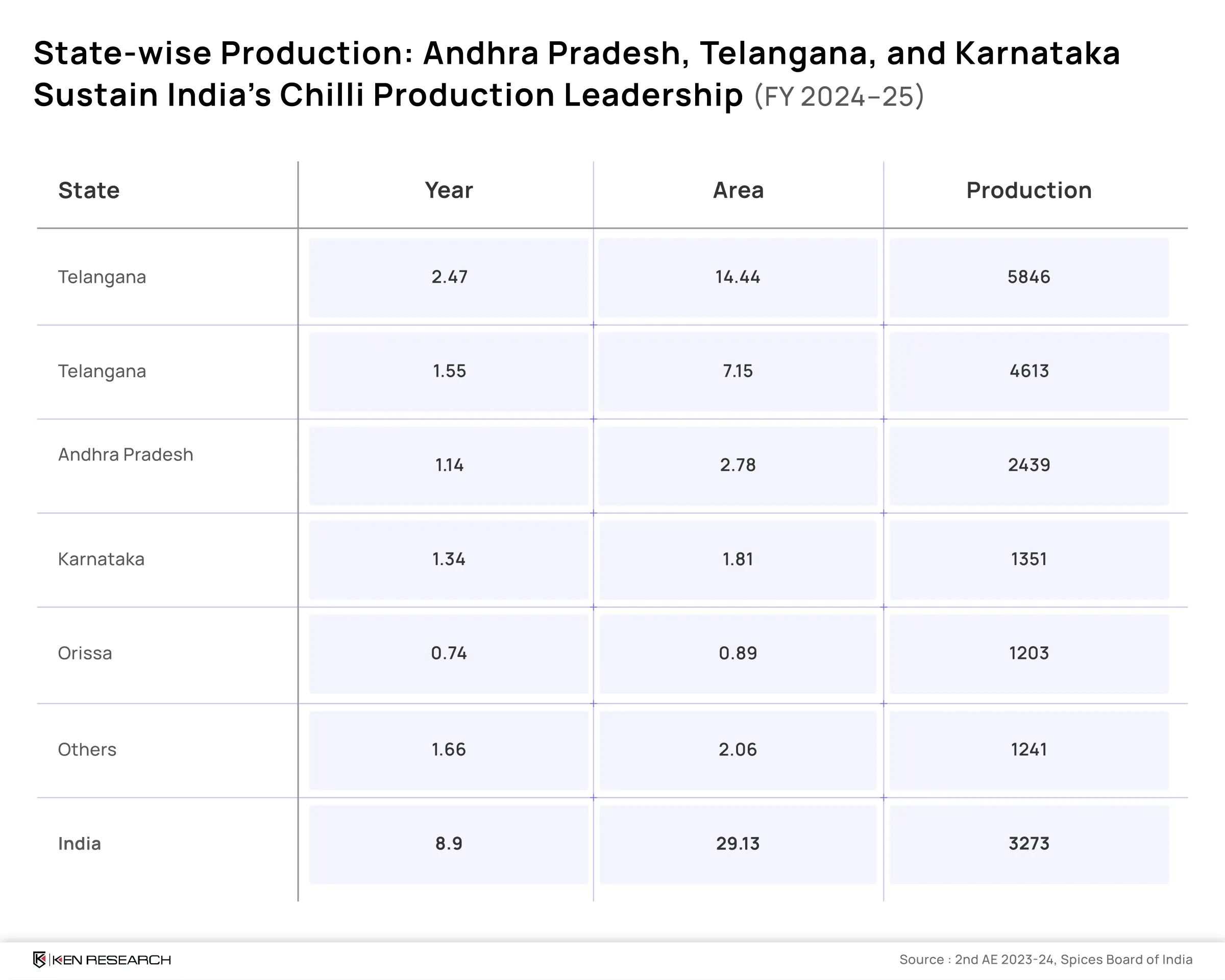
The data highlights how concentrated India’s chilli production is in just two states, meaning that regional weather shocks or disease outbreaks ripple quickly into national output and global supply.
This heavy geographic dependence strengthens India’s dominance but also magnifies its vulnerability. To understand the full trade dynamics, it is equally important to examine where this supply is heading.
Regional Dependence Defines India’s Chilli Trade as China, Sri Lanka, and Bangladesh Drive Bulk Demand
India’s chilli exports are anchored in nearby Asian markets, with China alone absorbing more than a third of total shipments, while Bangladesh and Sri Lanka account for another large share. This trade structure shows strength in volume but limited penetration into high-value markets like the US and EU, which prize safety and traceability. The reliance on regional bulk buyers makes India vulnerable to price fluctuations and policy shifts, and this vulnerability becomes even clearer when numbers are compared.
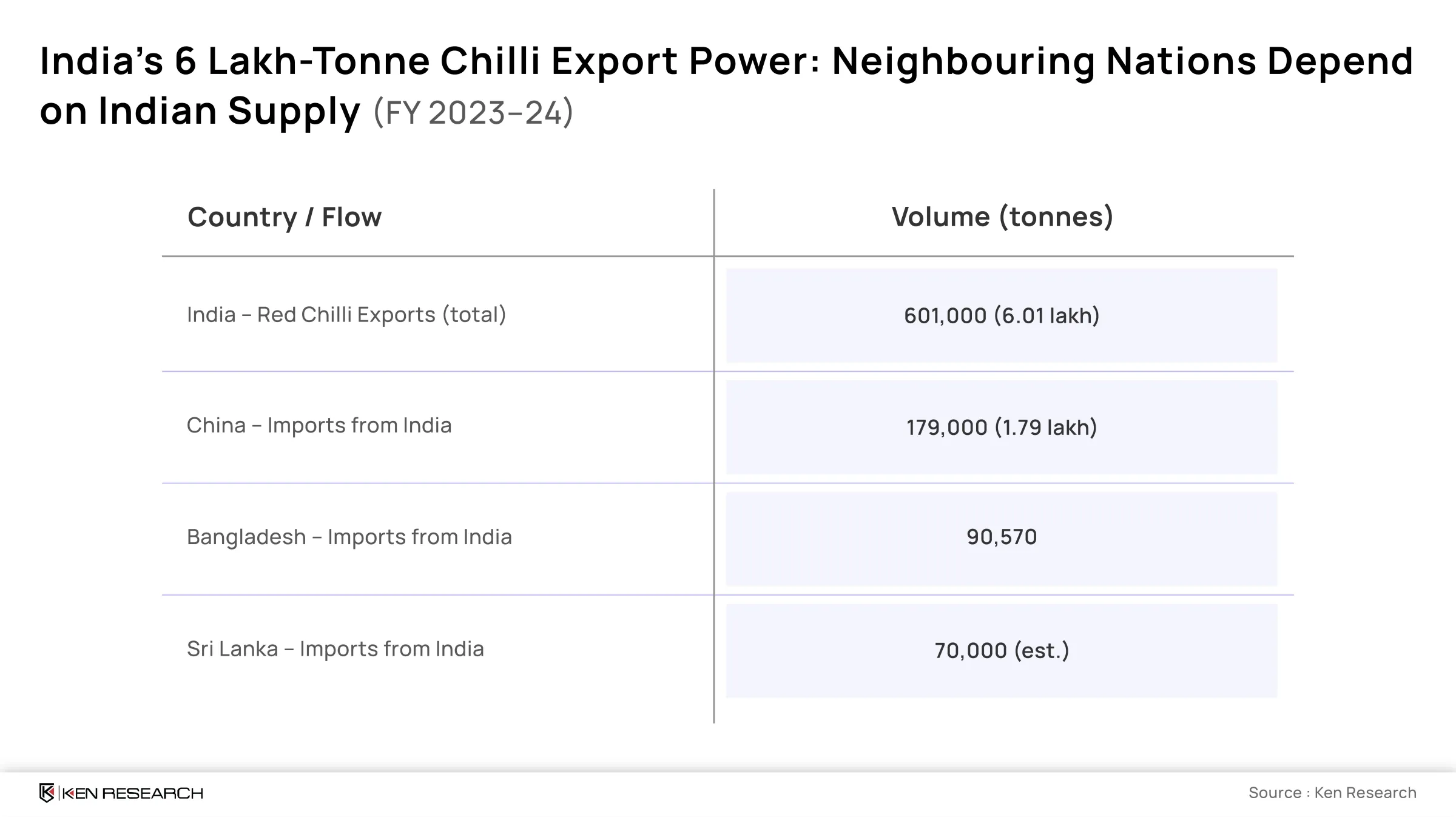
This benchmark shows India’s dominance in chilli exports, with over 6 lakh tonnes shipped globally in FY 2023–24. But it also underlines the concentration risk; China alone took nearly 1.8 lakh tonnes, while two other neighbouring markets accounted for another significant share. Such reliance on bulk buyers makes India’s chilli trade scale-driven but fragile, especially when farm economics and compliance risks are factored in.
Rising Costs and Falling Yields Undermine Farm-Level Stability
Beneath record export volumes lies fragility in farm economics. Farmers in Telangana are facing a situation where input costs are rising steeply, productivity is falling and selling prices have weakened.
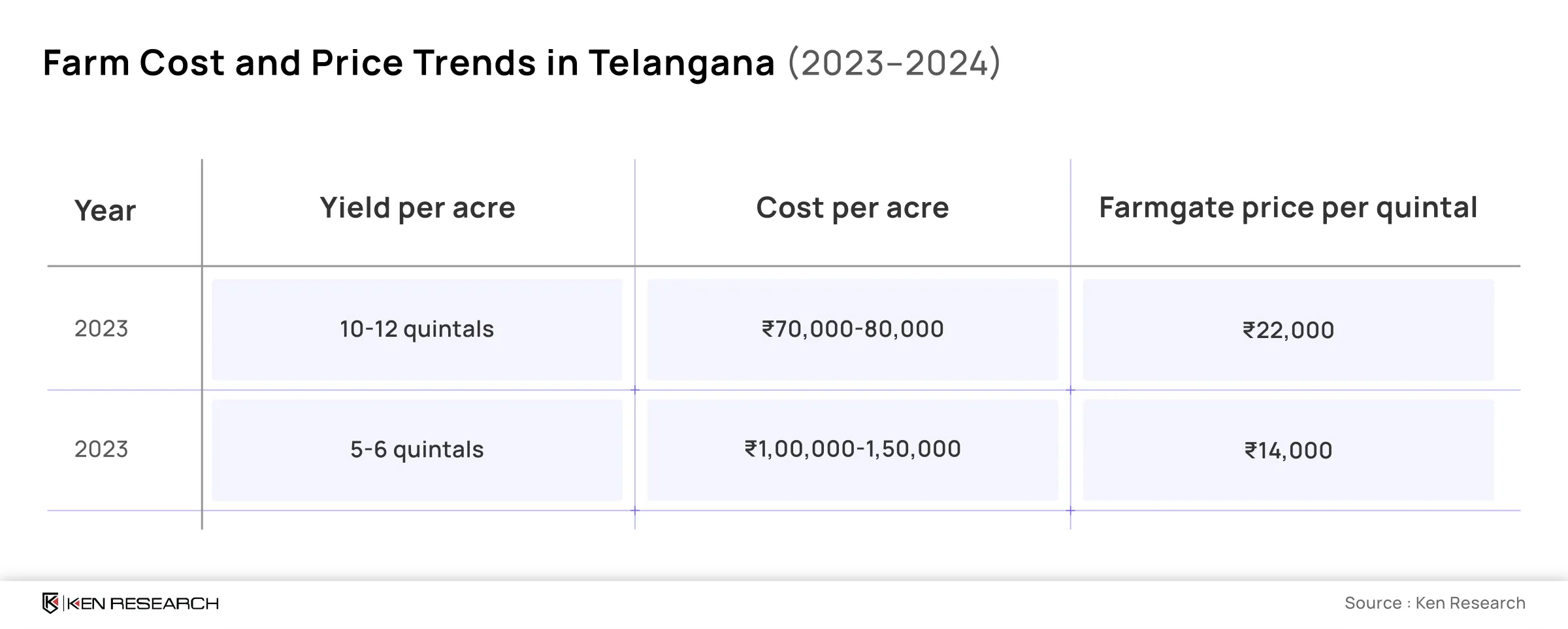
The table shows how farmers are spending more but harvesting less, only to sell at weaker market rates. This imbalance has eroded margins, turning chilli cultivation into a higher-risk activity. The spread of crop diseases like anthracnose, which can cut yields in half if unmanaged, deepens the strain, threatening the sustainability of India’s chilli leadership.
Compliance Failures and Idle Infrastructure Threaten Global Leadership
Weak farm economics quickly spill over into trade risks. Regulators in India and abroad are increasingly vigilant, and a recent FSSAI audit revealed that nearly one in eight spice samples failed to meet safety norms, with chilli often at the centre of these alerts.
At the same time, India’s processing backbone has not kept pace with export ambitions. The Spices Park in Guntur, built to support chilli processing and value-addition, still has most of its units idle . The earlier export benchmark showed India’s strength in volume, but weak infrastructure means the country is not capturing enough value beyond bulk shipments.
Together, compliance failures and infrastructure gaps amplify the risk of India’s chilli consignments being rejected in key markets like the EU or the Middle East, putting both reputation and revenue at stake.
GI Branding and FMCG Giants Push Chilli Toward Higher Margins
Even as challenges grow, the chilli sector is seeing new momentum from branding and FMCG integration. GI-certified varieties such as Byadgi and Guntur Sannam are finding stronger global acceptance, with shipments of Byadgi rising sharply in recent years. Between October 2023 and September 2024, Byadgi shipments rose 43% year-on-year, showing strong international appetite for differentiated chilli varieties.
Consumer-facing companies are also turning chilli into a growth driver. FMCG firms are increasingly turning chilli from a raw-input export into a value chain play as Everest Food Products reported revenue of ₹3,650 crore in FY 2024, much of which comes from its spice/blend business.
Meanwhile, industrial processors are scaling chilli extracts: Synthite promotes itself as the world’s largest oleoresin and spice extract manufacturer, offering spice oleoresins globally. Additionally, Akay also positions itself in the spice extract/natural ingredients space.
These developments signal a deliberate shift: away from commodity chilli exports toward branded FMCG blends and high-margin extracts less prone to supply-side volatility.
India’s Rise from Scale to Sustainable Strength
Chilli is the muscle of India’s spice economy, but scale alone is no longer enough to secure leadership. With fragile farm economics, compliance alerts, and underutilized infrastructure, the model risks being undercut from within.
The opportunity lies in resilience: stabilizing production through better farm practices, embedding zero-defect compliance systems, and pushing more exports into GI-certified and value-added segments. If realized, these measures will ensure that India’s chilli sector evolves from a bulk supplier into a value-driven powerhouse, protecting its position at the top of the global spice trade .
Related tags
Food & Other Services
General Food
Food, Beverage and Tobacco
Get started
We've helped companies around the world future-proof
their businesses - and we can do the same for you.