HealthKart Turned India’s Protein Crisis into ₹1,313 Crore Revenue and ₹120 Crore Profit in FY25
Ken Research
January 20, 2026 - 7 min read
January 20, 2026
by Ken ResearchWhen HealthKart's profit jumped over threefold to ₹120 crore in FY25, the headline captured operational excellence. But the deeper narrative sits at the intersection of India's chronic protein malnutrition and an emerging consumption class willing to pay for solutions. Health Kart's ₹1,313 crore FY25 revenue reflects not just growth but successful monetisation of India’s protein gap.
India Eats Just 47 g of Protein a Day and That Gap Built HealthKart’s ₹1,313 Crore Business
India consumes just 47 grams of protein per person daily, the lowest among Asian countries and well below the global average of 68 grams. This isn't merely a nutritional statistic; it's the foundational market condition that makes HealthKart's business model viable. Additionally, 73 per cent of Indians are protein-deficient, while over 90 cent remain unaware of daily protein requirements.
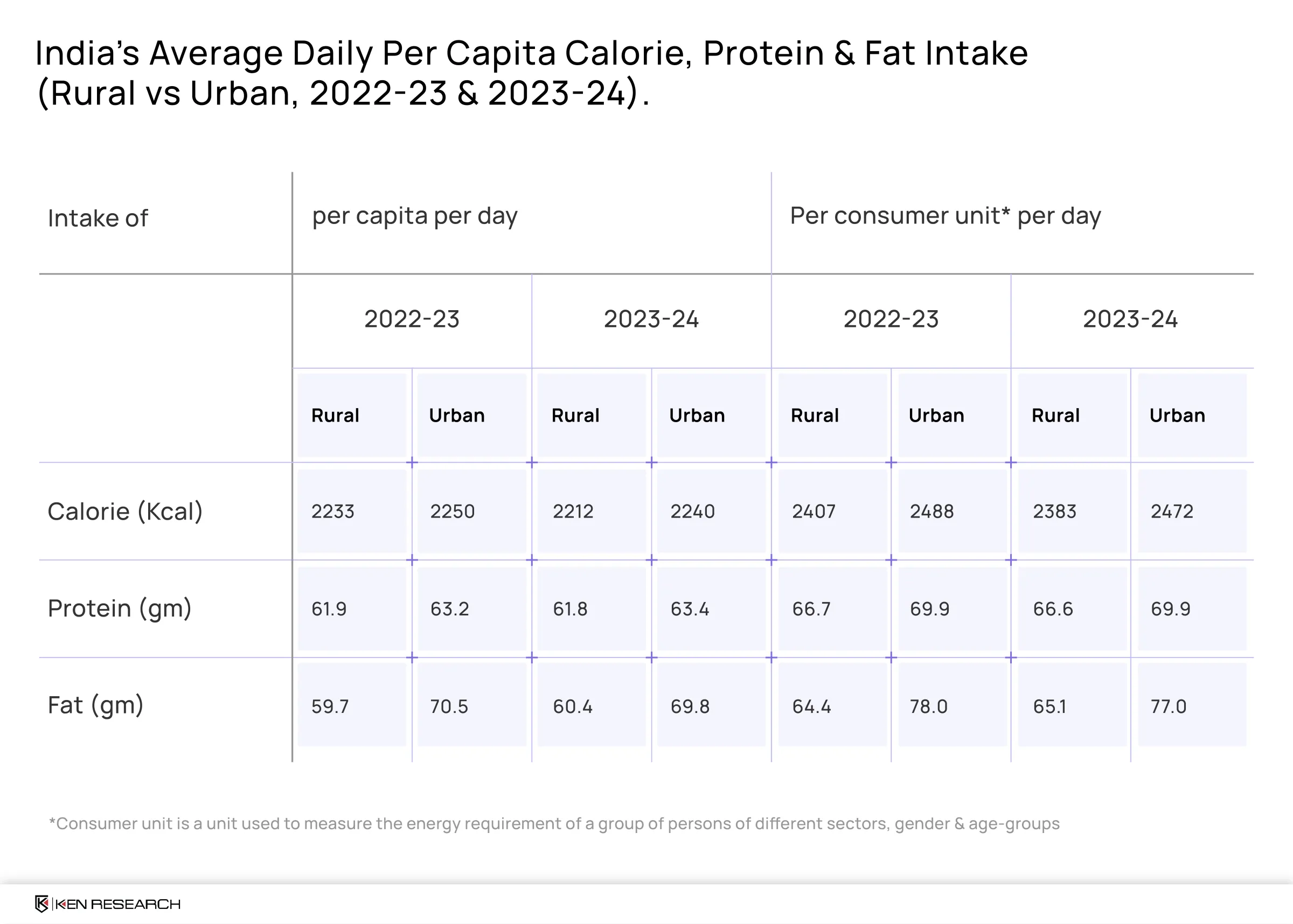
The government's own data reveals the scale that average daily protein intake per capita stabilised around 62 grams in rural areas and 63 grams in urban centres during 2023-24, according to the National Statistics Office's Household Consumption Expenditure Survey.
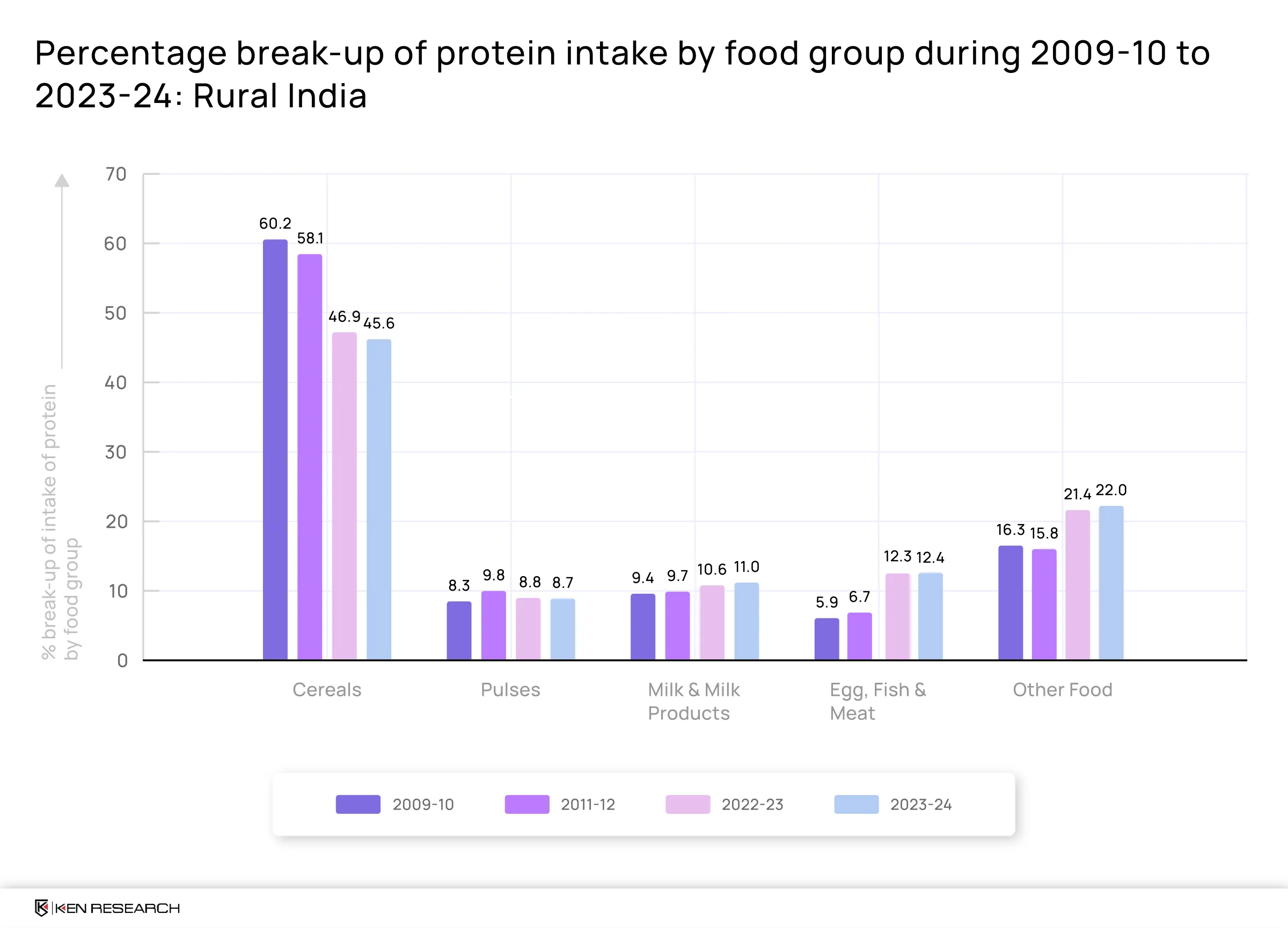
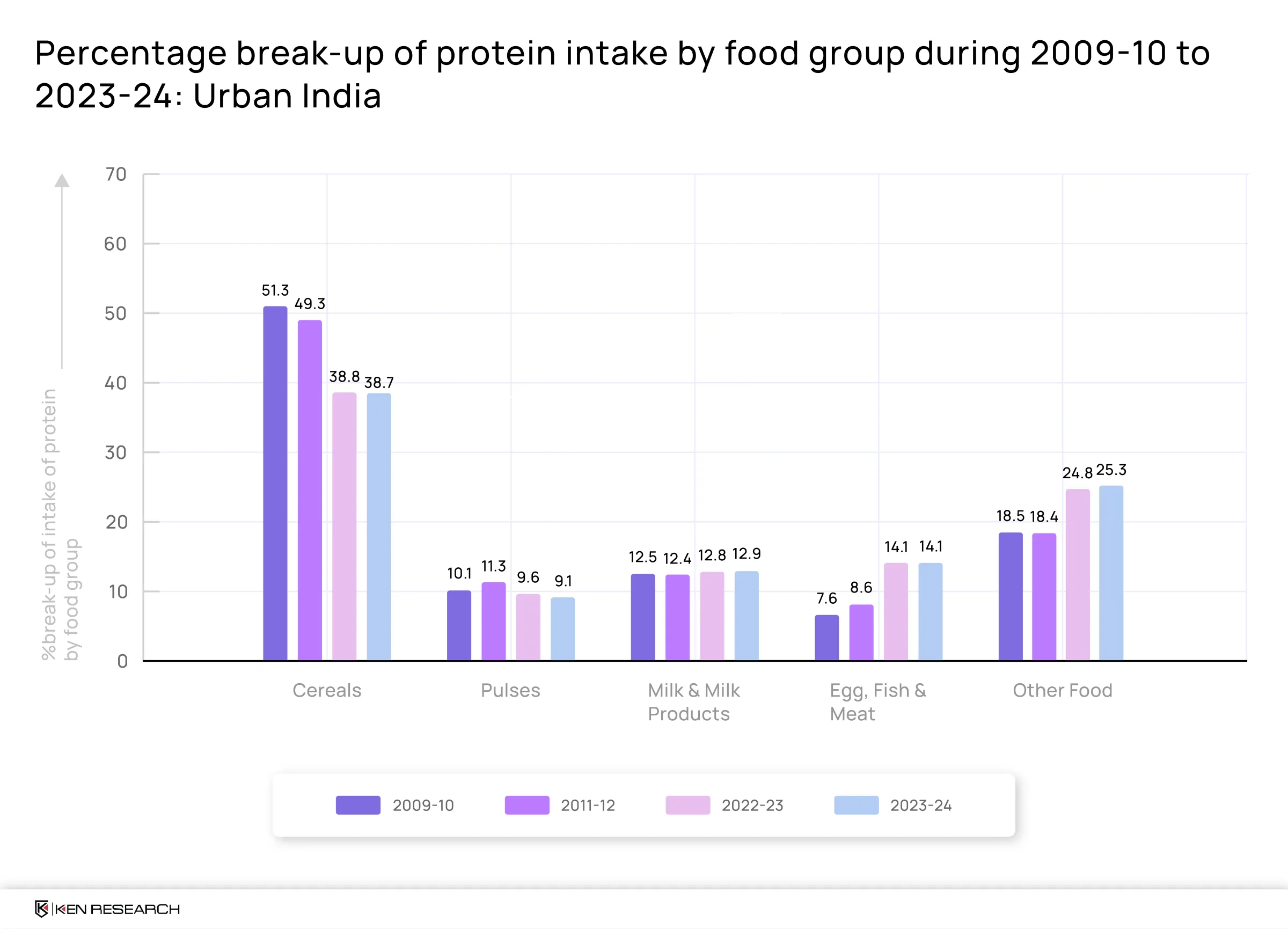
Even this modest consumption relies heavily on cereals, as cereals account for 46-47% in 2023-2024 of protein intake in rural India and 39% in urban areas, rather than higher-quality
Compare this against China's trajectory, as China's daily protein supply reached 141.21 grams per capita in 2021, significantly exceeding the United States' 123.8 grams. India's protein supply stood at just 70.52 grams per capita in 2021, positioning the country decades behind in addressing protein adequacy. The gap isn't closing naturally through dietary shifts alone.
Only 0.8% of Indians Go to gyms, and That Still Drove 29% Growth for HealthKart
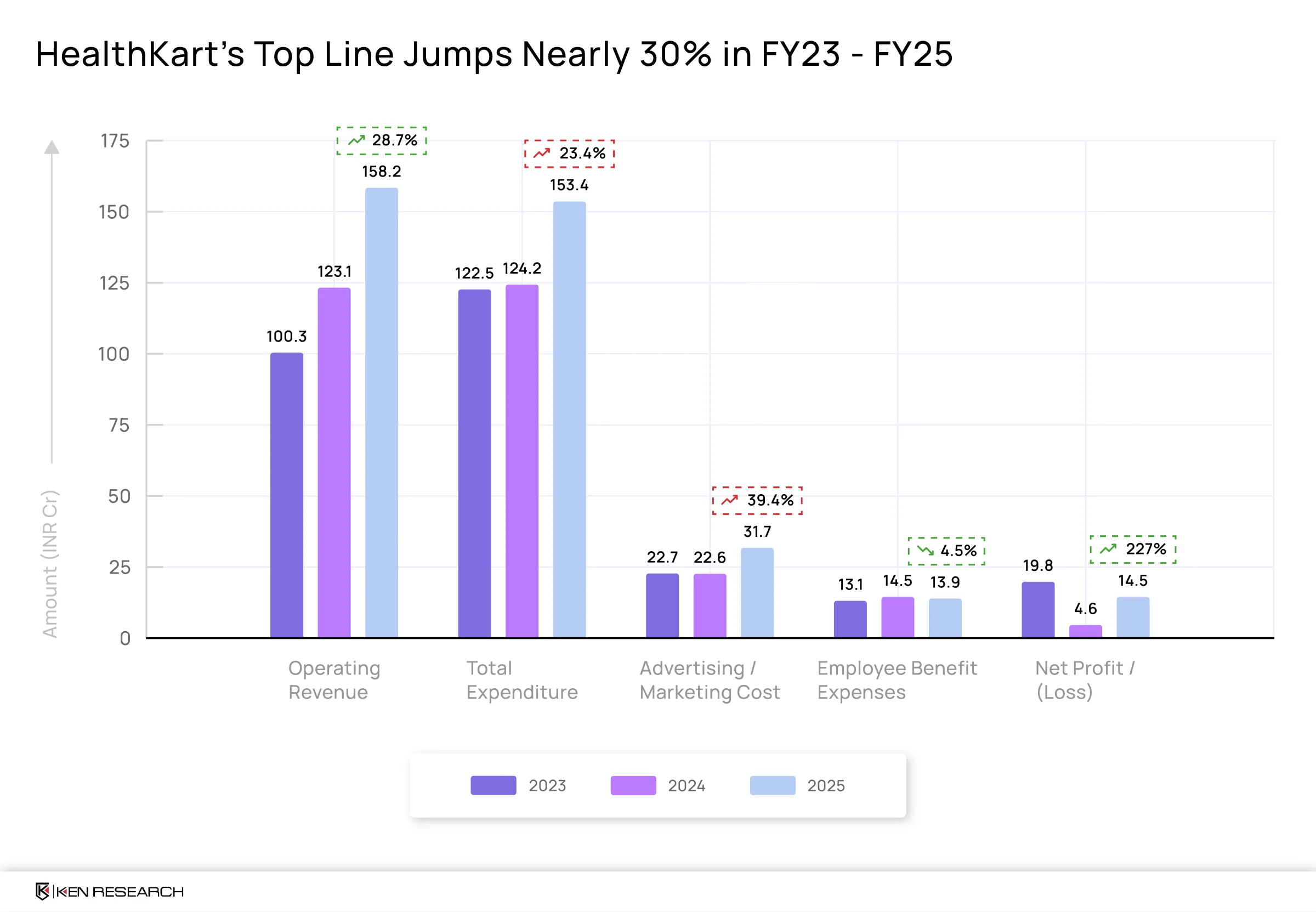
HealthKart's approx. 29% revenue growth in FY25 from ₹1,021 crore to ₹1,313 crore per consolidated financial statements filed with the Registrar of Companies occurs against a remarkable fitness industry expansion that creates direct distribution channels and consumer awareness for protein supplementation.
The current penetration remains strikingly low, 024, with projections to reach 1.7% by 2030. For context, the United States maintains 25% fitness penetration, while even emerging markets like Brazil achieve 7%. The runway for expansion is vast, but the growth path is now established.
Geographic concentration creates specific opportunities, as India's top 10 cities, which are Bengaluru, Mumbai, Delhi NCR, Hyderabad, Chennai, Pune, Jaipur, Lucknow, Kolkata, and Kochi, contribute 56% of fitness market revenue while housing only 31% of fitness facilities. This urban clustering aligns perfectly with HealthKart's distribution strategy and customer demographics capable of paying premium prices for nutritional products.
How HealthKart Spent Less per Rupee and Turned ₹1,313 Crore Revenue into ₹120 Crore Profit
Revenue growth without margin expansion merely funds expensive customer acquisition. HealthKart's FY25 performance demonstrates genuine operational leverage through disciplined cost management that allowed total expenses to rise just 23% to ₹ 1,273 crore while revenue grew 29%.
Material costs increased 26% to ₹ 623 crore, representing 49% of expenditure. This near alignment with revenue growth suggests procurement scale benefits and manufacturing efficiency gains are offsetting input inflation, which is critical in an industry where raw whey protein costs historically ranged from ₹ 6,000 to 7,000 per 2 kg tub before domestic manufacturing reduced prices through scale.
The company's 39% advertising spend increase to ₹263 crore deserves scrutiny. The above-revenue-growth marketing investment reflects either defensive positioning against intensifying competition or offensive market share capture during category expansion. Given that India's fitness supplements market is projected to grow from USD 2.47 billion in 2024 to USD 4.31 billion by 2033, the latter interpretation appears more credible. HealthKart is spending to capture share while the market expands, rather than merely defending existing positions.
Employee costs declining 5% to ₹ 115 crore during high-growth phases typically indicate automation gains or organisational efficiency improvements. This reduction, while modest in absolute terms, demonstrates management's willingness to optimise operations even as revenue scales.
The unit economics tell the essential story that HealthKart spent ₹ 0.97 to earn a rupee of operating revenue in FY25 versus ₹ 1.01 in FY24. Applied across ₹1,313 crore of revenue, this four-paisa improvement translates to approx. ₹ 52 crore in enhanced profitability, accounting for over 40% of the year's absolute profit gain.
Eight Brands One Goal: How HealthKart Targets Every Protein Buyer in India
HealthKart's eight-brand architecture – MuscleBlaze, TrueBasics, HKVitals, bGreen, Gritzo, Nouriza, and others – represents deliberate segmentation across India's fragmenting protein consumption landscape. Product sales constituted 97% of total revenue at ₹ 1,277 crore in FY25, with service revenue contributing ₹ 36 crore.
This portfolio diversification addresses distinct consumption occasions and demographic segments. MuscleBlaze targets serious fitness enthusiasts pursuing performance gains. TrueBasics and HKVitals serve broader wellness-conscious consumers seeking preventive health benefits. bGreen captures the plant-based segment, while Gritzo focuses on children's nutrition, a particularly strategic position given India's persistent child malnutrition challenges, where 38% of children under five suffer from undernutrition.
The brand segmentation allows HealthKart to participate across multiple growth vectors simultaneously. While traditional whey protein supplements serve gym-goers, plant-based proteins address vegetarian preferences, and children's nutrition products tap into parental willingness to invest in health outcomes. Each segment operates on different growth curves a.
Can HealthKart Keep Winning as India’s Protein Market Starts to Fragment?
HealthKart’s FY25 performance, with reported revenue of ₹1,313 crore and net profit of ₹120 crore, reflects strong business momentum supported by improving unit economics. While the company is approaching the ₹1,400 crore revenue threshold, this figure represents a near-term scale milestone rather than reported FY25 revenue. The distinction underscores that profitability has already been achieved at the ₹1,300 crore scale, strengthening HealthKart’s operating leverage as it moves toward higher revenue bands. But the forward challenge isn't maintaining profitability; it's choosing where to compete as India's protein consumption fragments across multiple formats and price points.
India's per capita net national income reached ₹ 172,000 in 2024, up from ₹125,000 in 2019, according to the Ministry of Statistics and Programme Implementation. This 37% income growth over five years creates purchasing power for discretionary health spending that didn't exist for most Indians a decade ago.
Yet 820 million Indians aged 18-62 remain completely physically inactive, representing both HealthKart's biggest challenge and largest opportunity. Converting even a fraction of this inactive population into protein supplement consumers requires addressing affordability barriers, awareness gaps, and behaviour change at scale.
The macro conditions remain favourable as India's protein consumption lags developed markets by decades, and gym memberships are doubling through 2030. Disposable incomes are also rising, whereas health consciousness intensified post-pandemic. Government initiatives like the Fit India Movement are normalising fitness behaviours.
The execution question is whether HealthKart can maintain operational discipline while pursuing growth across an increasingly fragmented opportunity set. The FY25 numbers suggest management understands the balance between growth investment and margin preservation. Whether they can sustain this as competition intensifies and the market fragments will determine if the company captures proportional value from India's protein transformation or merely rides the initial wave before others capture later-stage economics. The mathematics indicate opportunity, as only the execution will determine outcomes.
Conclusion
HealthKart’s FY25 outcome shows that protein supplementation in India has reached a scale where profitability is achievable alongside growth. The company’s financial performance reflects disciplined cost management and efficient capital allocation rather than demand-led volatility. Ken Research analysis indicates HealthKart is altering India’s protein market by accelerating the shift from informal, cereal-dependent protein intake toward packaged, standardised supplementation. Its multi-brand approach has widened adoption across urban households, as well as the women and children's segments that were historically excluded from the category. By expanding consumption occasions and improving market formalisation, HealthKart is reshaping how protein is consumed in India and setting a benchmark for sustainable value creation in the sector.
Related tags
Nutritional and Dietary Supplements
Get started
We've helped companies around the world future-proof
their businesses - and we can do the same for you.