India’s ₹66,000 Crore Aluminium Fenestration Market: 3 Real Estate Segments Will Drive Growth, But Where Will Value Concentrate?
Ken Research
August 27, 2026 - 9 min read
August 27, 2026
by Unnati MiglaniIndia’s aluminium fenestration opportunity is moving beyond market expansion. The next phase will be shaped by where premium demand, system adoption and value concentration develop fastest.
India’s aluminium fenestration market is moving into a higher-value phase of development. Ken Research's India Aluminium Fenestration Opportunity Analysis estimates that the market will reach approximately ₹66,000 crore by 2032, growing at around 12% CAGR. However, the opportunity is not evenly distributed across the construction landscape. The strongest value creation is emerging where premium housing, high-rise developments, commercial real estate and organised system adoption intersect.
The market is gradually shifting from a product-led category towards a system-led category. Aluminium is increasingly being evaluated not only as a window and door material, but as part of a broader building solution that influences aesthetics, durability, performance and design flexibility. Premium residential developments, Grade-A offices and high-rise projects are creating greater demand for solutions that support larger glazing formats, slimmer profiles and more integrated architectural designs.
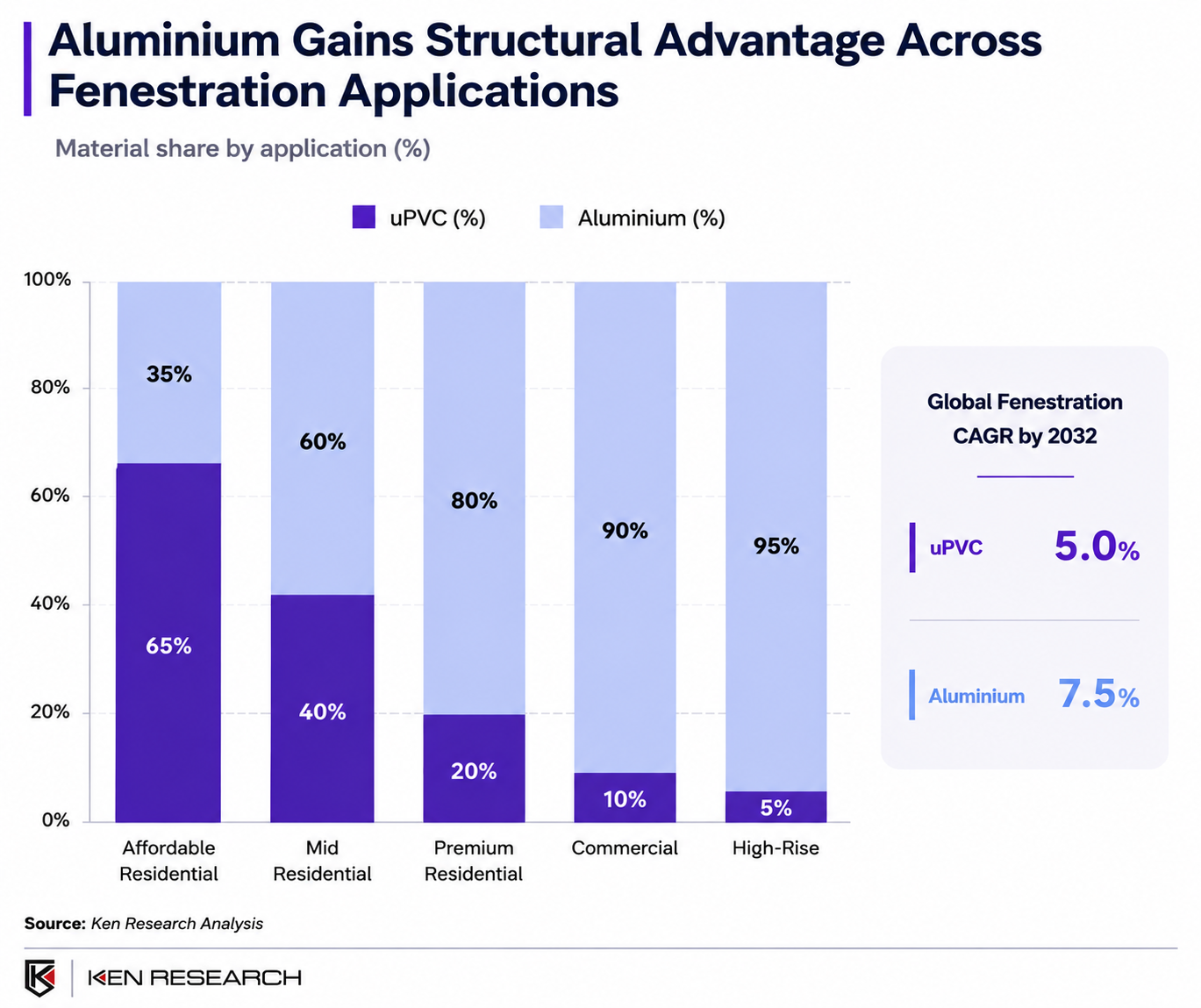
Ken Research’s findings suggest that aluminium adoption increases significantly with project complexity, increasing from approximately 35% in affordable residential applications to around 95% in high-rise developments. Globally, aluminium fenestration is also expected to grow faster than uPVC, with aluminium projected at around 7.5% CAGR compared with 5.0% for uPVC by 2032.
For aluminium system manufacturers, extrusion companies, façade players and investors, the central question is no longer whether India represents an attractive market. The challenge is understanding where aluminium adoption will generate the strongest value creation.
Aluminium Is Moving From a Material Choice to a Building-System Decision
The changing role of aluminium in Indian construction reflects a broader shift in how buildings are designed and valued.
Traditional fenestration decisions were often influenced by affordability, availability and basic functionality. However, premium construction is changing the basis of selection. Developers and customers are increasingly looking for solutions that improve not only the appearance of buildings but also their long-term performance.
This is increasing demand for aluminium applications that enable larger glass surfaces, slimmer sightlines, customised configurations, improved durability and integration with modern façade designs.
The relevance of aluminium increases when construction requirements move beyond standardised products. A premium residential tower, luxury home or commercial development does not evaluate fenestration only as a window or door component. It becomes part of the overall architectural and performance proposition.
This shift is reflected in adoption patterns across building segments. Aluminium penetration remains lower in affordable housing where cost sensitivity remains high, but adoption increases substantially in applications where developers and customers place greater importance on aesthetics, design flexibility and performance.
Ken Research analysis indicates that aluminium penetration rises from approximately 35% in affordable residential applications to around 95% in high-rise developments, demonstrating how system requirements influence material selection.
The category is also benefiting from a global shift towards higher-value applications. Aluminium fenestration is projected to grow at around 7.5% CAGR compared with 5.0% for uPVC by 2032, supported by demand for premium housing, smart systems and high-rise façade applications.
This transition creates a different competitive environment. The opportunity is not simply replacing one material with another. It is participating in a market where customers increasingly evaluate fenestration as an engineered solution rather than a basic construction component.
For companies operating in this space, this changes the basis of competition. The strongest opportunities are likely to emerge in segments where technical capability, design requirements and customer willingness to invest align.
Premium Housing Is Concentrating the Largest Residential Value Opportunity
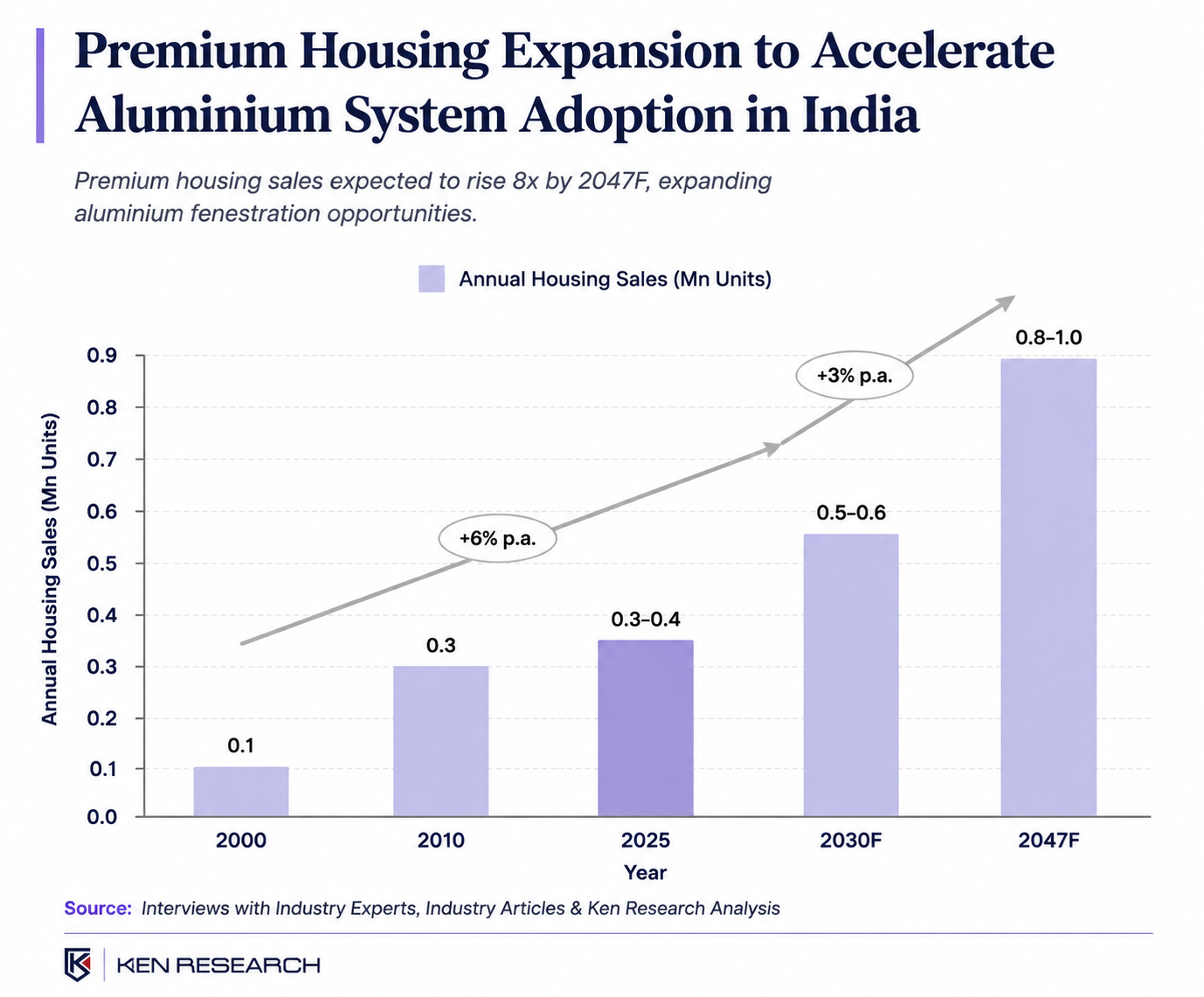
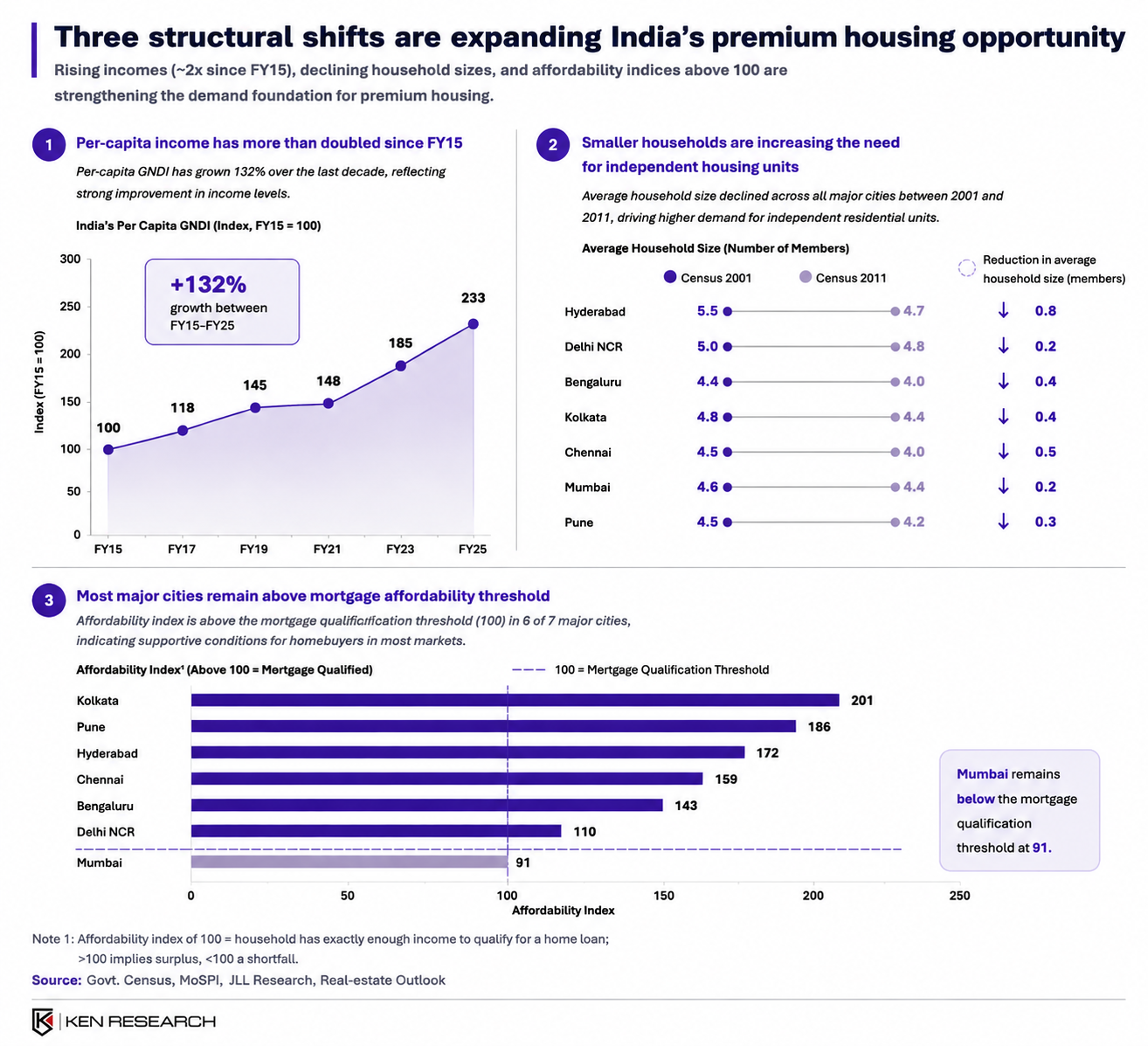
Residential construction remains the largest demand pool for aluminium fenestration, but the opportunity is not distributed proportionately across India’s housing market. The majority of aluminium-system value is concentrated within premium residential segments where project specifications, customer expectations and willingness to invest support higher-value solutions.
Residential real estate contributes approximately 62% of India’s aluminium fenestration value, making it the largest application segment. However, the value concentration within residential demand is significantly higher at the premium end. Homes priced above ₹2 crore account for around 82% of residential aluminium fenestration value, highlighting that premium housing, rather than overall housing volume, is the primary driver of aluminium-system adoption.
This creates an important distinction for companies evaluating the residential opportunity. A market with high housing activity does not necessarily represent the strongest aluminium opportunity. Aluminium adoption increases when residential projects move towards larger unit sizes, higher glazing requirements, customised architectural designs and premium finishes.
Ken Research segments residential aluminium fenestration value across housing categories:
- Homes below ₹2 crore contribute 18.5% of aluminium fenestration value. While representing a large housing volume base, this segment has lower aluminium contribution due to relatively lower premium-system adoption and lower per-home spend.
- Homes priced between ₹2–5 crore contribute 36.9% of aluminium fenestration value, making it the largest value segment. This segment represents the key adoption zone for organised aluminium system players, supported by rising premium residential demand.
- Homes priced between ₹5–10 crore contribute 21.1% of aluminium fenestration value. Higher adoption is driven by greater preference for premium systems, larger glazing requirements and customised residential designs.
- Homes above ₹10 crore contribute 23.5% of aluminium fenestration value. Despite lower housing volumes, ultra-luxury projects generate disproportionate aluminium value due to higher spend intensity per project and greater use of premium fenestration solutions.
The next phase of aluminium fenestration growth will not be defined by housing volume alone, but by where value is concentrating. With 82% of residential aluminium fenestration value coming from homes above ₹2 crore, identifying the segments, markets and demand pockets driving premium adoption will be critical for companies shaping their India strategy. Download the complete Ken Research India Aluminium Fenestration Market POV to explore the segment-level value pools, premium housing trends and market dynamics shaping India’s aluminium fenestration opportunity.
The Premium Housing Opportunity Is Expanding Beyond Traditional Metros
Premium housing growth is no longer limited to India’s established luxury corridors. The opportunity is widening across a broader set of Tier-1 and emerging Tier-2/3 markets, creating additional demand pockets for aluminium fenestration systems.
Ken Research analysis highlights that premium residential activity is expanding across a wider set of urban clusters, with markets such as Chandigarh, Kochi, Jaipur, Coimbatore, Indore, Lucknow, Surat and other emerging centres gaining relevance alongside established metropolitan markets. The complete POV provides the broader market landscape, including the full list of Tier-1, Tier-2 and Tier-3 cities where premium housing growth is creating potential opportunities for aluminium fenestration adoption.
However, the opportunity is not defined by city expansion alone. The key differentiator is whether these markets are moving towards higher-value residential formats, where larger homes, premium developments and differentiated building specifications support greater aluminium system adoption.
For aluminium system players, the next growth opportunity will come from identifying markets where premium housing momentum is translating into sustained demand for engineered fenestration solutions, rather than simply expanding geographic presence.
Commercial Real Estate Creates a Second High-Value Demand Pool
Residential construction remains the largest demand pool for aluminium fenestration, but commercial real estate represents another important source of demand, particularly across Grade-A offices and organised retail developments.
Ken Research analysis indicates that approximately 30% of aluminium fenestration demand comes from commercial real estate. The segment differs from residential demand because commercial projects typically involve larger-scale developments where aluminium applications are used across office buildings, retail assets and other commercial properties.
Grade-A Office Expansion Creates a Concentrated Commercial Opportunity
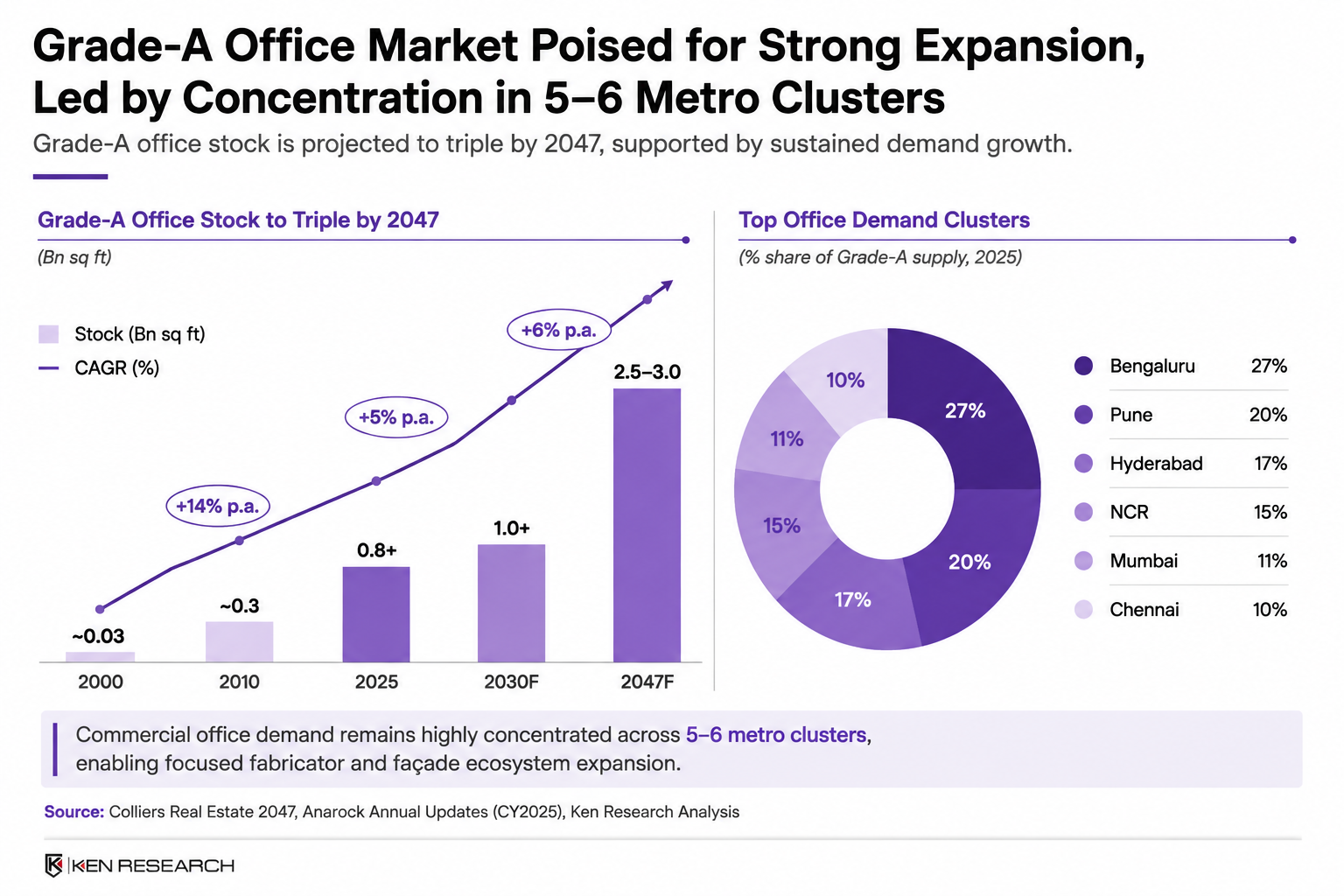
Commercial real estate is expected to remain a key demand segment for aluminium fenestration, supported by the expansion of Grade-A office infrastructure. Ken Research analysis indicates that Grade-A office stock could expand from approximately 0.8+ billion sq ft in 2025 to 2.5–3.0 billion sq ft by 2047F, creating a significantly larger demand base for aluminium fenestration systems across commercial real estate.
Demand is concentrated across six major office clusters:
- Bengaluru accounts for the largest share of Grade-A office supply at 27%.
- Pune and Hyderabad contribute 20% and 17%, respectively.
- NCR represents 15% of Grade-A office supply, followed by Mumbai (11%) and Chennai (10%).
These markets collectively account for the majority of Grade-A office demand, making them the primary commercial hubs for aluminium façade and fenestration system adoption.
Mall-Led Retail Expansion Is Opening New Growth Pools for Aluminium Systems
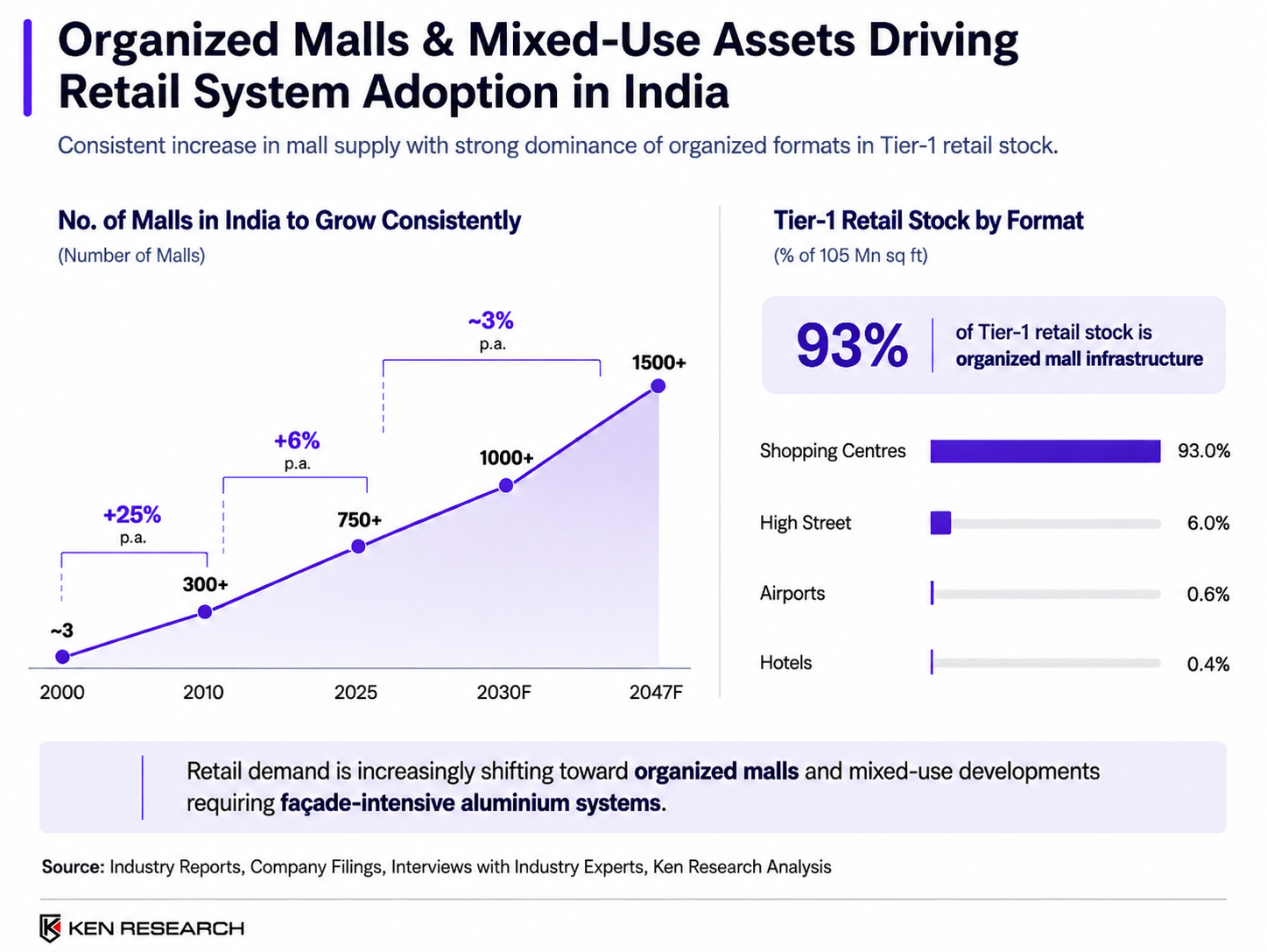
Retail real estate expansion is expected to create an additional demand pool for aluminium fenestration systems, driven by the scaling of organised retail infrastructure. Ken Research analysis estimates the number of malls in India to increase from approximately 750 in 2025 to around 1,500 by 2047, reflecting a doubling of organised retail assets over the period.
The opportunity is concentrated within organised formats, with shopping centres accounting for 93% of Tier-1 retail stock (105 million sq ft), compared with high streets (6%), airports (0.6%) and hotels (0.4%). As retail development shifts towards larger organised assets and mixed-use projects, aluminium fenestration demand is expected to remain closely linked with the expansion of façade-intensive commercial spaces.
For aluminium system players, the next growth challenge is not market access but market prioritisation. With demand evolving differently across premium housing, Grade-A offices and organised retail, identifying where aluminium adoption is likely to accelerate will determine where companies focus their commercial and expansion efforts. Ken Research’s complete POV examines these demand shifts, value pools and market dynamics shaping India’s aluminium fenestration landscape. Review the analysis to understand the segments and markets influencing future adoption.
India’s Aluminium Fenestration Market Is Entering a Formalisation Phase
The opportunity in India is being created not only by market growth. It is also being shaped by the transition from fragmented supply towards more organised system solutions.
The organised system penetration in India remains below 5%, compared with approximately 50% in mature markets, indicating significant headroom for organised players to expand.
This gap is strategically important because India’s aluminium fenestration market is developing at a stage where category growth and market formalisation are happening simultaneously.
The shift towards organised systems is being supported by changing customer expectations. Premium homeowners, developers and commercial buyers increasingly seek consistency in product quality, technical performance and installation outcomes. This creates stronger relevance for companies that can offer complete system solutions rather than only supplying aluminium profiles.
The market is therefore moving from a product-oriented model to a value-chain approach, where design capability, technical support, and execution standards influence purchasing decisions.
However, this transition also highlights why market participation alone will not guarantee success. Companies will need to identify where premium demand is developing, which applications are moving towards engineered solutions and how effectively they can support customers through the entire buying journey.
The Next Winners Will Capture Value Migration, Not Just Market Growth
India’s aluminium fenestration market is entering a phase where growth will be determined less by overall construction expansion and more by where premium demand is concentrating.
The strongest opportunities are emerging at the intersection of premium residential development, commercial real estate expansion and increasing adoption of engineered aluminium systems. Value creation will be concentrated in segments and markets where higher-performance fenestration solutions are becoming an integral part of building design.
For aluminium system players, the strategic priority is therefore not simply participating in India’s construction growth. It is identifying where premium housing clusters, Grade-A commercial developments and organised real estate formats are creating the strongest demand conditions.
India’s aluminium fenestration opportunity is not a single growth market. It comprises multiple value pools developing across premium residential, commercial real estate and organised building systems. Companies that align their market focus with these evolving demand pockets will be better positioned to capture the next phase of category growth.
Download Ken Research’s India Aluminium Fenestration Opportunity Analysis to evaluate market size, segment-level growth drivers, premium housing trends, commercial demand clusters and the key factors shaping aluminium system adoption in India.
Related tags
Metals & Minerals
Metal, Mining and Chemicals
Get started
We've helped companies around the world future-proof
their businesses - and we can do the same for you.