Revenue Set to Double to USD 3.55 Million as Infrastructure and Industrial Capex Reshape India’s Heavy Load Moving Equipment Market
Ken Research
February 12, 2026 - 7 min read

February 12, 2026
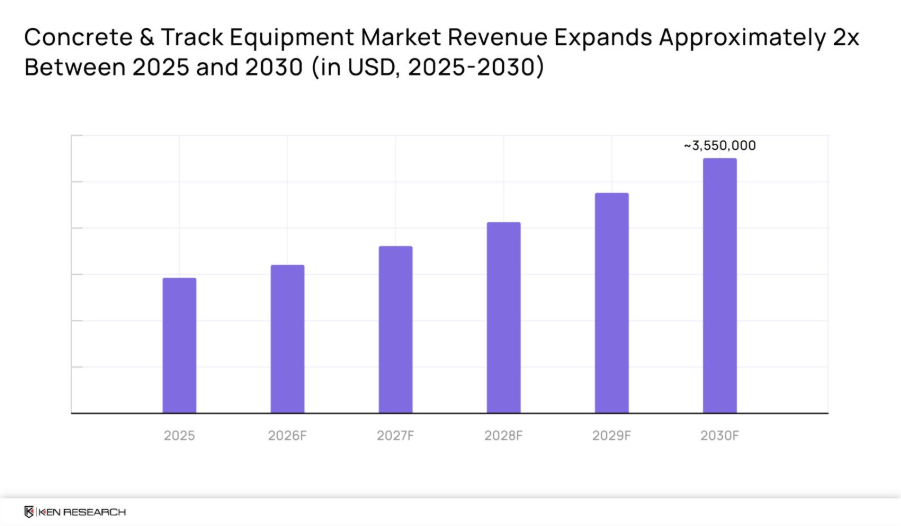
by Khushi GuptaIndia’s heavy-load moving equipment market for concrete and track applications is transitioning from a fragmented, project-linked demand cycle to a structurally expanding industrial segment. The market is entering a strong growth phase, with revenues projected to exceed USD 3.55 Mn by 2030, driven by infrastructure execution, domestic manufacturing depth and energy-sector capacity additions.
Manufacturing Scale, Construction Growth and Energy Expansion Are Strengthening India’s Heavy Equipment Base
India’s broader industrial landscape in 2024 provides a foundational demand environment for heavy-load moving equipment, anchored by manufacturing scale, construction acceleration and energy capacity expansion.
The following points outline how industrial output and public investment are strengthening the demand base for heavy-load handling equipment in India:
- General manufacturing remains a core GDP contributor, with automobile manufacturing accounting for 7.1% and electronics manufacturing 3.4% of GDP in 2024, reinforcing India’s position as a scale-driven production hub requiring frequent movement of heavy machinery and components.
- India’s manufacturing scale continues to deepen, as vehicle production reached 25.9 million units in 2023, positioning the country as the second-largest bus manufacturer and third-largest heavy truck manufacturer globally, directly increasing demand for heavy equipment across factories and logistics yards.
- Electronics manufacturing output reached USD 110 billion in 2024, with clear visibility towards USD 300 billion by 2026, indicating rapid capacity additions that require precision handling of large and sensitive equipment.
- Construction has emerged as a high-impact multiplier, with the transportation sector contributing 8.9% and core construction 7.6% to GDP in 2024, supported by a construction market size of USD 28.8 billion and a government ambition to raise construction’s GDP share to 15% by 2030.
- Energy, oil and utilities are scaling in parallel, with electricity, gas, water and utilities contributing 2.5%, mining 2% and pharmaceuticals 1.7% to GDP in 2024, supported by India’s installed power capacity of 442.85 GW in 2024, ranking the country as the third-largest producer and consumer of electricity.
This macro-industrial expansion is creating a structurally stable demand base for heavy-load moving equipment, shifting the market from episodic procurement to sustained, project-led deployment across sectors.
23 Waterways, 35 Logistics Parks and Refinery Expansion Are Accelerating Equipment Utilisation
Public-sector capital expenditure is emerging as the single most important demand driver for heavy-load moving equipment, translating policy intent into on-ground execution.
The points below explain how infrastructure, manufacturing incentives and refinery expansion are directly increasing equipment deployment across India:
- Infrastructure development remains a central pillar, with government targets to expand the national highway network by 10,000 km in 2026, significantly increasing demand for heavy rollers, jacks and load-handling systems at construction sites.
- Inland logistics expansion is reinforcing equipment usage, as India plans to operationalise 23 waterways and develop 35 Multi-Modal Logistics Parks by 2030, requiring heavy equipment for material movement, port construction and logistics infrastructure.
- Manufacturing-led industrialisation is accelerating, with India positioning itself as a global manufacturing hub and targeting USD 1 trillion in exports by 2030, supported by abundant raw materials and entrepreneurial capacity driving new factory setups and expansions.
- Government manufacturing initiatives are strengthening long-term demand fundamentals, led by Production Linked Incentive (PLI) schemes with a USD 26 billion outlay, alongside the Make in India program that boosts infrastructure creation and industrial output.
- Refinery capacity expansion is a high-impact driver, as India’s refining capacity is set to increase from 254 MMTPA in 2022 to over 450 MMTPA by 2030, requiring frequent movement of heavy reactors, columns and modules across refinery construction and upgrade projects.
Policy-backed capex is reducing demand cyclicality and creating predictable, multi-year visibility for equipment suppliers, particularly those aligned with infrastructure and energy projects.
USD 9 Billion GIFT City and 900 km Rail Expansion Are Securing Long-Term Equipment Demand
Large-scale transport and urban development programs are transforming heavy-load moving equipment demand from short-cycle procurement into long-duration project utilisation.
The following developments highlight how flagship projects are expanding both the scale and duration of equipment demand:
- Urban mega projects are acting as concentrated demand hubs, led by Gujarat International Finance Tec-City (GIFT City) in Gandhinagar, planned as a global financial and IT hub with an estimated investment of USD 9 billion, sustaining construction activity through 2030.
- GIFT City’s phased development is expected to fuel recurring demand for heavy-duty rollers, jacks and material handling equipment, as sequential construction phases require repeated deployment of load-movement solutions.
- Railway infrastructure expansion is increasing equipment utilisation, with the cabinet approving 8 new railway projects across 14 districts, adding 900 km of new rail lines and increasing demand for heavy equipment in track laying, station construction and material support.
- Public investment in rail modernisation is reinforcing long-term demand, supported by USD 2.8 billion for new rail connectivity and an additional USD 4.8 billion allocated under the Amrit Bharat scheme for infrastructure upgrades and modernisation.
- Highway construction remains a volume-driven demand engine, with major corridors such as Delhi-Amritsar-Katra and Delhi-Mumbai expressways, alongside a government target of 10,000 km of highway construction during 2025-26, intensifying heavy equipment usage across road and bridge projects.
These initiatives are extending equipment demand across project lifecycles, favouring suppliers capable of consistent delivery, durability and cost efficiency.
USD 3.55 Million Revenue and 3,300 Units by 2030 Signal a Market Set to Double
India’s heavy load moving equipment market for concrete and track applications is entering a high-growth phase, supported by accelerating infrastructure execution and domestic manufacturing participation.
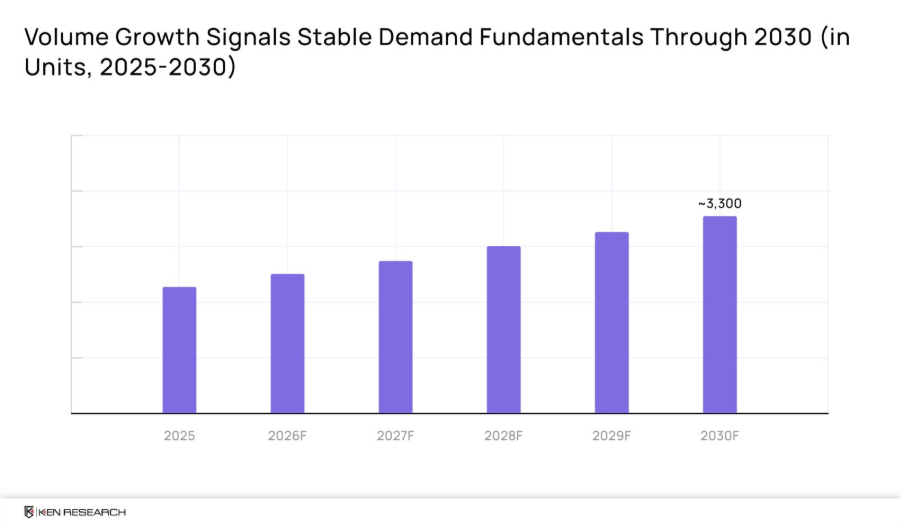
The points below summarise verified market size and volume trends shaping the market’s scale:
- Market revenues are projected to exceed USD 3.55 million by 2030, reflecting a clear post-2025 acceleration.
- Revenue growth momentum is strengthening; the CAGR during 2019-2024 was around 9% and is projected to be much higher during 2025-2030, indicating faster monetisation as projects move from planning to execution.
- Market volumes expanded are projected to reach 3,300 units by 2030, highlighting volume-led expansion across infrastructure and industrial sites.
- Volume CAGR is also accelerating, and it was around 5.5% during 2019-2024, reflecting the rising frequency of equipment usage and repeat procurement.
The simultaneous expansion of revenue and volume confirms a structurally growing market rather than a price-driven upswing.
Wheel-Based Rollers Surpass USD 700,000 in 2024 Overtaking Steel Chain Rollers
A clear shift is underway in India’s product-level revenue mix, driven by cost efficiency and domestic manufacturing strength.
The following points explain how segment leadership is evolving across product categories:
- Steel chain rollers led the market in 2019, and increased to around USD 650,000 in 2024, supported by heavy-load infrastructure applications.
- Wheel-based rollers surpassed steel chain rollers in 2024, with revenues of USD 700,000 in 2024, driven by widespread adoption in general manufacturing and infrastructure projects.
- Battery-powered rollers, while smaller in size, expanded from USD 27,000 in 2019 to USD 210,000 in 2024.
- Jacks play a supporting role, with revenues of USD 180,000 in 2024, primarily used alongside rollers in heavy engineering and plant relocation.
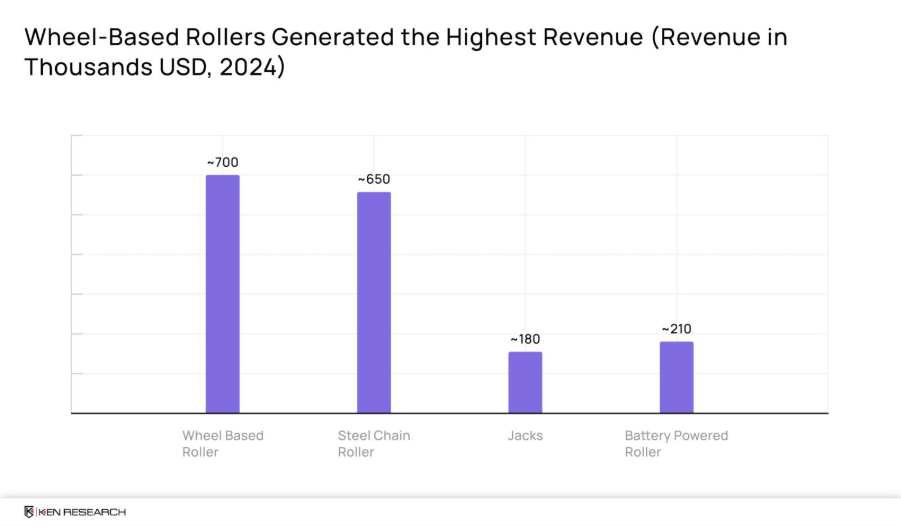
Revenue leadership is shifting toward cost-efficient, domestically manufactured products, reshaping competitive dynamics in the market.
Conclusion
India’s heavy-load moving equipment market for concrete and track applications is moving into a stronger growth cycle, with revenues projected to exceed USD 3.55 Mn by 2030 and volumes expected to reach nearly 3,300 units. Government-led capex, refinery expansion from 254 MMTPA to over 450 MMTPA by 2030, and large-scale rail and highway projects are shifting demand from episodic procurement to sustained and project-driven utilisation.
Ken Research highlights that stakeholders should align capacity planning and product strategy with India’s long-duration infrastructure pipeline, particularly highways (10,000 km expansion target), rail additions (900 km approved) and refinery upgrades through 2030.
Related tags
Machinery Components
Machinery and Parts
Manufacturing and Construction
Get started
We've helped companies around the world future-proof
their businesses - and we can do the same for you.