Can India Defend Its 45% Global Spice Market Share Amid Rising Competition from Vietnam, China & Indonesia?
Ken Research
October 14, 2025 - 5 min read
October 14, 2025
by Khushi RastogiIndia closed FY 2024–25 with its highest-ever spice export performance, shipping 1.799 million tonnes valued at nearly USD 4.72 billion, according to the Spices Board of India.
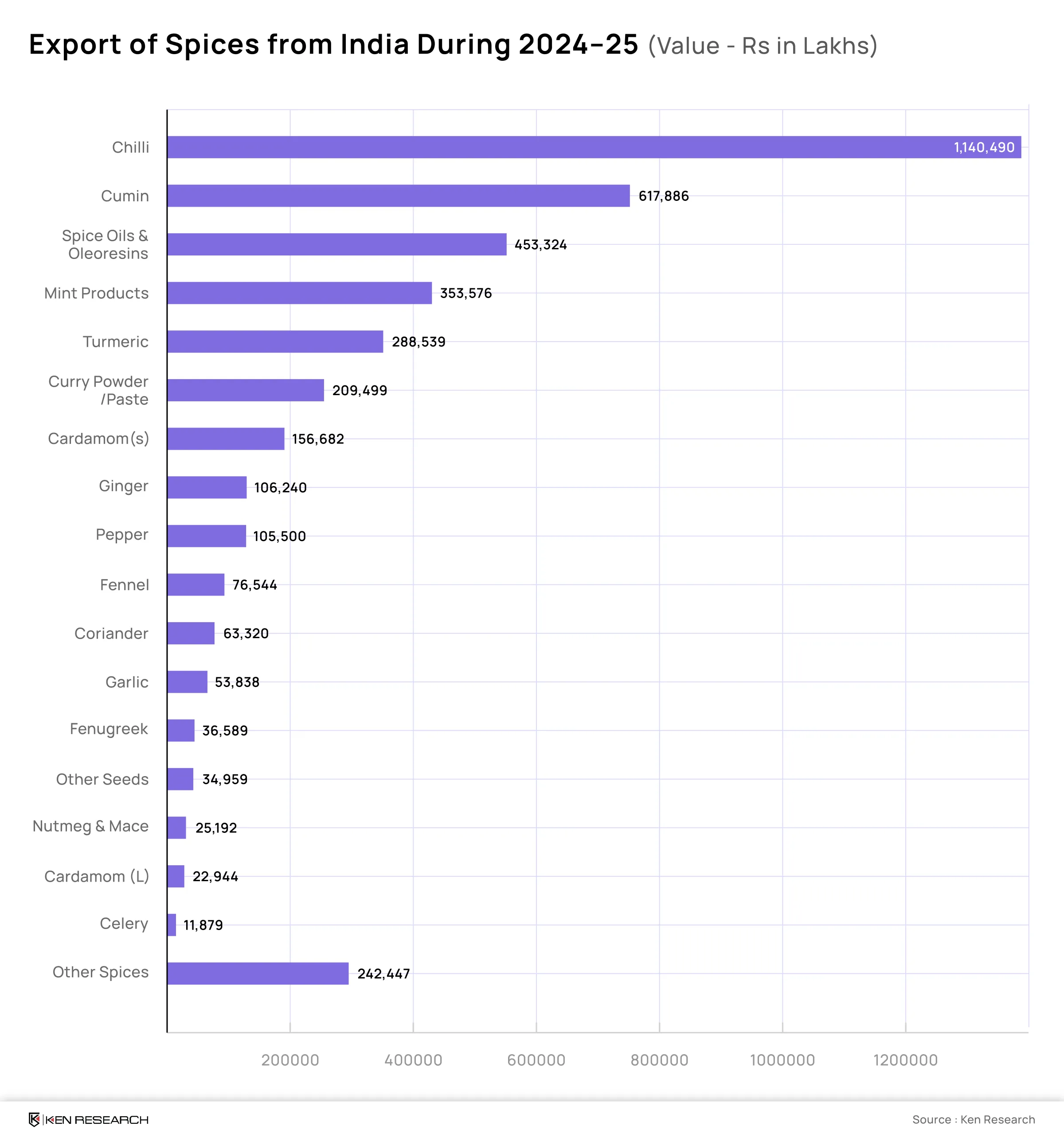
This record affirms India’s position as the world’s largest spice supplier and highlights the strength of its diversity across chilli, cumin, turmeric, pepper, cardamom, and coriander.
Yet, as India expands its basket, rivals are advancing with focused strategies: Vietnam in pepper, China in garlic and ginger, and Indonesia in cloves and nutmeg. The future will depend on whether India can transform from a volume-driven exporter into a value-led global leader while defending its broad spectrum against niche powerhouses.
India’s Scale Advantage: With 12 million Tonnes and a Domestic Cushion
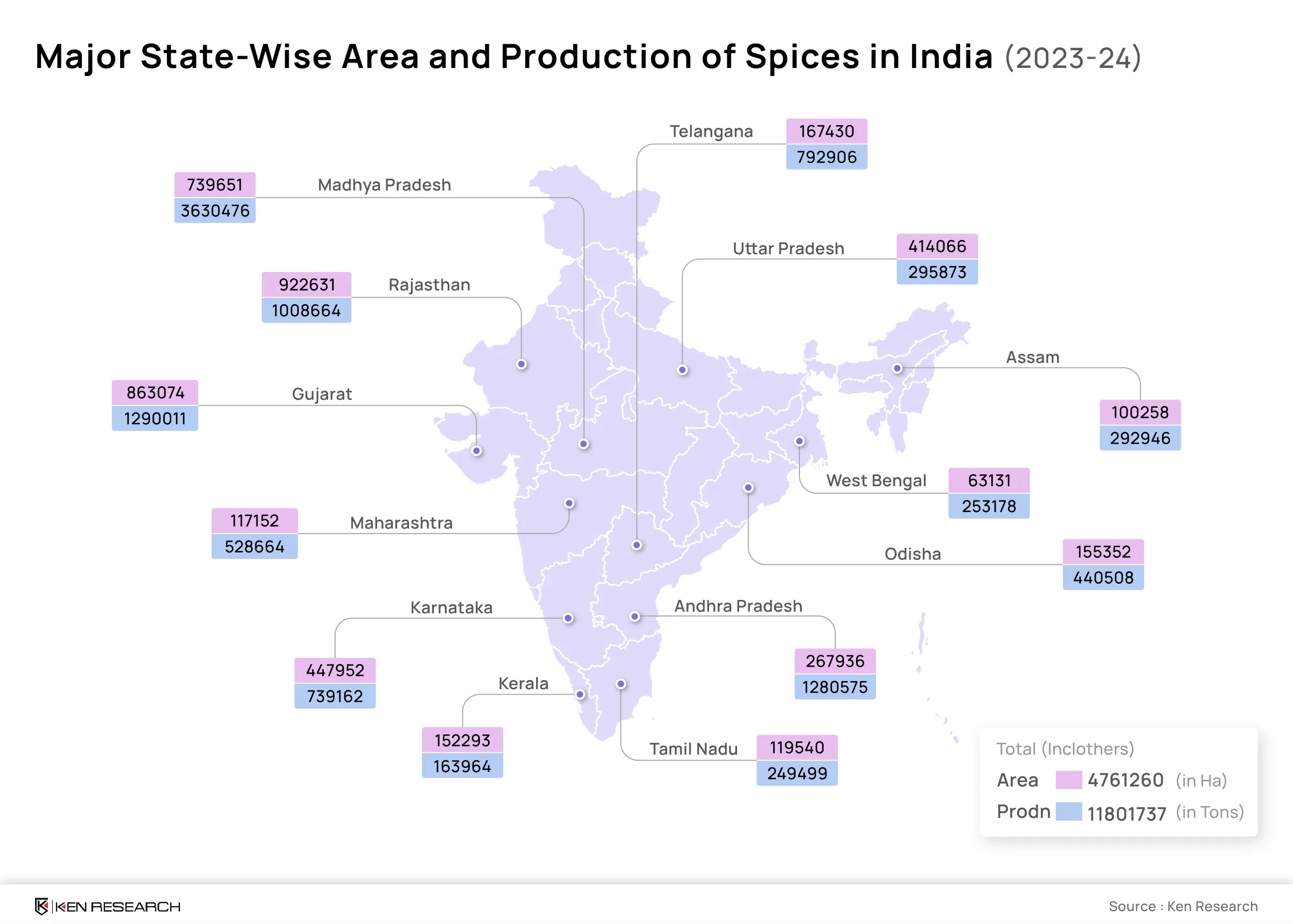
India produces more than 11 to 12 million tonnes of spices each year, representing nearly 45 percent of global production. Andhra Pradesh contributes almost half of India’s chilli output, Gujarat anchors cumin, Kerala dominates pepper and cardamom, while Meghalaya’s Lakadong turmeric is now globally recognised.
Domestic consumption absorbs about 75 to 80 % of this production, insulating the sector from volatility in export demand thereby Export earnings climbed from 4.46 billion US dollars in FY 2023–24 to 4.72 billion US dollars in FY 2024–25, reflecting sustained growth.
For large players, this scale and domestic moat provide stability: Everest Food Products reported revenues of around ₹2,300 crore in FY24 with profit after tax margins near 12 percent, MDH is estimated to generate more than ₹1,800 crore annually, and Tata Consumer’s Sampann line is scaling rapidly within its FMCG division, which posted total revenues of ₹15,206 crore in FY24.
Broad Leadership Faces Niche Power from Vietnam, China and Indonesia
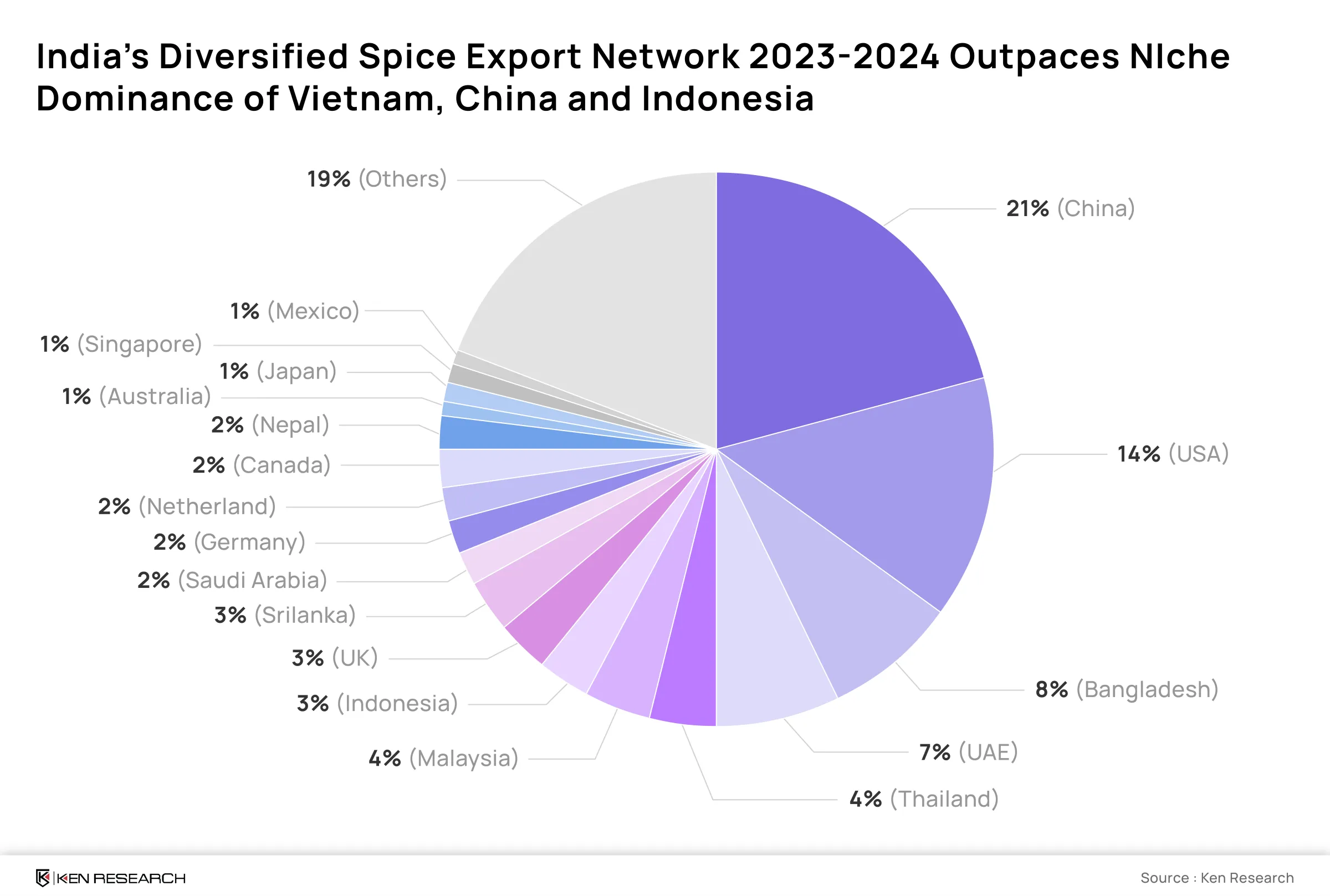
India’s diversified position contrasts sharply with rivals that dominate specific spice categories and control pricing. As illustrated below, India’s spice exports are widely distributed across key destinations such as China (21%), the USA (14%), Bangladesh (8%), and the UAE (7%), reinforcing its balanced global trade presence.
Vietnam has become the global leader in pepper, exporting 219,387 tonnes worth 1.1 billion US dollars between January and October 2024, and surpassing one billion US dollars in just the first eight months of 2025.
China exported ginger worth USD 582 million in 2023 and shipped more than 1.7 million tonnes of garlic, utilising scale and mechanisation to drive costs down.
Indonesia accounts for two-thirds of world clove production, feeding both domestic demand from its tobacco sector and international buyers, while also exporting nutmeg valued at more than 100 million US dollars annually.
Global players are watching these dynamics closely. McCormick & Co., with a market capitalisation of 25 billion US dollars, expanded its sourcing partnerships in India in 2023, while private equity investors have shown increasing interest in scaling mid-sized Indian brands for international markets.
How India Can Defend and Expand Its Spice Leadership
To defend its leadership and expand its market share, India must focus on four critical levers: quality, resilience, value addition, and branding.
Building compliance leadership
Recent recalls of Indian spice blends in Hong Kong and Singapore due to ethylene oxide residues, along with European Union RASFF alerts and FSSAI’s finding that nearly 12 percent of tested samples were non-compliant in mid-2024, underscored systemic gaps.
Zero-defect manufacturing, QR-enabled traceability, and transparent audits are no longer optional. Firms like Synthite, which have strong oleoresin exports, show how compliance can translate into premium pricing.
Investing in climate resilience and infrastructure
IMD’s 2024 monsoon report revealed rainfall deficits in Telangana and Andhra Pradesh that cut chilli yields by up to 20 per cent, showing how climate shocks threaten supply stability.
At the same time, the Spices Park in Guntur remains underutilised, with only 20 to 30 units active out of more than 100 plots. Addressing these bottlenecks requires targeted investment in irrigation systems, cold chains, and processing hubs, ensuring both small and large exporters can scale reliably.
Driving value-added exports
India exported 13,000 tonnes of oleoresins worth ₹3,250 crore in FY 2023–24 and shipped ready-to-cook spice blends valued at ₹5,500 crore. The global curcumin market, where India already dominates, is projected to exceed 200 million US dollars by 2030. These categories carry higher margins and are less vulnerable to commodity price swings.
Leveraging GI heritage and Ayurveda premiumisation with 75 GI-tagged spices—including Malabar Pepper, Byadgi Chilli, and Lakadong Turmeric—India has a branding opportunity rivals cannot match. Pairing GI certifications with the global health and wellness movement, especially Ayurveda-linked demand in diaspora-rich markets, creates a pathway from commodity to premium shelf presence.
Together, these levers form the foundation for India’s transition from volume leadership to value-driven competitiveness.
Shifting From Quantity to Value in India’s Spice Future
The shift is already underway. Companies such as Synthite, Mane Kancor, and Akay Flavours have built global reputations in oleoresins, while Everest, MDH, and Tata Sampann are scaling packaged spice blends abroad.
This mirrors the journey of Indian tea and coffee decades ago, moving from bulk commodity supply to branded presence worldwide. The same pivot, if executed in spices, could multiply India’s export value without increasing raw output.
Conclusion
India’s spice exports crossing ₹40,000 crore confirm its dominance, but the future of competitiveness will be shaped by compliance, climate resilience, and the ability to capture value beyond raw volumes. Vietnam’s pepper, China’s garlic and ginger, and Indonesia’s cloves highlight the power of focus, but India’s breadth, heritage, and branding opportunity make it the cornerstone of global spice growth.
The most compelling opportunities lie in India’s value-added processors, branded FMCG spice businesses, GI-based premium varieties, and exporters who can win trust in regulated markets through compliance leadership. Tactical exposure to Vietnam for pepper or China for garlic and ginger may deliver niche returns, but India’s stability, domestic demand cushion, and premiumisation approach make it the core market for long-term investment in the global spice industry.
Related tags
General Food
Get started
We've helped companies around the world future-proof
their businesses - and we can do the same for you.