KSA Permits 100% Foreign Ownership in Retail Pharmacy: Should Foreign Investors Capitalise on This USD 7 Billion Opportunity?
Ken Research
March 23, 2026 - 14 min read

March 23, 2026
by Unnati MiglaniSaudi Arabia’s USD 7 billion retail pharmacy market stands at a strategic inflexion point. On one hand, Vision 2030 reforms, rising healthcare expenditure, and demographic tailwinds signal expansion. On the other hand, tightening regulatory controls and the upcoming Integrated Health Law introduce structural uncertainty, particularly for foreign investors.
For the longest time, ownership of retail pharmacies remained largely restricted to Saudi nationals in KSA. Recent reforms, such as Decree 125, which permits 100% foreign ownership in pharmacy retail, appear to liberalise market access, aligning with the kingdom’s Vision 2030 to transform the healthcare sector through foreign investment, competitive efficiency and prepare for the upcoming healthcare laws.
However, the current framework permitting non-Saudi ownership of retail pharmacies and herbal establishments is transitional and remains in force only until the Integrated Health Law takes effect. This caveat introduces transition risk for investors entering or expanding in this geography. While the Kingdom’s foreign investment ambitions targeting FDI equivalent to 5.7% of the GDP are clear, retail pharmacy remains a tightly regulated healthcare interface, where commercial freedom operates within structured oversight.
What Is Driving Growth in the KSA Retail Pharmacy Market?
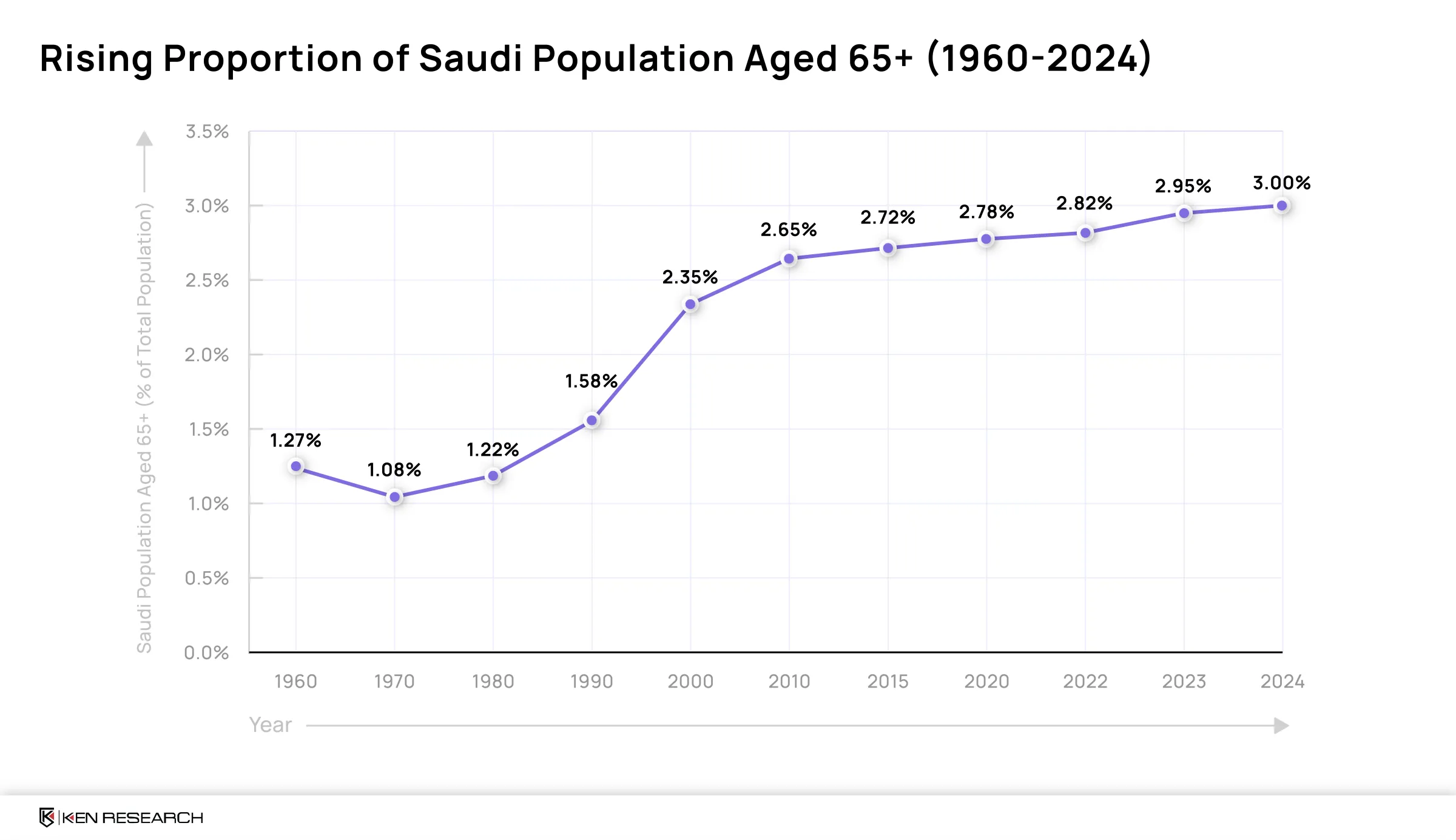
3% of KSA’s Population Is Over 65: How Population Growth and Gradual Ageing Are Fueling Pharmacy Demand?
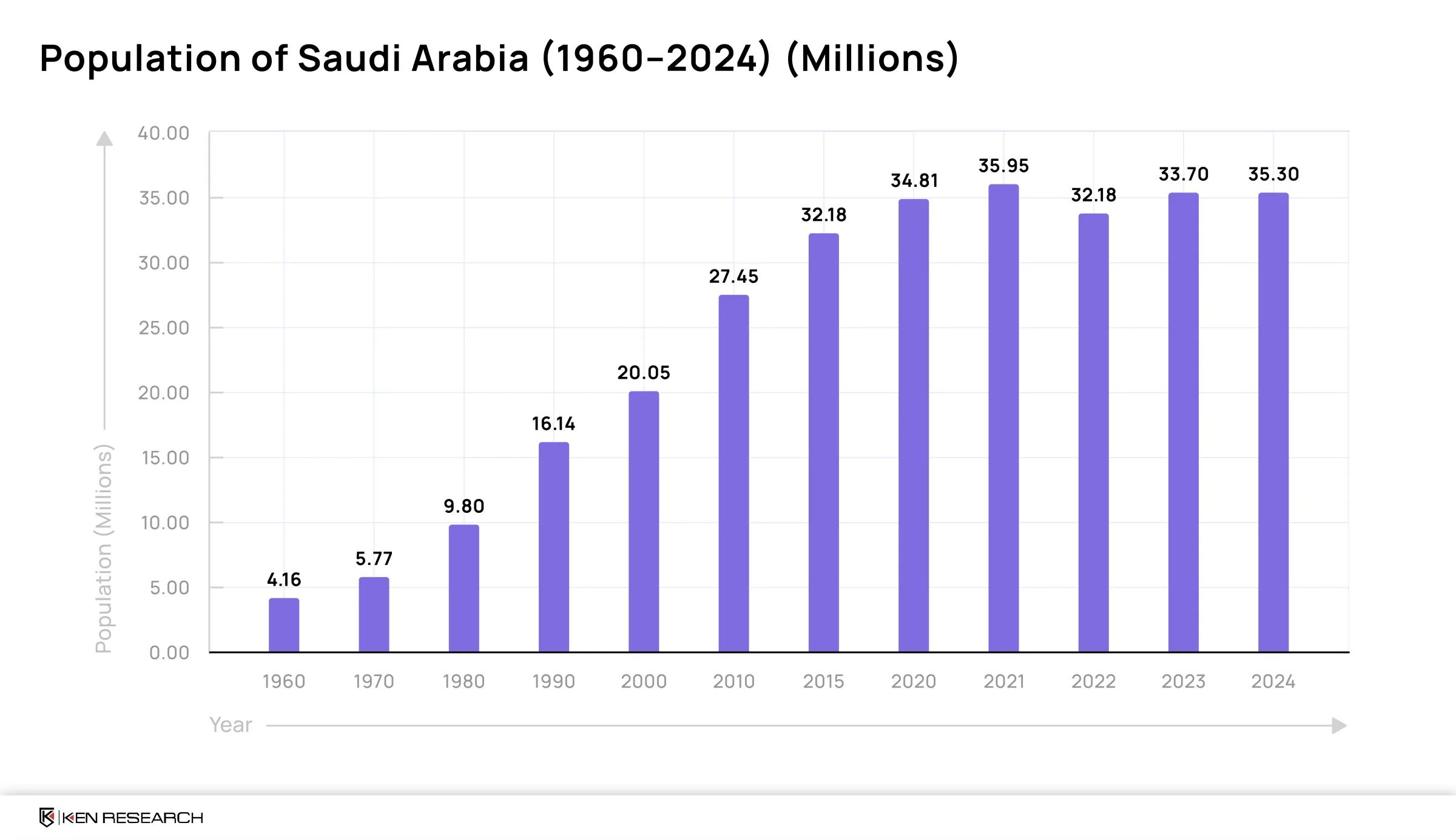
The long-term demand case for retail pharma in Saudi Arabia remains compelling, supported by both population expansion and demographic diversification. KSA’s population reached 35.3 million by mid-2024, up 4.7% year on year, with non-Saudis accounting for 44.4% of the total population. That scale and mix matter commercially as a large expatriate base broadens demand for convenience-led pharmacy purchases, including OTC medicines, wellness products, and general-use therapies, while overall population growth lifts baseline pharmaceutical consumption across urban centres and high-density catchments.
At the same time, although Saudi Arabia remains a relatively young market, the age structure is gradually widening, creating a stronger foundation for recurring medicine demand over time as older cohorts increase within the population base. For retail pharmacy players, this creates a favourable demand mix where everyday health purchases are being reinforced by a slowly deepening chronic-care and age-linked consumption base.
With 1 in 5 People Affected by a Chronic Disease, Prescription Medicine Demand Remains Structurally Resilient
Chronic health conditions are becoming increasingly prevalent in Saudi Arabia, placing growing pressure on the healthcare systems and increasing the need for long-term disease management. According to the General Authority for Statistics’ 2024 Health Status Statistics, 18.95% of adults aged 15 and above report living with at least one chronic disease. The most commonly reported conditions among adults include:
- Diabetes - 9.1%
- Hypertension - 7.9%
- High cholesterol - 3.6%
- Cardiovascular diseases - 1.5%
- Cancer - 0.6%
The burden of chronic illness is also visible among younger populations, with 9.4% of children under the age of 15 reported to have at least one chronic condition, most notably asthma and allergies. The broader health impact of these conditions is reflected in mortality trends, where cardiovascular diseases accounted for around 28% of non-communicable disease deaths in Saudi Arabia in 2023.
As per Ken Research’s findings, the diabetes rate increased from 15.8% in 2018 to 20.2% in 2023, while the obesity rate increased from 37.7% in 2018 to 40.6% in 2023, reflecting the growing prevalence of metabolic disorders in the country. The National Heart Centre also reported 30% adults aged 18 and above to be at risk of developing cardiovascular disease associated with smoking and other lifestyle patterns, potentially enhancing the burden on the Kingdom’s healthcare systems. Together, these figures are likely to support an expanding prescription base, ensuring volume resilience for retail pharmacies in Saudi Arabia.
Get a sharper view of KSA’s Retail Pharmacy market dynamics, regulatory structure, and competitive landscape – Download Ken Research’s free sample report.
Wellness-Led Consumption Is Reshaping Pharmacy Baskets in Saudi Arabia
Beyond clinical needs, lifestyle and societal shifts are increasingly reshaping pharmacy baskets in Saudi Arabia. Rising disposable incomes, stronger post-COVID health consciousness, and expanding access to e-commerce channels are shifting consumption patterns beyond core medicines and into broader consumer health categories.
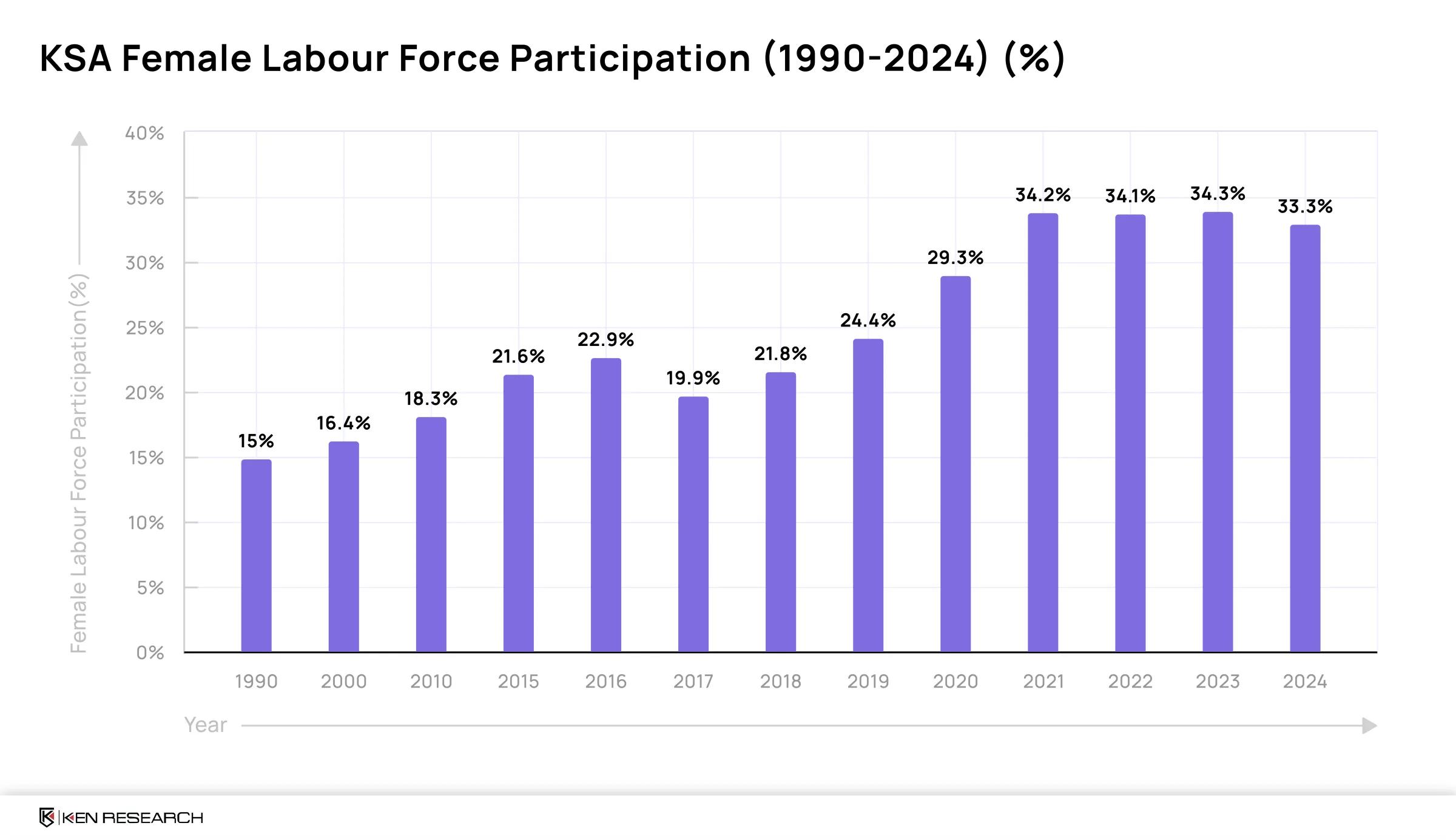
At the same time, increasing participation of women in the workforce is strengthening demand for personal care, baby care, cosmetics, and wellness products, making these segments more central to pharmacy-led retail growth. This is visible in adjacent categories as well: the KSA baby care products market, valued at USD 3.66 billion, is being driven by rising norms around infant care and hygiene, Western influence, and growing expenditure. In parallel, KSA’s USD 7 billion health and wellness retail market is benefiting from rapidly evolving buyer behaviour.
Post-COVID health awareness in Saudi Arabia has contributed to a stronger interest in supplements and preventive care categories. Demand for protein powders, vitamins, omegas, and broader preventive health products has strengthened, reflected in the Kingdom’s dietary supplements market, valued at approximately USD 4.5 billion in 2024.
Taken together, these trends suggest that growth in Saudi retail pharmacy is being shaped not only by treatment-driven demand but also by a more proactive, lifestyle-led, and wellness-oriented consumption pattern.
How is Saudi Arabia’s 30 Million Pilgrim Target Expanding Incidental Demand for Retail Pharmacies?
Tourism is creating a meaningful secondary demand tailwind for retail pharmacy in Saudi Arabia. Higher visitor volumes and longer lengths of stay are supporting incidental pharmacy spending across OTC medicines, supplements, hydration products, and personal care, particularly in major urban centres, transit corridors, and religious travel hubs.
The scale is already significant – Saudi Arabia recorded 29.73 million inbound tourists, 560.23 million inbound overnight stays, and an average inbound stay of 18.85 nights, while domestic tourism reached 86.16 million tourists, 538.62 million overnight stays, and an average stay of 6.25 nights. This sustained visitor presence increases the likelihood of need-based and convenience-led pharmacy purchases during travel.
Looking ahead, the demand effect could deepen further as tourism and pilgrimage activity expand, with plans to accommodate over 30 million Umrah pilgrims by 2030, creating additional spillover potential for pharmacy retail through travel-linked and incidental consumption.
Vision 2030’s 80-Year Life Expectancy Ambition and 35% Private Sector Participation Target Are Strengthening Retail Pharmacy Growth in Saudi Arabia
Saudi Arabia’s growing government focus on healthcare under Vision 2030 is creating a supportive long-term backdrop for retail pharmacy. The Kingdom’s health agenda is centred on raising life expectancy from 74 years to 80 years by 2030, while the Health Sector Transformation Program is focused on improving access to healthcare services, strengthening prevention, enhancing quality and efficiency, and expanding digital health delivery.
In parallel, Vision-linked healthcare transformation materials indicate a push to increase private-sector participation in healthcare spending from around 25% to 35%, reinforcing the role of private operators in service delivery. Together, these priorities support a healthcare model that depends more heavily on preventive care, chronic disease management, continuity of treatment, and easier patient access to medicines. Taken together, these targets are creating a supportive long-term environment for retail pharmacy growth in Saudi Arabia.
Saudi Arabia Online Pharmacy Market: Regulations, Compliance, and Operating Reality
Saudi Arabia’s online pharmacy market is expanding, but the channel is developing as a regulated extension of licensed pharmacy retail rather than as an open digital marketplace. Under Vision 2030 and the Health Sector Transformation Program, the Kingdom has accelerated the adoption of digital health, telemedicine, and e-prescriptions. In parallel, the Ministry of Health’s Wasfaty model has helped formalise the prescription-to-dispensation pathway through accredited community pharmacies and home delivery.
Based on Ken Research’s findings, prescriptions dispensed through Wasfaty increased from 18,000 in 2018 to almost 92 million by the end of 2023. Over the same period, the platform served 13 million beneficiaries at an 86% response rate. This indicates meaningful scale in digital prescription fulfilment, but not a relaxation of regulatory control.
The core rules governing online pharmacy sales remain stringent:
- Online medicine sales must be tied to a licensed pharmaceutical establishment
- Controlled medications remain prohibited from online sale
- Pharmacies cannot employ unlicensed pharmacists or pharmacy technicians
- Only SFDA-registered products can be sold
- Pharmacy sales systems must be connected to the Authority’s electronic tracking system
- Prescription medicines remain especially controlled, with valid prescriptions mandatory
- Public-facing advertising for prescription medicines is restricted to scientific channels directed at healthcare professionals, while non-prescription products may only be promoted with SFDA approval
Taken together, these conditions show that the online pharmacy market in KSA is favourable from an access and channel development perspective, but remains tightly regulated in terms of commercial freedom. As a result, scale advantages are likely to accrue to compliant pharmacy operators that can combine physical store networks, Wasfaty integration, approved product portfolios, and delivery capability within Saudi Arabia’s pharmaceutical regulatory framework.
Why Foreign Investors Need a Cautious Entry Strategy in the KSA Retail Pharmacy Market?
Leading Incumbents Like Nahdi Are Consolidating Market Share in KSA’s Retail Pharmacy
Saudi Arabia comprises more than 10,000 pharmacies, yet market share concentration continues to favour organised chains. Established players such as Nahdi Medical Company, Al Dawaa Medical Services Company, and United Pharmaceuticals dominate the market through scale, centralised procurement, brand strength, and loyalty programs.
Nahdi has emerged as one of the most entrenched competitors in the KSA retail pharmacy market, and that level of concentration is something foreign investors must weigh carefully before expansion. Nahdi operates over 1,181 pharmacies across more than 140 cities and villages, reaching 97% of Saudi Arabia’s population and handling around 100 million guest transactions annually.
The company generated USD 2.52 billion in revenue, up 8.4% year on year, with its core pharmacy retail business growing 6.5% in FY2024. It reported USD 425.3 million in EBITDA, USD 232.8 million in operating profit, and USD 218.9 million in net profit, while maintaining a 37.4% gross margin and a 16.9% EBITDA margin. In addition, its Private Label and Differentiated Brands contributed around 13% of revenue and exceeded USD 266.7 million in sales in 2024. Together, these figures signal how players such as Nahdi have consolidated competitive strength through network density, scale economics, customer access, and margin resilience, raising the bar for any new entrant evaluating KSA despite Saudi Arabia’s broader efforts to attract foreign investment.
Nahdi’s efficiency advantage is also being reinforced through IMDAD, its 250,000 m2 smart distribution centre, which has become a critical part of how the company protects service levels and converts scale into execution. The company operated 3 smart distribution centres in 2024 and delivered more than 222 million units during the year. This supply-chain backbone supported a wider omnichannel platform in which digital channels generated over 200 million sessions, online sales reached USD 533.3 million, and online channels accounted for 22% of total revenue.
For foreign investors, the implication is clear - entry into KSA is not only about regulatory openness, but about competing against incumbents that already operate at a national scale with integrated logistics, fast replenishment, and fulfilment capabilities that are difficult and capital-intensive to replicate.
Assess the real entry potential of Saudi Arabia’s retail pharmacy market through our Market Entry Strategy - Talk to our experts.
The Compliance Heavy Architecture of Retail Pharmacies in KSA
Retail pharmacy in Saudi Arabia operates within a tightly regulated and compliance-intensive framework, and for foreign investors, this burden is likely to be even more pronounced. From licensing and ownership approvals to pricing, packaging, and operational oversight, pharmacy operators are required to work within a highly structured regulatory environment that demands coordination across multiple authorities and adherence to strict pharmaceutical governance standards.
In practical terms, foreign investors are expected to secure a commerce-related foreign investment license from the Ministry of Investment of Saudi Arabia (MISA), following registration with the Ministry of Commerce (MOCI) and issuance of the required Commercial Registration (CR) documents. Once registered with the Saudi Food and Drug Authority (SFDA), operators must comply with the Authority’s requirements on pricing and packaging, in addition to broader pharmaceutical controls. The entry threshold is further elevated by capital obligations, with companies required to invest USD 8 million upfront and commit an additional USD 53.3 million over the first 5 years from obtaining the license. Taken together, licensing, track-and-trace requirements, product compliance, and operational controls make KSA retail pharmacy a market where regulatory readiness is not a peripheral requirement, but a core condition for sustainable entry and scale.
Mandatory Saudization Targets to Shape Workforce Costs and Expansion Economics
Saudi Arabia’s pharmacy-sector Saudization policy requires localisation of 35% in community pharmacies and medical complexes, 65% in hospital pharmacy activities, and 55% in other pharmacy-related activities. For foreign investors, this is not just a peripheral labour rule – it is a direct market-entry variable that shapes staffing feasibility, expansion timing, and cost structure across pharmacy formats.
While this can affect foreign investors, the important nuance that is often overlooked is that these thresholds do not apply to total company headcount; they apply only to targeted pharmacy professions, and only in establishments employing five or more workers in pharmacy professions.
The rule also sets a USD 1,866.67 minimum monthly wage for a Saudi employee to be counted toward the localisation ratio, which means compliance depends on hiring appropriately classified pharmacy talent at qualifying compensation, not simply adding Saudi nationals anywhere in the business.
For foreign players, this makes Saudization a real execution filter for foreign entrants, because it cannot be solved through back-office hiring and instead directly affects the availability, cost, and scalability of licensed pharmacy talent needed to build and run operations in KSA.
Margins Capped at 10% for Products Above SAR 200: How Regulatory Controls Are Compressing Pharmacy Margins?
Structural pressure on Rx economics remains a defining feature of the KSA retail pharmacy market. Prescription drugs may continue to anchor pharmacy traffic and healthcare relevance, but Saudi Arabia’s regulated pricing architecture tightly constrains their profit pool. Pharmaceutical and herbal products are priced based on the factory price or export price to the Kingdom, in the currency of the country of origin or in another currency designated by the Authority.
The price tier caps pharmacy margins at:
- 20% for products priced at SAR 50 or below,
- 15% for products priced above SAR 50 up to SAR 200,
- and 10% for products priced above SAR 200.
The pressure is even more pronounced because these caps sit within a broader controlled channel structure that also fixes warehouse margins at 15%, 10%, and 10% across the same bands, limiting value capture across the supply chain. In effect, as medicine prices rise, the percentage margin falls, compressing profitability on higher-ticket Rx products and making scale, mix optimisation, and operating efficiency far more critical than pricing power for pharmacy operators in KSA.
Key Considerations for Foreign Investors Entering Saudi Arabia’s Retail Pharmacy Market
Entry Is Liberalised, Permanence Is Conditional
Foreign ownership rules in Saudi retail pharmacy are currently supportive, with 100% foreign ownership permitted under Decree 125. That said, the present framework is transitional rather than permanent, as the decree remains valid only until the Integrated Health Law takes effect. This creates a meaningful layer of regulatory-shift risk for prospective entrants. While the market is open today, investors still face uncertainty around how future legislation may alter ownership rules, supervisory responsibilities, licensing conditions, and broader operating requirements.
To identify the most defensible path to growth in this market, explore our Go-to-Market Strategy support – Book a call with our experts.
Compliance is Required Across the Value Chain
For foreign investors, compliance is central to commercial viability in Saudi Arabia’s retail pharmacy market. Regulation extends across the value chain – only SFDA-registered products can be traded or sold, pharmacy sales systems must be connected to the SFDA’s electronic tracking system, and the Authority retains the right to review and re-price pharmaceutical and herbal products under its pricing framework.
At the same time, prescription margins remain structurally capped, repricing is built into the system, and Saudization thresholds have a direct bearing on scaling economics. As a result, profitability is regulated, expansion is compliance-dependent, and ownership frameworks may still evolve.
The opportunity in KSA retail pharmacy remains attractive, but it is no longer a straightforward store-expansion play. Growth will no longer be defined by simply opening outlets, but by the ability to compete effectively within an increasingly coordinated, digitised, and compliance-driven healthcare ecosystem.
Wellness-Led Margin Recovery Is Emerging, but Adaptability Will Decide Who Wins Sustainably
In response to squeezed prescription margins, pharmacies in Saudi Arabia are actively expanding into higher-margin wellness portfolios. According to Ken Research’s analysis, wellness products recorded the fastest growth from 2018 to 2023, with health supplements, nutraceuticals, and cosmetics increasingly offsetting reduced Rx profitability. This is becoming a clear portfolio shift rather than a side category for players.
The pattern is visible in leading chains as well - Nahdi, operating more than 1,000 outlets across the Kingdom, derived over 13% of its total revenue from wellness products, highlighting the stronger margin structure of non-Rx categories.
In parallel, Pharmacy chains continue to dominate the market, while omnichannel models are rising as players invest in enhancing efficiency across online pharmacy operations.
For investors, the market dynamic is that the future advantage will depend on combining physical scale, higher-margin wellness mix, and efficient omnichannel execution, while pure-play online expansion without compliant licensing carries meaningful regulatory risk.
Related tags
Pharmacy Stores
Pharmaceuticals
Healthcare
Get started
We've helped companies around the world future-proof
their businesses - and we can do the same for you.