Saudi Arabia Perfume Market Is Exploding: How 8x Higher Consumption Is Building a SAR 20 million Luxury Engine?
Ken Research
January 27, 2026 - 8 min read

January 27, 2026
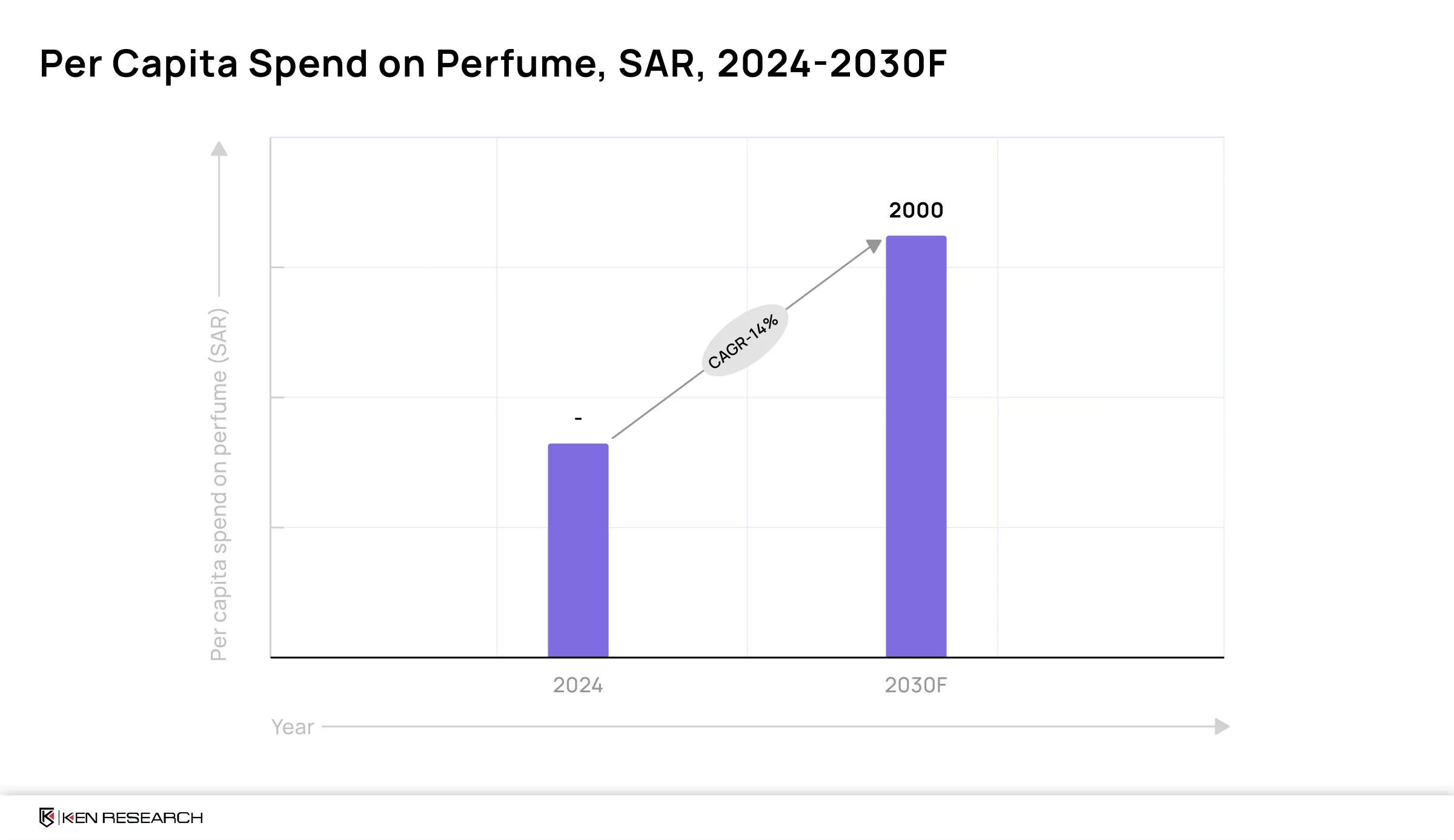
by Khushi GuptaSaudi Arabia’s perfume market is undergoing a shift towards luxury and niche fragrances, anchored by rising per-capita spending, which is projected to rise to around SAR 1,950-2,000 by 2030. This spending momentum is supported by higher disposable incomes and an increasingly aspirational and brand-aware population.
The market remains anchored by the dominance of legacy and heritage brands, such as Arabian Oud, Abdul Samad Al Qurashi, and Swiss Arabian, which command decades of cultural trust and deep emotional resonance. Simultaneously, premium international and niche brands, including Tom Ford, Maison Francis Kurkdjian, Byredo, and Jo Malone, are expanding their footprint, broadening premium choice sets for affluent consumers and urban youth.
Saudi Arabia’s Perfume Consumption Is Over 8 Times Higher Than Europe
Perfume consumption in Saudi Arabia significantly exceeds global benchmarks, supported by high purchase frequency, cultural relevance, and strong engagement across genders.
The following points highlight how purchase frequency, per capita usage, and gender-based behaviour shape Saudi Arabia’s exceptionally high perfume consumption levels:
- Consumers in GCC countries purchase perfumes roughly once every two months, compared to once every six months in Western countries, indicating structurally higher repeat demand.
- Annual consumption rate of perfumes in the KSA stands at approximately 2.5 litres, more than eight times per capita compared to consumption in Europe.
- Females are the most active buyers, with nearly 86% purchasing more than six perfumes annually, reflecting strong gifting and personal usage patterns, while males account for only around 28%.
- Frequent usage across daily wear, social occasions, and gifting continues to reinforce volume-driven growth alongside premiumisation.
Overall, Saudi Arabia’s perfume consumption profile is structurally stronger than global peers, underpinned by cultural norms, higher usage intensity, and sustained multi-purchase behaviour across consumer segments.
Saudi Arabia’s Perfume Market Is Set to More Than Double in Value by 2032
Saudi Arabia’s perfume industry demonstrates resilient growth momentum, rebounding strongly from pandemic disruptions and entering a structurally higher growth phase driven by premium demand and channel expansion.
The following points summarise historical performance, recovery dynamics, and the medium-term revenue growth outlook for the KSA perfume market:
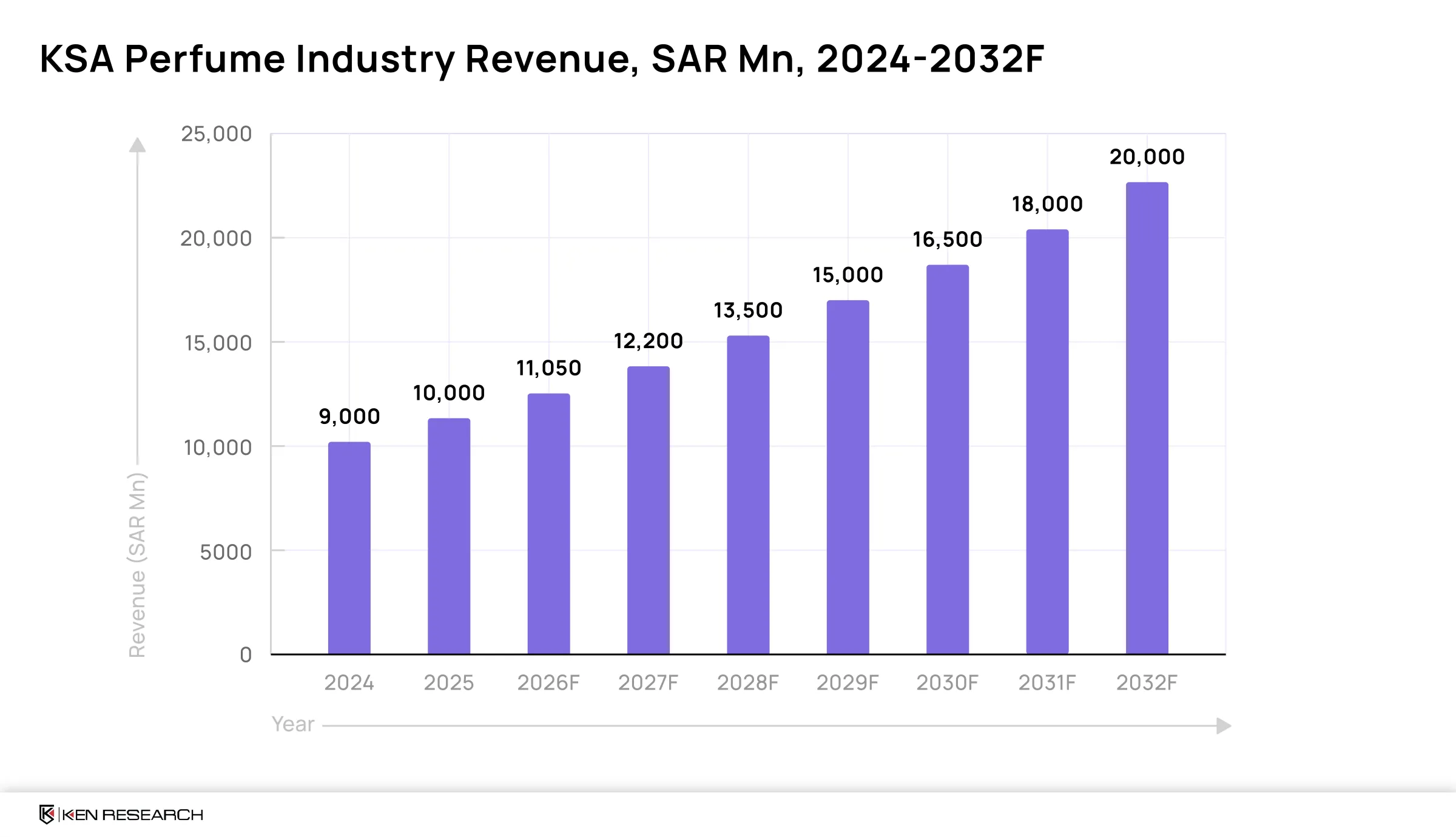
- The market reached approximately SAR 9 million in 2024, marking the base year for accelerated future growth.
- By 2032, total market revenue is forecasted to hit over SAR 20,000 million, more than doubling the current market size.
- This upward trajectory is fueled by rising premiumisation, the expansion of online channels, and high demand during festive and gifting occasions.
- Unit volumes are also expected to rise consistently, indicating growth is supported by both higher consumption intensity and premium pricing.
KSA's passion for fine fragrances remains strong, solidifying the region's position as a powerhouse for high-value revenue growth.
Premium Innovation Is Rewriting the Competitive Landscape of Saudi Arabia’s Perfume Market
The Saudi Arabian perfume market has evolved from heritage-led consumption to a digitally enabled, premium-driven industry, shaped by shifting consumer behaviour and brand strategies.
This section outlines the key phases defining the market’s structural evolution, consumer base, product mix, and competitive dynamics:
- The emerging phase (pre-2010s) was rooted in cultural and religious usage, dominated by offline retail with a major focus on oil-based attars, oud and bakhoor with minimal packaging innovation and customisation.
- During the growing phase (2010s to mid-2020s), rising social media influence and youth-driven gifting demand accelerated premium perfume adoption and international brand entry. It includes alcohol-based perfumes, mists and layering formats along with premium packaging and gift sets.
- The market transitioned from family-run legacy players to a mix of global brands, niche importers, and digitally native fragrance labels targeting younger consumers.
- From the mid-2020s and beyond, the market is entering a maturity phase, marked by personalised kits, clean-label and vegan fragrances, with omnichannel dominance. HNWIs and collectors drive luxury demand.
Overall, the KSA perfume market’s business cycle reflects a clear shift toward premiumisation, innovation, and global integration, positioning it as one of the most structurally advanced fragrance markets in the Middle East.
Attars and Modern Sprays Are Shaping Saudi Arabia’s Perfume Mix
The Saudi perfume market is highly skewed toward alcoholic perfumes and spray formats, reflecting consumer preference for familiarity, performance, and ease of use across daily and gifting occasions.
This section outlines how product types and format preferences shape market structure and growth dynamics in KSA:
- Alcoholic perfumes dominate the market with around 75% share in 2024, supported by strong brand recall, wide availability, and long-lasting fragrance performance.
- Attar is the fastest-growing product segment, driven by rising demand for alcohol-free and natural fragrances among younger and religious consumers.
- Oud concentrates continue to gain traction as a luxury segment, fueled by gifting demand and preference for premium, intense aromas.
- Spray formats account for over 80% of market share, benefiting from convenience, hygienic application, and dominance across both mass and luxury perfume lines.
- Roll-on formats are expanding, particularly within attars and concentrated oils, due to portability and alignment with traditional application styles.
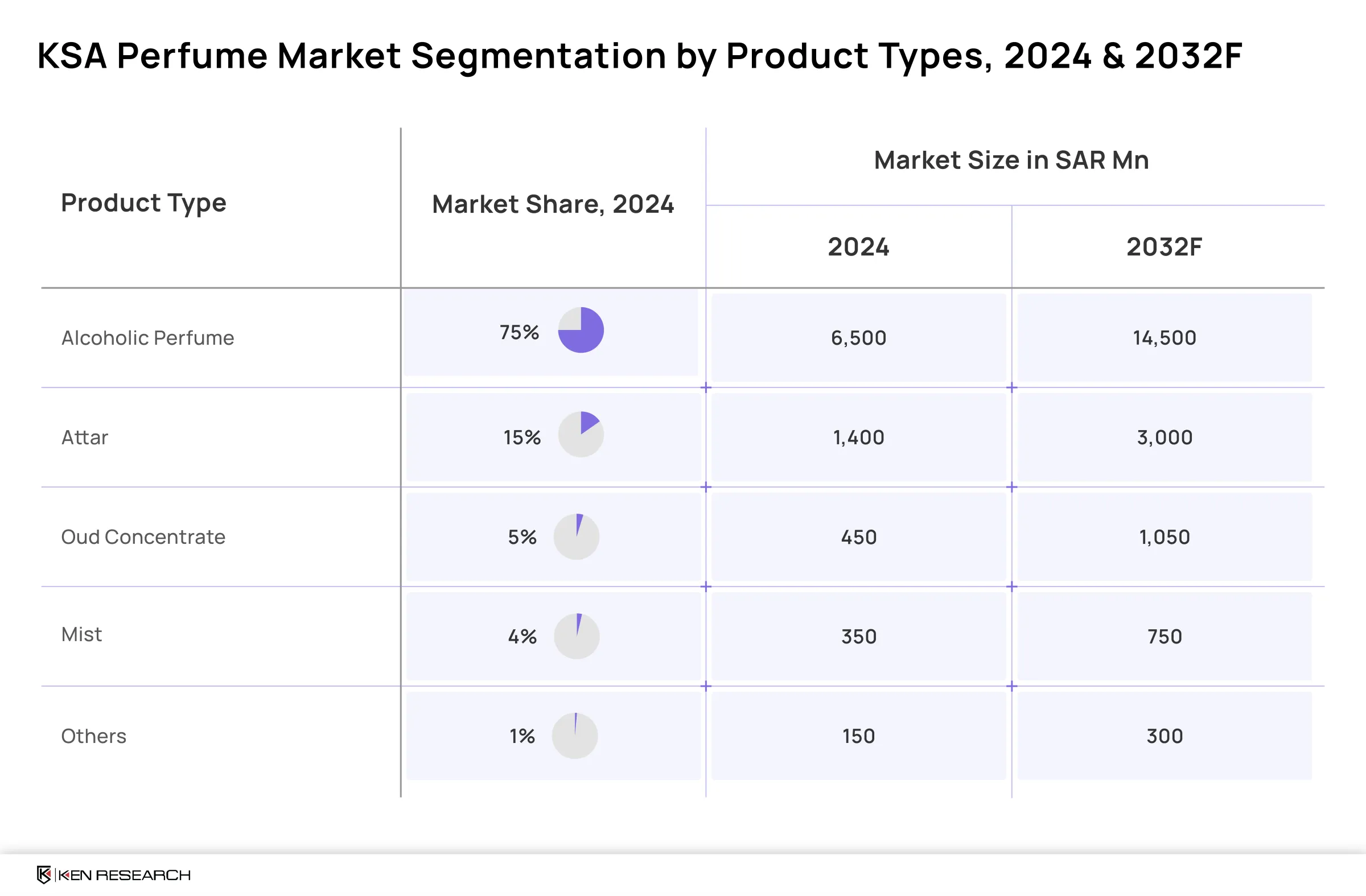
Overall, the KSA perfume market combines scale-led dominance of alcoholic sprays with selective premium growth in attars and oud concentrates, reinforcing a balanced mix of mass familiarity and high-value niche expansion.
Why Premium Pricing Matters More Than Volume in the KSA Perfume Market?
The Saudi perfume market is value-led, with premium-priced products accounting for the bulk of market revenue despite mass fragrances dominating unit sales.
This section explains how price bands influence consumption patterns, brand positioning, and value creation in the KSA perfume market:
- Mass-priced perfumes (below SAR 500) lead in unit volumes due to frequent usage, casual gifting, and accessibility across hypermarkets, pharmacies, and local retailers.
- Premium perfumes (SAR 500-1,500) form the core of the market, contributing over 80% of total value, supported by strong perceived quality, brand equity, and gifting demand.
- Premium products are widely purchased through malls and online platforms, benefiting from curated collections and seasonal promotions.
- Luxury perfumes (above SAR 1,500) represent the smallest share by volume but deliver significant high value per unit, driven by affluent individuals, tourists, exclusivity and craftsmanship. It is the fastest-growing segment.
Overall, the KSA perfume market’s price segmentation underscores a clear shift toward premium and luxury offerings, reinforcing high value realisation despite mass-market volume dominance.
Local Arabian Brands Dominate Volumes While Global Players Target Premium Niches
The Saudi perfume market remains highly fragmented, characterised by a large base of local manufacturers alongside a selective presence of global luxury brands.
This section summarises the market structure, competitive intensity, and the key parameters shaping competition in the KSA perfume industry:
- The market comprises over 1,200 local, Arabic, and regional perfume manufacturers, alongside an estimated 50-100 international brands.
- Local Arabian brands dominate volumes, led by players such as Arabian Oud and Abdul Samad Al Qurashi, supported by strong demand for oud, musk, and amber-based fragrances.
- International brands, including Dior, Tom Ford, Chanel, and YSL, focus on affluent urban consumers, targeting premium and elite customer segments.
- Increasing local production of Saudi perfumes is lowering reliance on imports and international tie-ups, creating opportunities for new domestic entrants and investors.
- Competition is driven by brand heritage, fragrance uniqueness, pricing perception, distribution reach, customisation capability, and packaging innovation.
Overall, the KSA perfume market’s fragmented structure encourages continuous innovation and brand differentiation, while gradual consolidation is expected as premium and luxury players scale operations and expand regional footprints.
Arabian Oud and Abdul Samad Al Qurashi Anchor Revenue Leadership in Saudi Arabia
The Saudi perfume market features a long tail of players, with a few dominant regional brands accounting for a meaningful share of industry revenues amid overall fragmentation.
This section highlights the revenue concentration, leading players, and competitive balance within the KSA perfume market in 2024:
- Arabian Oud and Abdul Samad Al Qurashi together command over 21% of total market revenue, underscoring the strength of heritage-led Arabian fragrance brands.
- Other prominent regional players, including Amouage, Swiss Arabian, Ajmal, and Rasasi, collectively reinforce regional dominance across premium and luxury price bands.
- International brands such as Dior, Tom Ford, and Le Labo maintain a focused presence, primarily targeting affluent urban consumers within premium and luxury segments.
- The top manufacturers account for roughly 42% of total revenues, while the remaining around 58% is distributed across a large base of smaller local and niche players.
- This fragmented tail reflects low entry barriers in artisanal and local perfumery, alongside strong consumer openness to new and differentiated fragrance offerings.
Overall, the KSA perfume market balances strong leadership by a few established regional brands with a broad, competitive base of smaller players, sustaining high innovation intensity and gradual, selective consolidation.
Conclusion
Saudi Arabia’s perfume market is outperforming its global peers, supported by exceptionally high consumption intensity, accelerating premiumisation, and a strong cultural affinity for fragrances. With annual per capita consumption at around 2.5 litres, over eight times higher than in Europe and per capita spend projected to reach SAR 1,950-2,000 by 2030. Revenues are expected to reach over SAR 20,000 million by 2032. Overall, the Saudi Arabian perfume market is transitioning into a mature, premium-driven ecosystem with strong visibility for sustained long-term growth.
Ken Research highlights that entering the Saudi Arabia perfume market requires a sharply localised, performance-driven strategy. Despite mass products leading volumes, premium fragrances already account for over 80% of total market value, while the luxury segment is the fastest-growing price band. New entrants can reduce risk by starting with UAE-based OEM manufacturing while gradually localising packaging and sourcing. Personalisation, customisation, and strong visual presentation further enhance perceived value, making them critical levers for differentiation and scalable growth in the KSA perfume market.
Related tags
Cosmetics and Personal Care
Consumer Products and Retail
Get started
We've helped companies around the world future-proof
their businesses - and we can do the same for you.