About the Report
Base Year 2024Listen to the audio summary
Europe Alfalfa Market Overview
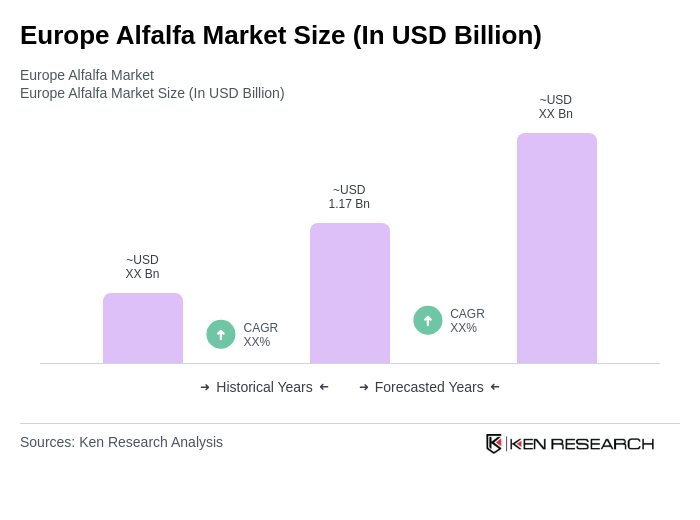
- The Europe Alfalfa Market is valued at USD 1.17 billion, based on a five-year historical analysis. This growth is primarily driven by the increasing demand for high-protein animal feed, especially in dairy and meat sectors, as well as the rising awareness of the nutritional benefits of alfalfa among livestock producers. Improved harvesting technologies and sustainable farming practices further support market expansion, with alfalfa’s nitrogen-fixing properties enhancing soil health and reducing synthetic fertilizer use .
- Countries such as France, Spain, Germany, and Italy dominate the market due to their extensive agricultural practices and favorable climatic conditions for alfalfa cultivation. These nations have well-established dairy and meat industries, which significantly contribute to the high demand for alfalfa as a feed source. Italy, in particular, has seen substantial government support for sustainable farming and dairy modernization, further boosting alfalfa production and consumption .
- The European Union’s Common Agricultural Policy (CAP) 2023–2027, issued by the European Commission, mandates sustainable agricultural practices, including the use of alfalfa as a key component in animal feed. This regulation encourages farmers to adopt environmentally friendly methods, such as crop rotation with nitrogen-fixing plants like alfalfa, and sets compliance requirements for eco-scheme subsidies and irrigation system improvements .
Europe Alfalfa Market Segmentation
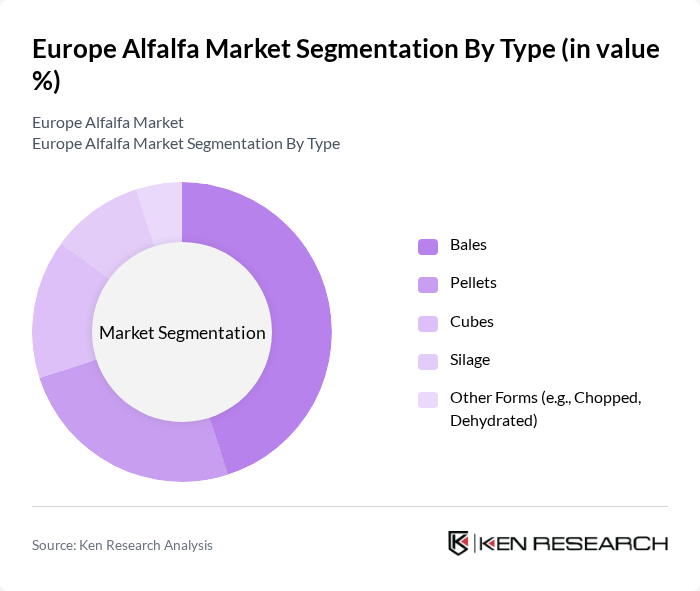
By Type:The market is segmented into bales, pellets, cubes, silage, and other forms such as chopped and dehydrated alfalfa. Bales remain the most popular due to their ease of handling and storage, making them a preferred choice for farmers. Pellets and cubes are gaining traction for their convenience and high nutritional value, while silage is valued for its fermentation benefits. The demand for other forms is increasing as producers seek diverse feeding options .
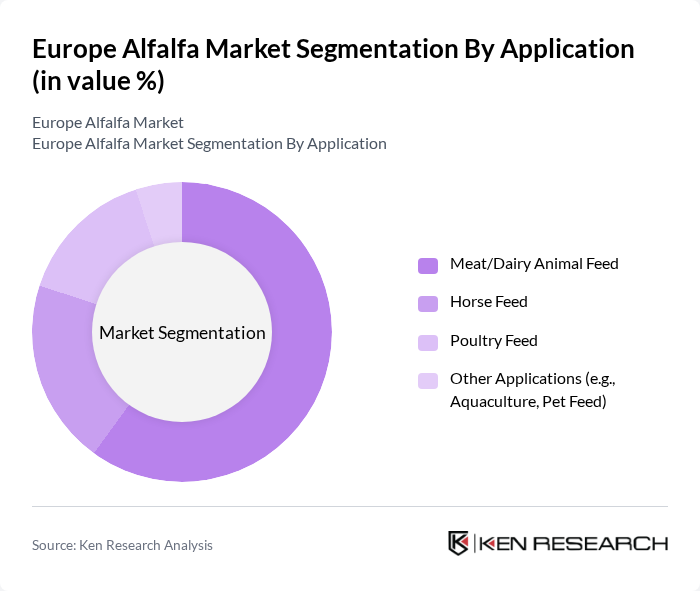
By Application:The applications of alfalfa in the market include meat/dairy animal feed, horse feed, poultry feed, and other applications such as aquaculture and pet feed. The meat/dairy animal feed segment holds the largest share, driven by the high nutritional requirements of livestock, particularly in dairy production. Horse feed is significant due to alfalfa’s high fiber content, essential for equine health. The poultry feed segment is expanding as producers seek high-quality feed options to enhance poultry growth and egg production .
Europe Alfalfa Market Competitive Landscape
The Europe Alfalfa Market is characterized by a dynamic mix of regional and international players. Leading participants such as Al Dahra Agriculture, Grupo Osés, AGROPECUARIA LA BAÑEZA S.A., Gruppo Carli S.p.A., Sarl Promodis, Dehydration Lucerne de la Mancha S.A. (DELMANSA), Green Prairie International, Eckenberg Pflanzenzucht GmbH, DLF Seeds A/S, Barenbrug Group, OOO "Agro-Alliance", S.C. AGRONOM S.R.L., S.A.T. Alfalfa Monegros, Luzerne Recherche et Développement (LRD), S.A.T. Alfalfa de la Loma contribute to innovation, geographic expansion, and service delivery in this space.
Europe Alfalfa Market Industry Analysis
Growth Drivers
- Increasing Demand for Livestock Feed:The European livestock sector is projected to consume approximately 30 million tons of alfalfa annually in future, driven by a growing population and rising meat consumption. The European Commission reported that meat consumption is expected to increase by 1.5% annually, leading to higher demand for protein-rich feed. This trend is particularly evident in countries like Germany and France, where livestock farming is a significant economic activity, further boosting alfalfa demand.
- Rising Awareness of Nutritional Benefits:Alfalfa is recognized for its high protein content, with an average of 15-20% protein per ton, making it an essential component of livestock diets. The increasing awareness among farmers about the nutritional advantages of alfalfa is driving its adoption. Reports indicate that livestock fed alfalfa show improved growth rates and milk production, with dairy cows producing up to 10% more milk when alfalfa is included in their diet, thus enhancing its market appeal.
- Expansion of Organic Farming Practices:The organic farming sector in Europe is experiencing rapid growth, with organic farmland increasing by approximately 5% annually, reaching over 15.9 million hectares in future. Alfalfa is a favored crop in organic farming due to its natural pest resistance and soil health benefits. The European Union's commitment to sustainable agriculture, including a target of 25% of agricultural land being organic by 2030, is further propelling the demand for organic alfalfa, creating a robust market opportunity.
Market Challenges
- Fluctuating Weather Conditions:Weather variability poses a significant challenge to alfalfa production in Europe, with droughts and excessive rainfall affecting yields. For instance, the recent drought in Southern Europe led to a 20% reduction in alfalfa yields, impacting supply chains. Farmers are increasingly facing unpredictable weather patterns, which can lead to crop failures and financial losses, thereby threatening the stability of the alfalfa market in the region.
- High Production Costs:The cost of producing alfalfa has risen significantly, with average production costs reaching approximately €200 per ton in future. Factors contributing to these costs include rising labor expenses, fuel prices, and the cost of fertilizers. Additionally, the need for advanced irrigation systems to combat drought conditions further escalates expenses. These high production costs can deter new entrants and challenge existing producers, limiting market growth potential.
Europe Alfalfa Market Future Outlook
The future of the Europe alfalfa market appears promising, driven by increasing consumer demand for sustainable and nutritious livestock feed. As the EU continues to implement policies supporting organic farming and sustainable practices, the market is likely to see a shift towards more environmentally friendly production methods. Additionally, technological advancements in cultivation and harvesting are expected to enhance productivity and reduce costs, making alfalfa a more attractive option for farmers across the region.
Market Opportunities
- Export Potential to Non-European Markets:With global demand for alfalfa projected to rise, European producers have significant export opportunities, particularly in Asia and the Middle East. Countries like China are increasing their imports of alfalfa, with a projected growth of 15% annually, creating a lucrative market for European exporters looking to expand their reach and profitability.
- Development of Value-Added Products:There is a growing trend towards the development of alfalfa-based health products, including supplements and organic feed. The market for alfalfa-based health products is expected to grow by 10% annually, driven by consumer interest in natural and organic options. This presents an opportunity for producers to diversify their offerings and tap into the health-conscious consumer segment.
Scope of the Report
| Segment | Sub-Segments |
|---|---|
| By Type | Bales Pellets Cubes Silage Other Forms (e.g., Chopped, Dehydrated) |
| By Application | Meat/Dairy Animal Feed Horse Feed Poultry Feed Other Applications (e.g., Aquaculture, Pet Feed) |
| By Distribution Channel | Direct Sales Wholesale Distributors Retail Outlets Online Sales Others |
| By Geography | Spain France Italy Germany United Kingdom Netherlands Belgium Sweden Poland Rest of Europe |
| By Quality Grade | Premium Grade Standard Grade Low Grade Others |
| By Packaging Type | Bales Bags Bulk Others |
| By Price Range | Low Price Medium Price High Price Others |
Key Target Audience
Investors and Venture Capitalist Firms
Government and Regulatory Bodies (e.g., European Food Safety Authority, European Commission)
Manufacturers and Producers
Distributors and Retailers
Livestock Feed Companies
Agri-tech Companies
Industry Associations (e.g., European Alfalfa Association)
Financial Institutions
Players Mentioned in the Report:
Al Dahra Agriculture
Grupo Oses
AGROPECUARIA LA BANEZA S.A.
Gruppo Carli S.p.A.
Sarl Promodis
Dehydration Lucerne de la Mancha S.A. (DELMANSA)
Green Prairie International
Eckenberg Pflanzenzucht GmbH
DLF Seeds A/S
Barenbrug Group
OOO "Agro-Alliance"
S.C. AGRONOM S.R.L.
S.A.T. Alfalfa Monegros
Luzerne Recherche et Developpement (LRD)
S.A.T. Alfalfa de la Loma
Table of Contents
Market Assessment Phase
1. Executive Summary and Approach
2. Europe Alfalfa Market Overview
2.1 Key Insights and Strategic Recommendations
2.2 Europe Alfalfa Market Overview
2.3 Definition and Scope
2.4 Evolution of Market Ecosystem
2.5 Timeline of Key Regulatory Milestones
2.6 Value Chain & Stakeholder Mapping
2.7 Business Cycle Analysis
2.8 Policy & Incentive Landscape
3. Europe Alfalfa Market Analysis
3.1 Growth Drivers
3.1.1 Increasing Demand for Livestock Feed
3.1.2 Rising Awareness of Nutritional Benefits
3.1.3 Expansion of Organic Farming Practices
3.1.4 Government Support for Sustainable Agriculture
3.2 Market Challenges
3.2.1 Fluctuating Weather Conditions
3.2.2 Competition from Other Forage Crops
3.2.3 High Production Costs
3.2.4 Regulatory Compliance Issues
3.3 Market Opportunities
3.3.1 Export Potential to Non-European Markets
3.3.2 Development of Value-Added Products
3.3.3 Technological Advancements in Cultivation
3.3.4 Growing Demand for Biofuels
3.4 Market Trends
3.4.1 Shift Towards Sustainable Farming Practices
3.4.2 Increasing Use of Precision Agriculture
3.4.3 Rise in Alfalfa-Based Health Products
3.4.4 Enhanced Focus on Soil Health and Fertility
3.5 Government Regulation
3.5.1 EU Agricultural Policy Reforms
3.5.2 Environmental Protection Regulations
3.5.3 Subsidies for Sustainable Farming
3.5.4 Quality Standards for Feed Products
4. SWOT Analysis
5. Stakeholder Analysis
6. Porter's Five Forces Analysis
7. Europe Alfalfa Market Market Size, 2019-2024
7.1 By Value
7.2 By Volume
7.3 By Average Selling Price
8. Europe Alfalfa Market Segmentation
8.1 By Type
8.1.1 Bales
8.1.2 Pellets
8.1.3 Cubes
8.1.4 Silage
8.1.5 Other Forms (e.g., Chopped, Dehydrated)
8.2 By Application
8.2.1 Meat/Dairy Animal Feed
8.2.2 Horse Feed
8.2.3 Poultry Feed
8.2.4 Other Applications (e.g., Aquaculture, Pet Feed)
8.3 By Distribution Channel
8.3.1 Direct Sales
8.3.2 Wholesale Distributors
8.3.3 Retail Outlets
8.3.4 Online Sales
8.3.5 Others
8.4 By Geography
8.4.1 Spain
8.4.2 France
8.4.3 Italy
8.4.4 Germany
8.4.5 United Kingdom
8.4.6 Netherlands
8.4.7 Belgium
8.4.8 Sweden
8.4.9 Poland
8.4.10 Rest of Europe
8.5 By Quality Grade
8.5.1 Premium Grade
8.5.2 Standard Grade
8.5.3 Low Grade
8.5.4 Others
8.6 By Packaging Type
8.6.1 Bales
8.6.2 Bags
8.6.3 Bulk
8.6.4 Others
8.7 By Price Range
8.7.1 Low Price
8.7.2 Medium Price
8.7.3 High Price
8.7.4 Others
9. Europe Alfalfa Market Competitive Analysis
9.1 Market Share of Key Players
9.2 KPIs for Cross Comparison of Key Players
9.2.1 Company Name
9.2.2 Group Size (Large, Medium, Small)
9.2.3 Annual Revenue (EUR/USD)
9.2.4 Production Volume (Metric Tons/Year)
9.2.5 Export Share (%)
9.2.6 Geographic Presence (Number of Countries/Regions)
9.2.7 Product Portfolio Breadth (Types/Grades Offered)
9.2.8 Certifications & Quality Standards (e.g., GMP+, ISO, Organic)
9.2.9 Sustainability Initiatives (e.g., Water Use, Carbon Footprint)
9.2.10 R&D/Innovation Investment (% of Revenue)
9.3 SWOT Analysis of Top Players
9.4 Pricing Analysis
9.5 Detailed Profile of Major Companies
9.5.1 Al Dahra Agriculture
9.5.2 Grupo Osés
9.5.3 AGROPECUARIA LA BAÑEZA S.A.
9.5.4 Gruppo Carli S.p.A.
9.5.5 Sarl Promodis
9.5.6 Dehydration Lucerne de la Mancha S.A. (DELMANSA)
9.5.7 Green Prairie International
9.5.8 Eckenberg Pflanzenzucht GmbH
9.5.9 DLF Seeds A/S
9.5.10 Barenbrug Group
9.5.11 OOO "Agro-Alliance"
9.5.12 S.C. AGRONOM S.R.L.
9.5.13 S.A.T. Alfalfa Monegros
9.5.14 Luzerne Recherche et Développement (LRD)
9.5.15 S.A.T. Alfalfa de la Loma
10. Europe Alfalfa Market End-User Analysis
10.1 Procurement Behavior of Key Ministries
10.1.1 Government Procurement Policies
10.1.2 Budget Allocations for Agriculture
10.1.3 Tendering Processes
10.1.4 Supplier Evaluation Criteria
10.2 Corporate Spend on Infrastructure & Energy
10.2.1 Investment in Sustainable Practices
10.2.2 Budget for Feed Procurement
10.2.3 Infrastructure Development Costs
10.3 Pain Point Analysis by End-User Category
10.3.1 Supply Chain Disruptions
10.3.2 Quality Assurance Issues
10.3.3 Cost Management Challenges
10.4 User Readiness for Adoption
10.4.1 Awareness of Alfalfa Benefits
10.4.2 Training and Support Needs
10.4.3 Financial Readiness
10.5 Post-Deployment ROI and Use Case Expansion
10.5.1 Measurement of ROI
10.5.2 Expansion into New Markets
10.5.3 Long-term Sustainability Goals
11. Europe Alfalfa Market Future Size, 2025-2030
11.1 By Value
11.2 By Volume
11.3 By Average Selling Price
Go-To-Market Strategy Phase
1. Whitespace Analysis + Business Model Canvas
1.1 Market Gaps Identification
1.2 Business Model Development
2. Marketing and Positioning Recommendations
2.1 Branding Strategies
2.2 Product USPs
3. Distribution Plan
3.1 Urban Retail Strategies
3.2 Rural NGO Tie-ups
4. Channel & Pricing Gaps
4.1 Underserved Routes
4.2 Pricing Bands
5. Unmet Demand & Latent Needs
5.1 Category Gaps
5.2 Consumer Segments
6. Customer Relationship
6.1 Loyalty Programs
6.2 After-sales Service
7. Value Proposition
7.1 Sustainability Initiatives
7.2 Integrated Supply Chains
8. Key Activities
8.1 Regulatory Compliance
8.2 Branding Efforts
8.3 Distribution Setup
9. Entry Strategy Evaluation
9.1 Domestic Market Entry Strategy
9.1.1 Product Mix
9.1.2 Pricing Band
9.1.3 Packaging Options
9.2 Export Entry Strategy
9.2.1 Target Countries
9.2.2 Compliance Roadmap
10. Entry Mode Assessment
10.1 Joint Ventures
10.2 Greenfield Investments
10.3 Mergers & Acquisitions
10.4 Distributor Model
11. Capital and Timeline Estimation
11.1 Capital Requirements
11.2 Timelines
12. Control vs Risk Trade-Off
12.1 Ownership vs Partnerships
13. Profitability Outlook
13.1 Breakeven Analysis
13.2 Long-term Sustainability
14. Potential Partner List
14.1 Distributors
14.2 Joint Ventures
14.3 Acquisition Targets
15. Execution Roadmap
15.1 Phased Plan for Market Entry
15.1.1 Market Setup
15.1.2 Market Entry
15.1.3 Growth Acceleration
15.1.4 Scale & Stabilize
15.2 Key Activities and Milestones
15.2.1 Activity Planning
15.2.2 Milestone Tracking
Research Methodology
Phase 1: Approach1
Desk Research
- Analysis of industry reports from agricultural associations and market research firms
- Review of government publications on alfalfa production and trade statistics
- Examination of academic journals and articles focusing on alfalfa cultivation and market trends
Primary Research
- Interviews with agronomists and crop specialists in the alfalfa sector
- Surveys with farmers and distributors to gather insights on production practices and market dynamics
- Focus groups with end-users such as livestock farmers to understand alfalfa consumption patterns
Validation & Triangulation
- Cross-validation of findings through multiple data sources including trade associations and government reports
- Triangulation of qualitative insights from interviews with quantitative data from surveys
- Sanity checks conducted through expert panel reviews to ensure data accuracy and relevance
Phase 2: Market Size Estimation1
Top-down Assessment
- Estimation of total alfalfa market size based on national agricultural output data
- Segmentation of market by product type (e.g., hay, pellets) and end-use applications (e.g., livestock feed)
- Incorporation of trends in export and import data to assess market dynamics
Bottom-up Modeling
- Collection of production volume data from leading alfalfa producers across Europe
- Cost analysis based on input prices, including seeds, fertilizers, and labor
- Estimation of market size through volume x price calculations for different alfalfa products
Forecasting & Scenario Analysis
- Multi-factor regression analysis incorporating variables such as livestock population growth and feed demand
- Scenario modeling based on potential changes in agricultural policies and climate impacts on crop yields
- Development of baseline, optimistic, and pessimistic forecasts through 2030
Phase 3: CATI Sample Composition1
| Scope Item/Segment | Sample Size | Target Respondent Profiles |
|---|---|---|
| Alfalfa Producers | 100 | Farm Owners, Agricultural Managers |
| Livestock Feed Distributors | 60 | Supply Chain Managers, Sales Representatives |
| Research Institutions | 40 | Agricultural Researchers, Policy Analysts |
| Exporters and Importers | 50 | Trade Managers, Logistics Coordinators |
| Livestock Farmers | 80 | Farm Operators, Livestock Nutritionists |
Frequently Asked Questions
What is the current value of the Europe Alfalfa Market?
The Europe Alfalfa Market is valued at approximately USD 1.17 billion, reflecting a five-year historical analysis. This growth is driven by the increasing demand for high-protein animal feed, particularly in the dairy and meat sectors.
Which countries dominate the Europe Alfalfa Market?
What are the main applications of alfalfa in Europe?
How does the European Union support alfalfa production?
Other Regional/Country Reports
Indonesia Alfalfa Market
Malaysia Alfalfa Market
APAC Alfalfa Market
SEA Alfalfa Market
Vietnam Alfalfa Market
Why Buy From Us?

What makes us stand out is that our consultants follow Robust, Refine and Result (RRR) methodology. Robust for clear definitions, approaches and sanity checking, Refine for differentiating respondents' facts and opinions, and Result for presenting data with story.

We have set a benchmark in the industry by offering our clients with syndicated and customized market research reports featuring coverage of entire market as well as meticulous research and analyst insights.

While we don't replace traditional research, we flip the method upside down. Our dual approach of Top Bottom & Bottom Top ensures quality deliverable by not just verifying company fundamentals but also looking at the sector and macroeconomic factors.

With one step in the future, our research team constantly tries to show you the bigger picture. We help with some of the tough questions you may encounter along the way: How is the industry positioned? Best marketing channel? KPI's of competitors? By aligning every element, we help maximize success.

Our report gives you instant access to the answers and sources that other companies might choose to hide. We elaborate each steps of research methodology we have used and showcase you the sample size to earn your trust.

If you need any support, we are here! We pride ourselves on universe strength, data quality, and quick, friendly, and professional service.