About the Report
Base Year 2024Listen to the audio summary
GCC Automotive Hydraulics System Market Overview
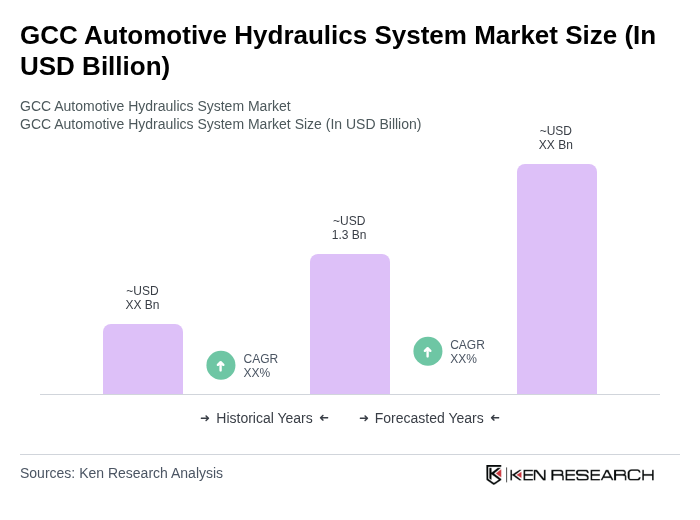
- The GCC Automotive Hydraulics System Market is valued at USD 1.3 billion, based on a five-year historical analysis. This growth is primarily driven by the increasing demand for advanced automotive technologies, particularly in safety and performance enhancements, including ABS, ESC, electronically controlled braking, and hydraulic power steering. The rising production and sales of vehicles in GCC markets, along with premium model mix and the gradual introduction of hybrid and electric vehicles that still use hydraulic braking and suspension components, has further fueled the market's expansion.
- Saudi Arabia and the United Arab Emirates are the dominant countries in the GCC Automotive Hydraulics System Market. Their dominance is attributed to relatively large light-vehicle and commercial-vehicle fleets, strong import and assembly activity, and significant investments in transport and logistics infrastructure that support higher demand for passenger cars, SUVs, trucks, and buses. Additionally, these countries host regional operations and distribution networks of major global Tier-1 suppliers for braking, steering, and suspension hydraulics, which strengthens their role as key hubs for the GCC aftermarket and OEM supply.
- GCC governments have progressively implemented more stringent regulations aimed at improving vehicle safety standards, including mandatory fitment of advanced braking technologies such as anti-lock braking systems and electronic stability control on new vehicles through Gulf Standardization Organization (GSO) technical regulations, for example GSO 42 “Motor Vehicles – General Requirements” and related Gulf Technical Regulations issued by the Gulf Standardization Organization and national standards bodies. These safety requirements, combined with national road-safety strategies in Saudi Arabia and the UAE that emphasize braking performance and stability control, support sustained demand for hydraulic braking and associated systems in the automotive sector.
GCC Automotive Hydraulics System Market Segmentation
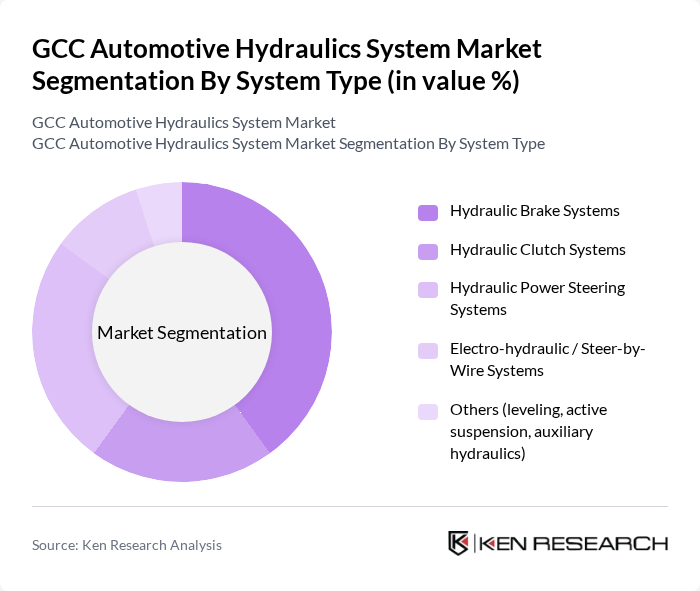
By System Type:The market is segmented into various system types, including Hydraulic Brake Systems, Hydraulic Clutch Systems, Hydraulic Power Steering Systems, Electro-hydraulic / Steer-by-Wire Systems, and Others (leveling, active suspension, auxiliary hydraulics). Among these, Hydraulic Brake Systems are the most dominant due to their critical role in vehicle safety and performance and their universal fitment across passenger cars and commercial vehicles. The increasing focus on safety regulations, the widespread use of disc brakes and ABS/ESC, and consumer demand for reliable braking systems has led to a significant market share for this sub-segment, while hydraulic power steering and electro-hydraulic steering continue to be adopted in higher-end and commercial applications.
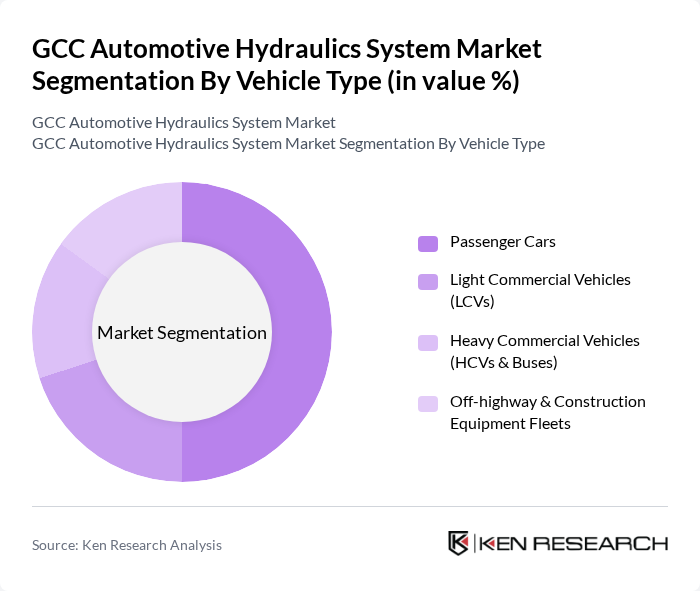
By Vehicle Type:The market is categorized into Passenger Cars, Light Commercial Vehicles (LCVs), Heavy Commercial Vehicles (HCVs & Buses), and Off-highway & Construction Equipment Fleets. Passenger Cars dominate this segment, driven by the increasing consumer preference for personal vehicles, the high share of SUVs and crossovers with sophisticated braking and steering systems, and the growing trend of urbanization across key GCC cities. The demand for advanced hydraulic systems in passenger cars is further propelled by the rising focus on safety and comfort features, including electronically controlled braking, hydraulic suspension components in premium models, and enhanced steering feel in both conventional and hybrid vehicles.
GCC Automotive Hydraulics System Market Competitive Landscape
The GCC Automotive Hydraulics System Market is characterized by a dynamic mix of regional and international players. Leading participants such as Robert Bosch GmbH (Bosch Mobility / Bosch Rexroth), ZF Friedrichshafen AG, Continental AG, Aisin Corporation, JTEKT Corporation, Mando Corporation, Knorr-Bremse AG, WABCO (ZF Commercial Vehicle Control Systems), Parker Hannifin Corporation, Danfoss A/S, Eaton Corporation plc, Hitachi Astemo, Ltd., Kongsberg Automotive ASA, HYDAC International GmbH, Yuken Kogyo Co., Ltd. contribute to innovation, geographic expansion, and service delivery in this space.
GCC Automotive Hydraulics System Market Industry Analysis
Growth Drivers
- Increasing Demand for Fuel-Efficient Vehicles:The GCC region is witnessing a significant shift towards fuel-efficient vehicles, driven by rising fuel prices and environmental concerns. In future, the average fuel price in the GCC is projected to be around $1.30 per liter, prompting consumers to seek vehicles that offer better mileage. This trend is expected to boost the demand for advanced hydraulic systems, which enhance vehicle efficiency and performance, thereby supporting the growth of the automotive hydraulics market.
- Technological Advancements in Hydraulic Systems:The automotive sector in the GCC is rapidly adopting innovative hydraulic technologies, such as electro-hydraulic systems, which improve vehicle responsiveness and efficiency. In future, investments in automotive R&D are expected to reach $1.8 billion, facilitating the development of next-generation hydraulic systems. These advancements not only enhance vehicle performance but also align with the region's goals for sustainable transportation, further driving market growth.
- Rising Automotive Production in the GCC Region:The automotive production in the GCC is projected to reach 1.5 million units in future, reflecting a robust growth trajectory. This increase is fueled by government initiatives aimed at boosting local manufacturing and reducing dependency on imports. As production ramps up, the demand for hydraulic systems is expected to rise correspondingly, creating a favorable environment for market expansion in the region.
Market Challenges
- High Cost of Advanced Hydraulic Systems:The integration of advanced hydraulic systems often comes with a high price tag, which can deter manufacturers from adopting these technologies. In future, the average cost of advanced hydraulic components is estimated to be around $2,800 per unit. This high cost poses a significant barrier, particularly for smaller manufacturers in the GCC, limiting their ability to invest in modern hydraulic solutions and hindering overall market growth.
- Limited Awareness of Hydraulic Technology Benefits:Despite the advantages of modern hydraulic systems, there remains a significant knowledge gap among manufacturers and consumers in the GCC. In future, only 45% of automotive companies are expected to fully understand the benefits of hydraulic technology. This lack of awareness can lead to underutilization of advanced systems, stifling innovation and growth within the automotive hydraulics market in the region.
GCC Automotive Hydraulics System Market Future Outlook
The future of the GCC automotive hydraulics market appears promising, driven by a growing emphasis on sustainability and technological integration. As the region moves towards electric and hybrid vehicles, hydraulic systems will evolve to meet new performance standards. Additionally, the integration of IoT technologies is expected to enhance system efficiency and monitoring capabilities. These trends indicate a shift towards smarter, more efficient hydraulic solutions that align with global automotive advancements, positioning the GCC market for significant growth in the coming years.
Market Opportunities
- Expansion of Electric and Hybrid Vehicles:The increasing adoption of electric and hybrid vehicles in the GCC presents a significant opportunity for hydraulic system manufacturers. With an expected 30% growth in electric vehicle sales in future, there is a rising demand for hydraulic systems that can support these new technologies, creating a lucrative market segment for innovative solutions.
- Growth in Aftermarket Services:The aftermarket services sector for automotive hydraulics is anticipated to grow, driven by the increasing number of vehicles on the road. In future, the aftermarket services market is projected to reach $600 million, providing opportunities for companies to offer maintenance, repair, and upgrades for hydraulic systems, thereby enhancing customer loyalty and revenue streams.
Scope of the Report
| Segment | Sub-Segments |
|---|---|
| By System Type | Hydraulic Brake Systems Hydraulic Clutch Systems Hydraulic Power Steering Systems Electro?hydraulic / Steer?by?Wire Systems Others (leveling, active suspension, auxiliary hydraulics) |
| By Vehicle Type | Passenger Cars Light Commercial Vehicles (LCVs) Heavy Commercial Vehicles (HCVs & Buses) Off?highway & Construction Equipment Fleets |
| By Application | Steering & Stability Control Braking & Anti?lock / ESC Functions Suspension & Chassis Control Drivetrain & Powertrain Actuation |
| By Component | Master & Slave Cylinders Hydraulic Pumps & Actuators Hoses, Lines & Fittings Reservoirs, Accumulators & Valves Hydraulic Fluids & Filters |
| By Sales Channel | OEM (Factory?fit Systems) Authorized Dealer & Service Network Independent Aftermarket Online & e?Commerce Platforms |
| By Country | Saudi Arabia United Arab Emirates Qatar Kuwait Oman Bahrain Rest of GCC (Free Zones & Re?export Hubs) |
| By Customer Type / Fleet Maturity | OEMs & Global Tier?1 Suppliers Large Organized Fleets SME Fleets & Independent Workshops |
Key Target Audience
Investors and Venture Capitalist Firms
Government and Regulatory Bodies (e.g., Ministry of Interior, Ministry of Transport)
Automotive Manufacturers
Hydraulic System Component Suppliers
Automotive Aftermarket Service Providers
Logistics and Supply Chain Companies
Automotive Industry Associations
Financial Institutions and Banks
Players Mentioned in the Report:
Robert Bosch GmbH (Bosch Mobility / Bosch Rexroth)
ZF Friedrichshafen AG
Continental AG
Aisin Corporation
JTEKT Corporation
Mando Corporation
KnorrBremse AG
WABCO (ZF Commercial Vehicle Control Systems)
Parker Hannifin Corporation
Danfoss A/S
Eaton Corporation plc
Hitachi Astemo, Ltd.
Kongsberg Automotive ASA
HYDAC International GmbH
Yuken Kogyo Co., Ltd.
Table of Contents
Market Assessment Phase
1. Executive Summary and Approach
2. GCC Automotive Hydraulics System Market Overview
2.1 Key Insights and Strategic Recommendations
2.2 GCC Automotive Hydraulics System Market Overview
2.3 Definition and Scope
2.4 Evolution of Market Ecosystem
2.5 Timeline of Key Regulatory Milestones
2.6 Value Chain & Stakeholder Mapping
2.7 Business Cycle Analysis
2.8 Policy & Incentive Landscape
3. GCC Automotive Hydraulics System Market Analysis
3.1 Growth Drivers
3.1.1 Increasing demand for fuel-efficient vehicles
3.1.2 Technological advancements in hydraulic systems
3.1.3 Rising automotive production in the GCC region
3.1.4 Growing focus on vehicle safety and performance
3.2 Market Challenges
3.2.1 High cost of advanced hydraulic systems
3.2.2 Limited awareness of hydraulic technology benefits
3.2.3 Stringent regulatory requirements
3.2.4 Supply chain disruptions
3.3 Market Opportunities
3.3.1 Expansion of electric and hybrid vehicles
3.3.2 Increasing investments in automotive R&D
3.3.3 Growth in aftermarket services
3.3.4 Adoption of smart hydraulic systems
3.4 Market Trends
3.4.1 Shift towards sustainable automotive solutions
3.4.2 Integration of IoT in hydraulic systems
3.4.3 Customization of hydraulic systems for specific applications
3.4.4 Rise of automation in manufacturing processes
3.5 Government Regulation
3.5.1 Emission standards for automotive vehicles
3.5.2 Safety regulations for hydraulic systems
3.5.3 Incentives for electric vehicle adoption
3.5.4 Compliance with international hydraulic standards
4. SWOT Analysis
5. Stakeholder Analysis
6. Porter's Five Forces Analysis
7. GCC Automotive Hydraulics System Market Market Size, 2019-2024
7.1 By Value
7.2 By Volume
7.3 By Average Selling Price
8. GCC Automotive Hydraulics System Market Segmentation
8.1 By System Type
8.1.1 Hydraulic Brake Systems
8.1.2 Hydraulic Clutch Systems
8.1.3 Hydraulic Power Steering Systems
8.1.4 Electro?hydraulic / Steer?by?Wire Systems
8.1.5 Others (leveling, active suspension, auxiliary hydraulics)
8.2 By Vehicle Type
8.2.1 Passenger Cars
8.2.2 Light Commercial Vehicles (LCVs)
8.2.3 Heavy Commercial Vehicles (HCVs & Buses)
8.2.4 Off?highway & Construction Equipment Fleets
8.3 By Application
8.3.1 Steering & Stability Control
8.3.2 Braking & Anti?lock / ESC Functions
8.3.3 Suspension & Chassis Control
8.3.4 Drivetrain & Powertrain Actuation
8.4 By Component
8.4.1 Master & Slave Cylinders
8.4.2 Hydraulic Pumps & Actuators
8.4.3 Hoses, Lines & Fittings
8.4.4 Reservoirs, Accumulators & Valves
8.4.5 Hydraulic Fluids & Filters
8.5 By Sales Channel
8.5.1 OEM (Factory?fit Systems)
8.5.2 Authorized Dealer & Service Network
8.5.3 Independent Aftermarket
8.5.4 Online & e?Commerce Platforms
8.6 By Country
8.6.1 Saudi Arabia
8.6.2 United Arab Emirates
8.6.3 Qatar
8.6.4 Kuwait
8.6.5 Oman
8.6.6 Bahrain
8.6.7 Rest of GCC (Free Zones & Re?export Hubs)
8.7 By Customer Type / Fleet Maturity
8.7.1 OEMs & Global Tier?1 Suppliers
8.7.2 Large Organized Fleets
8.7.3 SME Fleets & Independent Workshops
9. GCC Automotive Hydraulics System Market Competitive Analysis
9.1 Market Share of Key Players
9.2 Cross Comparison of Key Players
9.2.1 Company Name
9.2.2 Regional Revenue from GCC Automotive Hydraulics (USD Mn)
9.2.3 CAGR of GCC Hydraulics Revenue (Historical & Forecast)
9.2.4 Share of Hydraulics in Total Automotive Component Revenue (%)
9.2.5 OEM vs Aftermarket Revenue Mix in GCC (%)
9.2.6 Installed Production / Assembly Capacity in GCC (Units/Year)
9.2.7 Average Realization per Vehicle Equipped (USD/Vehicle)
9.2.8 Product Portfolio Breadth (Brakes, Steering, Clutch, Suspension)
9.2.9 Number of OEM Programs / Platform Wins in GCC
9.2.10 Distribution & Service Footprint (No. of Service Points / Countries Covered)
9.2.11 R&D and Localization Spend in GCC (% of Regional Sales)
9.3 SWOT Analysis of Top Players
9.4 Pricing Analysis
9.5 Detailed Profile of Major Companies
9.5.1 Robert Bosch GmbH (Bosch Mobility / Bosch Rexroth)
9.5.2 ZF Friedrichshafen AG
9.5.3 Continental AG
9.5.4 Aisin Corporation
9.5.5 JTEKT Corporation
9.5.6 Mando Corporation
9.5.7 Knorr?Bremse AG
9.5.8 WABCO (ZF Commercial Vehicle Control Systems)
9.5.9 Parker Hannifin Corporation
9.5.10 Danfoss A/S
9.5.11 Eaton Corporation plc
9.5.12 Hitachi Astemo, Ltd.
9.5.13 Kongsberg Automotive ASA
9.5.14 HYDAC International GmbH
9.5.15 Yuken Kogyo Co., Ltd.
10. GCC Automotive Hydraulics System Market End-User Analysis
10.1 Procurement Behavior of Key Ministries
10.1.1 Government vehicle procurement policies
10.1.2 Budget allocation for automotive projects
10.1.3 Collaboration with private sectors
10.1.4 Sustainability initiatives in procurement
10.2 Corporate Spend on Infrastructure & Energy
10.2.1 Investment in automotive infrastructure
10.2.2 Funding for R&D in hydraulic systems
10.2.3 Partnerships with technology providers
10.2.4 Budgeting for maintenance and upgrades
10.3 Pain Point Analysis by End-User Category
10.3.1 Challenges faced by manufacturers
10.3.2 Issues in supply chain management
10.3.3 Customer service and support challenges
10.3.4 Regulatory compliance difficulties
10.4 User Readiness for Adoption
10.4.1 Awareness of hydraulic technology benefits
10.4.2 Training and skill development needs
10.4.3 Financial readiness for investment
10.4.4 Infrastructure readiness for implementation
10.5 Post-Deployment ROI and Use Case Expansion
10.5.1 Measurement of performance improvements
10.5.2 Expansion into new applications
10.5.3 Long-term maintenance cost analysis
10.5.4 User feedback and system upgrades
11. GCC Automotive Hydraulics System Market Future Size, 2025-2030
11.1 By Value
11.2 By Volume
11.3 By Average Selling Price
Go-To-Market Strategy Phase
1. Whitespace Analysis + Business Model Canvas
1.1 Market Gaps Identification
1.2 Business Model Development
2. Marketing and Positioning Recommendations
2.1 Branding Strategies
2.2 Product USPs
3. Distribution Plan
3.1 Urban Retail Strategies
3.2 Rural NGO Tie-ups
4. Channel & Pricing Gaps
4.1 Underserved Routes
4.2 Pricing Bands Analysis
5. Unmet Demand & Latent Needs
5.1 Category Gaps
5.2 Consumer Segments
6. Customer Relationship
6.1 Loyalty Programs
6.2 After-sales Service
7. Value Proposition
7.1 Sustainability Initiatives
7.2 Integrated Supply Chains
8. Key Activities
8.1 Regulatory Compliance
8.2 Branding Efforts
8.3 Distribution Setup
9. Entry Strategy Evaluation
9.1 Domestic Market Entry Strategy
9.1.1 Product Mix Considerations
9.1.2 Pricing Band Strategy
9.1.3 Packaging Solutions
9.2 Export Entry Strategy
9.2.1 Target Countries Identification
9.2.2 Compliance Roadmap Development
10. Entry Mode Assessment
10.1 Joint Ventures
10.2 Greenfield Investments
10.3 Mergers & Acquisitions
10.4 Distributor Model Evaluation
11. Capital and Timeline Estimation
11.1 Capital Requirements
11.2 Timelines for Implementation
12. Control vs Risk Trade-Off
12.1 Ownership Considerations
12.2 Partnerships Evaluation
13. Profitability Outlook
13.1 Breakeven Analysis
13.2 Long-term Sustainability Strategies
14. Potential Partner List
14.1 Distributors
14.2 Joint Ventures
14.3 Acquisition Targets
15. Execution Roadmap
15.1 Phased Plan for Market Entry
15.1.1 Market Setup
15.1.2 Market Entry
15.1.3 Growth Acceleration
15.1.4 Scale & Stabilize
15.2 Key Activities and Milestones
15.2.1 Activity Planning
15.2.2 Milestone Tracking
Research Methodology
Phase 1: Approach1
Desk Research
- Industry reports from automotive associations and hydraulic system manufacturers
- Market analysis publications focusing on the GCC automotive sector
- Government publications and trade statistics related to automotive imports and exports
Primary Research
- Interviews with engineers and product managers at leading automotive manufacturers
- Surveys with hydraulic system suppliers and distributors in the GCC region
- Field interviews with automotive service centers and repair shops
Validation & Triangulation
- Cross-validation of data from multiple industry sources and expert opinions
- Triangulation of market size estimates using sales data and production statistics
- Sanity checks through expert panel discussions and feedback sessions
Phase 2: Market Size Estimation1
Top-down Assessment
- Analysis of total automotive market size in the GCC and its growth trajectory
- Segmentation of the market by vehicle type and hydraulic system application
- Incorporation of regional economic indicators and automotive sales forecasts
Bottom-up Modeling
- Estimation of hydraulic system demand based on vehicle production volumes
- Cost analysis of hydraulic components and systems used in various vehicle types
- Volume x cost calculations to derive total market value for hydraulic systems
Forecasting & Scenario Analysis
- Multi-variable regression analysis incorporating economic growth and automotive trends
- Scenario modeling based on regulatory changes and technological advancements
- Baseline, optimistic, and pessimistic forecasts through 2030
Phase 3: CATI Sample Composition1
| Scope Item/Segment | Sample Size | Target Respondent Profiles |
|---|---|---|
| Passenger Vehicle Hydraulic Systems | 120 | Product Managers, Automotive Engineers |
| Commercial Vehicle Hydraulic Applications | 90 | Fleet Managers, Procurement Specialists |
| Aftermarket Hydraulic Components | 80 | Service Center Owners, Parts Distributors |
| Hydraulic System Innovations | 70 | R&D Managers, Technology Officers |
| Regulatory Compliance in Hydraulic Systems | 60 | Compliance Officers, Quality Assurance Managers |
Frequently Asked Questions
What is the current value of the GCC Automotive Hydraulics System Market?
The GCC Automotive Hydraulics System Market is valued at approximately USD 1.3 billion, reflecting a robust growth trajectory driven by advancements in automotive technologies and increasing vehicle production in the region.
Which countries dominate the GCC Automotive Hydraulics System Market?
What are the key drivers of growth in the GCC Automotive Hydraulics System Market?
What challenges does the GCC Automotive Hydraulics System Market face?
Other Regional/Country Reports
Indonesia Automotive Hydraulics System Market
Malaysia Automotive Hydraulics System Market
KSA Automotive Hydraulics System Market
APAC Automotive Hydraulics System Market
SEA Automotive Hydraulics System Market
Vietnam Automotive Hydraulics System Market
Other Adjacent Reports
Malaysia Automotive Braking Systems Market
Indonesia Automotive Steering Systems Market
Vietnam Automotive Suspension Systems Market
Qatar Electro-Hydraulic Systems Market
Mexico Vehicle Safety Technologies Market
Kuwait Commercial Vehicle Components Market
Mexico Hydraulic Fluid and Components Market
Mexico Electric Vehicle Hydraulics Market
Japan Automotive Aftermarket Parts Market
South Africa Off-Highway Vehicle Hydraulics Market
Why Buy From Us?

What makes us stand out is that our consultants follow Robust, Refine and Result (RRR) methodology. Robust for clear definitions, approaches and sanity checking, Refine for differentiating respondents' facts and opinions, and Result for presenting data with story.

We have set a benchmark in the industry by offering our clients with syndicated and customized market research reports featuring coverage of entire market as well as meticulous research and analyst insights.

While we don't replace traditional research, we flip the method upside down. Our dual approach of Top Bottom & Bottom Top ensures quality deliverable by not just verifying company fundamentals but also looking at the sector and macroeconomic factors.

With one step in the future, our research team constantly tries to show you the bigger picture. We help with some of the tough questions you may encounter along the way: How is the industry positioned? Best marketing channel? KPI's of competitors? By aligning every element, we help maximize success.

Our report gives you instant access to the answers and sources that other companies might choose to hide. We elaborate each steps of research methodology we have used and showcase you the sample size to earn your trust.

If you need any support, we are here! We pride ourselves on universe strength, data quality, and quick, friendly, and professional service.