About the Report
Base Year 2024GCC Collectibles Market Overview
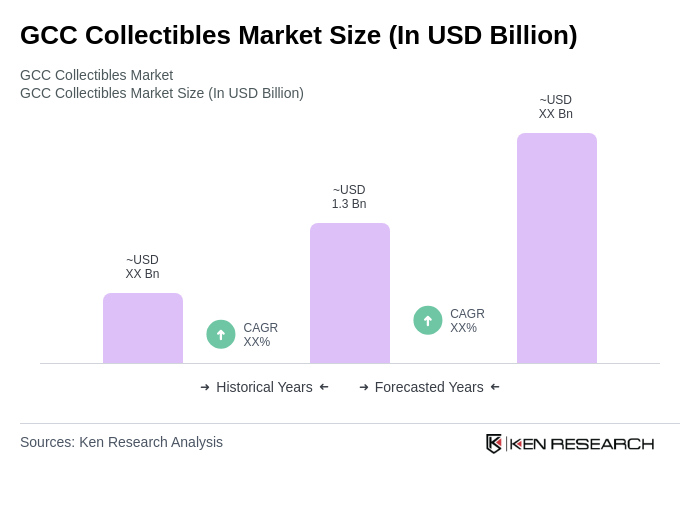
- The GCC Collectibles Market is valued at USD 1.3 billion, based on a five-year historical analysis. This market size aligns with the regional share of the global collectibles market and reflects robust growth driven by increasing disposable incomes, the rising popularity of unique and rare items, and the influence of social media platforms on consumer behavior. The sector has experienced heightened demand for diverse collectibles, including art, antiques, and digital assets, as consumers seek investments that offer both emotional and financial value. The expansion of online marketplaces and e-commerce platforms has further accelerated market growth, making collectibles more accessible to a wider audience .
- The United Arab Emirates (UAE) and Saudi Arabia continue to dominate the GCC collectibles market, supported by affluent populations and vibrant cultural environments. Dubai and Riyadh serve as major hubs for art galleries, auction houses, and specialty shops, attracting both local and international collectors. High-profile events such as art fairs, auctions, and cultural festivals have significantly increased the visibility and appeal of collectibles in these cities, further stimulating market activity .
- In 2023, the UAE government advanced the collectibles market by implementing the "UAE Cultural Property Authentication and Valuation Framework, 2023" issued by the Ministry of Culture and Youth. This regulation establishes mandatory standards for the authentication and valuation of collectibles, requiring licensed appraisers and certified documentation for high-value items. The framework aims to protect consumers, enhance market transparency, and foster a secure environment for collectors and investors .
GCC Collectibles Market Segmentation
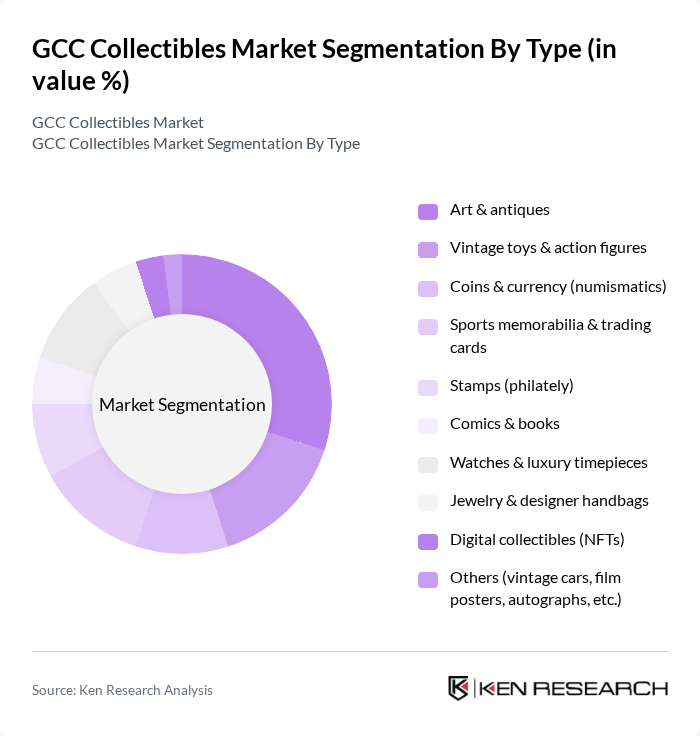
By Type:The GCC collectibles market encompasses a wide array of items catering to diverse consumer interests. Key subsegments include art & antiques, vintage toys & action figures, coins & currency (numismatics), sports memorabilia & trading cards, stamps (philately), comics & books, watches & luxury timepieces, jewelry & designer handbags, digital collectibles (NFTs), and others such as vintage cars and film posters. Art & antiques remain the leading subsegment, driven by a growing appreciation for cultural heritage, investment potential, and the prestige associated with owning rare pieces. The emergence of digital collectibles, including NFTs, has introduced new investment opportunities and attracted younger demographics to the market .
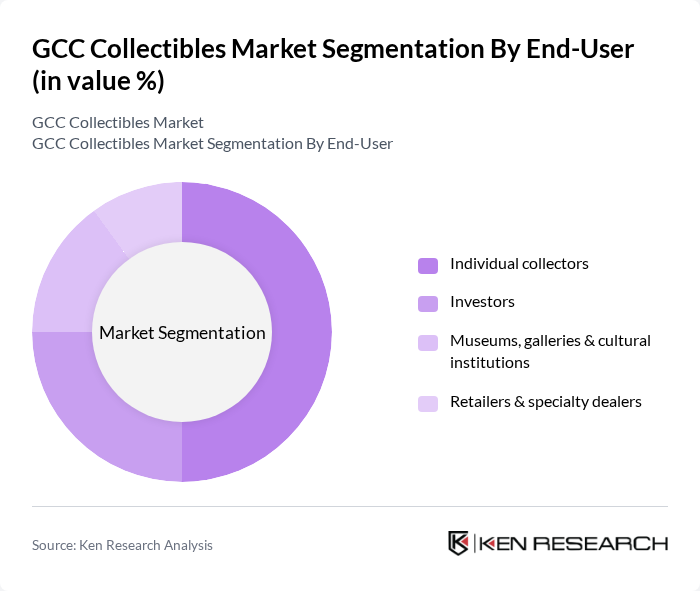
By End-User:The end-user segmentation of the GCC collectibles market includes individual collectors, investors, museums, galleries & cultural institutions, and retailers & specialty dealers. Individual collectors constitute the largest segment, motivated by personal passion and the desire to own unique and rare items. Investors are increasingly participating, viewing collectibles as alternative assets with strong appreciation potential. Museums and galleries play a pivotal role in preserving cultural heritage and showcasing valuable items, while retailers and specialty dealers facilitate transactions and broaden market access .
GCC Collectibles Market Competitive Landscape
The GCC Collectibles Market is characterized by a dynamic mix of regional and international players. Leading participants such as Heritage Auctions, Sotheby's, Bonhams, Christie's, Catawiki, eBay, Al Bahar Auctions, Dubai Collectibles, The Collectors' Guild (UAE), The Vintage Shop (Kuwait), NumisArt Gallery (Dubai), The Coin Shop (Saudi Arabia), The Art House (Qatar), The Memorabilia Store (Bahrain), The Antique Gallery (Oman) contribute to innovation, geographic expansion, and service delivery in this space.
GCC Collectibles Market Industry Analysis
Growth Drivers
- Increasing Disposable Income:The GCC region has witnessed a significant rise in disposable income, with average household income projected to reach $70,000 in future. This increase allows consumers to allocate more funds towards collectibles, enhancing market demand. The World Bank reports that the region's GDP per capita is expected to grow by 4.2% annually, further supporting the purchasing power of potential buyers. As disposable income rises, the appetite for unique and rare collectibles is likely to expand, driving market growth.
- Rising Interest in Unique and Rare Items:The GCC's cultural landscape fosters a growing interest in unique and rare collectibles, with sales of such items increasing by 25% year-on-year. This trend is supported by a burgeoning collector community, with over 2 million active collectors in the region as of in future. The rise of social media platforms has also facilitated the sharing of collectible interests, further fueling demand. As consumers seek to differentiate themselves, the market for unique collectibles is expected to thrive.
- Growth of Online Marketplaces:The expansion of online marketplaces has revolutionized the collectibles market in the GCC, with e-commerce sales projected to reach $40 billion in future. Platforms like Souq and Dubizzle have made it easier for collectors to buy and sell items, increasing market accessibility. The International Monetary Fund (IMF) notes that online retail in the region is growing at a rate of 18% annually, indicating a shift in consumer behavior towards digital transactions. This trend is expected to enhance market growth significantly.
Market Challenges
- Counterfeit Products:The prevalence of counterfeit collectibles poses a significant challenge in the GCC market, with estimates suggesting that counterfeit goods account for 12% of total collectible sales. This issue undermines consumer trust and can lead to substantial financial losses for genuine collectors. The World Customs Organization reports that the GCC is a hotspot for counterfeit goods, necessitating stricter regulations and consumer education to combat this challenge effectively.
- Lack of Standardization:The collectibles market in the GCC suffers from a lack of standardization, which complicates valuation and authenticity verification. Without established grading systems, collectors face difficulties in assessing the quality and worth of items. This ambiguity can deter potential buyers, with 35% of collectors citing concerns over authenticity as a barrier to purchase. Industry stakeholders must work towards creating standardized practices to enhance market credibility and consumer confidence.
GCC Collectibles Market Future Outlook
The GCC collectibles market is poised for dynamic growth, driven by increasing disposable incomes and a burgeoning interest in unique items. As e-commerce platforms expand, accessibility will improve, attracting a wider audience. Additionally, the rise of digital collectibles, such as NFTs, is expected to reshape the market landscape. However, addressing challenges like counterfeiting and standardization will be crucial for sustaining growth. Overall, the market is likely to evolve, presenting new opportunities for collectors and investors alike.
Market Opportunities
- Expansion of E-commerce Platforms:The growth of e-commerce platforms presents a significant opportunity for the collectibles market, with online sales expected to increase by 30% in future. This expansion allows collectors to reach a broader audience, enhancing sales potential. By leveraging digital marketing strategies, businesses can tap into the growing online consumer base, driving market growth and increasing visibility for unique collectibles.
- Collaborations with Local Artists:Collaborating with local artists can create unique collectible items that resonate with regional culture, potentially increasing sales by 20%. Such partnerships can enhance brand value and attract collectors interested in culturally significant pieces. By promoting these collaborations through targeted marketing campaigns, businesses can capitalize on the growing interest in locally sourced and artistically crafted collectibles, fostering community engagement and market growth.
Scope of the Report
| Segment | Sub-Segments |
|---|---|
| By Type | Art & antiques Vintage toys & action figures Coins & currency (numismatics) Sports memorabilia & trading cards Stamps (philately) Comics & books Watches & luxury timepieces Jewelry & designer handbags Digital collectibles (NFTs) Others (vintage cars, film posters, autographs, etc.) |
| By End-User | Individual collectors Investors Museums, galleries & cultural institutions Retailers & specialty dealers |
| By Sales Channel | Online marketplaces (e.g., eBay, Catawiki, OpenSea) Auction houses (physical & digital) Specialty stores & boutiques Trade shows & exhibitions |
| By Price Range | Low-end collectibles (< $100) Mid-range collectibles ($100–$5,000) High-end collectibles (> $5,000) |
| By Material | Paper-based collectibles (stamps, comics, posters) Metal collectibles (coins, medals, watches) Plastic & resin collectibles (toys, figurines) Wood & mixed-material collectibles |
| By Condition | Mint condition Used/Pre-owned condition Damaged/Restored condition |
| By Region | United Arab Emirates (UAE) Saudi Arabia Qatar Kuwait Oman Bahrain Others (rest of GCC) |
Key Target Audience
Investors and Venture Capitalist Firms
Government and Regulatory Bodies (e.g., Ministry of Economy, Central Bank of the UAE)
Collectors and Enthusiasts
Art Galleries and Auction Houses
Insurance Companies
Online Marketplaces and E-commerce Platforms
Trade Associations and Collectibles Organizations
Logistics and Shipping Companies
Players Mentioned in the Report:
Heritage Auctions
Sotheby's
Bonhams
Christie's
Catawiki
eBay
Al Bahar Auctions
Dubai Collectibles
The Collectors' Guild (UAE)
The Vintage Shop (Kuwait)
NumisArt Gallery (Dubai)
The Coin Shop (Saudi Arabia)
The Art House (Qatar)
The Memorabilia Store (Bahrain)
The Antique Gallery (Oman)
Table of Contents
Market Assessment Phase
1. Executive Summary and Approach
2. GCC Collectibles Market Overview
2.1 Key Insights and Strategic Recommendations
2.2 GCC Collectibles Market Overview
2.3 Definition and Scope
2.4 Evolution of Market Ecosystem
2.5 Timeline of Key Regulatory Milestones
2.6 Value Chain & Stakeholder Mapping
2.7 Business Cycle Analysis
2.8 Policy & Incentive Landscape
3. GCC Collectibles Market Analysis
3.1 Growth Drivers
3.1.1 Increasing disposable income
3.1.2 Rising interest in unique and rare items
3.1.3 Growth of online marketplaces
3.1.4 Cultural significance of collectibles in the region
3.2 Market Challenges
3.2.1 Counterfeit products
3.2.2 Lack of standardization
3.2.3 Economic fluctuations
3.2.4 Limited awareness among potential buyers
3.3 Market Opportunities
3.3.1 Expansion of e-commerce platforms
3.3.2 Collaborations with local artists
3.3.3 Growing tourism boosting collectible sales
3.3.4 Increasing interest in investment-grade collectibles
3.4 Market Trends
3.4.1 Rise of digital collectibles (NFTs)
3.4.2 Sustainability in collectible production
3.4.3 Customization and personalization trends
3.4.4 Increased participation in collectible fairs and exhibitions
3.5 Government Regulation
3.5.1 Import/export regulations on collectibles
3.5.2 Tax implications for collectible sales
3.5.3 Intellectual property laws
3.5.4 Consumer protection regulations
4. SWOT Analysis
5. Stakeholder Analysis
6. Porter's Five Forces Analysis
7. GCC Collectibles Market Market Size, 2019-2024
7.1 By Value
7.2 By Volume
7.3 By Average Selling Price
8. GCC Collectibles Market Segmentation
8.1 By Type
8.1.1 Art & antiques
8.1.2 Vintage toys & action figures
8.1.3 Coins & currency (numismatics)
8.1.4 Sports memorabilia & trading cards
8.1.5 Stamps (philately)
8.1.6 Comics & books
8.1.7 Watches & luxury timepieces
8.1.8 Jewelry & designer handbags
8.1.9 Digital collectibles (NFTs)
8.1.10 Others (vintage cars, film posters, autographs, etc.)
8.2 By End-User
8.2.1 Individual collectors
8.2.2 Investors
8.2.3 Museums, galleries & cultural institutions
8.2.4 Retailers & specialty dealers
8.3 By Sales Channel
8.3.1 Online marketplaces (e.g., eBay, Catawiki, OpenSea)
8.3.2 Auction houses (physical & digital)
8.3.3 Specialty stores & boutiques
8.3.4 Trade shows & exhibitions
8.4 By Price Range
8.4.1 Low-end collectibles (< $100)
8.4.2 Mid-range collectibles ($100–$5,000)
8.4.3 High-end collectibles (> $5,000)
8.5 By Material
8.5.1 Paper-based collectibles (stamps, comics, posters)
8.5.2 Metal collectibles (coins, medals, watches)
8.5.3 Plastic & resin collectibles (toys, figurines)
8.5.4 Wood & mixed-material collectibles
8.6 By Condition
8.6.1 Mint condition
8.6.2 Used/Pre-owned condition
8.6.3 Damaged/Restored condition
8.7 By Region
8.7.1 United Arab Emirates (UAE)
8.7.2 Saudi Arabia
8.7.3 Qatar
8.7.4 Kuwait
8.7.5 Oman
8.7.6 Bahrain
8.7.7 Others (rest of GCC)
9. GCC Collectibles Market Competitive Analysis
9.1 Market Share of Key Players
9.2 Cross Comparison of Key Players
9.2.1 Company Name
9.2.2 Group Size (Large, Medium, or Small as per industry convention)
9.2.3 Annual Revenue
9.2.4 Revenue Growth Rate (YoY %)
9.2.5 Market Share (%) in GCC Collectibles
9.2.6 Number of Active Listings/Items Sold
9.2.7 Customer Acquisition Cost (CAC)
9.2.8 Customer Retention Rate (%)
9.2.9 Average Order Value (AOV)
9.2.10 Market Penetration Rate (GCC region)
9.2.11 Pricing Strategy (Premium, Value, Auction-based, etc.)
9.2.12 Brand Equity/Recognition (Brand Index or Survey Score)
9.2.13 Product Diversification Index (Breadth of collectible categories)
9.2.14 Digital Engagement (Website traffic, social media following)
9.3 SWOT Analysis of Top Players
9.4 Pricing Analysis
9.5 Detailed Profile of Major Companies
9.5.1 Heritage Auctions
9.5.2 Sotheby's
9.5.3 Bonhams
9.5.4 Christie's
9.5.5 Catawiki
9.5.6 eBay
9.5.7 Al Bahar Auctions
9.5.8 Dubai Collectibles
9.5.9 The Collectors' Guild (UAE)
9.5.10 The Vintage Shop (Kuwait)
9.5.11 NumisArt Gallery (Dubai)
9.5.12 The Coin Shop (Saudi Arabia)
9.5.13 The Art House (Qatar)
9.5.14 The Memorabilia Store (Bahrain)
9.5.15 The Antique Gallery (Oman)
10. GCC Collectibles Market End-User Analysis
10.1 Procurement Behavior of Key Ministries
10.1.1 Interest in cultural heritage items
10.1.2 Budget allocation for public exhibitions
10.1.3 Collaboration with local artists
10.1.4 Support for educational programs
10.2 Corporate Spend on Infrastructure & Energy
10.2.1 Investment in collectible exhibitions
10.2.2 Sponsorship of art fairs
10.2.3 Partnerships with museums
10.3 Pain Point Analysis by End-User Category
10.3.1 Difficulty in authenticating collectibles
10.3.2 Limited access to high-quality items
10.3.3 High transaction costs
10.4 User Readiness for Adoption
10.4.1 Awareness of collectible value
10.4.2 Interest in online purchasing
10.4.3 Engagement in collectible communities
10.5 Post-Deployment ROI and Use Case Expansion
10.5.1 Increased sales through online platforms
10.5.2 Enhanced brand visibility
10.5.3 Growth in customer loyalty programs
11. GCC Collectibles Market Future Size, 2025-2030
11.1 By Value
11.2 By Volume
11.3 By Average Selling Price
Go-To-Market Strategy Phase
1. Whitespace Analysis + Business Model Canvas
1.1 Market gaps identification
1.2 Value proposition development
1.3 Revenue model exploration
1.4 Customer segmentation analysis
1.5 Competitive landscape overview
1.6 Key partnerships identification
1.7 Cost structure analysis
2. Marketing and Positioning Recommendations
2.1 Branding strategies
2.2 Product USPs
2.3 Target audience definition
2.4 Marketing channels selection
2.5 Messaging and communication strategy
2.6 Performance metrics
3. Distribution Plan
3.1 Urban retail vs rural NGO tie-ups
3.2 Online vs offline distribution strategies
3.3 Partnerships with local retailers
3.4 Logistics and supply chain considerations
3.5 Distribution channel optimization
4. Channel & Pricing Gaps
4.1 Underserved routes
4.2 Pricing bands
4.3 Competitor pricing analysis
4.4 Customer willingness to pay
4.5 Price sensitivity assessment
5. Unmet Demand & Latent Needs
5.1 Category gaps
5.2 Consumer segments
5.3 Emerging trends analysis
5.4 Feedback from potential customers
5.5 Market research findings
6. Customer Relationship
6.1 Loyalty programs
6.2 After-sales service
6.3 Customer feedback mechanisms
6.4 Community engagement strategies
6.5 Personalization of customer experience
7. Value Proposition
7.1 Sustainability
7.2 Integrated supply chains
7.3 Unique selling points
7.4 Customer-centric approach
7.5 Competitive advantages
8. Key Activities
8.1 Regulatory compliance
8.2 Branding
8.3 Distribution setup
8.4 Marketing initiatives
8.5 Training and development
9. Entry Strategy Evaluation
9.1 Domestic Market Entry Strategy
9.1.1 Product mix
9.1.2 Pricing band
9.1.3 Packaging
9.2 Export Entry Strategy
9.2.1 Target countries
9.2.2 Compliance roadmap
10. Entry Mode Assessment
10.1 JV
10.2 Greenfield
10.3 M&A
10.4 Distributor Model
11. Capital and Timeline Estimation
11.1 Capital requirements
11.2 Timelines
12. Control vs Risk Trade-Off
12.1 Ownership vs Partnerships
13. Profitability Outlook
13.1 Breakeven analysis
13.2 Long-term sustainability
14. Potential Partner List
14.1 Distributors
14.2 JVs
14.3 Acquisition targets
15. Execution Roadmap
15.1 Phased Plan for Market Entry
15.1.1 Market Setup
15.1.2 Market Entry
15.1.3 Growth Acceleration
15.1.4 Scale & Stabilize
15.2 Key Activities and Milestones
15.2.1 Milestone planning
15.2.2 Activity scheduling
15.2.3 Resource allocation
Research Methodology
Phase 1: Approach1
Desk Research
- Market reports from regional trade associations and collectible fairs
- Analysis of online marketplaces and auction platforms for pricing trends
- Review of academic journals and publications on collectibles and consumer behavior
Primary Research
- Interviews with collectors and enthusiasts at local collectible events
- Surveys targeting dealers and retailers in the GCC collectibles market
- Focus groups with hobbyist communities to understand preferences and trends
Validation & Triangulation
- Cross-validation of findings with sales data from major auction houses
- Triangulation of insights from collectors, dealers, and market analysts
- Sanity checks through expert panel reviews comprising industry veterans
Phase 2: Market Size Estimation1
Top-down Assessment
- Analysis of overall consumer spending in the GCC region on collectibles
- Segmentation of the market by collectible categories (e.g., coins, stamps, art)
- Incorporation of demographic trends influencing collectible purchases
Bottom-up Modeling
- Estimation of sales volume based on dealer inventory and turnover rates
- Operational cost analysis of collectible shops and online platforms
- Volume x average price calculations for each collectible category
Forecasting & Scenario Analysis
- Multi-factor regression analysis incorporating economic indicators and consumer trends
- Scenario modeling based on potential shifts in collector demographics and interests
- Baseline, optimistic, and pessimistic projections through 2030
Phase 3: CATI Sample Composition1
| Scope Item/Segment | Sample Size | Target Respondent Profiles |
|---|---|---|
| Art Collectors | 100 | Gallery Owners, Art Investors |
| Coin Collectors | 60 | Numismatists, Coin Dealers |
| Stamp Collectors | 50 | Philatelists, Stamp Dealers |
| Sports Memorabilia Collectors | 70 | Sports Enthusiasts, Memorabilia Shop Owners |
| Vintage Toy Collectors | 40 | Toy Store Owners, Vintage Collectors |
Frequently Asked Questions
What is the current value of the GCC collectibles market?
The GCC collectibles market is valued at approximately USD 1.3 billion, reflecting significant growth driven by increasing disposable incomes and a rising interest in unique and rare items among consumers in the region.
Which countries dominate the GCC collectibles market?
What types of collectibles are popular in the GCC region?
How has social media influenced the GCC collectibles market?
Other Regional/Country Reports
Indonesia Collectibles Market Report
Malaysia Collectibles Market Report
KSA Collectibles Market Report
APAC Collectibles Market Report
SEA Collectibles Market Report
Vietnam Collectibles Market Report
Other Adjacent Reports
Bahrain Fine Art Market
Philippines Antiques Market
South Korea Luxury Goods MarketBahrain Auction Services Market
Kuwait Digital NFT Market
Indonesia Sports Memorabilia Market
Singapore Numismatics Market
Qatar Philately Market
South Africa Vintage Toys Market
UAE Jewelry and Watches Market
Why Buy From Us?

What makes us stand out is that our consultants follow Robust, Refine and Result (RRR) methodology. Robust for clear definitions, approaches and sanity checking, Refine for differentiating respondents' facts and opinions, and Result for presenting data with story.

We have set a benchmark in the industry by offering our clients with syndicated and customized market research reports featuring coverage of entire market as well as meticulous research and analyst insights.

While we don't replace traditional research, we flip the method upside down. Our dual approach of Top Bottom & Bottom Top ensures quality deliverable by not just verifying company fundamentals but also looking at the sector and macroeconomic factors.

With one step in the future, our research team constantly tries to show you the bigger picture. We help with some of the tough questions you may encounter along the way: How is the industry positioned? Best marketing channel? KPI's of competitors? By aligning every element, we help maximize success.

Our report gives you instant access to the answers and sources that other companies might choose to hide. We elaborate each steps of research methodology we have used and showcase you the sample size to earn your trust.

If you need any support, we are here! We pride ourselves on universe strength, data quality, and quick, friendly, and professional service.