About the Report
Base Year 2024Listen to the audio summary
Indonesia Platelet Rich Plasma PRP Stem Cell Alopecia Treatment Market Overview
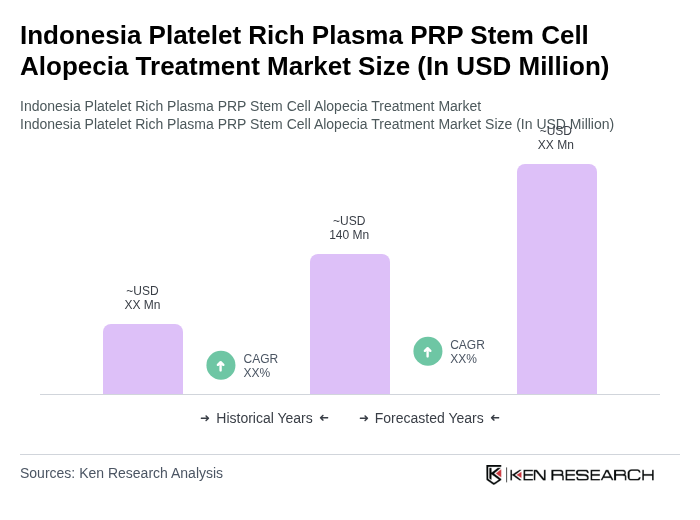
- The Indonesia Platelet Rich Plasma PRP Stem Cell Alopecia Treatment Market is valued at USD 140 million, based on a five-year historical analysis and benchmarked against global PRP and stem cell alopecia treatment market values, where the worldwide market is placed in the mid-hundreds of millions of USD and Asia Pacific is one of the fastest-growing regions. This growth is primarily driven by increasing awareness of advanced hair restoration techniques, rising disposable incomes among Indonesia’s expanding middle class, and a growing population suffering from various types of alopecia. The demand for non-surgical and minimally invasive treatment options has surged, leading to a significant uptick in the adoption of PRP and regenerative therapies within dermatology and aesthetic clinics.
- Key cities such as Jakarta, Surabaya, and Bandung dominate the market due to their high population density, higher per?capita income, and increased access to private hospitals and aesthetic dermatology centers, in line with broader Asia Pacific trends where urban hubs drive adoption of alopecia therapies. The urban population in these areas is more inclined towards cosmetic and anti?aging procedures, contributing to the market's expansion through higher utilization of PRP-based hair restoration programs. Additionally, the presence of leading healthcare providers and branded clinic chains in these cities enhances the availability of advanced treatment options and standardized treatment protocols.
- In 2023, the Indonesian government strengthened the regulatory framework governing regenerative medicine procedures, including PRP and certain stem?cell–related services, by requiring health facilities and health workers to comply with licensing, quality, and safety standards for advanced medical technologies under instruments such as the Regulation of the Minister of Health of the Republic of Indonesia Number 24 of 2022 on Medical Service Quality in Hospitals and related guidance on health service standards issued by the Ministry of Health. This includes obligations for clinics and hospitals to ensure staff competency, proper equipment, documented informed consent, and institutional review or ethical oversight when using human cells and tissues in medical procedures, with the aim of protecting patients and promoting responsible integration of innovative therapies into routine healthcare services.
Indonesia Platelet Rich Plasma PRP Stem Cell Alopecia Treatment Market Segmentation
By Treatment Type:
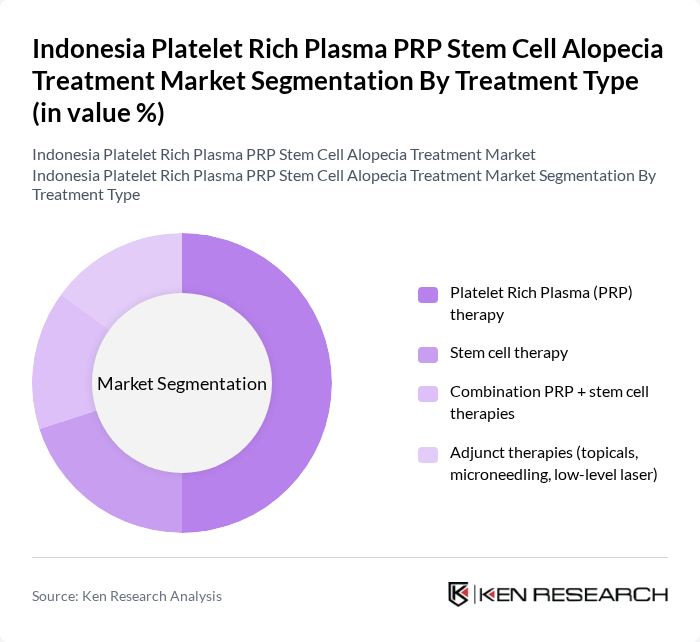
The treatment type segmentation includes Platelet Rich Plasma (PRP) therapy, Stem cell–based or cell-derived therapy (including growth factor concentrates and conditioned media as used in some aesthetic centers), Combination PRP + stem cell–related therapies, and Adjunct therapies (topicals, microneedling, low-level laser). Global and regional data indicate that platelet-rich plasma is the most widely adopted regenerative procedure for alopecia, as it is minimally invasive, autologous, and relatively cost-effective compared with more complex cell therapies. Patients prefer PRP due to its minimal downtime, outpatient setting, and the perception of “natural” results using their own blood, making it a popular first?line option in aesthetic and dermatology clinics. The growing trend towards personalized treatment plans and combination protocols (PRP with microneedling, low?level laser therapy, or topical pharmacologic agents) has also contributed to the rise of combination therapies, although PRP alone remains the most frequently offered and sought-after option in clinical practice.
By Alopecia Type:
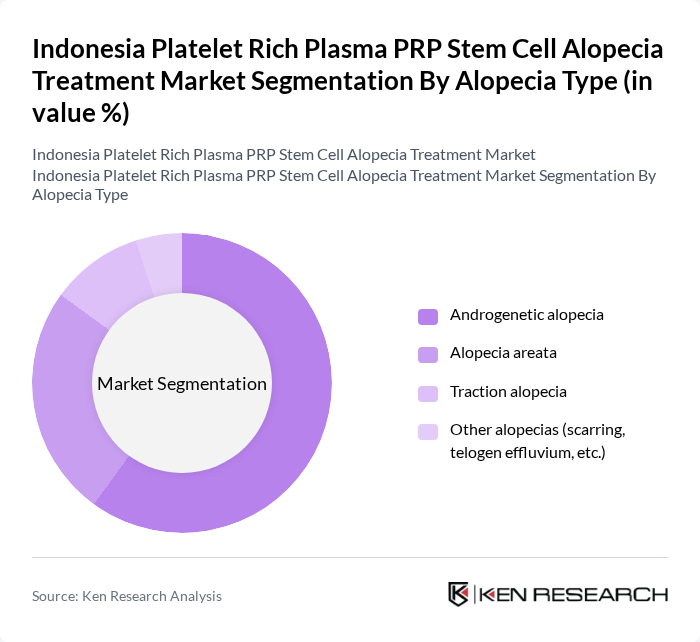
This segmentation includes Androgenetic alopecia, Alopecia areata, Traction alopecia, and Other alopecias (scarring, telogen effluvium, etc.). Epidemiological and treatment?utilization data show that androgenetic alopecia is the dominant type globally and in Asia Pacific, accounting for a substantial share of patients seeking hair restoration and regenerative therapies, including PRP. Its high prevalence among both men and women, together with heightened awareness of available interventions, drives the largest demand for PRP sessions and related combination protocols. Alopecia areata also shows a growing trend as more patients seek effective solutions for this autoimmune condition, supported by expanding therapeutic options in the broader alopecia market, but it remains secondary to androgenetic alopecia in terms of patient volume and treatment spend in regenerative procedures.
Indonesia Platelet Rich Plasma PRP Stem Cell Alopecia Treatment Market Competitive Landscape
The Indonesia Platelet Rich Plasma PRP Stem Cell Alopecia Treatment Market is characterized by a dynamic mix of regional and international players. Leading participants such as PT Prodia Widyahusada Tbk, PT Siloam International Hospitals Tbk, PT Mitra Keluarga Karyasehat Tbk, PT Medikaloka Hermina Tbk, PT Bundamedik Tbk (BMH), PT Erha Clinic Indonesia (ERHA), Klinik Dr. Tompi (Brawijaya Aesthetic Clinic), Jakarta Aesthetic Clinic, Dermamedica Clinic, JEC-Orbita Aesthetic & Hair Clinic, Klinik Nirmala Skin & Hair, Klinika Estetika dr. Affandi, Youth & Beauty Clinic Indonesia, Bamed Skin Care, Klinik Utama Queen Beauty contribute to innovation, geographic expansion, and service delivery in this space.
Indonesia Platelet Rich Plasma PRP Stem Cell Alopecia Treatment Market Industry Analysis
Growth Drivers
- Increasing Prevalence of Alopecia:The prevalence of alopecia in Indonesia is estimated to affect approximately 12 million individuals, with a significant rise in cases among the urban population. According to the Indonesian Dermatology Association, around 30% of men and 20% of women experience some form of hair loss by age 30. This growing incidence drives demand for effective treatments, including PRP therapy, as individuals seek solutions to restore their hair and confidence.
- Rising Awareness about PRP Treatments:Awareness of PRP treatments has surged, with over 60% of the population now familiar with the procedure, according to a survey by the Indonesian Health Ministry. This increase in knowledge is attributed to social media campaigns and educational initiatives by clinics. As more people understand the benefits of PRP, the demand for these treatments is expected to grow, further propelling market expansion.
- Technological Advancements in Treatment Methods:The introduction of advanced PRP extraction technologies has improved treatment efficacy and patient outcomes. For instance, new centrifuge systems can produce higher-quality PRP with greater platelet concentrations, enhancing hair restoration results. The Indonesian healthcare sector is projected to invest approximately IDR 500 billion in medical technology upgrades in future, facilitating better PRP treatment options and attracting more patients seeking innovative solutions.
Market Challenges
- High Cost of Treatment:The average cost of PRP treatment in Indonesia ranges from IDR 3 million to IDR 10 million per session, making it inaccessible for many individuals. With the average monthly income in urban areas around IDR 5 million, the treatment can represent a significant financial burden. This high cost limits the market's growth potential, as many patients may opt for less expensive alternatives or forgo treatment altogether.
- Limited Availability of Trained Professionals:There is a notable shortage of trained professionals in Indonesia capable of administering PRP treatments effectively. Currently, only about 200 certified practitioners are available nationwide, according to the Indonesian Medical Association. This scarcity not only restricts patient access to quality care but also raises concerns about treatment safety and efficacy, hindering overall market growth.
Indonesia Platelet Rich Plasma PRP Stem Cell Alopecia Treatment Market Future Outlook
The future of the PRP treatment market in Indonesia appears promising, driven by increasing consumer demand for non-surgical hair restoration options and advancements in medical technology. As clinics expand their offerings and improve treatment protocols, patient access is expected to rise. Additionally, the integration of telemedicine and online consultations will facilitate greater outreach, allowing more individuals to explore PRP treatments. This evolving landscape will likely enhance patient experiences and satisfaction, fostering a more robust market environment.
Market Opportunities
- Expansion of Clinics Offering PRP Treatments:The number of clinics providing PRP treatments is projected to increase by 25% in future, driven by rising demand. This expansion will create more access points for patients, enhancing treatment availability and fostering competition among providers, which may lead to improved service quality and pricing strategies.
- Collaborations with Dermatology Specialists:Partnerships between PRP clinics and dermatology specialists are expected to grow, enhancing treatment credibility and patient trust. By collaborating, clinics can leverage the expertise of dermatologists to refine treatment protocols and improve patient outcomes, ultimately driving market growth and expanding the patient base.
Scope of the Report
| Segment | Sub-Segments |
|---|---|
| By Treatment Type | Platelet Rich Plasma (PRP) therapy Stem cell therapy Combination PRP + stem cell therapies Adjunct therapies (topicals, microneedling, low-level laser) |
| By Alopecia Type | Androgenetic alopecia Alopecia areata Traction alopecia Other alopecias (scarring, telogen effluvium, etc.) |
| By End-User | Dermatology and trichology clinics Aesthetic and cosmetic clinics Hospitals Others (wellness centers, integrated clinics) |
| By Patient Demographics | By age group (18–30, 31–45, 46–60, 60+) By gender (male, female) By income segment (mass, upper mass, premium) Others |
| By Treatment Setting | Urban tier-1 cities Urban tier-2/3 cities Peri?urban and emerging hubs Others |
| By Treatment Frequency | Single treatment cycles Multiple-session packages (3–6 sessions) Maintenance programs Others |
| By Price Band | Budget treatments Mid-range treatments Premium treatments Concierge / personalized programs |
Key Target Audience
Investors and Venture Capitalist Firms
Government and Regulatory Bodies (e.g., Ministry of Health, National Agency of Drug and Food Control)
Manufacturers and Producers of PRP and Stem Cell Products
Distributors and Retailers of Medical Aesthetic Products
Healthcare Providers and Clinics Specializing in Alopecia Treatment
Pharmaceutical Companies Involved in Hair Restoration Solutions
Medical Device Manufacturers for PRP Equipment
Insurance Companies Offering Coverage for Alopecia Treatments
Players Mentioned in the Report:
PT Prodia Widyahusada Tbk
PT Siloam International Hospitals Tbk
PT Mitra Keluarga Karyasehat Tbk
PT Medikaloka Hermina Tbk
PT Bundamedik Tbk (BMH)
PT Erha Clinic Indonesia (ERHA)
Klinik Dr. Tompi (Brawijaya Aesthetic Clinic)
Jakarta Aesthetic Clinic
Dermamedica Clinic
JEC-Orbita Aesthetic & Hair Clinic
Klinik Nirmala Skin & Hair
Klinika Estetika dr. Affandi
Youth & Beauty Clinic Indonesia
Bamed Skin Care
Klinik Utama Queen Beauty
Table of Contents
Market Assessment Phase
1. Executive Summary and Approach
2. Indonesia Platelet Rich Plasma PRP Stem Cell Alopecia Treatment Market Overview
2.1 Key Insights and Strategic Recommendations
2.2 Indonesia Platelet Rich Plasma PRP Stem Cell Alopecia Treatment Market Overview
2.3 Definition and Scope
2.4 Evolution of Market Ecosystem
2.5 Timeline of Key Regulatory Milestones
2.6 Value Chain & Stakeholder Mapping
2.7 Business Cycle Analysis
2.8 Policy & Incentive Landscape
3. Indonesia Platelet Rich Plasma PRP Stem Cell Alopecia Treatment Market Analysis
3.1 Growth Drivers
3.1.1 Increasing prevalence of alopecia
3.1.2 Rising awareness about PRP treatments
3.1.3 Technological advancements in treatment methods
3.1.4 Growing demand for non-surgical hair restoration options
3.2 Market Challenges
3.2.1 High cost of treatment
3.2.2 Limited availability of trained professionals
3.2.3 Regulatory hurdles
3.2.4 Patient skepticism regarding efficacy
3.3 Market Opportunities
3.3.1 Expansion of clinics offering PRP treatments
3.3.2 Collaborations with dermatology specialists
3.3.3 Increasing investment in research and development
3.3.4 Growing online platforms for patient education
3.4 Market Trends
3.4.1 Rise in personalized treatment plans
3.4.2 Integration of technology in treatment processes
3.4.3 Shift towards holistic health approaches
3.4.4 Increased focus on patient experience and satisfaction
3.5 Government Regulation
3.5.1 Licensing requirements for treatment providers
3.5.2 Guidelines for PRP treatment protocols
3.5.3 Safety standards for medical equipment
3.5.4 Advertising regulations for medical treatments
4. SWOT Analysis
5. Stakeholder Analysis
6. Porter's Five Forces Analysis
7. Indonesia Platelet Rich Plasma PRP Stem Cell Alopecia Treatment Market Size, 2019-2024
7.1 By Value
7.2 By Volume
7.3 By Average Selling Price
8. Indonesia Platelet Rich Plasma PRP Stem Cell Alopecia Treatment Market Segmentation
8.1 By Treatment Type
8.1.1 Platelet Rich Plasma (PRP) therapy
8.1.2 Stem cell therapy
8.1.3 Combination PRP + stem cell therapies
8.1.4 Adjunct therapies (topicals, microneedling, low-level laser)
8.2 By Alopecia Type
8.2.1 Androgenetic alopecia
8.2.2 Alopecia areata
8.2.3 Traction alopecia
8.2.4 Other alopecias (scarring, telogen effluvium, etc.)
8.3 By End-User
8.3.1 Dermatology and trichology clinics
8.3.2 Aesthetic and cosmetic clinics
8.3.3 Hospitals
8.3.4 Others (wellness centers, integrated clinics)
8.4 By Patient Demographics
8.4.1 By age group (18–30, 31–45, 46–60, 60+)
8.4.2 By gender (male, female)
8.4.3 By income segment (mass, upper mass, premium)
8.4.4 Others
8.5 By Treatment Setting
8.5.1 Urban tier-1 cities
8.5.2 Urban tier-2/3 cities
8.5.3 Peri?urban and emerging hubs
8.5.4 Others
8.6 By Treatment Frequency
8.6.1 Single treatment cycles
8.6.2 Multiple-session packages (3–6 sessions)
8.6.3 Maintenance programs
8.6.4 Others
8.7 By Price Band
8.7.1 Budget treatments
8.7.2 Mid-range treatments
8.7.3 Premium treatments
8.7.4 Concierge / personalized programs
9. Indonesia Platelet Rich Plasma PRP Stem Cell Alopecia Treatment Market Competitive Analysis
9.1 Market Share of Key Players
9.2 Cross Comparison of Key Players
9.2.1 Company Name
9.2.2 Group Size (Large, Medium, or Small as per industry convention)
9.2.3 Indonesia PRP & stem cell alopecia revenue (latest year, IDR/USD)
9.2.4 3-year revenue CAGR in alopecia segment (%)
9.2.5 EBITDA margin from PRP & stem cell services (%)
9.2.6 Average treatment price per session (IDR/USD)
9.2.7 Patient volume per year (number of alopecia patients treated)
9.2.8 Market penetration in target cities (no. of clinics / outlets)
9.2.9 Customer retention / repeat treatment rate (%)
9.2.10 Treatment efficacy / clinical success rate (%)
9.2.11 Capex intensity (investment per clinic / treatment chair)
9.2.12 Brand awareness / consideration score (survey-based index)
9.3 SWOT Analysis of Top Players
9.4 Pricing Analysis
9.5 Detailed Profile of Major Companies
9.5.1 PT Prodia Widyahusada Tbk
9.5.2 PT Siloam International Hospitals Tbk
9.5.3 PT Mitra Keluarga Karyasehat Tbk
9.5.4 PT Medikaloka Hermina Tbk
9.5.5 PT Bundamedik Tbk (BMH)
9.5.6 PT Erha Clinic Indonesia (ERHA)
9.5.7 Klinik Dr. Tompi (Brawijaya Aesthetic Clinic)
9.5.8 Jakarta Aesthetic Clinic
9.5.9 Dermamedica Clinic
9.5.10 JEC-Orbita Aesthetic & Hair Clinic
9.5.11 Klinik Nirmala Skin & Hair
9.5.12 Klinika Estetika dr. Affandi
9.5.13 Youth & Beauty Clinic Indonesia
9.5.14 Bamed Skin Care
9.5.15 Klinik Utama Queen Beauty
10. Indonesia Platelet Rich Plasma PRP Stem Cell Alopecia Treatment Market End-User Analysis
10.1 Procurement Behavior of Key Ministries
10.1.1 Budget allocation for hair restoration treatments
10.1.2 Approval processes for new treatment methods
10.1.3 Collaboration with private clinics
10.1.4 Others
10.2 Corporate Spend on Infrastructure & Energy
10.2.1 Investment in healthcare facilities
10.2.2 Funding for research and development
10.2.3 Partnerships with technology providers
10.2.4 Others
10.3 Pain Point Analysis by End-User Category
10.3.1 Accessibility of treatments
10.3.2 Affordability of services
10.3.3 Quality of care
10.3.4 Others
10.4 User Readiness for Adoption
10.4.1 Awareness of PRP treatments
10.4.2 Willingness to pay for treatments
10.4.3 Trust in medical professionals
10.4.4 Others
10.5 Post-Deployment ROI and Use Case Expansion
10.5.1 Evaluation of treatment outcomes
10.5.2 Long-term patient follow-up
10.5.3 Expansion into new patient demographics
10.5.4 Others
11. Indonesia Platelet Rich Plasma PRP Stem Cell Alopecia Treatment Market Future Size, 2025-2030
11.1 By Value
11.2 By Volume
11.3 By Average Selling Price
Go-To-Market Strategy Phase
1. Whitespace Analysis + Business Model Canvas
1.1 Market gaps and opportunities
1.2 Business model components
2. Marketing and Positioning Recommendations
2.1 Branding strategies
2.2 Product USPs
3. Distribution Plan
3.1 Urban retail vs rural NGO tie-ups
4. Channel & Pricing Gaps
4.1 Underserved routes
4.2 Pricing bands
5. Unmet Demand & Latent Needs
5.1 Category gaps
5.2 Consumer segments
6. Customer Relationship
6.1 Loyalty programs
6.2 After-sales service
7. Value Proposition
7.1 Sustainability
7.2 Integrated supply chains
8. Key Activities
8.1 Regulatory compliance
8.2 Branding
8.3 Distribution setup
9. Entry Strategy Evaluation
9.1 Domestic Market Entry Strategy
9.1.1 Product mix
9.1.2 Pricing band
9.1.3 Packaging
9.2 Export Entry Strategy
9.2.1 Target countries
9.2.2 Compliance roadmap
10. Entry Mode Assessment
10.1 JV, Greenfield, M&A, Distributor Model
11. Capital and Timeline Estimation
11.1 Capital requirements
11.2 Timelines
12. Control vs Risk Trade-Off
12.1 Ownership vs Partnerships
13. Profitability Outlook
13.1 Breakeven analysis
13.2 Long-term sustainability
14. Potential Partner List
14.1 Distributors
14.2 JVs
14.3 Acquisition targets
15. Execution Roadmap
15.1 Phased Plan for Market Entry
15.1.1 Market Setup
15.1.2 Market Entry
15.1.3 Growth Acceleration
15.1.4 Scale & Stabilize
15.2 Key Activities and Milestones
15.2.1 Milestone tracking
15.2.2 Activity scheduling
Research Methodology
Phase 1: Approach1
Desk Research
- Analysis of industry reports from health and wellness organizations focusing on PRP and stem cell treatments
- Review of academic journals and clinical studies related to alopecia treatments and efficacy of PRP
- Examination of regulatory frameworks and guidelines from Indonesian health authorities regarding stem cell therapies
Primary Research
- Interviews with dermatologists and trichologists specializing in hair loss treatments
- Surveys with patients who have undergone PRP treatments for alopecia
- Consultations with healthcare providers and clinics offering PRP and stem cell therapies
Validation & Triangulation
- Cross-validation of findings through multiple expert interviews and patient feedback
- Triangulation of data from clinical studies, market reports, and expert opinions
- Sanity checks through peer reviews and discussions with industry stakeholders
Phase 2: Market Size Estimation1
Top-down Assessment
- Estimation of the overall healthcare expenditure in Indonesia allocated to hair loss treatments
- Analysis of demographic trends and prevalence rates of alopecia in the Indonesian population
- Incorporation of growth rates in the aesthetic medicine sector and emerging trends in regenerative medicine
Bottom-up Modeling
- Collection of treatment pricing data from clinics offering PRP and stem cell therapies
- Estimation of patient volumes based on clinic capacity and treatment frequency
- Calculation of market size based on average revenue per treatment and total patient population
Forecasting & Scenario Analysis
- Multi-factor regression analysis incorporating economic indicators and healthcare access trends
- Scenario modeling based on potential regulatory changes and advancements in treatment technologies
- Development of baseline, optimistic, and pessimistic market forecasts through 2030
Phase 3: CATI Sample Composition1
| Scope Item/Segment | Sample Size | Target Respondent Profiles |
|---|---|---|
| Dermatology Clinics Offering PRP Treatments | 60 | Dermatologists, Clinic Managers |
| Patients Undergoing Alopecia Treatments | 120 | Alopecia Patients, Treatment Coordinators |
| Healthcare Providers in Regenerative Medicine | 70 | Medical Directors, Research Scientists |
| Regulatory Bodies and Health Authorities | 40 | Policy Makers, Health Regulators |
| Industry Experts and Consultants | 50 | Market Analysts, Healthcare Consultants |
Frequently Asked Questions
What is the current value of the Indonesia Platelet Rich Plasma PRP Stem Cell Alopecia Treatment Market?
The Indonesia Platelet Rich Plasma PRP Stem Cell Alopecia Treatment Market is valued at approximately USD 140 million, reflecting significant growth driven by rising awareness of hair restoration techniques and increasing disposable incomes among the population.
What factors are driving the growth of the PRP treatment market in Indonesia?
Which cities in Indonesia are leading in the PRP treatment market?
What types of alopecia are treated with PRP therapy in Indonesia?
Other Regional/Country Reports
Malaysia Platelet Rich Plasma PRP Stem Cell Alopecia Treatment Market
KSA Platelet Rich Plasma PRP Stem Cell Alopecia Treatment Market
APAC Platelet Rich Plasma PRP Stem Cell Alopecia Treatment Market
SEA Platelet Rich Plasma PRP Stem Cell Alopecia Treatment Market
Vietnam Platelet Rich Plasma PRP Stem Cell Alopecia Treatment Market
Thailand Platelet Rich Plasma PRP Stem Cell Alopecia Treatment Market
Other Adjacent Reports
Indonesia Hair Restoration Market
Kuwait Aesthetic Medicine Market Report Size Share Growth Drivers Trends Opportunities & Forecast 2025–2030Qatar Regenerative Medicine Market Report Size Share Growth Drivers Trends Opportunities & Forecast 2025–2030Japan Dermatology Services Market
Ksa Stem Cell Therapy Market Report Size, Share, Growth Drivers, Trends, Opportunities & Forecast 2025–2030Germany Cosmetic Procedures Market
Brazil Anti-Aging Treatment Market
Global Medical Aesthetics Market Size, Share & Forecast, By Product Type, Procedure Type & End User, 2026-2031Global Hair Care Products Market Size, Share & Forecast, By Product Type, Price Tier & Distribution Channel, 2026-2031Belgium Alopecia Drugs Market
Why Buy From Us?

What makes us stand out is that our consultants follow Robust, Refine and Result (RRR) methodology. Robust for clear definitions, approaches and sanity checking, Refine for differentiating respondents' facts and opinions, and Result for presenting data with story.

We have set a benchmark in the industry by offering our clients with syndicated and customized market research reports featuring coverage of entire market as well as meticulous research and analyst insights.

While we don't replace traditional research, we flip the method upside down. Our dual approach of Top Bottom & Bottom Top ensures quality deliverable by not just verifying company fundamentals but also looking at the sector and macroeconomic factors.

With one step in the future, our research team constantly tries to show you the bigger picture. We help with some of the tough questions you may encounter along the way: How is the industry positioned? Best marketing channel? KPI's of competitors? By aligning every element, we help maximize success.

Our report gives you instant access to the answers and sources that other companies might choose to hide. We elaborate each steps of research methodology we have used and showcase you the sample size to earn your trust.

If you need any support, we are here! We pride ourselves on universe strength, data quality, and quick, friendly, and professional service.