
Asia Pacific Automotive Aftermarket Market Outlook to 2030
Region:Asia
Author(s):Shreya
Product Code:KROD8612
December 2024
88
About the Report
Asia Pacific Automotive Aftermarket Market Overview
The Asia Pacific automotive aftermarket is valued at USD 130 billion, driven primarily by the increasing vehicle fleet and rising average vehicle age in the region. The aftermarket demand stems from a combination of factors, including high urbanization rates, an expanding middle class, and growing consumer preference for vehicle customization and maintenance. The automotive service and parts sectors have seen substantial growth, bolstered by consumers' emphasis on vehicle longevity and performance enhancements. 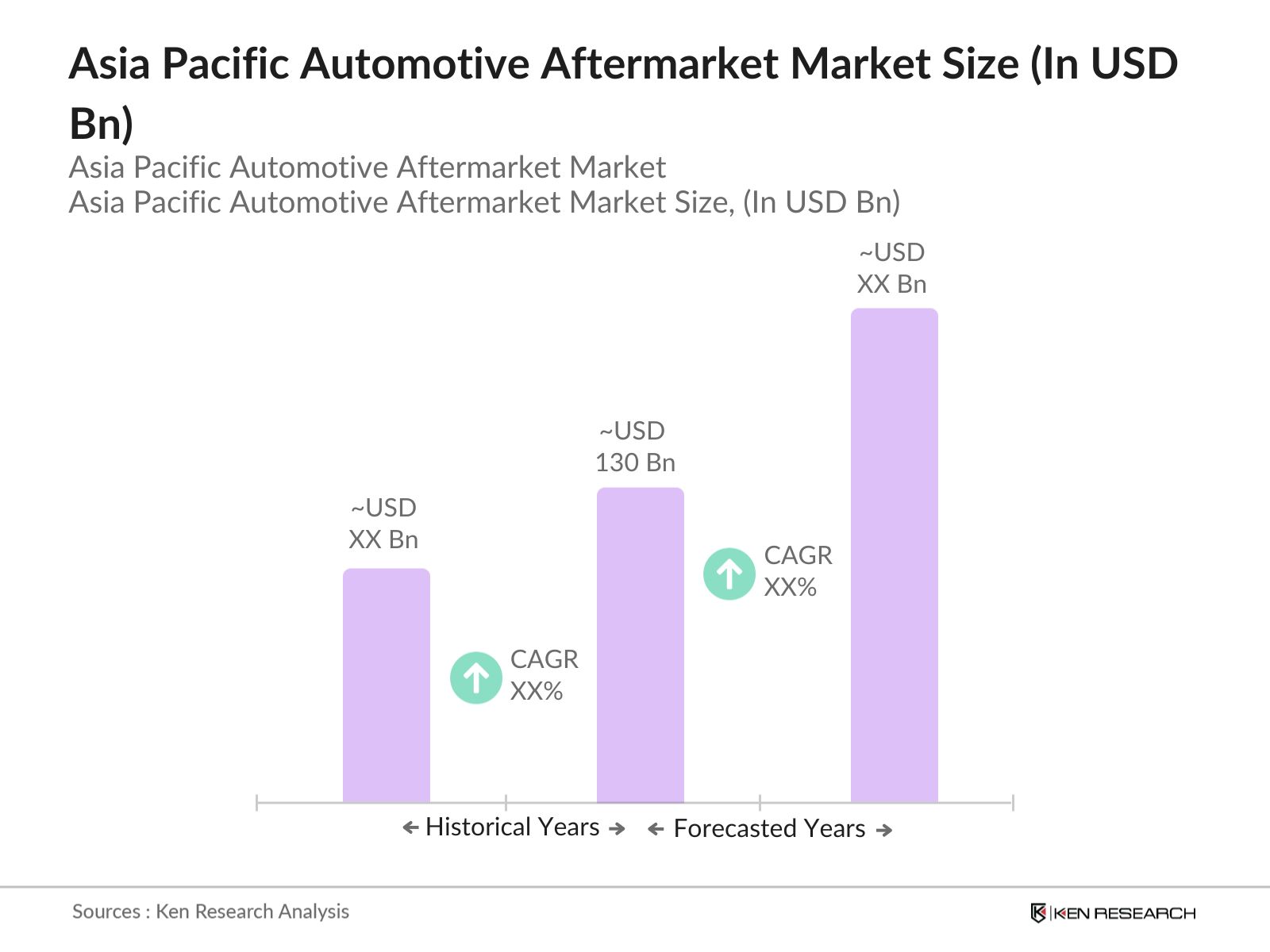
Countries such as China, Japan, and India dominate the Asia Pacific automotive aftermarket. China, with its massive vehicle population and growing economy, leads in parts and services demand, supported by increasing disposable incomes and a high rate of vehicle ownership. Japan holds a prominent position due to its advanced automotive industry and consumer preference for quality maintenance services, while Indias demand is spurred by the surge in two-wheelers and affordable vehicle ownership.
Stringent emission standards in the Asia Pacific region have significantly impacted the aftermarket sector, driving demand for compliant products and technologies. In 2023, major economies such as China and Japan implemented rigorous emissions regulations that necessitate the use of environmentally friendly parts and cleaner technologies. This regulatory push has prompted aftermarket providers to focus on the development of emission-compliant components, such as catalytic converters and efficient exhaust systems, to support pollution reduction goals. These standards aim to curb pollution levels, which remain a critical issue in highly urbanized areas across the region.
Asia Pacific Automotive Aftermarket Market Segmentation
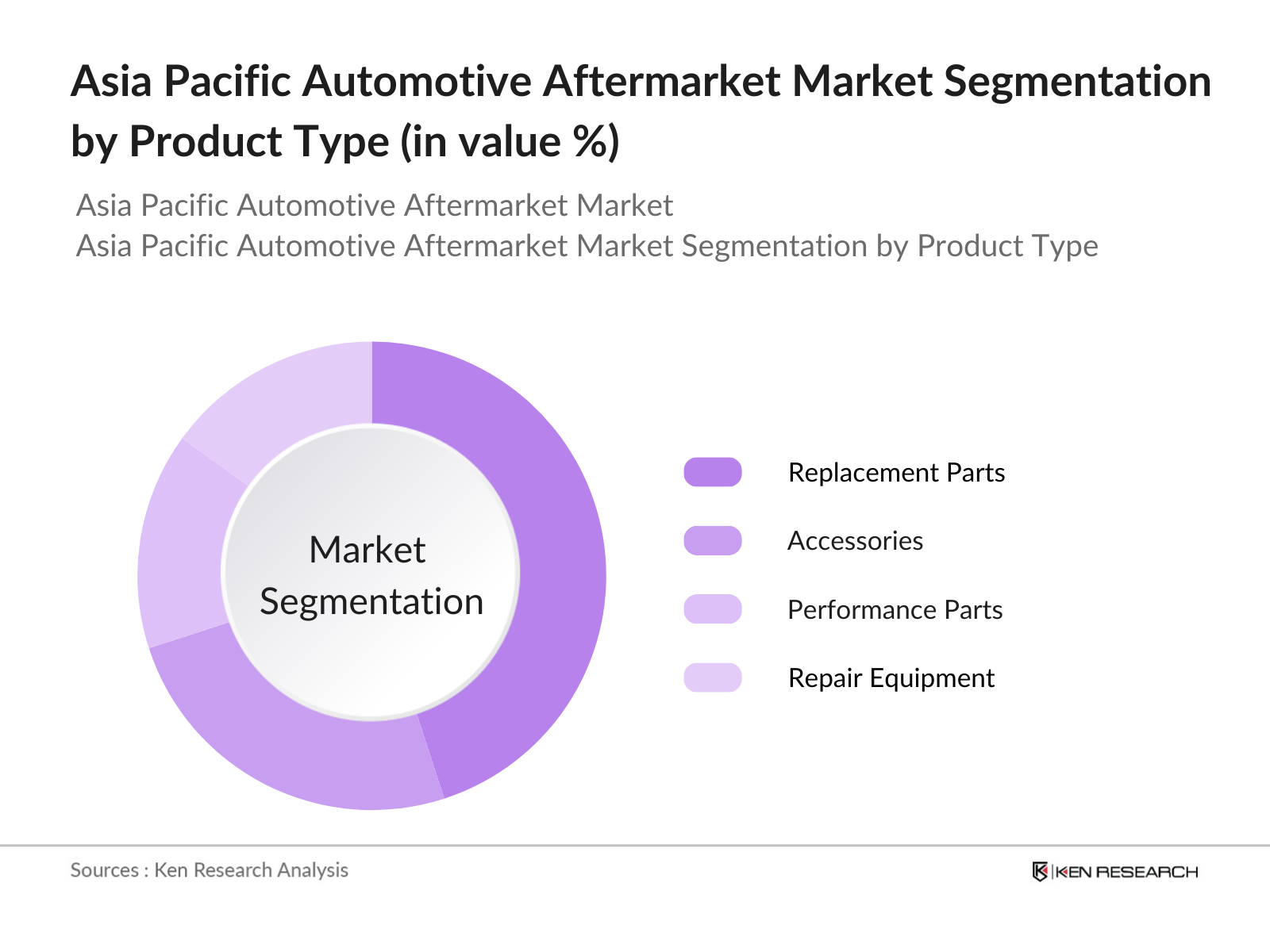
- By Product Type: The Asia Pacific automotive aftermarket is segmented by product type into replacement parts, accessories, performance parts, and repair equipment. Replacement parts, including engine parts and filters, hold a dominant market share, primarily due to frequent wear and tear and regular maintenance cycles. The availability of a vast array of replacement components, coupled with the expansion of both authorized service centers and independent garages, has amplified this segments growth. Furthermore, local manufacturing and availability of affordable spare parts make replacement parts a highly accessible and widely demanded segment in the region.
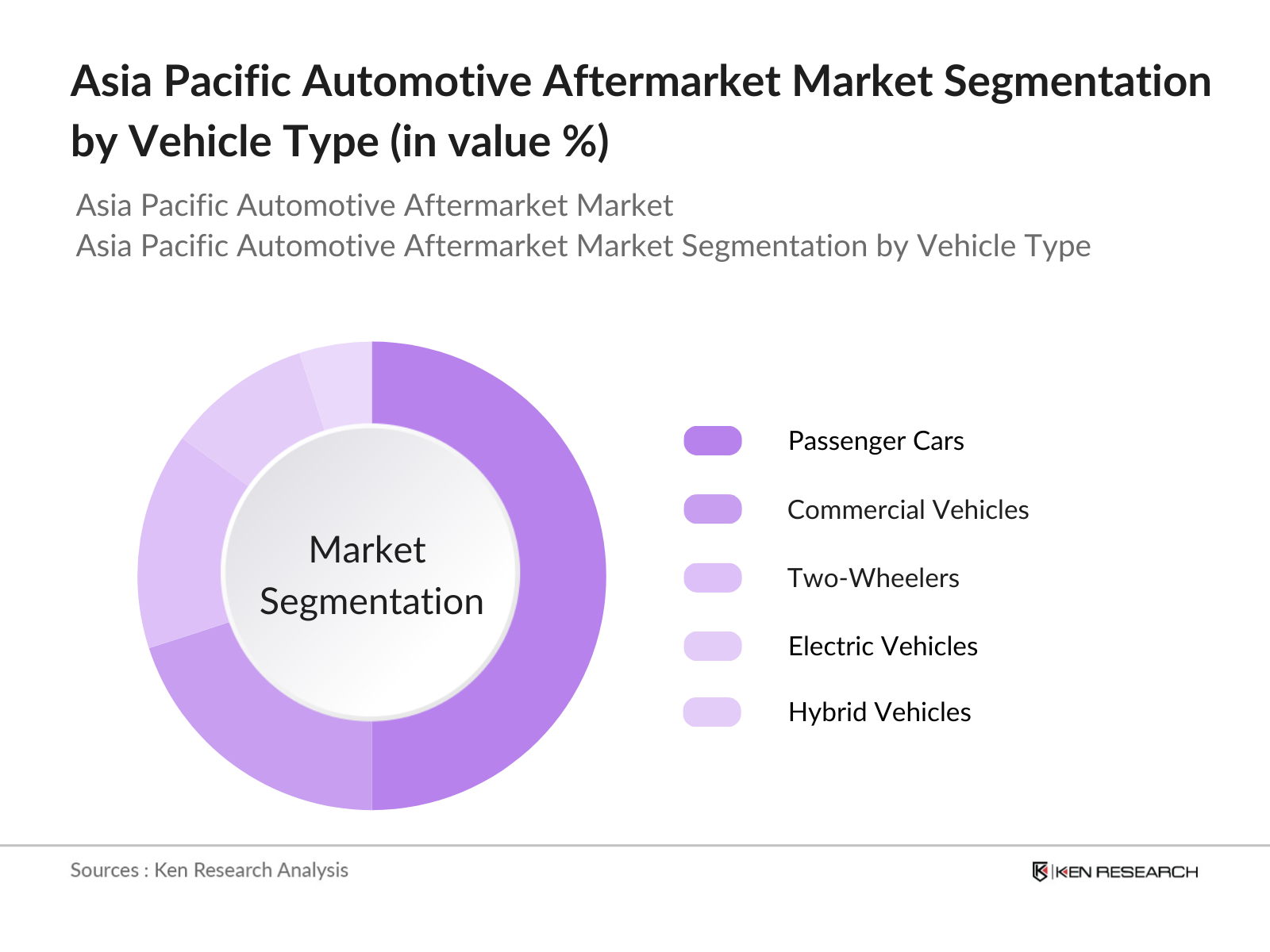
- By Vehicle Type: The Asia Pacific automotive aftermarket is further segmented by vehicle type into passenger cars, commercial vehicles, two-wheelers, electric vehicles (EVs), and hybrid vehicles. Passenger cars hold a significant share, driven by high ownership rates in urban regions and regular maintenance needs. The growing popularity of ride-sharing services, along with the adoption of luxury car services in densely populated cities, has further stimulated demand for aftermarket services. Electric and hybrid vehicles are also gaining traction as governments push for greener transportation options, but their aftermarket requirements remain distinct and developing.
Asia Pacific Automotive Aftermarket Market Competitive Landscape
The Asia Pacific automotive aftermarket is dominated by key players that leverage extensive distribution networks, local partnerships, and strong brand recognition to maintain market presence. These companies offer a wide range of products across the region, catering to varying consumer needs and regulatory standards. 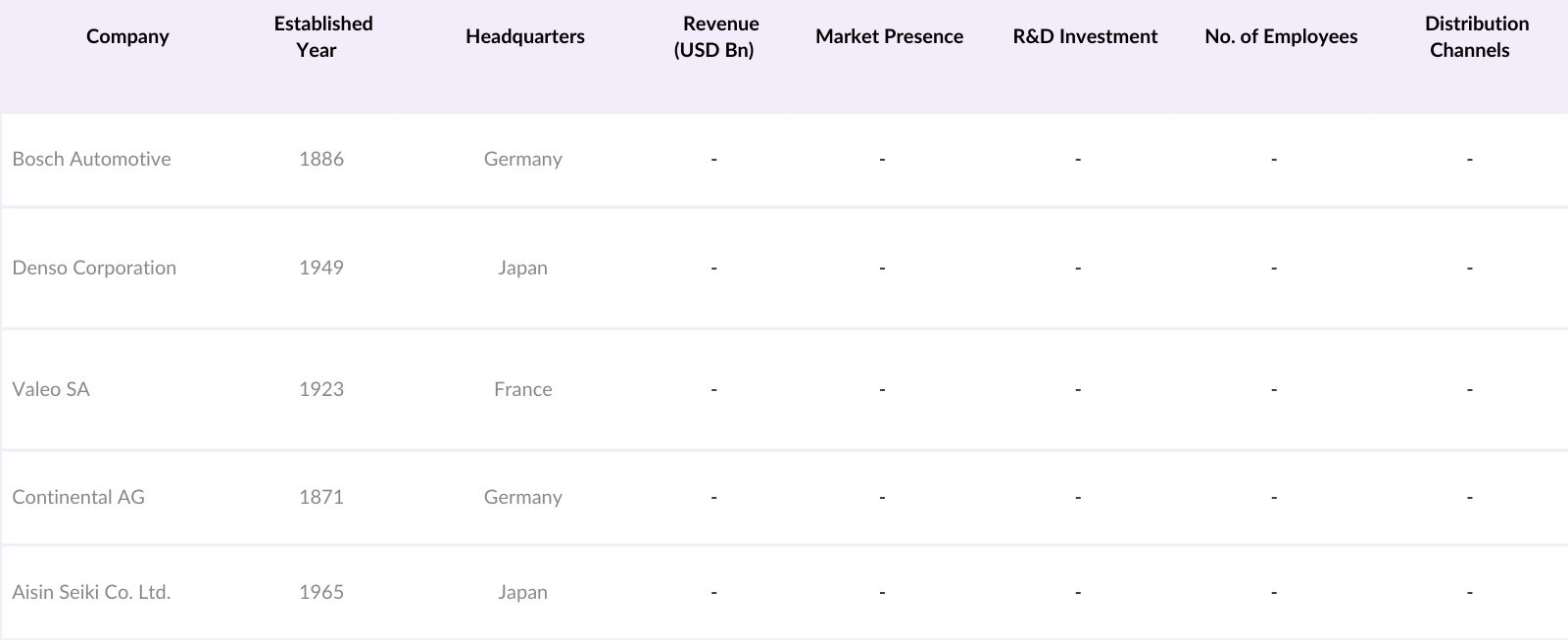
Asia Pacific Automotive Aftermarket Market Analysis
Growth Drivers
- Rise in Vehicle Ownership: The Asia Pacific region has experienced a significant increase in vehicle ownership, with the total number of registered vehicles reaching 1.2 billion in 2023. This surge is largely driven by economic growth in countries like China and India, where GDPs have expanded to $17.7 trillion and $3.5 trillion, respectively, in 2023. This economic prosperity has elevated disposable incomes, enabling more consumers to purchase vehicles. Consequently, the expanding vehicle fleet has amplified the demand for aftermarket services, including maintenance, repairs, and parts replacement.
- Demand for Customization and Upgrades: Consumers in the Asia Pacific region are increasingly seeking vehicle customization and upgrades, reflecting a shift towards personalized automotive experiences. In 2023, the automotive accessories market saw a notable uptick, with a significant portion of vehicle owners investing in enhancements such as advanced infotainment systems, performance parts, and aesthetic modifications. This trend is particularly evident in urban centers where younger demographics are willing to allocate a portion of their income towards vehicle personalization, thereby driving growth in the aftermarket sector.
- Increasing Average Vehicle Age: The average age of vehicles in the Asia Pacific region has been on the rise, reaching 7.5 years in 2023. This aging vehicle fleet necessitates more frequent maintenance and part replacements to ensure safety and performance. As vehicles age, components such as brakes, batteries, and tires require regular servicing or replacement, thereby bolstering the aftermarket industry. This trend underscores the importance of the aftermarket sector in supporting the longevity and reliability of older vehicles.
Market Challenges
- Price Sensitivity: The Asia Pacific automotive aftermarket is characterized by high price sensitivity among consumers, leading to intense competition among service providers and parts manufacturers. In 2023, the market saw a surge in low-cost alternatives, particularly from local manufacturers, challenging established brands. This trend has pressured companies to balance cost and quality to maintain market share, often leading to reduced profit margins and a focus on cost-effective production methods.
- Quality Control Issues: The prevalence of counterfeit automotive parts poses a significant challenge in the Asia Pacific aftermarket. In 2023, authorities reported numerous cases of counterfeit parts entering the supply chain, compromising vehicle safety and performance. These substandard components not only endanger consumers but also tarnish the reputation of legitimate manufacturers and suppliers, leading to increased regulatory scrutiny and the need for stringent quality control measures.
Asia Pacific Automotive Aftermarket Market Future Outlook
Over the coming years, the Asia Pacific automotive aftermarket is expected to experience significant growth driven by the rising adoption of electric and hybrid vehicles, expanding e-commerce channels for automotive parts, and technological advancements in diagnostic tools. Countries like China, India, and Japan will continue to play a critical role, with EV aftermarket services likely to emerge as a niche yet expanding segment. Increasing consumer awareness regarding vehicle maintenance and the shift towards eco-friendly aftermarket products are expected to shape the future landscape of the industry.
Future Market Opportunities
- Rising Demand for EV Components: The Asia Pacific region has witnessed a surge in electric vehicle (EV) adoption, with over 2 million EVs sold in 2023. This trend presents substantial opportunities for the aftermarket sector, particularly in the supply of specialized components such as batteries, charging equipment, and maintenance services tailored for EVs. As governments continue to promote sustainable transportation through incentives and infrastructure development, the demand for EV-related aftermarket products is expected to grow, offering new avenues for businesses in this sector.
- Growth in DIY Repairs: There has been a notable increase in the do-it-yourself (DIY) culture among vehicle owners in the Asia Pacific region. In 2023, a significant number of consumers opted to perform basic maintenance and repairs themselves, driven by the availability of online tutorials and the desire to reduce costs. This trend has led to higher sales of tools, parts, and accessories suitable for DIY projects, presenting a lucrative opportunity for aftermarket suppliers to cater to this growing segment.
Scope of the Report
|
By ProductType |
Engine Parts |
|
By VehicleType |
Passenger Cars |
|
By DistributionChannel |
OEMs |
|
By Service Type |
GeneralMaintenance |
|
By Region |
China |
Products
Key Target Audience
Automotive Parts Manufacturers
OEM Service Centers
Independent Aftermarket Providers
Online Retailers for Automotive Parts
Vehicle Owners and Fleet Operators
Investments and Venture Capitalist Firms
Government and Regulatory Bodies (e.g., Ministry of Industry and Trade, Environmental Protection Agency)
Automotive Repair and Service Workshops
Companies
Major Players
Bosch Automotive
Denso Corporation
Valeo SA
Continental AG
Aisin Seiki Co. Ltd.
ZF Friedrichshafen AG
Bridgestone Corporation
Michelin Group
Hella GmbH & Co. KGaA
Schaeffler AG
Hyundai Mobis
Tenneco Inc.
Hitachi Automotive Systems
3M Company
Magneti Marelli S.p.A.
Table of Contents
1. Asia Pacific Automotive Aftermarket Market Overview
1.1. Definition and Scope
1.2. Market Taxonomy
1.3. Market Growth Rate
1.4. Market Segmentation Overview
2. Asia Pacific Automotive Aftermarket Market Size (In USD Bn)
2.1. Historical Market Size
2.2. Year-on-Year Growth Analysis
2.3. Key Market Developments and Milestones
3. Asia Pacific Automotive Aftermarket Market Dynamics
3.1. Growth Drivers
3.1.1. Rise in Vehicle Ownership (Vehicle Fleet Growth)
3.1.2. Demand for Customization and Upgrades (Consumer Preferences)
3.1.3. Increasing Average Vehicle Age (Replacement Demand)
3.1.4. Expansion of E-Commerce Platforms (Online Retail Growth)
3.2. Market Challenges
3.2.1. Price Sensitivity (Low-Cost Competition)
3.2.2. Quality Control Issues (Counterfeit Parts)
3.2.3. Supply Chain Disruptions (Raw Material Scarcity)
3.2.4. Regulatory Compliance (Emission Standards)
3.3. Opportunities
3.3.1. Rising Demand for EV Components (Electric Vehicles)
3.3.2. Growth in DIY Repairs (Do-It-Yourself Culture)
3.3.3. Development of Smart Automotive Parts (IoT Integration)
3.3.4. Collaborations with Car Dealerships (Distribution Channels)
3.4. Trends
3.4.1. Shift Towards Digitization (AI and Analytics)
3.4.2. Popularity of Online-to-Offline (O2O) Strategies
3.4.3. Emergence of Subscription-Based Models (Service Plans)
3.4.4. Focus on Green and Sustainable Products (Eco-Friendly Parts)
3.5. Government Regulations
3.5.1. Emission Standards and Compliance (Pollution Control)
3.5.2. Tariffs on Imported Parts (Trade Policies)
3.5.3. Incentives for EV and Hybrid Vehicles (Subsidies)
3.5.4. Safety Standards for Aftermarket Products (Certification Requirements)
3.6. SWOT Analysis
3.7. Stakeholder Ecosystem (Manufacturers, Distributors, End Users)
3.8. Porters Five Forces
3.9. Competition Ecosystem
4. Asia Pacific Automotive Aftermarket Market Segmentation
4.1. By Product Type (In Value %)
4.1.1. Engine Parts
4.1.2. Electrical Components
4.1.3. Exterior Accessories
4.1.4. Interior Accessories
4.1.5. Repair and Maintenance Parts
4.2. By Vehicle Type (In Value %)
4.2.1. Passenger Cars
4.2.2. Commercial Vehicles
4.2.3. Electric Vehicles (EVs)
4.2.4. Hybrid Vehicles
4.2.5. Two-Wheelers
4.3. By Distribution Channel (In Value %)
4.3.1. OEMs
4.3.2. Wholesalers and Distributors
4.3.3. Online Platforms
4.3.4. Retail Outlets
4.3.5. Service Stations
4.4. By Service Type (In Value %)
4.4.1. General Maintenance
4.4.2. Repair Services
4.4.3. Tire Services
4.4.4. Collision Repair
4.4.5. Body Refurbishment
4.5. By Region (In Value %)
4.5.1. China
4.5.2. Japan
4.5.3. India
4.5.4. Southeast Asia
4.5.5. Australia
5. Asia Pacific Automotive Aftermarket Market Competitive Analysis
5.1. Detailed Profiles of Major Companies
5.1.1. Bosch Automotive Aftermarket
5.1.2. Denso Corporation
5.1.3. Valeo SA
5.1.4. Continental AG
5.1.5. ZF Friedrichshafen AG
5.1.6. Bridgestone Corporation
5.1.7. Aisin Seiki Co. Ltd.
5.1.8. Hella GmbH & Co. KGaA
5.1.9. Tenneco Inc.
5.1.10. Michelin Group
5.1.11. 3M Company
5.1.12. Schaeffler AG
5.1.13. Hyundai Mobis
5.1.14. Magneti Marelli S.p.A
5.1.15. Hitachi Automotive Systems
5.2. Cross Comparison Parameters (No. of Employees, Headquarters, Revenue, Market Share, Product Portfolio, Geographical Presence, Manufacturing Capabilities, R&D Expenditure)
5.3. Market Share Analysis
5.4. Strategic Initiatives
5.5. Mergers and Acquisitions
5.6. Investment Analysis
5.7. Venture Capital Funding
5.8. Government Grants
5.9. Private Equity Investments
6. Asia Pacific Automotive Aftermarket Regulatory Framework
6.1. Emission Control Regulations
6.2. Compliance and Safety Standards
6.3. Certification Processes for Aftermarket Parts
7. Asia Pacific Automotive Aftermarket Future Market Size (In USD Bn)
7.1. Future Market Size Projections
7.2. Key Factors Driving Future Market Growth
8. Asia Pacific Automotive Aftermarket Future Market Segmentation
8.1. By Product Type (In Value %)
8.2. By Vehicle Type (In Value %)
8.3. By Distribution Channel (In Value %)
8.4. By Service Type (In Value %)
8.5. By Region (In Value %)
9. Asia Pacific Automotive Aftermarket Market Analysts Recommendations
9.1. TAM/SAM/SOM Analysis
9.2. Customer Cohort Analysis
9.3. Marketing Initiatives
9.4. White Space Opportunity Analysis
DisclaimerContact Us
Research Methodology
Step 1: Identification of Key Variables
The research begins with a comprehensive identification of critical variables influencing the Asia Pacific Automotive Aftermarket Market. An ecosystem map is constructed, covering stakeholders such as automotive parts manufacturers, distributors, and service providers. Secondary data from proprietary databases and industry reports support this phase.
Step 2: Market Analysis and Construction
This phase involves gathering historical data on automotive part usage, frequency of repairs, and service intervals. Market penetration rates are analyzed to provide insights into consumer preferences and expenditure trends within various segments.
Step 3: Hypothesis Validation and Expert Consultation
Market assumptions are validated through expert interviews and CATIs with senior executives from aftermarket companies. These discussions provide insights into operational trends, segment growth, and the future scope of the aftermarket industry.
Step 4: Research Synthesis and Final Output
This stage synthesizes the findings from all previous steps into a comprehensive report. Detailed insights into segment performance, revenue distribution, and growth drivers are compiled to present an accurate and validated analysis of the Asia Pacific Automotive Aftermarket Market.
Frequently Asked Questions
1. How big is the Asia Pacific Automotive Aftermarket Market?
The Asia Pacific automotive aftermarket market is valued at USD 130 billion, driven by increasing vehicle ownership, longer vehicle lifespans, and a high demand for vehicle customization.
2. What are the key drivers of the Asia Pacific Automotive Aftermarket Market?
The Asia Pacific automotive aftermarket is driven by the rising vehicle fleet, increased average vehicle age, urbanization, and a growing consumer preference for vehicle performance upgrades and routine maintenance.
3. Who are the major players in the Asia Pacific Automotive Aftermarket Market?
Major players in the Asia Pacific automotive aftermarket include Bosch Automotive, Denso Corporation, Valeo SA, Continental AG, and Aisin Seiki Co. Ltd., recognized for their extensive distribution networks and comprehensive product offerings.
4. What challenges does the Asia Pacific Automotive Aftermarket Market face?
Key challenges in the Asia Pacific automotive aftermarket include the presence of counterfeit parts, high market fragmentation, regulatory hurdles, and the shift towards EVs, which have distinct aftermarket needs.
5. What is the future outlook for the Asia Pacific Automotive Aftermarket Market?
The Asia Pacific automotive aftermarket is expected to grow due to increased adoption of EVs, e-commerce expansion, and technological advancements in diagnostic tools and sustainable aftermarket products.
Why Buy From Us?

What makes us stand out is that our consultants follows Robust, Refine and Result (RRR) methodology. i.e. Robust for clear definitions, approaches and sanity checking, Refine for differentiating respondents facts and opinions and Result for presenting data with story

We have set a benchmark in the industry by offering our clients with syndicated and customized market research reports featuring coverage of entire market as well as meticulous research and analyst insights.

While we don't replace traditional research, we flip the method upside down. Our dual approach of Top Bottom & Bottom Top ensures quality deliverable by not just verifying company fundamentals but also looking at the sector and macroeconomic factors.

With one step in the future, our research team constantly tries to show you the bigger picture. We help with some of the tough questions you may encounter along the way: How is the industry positioned? Best marketing channel? KPI's of competitors? By aligning every element, we help maximize success.

Our report gives you instant access to the answers and sources that other companies might choose to hide. We elaborate each steps of research methodology we have used and showcase you the sample size to earn your trust.

If you need any support, we are here! We pride ourselves on universe strength, data quality, and quick, friendly, and professional service.