CHAPTER 1 - MARKET SUMMARY
Market Overview
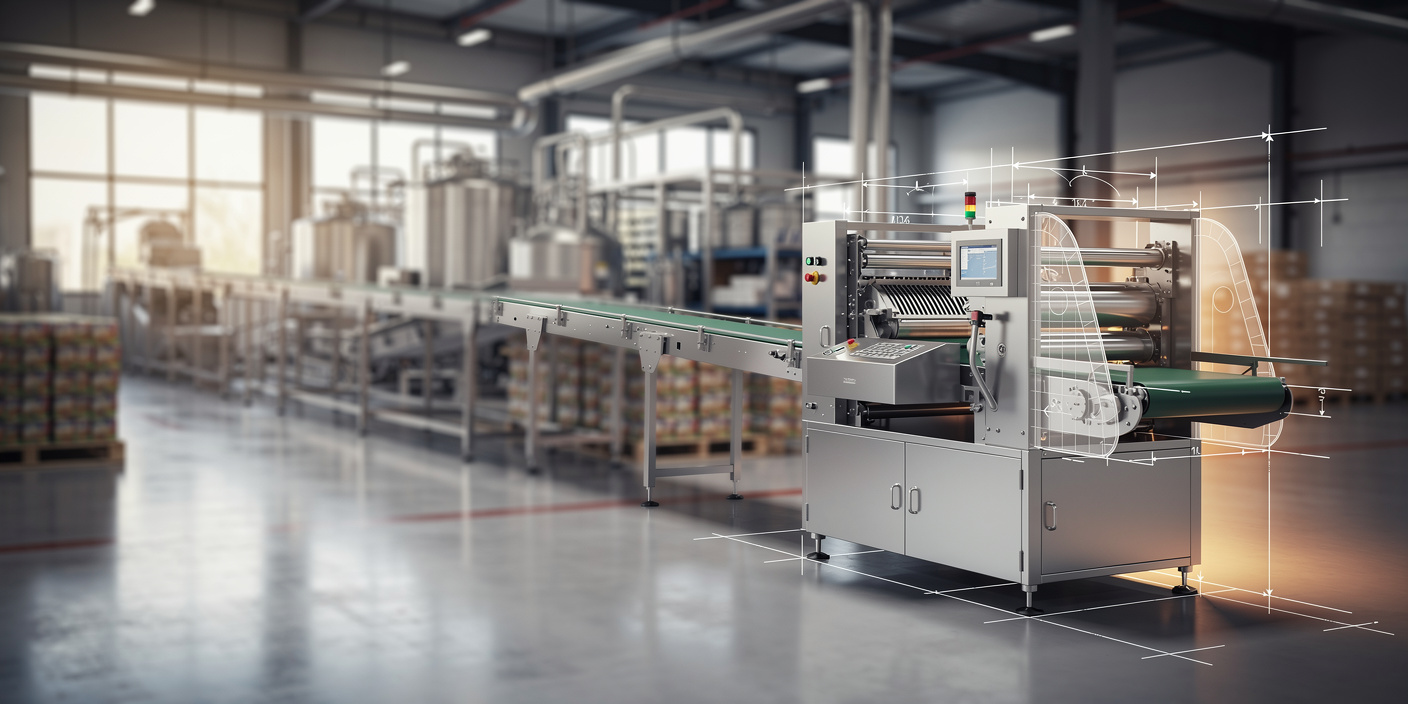
The Asia Pacific Food Processing Machinery Market operates as a capital equipment market in which OEM revenue is booked at ex-factory sale, while downstream value is captured through installation, service, retrofits, and spare parts. Commercial demand is led by industrial processors seeking throughput, hygiene, and yield control. China alone had more than 100,000 registered food processing companies in 2025, while its food service sales reached USD 812 billion in 2025, illustrating the scale that supports replacement cycles and line expansion.
Geographic concentration is strongest in East Asia, where engineering depth, supplier ecosystems, and validation infrastructure are most mature. Japan remains a critical technology hub: FOOMA JAPAN 2024 recorded 113,777 visitors, up from 106,104 in 2023, highlighting the scale of regional solution sourcing, demonstration activity, and buyer-supplier matching. This matters commercially because processors in Asia Pacific typically prefer proven hygienic designs, local commissioning capability, and faster parts support when purchasing higher-value automated lines.
Market Value
USD 21,500 Mn
2024
Dominant Region
East Asia
2024
Dominant Segment
Meat, Poultry & Seafood Processing Equipment
largest segment, 2024
Total Number of Players
14
Future Outlook
The Asia Pacific Food Processing Machinery Market is positioned for steady medium-term expansion, with the market moving from USD 21,500 Mn in 2024 to USD 29,039 Mn by 2030. Historical performance remained resilient, despite a pandemic-led contraction in 2020, and the market delivered a 4.2% CAGR during 2019-2024. The next growth phase is expected to be supported by protein processing upgrades, beverage line modernization, bakery automation, and higher adoption of fully automated and semi-automated systems among large industrial processors. Average OEM revenue per unit is expected to rise gradually as hygienic design, digital controls, and energy-efficiency features gain weight in procurement decisions.
From 2025 to 2030, the Asia Pacific Food Processing Machinery Market is forecast to expand at a 5.1% CAGR, implying faster growth than the previous five-year period. The step-up reflects a better mix, not only higher unit volumes. Chocolate, snack and convenience food equipment remains the fastest-growing revenue pool, while plant expansions in ready-to-eat, dairy, seafood, and fruit processing continue to support equipment replacement and greenfield demand. By 2030, the market is expected to show broader demand outside China and Japan, with India and Southeast Asia contributing a higher share of incremental revenue through policy-backed food manufacturing investment and a rising installed base of modern lines.
5.1%
Forecast CAGR
$29,039 Mn
2030 Projection
Base Year
2024
Historical Period
2019-2024
Forecast Period
2025-2030
Historical CAGR
4.2%
CHAPTER 2 - SCOPE OF REPORT
Scope of the Market
CHAPTER 3 - Key Stakeholders
Key Target Audience
Key stakeholders who can leverage from this market analysis for investment, strategy, and operational planning.
Investors
CAGR, installed base, aftermarket margin, automation mix
Corporates
capex timing, hygienic design, uptime, yield
Government
food security, compliance, export competitiveness, modernization
Operators
throughput, labor savings, maintenance, changeover efficiency
Financial institutions
equipment finance, residual value, utilization, covenants
CHAPTER 4 - Market Size & Growth
Market Size, Growth Forecast and Trends
This section evaluates the historical market size, analyzes year-over-year growth dynamics, and presents forecast projections supported by market performance indicators and demand-side drivers.
Historical & Projected Market Size ($ Million)
Year-over-Year Growth Rate (%)
Market Value vs Volume Growth (%)
Historical Market Performance (2019-2024)
The Asia Pacific Food Processing Machinery Market bottomed in 2020, then recovered strongly in 2021 as plant expansion and deferred capex returned. By 2024, value had moved above the pre-pandemic 2019 level by roughly 23.0%, supported by a broader replacement cycle and higher system complexity. A key inflection came from automation: China’s factories had an operational stock of 1,755,132 industrial robots in 2023, while Asia accounted for 74% of new global robot deployments in 2024. That automation depth supported demand for integrated handling, inspection, and high-throughput processing systems.
Forecast Market Outlook (2025-2030)
Forecast growth is expected to accelerate modestly because mix improves alongside volume. The Asia Pacific Food Processing Machinery Market reaches USD 29,039 Mn in 2030, with average OEM revenue per unit rising toward USD 45,444 per unit. India is an important incremental growth engine: the PLISFPI carries an outlay of Rs 10,900 crore through FY2026-27 and is expected to facilitate processed food output of Rs 33,494 crore and nearly 2.5 lakh jobs. This supports line additions in ready-to-cook, fruits and vegetables, marine products, and cheese, all of which expand the addressable market for hygienic and automated equipment.
CHAPTER 5 - Market Data
Market Breakdown
The Asia Pacific Food Processing Machinery Market has moved from cyclical recovery to structurally broader modernization. For CEOs and investors, the relevant question is no longer only unit volume growth, but whether higher automation, richer software content, and tighter hygiene requirements are lifting revenue quality and aftermarket attachment.
Year | Market Size (USD Mn) | YoY Growth (%) | Market Volume (Units) | Average OEM Revenue per Unit (USD) | Fully Automated Equipment Share (%) | Period |
|---|---|---|---|---|---|---|
| 2019 | $17,480 Mn | +- | 403,000 | 43,375 | Forecast | |
| 2020 | $16,650 Mn | +-4.7% | 389,000 | 42,802 | Forecast | |
| 2021 | $18,320 Mn | +10.0% | 423,000 | 43,310 | Forecast | |
| 2022 | $19,440 Mn | +6.1% | 444,000 | 43,784 | Forecast | |
| 2023 | $20,560 Mn | +5.8% | 465,000 | 44,215 | Forecast | |
| 2024 | $21,500 Mn | +4.6% | 485,000 | 44,330 | Forecast | |
| 2025 | $22,605 Mn | +5.1% | 508,000 | 44,498 | Forecast | |
| 2026 | $23,766 Mn | +5.1% | 532,000 | 44,673 | Forecast | |
| 2027 | $24,987 Mn | +5.1% | 557,000 | 44,860 | Forecast | |
| 2028 | $26,270 Mn | +5.1% | 583,000 | 45,060 | Forecast | |
| 2029 | $27,620 Mn | +5.1% | 610,000 | 45,279 | Forecast | |
| 2030 | $29,039 Mn | +5.1% | 639,000 | 45,444 | Forecast |
Market Volume
485,000 units, 2024, Asia Pacific. A large installed base expands the profit pool for parts, service, inspection modules, and retrofit automation. Asia accounted for 74% of new global industrial robot deployments in 2024, indicating that food plants are operating in a region where automation standards are rising quickly.
Average OEM Revenue per Unit
USD 44,330 per unit, 2024, Asia Pacific. Stable ASP expansion indicates buyers are accepting higher-value hygienic, digitally controlled, and energy-efficient systems rather than only capacity additions. In Japan, HACCP-based hygiene management became mandatory for, in principle, all food business operators from June 1, 2021, reinforcing premium specification demand.
Fully Automated Equipment Share
31%, 2024, Asia Pacific. Rising automation share improves revenue density and supports software, controls, and integration-led margins. India’s PLISFPI has an outlay of Rs 10,900 crore through FY2026-27, with 168 approvals reported by March 2026, signaling continued capex support for modern food manufacturing lines.
CHAPTER 6 - Segmentation
Market Segmentation Framework
Comprehensive analysis across key market segmentation dimensions providing insights into market structure, revenue pools, buyer behavior, and distribution patterns.
No of Segments
5
Dominant Segment
By Product
Fastest Growing Segment
By Automation Level
By Product
Captures the primary equipment revenue pools sold into processors, with Meat Processing Machinery remaining the dominant commercial sub-segment.
By Application
Reflects purchasing intensity by operating scale, with Industrial buyers dominating due to throughput, hygiene, validation, and integration requirements.
By Automation Level
Shows how value shifts from labor-saving upgrades to digitally integrated lines, with Semi-Automated systems currently the broadest installed base.
By End-User Industry
Maps equipment demand to downstream food categories, with Meat & Poultry accounting for the most commercially significant spending pattern.
By Region
Indicates broad geographic revenue allocation within the market footprint, with East showing the strongest concentration of demand and supply depth.
Key Segmentation Takeaways
Comprehensive analysis across all segmentation dimensions providing insights into market structure, buyer preferences, revenue concentration, and distribution patterns.
By Product
Product remains the dominant segmentation axis because capital allocation decisions are made around distinct hygienic process requirements, throughput economics, and line architecture. Meat Processing Machinery leads this dimension because protein plants require higher sanitation intensity, more ancillary modules, and greater automation spending than many other categories. This makes product-led positioning more commercially relevant than purely channel-led views.
By Automation Level
Automation level is the fastest-advancing segmentation axis because labor volatility, food-safety documentation, and yield optimization increasingly influence procurement. Fully Automated systems are gaining share as large processors prioritize uptime, recipe repeatability, and digital traceability. For investors, this axis matters because it usually carries higher ASPs, stickier software attachment, and stronger lifecycle service opportunities than manual or basic semi-automated equipment.
CHAPTER 7 - Regional Analysis
Regional Analysis
Within the Asia Pacific Food Processing Machinery Market, China is the largest national revenue pool among major comparable markets, supported by the region’s deepest food manufacturing base and the strongest automation ecosystem. Japan remains the highest-specification engineering hub, while India is the fastest-growing large market due to policy-backed capacity addition and expanding processed food demand.
Regional Ranking
1st
Regional Share vs Global (Asia Pacific)
38.7%
China CAGR (2025-2030)
5.4%
Regional Ranking
1st
Regional Share vs Global (Asia Pacific)
38.7%
China CAGR (2025-2030)
5.4%
Regional Analysis (Current Year)
Market Position
China ranks 1st among the selected Asia Pacific peer markets at USD 7,955 Mn in 2024, helped by a food processing base of more than 100,000 registered companies and unmatched automation depth.
Growth Advantage
India is the growth leader at 6.8% CAGR, ahead of China at 5.4% and Japan at 3.2%, reflecting policy-backed food manufacturing investment and lower current equipment penetration.
Competitive Strengths
China combines scale and automation, with 1,755,132 industrial robots in factories and 276,288 installations in 2023; Japan adds specification leadership through mature hygiene-led engineering ecosystems and high buyer sophistication.
CHAPTER 8 - INDUSTRY ANALYSIS
Growth Drivers, Market Challenges & Market Opportunities
Comprehensive analysis of key factors shaping the Asia Pacific Food Processing Machinery Market, including growth catalysts, operational challenges, and emerging opportunities across production, distribution, and consumer segments.
Growth Drivers
Industrial food demand deepening across Asia Pacific
- China’s food service sales reached USD 812 billion (2025, China), creating sustained demand for proteins, prepared foods, sauces, and bakery inputs; this supports continuous investment in high-throughput lines, mixers, cookers, and forming systems.
- The Chinese food and agricultural processing industry generated an estimated USD 2.5 trillion revenue base (2025, China), which matters because a large downstream processing base directly expands OEM replacement and retrofit opportunities.
- India’s processed food contributed 23.4% of total agri exports (2023-24, India), signaling stronger commercial orientation of processing capacity and greater need for export-grade sorting, hygienic filling, and thermal systems.
Automation intensity is lifting equipment value per line
- China had 1,755,132 industrial robots in operation (2023, China), indicating that processors increasingly evaluate machinery on labor productivity, data integration, and uptime, not only on mechanical throughput.
- Global manufacturing robot installations reached 542,000 units (2024, global); Asia’s 74% deployment share implies the region remains the primary theater for advanced plant modernization and integrator-led projects.
- In the Asia Pacific Food Processing Machinery Market, fully automated equipment represented 31% of revenue-weighted unit demand (2024, Asia Pacific); value capture is therefore shifting toward controls, robotics interfaces, and software-rich line architecture.
Policy support is widening the investable capex pipeline
- The PLISFPI is expected to generate processed food output of Rs 33,494 crore by 2026-27 (India), directly supporting line additions in ready-to-eat, fruits and vegetables, marine products, and mozzarella.
- As of March 2026, India reported 168 approved applications under PLISFPI and related millet categories, which matters because approvals typically convert into equipment orders across preparation, thermal, conveying, and packaging stages.
- RCEP entered into force on January 1, 2022 for the initial ten countries and later expanded to additional members, improving regional sourcing economics for components, sub-assemblies, and cross-border manufacturing footprints.
Market Challenges
High-specification equipment remains capital intensive for mid-sized processors
- Japan’s HACCP regime applies, in principle, to all food business operators from June 1, 2021; this raises equipment specification requirements and can push smaller processors toward delayed purchases or lower-spec alternatives.
- India’s policy support is substantial, but the need for beneficiaries to invest in plant and machinery within defined windows means weaker balance sheets can still slow conversion from project approval to equipment commissioning.
- Average OEM revenue per unit in the Asia Pacific Food Processing Machinery Market already stood at USD 44,330 per unit (2024, Asia Pacific), which is commercially positive for OEMs but raises financing pressure for smaller processors and independent plant owners.
Supply chains remain exposed to trade and sourcing volatility
- China’s consumer-oriented agricultural imports reached USD 84.4 billion (2025, China); processors serving imported ingredient streams often need flexible line setups, but volatile sourcing can delay capacity expansion decisions.
- The same USDA report notes that U.S. consumer-oriented exports to China fell by over 30% in 2025, underscoring how trade friction can quickly alter ingredient mixes, origin requirements, and downstream processing plans.
- For machinery vendors, the implication is clear: quoting strategy must account for longer lead times, alternative component qualification, and broader localization of service and spare parts to protect conversion.
Regulatory heterogeneity increases localization cost
- RCEP entered in stages, with Korea from February 1, 2022, Malaysia from March 18, 2022, Indonesia from January 2, 2023, and the Philippines from June 2, 2023; OEMs still face different timing for tariff and customs benefits.
- Japan’s requirement for documented hygiene plans, records, and periodic review means imported equipment must align with operator auditability, not only process functionality.
- Commercially, this raises the need for local application engineering, validation support, language-ready documentation, and country-specific configuration, all of which increase cost-to-serve for regional expansion strategies.
Market Opportunities
Convenience and ready-to-eat lines offer the strongest incremental revenue pool
- India’s PLI explicitly targets ready-to-cook and ready-to-eat products among priority segments, creating a direct monetization route for forming, seasoning, frying, cooling, and packaging systems.
- Who benefits is clear: global OEMs, local integrators, software providers, and food manufacturers with branded snack and prepared food portfolios capture the highest returns from faster product refresh and shorter payback periods.
- What must change is faster conversion of project approvals into commissioned lines, especially in India and Southeast Asia, where demand is present but engineering execution capacity remains uneven.
Aftermarket and retrofit services are becoming a larger profit pool
- JBT states that roughly one-half of revenue is generated from recurring parts, service, rebuilds, and leasing activities, demonstrating that lifecycle monetization can rival new equipment economics.
- Investors and operators benefit because installed-base monetization is less cyclical than greenfield capex and usually carries higher gross margins with lower customer acquisition cost.
- What must change is stronger local field-service density, remote diagnostics, spare-parts planning, and retrofit engineering capability, especially outside the core East Asian cluster where service response remains a buying criterion.
Energy-efficient and hygiene-led systems can command premium pricing
- Monetization comes from higher ASP process skids, advanced CIP systems, heat recovery, separators, and digital monitoring, all of which improve customer payback through lower operating cost.
- Who benefits includes dairy, beverage, and protein processors facing tighter hygiene controls and energy scrutiny, as well as OEMs with strong application engineering and process-integration capability.
- What must change is broader buyer adoption of total-cost-of-ownership procurement rather than lowest-capex selection, because efficiency gains are often realized over operating life rather than at initial purchase.
CHAPTER 9 - Competitive Landscape
Competitive Landscape Overview
Competition is moderately concentrated at the premium end, with high entry barriers in hygienic design, process integration, installed service base, and application know-how across protein, dairy, beverage, and bakery lines.
Market Share Distribution
Top 5 Players
Market Dynamics
8 new entrants in the past 5 years, indicating strong market attractiveness and growth potential.
Company Name | Market Share | Headquarters | Founding Year | Core Market Focus |
|---|---|---|---|---|
GEA Group AG | - | Düsseldorf, Germany | 1881 | Dairy, beverage, meat, separators, and integrated process lines |
Bhler AG | - | Uzwil, Switzerland | 1860 | Grain milling, chocolate, bakery, pasta, and ingredient processing systems |
Alfa Laval AB | - | Lund, Sweden | 1883 | Separation, heat transfer, fluid handling, and hygienic food process solutions |
Tetra Pak International S.A. | - | Lausanne, Switzerland | 1951 | Liquid food processing, dairy, beverage systems, and integrated packaging lines |
JBT Corporation | - | Chicago, United States | 1884 | Protein, bakery, beverage, aseptic, thermal, and fresh produce solutions |
Marel | - | Gardabaer, Iceland | 1983 | Poultry, meat, fish, software, and food processing automation systems |
SPX FLOW, Inc. | - | Charlotte, United States | 2015 | Mixing, thermal processing, pumps, valves, and turnkey nutrition systems |
Heat and Control, Inc. | - | Hayward, United States | 1950 | Snack, frying, seasoning, conveying, inspection, and packaging integration |
FENCO Food Machinery S.r.l. | - | - | - | Fruit, tomato, vegetable, and ready-meal processing machinery and plants |
Bucher Industries AG | - | Niederweningen, Switzerland | 1807 | Beverage processing, juice extraction, pressing, and food engineering equipment |
Cross Comparison Parameters
The report provides detailed cross-comparison of key players across 10 performance parameters to identify competitive strengths and weaknesses.
Analysis Covered
Market Share Analysis:
Compares relative scale across protein, dairy, beverage, and bakery niches
Cross Comparison Matrix:
Benchmarks product depth, service reach, automation, and localization strength
SWOT Analysis:
Assesses positioning, risk exposure, capabilities, and strategic whitespace opportunities
Pricing Strategy Analysis:
Reviews premiumization, lifecycle pricing, bundling, and aftermarket monetization levers
Company Profiles:
Summarizes headquarters, heritage, focus areas, and operating relevance
CHAPTER 10 - REPORT TOC
Market Report Structure
Comprehensive coverage across three strategic phases — Market Assessment, Go-To-Market Strategy, and Survey — delivering end-to-end insights from market analysis and execution roadmap to customer demand validation.
Market Assessment Phase
Supply-side and competitive intelligence covering market sizing, segmentation, competitive dynamics, regulatory landscape, and future forecasts.
Go-To-Market Strategy Phase
15 chapters
Entry strategy evaluation, execution roadmap, partner recommendations, and profitability outlook.
Survey Phase
8 chapters
Demand-side primary research conducted through structured interviews and online surveys with end users across priority metros and Tier 2/3 cities to capture consumption behavior, unmet needs, and purchase drivers.
Complete Report Coverage
201+ detailed sections covering every aspect of the market
143
Assessment Sections
58
Strategy Sections
CHAPTER 11 - Our Approach
Research Methodology
Desk Research
- OEM revenue and shipment mapping
- Protein and dairy capex tracking
- Food processing policy review
- Trade flow and import screening
Primary Research
- OEM regional sales director interviews
- Food plant engineering head interviews
- Process technology consultant interviews
- Distributor and integrator discussions
Validation and Triangulation
- 287 expert responses reconciled
- OEM versus buyer cross-checks
- Volume-price bridge verification
- Scenario closure stress testing
CHAPTER 12 - FAQ
FAQs
Still have questions?
Our research team is here to help you find the right solution
CHAPTER 13 - Related Research
Explore Related Reports
Expand your market intelligence with complementary research across regions and adjacent markets.
Regional/Country ReportsRelated market analysis across key regions
Related market analysis across key regions
- UAE Food Processing Machinery Market
- KSA Food Processing Machinery Market
- Global Food Processing Machinery Market
- Indonesia Food Processing Machinery Market
- Vietnam Food Processing Machinery Market
Adjacent ReportsRelated markets and complementary research
Related markets and complementary research
- Vietnam Food Processing Automation Software Market
- Japan Hygienic Design Equipment Market
- KSA Clean-in-Place Systems Market
- Philippines Food Traceability Software Market
- South Korea Food Packaging Machinery Market
500+
Market Research Reports
50+
Countries Covered
15+
Industry Verticals