
Asia-Pacific Healthcare Logistics Market Outlook to 2030
Region:Asia
Author(s):Sanjeev
Product Code:KROD8963
November 2024
100
About the Report
Asia-Pacific Healthcare Logistics Market Overview
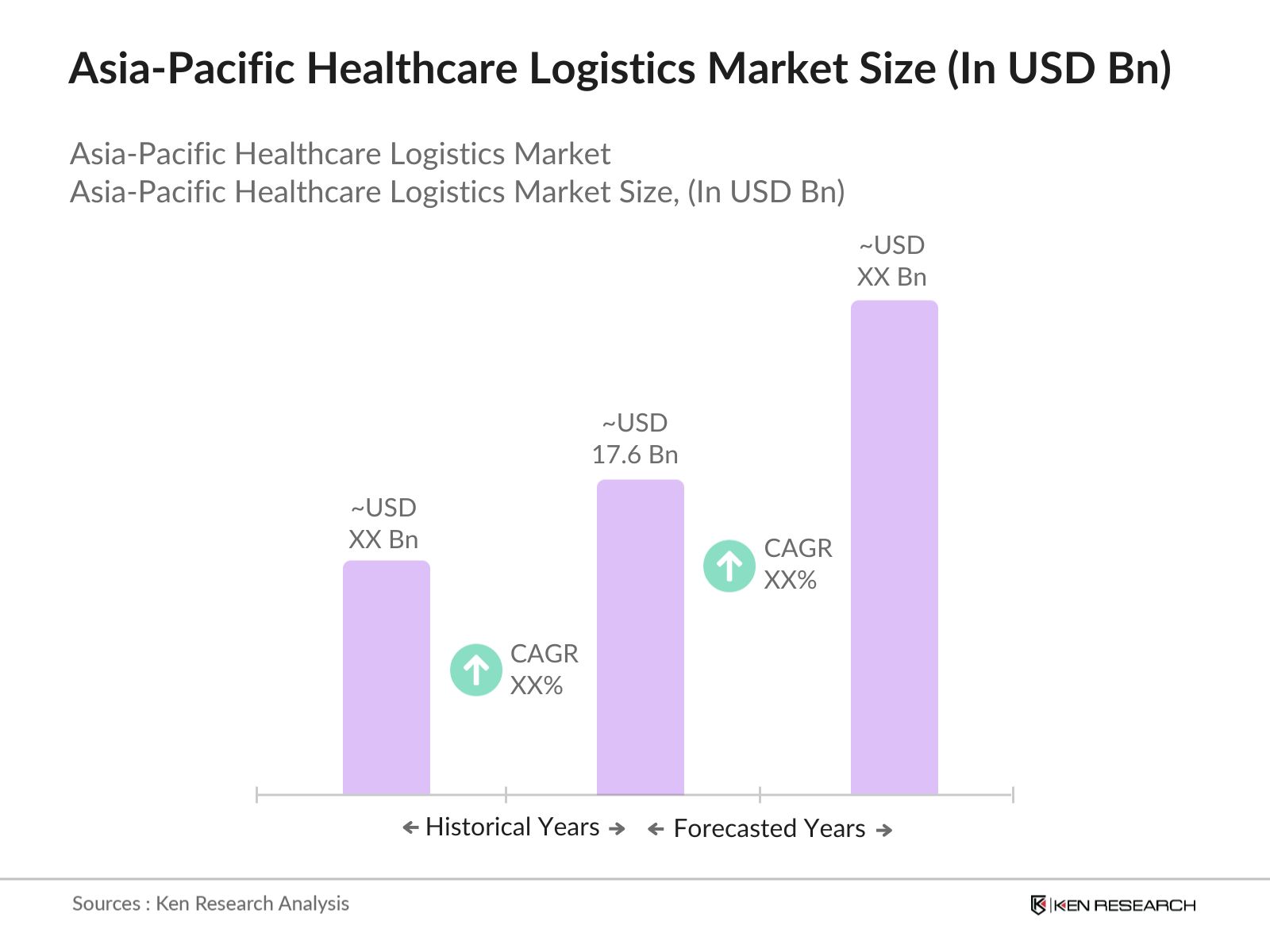
- The Asia-Pacific Healthcare Logistics market is valued at USD 17.6 billion, driven by rapid urbanization, increasing demand for pharmaceuticals, and expanding healthcare infrastructure. The growing prevalence of chronic diseases has contributed to the increased demand for healthcare products requiring efficient logistics services. The market is bolstered by advancements in cold chain logistics, which are essential for the transportation of temperature-sensitive medical products, such as vaccines and biologics. Government initiatives to enhance healthcare infrastructure and supply chain resilience also contribute to market growth, with investments in logistics systems.
- Countries like China, Japan, and India dominate the Asia-Pacific Healthcare Logistics market. Chinas dominance is due to its well-established manufacturing sector, supported by a vast logistics infrastructure, making it a central hub for pharmaceutical and medical device production. Japan's strong healthcare system and technological advancements in supply chain management, particularly for biologics and medical devices, contribute to its market leadership. India, with its growing pharmaceutical industry and strategic positioning for global exports, is increasingly due to its role as a major generic drug producer.
- The Asia-Pacific Healthcare Logistics market is also seeing significant growth due to the integration of digital technologies, such as Artificial Intelligence (AI), Internet of Things (IoT), and blockchain, to improve supply chain visibility, efficiency, and security. These technologies are particularly impactful in ensuring the timely delivery of critical medical supplies and maintaining compliance with stringent regulatory standards for pharmaceutical and biological products.
Asia-Pacific Healthcare Logistics Market Segmentation
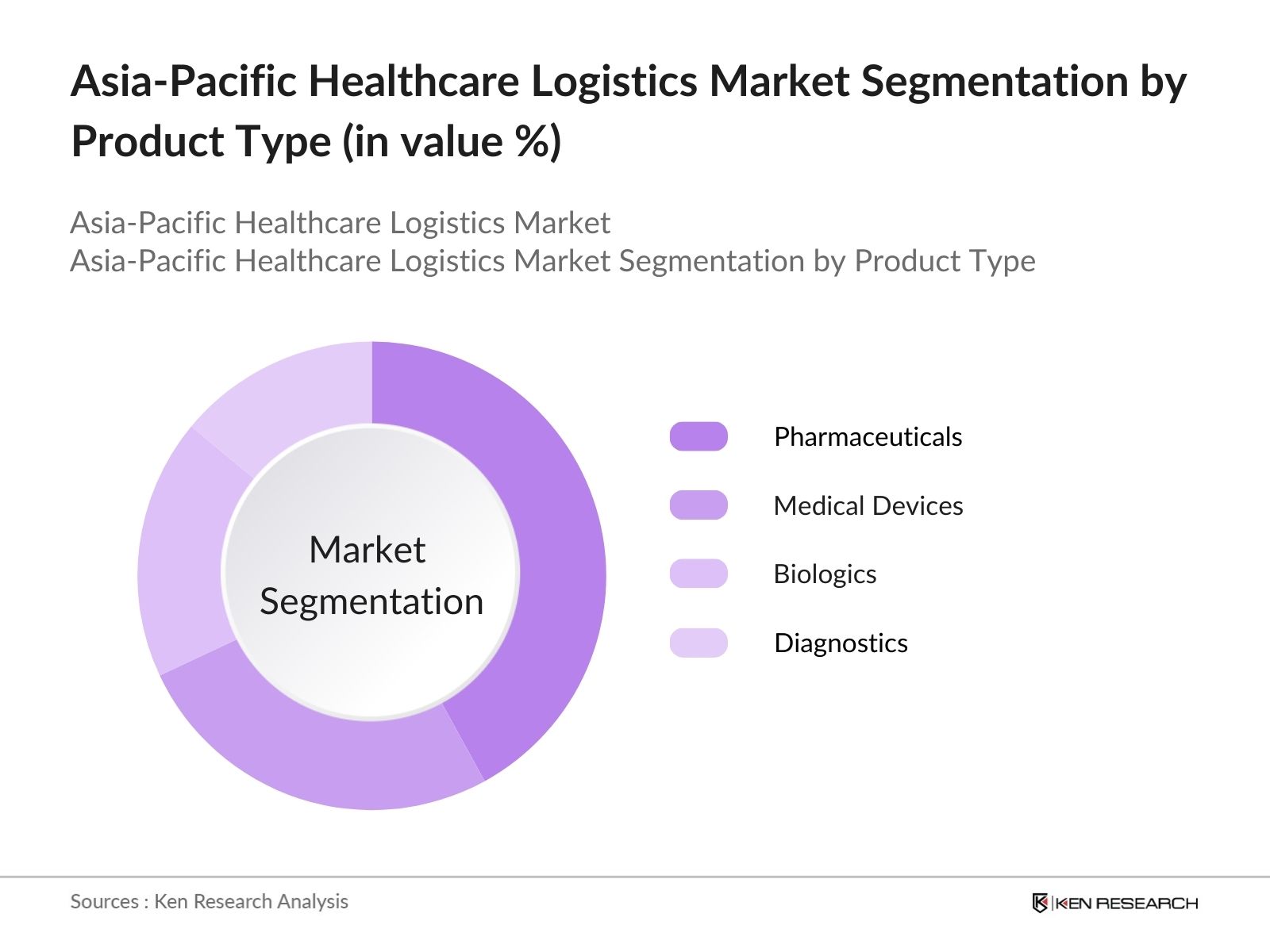
- By Product Type: The market is segmented by product type into Pharmaceuticals, Medical Devices, Biologics, and Diagnostics. Pharmaceuticals hold a dominant share in the market due to the increasing demand for over the counter and prescription drugs. The expansion of the pharmaceutical manufacturing industry, particularly in China and India, has driven this dominance. Additionally, the need for secure and efficient transportation of sensitive products such as vaccines further boosts the pharmaceutical segment's share.
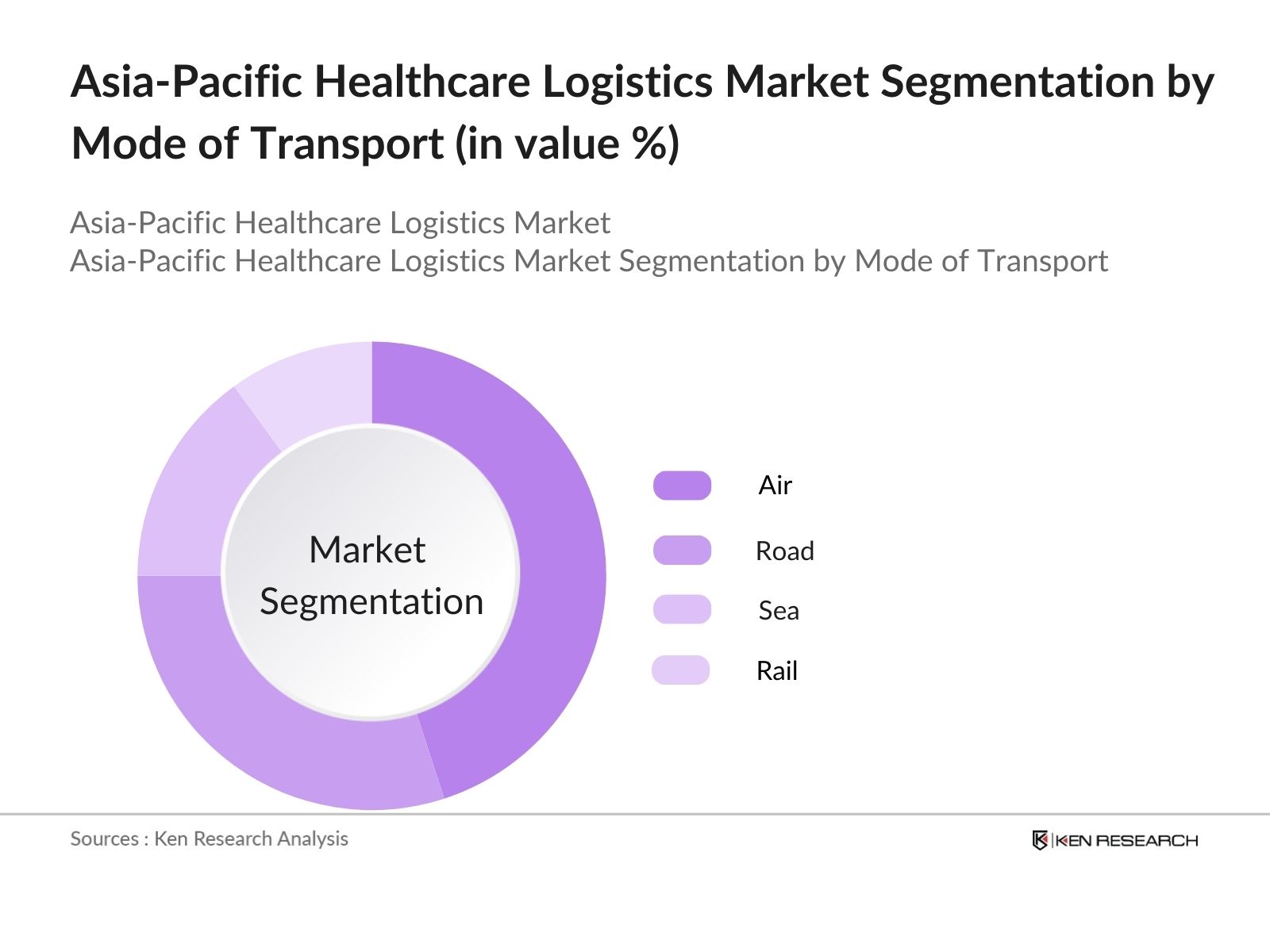
- By Mode of Transport: In terms of mode of transport, the market is segmented into Air, Road, Sea, and Rail. Air transport dominates the market due to the need for fast and reliable logistics solutions, especially for critical medical products like biologics and emergency medical supplies. The increasing use of air freight services for temperature-controlled products also enhances its share. Moreover, regional disparities in healthcare infrastructure require air logistics for quick access to essential medical supplies in remote areas.
Asia-Pacific Healthcare Logistics Market Competitive Landscape
The Asia-Pacific Healthcare Logistics market is dominated by both global and regional players, each focusing on expanding their logistics networks to meet the growing demand for healthcare products. The market is dominated by logistics giants like DHL Supply Chain, FedEx, and Kuehne + Nagel, which have well-established networks across the region. These companies are leveraging technological advancements, including the use of AI and blockchain, to enhance the transparency and efficiency of their healthcare supply chains. Regional players such as SF Express and Kerry Logistics are also expanding their presence, particularly in China and Southeast Asia, focusing on cold chain logistics for pharmaceuticals and biologics.
|
Company Name |
Established Year |
Headquarters |
Key Focus |
Revenue (USD) |
Service Range |
Cold Chain Capability |
|
DHL Supply Chain |
1969 |
Germany |
||||
|
FedEx Healthcare |
1971 |
USA |
||||
|
Kuehne + Nagel |
1890 |
Switzerland |
||||
|
SF Express |
1993 |
China |
||||
|
Kerry Logistics |
2000 |
Hong Kong |
Asia-Pacific Healthcare Logistics Industry Analysis
Market Growth Drivers
- Rising Demand for Pharmaceuticals and Vaccines: The Asia-Pacific region has seen a rise in demand for pharmaceuticals and vaccines, driven by the growing population and aging demographics. For instance, Japans healthcare spending was over $400 billion in 2023, reflecting the need for advanced healthcare services. The demand for vaccines, especially COVID-19 vaccines and boosters, has also fueled the logistics sector's expansion. In India, the government has allocated over $3 billion towards the National Health Mission, promoting the distribution of essential medicines. These factors underline the growth of healthcare logistics, as the demand for efficient distribution systems has become paramount.
- Expansion of Cold Chain Logistics for Healthcare Products: The Asia-Pacific region has been investing heavily in cold chain logistics to ensure the safe transport of temperature-sensitive healthcare products like vaccines and biologics. China, for instance, has increased its cold storage capacity to 180 million cubic meters in 2023 to meet the growing needs of pharmaceutical distribution. In Southeast Asia, governments are partnering with the private sector to enhance cold chain logistics infrastructure, with Vietnam investing $1.2 billion to develop cold storage facilities in 2024. This expansion is critical for maintaining the efficacy of sensitive healthcare products.
- Increasing Urbanization Leading to Higher Healthcare Demand: Rapid urbanization across Asia-Pacific countries has created increased demand for healthcare services. According to the United Nations, over 55% of the Asia-Pacific population resided in urban areas by 2023, with this figure expected to grow further. Countries like Indonesia have seen urban population increases, leading to a greater need for healthcare logistics to service these densely populated areas. In response, governments have expanded their healthcare infrastructure and logistics networks, with India allocating $13 billion towards improving urban healthcare facilities in 2024.
Market Challenges
- Lack of Infrastructure in Rural Areas: One of the challenges for healthcare logistics in Asia-Pacific is the lack of infrastructure in rural areas. In India, nearly 65% of the population still resides in rural regions with inadequate healthcare facilities, creating logistical hurdles. Despite government initiatives, such as Indias $50 billion rural infrastructure development fund, road access and cold chain logistics are still insufficient in many areas. This lack of infrastructure limits the efficient distribution of healthcare products, especially in remote regions of countries like Indonesia and the Philippines.
- Complex Regulatory Requirements Across APAC Countries: Navigating the diverse regulatory landscape in Asia-Pacific is another challenge for healthcare logistics. Each country in the region has its own set of regulations governing the transportation and storage of pharmaceuticals and medical devices. For instance, Australias Therapeutic Goods Administration (TGA) and Japans Pharmaceuticals and Medical Devices Agency (PMDA) impose stringent requirements for pharmaceutical imports. Companies face compliance challenges, especially with cross-border logistics, leading to delays and higher operational costs. In 2023, compliance costs across the region were estimated to be over $1 billion annually due to complex regulatory frameworks.
Asia-Pacific Healthcare Logistics Market Future Outlook
Over the next five years, the Asia-Pacific Healthcare Logistics market is expected to experience substantial growth driven by advancements in cold chain logistics, increasing demand for pharmaceuticals, and government investments in healthcare infrastructure. The rise in chronic diseases, coupled with the expansion of biologics and vaccine distribution, will play a pivotal role in accelerating market growth. Digital transformation in logistics and the adoption of AI for predictive analytics and real-time tracking will further enhance operational efficiency across the healthcare supply chain.
Future Market Opportunities
- Growth of E-Commerce in Healthcare Distribution: E-commerce has emerged as a game-changer for healthcare logistics in Asia-Pacific, enabling faster and more efficient distribution of pharmaceuticals and medical devices. In 2023, the Asia-Pacific e-commerce market for healthcare products was valued at over $100 billion, driven by growing consumer demand for online pharmacies and telemedicine services. Countries like China and Japan have embraced e-commerce platforms to enhance healthcare access. Governments are also supporting the growth of e-commerce by improving digital infrastructure and logistics networks, such as Indonesias investment of $2 billion in expanding its e-commerce capabilities in 2024.
- Use of AI and Blockchain in Supply Chain Transparency: The use of AI and blockchain technology in healthcare logistics is creating opportunities for improved transparency and efficiency. South Korea has already implemented blockchain-based systems in its pharmaceutical supply chain to ensure the authenticity of medical products. In 2023, the South Korean government allocated $500 million for AI and blockchain integration in healthcare logistics. Similarly, Japan has invested heavily in AI-driven predictive logistics models, which reduce wastage and optimize inventory management. This digital transformation is enhancing the reliability and security of healthcare supply chains across the region.
Scope of the Report
|
Pharmaceuticals Medical Devices Biologics, Diagnostics |
|
|
By Service Type |
Warehousing Transportation Packaging Value-added Services |
|
By Mode of Transport |
Air Road Sea Rail |
|
By End-User |
Hospitals Pharmaceutical Companies Diagnostic Labs Research Institutions |
|
By Region |
North East West South |
Products
Key Target Audience
Pharmaceutical Manufacturers
Biologic Drug Developers
Medical Device Companies
Hospitals and Healthcare Providers
Diagnostic Centers
E-commerce Healthcare Platforms
Investments and Venture Capitalist Firms
Government and Regulatory Bodies (APAC Regional Health Authorities)
Companies
Asia-Pacific Healthcare Logistics Market Major Players
DHL Supply Chain
FedEx Healthcare
Kuehne + Nagel
SF Express
Kerry Logistics
Nippon Express
DB Schenker
Agility Logistics
Yusen Logistics
CEVA Logistics
Bollor Logistics
Panalpina
Sinotrans
CJ Logistics
UPS Healthcare
Table of Contents
1. Asia-Pacific Healthcare Logistics Market Overview
1.1. Definition and Scope
1.2. Market Taxonomy
1.3. Market Growth Rate
1.4. Market Segmentation Overview
2. Asia-Pacific Healthcare Logistics Market Size (In USD Bn)
2.1. Historical Market Size
2.2. Year-On-Year Growth Analysis
2.3. Key Market Developments and Milestones
3. Asia-Pacific Healthcare Logistics Market Analysis
3.1. Growth Drivers (Healthcare Demand, Cold Chain Logistics, Urbanization, Supply Chain Innovations)
3.1.1. Rising Demand for Pharmaceuticals and Vaccines
3.1.2. Expansion of Cold Chain Logistics for Healthcare Products
3.1.3. Increasing Urbanization Leading to Higher Healthcare Demand
3.1.4. Digitalization and Automation in Supply Chain Operations
3.2. Market Challenges (Infrastructure Bottlenecks, Regulatory Complexities, Operational Costs)
3.2.1. Lack of Infrastructure in Rural Areas
3.2.2. Complex Regulatory Requirements Across APAC Countries
3.2.3. High Operating Costs and Competitive Pressure
3.3. Opportunities (E-commerce Integration, Technological Advancements, Regional Collaborations)
3.3.1. Growth of E-Commerce in Healthcare Distribution
3.3.2. Use of AI and Blockchain in Supply Chain Transparency
3.3.3. Cross-Border Logistics Opportunities and Regional Cooperation
3.4. Trends (Digital Health Integration, AI-Powered Logistics, Sustainable Logistics)
3.4.1. Rise of Digital Health and Telemedicine Services
3.4.2. Adoption of AI for Predictive Logistics and Inventory Management
3.4.3. Increasing Focus on Sustainable and Green Logistics Solutions
3.5. Government Regulation (Regulatory Bodies, Compliance, Data Security)
3.5.1. APAC Regulatory Compliance for Healthcare Logistics
3.5.2. Pharmaceutical and Cold Chain Logistics Regulations
3.5.3. Data Security and Integrity for Healthcare Logistics
4. Asia-Pacific Healthcare Logistics Market Segmentation
4.1. By Product Type (In Value %)
4.1.1. Pharmaceuticals
4.1.2. Medical Devices
4.1.3. Biologics
4.1.4. Diagnostics
4.2. By Service Type (In Value %)
4.2.1. Warehousing
4.2.2. Transportation
4.2.3. Packaging
4.2.4. Value-added Services
4.3. By Mode of Transport (In Value %)
4.3.1. Air
4.3.2. Road
4.3.3. Sea
4.3.4. Rail
4.4. By End-User (In Value %)
4.4.1. Hospitals
4.4.2. Pharmaceutical Companies
4.4.3. Diagnostic Labs
4.4.4. Research Institutions
4.5. By Region (In Value %)
4.5.1. North
4.5.2. South
4.5.3. West
4.5.4. East
5. Asia-Pacific Healthcare Logistics Market Competitive Analysis
5.1. Detailed Profiles of Major Companies
5.1.1. DHL Supply Chain
5.1.2. Kuehne + Nagel
5.1.3. FedEx Healthcare
5.1.4. Agility Logistics
5.1.5. UPS Healthcare
5.1.6. Nippon Express
5.1.7. Kerry Logistics
5.1.8. DB Schenker
5.1.9. CEVA Logistics
5.1.10. Yusen Logistics
5.1.11. Panalpina
5.1.12. Sinotrans
5.1.13. SF Express
5.1.14. CJ Logistics
5.1.15. Bollor Logistics
5.2. Cross Comparison Parameters (Employee Count, Headquarters, Revenue, Service Portfolio, Market Share, Regional Presence, Partnerships, Sustainability Initiatives)
5.3. Market Share Analysis
5.4. Strategic Initiatives
5.5. Mergers and Acquisitions
5.6. Investment Analysis
5.7. Venture Capital Funding
5.8. Government Grants
5.9. Private Equity Investments
6. Asia-Pacific Healthcare Logistics Market Regulatory Framework
6.1. APAC Healthcare Logistics Regulatory Landscape
6.2. Import and Export Compliance for Pharmaceuticals
6.3. Licensing and Certification Requirements
6.4. Environmental Standards for Logistics Operations
7. Asia-Pacific Healthcare Logistics Future Market Size (In USD Bn)
7.1. Future Market Size Projections
7.2. Key Factors Driving Future Market Growth
8. Asia-Pacific Healthcare Logistics Future Market Segmentation
8.1. By Product Type
8.2. By Service Type
8.3. By Mode of Transport
8.4. By End-User
8.5. By Region
9. Asia-Pacific Healthcare Logistics Market Analysts' Recommendations
9.1. TAM/SAM/SOM Analysis
9.2. Customer Cohort Analysis
9.3. Marketing Initiatives
9.4. White Space Opportunity Analysis
Research Methodology
Step 1: Identification of Key Variables
The initial phase of the research involves mapping the key stakeholders within the Asia-Pacific Healthcare Logistics market. Desk research is utilized to gather data from secondary sources, including reports, government publications, and proprietary databases, focusing on variables such as market growth drivers, logistical challenges, and the role of cold chain technologies.
Step 2: Market Analysis and Construction
This phase includes the compilation of historical data related to the Asia-Pacific Healthcare Logistics market. Factors such as logistics performance, distribution network expansion, and product segment penetration are analyzed to determine current market trends and growth dynamics. A detailed assessment of service providers and their impact on healthcare supply chains is also conducted.
Step 3: Hypothesis Validation and Expert Consultation
Hypotheses concerning the future trajectory of the market are validated through interviews with industry experts, including logistics managers, healthcare providers, and cold chain specialists. These consultations provide critical insights into the operational and strategic aspects of the market, further corroborating market data.
Step 4: Research Synthesis and Final Output
In the final stage, direct consultations with healthcare logistics companies and service providers are conducted to verify the findings. This includes analyzing supply chain performance, technological adoption, and service portfolio diversification. These insights are integrated into the final report, ensuring the accuracy and reliability of the market analysis.
Frequently Asked Questions
01. How big is the Asia-Pacific Healthcare Logistics Market?
The Asia-Pacific Healthcare Logistics market is valued at USD 17.6 billion, driven by the expansion of the healthcare sector, demand for pharmaceuticals, and the growing need for cold chain logistics.
02. What are the major challenges in the Asia-Pacific Healthcare Logistics Market?
Challenges in the Asia-Pacific Healthcare Logistics market include infrastructure bottlenecks in rural areas, high operating costs, and complex regulatory frameworks that vary across countries, which pose barriers to efficient healthcare logistics operations.
03. Who are the major players in the Asia-Pacific Healthcare Logistics Market?
Key players in Asia-Pacific Healthcare Logistics market include DHL Supply Chain, FedEx Healthcare, Kuehne + Nagel, SF Express, and Kerry Logistics. These companies lead the market due to their extensive global and regional networks and advanced cold chain capabilities.
04. What are the key growth drivers of the Asia-Pacific Healthcare Logistics Market?
Asia-Pacific Healthcare Logistics market growth is driven by the increasing demand for pharmaceuticals, biologics, and medical devices, as well as advancements in cold chain logistics technologies, particularly for temperature-sensitive products like vaccines.
05. What is the role of air transport in the Asia-Pacific Healthcare Logistics Market?
Air transport plays a crucial role in Asia-Pacific Healthcare Logistics, especially for high-value and time-sensitive medical products. Its fast delivery times and reliable temperature control capabilities make it a dominant mode of transport in the region.
Why Buy From Us?

What makes us stand out is that our consultants follows Robust, Refine and Result (RRR) methodology. i.e. Robust for clear definitions, approaches and sanity checking, Refine for differentiating respondents facts and opinions and Result for presenting data with story

We have set a benchmark in the industry by offering our clients with syndicated and customized market research reports featuring coverage of entire market as well as meticulous research and analyst insights.

While we don't replace traditional research, we flip the method upside down. Our dual approach of Top Bottom & Bottom Top ensures quality deliverable by not just verifying company fundamentals but also looking at the sector and macroeconomic factors.

With one step in the future, our research team constantly tries to show you the bigger picture. We help with some of the tough questions you may encounter along the way: How is the industry positioned? Best marketing channel? KPI's of competitors? By aligning every element, we help maximize success.

Our report gives you instant access to the answers and sources that other companies might choose to hide. We elaborate each steps of research methodology we have used and showcase you the sample size to earn your trust.

If you need any support, we are here! We pride ourselves on universe strength, data quality, and quick, friendly, and professional service.