CHAPTER 1 - MARKET SUMMARY
Market Overview
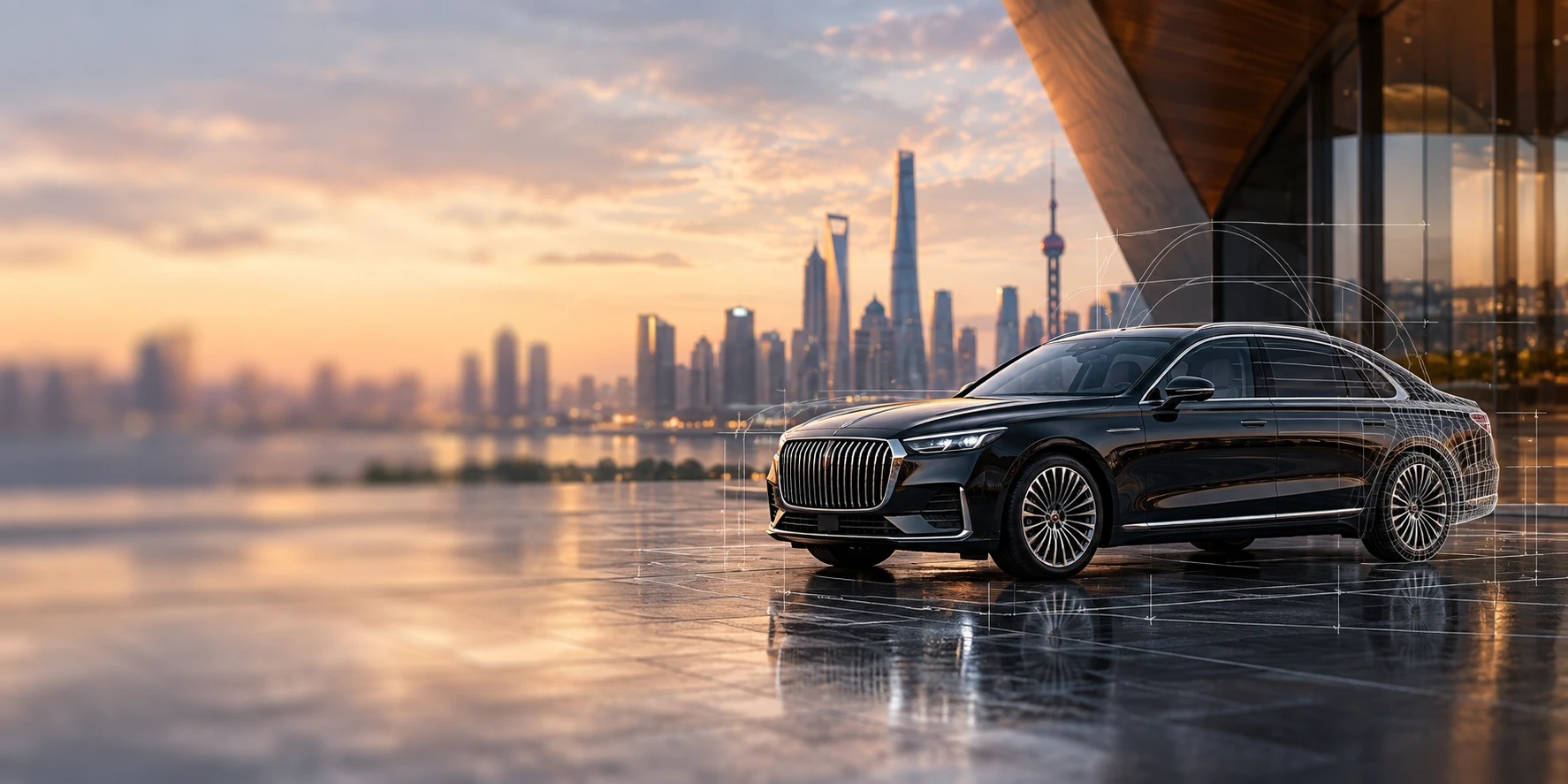
The China Luxury Car Market operates through locally produced premium vehicles, imported high-end models and increasingly important domestic smart-luxury brands. China recorded 23.744 million passenger-car retail sales in 2025, while luxury vehicles represented 12.8% of passenger-car retail in December. This scale gives premium manufacturers a large replacement pool and supports differentiated pricing, financing, customization and after-sales profit pools.
East China remains the most commercially important luxury-car hub because Shanghai, Jiangsu and Zhejiang combine high household purchasing power, dense premium retail networks, import logistics and advanced electric-vehicle infrastructure. Shanghai alone had approximately 980,000 charging piles by end-2024, including around 250,000 public and dedicated units, strengthening the operating economics of premium battery-electric ownership and supporting luxury-brand electrification strategies.
Market Value
USD 148 billion
2025
Dominant Region
East China
2025
Dominant Segment
Battery Electric Luxury Vehicles
fastest growing, 2025-2032
Total Number of Players
35
Future Outlook
The China Luxury Car Market is projected to expand from USD 148 billion in 2025 to approximately USD 213 billion by 2032, representing a forecast CAGR of 5.37%. Growth is expected to accelerate gradually after a comparatively soft 2024-2026 pricing cycle as premium NEV adoption, model renewal and intelligent-driving differentiation offset lower average prices. The historical 2020-2025 CAGR of 7.94% reflected rapid premiumization and post-pandemic demand recovery, whereas the next phase will depend more heavily on product mix, software-defined functions, localized electric platforms and replacement purchases among affluent urban households.
By 2032, battery-electric, plug-in hybrid and extended-range vehicles are expected to account for the majority of incremental luxury-sector value creation. The forecast assumes luxury retail volume expands from approximately 3.00 million units in 2025 to 3.84 million units in 2032 while average transaction value recovers progressively as high-content intelligent vehicles gain mix. Competitive advantage will increasingly depend on localized R&D, advanced driver-assistance capability, charging convenience and disciplined residual-value management. Traditional global luxury brands remain significant, but Chinese premium technology brands are expected to capture a larger share of the industry's future growth pool.
5.37%
Forecast CAGR
$213,408 Mn
2030 Projection
Base Year
2025
Historical Period
2020-2025
Forecast Period
2025-2032
Historical CAGR
7.94%
CHAPTER 2 - SCOPE OF REPORT
Scope of the Market
CHAPTER 3 - Key Stakeholders
Key Target Audience
Key stakeholders who can leverage from this market analysis for investment, strategy, and operational planning.
Investors
CAGR, luxury NEV mix, margins, competitive disruption, valuation
Corporates
localization, pricing, product mix, software monetization, channels
Government
electrification, taxation, charging infrastructure, consumption, industrial competitiveness
Operators
dealer economics, inventory, residual values, charging, after-sales
Financial institutions
auto finance, leasing, residual risk, credit, securitization
CHAPTER 4 - Market Size & Growth
Market Size, Growth Forecast and Trends
This section evaluates the historical market size, analyzes year-over-year growth dynamics, and presents forecast projections supported by market performance indicators and demand-side drivers.
Historical & Projected Market Size ($ Million)
Year-over-Year Growth Rate (%)
Market Value vs Volume Growth (%)
Historical Market Performance (2020-2025)
The market expanded at a 7.94% CAGR between 2020 and 2025, but the trajectory was uneven. Growth peaked at 14.85% in 2021 as postponed purchases normalized, followed by a 10.32% value expansion in 2023. The 2024-2025 period represented an inflection point: retail competition intensified, transaction prices softened and established international luxury brands faced pressure from premium domestic NEV offerings. Luxury-brand average transaction price fell to approximately CNY 358,000 in 2025 from CNY 376,000 in 2024, showing that revenue growth increasingly required volume, technology content and model-mix gains rather than pricing alone.
Forecast Market Outlook (2025-2032)
Forecast growth is modeled to accelerate from 3.80% in 2026 to 6.50% by 2032, producing a seven-year CAGR of 5.37%. Expansion will increasingly be supported by battery-electric and extended-range premium SUVs, advanced driver-assistance systems, software-defined cabins and higher local content. The value-versus-volume spread widens toward the end of the forecast as average transaction values recover from the 2025 price trough. Premium NEV adoption also provides a structural mix driver: luxury-car NEV retail penetration reached 39.1% in December 2025, signaling that electrification has already moved from niche adoption toward mainstream premium purchasing.
CHAPTER 5 - Market Data
Market Breakdown
The China Luxury Car Market is transitioning from brand-led premiumization toward a technology-intensive model in which electric powertrains, intelligent-driving systems and localized product cycles increasingly determine revenue growth. The KPI trajectory indicates slower unit growth than value growth after 2027, creating a stronger role for mix, software content and premium feature monetization.
Year | Market Size (USD Mn) | YoY Growth (%) | Luxury Retail Volume (Mn units) | Luxury NEV Mix (%) | Average Transaction Price (USD 000s) | Period |
|---|---|---|---|---|---|---|
| 2020 | $101,000 Mn | +- | 2.25 | 8% | Forecast | |
| 2021 | $116,000 Mn | +14.85% | 2.50 | 12% | Forecast | |
| 2022 | $126,000 Mn | +8.62% | 2.63 | 19% | Forecast | |
| 2023 | $139,000 Mn | +10.32% | 2.88 | 27% | Forecast | |
| 2024 | $145,000 Mn | +4.32% | 2.70 | 32% | Forecast | |
| 2025 | $148,000 Mn | +2.07% | 3.00 | 36% | Forecast | |
| 2026 | $153,624 Mn | +3.80% | 3.08 | 42% | Forecast | |
| 2027 | $160,537 Mn | +4.50% | 3.18 | 48% | Forecast | |
| 2028 | $168,724 Mn | +5.10% | 3.29 | 54% | Forecast | |
| 2029 | $178,173 Mn | +5.60% | 3.41 | 59% | Forecast | |
| 2030 | $188,685 Mn | +5.90% | 3.54 | 64% | Forecast | |
| 2031 | $200,383 Mn | +6.20% | 3.68 | 68% | Forecast | |
| 2032 | $213,408 Mn | +6.50% | 3.84 | 72% | Forecast |
Luxury Retail Volume
23.744 million passenger-car retail units, 2025, China. The national demand base is sufficiently large for premium brands to pursue narrower high-value niches without requiring mass-market penetration. Luxury brands captured 12.8% of passenger-car retail in December 2025.
Luxury NEV Mix
39.1% luxury-brand NEV retail penetration, December 2025, China. Electric and plug-in architectures are becoming central to premium product planning, increasing the strategic value of battery systems, fast charging, EREV capability and software-defined vehicle platforms.
Average Transaction Price
CNY 358,000 average luxury-brand transaction price, 2025, China. The CNY 18,000 decline from 2024 demonstrates significant price compression, making product mix, direct retail efficiency and feature monetization increasingly important for maintaining premium-sector margins.
CHAPTER 6 - Segmentation
Market Segmentation Framework
Comprehensive analysis across key dimensions providing insights into market structure, consumer preferences, and distribution patterns.
No of Segments
7
Dominant Segment
Vehicle Type
Fastest Growing Segment
Powertrain
Vehicle Type
Customer Type
Sales Channel
Powertrain
Usage Type
Price Tier
Geography
Key Segmentation Takeaways
Comprehensive analysis across all extracted segmentation dimensions providing insights into market structure, consumer preferences, and distribution patterns.
Vehicle Type
Luxury SUVs remain the strongest commercial vehicle format because they combine premium cabin space, family practicality, executive positioning and sufficient packaging flexibility for large batteries or extended-range systems. Large and mid-size SUVs are also the main battleground for domestic high-end technology brands, forcing established international manufacturers to localize infotainment, rear-seat comfort and intelligent-driving features.
Powertrain
Battery Electric is expected to be the fastest-growing powertrain sub-segment as charging infrastructure, high-voltage platforms, premium electric SUVs and software-defined functionality improve. Plug-in hybrid and extended-range solutions will remain strategically relevant for customers requiring long-distance flexibility, but declining battery costs and high-power charging availability progressively strengthen the economics of full-electric premium ownership.
CHAPTER 7 - Regional Analysis
Regional Analysis
China ranks first among the selected Asia-Pacific luxury-car peer markets by normalized 2025 revenue, supported by the region's largest new-car demand pool, extensive local premium production and rapid NEV adoption. Japan, India, South Korea and Australia remain strategically relevant comparison markets, but none matches China's combination of scale, localization and premium electrification intensity.
Focus Country Ranking
1st
Focus Country Market Size
USD 148 Bn
China CAGR (2025-2032)
5.37%
Focus Country Ranking
1st
Focus Country Market Size
USD 148 Bn
China CAGR (2025-2032)
5.37%
Regional Analysis (Current Year)
Market Position
China ranks first in the peer set, with its luxury sector supported by a 23.744 million-unit passenger-car retail market in 2025, creating unmatched scale for premium model localization and distribution.
Growth Advantage
China's 5.37% forecast CAGR positions it between faster-growing India and mature Japan, while its substantially larger revenue base means even mid-single-digit expansion creates a larger absolute incremental profit pool than most regional peers.
Competitive Strengths
China combines 16 million-plus NEV sales in 2025, deep local production capability and highly developed charging infrastructure, giving premium manufacturers a stronger platform for electric model localization and software-driven differentiation.
CHAPTER 8 - INDUSTRY ANALYSIS
Growth Drivers, Challenges & Opportunities
Comprehensive analysis of key factors shaping the China Luxury Car Market, including growth catalysts, operational challenges, and emerging opportunities across production, distribution, and consumer segments.
Growth Drivers
Affluent Household Purchasing Power and Replacement Demand
- Urban disposable income rose 4.3% year-on-year (2025, China), supporting vehicle replacement capacity among higher-income households even as buyers become more value-sensitive. Brands with strong financing and residual-value propositions can convert income growth into premium upgrades.
- Urban households owned approximately 59.2 private cars per 100 households (2025, China), up from 44.9 in 2020, expanding the installed base from which luxury replacement and second-vehicle purchases can be generated.
- Passenger-car retail reached 23.744 million units (2025, China), allowing luxury brands to grow through comparatively small share gains in a very large replacement market rather than relying solely on first-time vehicle ownership.
Premium Electrification and Intelligent-Vehicle Adoption
- China sold more than 16 million NEVs (2025, China), creating scale economics in batteries, motors, power electronics and software that increasingly flow into the premium segment and shorten development cycles.
- Luxury-brand NEV wholesale penetration reached 42.5% (December 2025, China), demonstrating that manufacturers are already allocating substantial inventory and production capacity to premium electrified products.
- Shanghai had approximately 980,000 charging piles (end-2024, Shanghai), including around 250,000 public and dedicated units, reducing a major ownership barrier for premium urban EV users and supporting high-frequency fast-charging propositions.
Domestic High-End Brand Expansion
- AITO M9 delivered more than 110,000 vehicles (2025, China), demonstrating that domestic brands can sustain high-volume demand in price bands historically dominated by international luxury marques.
- AITO M8 delivered more than 150,000 vehicles (2025, China), confirming substantial consumer willingness to pay for premium domestic SUVs differentiated through cabin technology, intelligent driving and integrated digital ecosystems.
- Smart-driving active-user penetration across AITO reached 95.4% (2025, China), indicating that software capability is becoming a utilized product benefit rather than only a marketing specification, supporting future software and service monetization.
Market Challenges
Price Compression and Margin Pressure
- The luxury-sector average transaction price declined by approximately CNY 18,000 year-on-year (2025, China), forcing brands to defend residual values while still responding to technology-driven price competition from domestic premium challengers.
- China's broader automotive industry operated at a profit margin of approximately 4.4% during January-November 2025, below the downstream industrial-company average cited in industry monitoring, highlighting the financial cost of persistent discounting.
- BMW Group deliveries in China declined 12.5% to 625,527 vehicles (2025, China), illustrating the demand and pricing pressure faced by established premium manufacturers as the competitive set expands.
Legacy Brand Volume Pressure and Rapid Product Cycles
- Mercedes-Benz Cars' China volume contracted by 19% in 2025, showing that heritage alone is insufficient when Chinese consumers benchmark intelligent-driving, infotainment and electric performance against rapidly updated domestic vehicles.
- Porsche delivered 41,938 vehicles in China in 2025, down 26%, demonstrating weakness in highly exclusive price tiers when economic confidence softens and new domestic alternatives expand.
- Volvo Cars sold 149,549 vehicles in China in 2025, down 4%, emphasizing the need for premium brands to refresh local product, channel and electrification strategies while controlling incentive intensity.
Policy Normalization and High-End Tax Exposure
- NEV purchase-tax treatment moved from full exemption capped at CNY 30,000 during 2024-2025 to a 50% reduction capped at CNY 15,000 during 2026-2027, increasing effective acquisition costs for premium EV buyers.
- The ultra-luxury consumption-tax threshold was lowered to vehicles with retail prices of CNY 900,000 or above excluding VAT from July 20, 2025, widening tax exposure across flagship luxury models.
- Passenger-car imports were approximately 450,000 units during January-November 2025, down 30%, increasing pressure on import-heavy luxury portfolios to localize manufacturing or narrow imported offerings to high-margin niches.
Market Opportunities
Localized Premium Electric Platforms
- Locally engineered 800V platforms, larger batteries, EREV systems and software packages can increase premium content per vehicle while lowering imported-component exposure; luxury NEV penetration of 39.1% (December 2025) provides an established demand base.
- OEMs, battery suppliers, semiconductor firms, ADAS developers and charging operators gain from more premium electric launches; national NEV sales exceeded 16 million units in 2025, sustaining supply-chain scale.
- Faster premium charging and integrated energy services are required; Shanghai's approximately 980,000 charging piles at end-2024 illustrate the infrastructure density that other major luxury-car cities need to approach.
Software, Intelligent Driving and Digital Services
- Subscription features, assisted-driving packages, connectivity and premium infotainment can create recurring revenue beyond the initial vehicle transaction; AITO users added 3.8 billion kilometers of assisted-driving mileage in 2025.
- OEMs with vertically integrated software stacks, chip suppliers, mapping providers and cloud platforms gain as feature differentiation shifts from mechanical hardware toward computational capability and user experience. NIO reached 100 million cumulative battery swaps by February 2026, demonstrating ecosystem-scale service engagement.
- Brands must shorten software release cycles and adapt features to Chinese digital behavior while maintaining safety and cybersecurity compliance. Audi announced a 42-model product matrix in China during 2025, illustrating the complexity of synchronizing powertrain and software portfolios.
Direct Retail and Residual-Value Management
- Direct sales, agency retail, certified pre-owned programs and captive finance can shift profit from upfront dealer margin toward financing, insurance, maintenance and remarketing, reducing dependence on discount-led new-car sales. The 2025 luxury price decline was CNY 18,000 per vehicle.
- OEM captive-finance units, leasing firms, used-vehicle platforms and premium dealers can capture lifetime customer value as replacement demand expands. Shanghai reported that approximately 30% of replacement-consumption transactions involved consumers scrapping or transferring an old vehicle before purchasing new.
- Brands require stronger guaranteed buyback, certified-used and residual-value analytics. Shanghai targets 50,000 used-vehicle exports annually by 2027, creating an additional channel for inventory disposition and residual-value support.
CHAPTER 9 - Competitive Landscape
Competitive Landscape Overview
Competition is intensifying as global premium incumbents defend scale against Chinese technology-led luxury brands. Entry barriers remain high because brand equity, retail reach, localized R&D, advanced software, capital intensity and residual-value management must all be developed simultaneously.
Market Share Distribution
Top 5 Players
Market Dynamics
8 new entrants in the past 5 years, indicating strong market attractiveness and growth potential.
Company Name | Market Share | Headquarters | Founding Year | Core Market Focus |
|---|---|---|---|---|
Audi | - | Ingolstadt, Germany | 1909 | Premium sedans, SUVs, performance models and localized electric luxury vehicles |
BMW Group | - | Munich, Germany | 1916 | Premium and luxury vehicles across combustion, plug-in hybrid and battery-electric platforms |
Mercedes-Benz Group | - | Stuttgart, Germany | 1926 | Luxury passenger cars, executive sedans, SUVs, performance and ultra-luxury vehicles |
Tesla | - | Austin, United States | 2003 | Premium battery-electric vehicles, software-defined mobility and charging ecosystem |
SERES Group | - | Chongqing, China | 1986 | AITO premium intelligent electric and extended-range luxury SUVs |
Li Auto | - | Beijing, China | 2015 | Premium family SUVs using extended-range and battery-electric powertrains |
NIO | - | Shanghai, China | 2014 | Premium smart battery-electric vehicles, battery swapping and digital services |
Toyota Motor Corporation (Lexus) | - | Toyota City, Japan | 1937 | Imported and localized premium sedans, SUVs and electrified Lexus vehicles |
Volvo Cars | - | Gothenburg, Sweden | 1927 | Premium safety-led SUVs and sedans with increasing electrified product mix |
Porsche | - | Stuttgart, Germany | 1931 | High-performance luxury sports cars, SUVs and premium electric vehicles |
Cross Comparison Parameters
The report provides detailed cross-comparison of key players across 10 performance parameters to identify competitive strengths and weaknesses.
China Retail Deliveries
Luxury NEV Mix
China Revenue Growth
Operating Margin
Analysis Covered
Market Share Analysis:
Assesses competitive scale across global and domestic luxury vehicle brands.
Cross Comparison Matrix:
Benchmarks operating performance, electrification, growth and profitability across major players.
SWOT Analysis:
Evaluates brand, technology, distribution, localization and financial competitive positioning factors.
Pricing Strategy Analysis:
Compares transaction pricing, discount discipline, product mix and value propositions.
Company Profiles:
Reviews portfolio focus, market presence, strategy and operating capabilities comprehensively.
CHAPTER 10 - REPORT TOC
Table of Contents
Market Assessment Phase
Supply-side and competitive intelligence covering market sizing, segmentation, competitive dynamics, regulatory landscape, and future forecasts.
Go-To-Market Strategy Phase
15 chapters
Entry strategy evaluation, execution roadmap, partner recommendations, and profitability outlook.
Survey Phase
8 chapters
Demand-side primary research conducted through structured interviews and online surveys with end users across priority metros and Tier 2/3 cities to capture consumption behavior, unmet needs, and purchase drivers.
Complete Report Coverage
201+ detailed sections covering every aspect of the market
143
Assessment Sections
58
Strategy Sections
CHAPTER 11 - Our Approach
Research Methodology
Desk Research
- Luxury passenger-car registration trend analysis
- Premium transaction-price benchmarking across brands
- NEV penetration and powertrain tracking
- Luxury tax and incentive review
Primary Research
- Luxury OEM sales directors interviewed
- Dealer principals and managers interviewed
- Product planning executives interviewed directly
- Auto-finance strategy executives interviewed directly
Validation and Triangulation
- 320 respondent observations cross-validated
- Dealer volumes reconciled with OEMs
- Price observations normalized by segment
- Powertrain assumptions tested across cohorts
CHAPTER 12 - FAQ
FAQs
Still have questions?
Our research team is here to help you find the right solution
CHAPTER 13 - Related Research
Explore Related Reports
Expand your market intelligence with complementary research across regions and adjacent markets.
Regional/Country ReportsRelated market analysis across key regions
Related market analysis across key regions
- Indonesia Luxury Car Market Size, Share & Forecast, By Vehicle Type, Powertrain & Price Tier, 2026-2032
- GCC Luxury Car Market Size, Share & Forecast, By Vehicle Type, Powertrain, Price Tier & Sales Channel, 2026-2031
- Global Luxury Car Market Size, Share & Forecast, By Vehicle Type, Powertrain, Price Tier & Sales Channel, 2026-2031
- Saudi Arabia Luxury Car Market Size, Share & Forecast, By Vehicle Type, Powertrain, Price Tier & Sales Channel, 2026-2031
- Vietnam Luxury Car Market Size, Share & Forecast, By Vehicle Type, Powertrain & Price Tier, 2026-2031
Adjacent ReportsRelated markets and complementary research
Related markets and complementary research
- Philippines Luxury Electric Vehicle Battery Market
- Kuwait Automotive Aftermarket Services Market Size, Share & Forecast, By Service Type, Customer Type & Delivery Model, 2025–2032
- Qatar Smart Vehicle Technology Market
- Thailand Luxury Vehicle Financing Market
- Oman Automotive Logistics Solutions Market
500+
Market Research Reports
50+
Countries Covered
15+
Industry Verticals