
Global Aircraft Tugs Market Outlook to 2030
Region:Global
Author(s):Vijay Kumar
Product Code:KROD10397
Region:Global
Author(s):Vijay Kumar
Product Code:KROD10397
December 2024
87
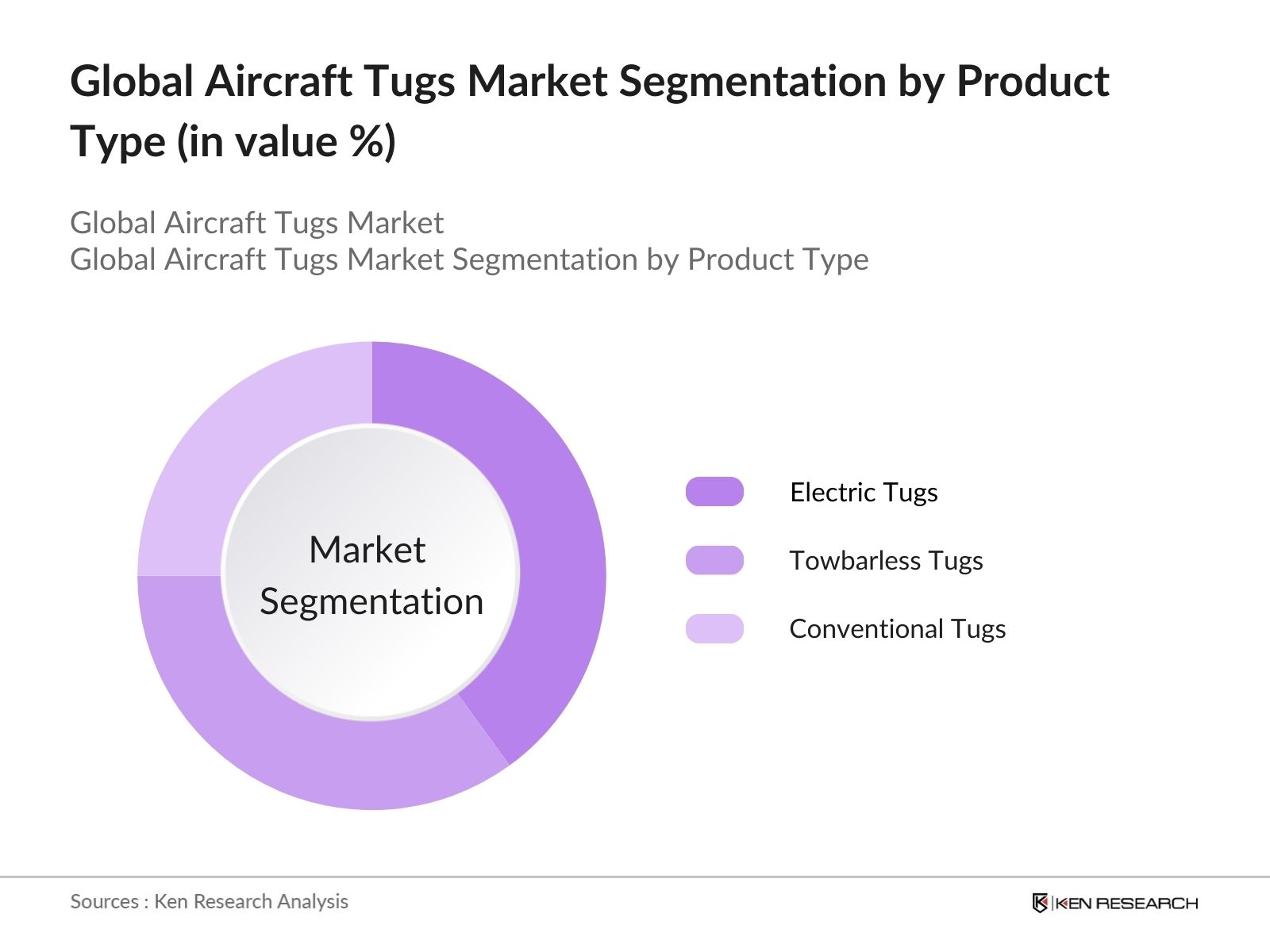
By Product Type: The aircraft tugs market is segmented by product type into conventional tugs, towbarless tugs, and electric tugs. Electric tugs currently hold the largest market share due to the increased focus on sustainability and zero-emission policies adopted by airport operators. The introduction of electric tugs allows airports to reduce their carbon footprint while lowering operational costs related to fuel consumption and maintenance. Towbarless tugs, while still popular for their maneuverability and efficiency, are increasingly being replaced by electric alternatives due to their environmental benefits.
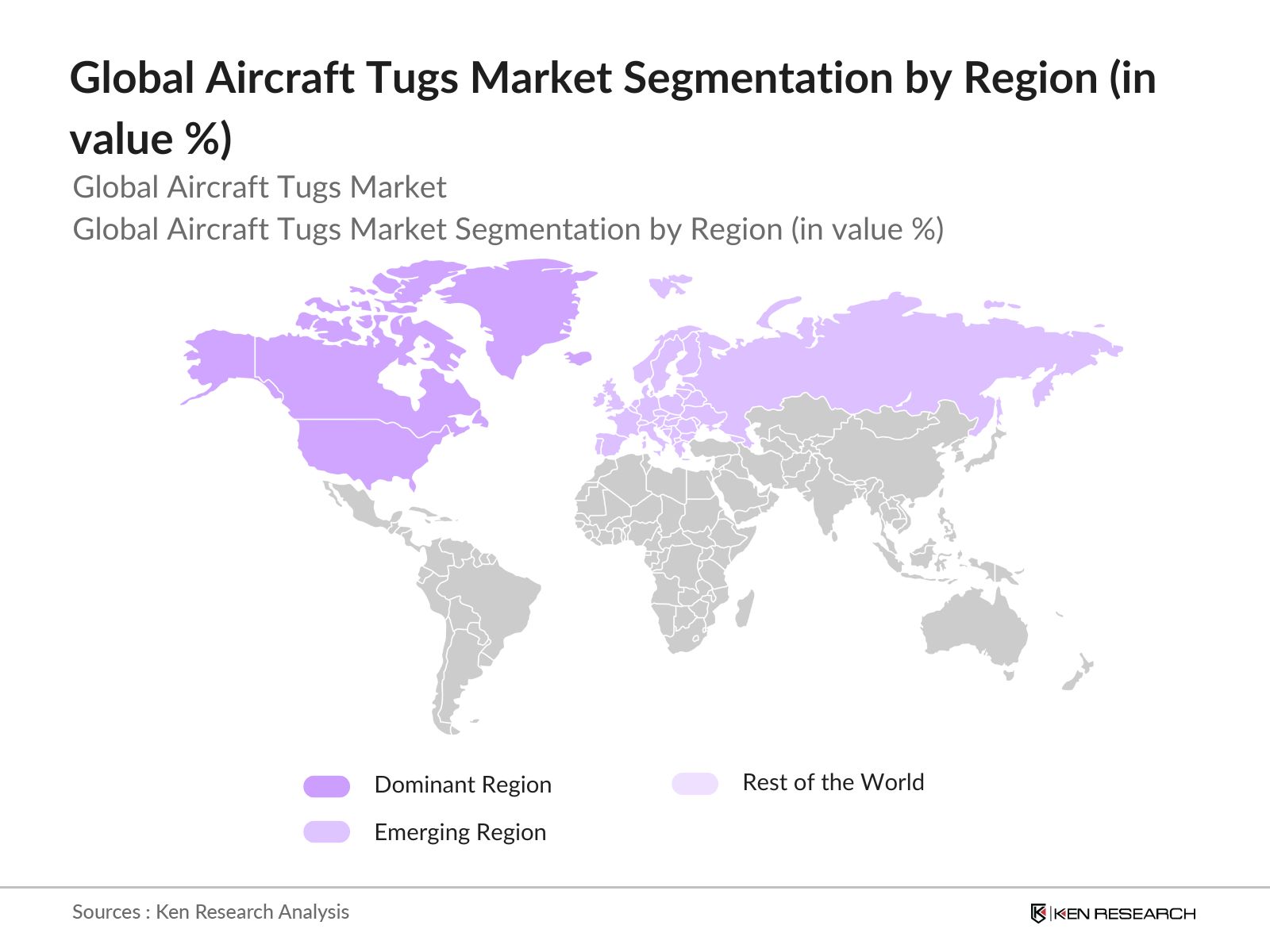
By Region: The market is regionally segmented into North America, Europe, Asia-Pacific, the Middle East & Africa, and Latin America. North America holds the largest share of the global aircraft tugs market due to the high number of airports and extensive ground support infrastructure. Furthermore, the early adoption of electric and hybrid technologies across key U.S. airports such as Los Angeles and Dallas has cemented the region's dominance. Asia-Pacific is expected to show rapid growth due to expanding airport infrastructure and increasing air traffic in countries like China and India.
By Application: The market is segmented into commercial aviation, military aviation, and business & general aviation. Commercial aviation dominates the market due to the sheer volume of flights requiring efficient ground handling solutions. With a constant demand for rapid turnaround times at airports, aircraft tugs play a crucial role in minimizing delays. The increasing air traffic and demand for operational efficiency are pushing airport operators to invest heavily in technologically advanced tug solutions, especially in commercial hubs like New York, Beijing, and Dubai.
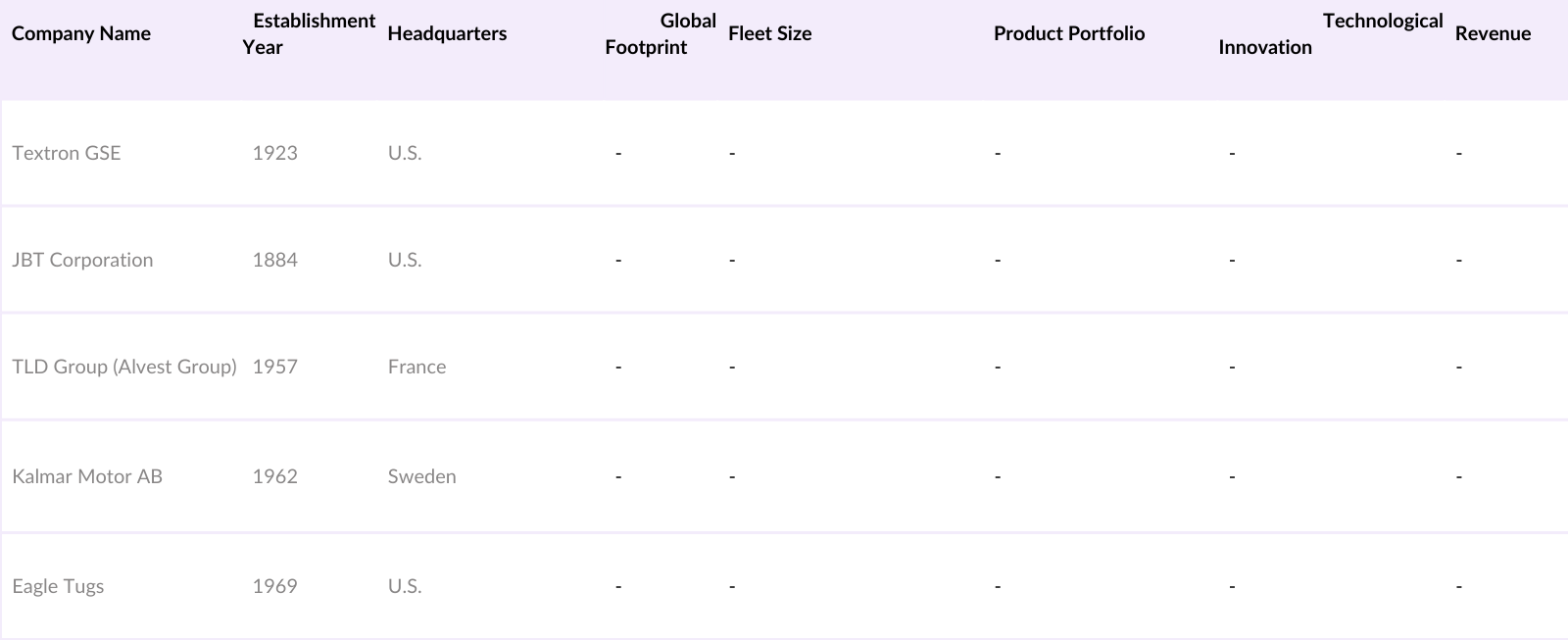
The global aircraft tugs market is highly competitive, with several key players holding a significant market share. The market is dominated by a mix of established manufacturers and new entrants focusing on electric and autonomous tug technologies. Companies like Textron GSE and JBT Corporation have a robust global presence and strong partnerships with major airport operators, enabling them to dominate the market.
Over the next five years, the global aircraft tugs market is expected to show significant growth, driven by the growing demand for eco-friendly ground support solutions and advancements in autonomous technologies. The introduction of zero-emission, electric-powered tugs will continue to play a critical role in reducing the environmental impact of airport operations. Increasing investments in airport infrastructure, especially in Asia-Pacific, and the adoption of electric tugs by airport operators will fuel future market expansion.
|
By Product Type |
Conventional Tugs Towbarless Tugs Electric Tugs |
|
By Application |
Commercial Aviation Military Aviation Business Aviation |
|
By Technology |
Electric-Powered Hybrid Autonomous/AI-Driven |
|
By End-User |
Airport Operators Airlines Military Organizations FBOs |
|
By Region |
North America Europe Asia-Pacific Middle East & Africa Latin America |
1.1. Definition and Scope
1.2. Market Taxonomy
1.3. Market Growth Rate (YoY growth, GDP impact, demand surge due to air travel recovery)
1.4. Market Segmentation Overview
2.1. Historical Market Size
2.2. Year-on-Year Growth Analysis
2.3. Key Market Developments and Milestones (Notable fleet expansions, technology adoption rates)
3.1. Growth Drivers
3.1.1. Increasing Airport Expansions
3.1.2. Surge in Air Traffic
3.1.3. Advancements in Green Technology (Electric tugs, hybrid models)
3.1.4. Rising Emphasis on Ground Handling Efficiency
3.2. Market Challenges
3.2.1. High Operational Costs of Electric Tugs
3.2.2. Limited Battery Life and Charging Infrastructure
3.2.3. Complexity in Retrofitting Conventional Tugs with New Tech
3.3. Opportunities
3.3.1. Integration of Autonomous Systems (Autonomous ground handling)
3.3.2. Emerging Markets for Aircraft Tugs (Asia-Pacific, Middle East)
3.3.3. Strategic Partnerships and Collaborations (OEMs & Airports)
3.4. Trends
3.4.1. Electrification of Ground Support Equipment (Electric tugs adoption)
3.4.2. Focus on Zero-Emission Solutions (Sustainability initiatives)
3.4.3. Increased Use of AI and IoT in Tugs
3.5. Regulatory Overview
3.5.1. Emission Standards (Ground handling equipment compliance)
3.5.2. Safety Protocols (Airport and airline safety standards for ground operations)
3.5.3. Regional Regulations (North America, Europe, Asia)
3.6. SWOT Analysis
3.6.1. Strengths (Strong OEM presence, Innovation)
3.6.2. Weaknesses (Infrastructure constraints for electrification)
3.6.3. Opportunities (Growing air traffic in emerging regions)
3.6.4. Threats (High competition, technological disruptions)
3.7. Stakeholder Ecosystem
3.8. Porters Five Forces Analysis
3.9. Competition Ecosystem (Key market participants and market share dynamics)
4.1. By Product Type (In Value %)
4.1.1. Conventional Tugs
4.1.2. Towbarless Tugs
4.1.3. Electric Tugs
4.2. By Application (In Value %)
4.2.1. Commercial Aviation
4.2.2. Military Aviation
4.2.3. Business and General Aviation
4.3. By Technology (In Value %)
4.3.1. Electric-Powered Tugs
4.3.2. Hybrid Tugs
4.3.3. Autonomous/AI-Driven Tugs
4.4. By End-User (In Value %)
4.4.1. Airport Operators
4.4.2. Airlines
4.4.3. Military Organizations
4.4.4. Fixed Base Operators (FBOs)
4.5. By Region (In Value %)
4.5.1. North America
4.5.2. Europe
4.5.3. Asia-Pacific
4.5.4. Middle East & Africa
4.5.5. Latin America
5.1 Detailed Profiles of Major Companies
5.1.1. Textron GSE
5.1.2. JBT Corporation
5.1.3. TLD Group (Alvest Group)
5.1.4. Kalmar Motor AB
5.1.5. Eagle Tugs
5.1.6. Mulag Fahrzeugwerk GmbH
5.1.7. Mototok International GmbH
5.1.8. Goldhofer AG
5.1.9. Tronair Inc.
5.1.10. Airmarrel
5.1.11. KAMAG Transporttechnik GmbH
5.1.12. Weihai Guangtai Airport Equipment Co., Ltd.
5.1.13. Lektro Inc.
5.1.14. Charlatte America
5.1.15. Douglas Equipment Ltd.
5.2 Cross Comparison Parameters (Revenue, Global Footprint, Fleet Size, Product Portfolio, Technological Innovation, Customer Base, Manufacturing Capabilities, Strategic Initiatives)
5.3. Market Share Analysis
5.4. Strategic Initiatives (Partnerships, Collaborations, Innovation efforts)
5.5. Mergers and Acquisitions
5.6. Investment Analysis (Private equity, Venture capital funding)
5.7. Government Grants (Incentives for electric and green technologies)
5.8. Private Equity Investments
6.1. Compliance and Certification Requirements (Ground support vehicle standards)
6.2. Environmental Standards (Emission control regulations for airport vehicles)
6.3. Certification Processes
7.1. Future Market Size Projections
7.2. Key Factors Driving Future Market Growth
8.1. By Product Type (In Value %)
8.2. By Application (In Value %)
8.3. By Technology (In Value %)
8.4. By End-User (In Value %)
8.5. By Region (In Value %)
9.1. TAM/SAM/SOM Analysis
9.2. Customer Cohort Analysis
9.3. Market Entry Strategies
9.4. White Space Opportunity Analysis
Disclaimer Contact UsThe first step involves mapping out the global aircraft tugs ecosystem, identifying all the major stakeholders including manufacturers, airport operators, and regulatory bodies. The process relies on extensive desk research, utilizing secondary databases and proprietary sources to compile industry-level data. This phase aims to identify key market variables affecting demand and supply dynamics.
In this step, historical data is analyzed to understand the penetration and performance of different aircraft tugs segments. The analysis includes evaluating the demand for electric versus conventional tugs, alongside a detailed assessment of market revenue trends.
Market hypotheses are validated through consultations with industry experts and stakeholders via computer-assisted interviews. These consultations offer insights into operational challenges, technological advancements, and financial perspectives, refining the market data collected.
The final phase synthesizes the findings from secondary and primary research into actionable insights. This involves cross-referencing market statistics with insights from industry experts, delivering a robust and validated report on the global aircraft tugs market.
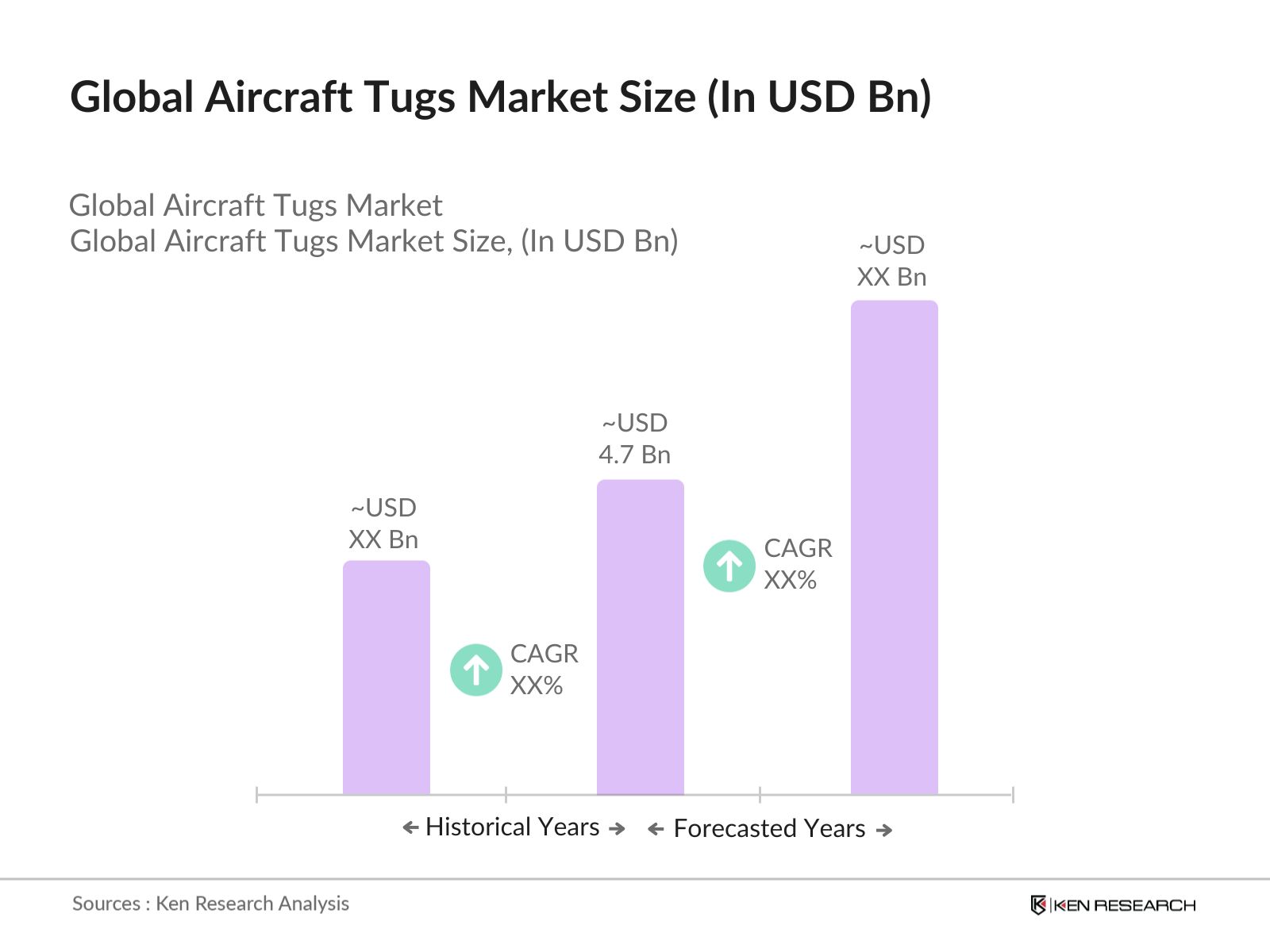
The global aircraft tugs market was valued at USD 4.7 billion, driven by growing demand for electric and zero-emission ground support equipment across major airports globally.
Challenges include high upfront costs for electric tugs, limited charging infrastructure, and the complexity of retrofitting conventional tugs with electric or autonomous technologies.
Key players include Textron GSE, JBT Corporation, TLD Group (Alvest Group), Kalmar Motor AB, and Eagle Tugs, each with a significant presence in both traditional and electric aircraft tugs.
The market is driven by increasing airport expansions, a focus on sustainability, and the growing demand for zero-emission electric tugs, supported by government regulations and environmental initiatives.

What makes us stand out is that our consultants follows Robust, Refine and Result (RRR) methodology. i.e. Robust for clear definitions, approaches and sanity checking, Refine for differentiating respondents facts and opinions and Result for presenting data with story

We have set a benchmark in the industry by offering our clients with syndicated and customized market research reports featuring coverage of entire market as well as meticulous research and analyst insights.

While we don't replace traditional research, we flip the method upside down. Our dual approach of Top Bottom & Bottom Top ensures quality deliverable by not just verifying company fundamentals but also looking at the sector and macroeconomic factors.

With one step in the future, our research team constantly tries to show you the bigger picture. We help with some of the tough questions you may encounter along the way: How is the industry positioned? Best marketing channel? KPI's of competitors? By aligning every element, we help maximize success.

Our report gives you instant access to the answers and sources that other companies might choose to hide. We elaborate each steps of research methodology we have used and showcase you the sample size to earn your trust.

If you need any support, we are here! We pride ourselves on universe strength, data quality, and quick, friendly, and professional service.