
Global Automotive Plastic Parts Market
Region:Global
Author(s):Yogita Sahu
Product Code:KROD1974
October 2024
94
About the Report
Global Automotive Plastic Parts Market Overview
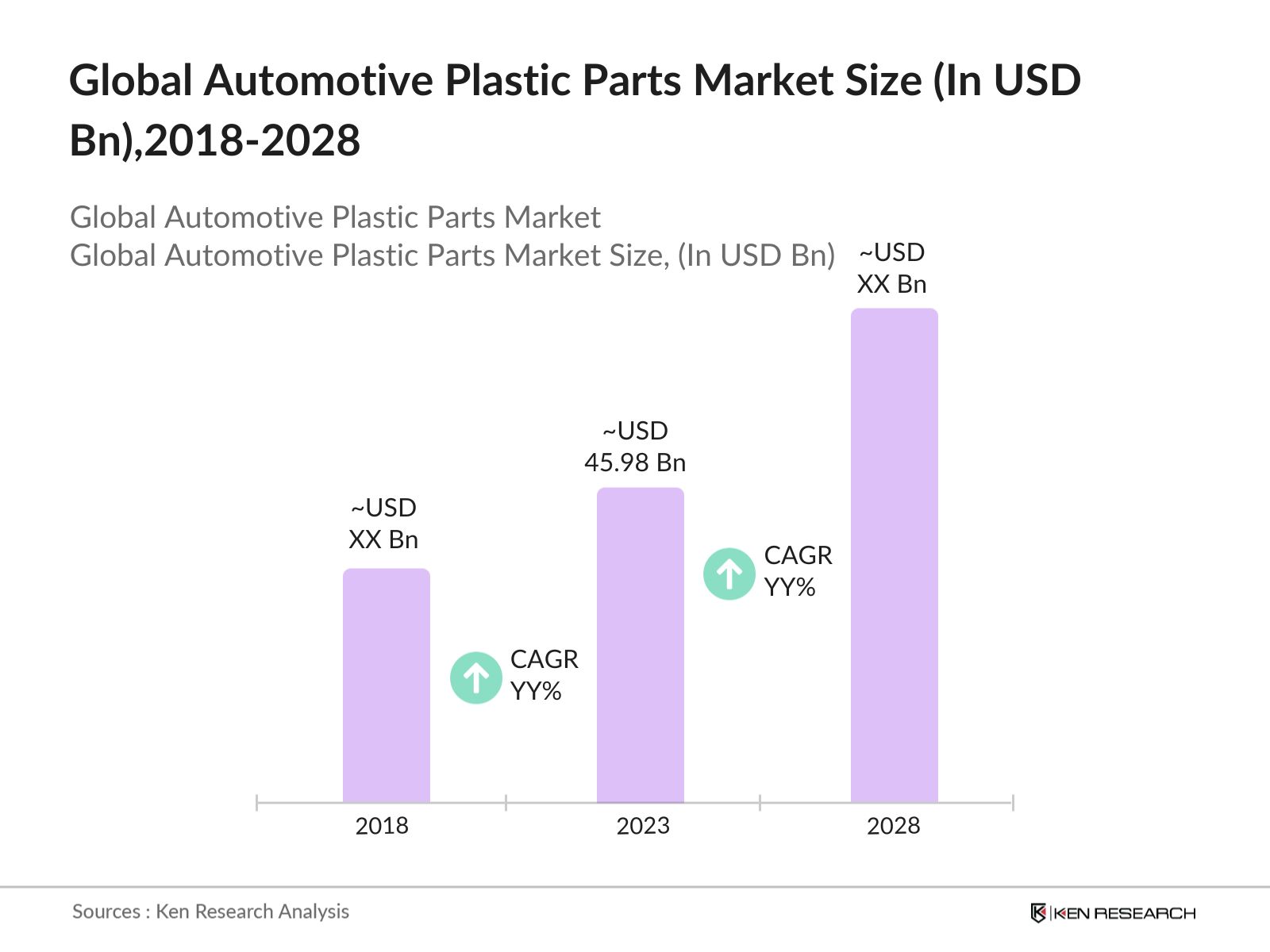
- TheAutomotive Plastic Parts MarketSize was valued at USD 45.98 Billion in 2023. The market is expanding due to rising demand for lightweight materials, which help improve fuel efficiency and reduce CO2 emissions. The industry's growth is driven by advancements in plastic manufacturing technologies, including injection molding and 3D printing, which enhance production efficiency.
- Major players in the market include BASF SE, Covestro AG, SABIC, Dow Inc., and LyondellBasell Industries. These companies dominate the market through continuous innovation in polymer materials and strategic partnerships with automobile manufacturers to develop custom plastic solutions for specific vehicle needs.
- In 2023, BASF SE introduced its Ultramid Advanced N series, a high-performance plastic aimed at the automotive sector, featuring enhanced heat resistance and mechanical strength. This innovation aligns with automakers' growing requirements for durable yet lightweight materials that can withstand extreme operating conditions in electric and hybrid vehicles. The Ultramid Advanced N series has seen rapid adoption, contributing to BASF's increased revenue from the automotive segment.
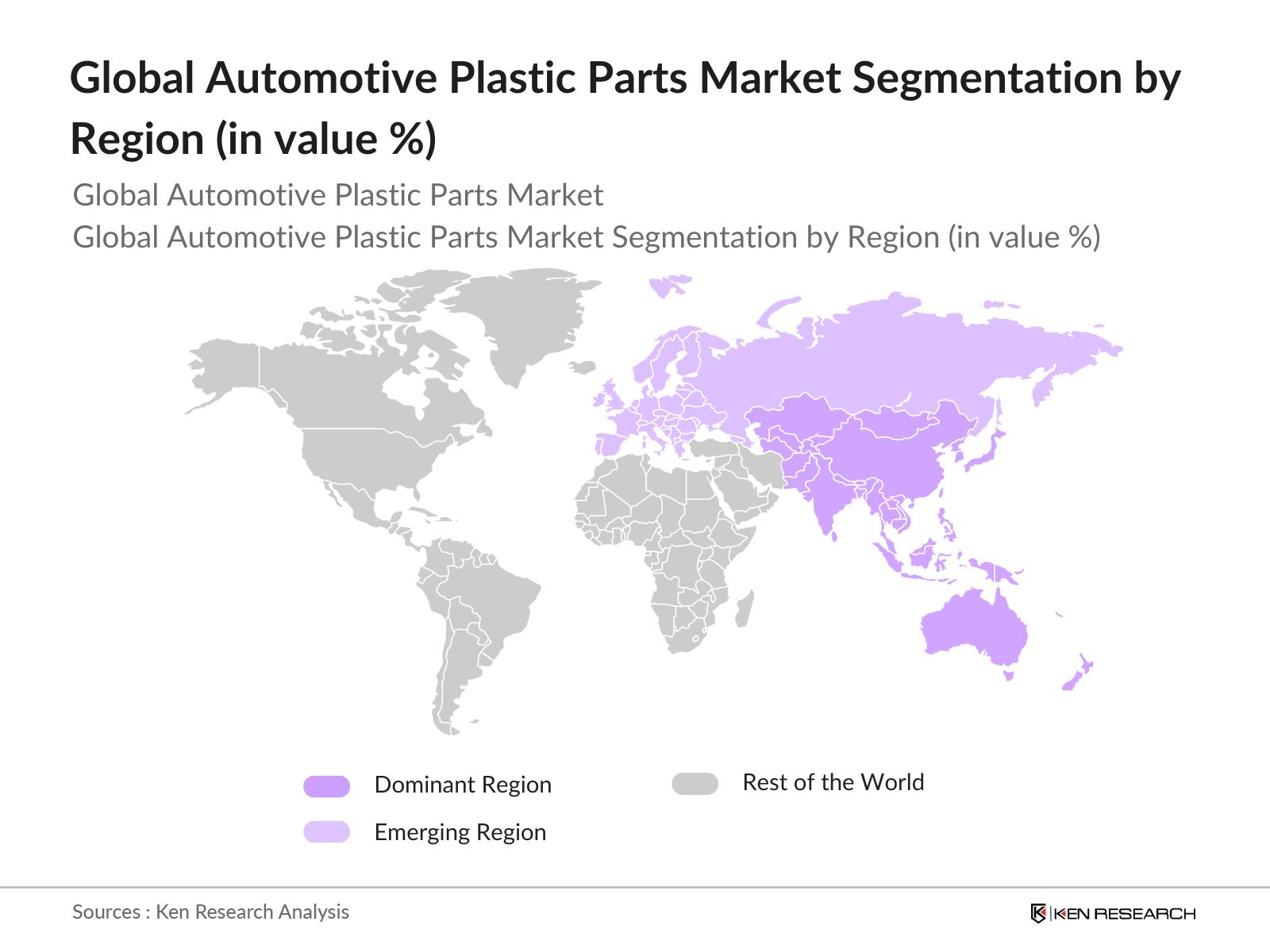
- The China, dominated the market due to the region's massive vehicle production, strong supply chains, and government support for lightweight vehicle components. China's "Made in China 2025" initiative promotes the development of high-tech materials, including advanced plastics, further boosting the market.
Global Automotive Plastic Parts Market Segmentation
The market is segmented into various factors like material, application, and region.
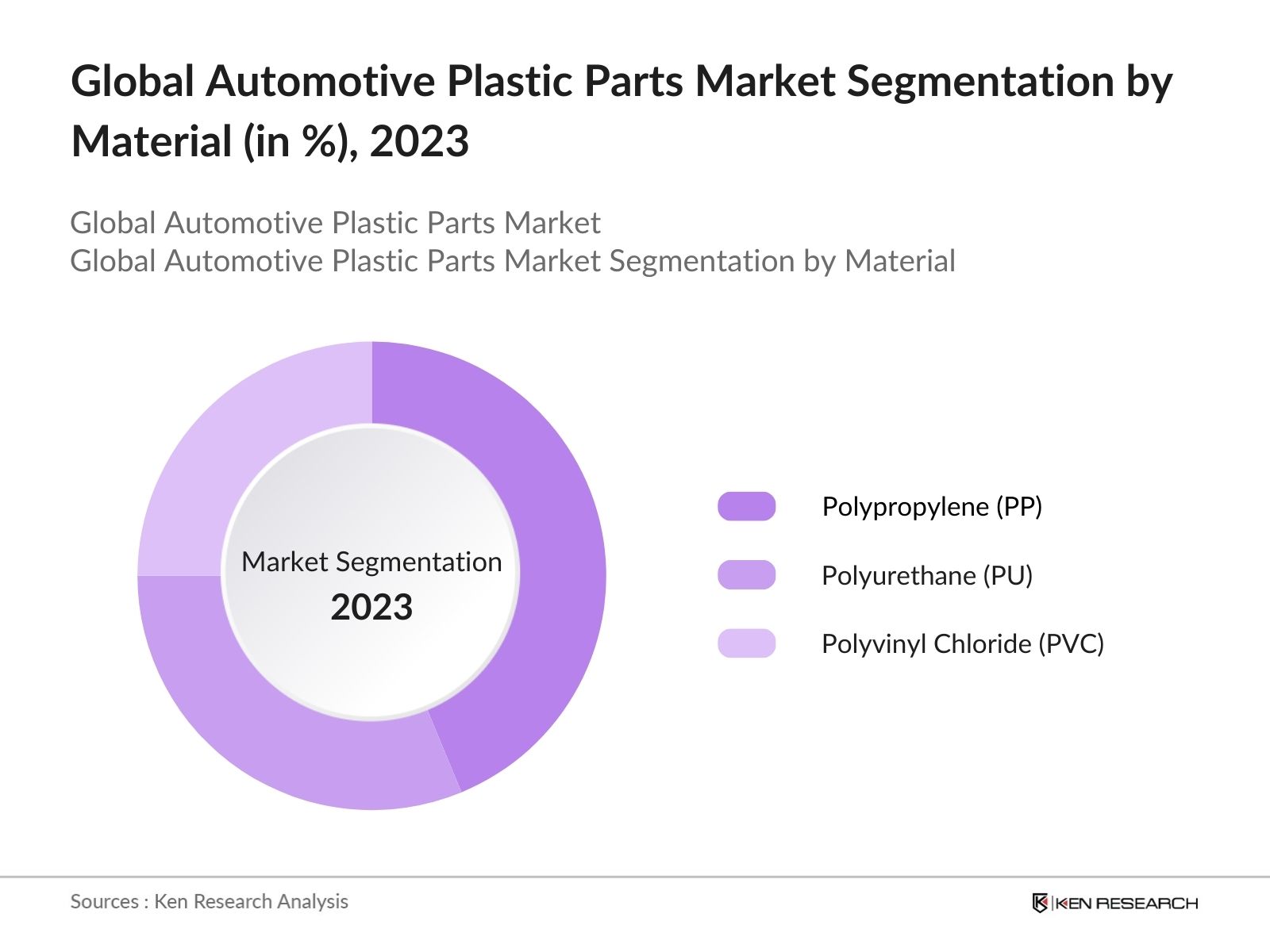
By Material: The market is segmented by material into Polypropylene (PP), Polyurethane (PU), and Polyvinyl Chloride (PVC). PP held the dominant market share due to its versatility, durability, and cost-effectiveness. PP is used in a wide range of automotive applications, including bumpers, dashboards, and interior trims. Its high chemical resistance and ability to withstand extreme temperatures make it the material of choice for many automakers.
By Application: The market is segmented by application into interior, exterior, and under-the-hood components. Interior components such as dashboards, door panels, and seat structures rising demand for aesthetic customization and comfort features in vehicles is driving the demand for plastic parts in the interior segment.
By Region: The market is segmented by region into North America, Europe, Asia Pacific (APAC), Middle East & Africa (MEA), and Latin America. Asia Pacific held the largest market share is due to high vehicle production and strong demand for electric vehicles in China and India.
Global Automotive Plastic Parts Market Competitive Landscape
|
Company Name |
Establishment Year |
Headquarters |
|
BASF SE |
1865 |
Germany |
|
Covestro AG |
2015 |
Germany |
|
SABIC |
1976 |
Saudi Arabia |
|
Dow Inc. |
1897 |
USA |
|
LyondellBasell |
2009 |
Netherlands |
- SABIC: SABIC showcased advanced polymer solutions for electric vehicle (EV) batteries and charging infrastructure. Highlights included a 2.2-meter injection-molded battery cover using STAMAX resin and EV charger components made from polymers. SABIC's innovations, such as ultra-thin insulation films and thermoplastic battery modules, address key challenges like weight reduction and flame resistance, supporting the transition to zero-emissions vehicles through their BLUEHERO electrification initiative.
- LyondellBasell: LyondellBasell showcased five innovative sustainable solutions at Chinaplas, including the Circulen product line made from recycled and bio-based plastics. The company announced partnerships with Nippon Paint China and Genox Recycling, focusing on eco-friendly packaging and artificial turf using recycled materials.
Global Automative Plastic Parts Market Analysis
Market Growth Drivers
- Increased Demand for Electric Vehicles (EVs): The global sales are reached 17 million units sold globally, accounting for 25% of all new passenger car registrations. This growth is fueled by increasing environmental concerns, technological advancements, and strong government incentives across major markets like China, Europe, and North America.
- Moderate Growth in Asia-Pacific Light Vehicle Production: Light vehicle production in Asia-Pacific reached a high of 51.8 million units, driven by strong output in China and Japan. However, the production is expected to stabilize, with Japan and Korea facing slight declines due to reduced backlogged orders and weaker demand. This normalization reflects steady growth rather than a slowdown, maintaining a healthy production level.
- Increased Focus on Sustainable Manufacturing: Automotive manufacturers are expected to increase their focus on sustainable plastic solutions, with recycled plastic anticipated to be used in vehicle production. Leading automakers such as Ford and BMW are shifting towards eco-friendly materials, with recycled plastic becoming a key material in new vehicle models. This push for sustainable practices is accelerating demand for innovative plastic solutions within the automotive sector.
Market Challenges
- Supply Chain Disruptions: Global supply chain disruptions, exacerbated by geopolitical tensions and continue to affect the availability of plastic raw materials. With delays in shipments and rising logistics costs, automotive plastic part manufacturers are facing significant challenges in maintaining steady production.
- Technological Integration and Capital Investment: The high capital investment required for integrating advanced plastic manufacturing technologies, such as injection molding and 3D printing, is a major challenge for smaller manufacturers. The cost of installing and maintaining 3D printing systems for automotive plastic parts manufacturing facility is high, making it difficult for smaller companies to compete with larger players who can afford these investments.
Government Initiatives
- The European Green Deal: The European Union continued its ambitious efforts under the "European Green Deal," targeting carbon neutrality by 2050. The initiative includes policies to reduce CO2 emissions, improve energy efficiency, and promote the adoption of sustainable materials, including automotive plastics. As part of this, over EUR 500 billion has been allocated to green energy and transportation infrastructure, with specific targets for reducing vehicle emissions by encouraging the use of lightweight materials like plastics.
- U.S. Investment in Electric Vehicles: The U.S. government has announced a $521 million investment to expand electric vehicle (EV) charging infrastructure. This funding will construct over 9,200 charging ports across 29 states and the District of Columbia, enhancing accessibility and supporting the transition to electric vehicles nationwide, as part of the Bipartisan Infrastructure Law.
Global Automotive Plastic Parts Market Future Outlook
The future trends in the Global automotive plastic parts market include increased adoption of recycled plastics, advancements in plastic composites for electric vehicles, and greater regulatory pressure for sustainable materials, pushing the industry toward innovative and eco-friendly solutions by 2028.
Future Market Trends
- Increased Adoption of Recycled Plastics: Automotive manufacturers are expected to incorporate high of recycled plastics annually in vehicle production. This trend is driven by stricter regulations and consumer demand for sustainable products. Governments worldwide are introducing policies that incentivize the use of recycled materials, and automakers are responding by increasing their use of recycled plastic in vehicle interiors and exteriors.
- Growth of Plastic Components in Electric Vehicles: Electric vehicles are expected to grow the market, with high units produced annually. The use of plastic components in EVs will grow as manufacturers look for ways to reduce vehicle weight and improve battery efficiency. Advanced plastic materials will be increasingly used in the market.
Scope of the Report
|
By Material Type |
Polypropylene (PP) Polyurethane (PU) Polyvinyl Chloride (PVC) |
|
By Application |
Interior Exterior Under-the-Hood |
|
By Region |
North America Europe APAC MEA Latin America |
Products
Key Target Audience Organizations and Entities Who Can Benefit by Subscribing This Report:
Automotive manufacturers
Electric vehicle (EV) manufacturers
Government Regulatory Bodies (e.g., U.S. Department of Transportation)
Automotive design and engineering firms
Recycling companies
Banks and financial institutions
Venture Capitalist
Companies
Players Mentioned in the Report:
BASF SE
Covestro AG
SABIC
Dow Inc.
LyondellBasell Industries
Solvay S.A.
Teijin Limited
LG Chem
Mitsubishi Chemical Corporation
Evonik Industries
Lanxess AG
Borealis AG
Ineos Group
RTP Company
Arkema S.A.
Table of Contents
1. Global Automotive Plastic Parts Market Overview
1.1. Definition and Scope
1.2. Market Taxonomy
1.3. Market Growth Rate
1.4. Market Segmentation Overview
2. Global Automotive Plastic Parts Market Size (in USD Bn), 2018-2023
2.1. Historical Market Size
2.2. Year-on-Year Growth Analysis
2.3. Key Market Developments and Milestones
3. Global Automotive Plastic Parts Market Analysis
3.1. Growth Drivers
3.1.1. Increased Demand for Electric Vehicles (EVs)
3.1.2. Expansion of Automotive Manufacturing in Asia Pacific
3.1.3. Focus on Sustainable Manufacturing
3.1.4. Advancements in Plastic Material Technologies
3.2. Restraints
3.2.1. Fluctuating Raw Material Prices
3.2.2. Stringent Environmental Regulations
3.2.3. Supply Chain Disruptions
3.3. Opportunities
3.3.1. Adoption of Recycled Plastics
3.3.2. Expansion in Emerging Markets
3.3.3. Innovations in Lightweight Materials
3.4. Trends
3.4.1. Growth in EV Production
3.4.2. Increased Use of Recycled Plastics
3.4.3. Technological Advancements in Manufacturing Processes
3.5. Government Initiatives
3.5.1. European Union Green Deal
3.5.2. U.S. Investment in Electric Vehicles
3.5.3. Chinas Made in China 2025 Strategy
3.6. SWOT Analysis
3.7. Stakeholder Ecosystem
3.8. Competition Ecosystem
4. Global Automotive Plastic Parts Market Segmentation, 2023
4.1. By Material Type (in Value %)
4.1.1. Polypropylene (PP)
4.1.2. Polyurethane (PU)
4.1.3. Polyvinyl Chloride (PVC)
4.2. By Application (in Value %)
4.2.1. Interior Components
4.2.2. Exterior Components
4.2.3. Under-the-Hood Components
4.3. By Region (in Value %)
4.3.1. North America
4.3.2. Europe
4.3.3. Asia Pacific (APAC)
4.3.4. Middle East & Africa (MEA)
4.3.5. Latin America
5. Global Automotive Plastic Parts Market Cross Comparison
5.1. Detailed Profiles of Major Companies
5.1.1. BASF SE
5.1.2. Covestro AG
5.1.3. SABIC
5.1.4. Dow Inc.
5.1.5. LyondellBasell Industries
5.2. Cross Comparison Parameters (No. of Employees, Headquarters, Inception Year, Revenue)
6. Global Automotive Plastic Parts Market Competitive Landscape
6.1. Market Share Analysis
6.2. Strategic Initiatives
6.3. Mergers and Acquisitions
6.4. Investment Analysis
6.4.1. Venture Capital Funding
6.4.2. Government Grants
6.4.3. Private Equity Investments
7. Global Automotive Plastic Parts Market Regulatory Framework
7.1. Environmental Standards
7.2. Compliance Requirements
7.3. Certification Processes
8. Global Automotive Plastic Parts Future Market Size (in USD Bn), 2023-2028
8.1. Future Market Size Projections
8.2. Key Factors Driving Future Market Growth
9. Global Automotive Plastic Parts Future Market Segmentation, 2028
9.1. By Material Type (in Value %)
9.2. By Application (in Value %)
9.3. By Region (in Value %)
10. Global Automotive Plastic Parts Market Analysts Recommendations
10.1. TAM/SAM/SOM Analysis
10.2. Customer Cohort Analysis
10.3. Marketing Initiatives
10.4. White Space Opportunity Analysis
Disclaimer Contact UsResearch Methodology
Step:1 Identifying Key Variables
Ecosystem creation for all the major entities and referring to multiple secondary and proprietary databases to perform desk research around market to collate industry level information.
Step:2 Market Building
Collating statistics on this industry over the years, penetration of marketplaces and service providers ratio to compute revenue generated for India Fashion Infuencer Marketing Market Industry. We will also review service quality statistics to understand revenue generated which can ensure accuracy behind the data points shared.
Step:3 Validating and Finalizing
Building market hypothesis and conducting CATIs with industry experts belonging to different companies to validate statistics and seek operational and financial information from company representatives.
Step:4 Research output
Our team will approach multiple fashion industry companies and understand nature of product segments and sales, consumer preference and other parameters, which will support us validate statistics derived through bottom to top approach from such fashion industry companies.
Frequently Asked Questions
01 How big is the Global Automotive Plastic Parts Market?
TheAutomotive Plastic Parts MarketSize was valued at USD 45.98 Billion in 2023. The market is expanding due to rising demand for lightweight materials, which help improve fuel efficiency and reduce CO2 emissions.
02 What are the challenges in the Global Automotive Plastic Parts Market?
Major challenges in the Global Automotive Plastic Parts Market include fluctuating raw material prices, stringent environmental regulations, supply chain disruptions, and the high capital investment required for integrating advanced plastic manufacturing technologies.
03 Who are the major players in the Global Automotive Plastic Parts Market?
Major players in the Global Automotive Plastic Parts Market include BASF SE, Covestro AG, SABIC, Dow Inc., and LyondellBasell Industries. These companies provide innovative plastic solutions to meet the automotive industrys evolving needs.
04 What are the main growth drivers of the Global Automotive Plastic Parts Market?
Key drivers of the Global Automotive Plastic Parts Market include the increasing demand for lightweight vehicles, the expansion of electric vehicle (EV) production, advancements in plastic material technologies, and the rising focus on sustainable manufacturing practices.
Why Buy From Us?

What makes us stand out is that our consultants follows Robust, Refine and Result (RRR) methodology. i.e. Robust for clear definitions, approaches and sanity checking, Refine for differentiating respondents facts and opinions and Result for presenting data with story

We have set a benchmark in the industry by offering our clients with syndicated and customized market research reports featuring coverage of entire market as well as meticulous research and analyst insights.

While we don't replace traditional research, we flip the method upside down. Our dual approach of Top Bottom & Bottom Top ensures quality deliverable by not just verifying company fundamentals but also looking at the sector and macroeconomic factors.

With one step in the future, our research team constantly tries to show you the bigger picture. We help with some of the tough questions you may encounter along the way: How is the industry positioned? Best marketing channel? KPI's of competitors? By aligning every element, we help maximize success.

Our report gives you instant access to the answers and sources that other companies might choose to hide. We elaborate each steps of research methodology we have used and showcase you the sample size to earn your trust.

If you need any support, we are here! We pride ourselves on universe strength, data quality, and quick, friendly, and professional service.