
Global Automotive Semiconductor Market Outlook to 2030
Region:Global
Author(s):Shivani Mehra
Product Code:KROD1910
Region:Global
Author(s):Shivani Mehra
Product Code:KROD1910
November 2024
81
Listen to the audio summary
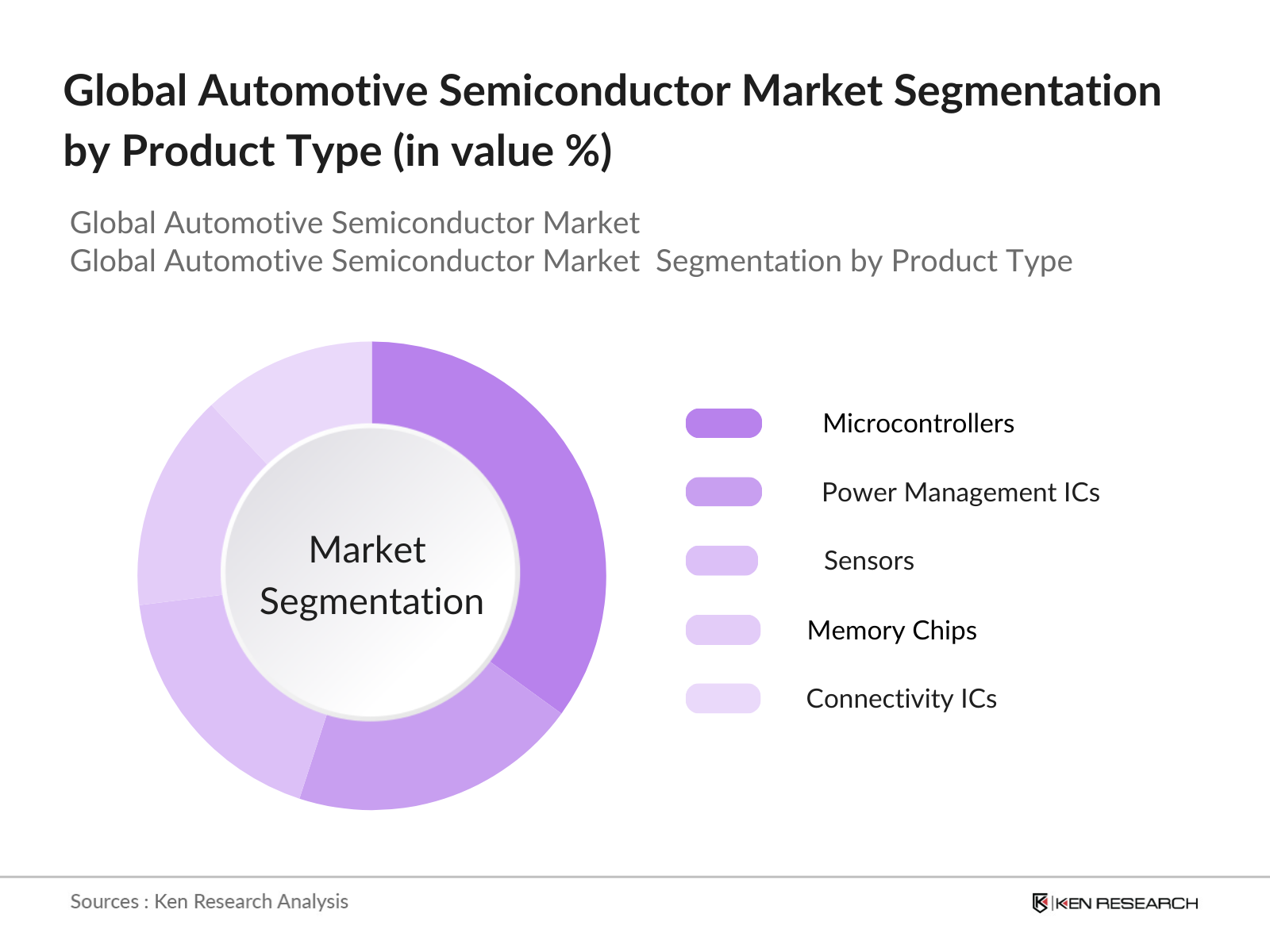
By Product Type: The Global Automotive Semiconductor Marketis segmented by product type into the following categories Microcontrollers (MCUs) dominate the market due to their wide application in controlling vehicle functions such as powertrain, infotainment, and safety systems. As automakers focus on developing smarter, safer, and more connected vehicles, the demand for MCUs continues to grow. Additionally, the transition to electric vehicles increases the need for MCUs to manage battery systems, motor control, and energy efficiency.
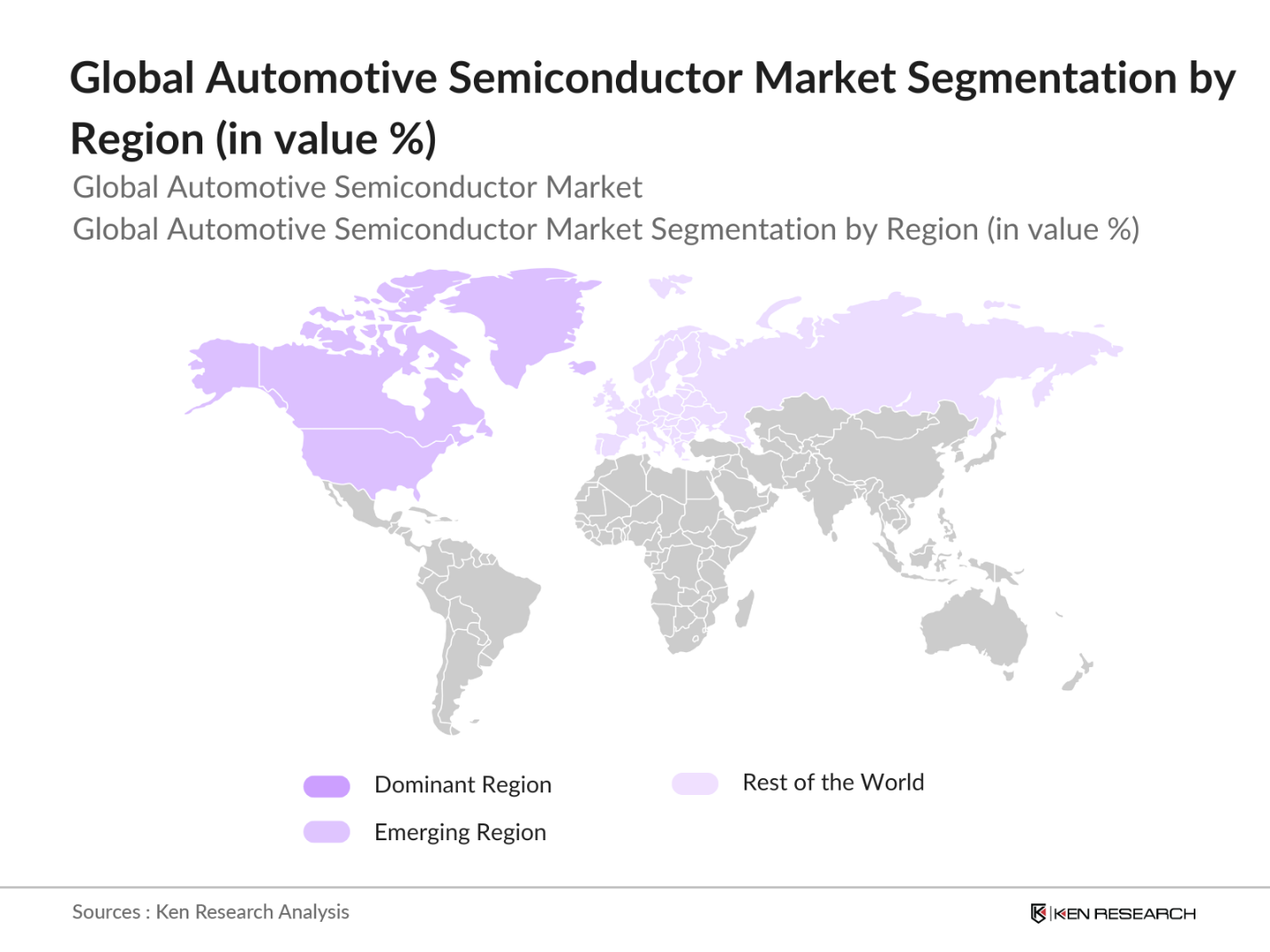
By Region: The Global Automotive Semiconductor Market is segmented by region into North America, Europe, Asia-Pacific, Latin America, and the Middle East & Africa. North America dominates the market due to its strong automotive and electric vehicle industries, driving significant demand for semiconductor components. The presence of leading semiconductor manufacturers and innovation hubs further strengthens the region's market leadership.
The Global Automotive Semiconductor Market is highly competitive, with several global and local players competing for market share. The industry is characterized by innovation, strategic partnerships, and heavy investments in R&D. Major players are focusing on developing energy-efficient solutions to cater to the growing demand for electric vehicles and ADAS technologies. Industry consolidation is also taking place, with mergers and acquisitions aimed at strengthening product portfolios and expanding geographical reach.
|
Company Name |
Establishment Year |
Headquarters |
Revenue (2023) |
Key Products |
R&D Investment |
Partnerships |
|
STMicroelectronics |
1987 |
Switzerland |
- |
- |
- |
- |
|
Infineon Technologies |
1999 |
Germany |
- |
- |
- |
- |
|
NXP Semiconductors |
2006 |
Netherlands |
- |
- |
- |
- |
|
Renesas Electronics |
2010 |
Japan |
- |
- |
- |
- |
|
Texas Instruments |
1930 |
USA |
- |
- |
- |
- |
Electrification of Vehicles: Indonesias strong push for electric vehicle adoption is one of the major drivers of growth in the automotive semiconductor market. The government's efforts are creating significant demand for semiconductor components, particularly for power management and battery systems. The shift towards energy-efficient and emission-free vehicles will require a steady supply of semiconductors, with major global players already increasing their production capacity in Indonesia to meet this demand.
|
By Product Type |
Microcontrollers Power Management ICs Sensors Memory Chips Connectivity ICs |
|
By Application |
Infotainment and Navigation Systems Powertrain and Chassis ADAS and Safety Systems Body Electronics |
|
By End-User |
Passenger Vehicles Commercial Vehicles Healthcare Healthcare |
|
By Technology |
Analog Technology Digital Technology Mixed-Signal Technology MEMS (Microelectromechanical Systems) Wireless Communication Technology |
|
By Region |
North America Europe Asia-Pacific Latin America Middle East & Africa |
1.1. Definition and Scope (Automotive Semiconductors, Market Applications)
1.2. Market Taxonomy (By Product Type, Application, End-User, Region)
1.3. Market Growth Rate (CAGR, Revenue Growth, Market Expansion)
1.4. Market Segmentation Overview (By Product Type, Application, End-User, Region)
2.1. Historical Market Size (Market Trends, Economic Impact)
2.2. Year-On-Year Growth Analysis (Market Performance, Technological Progress)
2.3. Key Market Developments (Product Launches, Milestones)
3.1. Growth Drivers
3.1.1. Increasing Demand for Electric Vehicles (EVs)
3.1.2. Technological Advancements in ADAS
3.1.3. Government Support for Semiconductor Manufacturing
3.2. Market Challenges
3.2.1. High Production Costs
3.2.2. Shortage of Raw Materials and Chips
3.3. Opportunities
3.3.1. Expansion of Local Manufacturing
3.3.2. Growing Adoption of ADAS
3.4. Trends
3.4.1. Rise of Smart Vehicles
3.4.2. Customization in Semiconductor Chips
3.5. Government Regulations and Standards
3.6. SWOT Analysis
3.7. Stakeholder Ecosystem (Automakers, Semiconductor Manufacturers)
3.8. Porters Five Forces Analysis
3.9. Competitive Ecosystem (Market Dynamics, New Entrants)
4.1. By Product Type (In Value %)
4.1.1. Microcontrollers
4.1.2. Power Management ICs
4.1.3. Sensors
4.1.4. Memory Chips
4.1.5. Connectivity ICs
4.2. By Application (In Value %)
4.2.1. Infotainment and Navigation Systems
4.2.2. Powertrain and Chassis
4.2.3. ADAS and Safety Systems
4.3. By End-User (In Value %)
4.3.1. Passenger Vehicles
4.3.2. Commercial Vehicles
4.4. By Region (In Value %)
4.4.1. Greater Jakarta
4.4.2. Java
4.4.3. Sumatra
4.4.4. Other Regions
5.1. Major Company Profiles
5.1.1. STMicroelectronics
5.1.2. Infineon Technologies
5.1.3. NXP Semiconductors
5.1.4. Renesas Electronics
5.1.5. Texas Instruments
5.2. Cross Comparison Parameters (Revenue, Product Portfolio, R&D Investments)
5.3. Market Share Analysis
5.4. Strategic Initiatives (Partnerships, Mergers, New Product Launches)
5.5. Investment and Funding Analysis
6.1. Compliance with Indonesian Automotive Standards
6.2. Certification for Semiconductor Components
6.3. Environmental Regulations for Semiconductor Manufacturing
7.1. Future Market Size Projections (Technological Advancements, Market Expansion)
7.2. Key Factors Driving Future Growth (EVs, ADAS)
8.1. By Product Type (In Value %)
8.2. By Application (In Value %)
8.3. By End-User (In Value %)
8.4. By Region (In Value %)
9.1. TAM/SAM/SOM Analysis
9.2. Customer Cohort Analysis
9.3. Marketing and Distribution Strategies
9.4. White Space Opportunity Analysis
Ecosystem mapping for all major players and leveraging multiple secondary and proprietary databases to perform desktop research around the market to collect comprehensive industry-level information.
Compiling statistics on the Global Automotive Semiconductor Marketover the years, including analysis of market penetration of different semiconductor components (such as sensors, ICs, and microcontrollers) and calculating ratios to determine revenue generation for the market. Additionally, we review performance metrics to gauge the reliability of data, ensuring the precision behind the statistics presented.
Developing market hypotheses and conducting Computer-Assisted Telephone Interviews (CATIs) with industry experts from various sectors within automotive manufacturing to validate statistics and gather operational and financial information directly from companies.
Our research team will consolidate data from various sources and understand nuanced product segmentations and market dynamics through a bottom-to-top approach from foundational market inputs to detailed market insights.
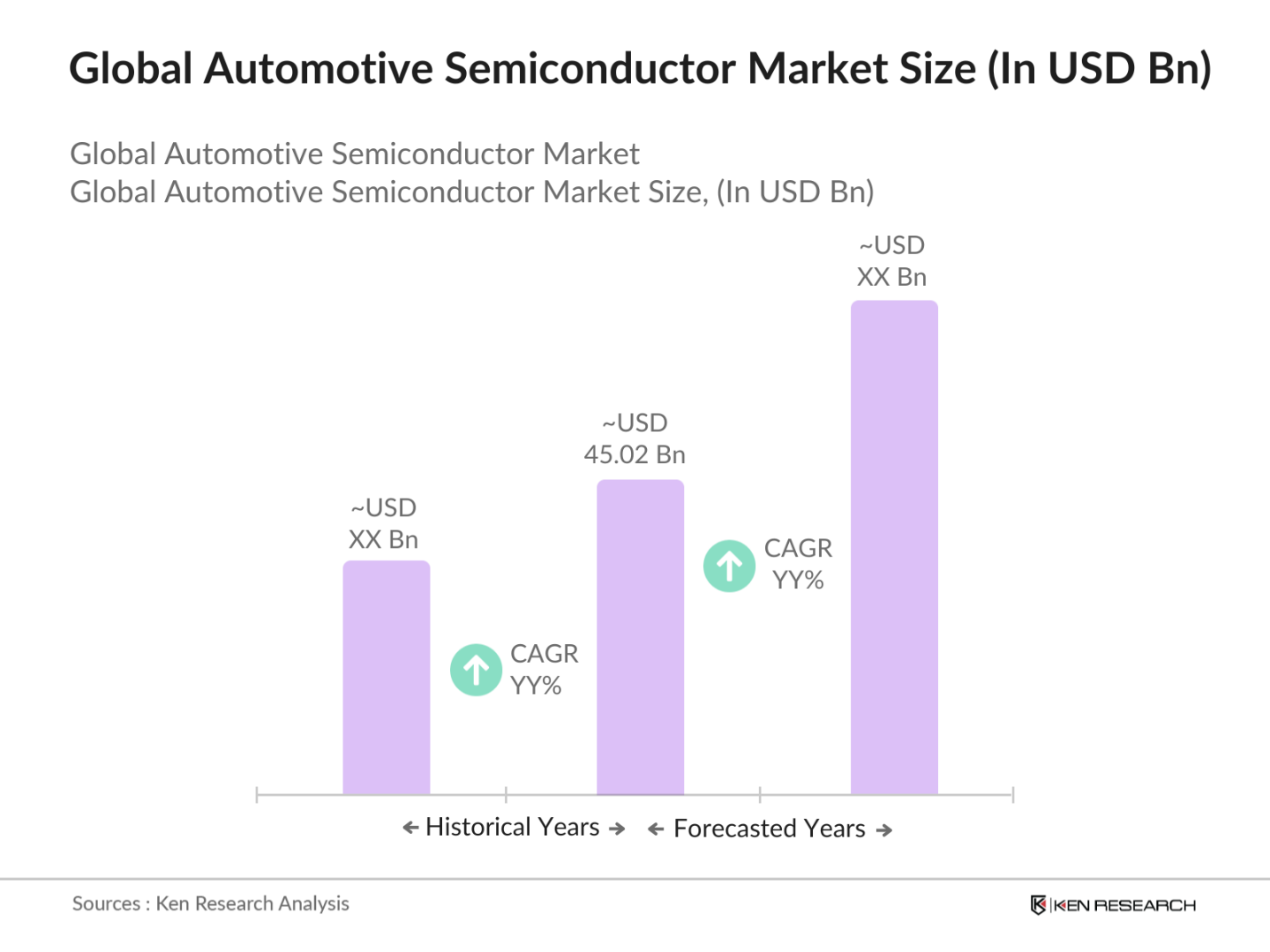
The Global Automotive Semiconductor Market was valued at USD 45.02 billion, driven by the growing adoption of electric vehicles (EVs), increased use of Advanced Driver Assistance Systems (ADAS), and supportive government initiatives for semiconductor manufacturing.
Challenges in the Global Automotive Semiconductor Market include the high cost of advanced semiconductor production, dependencies on foreign technology and imports, and the need for significant investment in R&D. Additionally, the limited local manufacturing capacity and infrastructure pose challenges to the widespread adoption of advanced automotive technologies.
Key players in the Global Automotive Semiconductor Market include STMicroelectronics, Infineon Technologies, NXP Semiconductors, Renesas Electronics, and Texas Instruments. These companies are leading due to their extensive product portfolios, strategic partnerships with automotive manufacturers, and robust investments in semiconductor technologies.
The growth of the Global Automotive Semiconductor Market is propelled by increasing electric vehicle production, rising demand for vehicle electrification, and stringent automotive safety regulations. Furthermore, government policies supporting the localization of semiconductor manufacturing and incentives for EV adoption are significant factors accelerating the markets growth.

What makes us stand out is that our consultants follows Robust, Refine and Result (RRR) methodology. i.e. Robust for clear definitions, approaches and sanity checking, Refine for differentiating respondents facts and opinions and Result for presenting data with story

We have set a benchmark in the industry by offering our clients with syndicated and customized market research reports featuring coverage of entire market as well as meticulous research and analyst insights.

While we don't replace traditional research, we flip the method upside down. Our dual approach of Top Bottom & Bottom Top ensures quality deliverable by not just verifying company fundamentals but also looking at the sector and macroeconomic factors.

With one step in the future, our research team constantly tries to show you the bigger picture. We help with some of the tough questions you may encounter along the way: How is the industry positioned? Best marketing channel? KPI's of competitors? By aligning every element, we help maximize success.

Our report gives you instant access to the answers and sources that other companies might choose to hide. We elaborate each steps of research methodology we have used and showcase you the sample size to earn your trust.

If you need any support, we are here! We pride ourselves on universe strength, data quality, and quick, friendly, and professional service.