Global Battery Swapping Market Outlook to 2030

Region:Global

Author(s):Sanjeev

Product Code:KROD1782

Published On

November 2024

Total pages

97

About the Report

Global Battery Swapping Market Overview

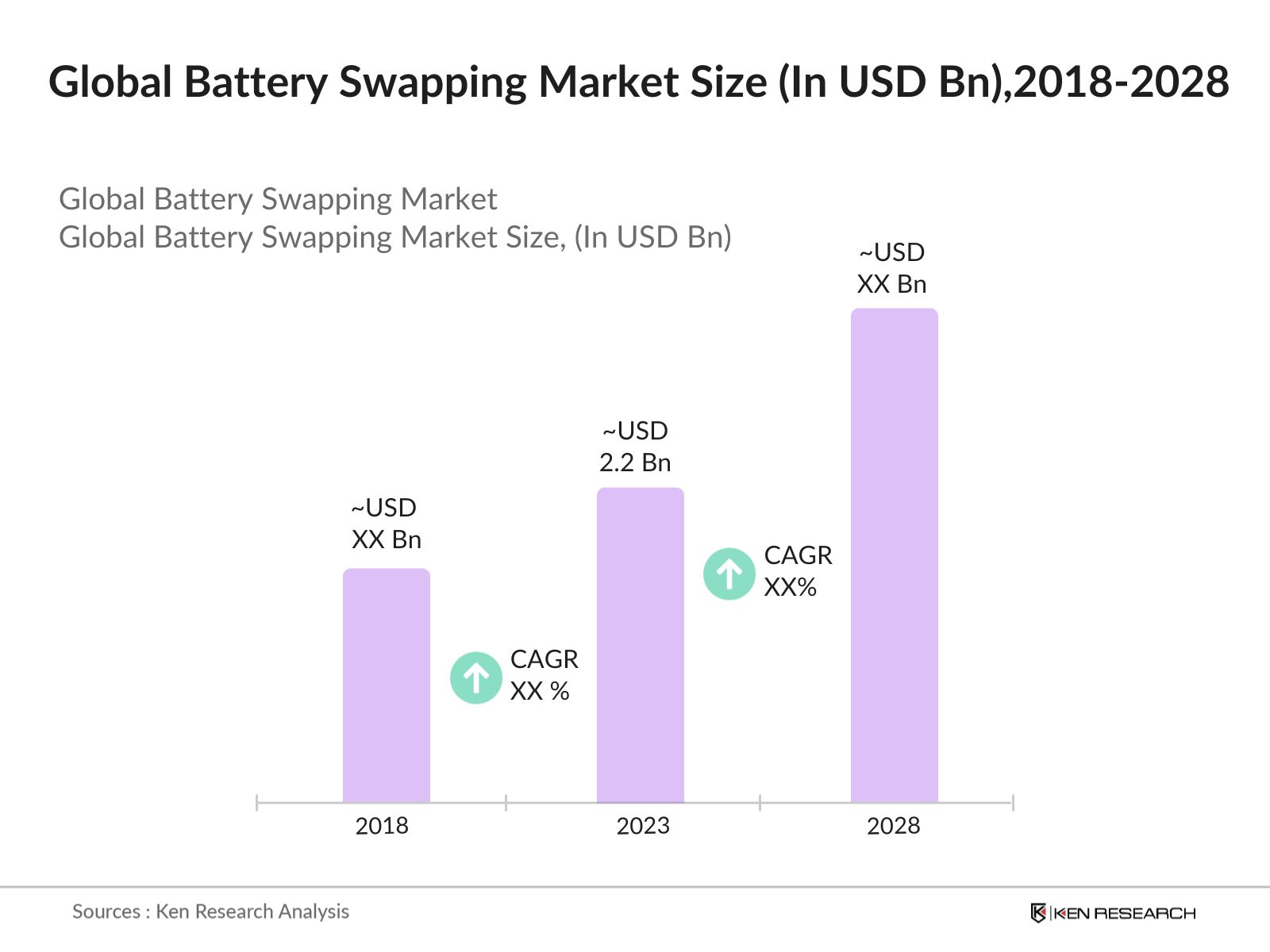
  • In 2023, the Global Battery Swapping Market was valued at USD 2.2 billion, driven by the increasing adoption of electric vehicles (EVs) and the need for efficient and quick refueling solutions. The market's growth is propelled by the rising demand for reduced EV downtime, government initiatives supporting EV infrastructure, and advancements in battery swapping technology that allow for faster and more seamless swaps.
  • Key players in the Battery Swapping market include NIO, Inc., Gogoro Inc., Ample Inc., Sun Mobility, and Battery Smart. These companies are leading the industry with innovative battery swapping solutions, strategic partnerships with vehicle manufacturers, and expansion of swapping station networks. For example, NIOs battery-as-a-service (BaaS) model provides a subscription-based solution that lowers the upfront cost of EVs and offers flexibility in battery capacity upgrades.
  • In China, the market has seen growth due to supportive government policies and subsidies for EV adoption and battery swapping infrastructure. The country's battery swapping industry is characterized by a high concentration of battery swapping stations and a collaborative ecosystem involving vehicle manufacturers, battery suppliers, and swapping station operators.
  • In 2023, Gogoro expanded its battery swapping network in Taiwan, introducing new stations in urban and rural areas to enhance accessibility and convenience for EV riders. This expansion aligns with Gogoros strategy to promote sustainable transportation and reduce carbon emissions.Global Battery Swapping Market Size

Global Battery Swapping Market Segmentation

The Global Battery Swapping Market can be segmented based on application type, service type, and region:
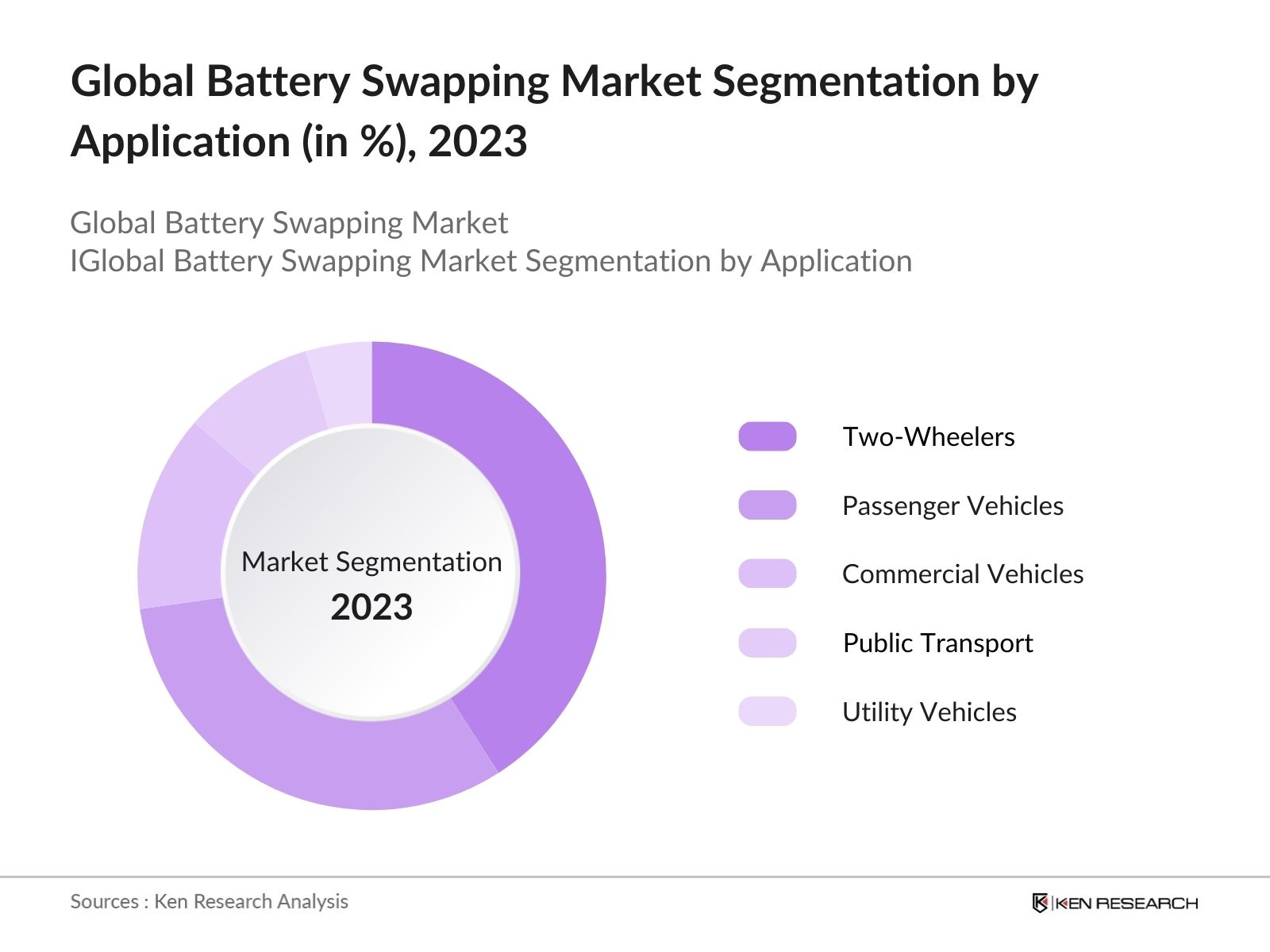
  • By Application Type: The market is segmented into Passenger Vehicles, Commercial Vehicles, Public Transport, Two-Wheelers, and Utility Vehicles. In 2023, the Two-Wheelers segment led the market due to the widespread adoption of electric scooters and motorcycles in densely populated urban areas where quick battery swaps are particularly advantageous.

Global Battery Swapping Market Segmentation By Application Type

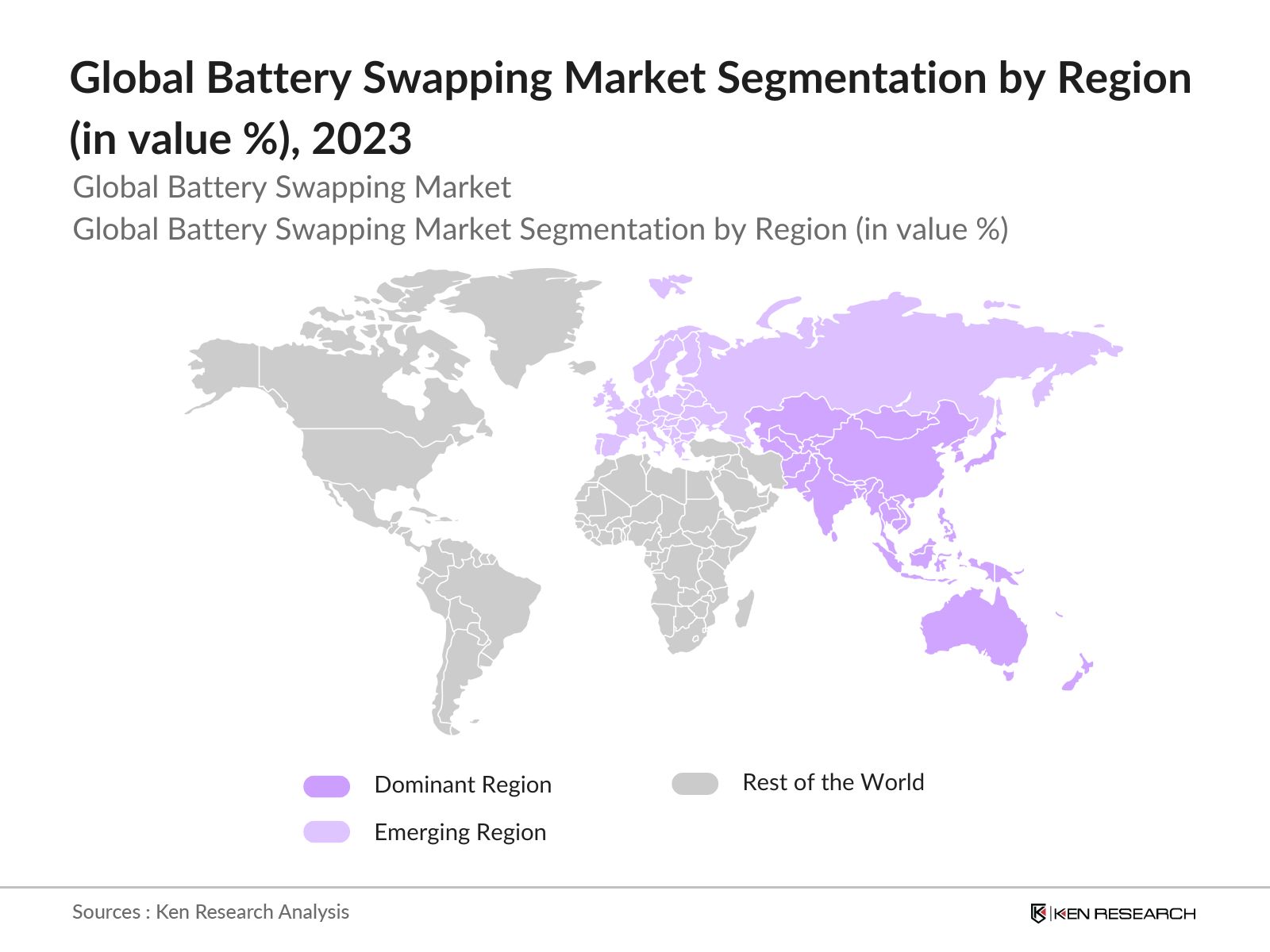
  • By Region: The market is segmented into North America, Europe, Asia-Pacific, Latin America, and Middle East & Africa. Asia-Pacific led the global market in 2023, holding the largest share due to the strong presence of battery swapping infrastructure in countries like China and India and the high rate of EV adoption.Global Battery Swapping Market Segmentation By Region
  • By Service Type: The market is segmented into Subscription-Based Service and Pay-Per-Use Service. In 2023, the Subscription-Based Service segment dominated the market, driven by its appeal to cost-conscious consumers and fleet operators seeking predictable expenses and convenience.

Global Battery Swapping Market Competitive Landscape

Company

Establishment Year

Headquarters

NIO, Inc.

2014

Shanghai, China

Gogoro Inc.

2011

Taipei, Taiwan

Ample Inc.

2018

San Francisco, USA

Sun Mobility

2017

Bangalore, India

Battery Smart

2019

New Delhi, India

  • NIO, Inc.: In 2023, NIO expanded its battery swapping network by adding new stations across China and Europe. The company also launched its third-generation battery swapping station, capable of performing up to 20 swaps per hour, enhancing the efficiency and convenience of the swapping process.
  • Gogoro Inc.: In 2023, Gogoro introduced a new range of smart batteries designed for longer life cycles and enhanced energy density. The company also collaborated with several global vehicle manufacturers to integrate Gogoros battery swapping technology into their electric scooters and motorcycles.

Global Battery Swapping Market Analysis

Market Growth Drivers:

  • Development of Smart Cities and Urban Mobility Solutions: The rise of smart cities is driving the demand for innovative transportation options, including electric vehicles and battery swapping. The smart cities market is growing rapidly, and cities like Singapore and Amsterdam have integrated battery swapping stations into their infrastructure to promote sustainable living and reduce congestion. As more cities adopt smart mobility solutions, the demand for battery swapping is expected to increase.
  • Consumer Preference for Cost-Effective Solutions: Battery swapping offers a cost-effective alternative to traditional charging by reducing the need for expensive home chargers and providing flexible battery ownership models. In China, for example, NIOs battery-as-a-service model reduces the upfront cost of EVs by approximately USD 10,000, making electric vehicles more accessible to a broader range of consumers. This model is particularly appealing in areas where public charging infrastructure is limited or costly.
  • Increasing Adoption of Electric Vehicles (EVs): The global shift towards sustainable transportation has significantly boosted the adoption of electric vehicles. The number of electric vehicles worldwide surpassed 10 million in 2020, and this trend is expected to continue growing. As more consumers and businesses opt for EVs, the demand for efficient and convenient battery swapping solutions is increasing. In Taiwan, for instance, Gogoro has established a network of over 2,100 battery swapping stations, serving more than 350,000 riders, illustrating the effectiveness of battery swapping in urban settings.

Market Challenges:

  • High Capital Expenditure for Infrastructure Development: Establishing a comprehensive network of battery swapping stations requires significant upfront investment in infrastructure, technology, and land acquisition. This high capital expenditure can be a substantial barrier for new entrants and smaller companies looking to enter the market. Additionally, the cost of setting up stations in prime urban locations, where real estate is expensive, can further increase operational costs, affecting the financial viability and scalability of battery swapping networks.
  • Technological Challenges in Battery Swapping Mechanisms: The mechanical and technological aspects of battery swapping, such as automated swapping systems, precision alignment, and secure battery handling, are complex and require sophisticated engineering. Technical issues can arise, such as battery misalignment or malfunction during the swapping process, leading to delays and increased maintenance costs. These challenges necessitate ongoing investment in technology and training, which can strain resources, especially for smaller companies.
  • Battery Degradation and Lifecycle Management: Frequent swapping and charging cycles can accelerate battery degradation, reducing their overall lifespan and increasing the cost of replacements. Managing battery lifecycles and ensuring optimal performance through regular maintenance and quality checks is resource-intensive. Furthermore, degradation affects battery performance and range, which can impact user satisfaction and trust in battery swapping systems.

Government Initiatives

  • Chinas New Energy Vehicle (NEV) Policy: The Chinese government has introduced several initiatives to support battery swapping technology, including subsidies for swapping station operators and incentives for EV manufacturers to adopt swappable battery designs. As of 2023, over 3567 battery swapping stations were operational in China, of which 2,333 were operated by Nio, providing extensive coverage and accessibility for EV users.
  • India's FAME II Scheme (Faster Adoption and Manufacturing of Hybrid and Electric Vehicles): Under the FAME II scheme, the Indian government provides financial incentives for the development of EV infrastructure, including battery swapping stations. The scheme aims to promote the adoption of electric two-wheelers, three-wheelers, and public transportation vehicles. The Indian government has allocated INR 10,000 crores to support EV infrastructure development, including battery swapping stations, under FAME II.

Global Battery Swapping Market Future Outlook

The Global Battery Swapping Market is expected to continue its robust growth, driven by the increasing adoption of electric vehicles, advancements in battery technology, and supportive government policies.

Future Market Trends:

  • Integration with Renewable Energy Sources: Battery swapping stations are increasingly being integrated with renewable energy sources, such as solar panels and wind turbines, to create a more sustainable and energy-efficient swapping network. This not only reduces the carbon footprint associated with charging but also helps stabilize the grid by storing excess renewable energy.
  • Expansion of Urban Mobility Solutions: The rise of electric scooters, bikes, and other micro-mobility vehicles in densely populated urban areas is driving demand for smaller, portable battery swapping stations tailored to these modes of transport. These stations provide a convenient, fast solution for users who need quick battery swaps on the go.
  • Expansion into Rural Areas: While urban areas have been the primary focus for battery swapping infrastructure, there is growing interest in expanding into rural and underserved regions. This expansion can help address the lack of charging infrastructure in these areas, promoting EV adoption and reducing reliance on fossil fuels.

Scope of the Report

Global Battery Swapping Market Scope:

By Region

North America

Europe

Asia-Pacific

Latin America

Middle East & Africa

By Battery Type

Lithium-Ion Batteries

Nickel-Metal Hydride Batteries

Solid-State Batteries

By Application

Passenger Vehicles

Commercial Vehicles

Public Transport

Two-Wheelers

Utility Vehicles


By Service Type

Subscription-Based Service

Pay-Per-Use Service

Products

Key Target Audience:

  • Electric Vehicle Manufacturers

  • Venture Capital and Private Equity Firms

  • Automotive Parts and Component Suppliers

  • Research & Academic Institutions

  • Environmental and Sustainability Organizations

  • Urban Planning and Infrastructure Development Agencies

  • Technology Providers and Software Developers

  • Battery Swapping Station Operators

  • Fleet Management Companies

  • Government and Regulatory Bodies (Ministries of Transport, Energy Departments)

  • Venture Capital and Private Equity Firms

  • Investment Firms

Time Period Captured in the Report:

  • Historical Period: 2018-2023

  • Base Year: 2023

  • Forecast Period: 2023-2028

Companies

Players Mentioned in the Report

  • NIO Inc.

  • BYD Auto

  • Tesla, Inc.

  • Rivian Automotive

  • Xpeng Motors

  • Lucid Motors

  • ChargePoint Holdings Inc.

  • Blink Charging Co.

  • EVgo Services LLC

  • ABB Ltd.

  • Siemens AG

  • Schneider Electric

  • Coulomb Technologies

  • Greenlots

  • Tesla Supercharger Network

Table of Contents

1. Global Battery Swapping Market Overview

1.1. Definition and Scope

1.2. Market Taxonomy

1.3. Market Growth Rate

1.4. Market Segmentation Overview

2. Global Battery Swapping Market Size (in USD Bn), 2018-2023

2.1. Historical Market Size

2.2. Year-on-Year Growth Analysis

2.3. Key Market Developments and Milestones

3. Global Battery Swapping Market Analysis

3.1. Growth Drivers

3.1.1. Increasing Adoption of Electric Vehicles (EVs)

3.1.2. Development of Smart Cities and Urban Mobility Solutions

3.1.3. Consumer Preference for Cost-Effective Solutions

3.1.4. Government Initiatives

3.2. Restraints

3.2.1. High Capital Expenditure for Infrastructure Development

3.2.2. Technological Challenges in Battery Swapping Mechanisms

3.2.3. Battery Degradation and Lifecycle Management

3.3. Opportunities

3.3.1. Expansion into Rural Areas

3.3.2. Integration with Renewable Energy Sources

3.3.3. Expansion of Urban Mobility Solutions

3.4. Trends

3.4.1. Integration with Smart City Projects

3.4.2. Rise of Electric Micro-Mobility Vehicles

3.4.3. Increased Focus on Sustainable Energy Solutions

3.5. Government Regulation

3.5.1. Chinas New Energy Vehicle (NEV) Policy

3.5.2. India's FAME II Scheme

3.5.3. European Green Deal and Sustainable Transport Strategy

3.5.4. US Infrastructure Investment and Jobs Act

3.6. SWOT Analysis

3.7. Stake Ecosystem

3.8. Competition Ecosystem

4. Global Battery Swapping Market Segmentation, 2023

4.1. By Application Type (in Value %)

4.1.1. Passenger Vehicles

4.1.2. Commercial Vehicles

4.1.3. Public Transport

4.1.4. Two-Wheelers

4.1.5. Utility Vehicles

4.2. By Service Type (in Value %)

4.2.1. Subscription-Based Service

4.2.2. Pay-Per-Use Service

4.3. By Region (in Value %)

4.3.1. North America

4.3.2. Europe

4.3.3. Asia-Pacific

4.3.4. Latin America

4.3.5. Middle East & Africa

4.4. By Battery Type (in Value %)

4.4.1. Lithium-Ion Batteries

4.4.2. Nickel-Metal Hydride Batteries

4.4.3. Solid-State Batteries

5. Global Battery Swapping Market Cross Comparison

5.1 Detailed Profiles of Major Companies

5.1.1. NIO, Inc.

5.1.2. Gogoro Inc.

5.1.3. Ample Inc.

5.1.4. Sun Mobility

5.1.5. Battery Smart

5.1.6. BYD Auto

5.1.7. Tesla, Inc.

5.1.8. Rivian Automotive

5.1.9. Xpeng Motors

5.1.10. Lucid Motors

5.1.11. ChargePoint Holdings Inc.

5.1.12. Blink Charging Co.

5.1.13. EVgo Services LLC

5.1.14. ABB Ltd.

5.1.15. Siemens AG

5.2 Cross Comparison Parameters (No. of Employees, Headquarters, Inception Year, Revenue)

6. Global Battery Swapping Market Competitive Landscape

6.1. Market Share Analysis

6.2. Strategic Initiatives

6.3. Mergers and Acquisitions

6.4. Investment Analysis

6.4.1. Venture Capital Funding

6.4.2. Government Grants

6.4.3. Private Equity Investments

7. Global Battery Swapping Market Regulatory Framework

7.1. Environmental Standards

7.2. Compliance Requirements

7.3. Certification Processes

8. Global Battery Swapping Future Market Size (in USD Bn), 2023-2028

8.1. Future Market Size Projections

8.2. Key Factors Driving Future Market Growth

9. Global Battery Swapping Future Market Segmentation, 2028

9.1. By Application Type (in Value %)

9.2. By Service Type (in Value %)

9.3. By Region (in Value %)

9.4. Battery Type

10.Global Battery Swapping Market Analysts Recommendations

10.1. TAM/SAM/SOM Analysis

10.2. Customer Cohort Analysis

10.3. Marketing Initiatives

10.4. White Space Opportunity Analysis

Disclaimer

Contact Us

Research Methodology

Step 1: Identifying Key Variables

Building an ecosystem of major entities in the Global Battery Swapping Market and referencing multiple secondary and proprietary databases to conduct desk research. This includes gathering industry-level information on market drivers, challenges, and key players, as well as understanding technological advancements and regulatory impacts.

Step 2: Market Building

Collecting statistics on the global Battery Swapping market over the years, including historical market size, growth rates, and adoption of battery swapping across various regions and vehicle types. We will analyze market share, revenue generated by major players, and emerging trends to ensure accuracy and reliability in the data presented.

Step 3: Validating and Finalizing

Formulating market hypotheses and conducting CATIs (Computer-Assisted Telephone Interviews) with industry experts from leading battery swapping companies. These interviews will help validate the collected statistics and provide insights into operational and financial aspects directly from company representatives.

Step 4: Research Output

Our team will approach multiple EV technology providers to understand the dynamics of market segments, consumer preferences, and sales trends. This process will validate the derived statistics using a bottom-to-top approach, ensuring that the final data accurately reflects the actual market conditions.

Frequently Asked Questions

01. How big is the Global Battery Swapping Market?

In 2023, the Global Battery Swapping Market was valued at USD 2.2 billion. The market's growth is driven by the increasing adoption of electric vehicles (EVs), the need for efficient and quick refueling solutions, and supportive government initiatives promoting battery swapping infrastructure.

02. What are the challenges in the Global Battery Swapping Market?

Challenges in the Global Battery Swapping Market include high initial setup costs, standardization issues across different battery and vehicle manufacturers, and concerns about battery degradation with frequent swapping. These factors can impact the scalability and adoption of battery swapping solutions in the global market.

03. Who are the major players in the Global Battery Swapping Market?

Major players in the Global Battery Swapping Market include NIO, Inc., Gogoro Inc., Ample Inc., Sun Mobility, and Battery Smart. These companies lead the market with their innovative battery swapping solutions, strategic partnerships, and extensive swapping station networks.

0.4 What are the growth drivers of the Global Battery Swapping Market?

Key growth drivers in the Global Battery Swapping Market include the increasing adoption of electric vehicles, the reduction in EV downtime through quick battery swaps, advancements in battery technology, and government initiatives supporting the development of battery swapping infrastructure.

Why Buy From Us?

RRR
Refine Robust Result (RRR) Framework

What makes us stand out is that our consultants follows Robust, Refine and Result (RRR) methodology. i.e. Robust for clear definitions, approaches and sanity checking, Refine for differentiating respondents facts and opinions and Result for presenting data with story

Our Reach Is Unmatched

We have set a benchmark in the industry by offering our clients with syndicated and customized market research reports featuring coverage of entire market as well as meticulous research and analyst insights.

Research
Shifting the Research Paradigm

While we don't replace traditional research, we flip the method upside down. Our dual approach of Top Bottom & Bottom Top ensures quality deliverable by not just verifying company fundamentals but also looking at the sector and macroeconomic factors.

Insite
More Insights-Better Decisions

With one step in the future, our research team constantly tries to show you the bigger picture. We help with some of the tough questions you may encounter along the way: How is the industry positioned? Best marketing channel? KPI's of competitors? By aligning every element, we help maximize success.

Trust
Transparency and Trust

Our report gives you instant access to the answers and sources that other companies might choose to hide. We elaborate each steps of research methodology we have used and showcase you the sample size to earn your trust.

support
Round the Clock Support

If you need any support, we are here! We pride ourselves on universe strength, data quality, and quick, friendly, and professional service.

Why Client Choose Us?

400000+ Reports in repository
150+ Consulting project a year
100+ Analysts
8000+ Client Queries in 2022