
Global Container Homes Market Outlook to 2030
Region:Global
Author(s):Yogita Sahu
Product Code:KROD3978
October 2024
84
About the Report
Global Container Homes Market Overview
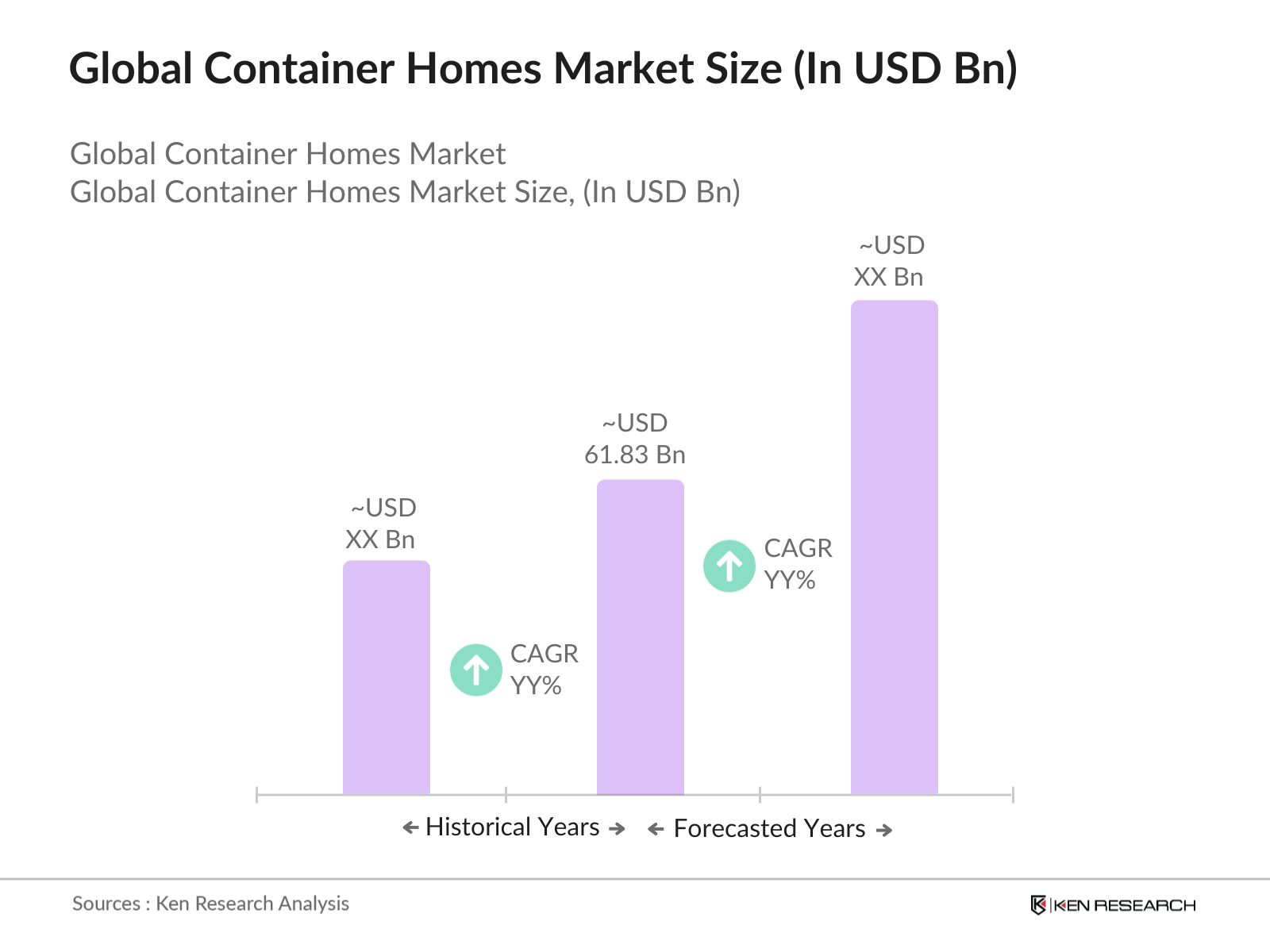
- The global container homes market is valued at USD 61.83 billion based on a five-year historical analysis, and it is primarily driven by the rising demand for affordable housing solutions and sustainable living practices. The use of repurposed shipping containers for construction has gained traction due to their cost efficiency and the speed at which homes can be assembled.
- Countries like the United States, the United Kingdom, and Australia dominate the market due to their advanced construction industries and increasing adoption of sustainable and eco-friendly housing solutions. In the U.S., for instance, container homes are prevalent in cities like Austin and San Francisco, where housing shortages and rising costs have spurred innovation in the modular housing sector.
- Governments in developed nations have begun promoting container homes as part of their green building initiatives. The European Union supported sustainable construction projects, with part of the funding going to innovative housing models like container homes. Similarly, countries like Canada and Australia have introduced tax credits for eco-friendly housing solutions, offering builders financial benefits for opting for sustainable construction practices.
Global Container Homes Market Segmentation
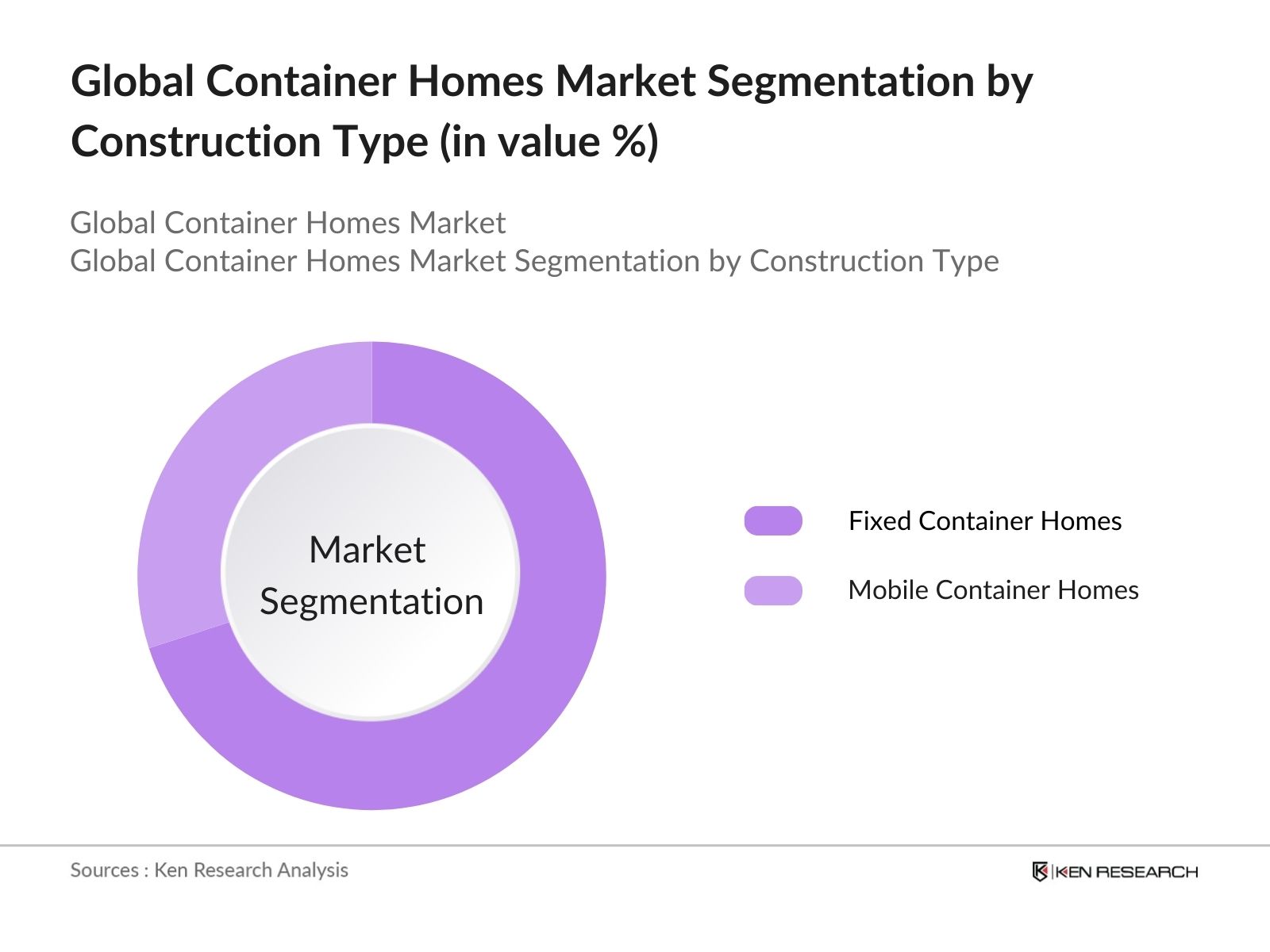
By Construction Type: The global container homes market is segmented by construction type into fixed container homes and mobile container homes. Fixed container homes hold a dominant market share because of their stability and permanent nature. These homes are increasingly popular in urban areas where land is limited, and they offer a reliable and cost-effective solution for residential purposes.
By End-Use: The market is further segmented by end-use into residential, commercial, industrial, and military & defense. The residential segment dominates the market due to the rising demand for affordable housing solutions and the growing appeal of container homes as a modern, minimalist living option. The trend is particularly strong in urban areas where housing shortages and high land prices have driven interest in innovative housing solutions.
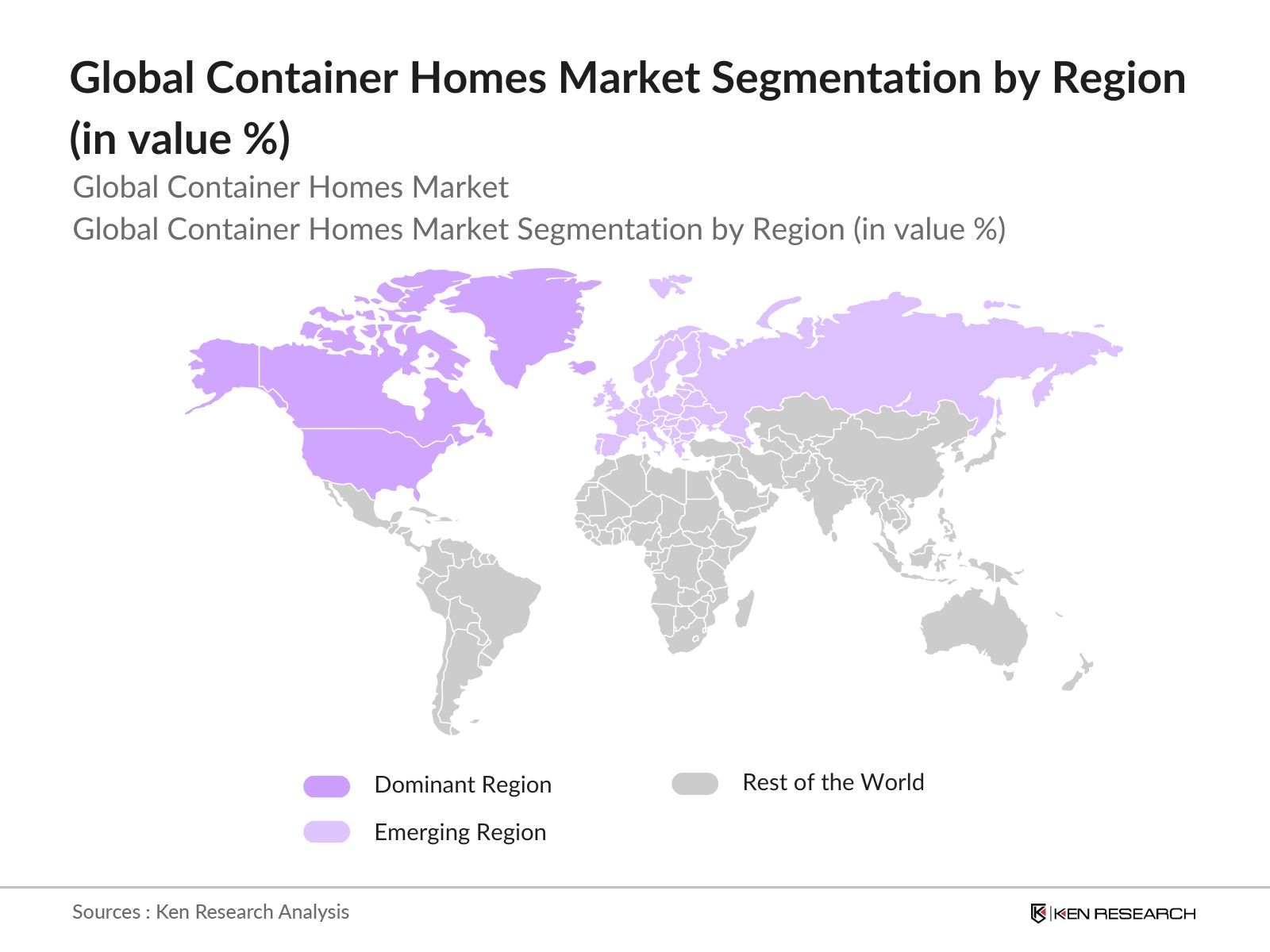
By Region: The dominates the global container homes market, followed by Europe and Asia-Pacific. North America's dominance can be attributed to the high adoption rates of sustainable living solutions, a well-established infrastructure for modular construction, and increasing awareness regarding eco-friendly building practices. The U.S. is the key player in this region, followed by Canada.
Global Container Homes Market Competitive Landscape
The market is dominated by a few key players, including companies specializing in modular construction and prefabrication. These companies are focusing on strategic initiatives like mergers and acquisitions, product development, and partnerships to enhance their market position.
|
Company |
Establishment Year |
Headquarters |
Annual Revenue |
No. of Employees |
R&D Investments |
Sustainability Initiatives |
Global Reach |
Product Portfolio |
|
SG Blocks, Inc. |
2007 |
New York, USA |
||||||
|
Giant Containers |
2003 |
Toronto, Canada |
||||||
|
Container Homes USA |
2010 |
Ohio, USA |
||||||
|
WillScot Mobile Mini |
1985 |
Arizona, USA |
||||||
|
Boxman Studios |
2008 |
North Carolina, USA |
Global Container Homes Market Analysis
Market Growth Drivers
- Increased Demand for Affordable Housing: The global shortage of affordable housing has driven the need for alternative solutions such as container homes. As of 2024, the World Bank estimates that around 1.6 billion people lack adequate housing, with the demand growing especially in rapidly urbanizing regions. The modular and cost-effective nature of container homes helps mitigate this issue by providing an efficient solution to fill the housing gap.
- Growing Awareness of Sustainability: Sustainability and eco-friendly construction have become paramount considerations in the housing sector. Container homes use repurposed shipping containers, reducing the demand for traditional building materials like cement and bricks. In 2024, it is estimated that the construction industry will generate over 2.1 billion tons of waste annually. By reusing containers, the construction of container homes helps to minimize this environmental impact.
- Government Incentives and Support for Modular Housing: Governments around the world are actively promoting modular and prefab housing solutions to address the housing crisis. For example, in the U.S., government-backed housing programs provided nearly $60 billion in subsidies and grants in 2023, many of which were directed towards innovative housing solutions such as container homes.
Market Challenges
- Public Perception and Aesthetic Concerns: Despite their growing popularity, many consumers still view container homes as less aesthetically appealing compared to traditional housing options. It is indicated that nearly 40 million homeowners globally expressed concerns about the aesthetic limitations of container homes. Many people associate container homes with low-income housing or temporary shelters, which can affect market acceptance in higher-income regions where luxury and design play a crucial role in home-buying decisions.
- Limited Availability of Skilled Labor: While container homes can be assembled faster than traditional homes, the specialized skills required for modifying and outfitting these structures can create a bottleneck in the supply chain. The International Labour Organization noted in 2023 that the shortage of skilled labor in the construction sector, particularly in modular housing, exceeded 1.5 million workers globally. This labor gap slows the production and deployment of container homes, increasing lead times and project costs.
Global Container Homes Market Future Outlook
Over the next five years, the global container homes industry is expected to experience growth driven by the rising demand for sustainable, affordable, and efficient housing solutions. As urban populations continue to swell and housing shortages become more acute, container homes will serve as a quick and eco-friendly alternative to traditional building methods.
Future Market Opportunities
- Increased Adoption in Urban Housing Solutions: Over the next five years, it is expected that container homes will become a component of urban housing projects in cities struggling with space constraints. By 2029, major cities like London and Tokyo are projected to have container homes integrated into at least 10,000 housing units. With growing population density and limited space for traditional housing, these modular units will offer a practical, space-efficient alternative in urban planning.
- Integration with Smart City Infrastructure: Container homes will increasingly integrate with broader smart city initiatives. In 2024, governments of technologically advanced cities like Singapore and Dubai are already incorporating smart infrastructure into modular homes, and by 2028, it is estimated that 15,000 container homes globally will be equipped with IoT and AI-based systems. These homes will feature smart energy grids, water recycling systems, and advanced security networks, making them a key player in future sustainable urban developments.
Scope of the Report
|
By Construction Type |
Fixed Container Homes Mobile Container Homes |
|
By End-Use |
Residential Commercial Industrial Military & Defense |
|
By Container Type |
20-Foot Containers 40-Foot Containers |
|
By Region |
North America Europe Asia-Pacific Latin America Middle East & Africa |
|
By Material Type |
Steel Aluminum Composite Materials |
Products
Key Target Audience Organizations and Entities Who Can Benefit by Subscribing This Report:
Banks and Financial Institution
Construction Companies
Government and Regulatory Bodies (e.g., U.S. Department of Housing and Urban Development, European Green Building Council)
Investors and Venture Capitalist Firms
Prefabrication Equipment Manufacturers
Private Equity Firms
Shipping Container Manufacturers
Companies
Players Mentioned in the Report:
SG Blocks, Inc.
Giant Containers
Container Homes USA
WillScot Mobile Mini
Boxman Studios
Falcon Structures
Royal Wolf
Speed House Group
Wernick Group
Eveon Containers
Laurianto Construction
Karmod Prefabricated Technologies
Advanced Container Company
Tiger Containers
MAC Containers
Table of Contents
1. Global Container Homes Market Overview
1.1. Definition and Scope
1.2. Market Taxonomy
1.3. Market Growth Rate
1.4. Market Segmentation Overview
2. Global Container Homes Market Size (In USD Billion)
2.1. Historical Market Size
2.2. Year-On-Year Growth Analysis
2.3. Key Market Developments and Milestones
3. Global Container Homes Market Analysis
3.1. Growth Drivers
3.1.1. Cost-Effective Housing Solutions
3.1.2. Sustainability and Eco-Friendly Construction
3.1.3. Growing Urbanization and Housing Shortage
3.1.4. Government Initiatives for Affordable Housing
3.2. Market Challenges
3.2.1. Structural Limitations and Size Constraints
3.2.2. Regulatory and Zoning Issues
3.2.3. Perception of Poor Aesthetic Appeal
3.2.4. Limited Skilled Workforce
3.3. Opportunities
3.3.1. Technological Advancements in Construction
3.3.2. Increasing Investment in Modular and Prefabricated Homes
3.3.3. Expansion in Emerging Markets
3.4. Trends
3.4.1. Use of Renewable Energy and Smart Technology in Container Homes
3.4.2. Multi-Story Container Homes
3.4.3. Integration with Off-the-Grid Solutions
3.5. Government Regulation
3.5.1. Green Building Codes and Standards
3.5.2. Incentives for Sustainable Construction
3.5.3. Affordable Housing Schemes
3.6. SWOT Analysis
3.7. Stakeholder Ecosystem
3.8. Porters Five Forces
3.9. Competition Ecosystem
4. Global Container Homes Market Segmentation
4.1. By Construction Type (In Value %)
4.1.1. Fixed Container Homes
4.1.2. Mobile Container Homes
4.2. By End-Use (In Value %)
4.2.1. Residential
4.2.2. Commercial
4.2.3. Industrial
4.2.4. Military & Defense
4.3. By Container Type (In Value %)
4.3.1. 20-Foot Containers
4.3.2. 40-Foot Containers
4.4. By Region (In Value %)
4.4.1. North America
4.4.2. Europe
4.4.3. Asia-Pacific
4.4.4. Latin America
4.4.5. Middle East & Africa
4.5. By Material Type (In Value %)
4.5.1. Steel
4.5.2. Aluminum
4.5.3. Composite Materials
5. Global Container Homes Market Competitive Analysis
5.1. Detailed Profiles of Major Companies
5.1.1. SG Blocks, Inc.
5.1.2. Giant Containers
5.1.3. Container Homes USA
5.1.4. MAC Containers
5.1.5. WillScot Mobile Mini
5.1.6. Boxman Studios
5.1.7. Royal Wolf
5.1.8. Falcon Structures
5.1.9. Wernick Group
5.1.10. Speed House Group
5.1.11. Eveon Containers
5.1.12. Laurianto Construction
5.1.13. Karmod Prefabricated Technologies
5.1.14. Advanced Container Company
5.1.15. Tiger Containers
5.2. Cross Comparison Parameters (Headquarters, No. of Employees, Inception Year, Revenue, Product Portfolio, Geographical Reach, R&D Investments, Sustainable Practices)
5.3. Market Share Analysis
5.4. Strategic Initiatives
5.5. Mergers and Acquisitions
5.6. Investment Analysis
5.7. Government Subsidies and Incentives
5.8. Private Equity and Venture Capital Funding
6. Global Container Homes Market Regulatory Framework
6.1. Zoning and Construction Permits
6.2. Environmental Compliance and Certifications
6.3. Health and Safety Regulations
7. Global Container Homes Future Market Size (In USD Billion)
7.1. Future Market Size Projections
7.2. Key Factors Driving Future Market Growth
8. Global Container Homes Future Market Segmentation
8.1. By Construction Type (In Value %)
8.2. By End-Use (In Value %)
8.3. By Container Type (In Value %)
8.4. By Material Type (In Value %)
8.5. By Region (In Value %)
9. Global Container Homes Market Analysts Recommendations
9.1. TAM/SAM/SOM Analysis
9.2. Customer Cohort Analysis
9.3. Marketing Initiatives
9.4. White Space Opportunity Analysis
Research Methodology
Step 1: Identification of Key Variables
This step involves mapping out the ecosystem of the global container homes market, focusing on key stakeholders such as manufacturers, regulators, and end-users. Secondary and proprietary databases are used to gather relevant data and insights on market dynamics.
Step 2: Market Analysis and Construction
Historical data is collected and analyzed, including penetration levels of container homes in different regions, market trends, and revenue generation. Service quality metrics are also examined to validate the revenue estimates and market penetration rates.
Step 3: Hypothesis Validation and Expert Consultation
Experts from the container homes industry are consulted through phone interviews and surveys to validate the market hypotheses. Their insights on operational and financial performance are instrumental in refining market data.
Step 4: Research Synthesis and Final Output
In this final step, data from primary and secondary research is synthesized to produce a comprehensive market report. Expert inputs are integrated to verify key statistics and ensure the accuracy of the analysis.
Frequently Asked Questions
01. How big is the Global Container Homes Market?
The global container homes market is valued at USD 61.83 billion, driven by the growing need for affordable, sustainable housing solutions, especially in urban areas facing housing shortages.
02. What are the challenges in the Global Container Homes Market?
Key challenges in the global container homes market include regulatory and zoning issues, limited awareness about container homes in some regions, and structural limitations that may require additional investments for customization.
03. Who are the major players in the Global Container Homes Market?
Major players in the global container homes market include SG Blocks, Inc., Giant Containers, Container Homes USA, and WillScot Mobile Mini. These companies dominate due to their strong market presence and innovative product offerings.
04. What are the growth drivers of the Global Container Homes Market?
The growth in the global container homes market is propelled by the rising demand for affordable housing, government incentives for sustainable construction, and advancements in modular construction technologies.
05. Which regions dominate the Global Container Homes Market?
North America and Europe dominate due to advanced infrastructure and a strong focus on sustainability. Asia-Pacific is emerging as a key in the global container homes market, driven by rapid urbanization in countries like China and India.
Why Buy From Us?

What makes us stand out is that our consultants follows Robust, Refine and Result (RRR) methodology. i.e. Robust for clear definitions, approaches and sanity checking, Refine for differentiating respondents facts and opinions and Result for presenting data with story

We have set a benchmark in the industry by offering our clients with syndicated and customized market research reports featuring coverage of entire market as well as meticulous research and analyst insights.

While we don't replace traditional research, we flip the method upside down. Our dual approach of Top Bottom & Bottom Top ensures quality deliverable by not just verifying company fundamentals but also looking at the sector and macroeconomic factors.

With one step in the future, our research team constantly tries to show you the bigger picture. We help with some of the tough questions you may encounter along the way: How is the industry positioned? Best marketing channel? KPI's of competitors? By aligning every element, we help maximize success.

Our report gives you instant access to the answers and sources that other companies might choose to hide. We elaborate each steps of research methodology we have used and showcase you the sample size to earn your trust.

If you need any support, we are here! We pride ourselves on universe strength, data quality, and quick, friendly, and professional service.