Global Electrical Resistor Market Outlook 2030

Region:Global

Author(s):Shivani Mehra

Product Code:KROD10091

Published On

November 2024

Total pages

83

About the Report

Global Electrical Resistor Market Overview

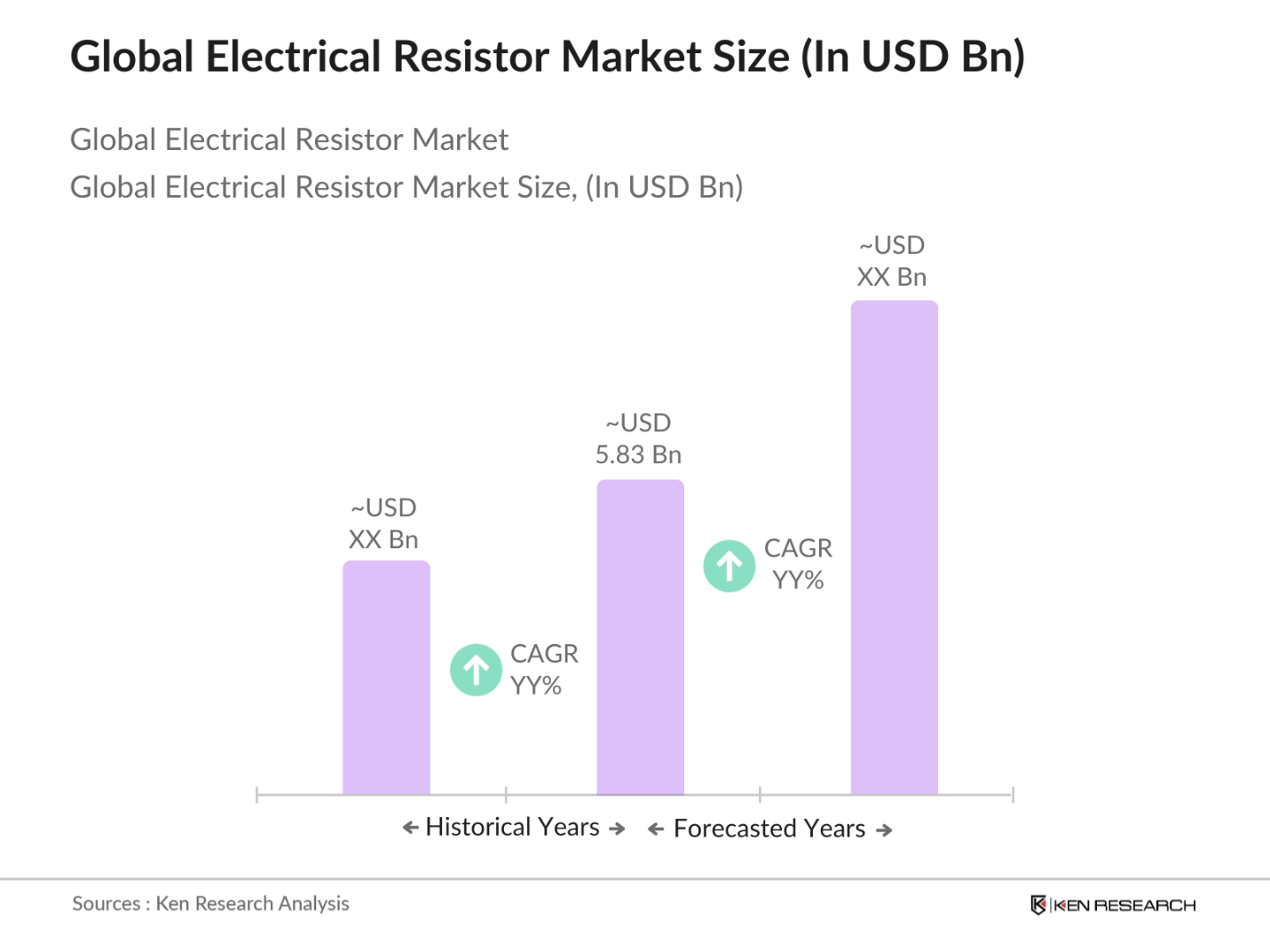
  • The global electrical resistor market is valued at approximately USD 5.83billion. This market is primarily driven by the widespread demand for resistors across various industries such as consumer electronics, automotive, industrial automation, and renewable energy systems. The increasing adoption of advanced electronics, coupled with the shift towards electric vehicles and energy-efficient systems, has significantly contributed to market expansion.

market overviews

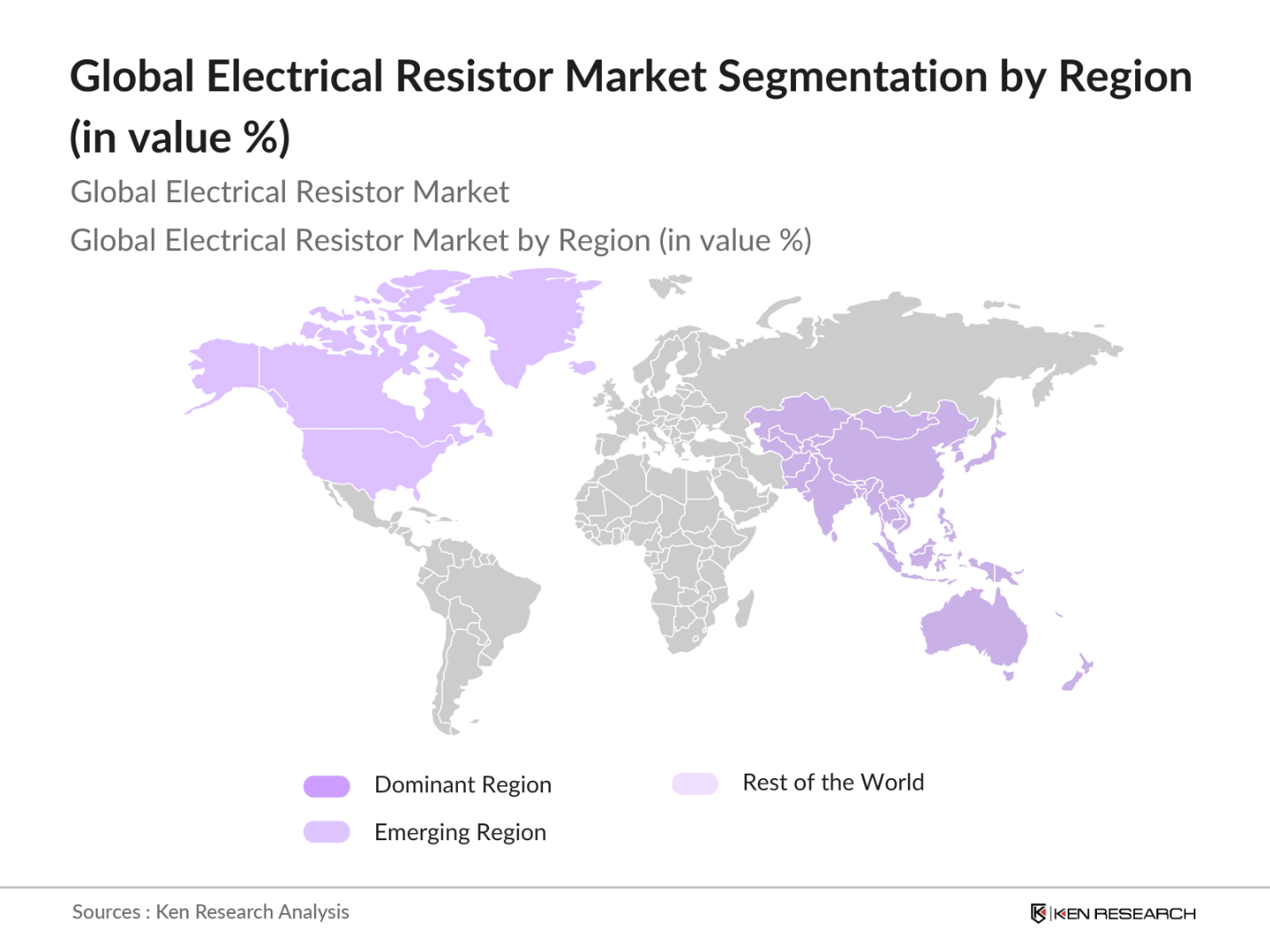
  • The dominant regions in the global electrical resistor market include Asia Pacific and North America. Asia Pacific leads the market due to its strong industrial base, rapid urbanization, and increasing electronics manufacturing hubs in countries like China, Japan, and South Korea. The presence of major electronics and automotive manufacturers in these regions, along with government incentives for renewable energy projects, further strengthens the market position.
  • Governments worldwide have implemented numerous initiatives to promote the adoption of renewable energy, focusing on solar, wind, and hydroelectric power. The European Unions Green Deal, for example, has allocated over $1 trillion to accelerate the transition to clean energy. This initiative aims to reduce greenhouse gas emissions and promote renewable energy investments, particularly in solar and wind power projects. Similarly, the U.S. government has extended investment tax credits (ITC) for renewable energy projects, providing substantial financial incentives for solar and wind energy developers, which has boosted large-scale clean energy installations.

Global Electrical Resistor Market Segmentation

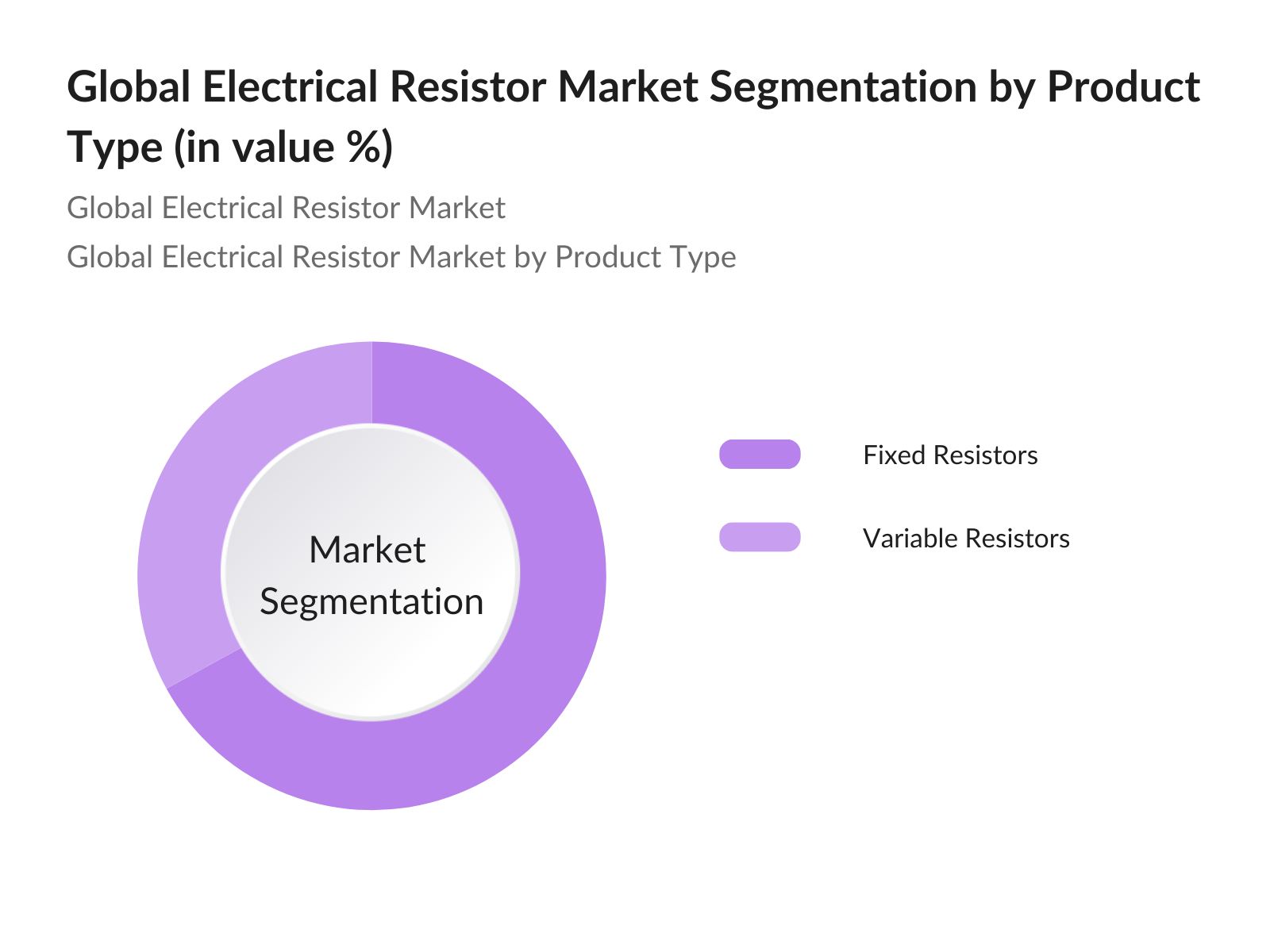
By Product Type: The electrical resistor market is segmented by product type into Fixed Resistors and Variable Resistors. Fixed resistors dominate the market due to their extensive application in consumer electronics, automotive systems, and industrial equipment. The reliability and simplicity of fixed resistors make them the preferred choice for controlling voltage, especially in devices where current regulation is critical, such as smartphones and household appliances.
market overviews

By Region: Asia Pacific leads the market. The regions dominance can be attributed to its growing consumer electronics market, robust automotive manufacturing industry, and significant investments in renewable energy projects. Countries like China, Japan, and India are at the forefront, supported by government policies promoting energy-efficient technologies.
market overviews

Global Electrical Resistor Market Competitive Landscape

The global electrical resistor market is highly competitive, with a few key players dominating the market through innovative technologies and strategic partnerships. Companies are focusing on expanding their production capabilities, particularly in regions with high demand for advanced electronics and electric vehicles. Below is a table showcasing five major companies operating in this space:

Company

Establishment Year

Headquarters

Key Metrics

Murata Manufacturing

1944

Kyoto, Japan

-

Bourns Inc.

1947

California, USA

-

Vishay Intertechnology

1962

Pennsylvania, USA

-

TT Electronics PLC

1936

Woking, UK

-

Panasonic Corporation

1918

Osaka, Japan

-

Global Electrical Resistor Market Analysis

Market Growth Drivers

  • Technological Adoption: Technological advancements in grid infrastructure, such as the deployment of smart meters and AI-powered energy management systems, have been significant growth drivers. These technologies enable real-time energy tracking and improve energy efficiency in homes and industries. Government initiatives to modernize energy grids have further accelerated this trend, focusing on enhancing system reliability and operational efficiency. The adoption of advanced technologies also supports energy transition goals, fostering innovation in energy management and distribution. This shift is creating opportunities for companies to provide more intelligent, resilient, and adaptive energy solutions for the evolving energy market.
  • Renewable Energy Integration: The integration of renewable energy sources, particularly wind and solar, has driven market expansion globally. The International Renewable Energy Agency (IRENA) reported significant growth in renewable energy capacity, with a substantial increase in renewable electricity generation. Regions like Southeast Asia and Latin America have seen significant adoption of solar energy, with Indonesia adding a considerable amount of solar capacity between 2022 and 2023. Government policies supporting green energy transitions, such as the European Unions Green Deal, have further bolstered renewable energy investments, fostering market growth and driving innovations in clean energy technologies.
  • Electrification of Transport: The growing adoption of electric vehicles (EVs) has spurred demand for electricity, especially in developed and emerging economies. In 2023, over 14 million EVs were sold worldwide, according to the International Energy Agency (IEA), representing a shift toward electrification in the transportation sector. Countries like China and India are leading this transformation, with the Indian government providing over $1.3 billion in subsidies for EV manufacturers to ramp up production in 2023. This electrification trend is expected to drive significant growth in the energy market as governments aim for net-zero emission goals.

Market Challenges:

  • Supply Chain Constraints: The energy sector continues to face significant challenges due to global supply chain disruptions, particularly in the sourcing of critical components such as semiconductors, transformers, and energy storage systems. The World Trade Organization reported delays in production and delivery times for these components, which slowed down the deployment of renewable energy projects and grid modernization efforts. These disruptions are exacerbated by geopolitical tensions and trade restrictions, particularly affecting emerging markets that rely heavily on imports for their energy infrastructure needs. These constraints are expected to persist, impacting energy project timelines globally.
  • Regulatory Uncertainty: Despite growing government support for renewable energy, regulatory uncertainty continues to pose challenges. Inconsistent policy frameworks, particularly in developing regions, hinder long-term investment in clean energy technologies. For example, fluctuating tariffs on imported solar panels and unpredictable tax incentives create uncertainty for energy companies, limiting their ability to plan large-scale renewable energy projects. This lack of policy coherence, coupled with delays in government approvals for energy infrastructure projects, slows down the pace of renewable energy adoption and hampers overall market growth, particularly in key regions with high renewable energy potential.

Global Electrical Resistor Market Future Outlook

Over the next five years, the electrical resistor market is poised for substantial growth. This growth is driven by the increasing electrification of vehicles, advancements in smart grid technologies, and the expansion of renewable energy projects. The demand for energy-efficient and high-performance resistors will continue to surge as industries across the globe focus on reducing their carbon footprint while enhancing operational efficiency. The market is also expected to benefit from government initiatives aimed at promoting sustainable energy and advanced manufacturing capabilities.

Market Opportunities:

  • IoT Integration in Energy Systems: The integration of the Internet of Things (IoT) into energy systems is transforming how energy is managed and consumed. Smart grids, which rely on IoT sensors and devices, enable real-time monitoring and management of electricity flows, enhancing efficiency and reducing energy waste. By 2024, over 1 billion IoT-enabled smart devices are expected to be in use globally, including smart meters and energy management systems. This shift toward connected energy systems allows utilities and consumers to optimize energy usage, reduce costs, and improve reliability across the grid, particularly in urban and industrial sectors.
  • Energy Storage Innovations: Energy storage technology has seen significant advancements, driven by the growing need to store renewable energy efficiently. New battery technologies, such as solid-state batteries and flow batteries, are gaining traction due to their improved energy density and longer lifespans. The global deployment of large-scale energy storage systems has significantly increased, particularly in renewable energy projects, allowing for better grid integration of intermittent sources like solar and wind. Innovations in energy storage are essential for enhancing grid stability and reliability, as well as supporting the electrification of transportation and industries.

Scope of the Report

By Type

Fixed Resistors

Variable Resistors

By Material

Metal

Carbon

Film-Based

By Application

Consumer Electronics

Automotive

Industrial Automation

Energy & Power

By End-User

Manufacturers

OEMs

Aftermarket Services

By Region

North America

Europe

Asia Pacific

MEA

Latin America

Products

Key Target Audience

  • Electrical and Electronics Manufacturers

  • Automotive Component Suppliers

  • Renewable Energy Equipment Manufacturers

  • Industrial Automation Companies

  • Government and Regulatory Bodies (e.g., Environmental Protection Agency)

  • Energy Utilities and Smart Grid Operators

  • Investments and Venture Capitalist Firms

  • Electrical Engineering and Design Firms

Companies

Players Mention in the Report 

  • Murata Manufacturing Co. Ltd.

  • Bourns Inc.

  • Vishay Intertechnology Inc.

  • TT Electronics PLC

  • Panasonic Corporation

  • AVX Corporation

  • TE Connectivity

  • Zonkas Electronic Co. Ltd.

  • KOA Corporation

  • Yageo Corporation

  • ROHM Co. Ltd.

  • CTS Corporation

  • Elecsound Electronics Co. Ltd.

  • Faithful Link Industrial Corporation

  • Cosonic Enterprise Corporation

Table of Contents

1. Market Overview

1.1 Definition and Scope
1.2 Market Taxonomy
1.3 Market Growth Rate
1.4 Key Developments in the Market

2. Market Size (In USD Bn)

2.1 Historical Market Size
2.2 Year-On-Year Growth Analysis
2.3 Key Market Drivers
2.4 Impact of Industry Disruptions (Technological Advancements, Regulatory Shifts)

3. Market Analysis

3.1 Growth Drivers (Technological Adoption, Renewable Energy Integration)
3.2 Market Challenges (Supply Chain Constraints, Pricing Pressures)
3.3 Market Opportunities (Emerging Economies, Electrification Trends)
3.4 Market Trends (IoT Integration, Miniaturization of Resistors)
3.5 Regulatory Framework (Environmental Standards, Energy Efficiency Regulations)
3.6 SWOT Analysis
3.7 Stakeholder Ecosystem
3.8 Porters Five Forces Analysis
3.9 Competition Ecosystem

4. Market Segmentation

4.1 By Type (Fixed Resistors, Variable Resistors)
4.2 By Material (Metal, Carbon, Film-Based)
4.3 By Application (Consumer Electronics, Automotive, Industrial Automation, Energy & Power)
4.4 By Region (North America, Europe, Asia Pacific, MEA, Latin America)
4.5 By End-User (Manufacturers, OEMs, Aftermarket Services)

5. Competitive Landscape

5.1 Detailed Profiles of Major Companies
5.1.1 Bourns Inc.
5.1.2 Murata Manufacturing Co. Ltd.
5.1.3 KOA Corporation
5.1.4 Yageo Corporation
5.1.5 Panasonic Corporation
5.1.6 TE Connectivity
5.1.7 Vishay Intertechnology Inc.
5.1.8 AVX Corporation
5.1.9 TT Electronics PLC
5.1.10 Zonkas Electronic Co. Ltd.
5.1.11 ROHM Co. Ltd.
5.1.12 Elecsound Electronics Co. Ltd.
5.1.13 CTS Corporation
5.1.14 Faithful Link Industrial Corporation
5.1.15 Cosonic Enterprise Corporation
5.2 Cross-Comparison Parameters (Revenue, Market Share, Product Innovation, Geographical Presence, Key Strategies)
5.3 Market Share Analysis
5.4 Mergers & Acquisitions
5.5 Investment Analysis
5.6 Strategic Initiatives (Partnerships, Product Launches)

6. Regulatory Environment

6.1 Environmental Compliance Standards
6.2 Energy Efficiency Certifications
6.3 Government Policies Impacting Production

7. Future Market Size (In USD Bn)

7.1 Market Projections and Forecasts
7.2 Key Factors Driving Future Growth

8. Future Market Segmentation

8.1 By Product Type (Fixed Resistors, Variable Resistors)
8.2 By Application (Automotive, Consumer Electronics, Energy Management, Smart Grid Technology)
8.3 By Region (North America, Asia Pacific, Europe, Latin America, Middle East & Africa)

9. Market Analyst Recommendations

9.1 TAM/SAM/SOM Analysis
9.2 Strategic Marketing Recommendations
9.3 White Space Opportunity Analysis

Disclaimer Contact Us

Research Methodology

Step 1: Identification of Key Variables

In the initial phase, we identified key variables such as product type, application, and region that impact the global electrical resistor market. Extensive desk research was conducted to gather industry-level information from proprietary databases and public sources.

Step 2: Market Analysis and Construction

Historical data on market penetration, revenue generation, and production capacity was analyzed. This data was supplemented by evaluating market share across different regions to ensure accurate estimations of market size.

Step 3: Hypothesis Validation and Expert Consultation

Consultations were conducted with industry experts through telephonic interviews to validate key market hypotheses. The feedback helped refine revenue estimates and provided insights into the competitive landscape.

Step 4: Research Synthesis and Final Output

The final stage involved synthesizing all gathered data into a cohesive report. The findings were cross-verified with industry leaders and manufacturers to ensure the highest level of accuracy and relevance in market predictions.

Frequently Asked Questions

01. How big is the Global Electrical Resistor Market?

The global electrical resistor market is valued at USD 5.83billion. The market is driven by the increasing use of resistors in industries such as automotive, consumer electronics, and renewable energy systems.

02. What are the challenges in the Electrical Resistor Market?

Key challenges include fluctuating raw material prices and supply chain constraints that can lead to production delays and increased operational costs. Additionally, the rising complexity of resistor applications in advanced technologies poses technical challenges.

03. Who are the major players in the Electrical Resistor Market?

The major players include Murata Manufacturing, Bourns Inc., Vishay Intertechnology, TT Electronics, and Panasonic Corporation. These companies dominate the market due to their global reach, innovation, and strategic partnerships.

04. What are the growth drivers of the Electrical Resistor Market?

The market is primarily driven by the increasing adoption of energy-efficient technologies, the rise of electric vehicles, and the integration of advanced electronics in consumer products. Additionally, government initiatives supporting renewable energy projects further boost demand.

Why Buy From Us?

RRR
Refine Robust Result (RRR) Framework

What makes us stand out is that our consultants follows Robust, Refine and Result (RRR) methodology. i.e. Robust for clear definitions, approaches and sanity checking, Refine for differentiating respondents facts and opinions and Result for presenting data with story

Our Reach Is Unmatched

We have set a benchmark in the industry by offering our clients with syndicated and customized market research reports featuring coverage of entire market as well as meticulous research and analyst insights.

Research
Shifting the Research Paradigm

While we don't replace traditional research, we flip the method upside down. Our dual approach of Top Bottom & Bottom Top ensures quality deliverable by not just verifying company fundamentals but also looking at the sector and macroeconomic factors.

Insite
More Insights-Better Decisions

With one step in the future, our research team constantly tries to show you the bigger picture. We help with some of the tough questions you may encounter along the way: How is the industry positioned? Best marketing channel? KPI's of competitors? By aligning every element, we help maximize success.

Trust
Transparency and Trust

Our report gives you instant access to the answers and sources that other companies might choose to hide. We elaborate each steps of research methodology we have used and showcase you the sample size to earn your trust.

support
Round the Clock Support

If you need any support, we are here! We pride ourselves on universe strength, data quality, and quick, friendly, and professional service.

Why Client Choose Us?

400000+ Reports in repository
150+ Consulting project a year
100+ Analysts
8000+ Client Queries in 2022