Ken Research Logo

Global HVAC Controls Market Outlook to 2030

Region:Global

Author(s):Mukul

Product Code:KROD8969

Published On

October 2024

Total pages

96

About the Report

Global HVAC Controls Market Overview

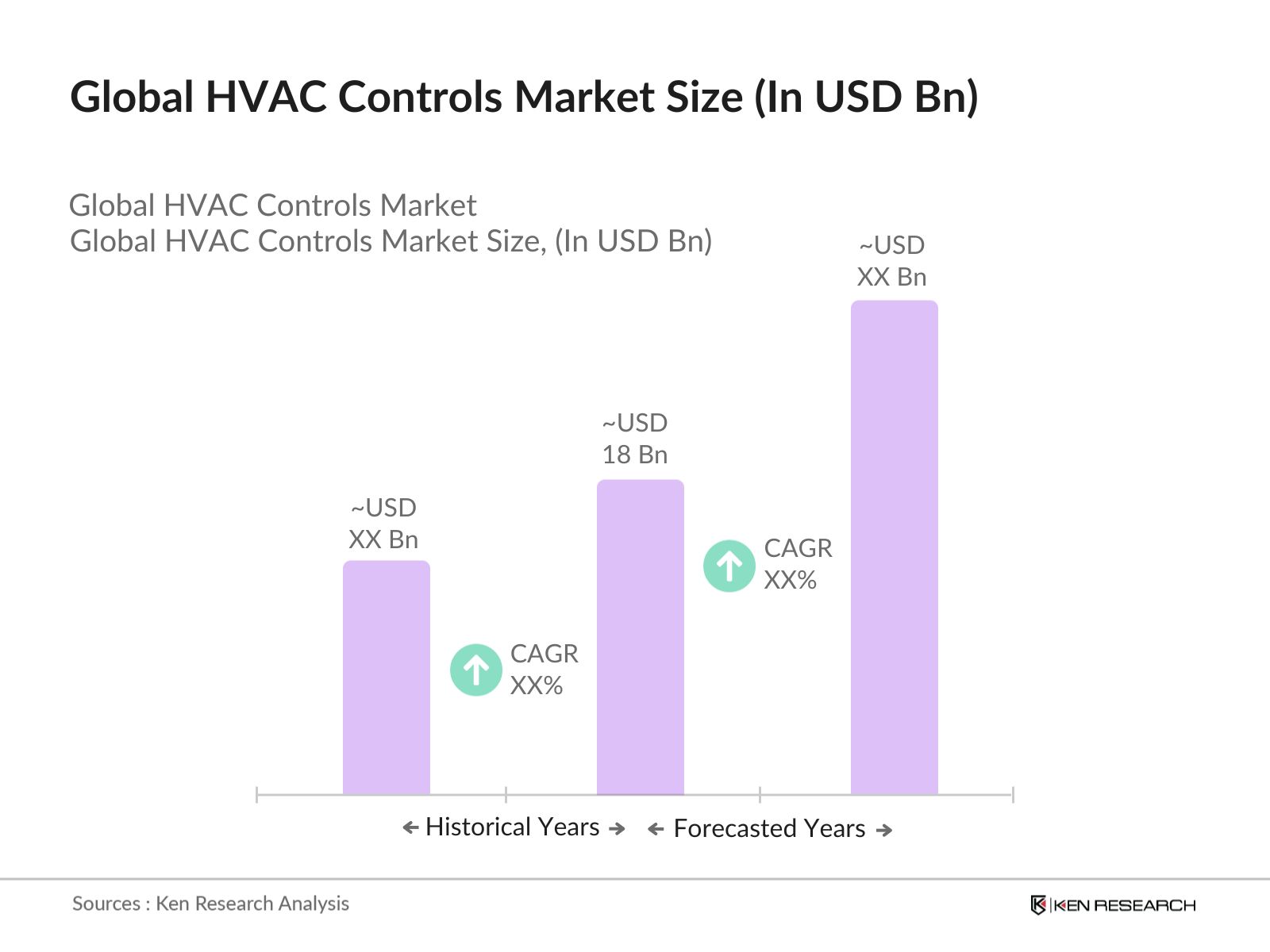
  • The Global HVAC Controls Market is valued at USD 18 billion, driven by the increasing demand for energy-efficient systems and smart technology integration. HVAC controls play a crucial role in optimizing energy consumption in buildings, with automation systems being adopted globally. These systems are essential for commercial and residential sectors where climate control is critical. The growing focus on reducing carbon footprints and operational costs is also pushing the adoption of these systems, significantly driving the markets expansion.
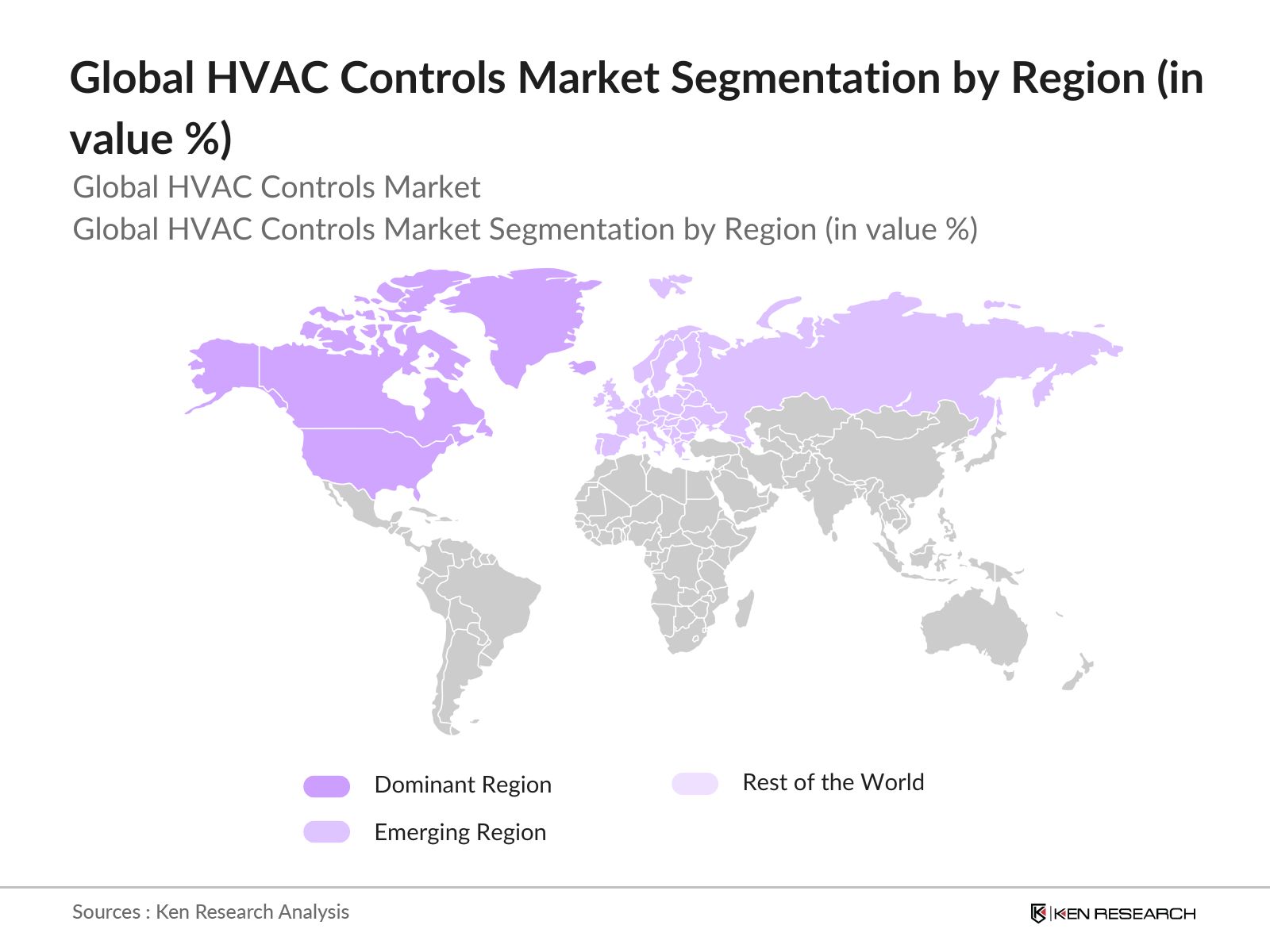
  • The dominance in the HVAC controls market is evident in countries such as the United States and China. These regions are leading due to their rapid urbanization, stringent energy-efficiency regulations, and high adoption rates of smart building technologies. In the U.S., the emphasis on energy conservation initiatives supports the market, while China's vast commercial infrastructure and government support for green building projects solidify its dominant position.
  • Governments worldwide have set stringent energy efficiency standards for HVAC systems. In 2024, over 35 countries implemented new HVAC efficiency regulations that require systems to meet specific energy-saving criteria. For instance, the U.S. government requires all new commercial HVAC systems to meet minimum Seasonal Energy Efficiency Ratio (SEER) levels, reducing energy consumption by up to 20%. The European Union has similar standards under its Energy Efficiency Directive, which mandates a 32.5% reduction in energy use by 2030.

market overviews

Global HVAC Controls Market Segmentation

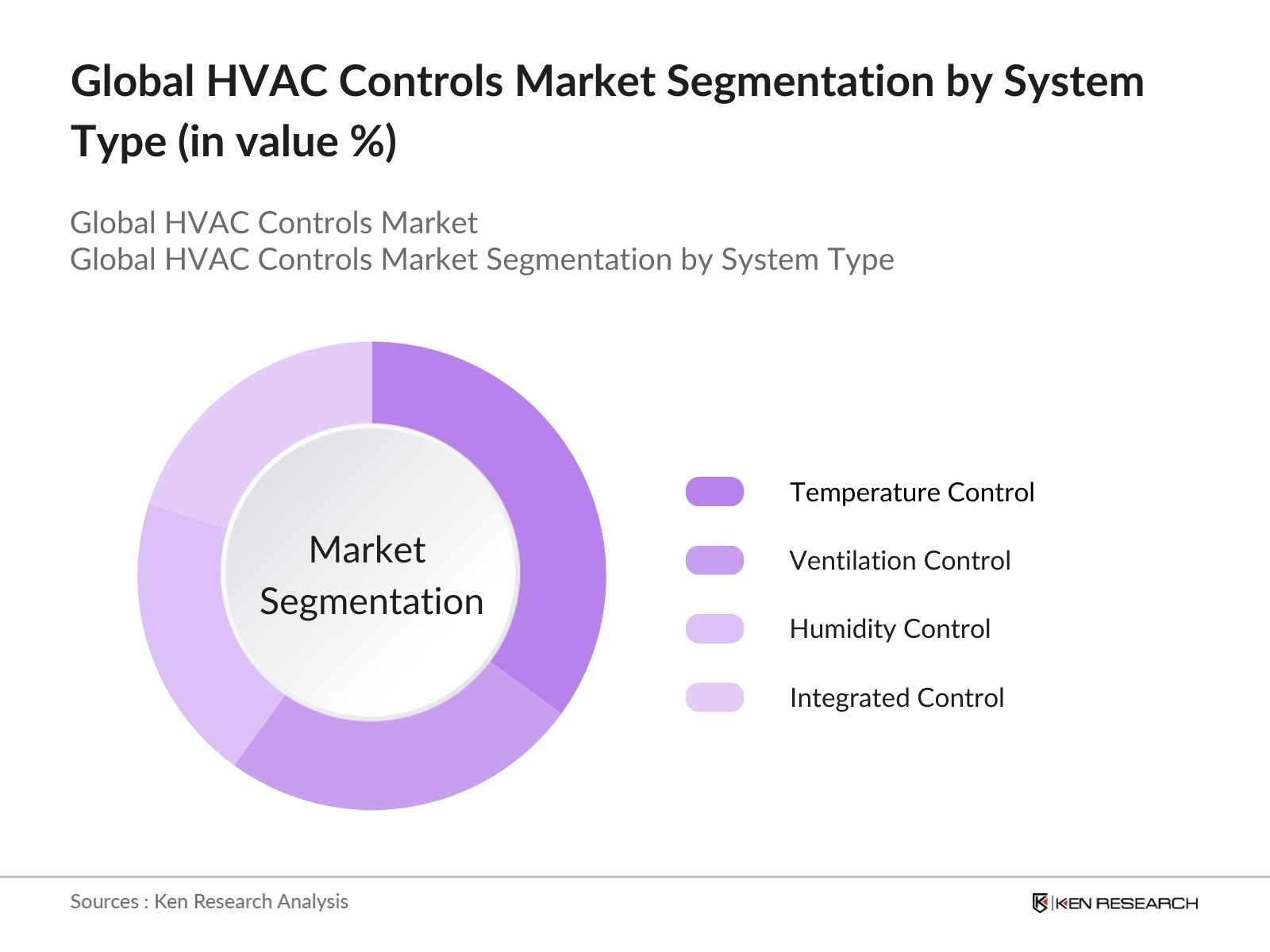
  • By System Type: The Global HVAC controls market is segmented by system type into temperature control systems, ventilation control systems, humidity control systems, and integrated control systems. Temperature control systems hold a dominant market share due to their widespread use in residential and commercial buildings. These systems enable precise climate control and ensure energy efficiency, making them essential in modern smart buildings. Their role in minimizing operational costs further bolsters their demand, especially in energy-conscious regions such as North America and Europe.

market overviews

  • By Region: The Global HVAC controls market is segmented by regions, including North America, Europe, Asia Pacific, Latin America, and the Middle East & Africa. North America leads this market, driven by high demand for energy-efficient solutions and stringent regulatory standards related to building energy consumption. The region's well-developed infrastructure and rapid adoption of smart building technologies further strengthen its dominance in the global market.

market overviews

  • By Component: The HVAC controls market is segmented by components into sensors, controllers, software, and actuators. Sensors dominate this segment as they are crucial in maintaining optimal environmental conditions by providing real-time data that controls HVAC systems efficiently. With the increasing emphasis on smart buildings and the need for accurate environmental monitoring, sensors are a key enabler of energy-efficient HVAC solutions, driving their dominance in this segment.

Global HVAC Controls Market Competitive Landscape

The Global HVAC Controls Market is dominated by a few key players with strong market influence. The competitive landscape features large multinational corporations that invest heavily in R&D, enabling them to introduce cutting-edge solutions and smart HVAC controls. The consolidation of key players allows them to maintain their leadership through technological advancements, strategic acquisitions, and extensive global networks.

Company

Establishment Year

Headquarters

R&D Expenditure

Revenue (USD Bn)

No. of Employees

Market Share

Product Portfolio

Key Innovations

Honeywell International

1906

Charlotte, USA

Siemens AG

1847

Munich, Germany

Johnson Controls

1885

Cork, Ireland

Schneider Electric

1836

Rueil-Malmaison, FR

Emerson Electric Co.

1890

Missouri, USA

Global HVAC Controls Industry Analysis

Growth Drivers

  • Energy Efficiency Regulations: Energy efficiency regulations globally have become more stringent, particularly in regions like North America and Europe. Governments in the U.S. and the EU are enforcing policies requiring HVAC systems to meet specific efficiency standards. The U.S. Department of Energy mandates new efficiency standards for residential HVAC units, projecting annual energy savings of over 2.8 quadrillion BTUs by 2025. In 2024, the U.S. allocated over $9 billion toward energy-efficient upgrades under the Inflation Reduction Act, incentivizing businesses to adopt more efficient HVAC systems. These regulations are creating strong demand for HVAC control systems that ensure compliance.
  • Growing Demand for Smart Buildings: The rise of smart buildings is driving demand for advanced HVAC controls that can seamlessly integrate with building management systems. Smart buildings, with their emphasis on energy optimization and real-time monitoring, are projected to account for nearly 60% of all new construction in the U.S. by 2025. In 2024, the global smart building market size, excluding HVAC-specific data, grew as governments in regions like Southeast Asia invested heavily in smart city projects. For example, Indonesia invested over $30 billion in smart city infrastructure that included advanced HVAC controls to improve energy consumption.
  • Technological Advancements in Automation: Technological advancements, particularly in AI and IoT, have transformed the HVAC controls landscape. In 2024, over 100 million smart IoT devices were in use across commercial and industrial HVAC systems worldwide. These technologies allow for predictive maintenance and energy-efficient operation, with companies in developed economies like Japan and Germany leading the way in integrating AI-enabled controls. Automation in HVAC controls is expected to reduce overall energy consumption by at least 10% across commercial buildings, as indicated by energy reports from Germanys Federal Ministry for Economic Affairs and Energy.

Market Restraints

  • High Initial Investment Cost (Cost Barriers): The high upfront cost of implementing advanced HVAC control systems remains a significant challenge. In 2024, the average cost of upgrading HVAC systems in commercial buildings in the U.S. exceeded $1 million, according to data from the U.S. Environmental Protection Agency. These costs are especially prohibitive in emerging markets where energy-efficient systems are still considered a luxury. For instance, in India, the adoption rate of energy-efficient HVAC controls is lower in small and medium-sized enterprises due to cost concerns, even though long-term savings from these systems are evident.
  • Lack of Awareness in Emerging Markets: In emerging markets, there is still limited awareness of the benefits of advanced HVAC control systems. According to a 2024 report by the World Bank, regions like Sub-Saharan Africa and parts of Southeast Asia face challenges in implementing energy-efficient HVAC solutions due to insufficient knowledge and expertise. In these regions, less than 30% of new commercial buildings incorporate advanced HVAC controls, compared to 75% in developed markets. This gap in awareness has slowed the markets expansion in countries like Nigeria and Vietnam, where energy-saving technologies could significantly reduce operational costs.

Global HVAC Controls Market Future Outlook

Over the next five years, the Global HVAC Controls Market is expected to witness steady growth, driven by the rising demand for energy-efficient and smart building solutions. The increasing integration of IoT, AI, and cloud-based systems into HVAC controls will revolutionize the market, making it more responsive and efficient. Government regulations promoting green building initiatives and growing consumer awareness regarding environmental sustainability will continue to propel the market forward, particularly in regions like North America, Europe, and Asia Pacific.

Market Opportunities

  • Expansion in Developing Economies: Developing economies represent a significant opportunity for the HVAC controls market. In 2024, investment in commercial infrastructure across Southeast Asia and Africa surged, with over $50 billion allocated to smart buildings. Countries like India, Indonesia, and Kenya are rapidly urbanizing, with governments prioritizing energy efficiency. Indonesia alone plans to build over 10,000 energy-efficient commercial structures by 2026, all requiring advanced HVAC control systems. This presents a lucrative opportunity for manufacturers to cater to the growing demand for sustainable HVAC solutions in these regions.
  • Increasing Adoption of IoT and AI in HVAC Controls: The adoption of IoT and AI technologies in HVAC systems has seen significant growth in 2024. In the U.S., nearly 60% of new commercial HVAC installations now feature IoT-enabled controls, which allow real-time monitoring and predictive maintenance. Additionally, AI-powered systems are expected to reduce energy consumption in commercial buildings by up to 30%, as evidenced by initiatives in European countries. Germany and France are leading the charge, with government-backed initiatives to integrate AI into building management systems to reduce energy costs and emissions.

Scope of the Report

By System Type

Temperature Control Systems, Ventilation Control Systems, Humidity Control Systems, Integrated Control Systems

By Component

Sensors, Controllers, Software, Actuators

By Implementation Type

New Installations, Retrofits

By Application

Residential, Commercial, Industrial

By Region

North America, Europe, Asia Pacific, Latin America, Middle East & Africa

Products

Key Target Audience

  • HVAC Manufacturers

  • Smart Building Integrators

  • Building Automation System Providers

  • Energy Efficiency Consultants

  • Government & Regulatory Bodies (ASHRAE, EPA)

  • Property Developers & Architects

  • Investor & Venture Capitalist Firms

  • Facility Management Companies

Companies

Players Mentioned in the Report:

  • Honeywell International Inc.

  • Siemens AG

  • Johnson Controls International

  • Schneider Electric SE

  • Emerson Electric Co.

  • Delta Controls

  • Mitsubishi Electric Corporation

  • Lennox International Inc.

  • Trane Technologies

  • United Technologies Corporation

  • Daikin Industries, Ltd.

  • Bosch Thermotechnology

  • LG Electronics Inc.

  • KMC Controls

  • Carrier Global Corporation

Table of Contents

1. Global HVAC Controls Market Overview

1.1. Definition and Scope
1.2. Market Taxonomy
1.3. Market Growth Rate
1.4. Market Segmentation Overview

2. Global HVAC Controls Market Size (In USD Bn)

2.1. Historical Market Size
2.2. Year-On-Year Growth Analysis
2.3. Key Market Developments and Milestones

3. Global HVAC Controls Market Analysis

3.1. Growth Drivers
3.1.1. Energy Efficiency Regulations
3.1.2. Growing Demand for Smart Buildings
3.1.3. Technological Advancements in Automation
3.1.4. Increased Focus on Sustainability
3.2. Market Challenges
3.2.1. High Initial Investment Cost (Cost Barriers)
3.2.2. Lack of Awareness in Emerging Markets
3.2.3. Integration with Legacy Systems (Technical Challenges)
3.3. Opportunities
3.3.1. Expansion in Developing Economies
3.3.2. Increasing Adoption of IoT and AI in HVAC Controls
3.3.3. Shift Toward Decarbonization Initiatives
3.4. Trends
3.4.1. Wireless HVAC Controls Adoption
3.4.2. Integration with Building Management Systems
3.4.3. Growth of Cloud-Based Controls
3.5. Government Regulations
3.5.1. Energy Efficiency Standards
3.5.2. Green Building Certifications (LEED, BREEAM)
3.5.3. National Energy Conservation Policies
3.5.4. Tax Incentives for Sustainable HVAC Solutions
3.6. SWOT Analysis
3.7. Stakeholder Ecosystem
3.8. Porters Five Forces
3.9. Competition Ecosystem

4. Global HVAC Controls Market Segmentation

4.1. By System Type (In Value %)
4.1.1. Temperature Control Systems
4.1.2. Ventilation Control Systems
4.1.3. Humidity Control Systems
4.1.4. Integrated Control Systems
4.2. By Component (In Value %)
4.2.1. Sensors
4.2.2. Controllers
4.2.3. Software
4.2.4. Actuators
4.3. By Implementation Type (In Value %)
4.3.1. New Installations
4.3.2. Retrofits
4.4. By Application (In Value %)
4.4.1. Residential
4.4.2. Commercial
4.4.3. Industrial
4.5. By Region (In Value %)
4.5.1. North America
4.5.2. Europe
4.5.3. Asia Pacific
4.5.4. Latin America
4.5.5. Middle East & Africa

5. Global HVAC Controls Market Competitive Analysis

5.1. Detailed Profiles of Major Companies
5.1.1. Honeywell International Inc.
5.1.2. Siemens AG
5.1.3. Johnson Controls International
5.1.4. Schneider Electric SE
5.1.5. Emerson Electric Co.
5.1.6. United Technologies Corporation
5.1.7. Trane Technologies
5.1.8. Lennox International Inc.
5.1.9. Daikin Industries, Ltd.
5.1.10. Delta Controls
5.1.11. KMC Controls
5.1.12. Bosch Thermotechnology
5.1.13. Carrier Global Corporation
5.1.14. Mitsubishi Electric Corporation
5.1.15. LG Electronics Inc.
5.2. Cross Comparison Parameters (Headquarters, Revenue, R&D Expenditure, Market Share, No. of Employees, Energy Efficiency Certifications, Innovation in Smart Controls, Strategic Partnerships)
5.3. Market Share Analysis
5.4. Strategic Initiatives
5.5. Mergers and Acquisitions
5.6. Investment Analysis
5.7. Venture Capital Funding
5.8. Government Grants
5.9. Private Equity Investments

6. Global HVAC Controls Market Regulatory Framework

6.1. Environmental Standards
6.2. Compliance Requirements
6.3. Certification Processes (ASHRAE Standards, ISO Certifications)

7. Global HVAC Controls Future Market Size (In USD Bn)

7.1. Future Market Size Projections
7.2. Key Factors Driving Future Market Growth

8. Global HVAC Controls Future Market Segmentation

8.1. By System Type (In Value %)
8.2. By Component (In Value %)
8.3. By Implementation Type (In Value %)
8.4. By Application (In Value %)
8.5. By Region (In Value %)

9. Global HVAC Controls Market Analysts' Recommendations

9.1. TAM/SAM/SOM Analysis
9.2. Customer Cohort Analysis
9.3. Marketing Initiatives
9.4. White Space Opportunity Analysis

Disclaimer

Contact Us

Research Methodology

Step 1: Identification of Key Variables

The initial phase involves mapping all stakeholders within the HVAC controls ecosystem, including manufacturers, suppliers, and end-users. Desk research and secondary databases are used to gather data, focusing on identifying critical market variables such as energy efficiency standards and technology adoption trends.

Step 2: Market Analysis and Construction

In this phase, historical data on the HVAC controls market is compiled and analyzed. This includes reviewing system adoption rates, market penetration, and the interplay between HVAC controls and building automation. The analysis also evaluates the efficiency of various system components to ensure reliability.

Step 3: Hypothesis Validation and Expert Consultation

Market hypotheses are developed and validated through expert consultations. These involve CATIs with HVAC manufacturers, building system integrators, and industry experts, providing insights into current market trends and consumer preferences.

Step 4: Research Synthesis and Final Output

This step involves direct engagement with HVAC control system providers to acquire insights into market performance, customer demands, and technology integration. The bottom-up approach ensures accurate market estimations and future forecasts.

Frequently Asked Questions

01. How big is the Global HVAC Controls Market?

The Global HVAC Controls Market is valued at USD 18 billion, driven by increasing demand for energy-efficient systems and smart technologies in buildings.

02. What are the challenges in the Global HVAC Controls Market?

Key challenges include high initial investment costs, integration with legacy systems, and the lack of awareness regarding advanced HVAC control technologies, particularly in emerging markets.

03. Who are the major players in the Global HVAC Controls Market?

Key players include Honeywell International, Siemens AG, Johnson Controls, Schneider Electric, and Emerson Electric. These companies dominate the market due to their global reach, innovative solutions, and strong R&D capabilities.

04. What are the growth drivers of the Global HVAC Controls Market?

The market is driven by the rising need for energy-efficient solutions, advancements in smart building technologies, and increasing regulatory requirements for reducing energy consumption in commercial and residential buildings.

Why Buy From Us?

RRR
Refine Robust Result (RRR) Framework

What makes us stand out is that our consultants follows Robust, Refine and Result (RRR) methodology. i.e. Robust for clear definitions, approaches and sanity checking, Refine for differentiating respondents facts and opinions and Result for presenting data with story

Our Reach Is Unmatched

We have set a benchmark in the industry by offering our clients with syndicated and customized market research reports featuring coverage of entire market as well as meticulous research and analyst insights.

Research
Shifting the Research Paradigm

While we don't replace traditional research, we flip the method upside down. Our dual approach of Top Bottom & Bottom Top ensures quality deliverable by not just verifying company fundamentals but also looking at the sector and macroeconomic factors.

Insite
More Insights-Better Decisions

With one step in the future, our research team constantly tries to show you the bigger picture. We help with some of the tough questions you may encounter along the way: How is the industry positioned? Best marketing channel? KPI's of competitors? By aligning every element, we help maximize success.

Trust
Transparency and Trust

Our report gives you instant access to the answers and sources that other companies might choose to hide. We elaborate each steps of research methodology we have used and showcase you the sample size to earn your trust.

support
Round the Clock Support

If you need any support, we are here! We pride ourselves on universe strength, data quality, and quick, friendly, and professional service.

Why Client Choose Us?

400000+ Reports in repository
150+ Consulting project a year
100+ Analysts
8000+ Client Queries in 2022