
Global Luxury Car Rental Market Outlook 2030
Region:Global
Author(s):Shivani Mehra
Product Code:KROD2435
Region:Global
Author(s):Shivani Mehra
Product Code:KROD2435
December 2024
94
Listen to the audio summary
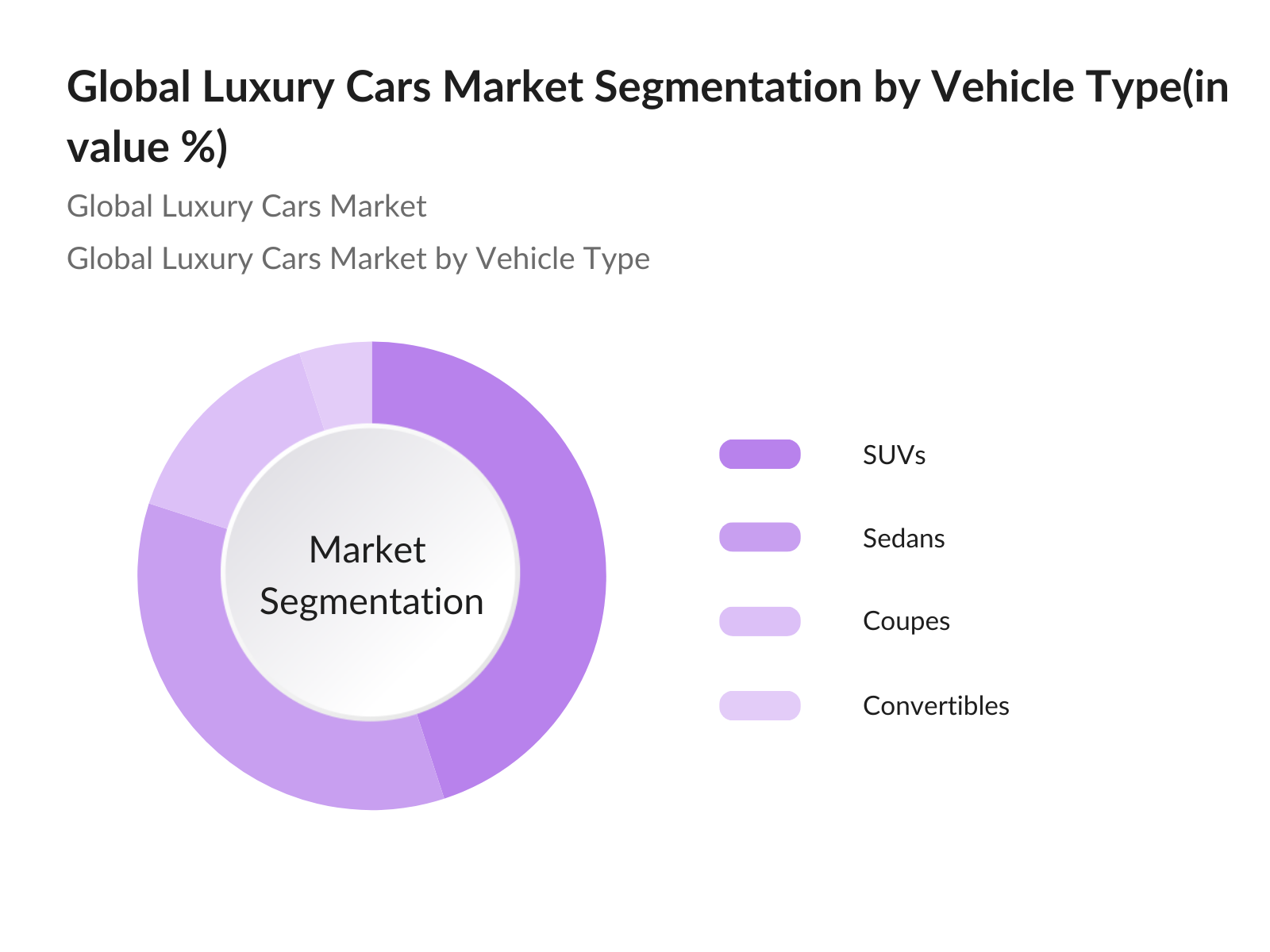
By Vehicle Type: The luxury car market is segmented by vehicle type into Sedans, Sports Utility Vehicles (SUVs), Coupes, and Convertibles. SUVs dominate the market share within this category, as they have become a favorite for affluent consumers due to their versatility, enhanced driving experience, and safety features. The growing preference for luxury SUVs is also driven by advancements in off-road technology and improved fuel efficiency, making them an ideal choice for various terrains.
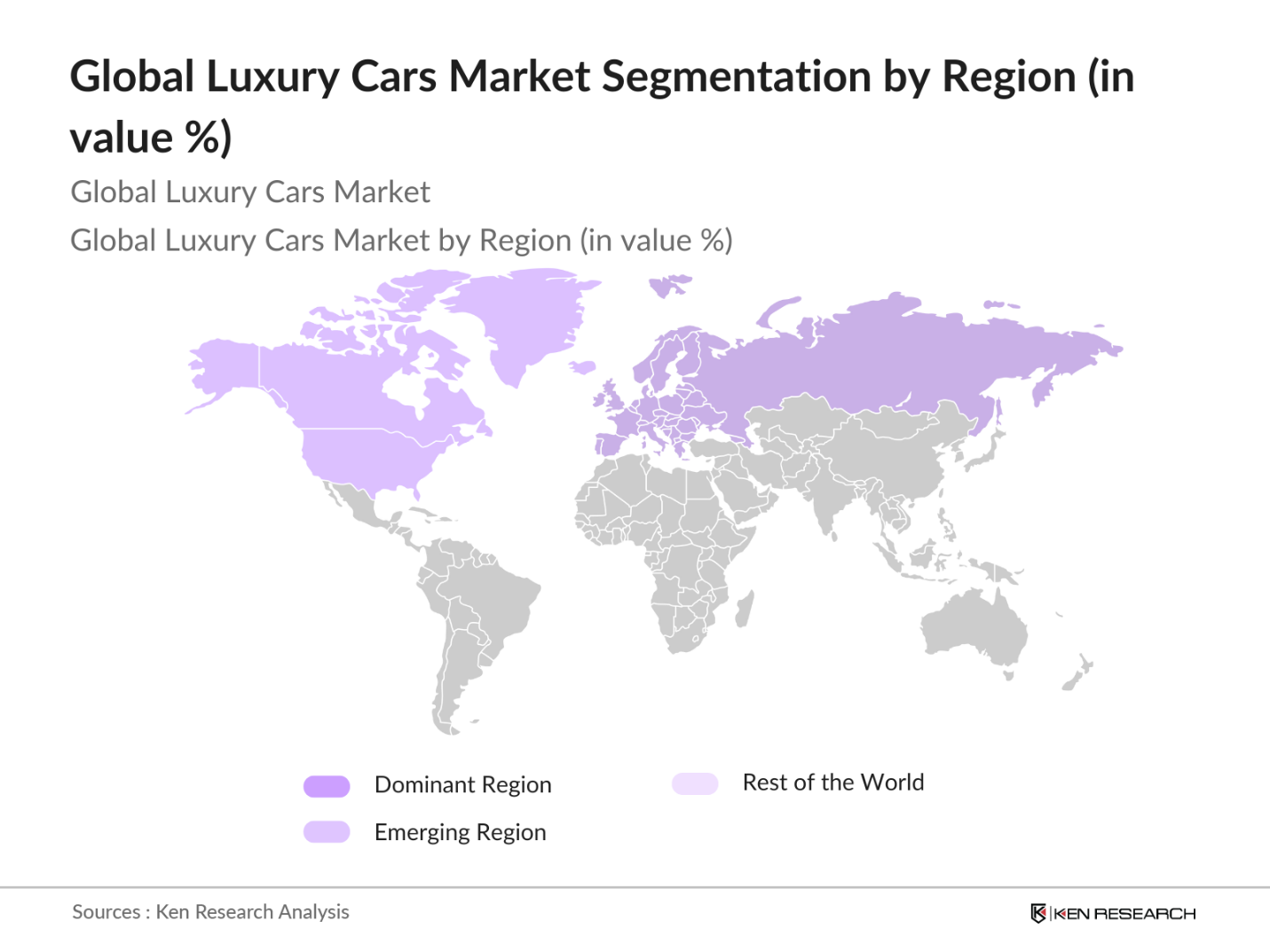
By Region: The luxury car market is segmented into North America, Europe, Asia-Pacific, Middle East & Africa, and Latin America. Europe holds the dominant market position due to its legacy of luxury car manufacturers, strong innovation capabilities, and high consumer preference for premium automobiles. Meanwhile, Asia-Pacific, particularly China, is emerging rapidly, supported by rising affluence, urbanization, and government support for electric vehicles.
The global luxury cars market is dominated by a few key players, each known for their innovative technologies, strong brand equity, and extensive product portfolios. Companies like Mercedes-Benz Group AG, BMW AG, and Tesla Inc. lead the industry, thanks to their strong financial backing and continuous innovation in electric vehicles and autonomous driving features. This consolidation highlights the significant influence these companies wield in shaping market trends.
|
Company Name |
Established Year |
Headquarters |
Revenue (2023) |
Product Portfolio |
R&D Investments |
Electric Vehicle Focus |
Global Sales Volume |
|
Mercedes-Benz Group AG |
1926 |
Stuttgart, Germany |
USD 162 billion |
- |
- |
- |
- |
|
BMW AG |
1916 |
Munich, Germany |
USD 129 billion |
- |
- |
- |
- |
|
Tesla Inc. |
2003 |
Palo Alto, USA |
USD 95 billion |
- |
- |
- |
- |
|
Volkswagen Group |
1937 |
Wolfsburg, Germany |
USD 270 billion |
- |
- |
- |
- |
|
Jaguar Land Rover PLC |
1922 |
Coventry, UK |
USD 29 billion |
- |
- |
- |
- |
Over the next five years, the global luxury cars market is anticipated to experience significant growth, driven by a continued shift toward electric vehicles, increasing consumer demand for personalized and high-performance vehicles, and innovations in autonomous driving technology. The transition to greener propulsion technologies will be a primary focus for both manufacturers and governments, as they push for lower emissions and better environmental sustainability.
|
By Vehicle Type |
Hatchback Sedan SUV MPV Others |
|
By Propulsion Type |
Internal Combustion Engine Electric and Hybrid |
|
By Class |
Entry-Level Mid-Level Ultra-Luxury |
|
By Price Segment |
Entry-Level Mid-Level High-End |
|
By Region |
North America Europe Asia-Pacific Middle East & Africa Latin America |
1.1. Definition and Scope
1.2. Market Taxonomy
1.3. Market Growth Drivers
1.4. Market Segmentation Overview
2.1. Historical Market Size
2.2. Year-On-Year Growth Analysis
2.3. Key Market Developments and Milestones
3.1. Growth Drivers
3.1.1. Rising Disposable Income of High-Net-Worth Individuals
3.1.2. Increasing Demand for Luxury SUVs
3.1.3. Technological Advancements (Advanced Driving Systems, Connectivity Features)
3.1.4. Environmental Shifts toward Electric Luxury Vehicles
3.2. Market Challenges
3.2.1. High Cost of Ownership and Maintenance
3.2.2. Competition from Emerging Brands (Electric and Hybrid Segments)
3.2.3. Regulatory and Emission Norms (Electric Vehicle Penetration)
3.3. Opportunities
3.3.1. Increasing Adoption of Electric and Hybrid Vehicles
3.3.2. Expansion in Emerging Markets (Asia-Pacific, Latin America)
3.3.3. Personalized and Coach-Built Luxury Cars
3.4. Trends
3.4.1. Rise in Autonomous and Semi-Autonomous Features
3.4.2. Growing Popularity of Subscription-Based Ownership Models
3.4.3. Integration of AI-Powered Infotainment Systems
3.5. SWOT Analysis
3.5.1. Strengths
3.5.2. Weaknesses
3.5.3. Opportunities
3.5.4. Threats
3.6. Porter's Five Forces Analysis
3.6.1. Bargaining Power of Buyers
3.6.2. Bargaining Power of Suppliers
3.6.3. Threat of New Entrants
3.6.4. Threat of Substitute Products
3.6.5. Intensity of Competitive Rivalry
4.1. By Vehicle Type
4.1.1. Hatchback
4.1.2. Sedan
4.1.3. Sports Utility Vehicle (SUV)
4.1.4. Multi-purpose Vehicle (MPV)
4.1.5. Others (Convertible, Coupe)
4.2. By Propulsion Type
4.2.1. Internal Combustion Engine (ICE)
4.2.2. Electric and Hybrid Vehicles
4.3. By Class
4.3.1. Entry-Level Luxury
4.3.2. Mid-Level Luxury
4.3.3. Ultra-Luxury
4.4. By Price Segment
4.4.1. Entry-Level
4.4.2. Mid-Level
4.4.3. High-End
4.5. By Region
4.5.1. North America (United States, Canada)
4.5.2. Europe (Germany, UK, France)
4.5.3. Asia-Pacific (China, Japan, India)
4.5.4. Middle East and Africa
4.5.5. Latin America
5.1. Detailed Profiles of Major Companies
5.1.1. Mercedes-Benz Group AG
5.1.2. BMW AG
5.1.3. Tesla Inc.
5.1.4. Volkswagen Group
5.1.5. Jaguar Land Rover Automotive PLC
5.1.6. Ferrari NV
5.1.7. Ford Motor Company
5.1.8. Aston Martin Lagonda Ltd.
5.1.9. McLaren Group Ltd.
5.1.10. General Motors Co.
5.1.11. Nissan Motor Co. Ltd.
5.1.12. Toyota Motor Corp.
5.1.13. BYD Co. Ltd.
5.1.14. Pagani S.p.A
5.1.15. Stellantis NV
5.2. Cross Comparison Parameters
5.2.1. Revenue
5.2.2. Vehicle Sales Volume
5.2.3. Product Portfolio
5.2.4. Geographical Presence
5.2.5. R&D Investments
5.2.6. Electric Vehicle Offerings
5.2.7. Strategic Collaborations
5.2.8. Market Share
6.1. Environmental Standards and Emission Norms
6.2. Taxation Policies
6.3. Certification and Compliance Processes
7.1. Market Forecast
7.2. Key Factors Driving Future Growth
8.1. By Vehicle Type
8.2. By Propulsion Type
8.3. By Class
8.4. By Region
9.1. TAM/SAM/SOM Analysis
9.2. Strategic Growth Opportunities
9.3. Investment Recommendations
The initial step involves identifying critical market variables, such as vehicle type preferences, propulsion technologies, and regional consumer behavior. This is accomplished through extensive desk research utilizing proprietary databases, industry reports, and publicly available data on the luxury car market.
In this phase, we analyze historical market trends, focusing on luxury car sales by type, propulsion, and region. Revenue and market share data is compiled, ensuring the accuracy and reliability of projections for the market.
Market hypotheses are validated through expert consultations and interviews, providing operational and strategic insights. These insights are critical in refining the report and ensuring comprehensive market data.
The final step involves synthesizing data from the above phases into a detailed market report. Insights from luxury car manufacturers, sales performance, and industry trends are incorporated to ensure a holistic market analysis.
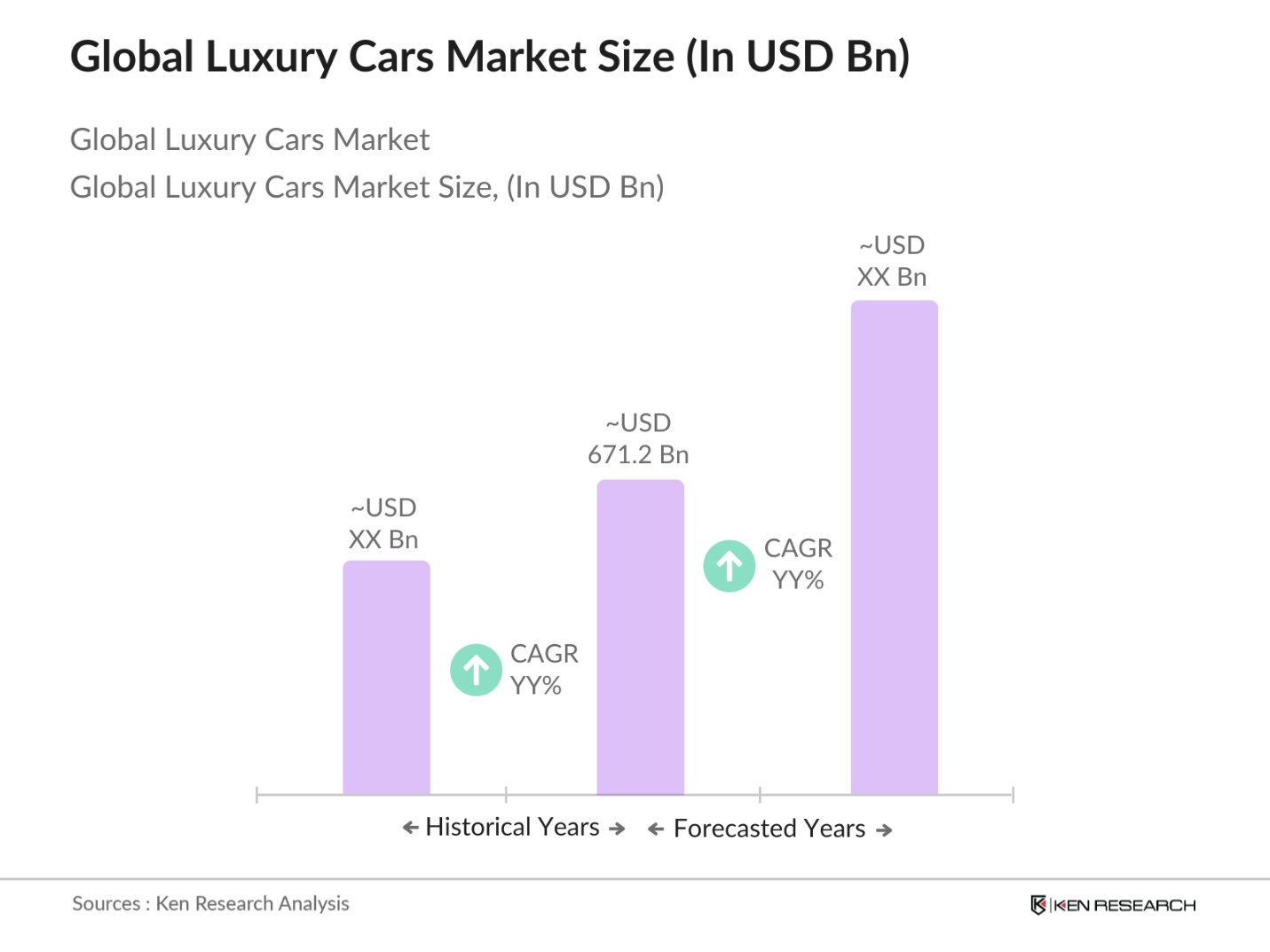
The global luxury cars market was valued at USD 671.2 billion, driven by rising demand for SUVs and electric vehicles, along with increasing disposable incomes of high-net-worth individuals.
Challenges include the high cost of ownership, regulatory hurdles around emissions, and the growing competition from emerging electric vehicle manufacturers.
Key players include Mercedes-Benz Group AG, BMW AG, Tesla Inc., Volkswagen Group, and Jaguar Land Rover Automotive PLC. These companies dominate due to their strong brand presence and innovation in electric and autonomous vehicles.
Growth is propelled by increasing demand for electric vehicles, rising disposable incomes, and advancements in vehicle safety and autonomous driving technologies.

What makes us stand out is that our consultants follows Robust, Refine and Result (RRR) methodology. i.e. Robust for clear definitions, approaches and sanity checking, Refine for differentiating respondents facts and opinions and Result for presenting data with story

We have set a benchmark in the industry by offering our clients with syndicated and customized market research reports featuring coverage of entire market as well as meticulous research and analyst insights.

While we don't replace traditional research, we flip the method upside down. Our dual approach of Top Bottom & Bottom Top ensures quality deliverable by not just verifying company fundamentals but also looking at the sector and macroeconomic factors.

With one step in the future, our research team constantly tries to show you the bigger picture. We help with some of the tough questions you may encounter along the way: How is the industry positioned? Best marketing channel? KPI's of competitors? By aligning every element, we help maximize success.

Our report gives you instant access to the answers and sources that other companies might choose to hide. We elaborate each steps of research methodology we have used and showcase you the sample size to earn your trust.

If you need any support, we are here! We pride ourselves on universe strength, data quality, and quick, friendly, and professional service.