
Global Maglev Market Outlook to 2030
Region:Global
Author(s):Yogita Sahu
Product Code:KROD4356
October 2024
97
About the Report
Global Maglev Train Market Overview
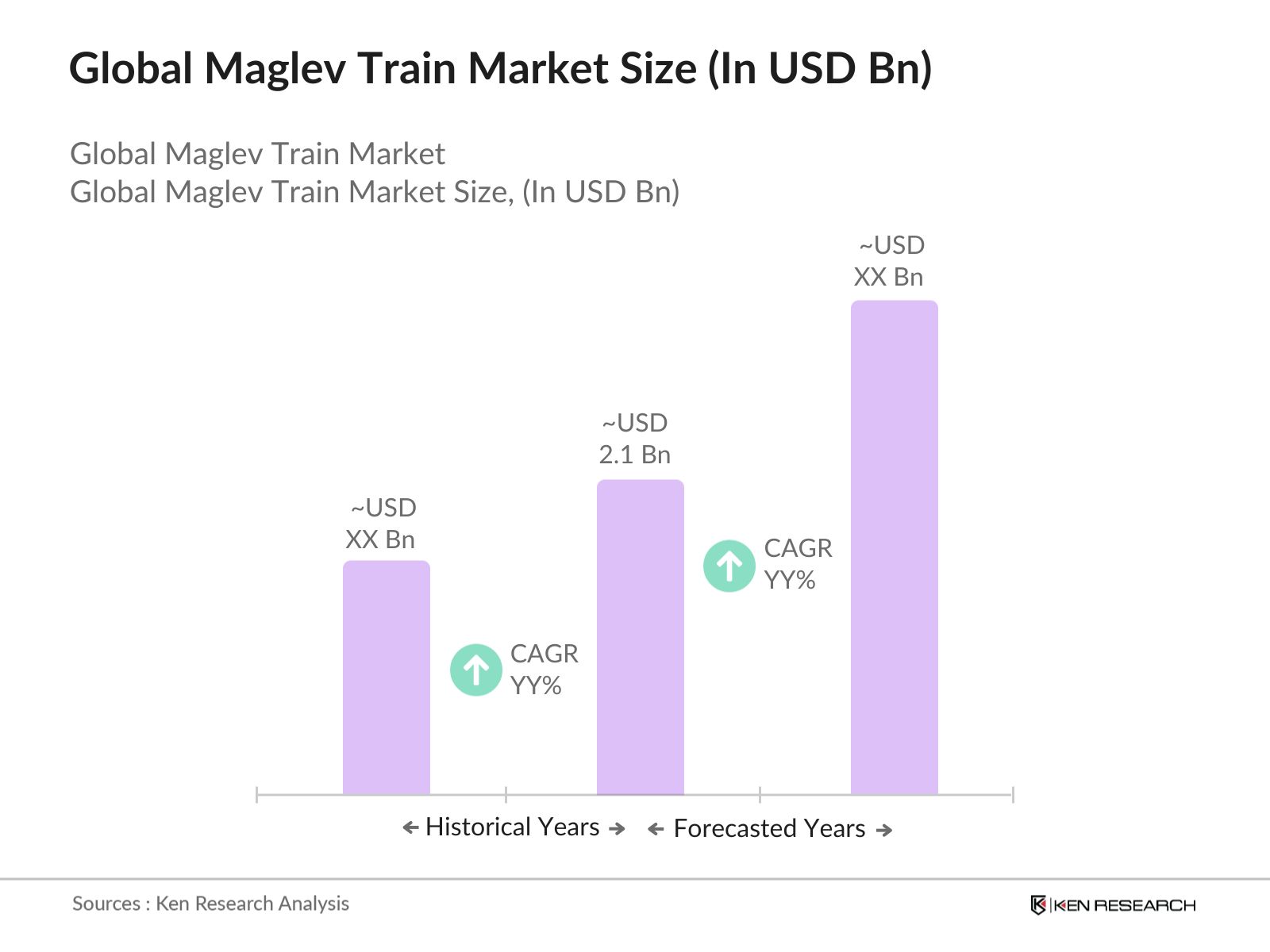
- The Global maglev train market is valued at USD 2.1 billion, driven by technological advancements, urbanization, and government investment in high-speed, energy-efficient transportation solutions. The increasing demand for fast, environmentally sustainable transit alternatives is pushing governments and private enterprises to invest in maglev technology, which offers minimal friction and energy consumption.
- Japan and China dominate the market due to their extensive investments in infrastructure and cutting-edge transportation technologies. Japans Chuo Shinkansen and Chinas Shanghai Maglev set benchmarks for other regions, with China being especially aggressive in expanding its maglev network for both passenger and cargo transport. The dominance is due to the funding and political will in these countries, aiming to reduce urban congestion and carbon emissions while maintaining global leadership in innovative transport solutions.
- As part of the BRI, China is aggressively promoting the construction of maglev rail lines across its partner countries. In 2024, China supported for transportation infrastructure projects, including maglev train systems, in Southeast Asia, Africa, and Europe. These projects aim to improve trade routes and foster economic integration through faster transportation. China's commitment to maglev technology is a cornerstone of its broader global infrastructure strategy.
Global Maglev Train Market Segmentation
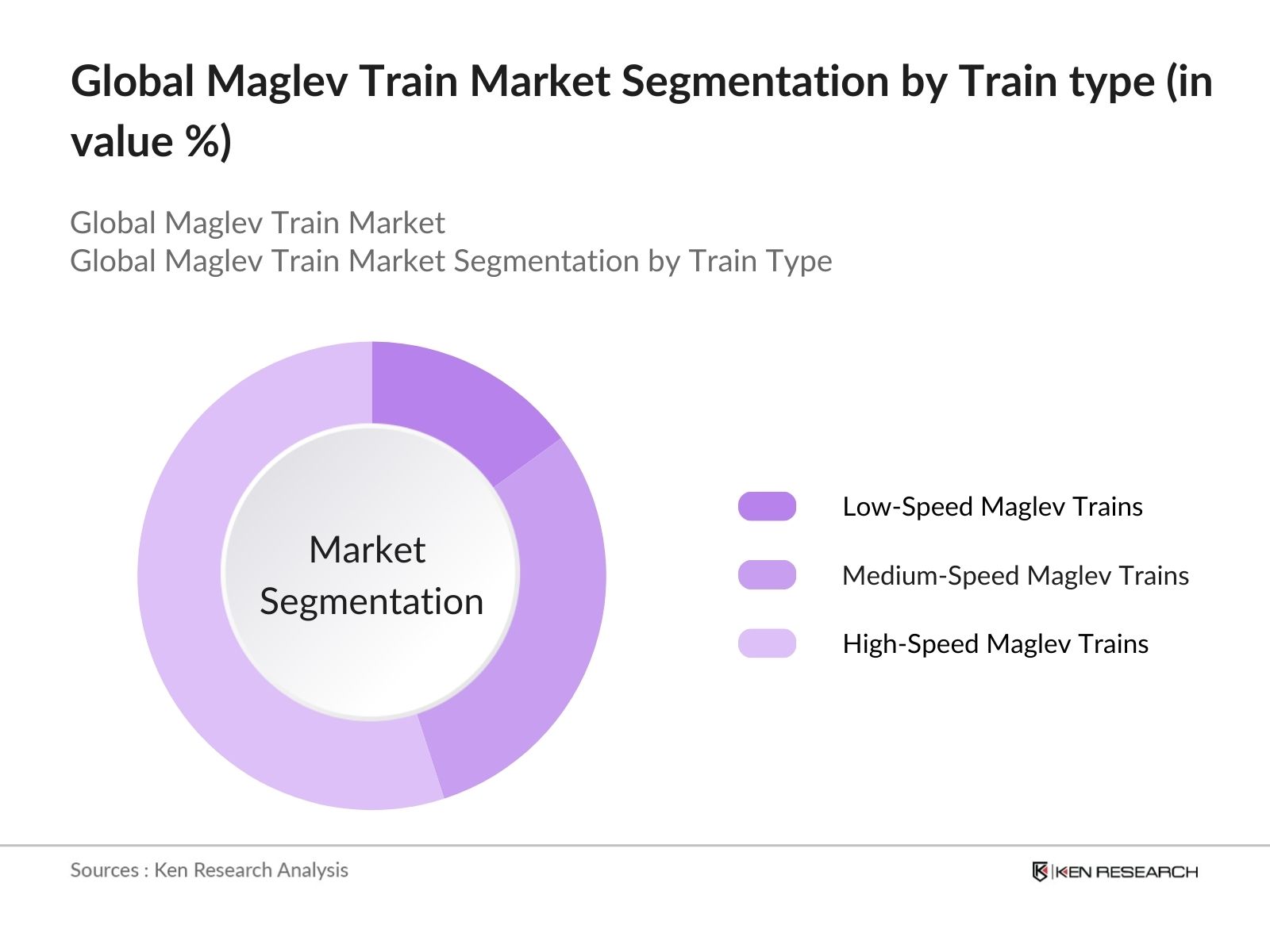
By Train Type: The market is segmented by train type into low-speed maglev trains, medium-speed maglev trains, and high-speed maglev trains. High-speed maglev trains dominate this segment due to their ability to operate at speeds over 500 km/h, which significantly reduces travel time for long-distance routes. Governments in countries like Japan and China have focused on building these systems to ease intercity transportation and improve economic efficiency.
By Technology: The market is segmented by technology into electromagnetic suspension (EMS), electrodynamic suspension (EDS), and inductrack systems. Electromagnetic suspension (EMS) currently leads the market due to its wide application in commercial maglev projects such as the Shanghai Maglev. EMS is preferred because of its ability to offer smooth rides at high speeds and its easier integration with existing infrastructure, which reduces the need for expensive construction and operational overhauls.
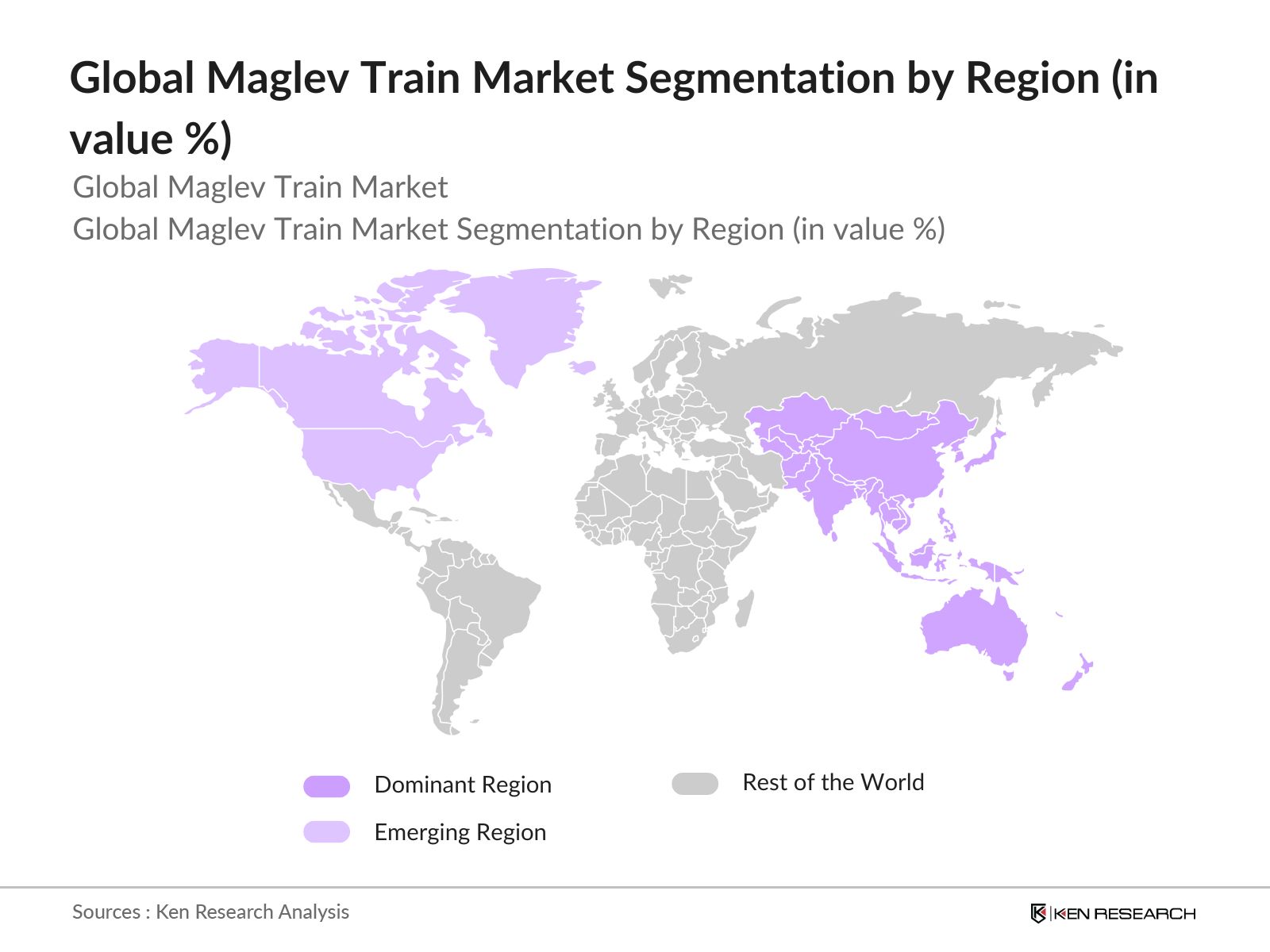
By Region: The market is segmented by region into North America, Europe, Asia-Pacific, Latin America, and the Middle East & Africa. Asia-Pacific dominates the regional market due to large-scale investments in countries like China, Japan, and South Korea. China's commitment to expanding its maglev network, paired with government support and an increase in transportation infrastructure spending, positions the region as a global leader.
Global Maglev Train Market Competitive Landscape
The market is dominated by several key players, each with market experience and technological expertise. The competitive landscape is defined by technological innovations, partnerships, and government collaborations. Companies like Central Japan Railway Company and CRRC Corporation are leaders in the market, thanks to their early adoption of maglev technology and partnerships with local governments to implement large-scale transportation projects.
|
Company Name |
Establishment Year |
Headquarters |
Market Focus |
Technological Leadership |
R&D Investments |
Partnerships |
Major Project Involvement |
Revenue Growth |
|
Central Japan Railway Company |
1987 |
Tokyo, Japan |
||||||
|
Siemens Mobility |
1847 |
Berlin, Germany |
||||||
|
CRRC Corporation Limited |
2015 |
Beijing, China |
||||||
|
Mitsubishi Heavy Industries |
1870 |
Tokyo, Japan |
||||||
|
American Maglev Technology, Inc. |
1994 |
Florida, USA |
Global Maglev Train Market Analysis
Market Growth Drivers
- Government Infrastructure Spending: In 2024, global infrastructure spending has seen a considerable rise, with governments in Asia and Europe channeling over $400 billion USD toward transportation projects, including maglev systems. China, for instance, has committed to expanding its maglev network with an additional 1,000 km of track by 2030, backed the investment in rail infrastructure. This increased funding is driven by a desire to modernize public transport systems, reduce carbon emissions, and meet the mobility demands of growing urban populations.
- Rising Energy Efficiency Concerns: The demand for energy-efficient transport is a major growth driver for the maglev market. In 2024, the global energy demand is expected to grow of oil equivalent, according to the International Energy Agency (IEA). Maglev trains offer up to 30% energy savings compared to traditional high-speed trains, making them a more attractive solution for regions facing rising energy consumption and costs. This efficiency is especially appealing in energy-scarce markets.
- Growing Demand for High-Speed Connectivity: There is an increasing global demand for faster and more reliable transportation solutions. In 2024, Japan's maglev train achieved a world record speed of 603 km/h, reducing travel times drastically compared to conventional trains. Countries like Japan, China, and South Korea are experiencing growing consumer demand for high-speed connectivity due to expanding business hubs and intercity travel, which are pushing the adoption of maglev systems for both passenger and freight transport.
Market Challenges
- Limited Global Adoption: As of 2024, only a handful of countries, such as Japan, China, and South Korea, have fully operational maglev systems. Many nations, particularly in Africa and South America, lack the economic and technological infrastructure to support maglev trains. Additionally, regions with less dense populations do not justify the high costs, limiting the system's appeal beyond heavily urbanized areas, further restraining global adoption.
- Geopolitical and Trade Barriers: The global supply chain for maglev technology faces geopolitical risks, particularly with nations restricting the export of advanced technologies or key components. In 2024, the trade tensions between China and the U.S. resulted in restrictions on the export of high-tech components necessary for maglev systems, increasing costs and delaying projects in certain markets. This political friction has created uncertainty for international collaborations on maglev projects.
Global Maglev Train Market Future Outlook
Over the next five years, the global maglev train industry is expected to experience growth, driven by advances in electromagnetism, government funding for transportation infrastructure, and the increasing demand for energy-efficient transportation solutions. Technological advancements, such as the integration of artificial intelligence (AI) and Internet of Things (IoT) in maglev systems, are likely to further boost the market.
Future Market Opportunities
- Global Expansion of Maglev Lines: Over the next five years, the market will witness global expansion as developing economies, particularly in Southeast Asia and the Middle East, invest in high-speed rail. China is expected to spearhead this growth by exporting its maglev technology to partner nations, enhancing trade routes and reducing travel times. Governments in these regions will prioritize maglev development as part of their national infrastructure strategies, with an estimated 1,500 km of new maglev tracks expected by 2030.
- Technological Innovations in Energy Efficiency: Technological advancements will focus on reducing the energy consumption of maglev systems over the next five years. Superconducting magnets with higher energy efficiency and new propulsion technologies are expected to reduce operational energy needs by up to 20%. These innovations will make maglev systems more competitive with other high-speed rail options, further expanding their adoption in energy-conscious markets.
Scope of the Report
|
Train Type |
Low-Speed Maglev Trains Medium-Speed Maglev Trains High-Speed Maglev Trains |
|
Technology |
Electromagnetic Suspension (EMS) Electrodynamic Suspension (EDS) Inductrack System |
|
Propulsion Type |
Linear Synchronous Motors (LSM) Linear Induction Motors (LIM) |
|
Application |
Urban Transport Intercity Transport Cargo Transport |
|
Region |
North America Europe Asia-Pacific Latin America Middle East & Africa |
Products
Key Target Audience Organizations and Entities Who Can Benefit by Subscribing This Report:
Government and Regulatory Bodies (e.g., Federal Railroad Administration, National Development and Reform Commission)
Maglev Technology Providers and Innovators
Infrastructure Development Firms
Investors and Venture Capitalist Firms
Banks and Financial Institutions
Private Equity Firms
Companies
Players Mentioned in the Report:
Central Japan Railway Company
Siemens Mobility
CRRC Corporation Limited
American Maglev Technology, Inc.
Transrapid International GmbH
Alstom SA
Mitsubishi Heavy Industries
Hyundai Rotem
Hitachi Rail
SwissRapide AG
Knorr-Bremse AG
TSB (Thyssenkrupp)
Chuo Shinkansen
China Railway Group Limited
JR East (East Japan Railway Company)
Table of Contents
1. Global Maglev Train Market Overview
1.1. Definition and Scope
1.2. Market Taxonomy
1.3. Market Growth Rate
1.4. Market Segmentation Overview
2. Global Maglev Train Market Size (In USD Bn)
2.1. Historical Market Size
2.2. Year-On-Year Growth Analysis
2.3. Key Market Developments and Milestones
3. Global Maglev Train Market Analysis
3.1. Growth Drivers (Energy Efficiency, High-Speed Connectivity, Urban Congestion, Emission Reduction Targets)
3.1.1. Urbanization & High-Speed Connectivity Needs
3.1.2. Environmental Sustainability Goals
3.1.3. Technological Advancements in Rail Infrastructure
3.1.4. Government Investments in the Transportation Sector
3.2. Market Challenges (Initial Capital Cost, Infrastructure Limitations, Technical Complexity)
3.2.1. High Initial Infrastructure Costs
3.2.2. Regulatory Hurdles in Land Acquisition
3.2.3. Limited Skilled Workforce for Maglev Technology
3.2.4. Technical Challenges in Long-Distance Maglev Networks
3.3. Opportunities (Regional Rail Projects, Private-Public Partnerships, Renewable Energy Integration)
3.3.1. Expansion in Emerging Markets
3.3.2. Maglev Integration into Smart Cities
3.3.3. Adoption of Green Energy Sources for Maglev Systems
3.3.4. Growing Interest from Private Investors
3.4. Trends (Advanced Propulsion Systems, IoT & AI, Automation in Maglev Maintenance)
3.4.1. Increasing Demand for Autonomous Train Operations
3.4.2. IoT Integration in Real-Time Monitoring
3.4.3. Focus on Reducing Operational Costs Through AI-Powered Predictive Maintenance
3.4.4. Adoption of Advanced Propulsion Systems for Enhanced Speed
3.5. Government Regulations (Subsidies, Safety Standards, Environmental Regulations)
3.5.1. Rail Safety Regulations for High-Speed Trains
3.5.2. Government Grants & Subsidies for Maglev Projects
3.5.3. Regional Environmental Standards
3.5.4. Public-Private Collaboration Models in Transport Infrastructure
3.6. SWOT Analysis
3.7. Stakeholder Ecosystem (Manufacturers, Governments, Private Operators)
3.8. Porters Five Forces
3.9. Competition Ecosystem (Key Competitors, New Entrants, Suppliers)
4. Global Maglev Train Market Segmentation
4.1. By Train Type (In Value %)
4.1.1. Low-Speed Maglev Trains
4.1.2. Medium-Speed Maglev Trains
4.1.3. High-Speed Maglev Trains
4.2. By Technology (In Value %)
4.2.1. Electromagnetic Suspension (EMS)
4.2.2. Electrodynamic Suspension (EDS)
4.2.3. Inductrack System
4.3. By Propulsion Type (In Value %)
4.3.1. Linear Synchronous Motors (LSM)
4.3.2. Linear Induction Motors (LIM)
4.4. By Application (In Value %)
4.4.1. Urban Transport
4.4.2. Intercity Transport
4.4.3. Cargo Transport
4.5. By Region (In Value %)
4.5.1. North America
4.5.2. Europe
4.5.3. Asia-Pacific
4.5.4. Latin America
4.5.5. Middle East & Africa
5. Global Maglev Train Market Competitive Analysis
5.1 Detailed Profiles of Major Companies
5.1.1. Central Japan Railway Company
5.1.2. Siemens Mobility
5.1.3. CRRC Corporation Limited
5.1.4. American Maglev Technology, Inc.
5.1.5. Transrapid International GmbH
5.1.6. Alstom SA
5.1.7. Mitsubishi Heavy Industries
5.1.8. Hyundai Rotem
5.1.9. Hitachi Rail
5.1.10. SwissRapide AG
5.1.11. Knorr-Bremse AG
5.1.12. TSB (Thyssenkrupp)
5.1.13. Chuo Shinkansen
5.1.14. China Railway Group Limited
5.1.15. JR East (East Japan Railway Company)
5.2. Cross Comparison Parameters (No. of Employees, Headquarters, Technology Focus, Revenue, Global Presence, Key Projects, Strategic Collaborations, Market Share)
5.3. Market Share Analysis
5.4. Strategic Initiatives (Partnerships, Technological Innovations, Global Expansion)
5.5. Mergers And Acquisitions
5.6. Investment Analysis (R&D, Infrastructure Investments)
5.7. Venture Capital Funding
5.8. Government Grants & Funding Support
5.9. Private Equity Investments
6. Global Maglev Train Market Regulatory Framework
6.1. International Rail Transport Standards
6.2. Compliance Requirements
6.3. Certification Processes
7. Global Maglev Train Future Market Size (In USD Bn)
7.1. Future Market Size Projections
7.2. Key Factors Driving Future Market Growth (Infrastructure Development, Technological Advancements, Green Energy Adoption)
8. Global Maglev Train Future Market Segmentation
8.1. By Train Type (In Value %)
8.2. By Technology (In Value %)
8.3. By Propulsion Type (In Value %)
8.4. By Application (In Value %)
8.5. By Region (In Value %)
9. Global Maglev Train Market Analysts Recommendations
9.1. TAM/SAM/SOM Analysis
9.2. Customer Cohort Analysis
9.3. Marketing Initiatives
9.4. White Space Opportunity Analysis
Research Methodology
Step 1: Identification of Key Variables
The research begins by identifying the key stakeholders and variables affecting the global maglev train market. This includes manufacturers, government agencies, and technological innovators. Through comprehensive desk research and secondary data collection, we define the market landscape, current drivers, and potential challenges.
Step 2: Market Analysis and Construction
Historical data from legitimate sources are analyzed to assess market trends and growth over the past five years. This step involves assessing revenue streams, deployment rates, and technology adoption within various regions and by key players. Data accuracy is ensured by cross-referencing with industry reports and proprietary databases.
Step 3: Hypothesis Validation and Expert Consultation
Key market hypotheses, such as the impact of government spending and technological advancement, are validated through interviews with industry experts. These consultations provide real-time insights into emerging trends, challenges, and strategies being employed by leading companies.
Step 4: Research Synthesis and Final Output
The final stage of the research involves synthesizing all the data into a comprehensive report, presenting an accurate overview of the markets growth trajectory, competitive landscape, and future outlook. This synthesis ensures that the report is both detailed and actionable for stakeholders in the maglev train market.
Frequently Asked Questions
01 How big is the Global Maglev Train Market?
The global maglev train market is valued at USD 2.1 billion, driven by the increasing demand for high-speed, energy-efficient transportation solutions. The market is influenced by rapid urbanization, particularly in Asia-Pacific countries like China and Japan.
02 What are the challenges in the Global Maglev Train Market?
Challenges in the global maglev train market include high initial capital costs, regulatory hurdles, and technical complexity in infrastructure development. The need for skilled workforce and the high cost of technological integration also act as barriers to market entry.
03 Who are the major players in the Global Maglev Train Market?
Key players in the global maglev train market include Central Japan Railway Company, CRRC Corporation Limited, Siemens Mobility, American Maglev Technology, and Transrapid International GmbH. These companies dominate through technological leadership and government partnerships.
04 What are the growth drivers of the Global Maglev Train Market?
The global maglev train market is driven by the need for faster, greener urban transportation solutions, government investments in infrastructure, and advancements in electromagnetic propulsion technology. The integration of maglev trains in smart city projects is another significant growth factor.
05 Which region dominates the Global Maglev Train Market?
Asia-Pacific dominates the maglev train market due to large-scale investments in high-speed transportation networks, particularly in China and Japan. The regions focus on reducing urban congestion and emissions makes maglev technology a priority.
Why Buy From Us?

What makes us stand out is that our consultants follows Robust, Refine and Result (RRR) methodology. i.e. Robust for clear definitions, approaches and sanity checking, Refine for differentiating respondents facts and opinions and Result for presenting data with story

We have set a benchmark in the industry by offering our clients with syndicated and customized market research reports featuring coverage of entire market as well as meticulous research and analyst insights.

While we don't replace traditional research, we flip the method upside down. Our dual approach of Top Bottom & Bottom Top ensures quality deliverable by not just verifying company fundamentals but also looking at the sector and macroeconomic factors.

With one step in the future, our research team constantly tries to show you the bigger picture. We help with some of the tough questions you may encounter along the way: How is the industry positioned? Best marketing channel? KPI's of competitors? By aligning every element, we help maximize success.

Our report gives you instant access to the answers and sources that other companies might choose to hide. We elaborate each steps of research methodology we have used and showcase you the sample size to earn your trust.

If you need any support, we are here! We pride ourselves on universe strength, data quality, and quick, friendly, and professional service.