Ken Research Logo

Global Oyster And Clam Market Outlook to 2030

Region:Global

Author(s):Mukul

Product Code:KROD10621

Published On

December 2024

Total pages

110

About the Report

Global Oyster and Clam Market Overview

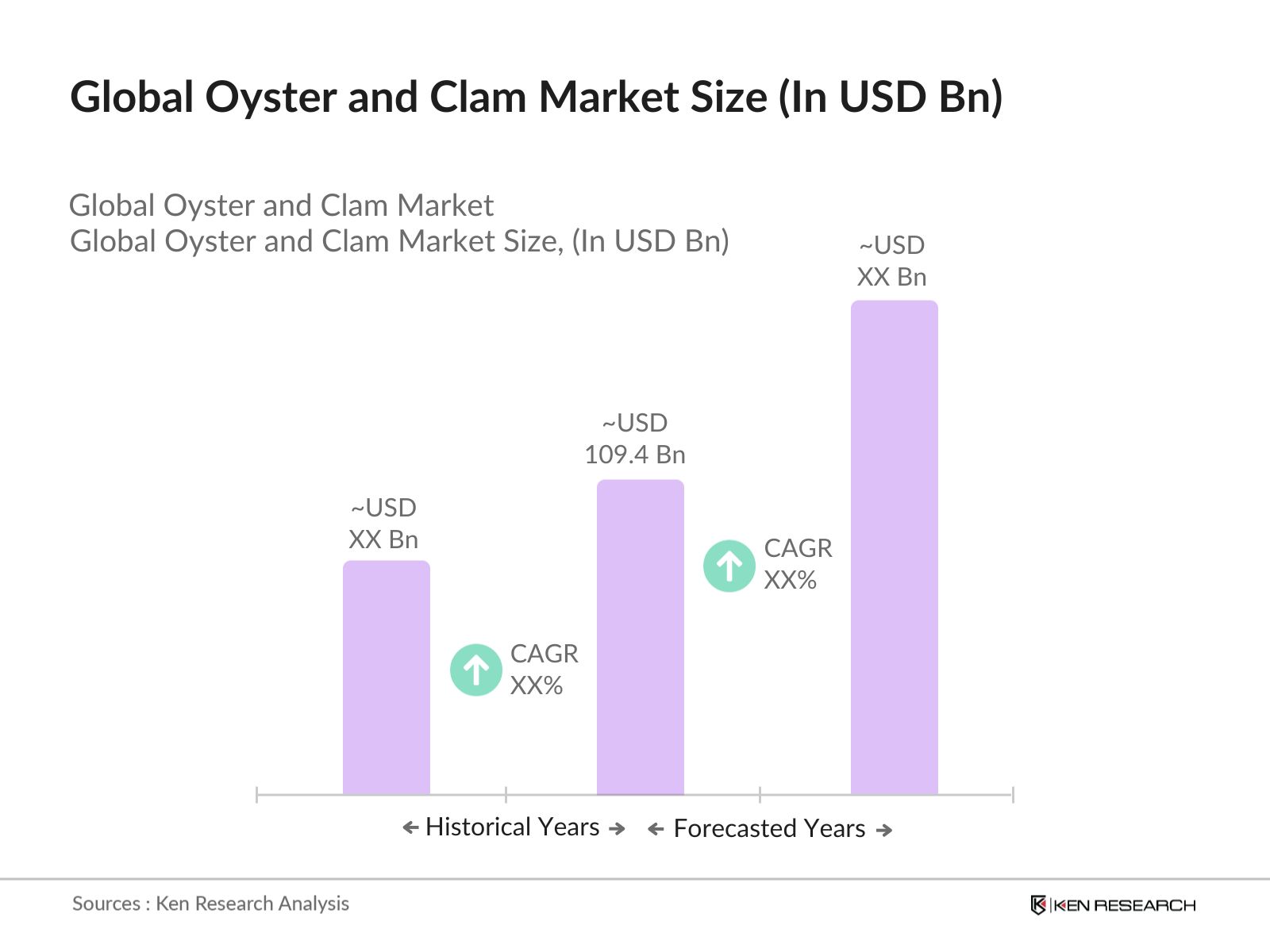
  • The global oyster and clam market was valued at USD 109.4 billion. This growth is driven by increasing consumer awareness of the nutritional benefits of oysters and clams, such as being rich sources of protein, omega-3 fatty acids, and essential minerals. Aquaculture's rapid expansion, particularly in Asia-Pacific and Europe, has also contributed to the market's steady growth. The shift toward sustainable seafood consumption, backed by government regulations promoting aquaculture development, has further accelerated market demand.

Global Oyster and Clam Market Size

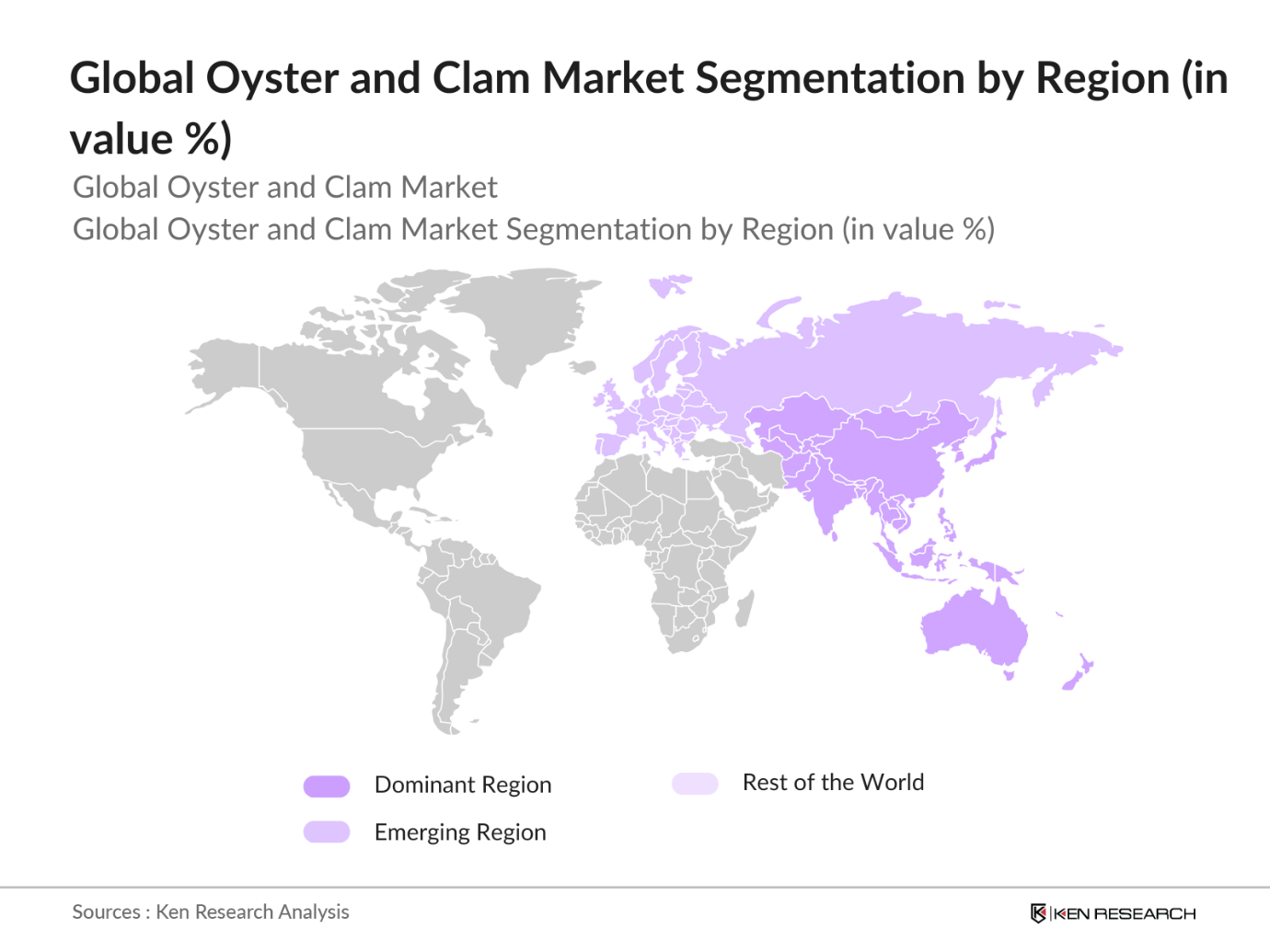
  • Asia-Pacific, particularly China and Japan, leads the global oyster and clam market due to a long-established tradition of seafood consumption and vast aquaculture infrastructure. The dominance of China is attributed to its favorable coastal regions, large-scale farming capabilities, and high domestic demand. Europe also holds a strong position, particularly in France, where oysters are a staple in the culinary industry. The dominance of these regions is driven by their established aquaculture methods, governmental support for the seafood industry, and growing consumer interest in high-quality, sustainable seafood.
  • Oyster and clam farmers must comply with rigorous licensing procedures to ensure that operations meet sustainability standards. In 2022, the USA issued new federal licenses for aquaculture farms under the NOAA, regulating the number of oysters and clams that can be farmed to prevent overfishing. These licenses come with strict requirements for environmental monitoring and farm management.

Global Oyster and Clam Market Segmentation

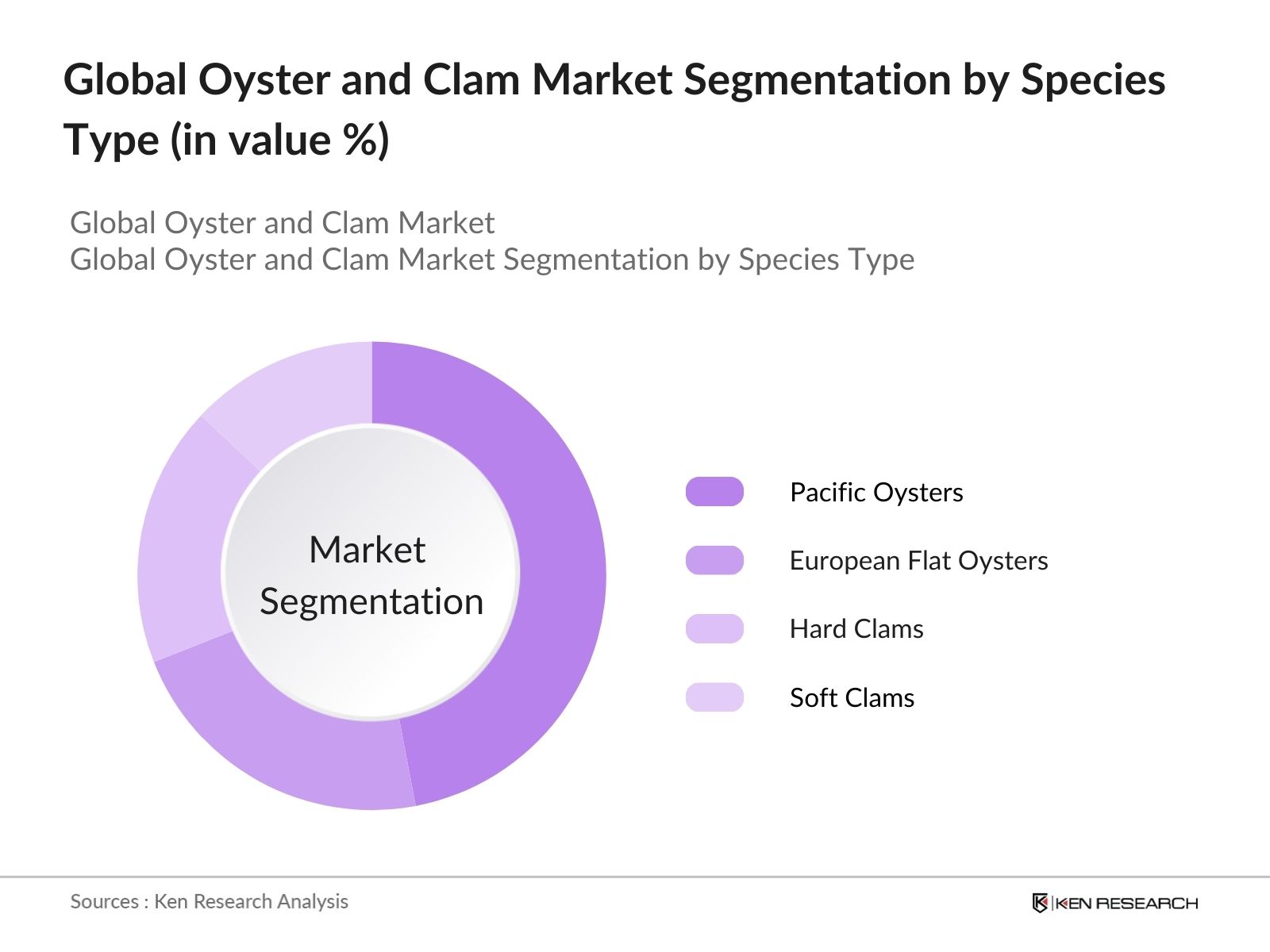
  • By Species Type: The global oyster and clam market is segmented by species type into Pacific oysters, European flat oysters, hard clams, soft clams, and Manila clams. Among these, Pacific oysters hold a dominant market share. This is primarily due to their faster growth rate, adaptability to various farming methods, and high demand in both the domestic and export markets. Pacific oysters are widely farmed in China and Japan, and their consistent supply chain has enabled them to maintain a leading position in the market.

Global Oyster and Clam Market Segmentation By Species Type

  • By Region: Geographically, the global oyster and clam market is segmented into North America, Europe, Asia-Pacific, Latin America, and the Middle East & Africa. Asia-Pacific remains the dominant region due to China and Japan's well-developed aquaculture industry and high domestic seafood consumption. Europe's demand for high-quality, gourmet oysters also supports the region's significant market share, particularly in countries like France and the United Kingdom.

Global Oyster and Clam Market Segmentation By Region Type

  • By Distribution Channel: The oyster and clam market is segmented by distribution channel into direct sales, hypermarkets/supermarkets, specialty stores, and online retail. Hypermarkets and supermarkets dominate the distribution channel due to their widespread reach, offering consumers easy access to fresh and frozen shellfish. This segment is driven by the growing trend of purchasing seafood from large retail chains that ensure product quality, freshness, and traceability. Major chains in North America and Europe have expanded their seafood offerings, pushing this segment's growth.

Global Oyster and Clam Market Competitive Landscape

The global oyster and clam market is characterized by the presence of both large-scale multinational companies and smaller local players. The competitive landscape reflects the consolidation of major aquaculture companies, which have leveraged their farming technologies, distribution networks, and sustainability certifications to dominate the market.

Company

Establishment Year

Headquarters

Aquaculture Output

Sustainability Certifications

Global Reach

Key Markets

Employee Count

Revenue (USD Mn)

Taylor Shellfish Farms

1890

Shelton, Washington, USA

Pacific Seafood Group

1941

Clackamas, Oregon, USA

Maruha Nichiro Corporation

1880

Tokyo, Japan

Clear Water Seafoods

1976

Nova Scotia, Canada

France Naissain

1969

Marennes, France

Global Oyster and Clam Industry Analysis

Growth Drivers

  • Increasing Aquaculture Production: Aquaculture production of oysters and clams has seen a steady rise due to government incentives and better farming technologies. In 2023, global aquaculture production reached 92 million metric tons, with a significant portion from oyster and clam farming, particularly in regions like China, the largest producer of mollusks. This expansion is supported by improved water management practices and government-backed initiatives for sustainable aquaculture in major producing countries such as Japan, South Korea, and Vietnam. Government grants and tax benefits for farmers are driving this growth further.
  • Growing Demand for Nutrient-Rich Seafood: Oysters and clams are highly regarded for their nutritional value, rich in omega-3 fatty acids, proteins, and essential minerals such as zinc and iron. The global demand for nutrient-dense seafood has surged, particularly in health-conscious regions like the USA, where seafood consumption rose to 21 pounds per capita in 2023. Health organizations are increasingly promoting the consumption of these shellfish due to their benefits in improving cardiovascular health and lowering cholesterol, creating a robust demand for oysters and clams.
  • Government Support for Sustainable Fishing Practices: Governments worldwide have emphasized sustainable aquaculture and fishing practices to ensure the long-term viability of marine resources. In 2022, the European Union adopted stricter regulations on overfishing and illegal fishing, mandating sustainable practices across its member states. In Japan, the Ministry of Agriculture, Forestry, and Fisheries provided subsidies worth $50 million in 2023 to promote sustainable oyster and clam farming practices, ensuring stock replenishment and environmental sustainability.

Market Restraints

  • Disruptions in Global Supply Chain: Global oyster and clam supply chains have been disrupted by various factors, including geopolitical tensions, shipping delays, and rising fuel costs. In 2023, the cost of freight surged by 25%, and delays in seafood imports in key markets such as the EU and USA resulted in reduced availability. Major production hubs in Asia faced logistical bottlenecks, impacting delivery times and creating supply shortages, especially for fresh oysters and clams.
  • Impact of Climate Change on Oyster and Clam Farming: Oyster and clam farming is highly sensitive to changes in water temperature and acidity, both of which are being influenced by climate change. According to the World Bank, rising ocean temperatures and increased CO2 levels have resulted in higher ocean acidification, which impairs shell formation in oysters and clams. In 2023, Pacific oyster production in Japan dropped by 15% due to abnormal weather patterns affecting water conditions.

Global Oyster and Clam Market Future Outlook

Over the next five years, the global oyster and clam market is expected to experience steady growth due to increasing consumer demand for sustainable and nutritious seafood products. Government support for aquaculture, alongside innovations in farming and processing techniques, is likely to continue driving market expansion. Additionally, advancements in packaging and distribution, particularly in the online retail segment, will further increase market accessibility and broaden the customer base.

Market Opportunities

  • Development of Sustainable Farming Technologies: Advancements in sustainable aquaculture technologies are creating new growth opportunities for the oyster and clam market. Innovations such as recirculating aquaculture systems (RAS) and integrated multi-trophic aquaculture (IMTA) have significantly improved production efficiency. In 2023, the United States invested $60 million in developing these technologies to promote eco-friendly shellfish farming, reducing environmental impacts while increasing yields.
  • New Processing and Preservation Techniques: New techniques for processing and preserving oysters and clams have improved product shelf life, allowing producers to expand their market reach. In 2023, several seafood companies in Europe and Asia implemented high-pressure processing (HPP), which increases the shelf life of oysters by up to 14 days without compromising quality. This innovation has facilitated greater export potential and opened new market avenues in countries with growing demand for frozen seafood.

Scope of the Report

Species Type

Pacific Oysters

European Flat Oysters

Hard Clams

Soft Clams

Manila Clams

Distribution Channel

Direct Sales

Hypermarkets/Supermarkets

Specialty Stores

Online Retail

End-Use

Food Service Industry

Retail Consumption

Pharmaceutical & Nutraceutical Industry

Animal Feed Industry

Farming Method

Bottom Culturing

Rack and Bag Culturing

Longline Culturing

Off-Bottom Floating Culturing

Region

North America

Europe

Asia-Pacific

Latin America

Middle East & Africa

Products

Key Target Audience

  • Seafood Distributors and Importers

  • Oyster and Clam Farmers

  • Aquaculture Equipment Manufacturers

  • Food Service and Restaurant Chains

  • Pharmaceutical and Nutraceutical Companies

  • Government and Regulatory Bodies (Food and Agriculture Organization (FAO), U.S. Food and Drug Administration (FDA))

  • Investor and Venture Capitalist Firms

  • Environmental and Sustainability Organizations

Companies

Players Mentioned in the Report:

  • Taylor Shellfish Farms

  • Pacific Seafood Group

  • Maruha Nichiro Corporation

  • Clear Water Seafoods

  • France Naissain

  • Australis Aquaculture

  • Hog Island Oyster Co.

  • Sea Watch International

  • Pangea Shellfish

  • East Coast Shellfish Growers Association

  • PEI Mussel Farms

  • Hong Kong Oyster Company

  • Mercer Oysters

  • Hama Hama Oysters

  • Hoopers Island Oyster Co.

Table of Contents

1. Global Oyster and Clam Market Overview

1.1. Definition and Scope
1.2. Market Taxonomy
1.3. Market Growth Rate
1.4. Market Segmentation Overview

2. Global Oyster and Clam Market Size (In USD Bn)

2.1. Historical Market Size
2.2. Year-On-Year Growth Analysis
2.3. Key Market Developments and Milestones

3. Global Oyster and Clam Market Analysis

3.1. Growth Drivers (Aquaculture Expansion, Demand for Sustainable Seafood, Consumer Awareness for Health Benefits)
3.1.1. Increasing Aquaculture Production
3.1.2. Growing Demand for Nutrient-Rich Seafood
3.1.3. Government Support for Sustainable Fishing Practices
3.1.4. Rise in Consumer Health-Consciousness
3.2. Market Challenges (Supply Chain Disruptions, Climate Change, Overfishing Risks)
3.2.1. Disruptions in Global Supply Chain
3.2.2. Impact of Climate Change on Oyster and Clam Farming
3.2.3. Overfishing and Sustainability Concerns
3.2.4. Regulatory Barriers for International Trade
3.3. Opportunities (Sustainable Farming Techniques, Innovations in Seafood Processing, Untapped Markets)
3.3.1. Development of Sustainable Farming Technologies
3.3.2. New Processing and Preservation Techniques
3.3.3. Expanding Markets in Asia-Pacific and Europe
3.3.4. Government Incentives for Aquaculture Development
3.4. Trends (Traceability, Farm-to-Table Initiatives, Alternative Seafood Products)
3.4.1. Increasing Focus on Traceability and Certification
3.4.2. Growth of Farm-to-Table Initiatives
3.4.3. Innovations in Alternative Seafood Products
3.5. Government Regulation (Sustainable Aquaculture, Fishing Licenses, Trade Regulations)
3.5.1. Environmental Regulations for Sustainable Aquaculture
3.5.2. Licensing and Compliance in Commercial Fishing
3.5.3. International Trade and Import/Export Policies
3.5.4. Subsidies and Financial Support for Oyster and Clam Farmers
3.6. SWOT Analysis
3.7. Stakeholder Ecosystem
3.8. Porters Five Forces Analysis (Supply Chain Influence, Market Competition, Regulatory Impact)
3.9. Competition Ecosystem (Major Oyster and Clam Producers)

4. Global Oyster and Clam Market Segmentation

4.1. By Species Type (In Value %)
4.1.1. Pacific Oysters
4.1.2. European Flat Oysters
4.1.3. Hard Clams
4.1.4. Soft Clams
4.1.5. Manila Clams
4.2. By Distribution Channel (In Value %)
4.2.1. Direct Sales
4.2.2. Hypermarkets/Supermarkets
4.2.3. Specialty Stores
4.2.4. Online Retail
4.3. By End-Use (In Value %)
4.3.1. Food Service Industry
4.3.2. Retail Consumption
4.3.3. Pharmaceutical and Nutraceutical Industry
4.3.4. Animal Feed Industry
4.4. By Farming Method (In Value %)
4.4.1. Bottom Culturing
4.4.2. Rack and Bag Culturing
4.4.3. Longline Culturing
4.4.4. Off-Bottom Floating Culturing
4.5. By Region (In Value %)
4.5.1. North America
4.5.2. Europe
4.5.3. Asia-Pacific
4.5.4. Latin America
4.5.5. Middle East & Africa

5. Global Oyster and Clam Market Competitive Analysis

5.1. Detailed Profiles of Major Companies
5.1.1. Taylor Shellfish Farms
5.1.2. France Naissain
5.1.3. Hog Island Oyster Co.
5.1.4. Sea Watch International
5.1.5. Pacific Seafood Group
5.1.6. Clear Water Seafoods
5.1.7. Australis Aquaculture
5.1.8. Maruha Nichiro Corporation
5.1.9. East Coast Shellfish Growers Association
5.1.10. Pangea Shellfish
5.1.11. Hong Kong Oyster Company
5.1.12. PEI Mussel Farms
5.1.13. Mercer Oysters
5.1.14. Hama Hama Oysters
5.1.15. Hoopers Island Oyster Co.
5.2. Cross Comparison Parameters (Aquaculture Output, Distribution Reach, Number of Farming Locations, Revenue, Employee Count, Sustainability Certifications, Market Presence, Regulatory Compliance)
5.3. Market Share Analysis
5.4. Strategic Initiatives
5.5. Mergers and Acquisitions
5.6. Investment Analysis
5.7. Government Grants and Subsidies
5.8. Private Equity Investments

6. Global Oyster and Clam Market Regulatory Framework

6.1. Environmental Standards for Aquaculture
6.2. Licensing and Compliance Requirements
6.3. Export and Import Certifications
6.4. International Fishing Quotas

7. Global Oyster and Clam Future Market Size (In USD Bn)

7.1. Future Market Size Projections
7.2. Key Factors Driving Future Market Growth

8. Global Oyster and Clam Market Analysts Recommendations

8.1. TAM/SAM/SOM Analysis
8.2. Strategic Market Entry Recommendations
8.3. Sustainable Aquaculture Best Practices
8.4. Untapped Market Identification
8.5. White Space Opportunity Analysis

Disclaimer

Contact U

Research Methodology

Step 1: Identification of Key Variables


The research process began by mapping the key stakeholders in the global oyster and clam market, including producers, distributors, and regulatory bodies. Extensive desk research and the use of proprietary databases were employed to identify and categorize the most critical variables affecting market dynamics, such as aquaculture output, demand for sustainable seafood, and regulatory trends.

Step 2: Market Analysis and Construction


This phase involved analyzing historical data and constructing a framework for market analysis. Detailed assessments of supply chain dynamics, revenue generation across segments, and the quality of aquaculture practices were performed. Market penetration rates and the relative distribution of key players were also evaluated to ensure the accuracy of market estimates.

Step 3: Hypothesis Validation and Expert Consultation


The market hypotheses were validated through interviews and consultations with industry experts, including aquaculture producers, seafood distributors, and regulatory representatives. These discussions provided insights into emerging trends, competitive positioning, and the financial health of key market players.

Step 4: Research Synthesis and Final Output


The final stage involved synthesizing the data collected from various sources, refining it through cross-verification with industry experts. Insights into oyster and clam production, distribution channels, and market dynamics were used to finalize the report, ensuring that it accurately reflects current market conditions and future prospects.

Frequently Asked Questions

01. How big is the Global Oyster and Clam Market?

The global oyster and clam market was valued at USD 109.4 billion, driven by increasing consumer interest in sustainable seafood and expanding aquaculture operations.

02. What are the challenges in the Global Oyster and Clam Market?

Challenges in the market include supply chain disruptions, climate change affecting farming operations, and stringent regulatory requirements for sustainable aquaculture.

03. Who are the major players in the Global Oyster and Clam Market?

Key players in the market include Taylor Shellfish Farms, Pacific Seafood Group, Maruha Nichiro Corporation, and Clear Water Seafoods, known for their large-scale operations and sustainable farming practices.

04. What are the growth drivers of the Global Oyster and Clam Market?

The market is propelled by increasing consumer demand for nutrient-rich seafood, government support for sustainable aquaculture, and technological advancements in farming techniques.

Why Buy From Us?

RRR
Refine Robust Result (RRR) Framework

What makes us stand out is that our consultants follows Robust, Refine and Result (RRR) methodology. i.e. Robust for clear definitions, approaches and sanity checking, Refine for differentiating respondents facts and opinions and Result for presenting data with story

Our Reach Is Unmatched

We have set a benchmark in the industry by offering our clients with syndicated and customized market research reports featuring coverage of entire market as well as meticulous research and analyst insights.

Research
Shifting the Research Paradigm

While we don't replace traditional research, we flip the method upside down. Our dual approach of Top Bottom & Bottom Top ensures quality deliverable by not just verifying company fundamentals but also looking at the sector and macroeconomic factors.

Insite
More Insights-Better Decisions

With one step in the future, our research team constantly tries to show you the bigger picture. We help with some of the tough questions you may encounter along the way: How is the industry positioned? Best marketing channel? KPI's of competitors? By aligning every element, we help maximize success.

Trust
Transparency and Trust

Our report gives you instant access to the answers and sources that other companies might choose to hide. We elaborate each steps of research methodology we have used and showcase you the sample size to earn your trust.

support
Round the Clock Support

If you need any support, we are here! We pride ourselves on universe strength, data quality, and quick, friendly, and professional service.

Why Client Choose Us?

400000+ Reports in repository
150+ Consulting project a year
100+ Analysts
8000+ Client Queries in 2022