
Global Pharmaceutical Packaging Market Outlook to 2030
Region:Global
Author(s):Sonika Bharadwaj
Product Code:KENGR054
Region:Global
Author(s):Sonika Bharadwaj
Product Code:KENGR054
December 2024
82
Listen to the audio summary
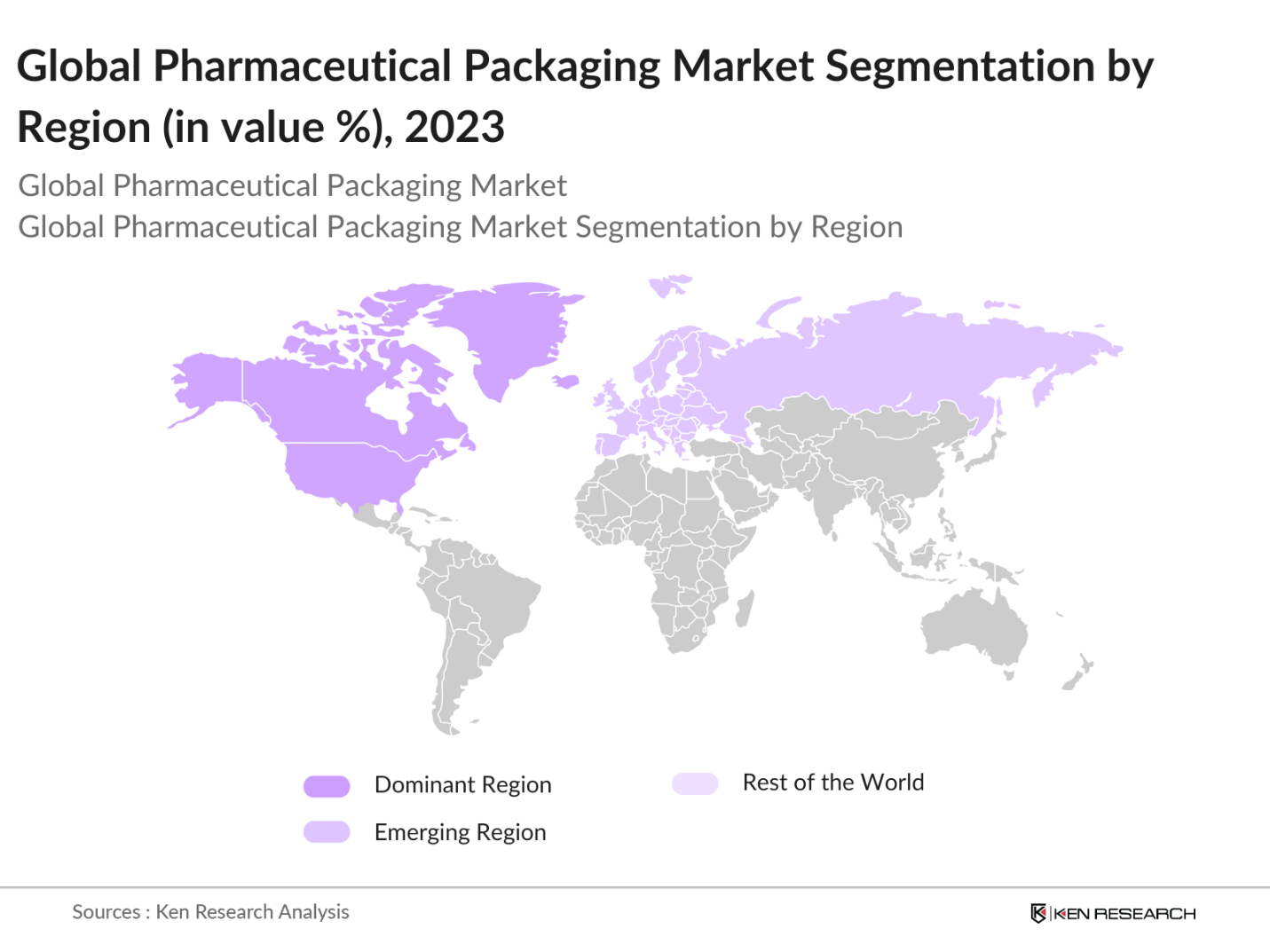
By Region: The global pharmaceutical packaging market is segmented by region into North America, Europe, Asia-Pacific, Latin America, and Middle East & Africa. North America leads the market due to the presence of major pharmaceutical companies, advanced healthcare infrastructure, and strong regulatory oversight. Additionally, the growing demand for biologics and injectable drugs has propelled the need for innovative packaging solutions in this region. Europe follows closely, driven by a focus on sustainability and eco-friendly packaging materials, with countries like Germany and the UK contributing significantly.
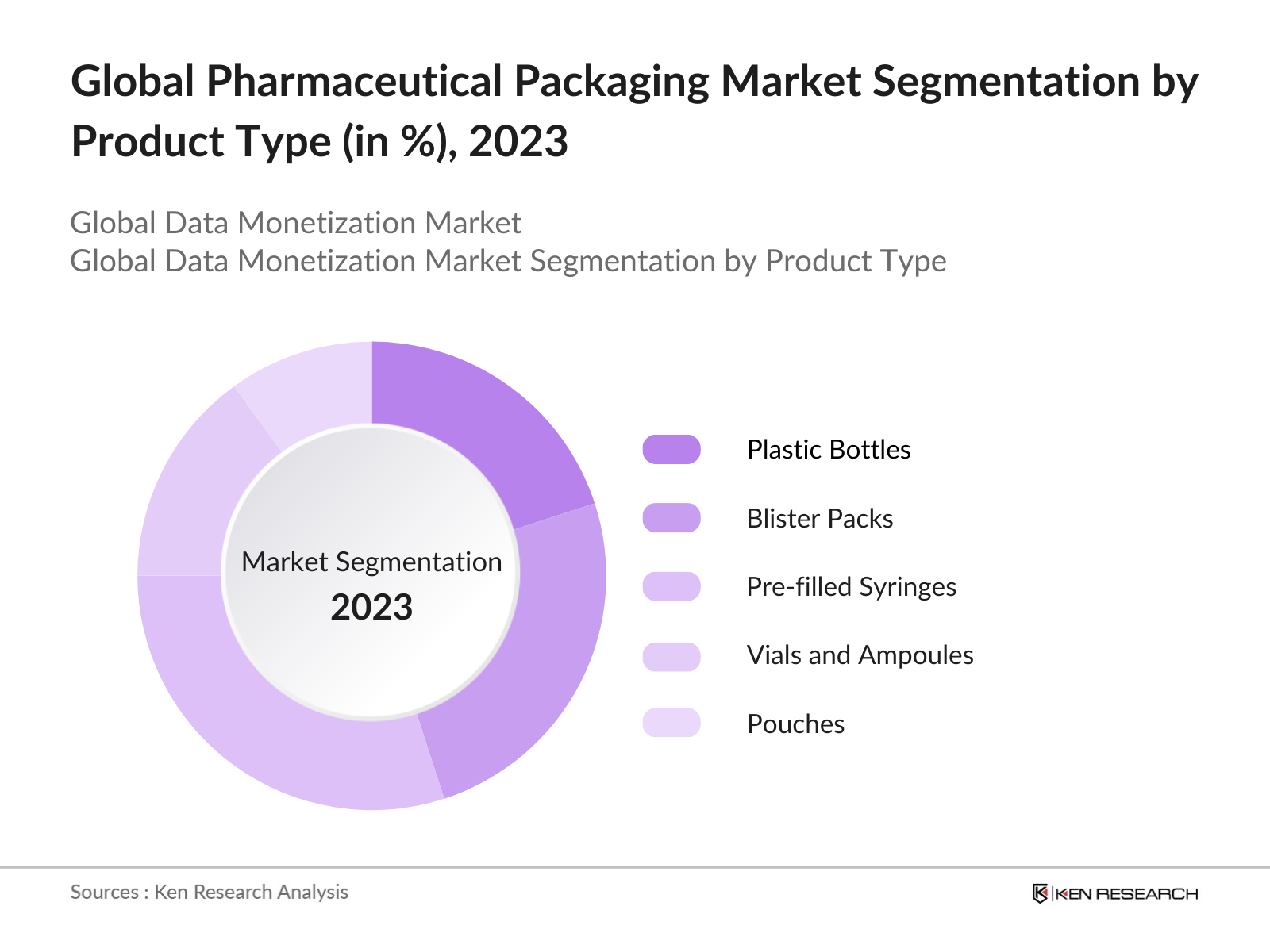
By Product Type: The global pharmaceutical packaging market is segmented by product type into plastic bottles, blister packs, pre-filled syringes, vials and ampoules, and pouches. Recently, pre-filled syringes have gained a dominant market share under this segment due to the increased demand for biologics and vaccines that require injectable solutions. The convenience and precision dosing offered by pre-filled syringes make them a preferred option in healthcare settings, especially in hospitals and outpatient clinics. Additionally, the rising focus on patient safety and the reduction of contamination risks has further strengthened the growth of this segment.
By Material Type: The market is segmented by material type into plastics & polymers, glass, aluminum foil, and paper & paperboard. Plastics & polymers dominate the market primarily due to their flexibility, durability, and cost-effectiveness. This material type is widely used for packaging solutions such as blister packs, plastic bottles, and pouches. Moreover, the development of biocompatible and biodegradable plastics for pharmaceutical packaging has further driven demand in this segment. The recyclability of polymer-based packaging also aligns with growing environmental concerns, pushing this material type to the forefront of pharmaceutical packaging.
The global pharmaceutical packaging market is characterized by the presence of a few dominant players. Companies in this market are focusing on innovation, sustainability, and compliance with strict regulatory frameworks to gain a competitive edge. The competition is also driven by technological advancements in smart packaging and anti-counterfeiting solutions.
|
Company |
Establishment Year |
Headquarters |
Annual Revenue |
No. of Employees |
Global Reach |
Production Facilities |
R&D Investments |
Sustainability Initiatives |
|
Amcor Limited |
1860 |
Melbourne, AUS |
- |
- |
- |
- |
- |
- |
|
Gerresheimer AG |
1864 |
Dsseldorf, DEU |
- |
- |
- |
- |
- |
- |
|
Schott AG |
1884 |
Mainz, DEU |
- |
- |
- |
- |
- |
- |
|
Berry Global, Inc. |
1967 |
Evansville, USA |
- |
- |
- |
- |
- |
- |
|
West Pharmaceutical Inc. |
1923 |
Exton, USA |
- |
- |
- |
- |
- |
- |
Over the next five years, the global pharmaceutical packaging market is expected to experience substantial growth. This growth will be driven by advancements in drug formulations, a rising focus on patient safety, and the increased adoption of sustainable packaging solutions. Additionally, the rapid expansion of the biologics and biosimilar markets, along with growing demand for sterile and safe packaging options, will contribute to market growth. Further innovation in smart packaging solutions, such as RFID and anti-counterfeiting technologies, will also be a major factor in shaping the future of the industry.
|
Product Type |
Plastic Bottles Blister Packs Pre-filled Syringes Vials and Ampoules Pouches |
|
Material Type |
Plastics & Polymers Glass Aluminum Foil Paper & Paperboard |
|
Drug Delivery Mode |
Oral Drugs Injectable Drugs Topical/Transdermal Drugs Inhalable Drugs |
|
End-User |
Pharmaceutical Manufacturing Hospitals & Clinics Retail Pharmacies Homecare Settings |
|
Region |
North America Europe Asia-Pacific Latin America Middle East & Africa |
1.1 Definition and Scope
1.2 Market Taxonomy
1.3 Market Growth Rate
1.4 Market Segmentation Overview
2.1 Historical Market Size
2.2 Year-On-Year Growth Analysis
2.3 Key Market Developments and Milestones
3.1 Growth Drivers
3.1.1 Rising Demand for Biologics
3.1.2 Aging Population and Increased Healthcare Access
3.1.3 Innovations in Drug Delivery Systems
3.1.4 Government Initiatives on Healthcare Expenditure
3.2 Market Challenges
3.2.1 High Regulatory Compliance Costs
3.2.2 Environmental Impact of Packaging Waste
3.2.3 Volatility in Raw Material Prices
3.2.4 Complexity in Packaging Design for Sensitive Drugs
3.3 Opportunities
3.3.1 Expansion in Emerging Markets (Latin America, Asia-Pacific)
3.3.2 Increasing Adoption of Sustainable Packaging Solutions
3.3.3 Technological Advancements in Smart Packaging
3.3.4 Strategic Collaborations with Healthcare Providers
3.4 Trends
3.4.1 Surge in Demand for Personalized Medicine Packaging
3.4.2 Integration of Track-and-Trace Technologies (IoT, RFID)
3.4.3 Growth in Flexible and Unit Dose Packaging
3.4.4 Increase in Use of Biodegradable and Recyclable Materials
3.5 Government Regulations
3.5.1 Packaging Standards and Drug Labeling Requirements
3.5.2 Anti-Counterfeiting Regulations
3.5.3 Waste Management Directives and Packaging Sustainability
3.5.4 Pharmaceutical Serialization Laws
3.6 SWOT Analysis
3.7 Stakeholder Ecosystem
3.8 Porters Five Forces Analysis
3.9 Competitive Ecosystem Analysis
4.1 By Product Type (In Value %)
4.1.1 Plastic Bottles
4.1.2 Blister Packs
4.1.3 Pre-filled Syringes
4.1.4 Vials and Ampoules
4.1.5 Pouches
4.2 By Material Type (In Value %)
4.2.1 Plastics & Polymers
4.2.2 Glass
4.2.3 Aluminum Foil
4.2.4 Paper & Paperboard
4.3 By Drug Delivery Mode (In Value %)
4.3.1 Oral Drugs
4.3.2 Injectable Drugs
4.3.3 Topical/Transdermal Drugs
4.3.4 Inhalable Drugs
4.4 By End-User (In Value %)
4.4.1 Pharmaceutical Manufacturing
4.4.2 Hospitals & Clinics
4.4.3 Retail Pharmacies
4.4.4 Homecare Settings
4.5 By Region (In Value %)
4.5.1 North America
4.5.2 Europe
4.5.3 Asia-Pacific
4.5.4 Latin America
4.5.5 Middle East & Africa
5.1 Detailed Profiles of Major Companies
5.1.1 Amcor Limited
5.1.2 Gerresheimer AG
5.1.3 Schott AG
5.1.4 Berry Global, Inc.
5.1.5 West Pharmaceutical Services, Inc.
5.1.6 AptarGroup, Inc.
5.1.7 Becton, Dickinson & Co.
5.1.8 WestRock Company
5.1.9 Nipro Corporation
5.1.10 Owens-Illinois, Inc.
5.1.11 Mondi Group
5.1.12 CCL Industries Inc.
5.1.13 Ardagh Group
5.1.14 Catalent, Inc.
5.1.15 Uhlmann Group
5.2 Cross Comparison Parameters (No. of Employees, Revenue, Production Facilities, Market Share)
5.3 Market Share Analysis
5.4 Strategic Initiatives
5.5 Mergers and Acquisitions
5.6 Investment Analysis
5.7 Venture Capital Funding
5.8 Government Grants
5.9 Private Equity Investments
6.1 Compliance with Drug Safety Regulations
6.2 Packaging Waste and Recycling Regulations
6.3 GMP and ISO Standards for Pharmaceutical Packaging
6.4 Certification and Approval Processes
7.1 Future Market Size Projections
7.2 Key Factors Driving Future Market Growth
8.1 By Product Type (In Value %)
8.2 By Material Type (In Value %)
8.3 By Drug Delivery Mode (In Value %)
8.4 By End-User (In Value %)
8.5 By Region (In Value %)
9.1 TAM/SAM/SOM Analysis
9.2 Customer Segment Analysis
9.3 Marketing Strategies
9.4 White Space Opportunity Analysis
The first step involves the identification of critical variables in the global pharmaceutical packaging market. This includes a comprehensive study of the major stakeholders, including pharmaceutical manufacturers, suppliers, and regulators. Data from primary and secondary sources, such as industry reports and government databases, is analyzed to ensure thorough coverage of market dynamics.
In this stage, historical data on market performance is gathered and analyzed. This includes evaluating factors such as the demand for various packaging materials, production costs, and regulatory requirements. These data points are used to construct an accurate representation of market performance, trends, and growth drivers.
Industry experts, including packaging engineers and pharmaceutical manufacturers, are consulted to validate market hypotheses. This step ensures the inclusion of real-world insights into the report, with feedback on innovations, challenges, and future opportunities in pharmaceutical packaging.
The final phase synthesizes all collected data and expert insights into a cohesive report. The findings are cross-verified using a bottom-up approach, ensuring the accuracy and reliability of the market projections and analysis. This stage also includes direct consultations with manufacturers to validate the market share of various packaging types and materials.
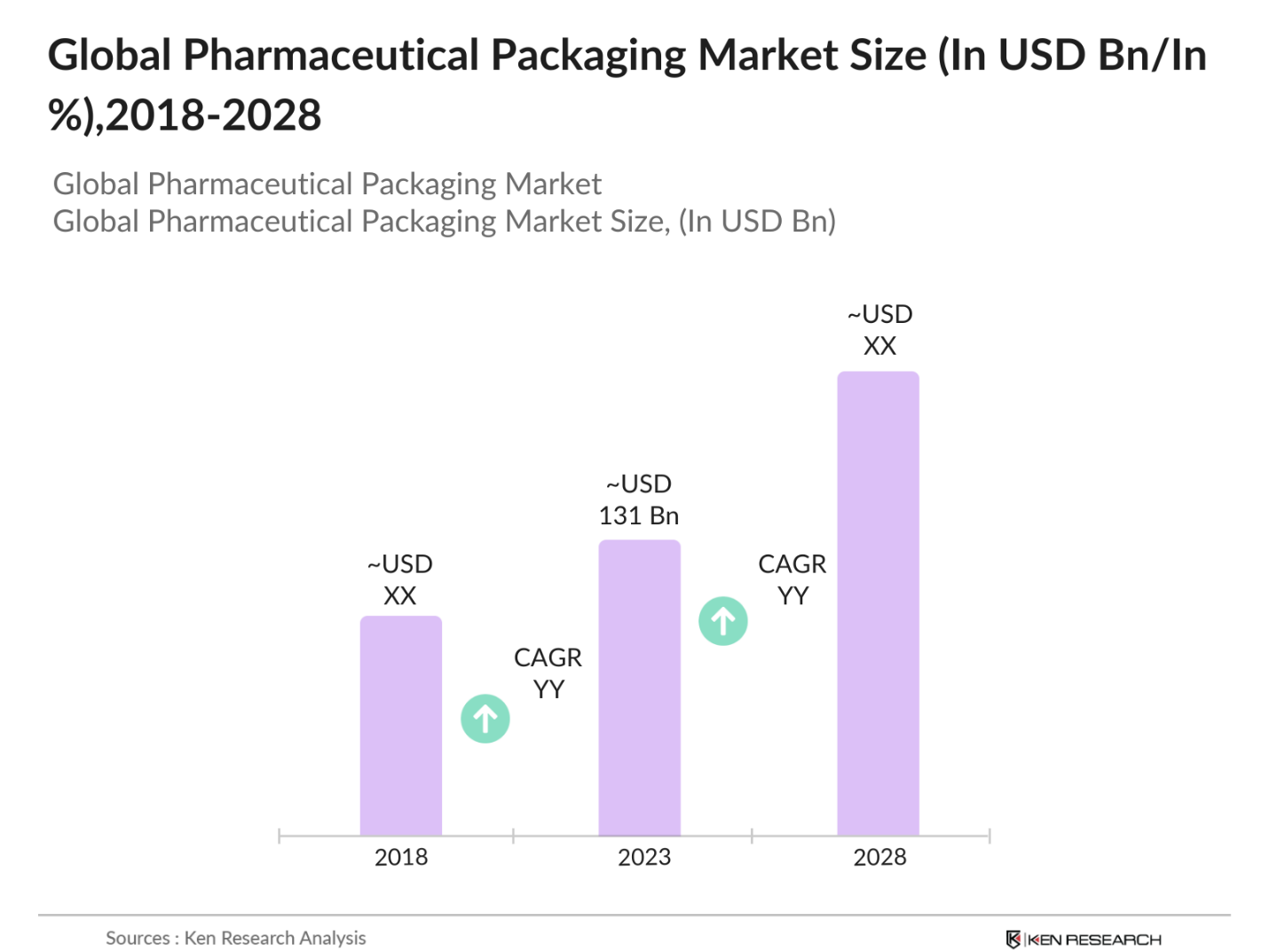
The global pharmaceutical packaging market is valued at USD 131 billion, driven by the growing demand for biologics, innovative packaging solutions, and increased focus on sustainability in the healthcare sector.
Challenges include stringent regulatory requirements, rising raw material costs, and the environmental impact of packaging waste. Moreover, the need for tamper-evident and anti-counterfeiting solutions adds complexity to the packaging process.
Major players include Amcor Limited, Gerresheimer AG, Schott AG, Berry Global, Inc., and West Pharmaceutical Services, Inc., all of which lead the market due to their extensive product portfolios, strong global presence, and innovation in sustainable packaging solutions.
The market is driven by the rising demand for biologics and injectables, stringent regulations regarding drug safety, and increasing adoption of eco-friendly packaging materials. Additionally, technological advancements in smart packaging are propelling the market forward.
Key trends include the growing demand for sustainable packaging materials, advancements in smart packaging technologies, and the increasing use of tamper-evident packaging solutions to prevent drug counterfeiting.

What makes us stand out is that our consultants follows Robust, Refine and Result (RRR) methodology. i.e. Robust for clear definitions, approaches and sanity checking, Refine for differentiating respondents facts and opinions and Result for presenting data with story

We have set a benchmark in the industry by offering our clients with syndicated and customized market research reports featuring coverage of entire market as well as meticulous research and analyst insights.

While we don't replace traditional research, we flip the method upside down. Our dual approach of Top Bottom & Bottom Top ensures quality deliverable by not just verifying company fundamentals but also looking at the sector and macroeconomic factors.

With one step in the future, our research team constantly tries to show you the bigger picture. We help with some of the tough questions you may encounter along the way: How is the industry positioned? Best marketing channel? KPI's of competitors? By aligning every element, we help maximize success.

Our report gives you instant access to the answers and sources that other companies might choose to hide. We elaborate each steps of research methodology we have used and showcase you the sample size to earn your trust.

If you need any support, we are here! We pride ourselves on universe strength, data quality, and quick, friendly, and professional service.