
Global Precast Construction Market Outlook to 2030
Region:Global
Author(s):Sanjna
Product Code:KROD3623
Region:Global
Author(s):Sanjna
Product Code:KROD3623
November 2024
84
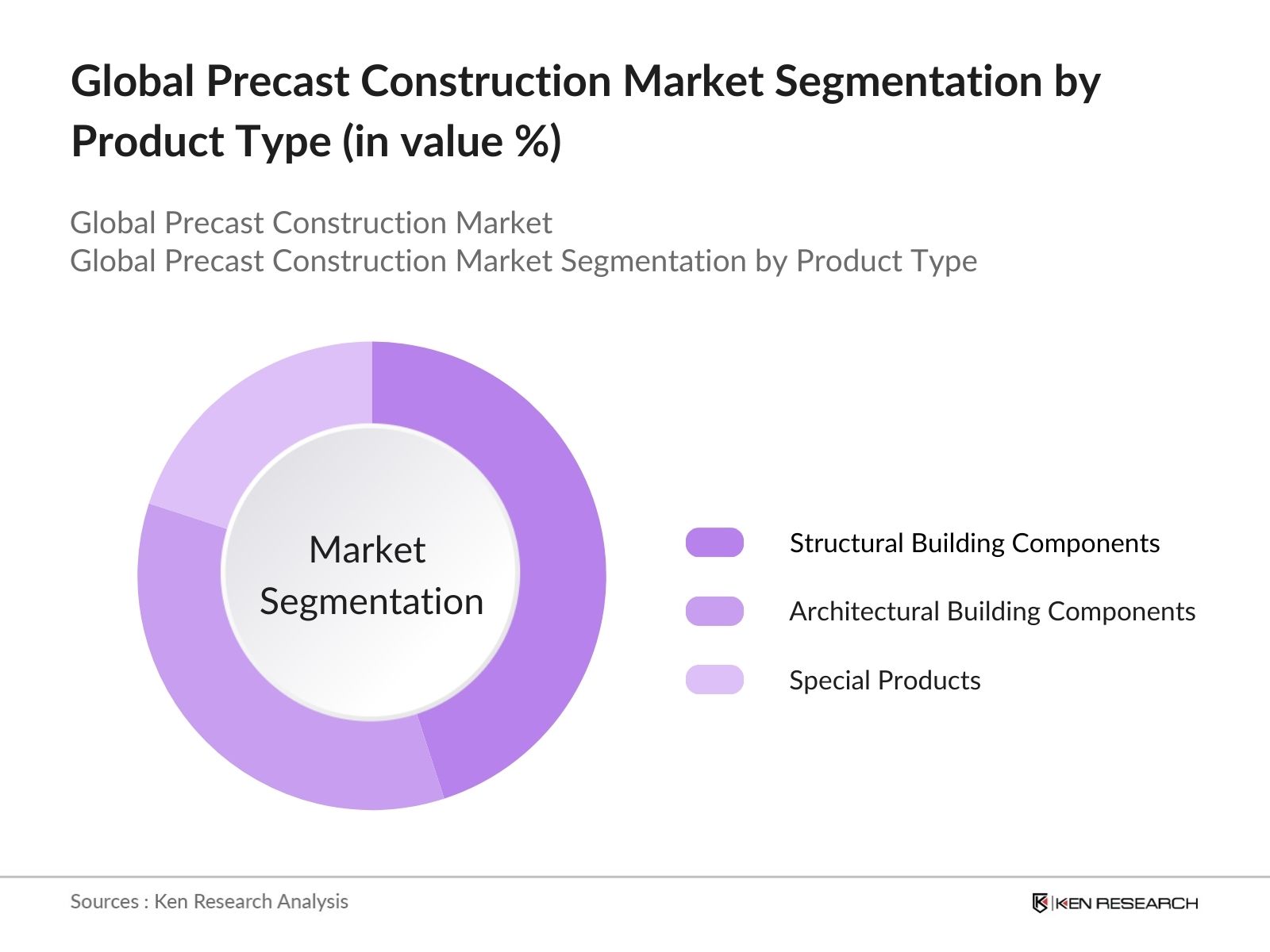
By Product Type: The Global Precast Construction Market is segmented by product type into structural building components, architectural building components, and special products such as pipes and utility structures. Structural building components hold a dominant market share within this segmentation due to their widespread application in large infrastructure projects and commercial buildings. These components, which include beams, columns, and floor slabs, are favored for their ability to reduce construction time while ensuring safety and durability.
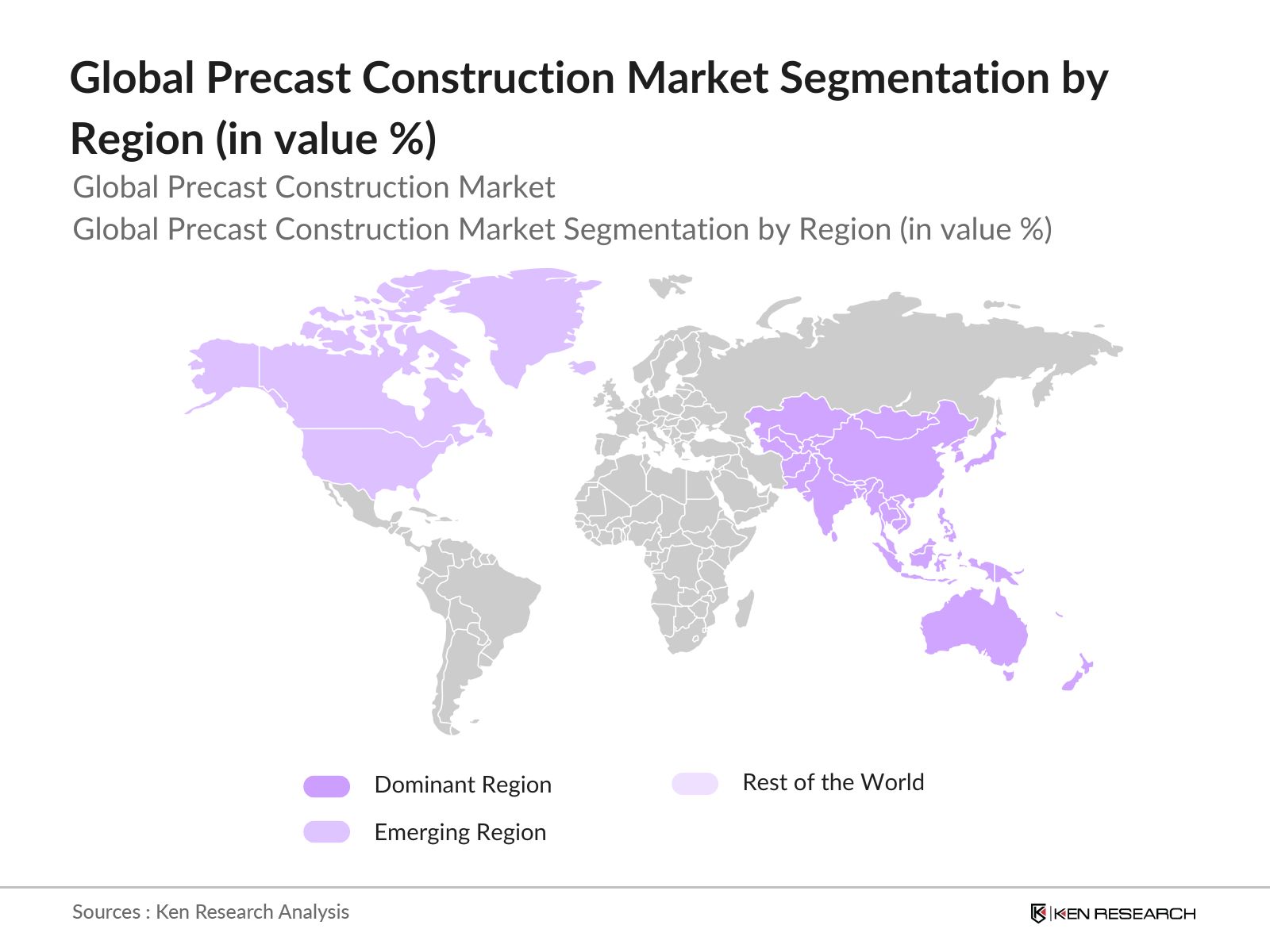
By Region: The market is segmented by region into North America, Europe, Asia-Pacific, Middle East & Africa, and Latin America. Asia-Pacific holds the largest share in the regional segmentation due to the booming construction activities in countries like China and India. The rapid urbanization in these countries, coupled with large-scale infrastructure investments, has accelerated the demand for precast construction. Additionally, the regions growing population and focus on smart city initiatives make Asia-Pacific a key player in the market.
By Construction Type
The precast construction market is segmented by construction type into residential, commercial, and infrastructure. The infrastructure segment leads this segmentation, driven by large government-funded projects such as highways, bridges, and tunnels that require efficient, durable, and long-lasting construction materials. The demand for infrastructure development in both developed and developing economies makes this segment highly significant in the overall market share.
The global precast construction market is highly competitive, with major players adopting strategies such as mergers and acquisitions, partnerships, and innovations in technology to maintain their market positions. The competitive landscape is dominated by large multinational companies that have established extensive distribution networks, advanced production capabilities, and a wide portfolio of products. Companies such as LafargeHolcim and CEMEX have a broad geographical presence, while firms like Elematic specialize in providing automation and technology solutions for precast concrete production.
|
Company |
Establishment Year |
Headquarters |
Revenue |
R&D Investments |
Product Portfolio |
Regional Presence |
Employees |
Market Cap |
|
LafargeHolcim |
1833 |
Switzerland |
- |
- |
- |
- |
- |
- |
|
CEMEX S.A.B. de C.V. |
1906 |
Mexico |
- |
- |
- |
- |
- |
- |
|
CRH plc |
1970 |
Ireland |
- |
- |
- |
- |
- |
- |
|
Elematic Oyj |
1959 |
Finland |
- |
- |
- |
- |
- |
- |
|
Skanska AB |
1887 |
Sweden |
- |
- |
- |
- |
- |
- |
Growth Drivers
Challenges
Over the next five years, the global precast construction market is expected to grow significantly, driven by the increasing adoption of advanced construction technologies and government support for infrastructure projects. With growing concerns about sustainability, the demand for environmentally friendly and energy-efficient construction methods like precast concrete will rise. Additionally, the focus on reducing construction time and labor costs will lead to wider acceptance of precast solutions in both commercial and residential sectors. Countries with robust infrastructure development plans, such as China, the U.S., and India, will continue to drive market growth.
Market Opportunities
|
Segment |
Sub-Segments |
|
Product Type |
Structural Building Components |
|
Architectural Building Components |
|
|
Special Products (Pipes, Utility Structures) |
|
|
Construction Type |
Residential |
|
Commercial |
|
|
Infrastructure |
|
|
Material Type |
Concrete |
|
Steel |
|
|
Glass |
|
|
End-User |
Contractors |
|
Engineers |
|
|
Architects |
|
|
Region |
North America |
|
Europe |
|
|
Asia-Pacific |
|
|
Middle East & Africa |
|
|
Latin America |
1.1. Definition and Scope
1.2. Market Taxonomy
1.3. Market Growth Rate
1.4. Market Segmentation Overview
2.1. Historical Market Size
2.2. Year-On-Year Growth Analysis
2.3. Key Market Developments and Milestones
3.1. Growth Drivers
3.1.1. Urbanization
3.1.2. Cost Efficiency in Construction
3.1.3. Sustainability Demands
3.2. Market Challenges
3.2.1. High Initial Capital Investment
3.2.2. Skilled Labor Shortage
3.2.3. Complex Logistics
3.3. Opportunities
3.3.1. Adoption of Green Building Standards
3.3.2. Technological Innovations in Prefabrication
3.3.3. Government Infrastructure Initiatives
3.4. Market Trends
3.4.1. Integration of BIM (Building Information Modeling)
3.4.2. Use of 3D Printing in Precast Construction
3.4.3. Expansion of Modular Construction
3.5. Government Regulations
3.5.1. Building Codes and Compliance
3.5.2. Environmental Regulations
3.5.3. Safety Standards in Construction
3.6. SWOT Analysis
3.7. Stakeholder Ecosystem (Manufacturers, Contractors, Suppliers, Regulatory Bodies)
3.8. Porters Five Forces (Supplier Power, Buyer Power, Threat of Substitutes, etc.)
3.9. Competition Ecosystem
4.1. By Product Type (In Value %)
4.1.1. Structural Building Components
4.1.2. Architectural Building Components
4.1.3. Special Products (e.g., Pipes, Utility Structures)
4.2. By Construction Type (In Value %)
4.2.1. Residential
4.2.2. Commercial
4.2.3. Infrastructure
4.3. By Material Type (In Value %)
4.3.1. Concrete
4.3.2. Steel
4.3.3. Glass
4.4. By End-User (In Value %)
4.4.1. Contractors
4.4.2. Engineers
4.4.3. Architects
4.5. By Region (In Value %)
4.5.1. North America
4.5.2. Europe
4.5.3. Asia-Pacific
4.5.4. Middle East & Africa
4.5.5. Latin America
5.1. Detailed Profiles of Major Companies
5.1.1. LafargeHolcim
5.1.2. CEMEX S.A.B. de C.V.
5.1.3. CRH plc
5.1.4. Skanska AB
5.1.5. HeidelbergCement AG
5.1.6. Elematic Oyj
5.1.7. Boral Limited
5.1.8. Gulf Precast Concrete
5.1.9. Forterra, Inc.
5.1.10. Coltman Precast Concrete
5.1.11. Tindall Corporation
5.1.12. Oldcastle Precast
5.1.13. Julius Berger Nigeria Plc
5.1.14. Larsen & Toubro Ltd.
5.1.15. GCP Applied Technologies Inc.
5.2. Cross Comparison Parameters (Market Share, Revenue, Headquarters, Regional Presence, R&D Investment, Product Portfolio, No. of Employees, Technology Integration)
5.3. Market Share Analysis
5.4. Strategic Initiatives
5.5. Mergers and Acquisitions
5.6. Investment Analysis
5.7. Venture Capital Funding
5.8. Government Grants
5.9. Private Equity Investments
6.1. Building and Construction Codes
6.2. Environmental Compliance
6.3. Certification Processes
6.4. Safety Regulations
7.1. Future Market Size Projections
7.2. Key Factors Driving Future Market Growth
8.1. By Product Type (In Value %)
8.2. By Construction Type (In Value %)
8.3. By Material Type (In Value %)
8.4. By End-User (In Value %)
8.5. By Region (In Value %)
9.1. TAM/SAM/SOM Analysis
9.2. Customer Cohort Analysis
9.3. Marketing Initiatives
9.4. White Space Opportunity Analysis
The research starts with identifying critical variables affecting the global precast construction market, including market trends, technological developments, and government regulations. Comprehensive desk research using credible industry databases was utilized to map out the major stakeholders and relevant factors influencing the market.
Historical data related to the precast construction market was analyzed to derive insights into market dynamics. We assessed the penetration of key players, product offerings, and revenue growth to build an accurate market analysis. Additionally, we evaluated market factors such as construction efficiency and cost savings to validate the data.
Interviews were conducted with industry professionals and construction specialists to validate our market hypotheses. Their insights provided firsthand knowledge on the application of precast components, market demand, and challenges faced in the industry.
The final phase synthesized all the data gathered from primary and secondary research to provide a comprehensive market analysis. Multiple cross-verifications were conducted with manufacturers and end-users to ensure the accuracy and reliability of the market outlook.
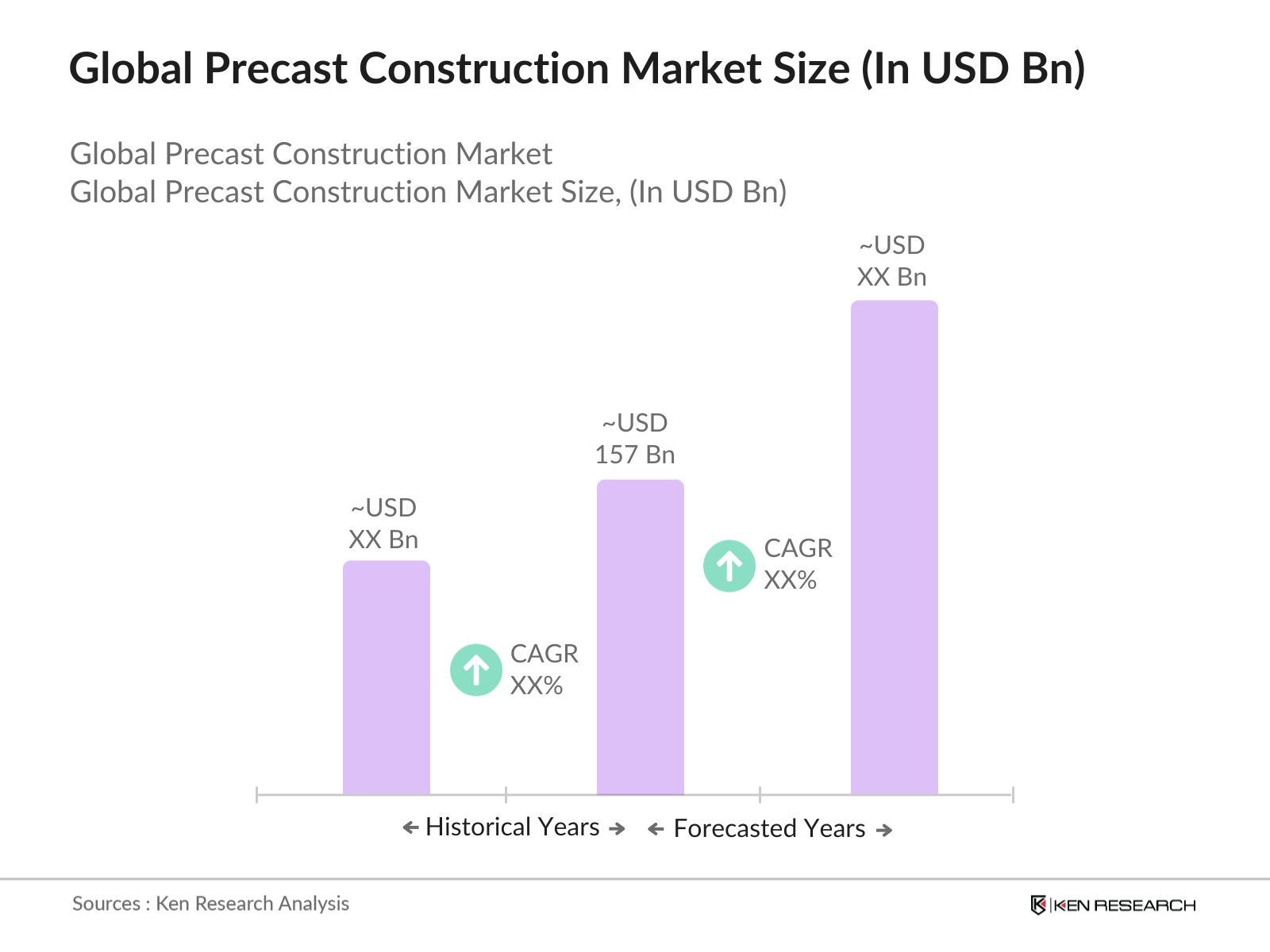
The global precast construction market is valued at USD 157 billion, driven by the increasing need for sustainable and cost-effective construction solutions.
Major challenges include high initial capital costs, transportation issues, and a shortage of skilled labor to handle precast components efficiently.
Key players include LafargeHolcim, CEMEX S.A.B. de C.V., CRH plc, Skanska AB, and HeidelbergCement AG, known for their strong global presence and extensive product portfolios.
The market is driven by factors such as advancements in construction technologies, sustainability initiatives, and large-scale government infrastructure projects.
Asia-Pacific dominates the market due to extensive urbanization and government initiatives in countries like China and India. North America and Europe are also major regions with strong infrastructure investments.

What makes us stand out is that our consultants follows Robust, Refine and Result (RRR) methodology. i.e. Robust for clear definitions, approaches and sanity checking, Refine for differentiating respondents facts and opinions and Result for presenting data with story

We have set a benchmark in the industry by offering our clients with syndicated and customized market research reports featuring coverage of entire market as well as meticulous research and analyst insights.

While we don't replace traditional research, we flip the method upside down. Our dual approach of Top Bottom & Bottom Top ensures quality deliverable by not just verifying company fundamentals but also looking at the sector and macroeconomic factors.

With one step in the future, our research team constantly tries to show you the bigger picture. We help with some of the tough questions you may encounter along the way: How is the industry positioned? Best marketing channel? KPI's of competitors? By aligning every element, we help maximize success.

Our report gives you instant access to the answers and sources that other companies might choose to hide. We elaborate each steps of research methodology we have used and showcase you the sample size to earn your trust.

If you need any support, we are here! We pride ourselves on universe strength, data quality, and quick, friendly, and professional service.