
Global Prefabricated Buildings Market Outlook 2030
Region:Global
Author(s):Shivani Mehra
Product Code:KROD3179
December 2024
91
About the Report
Global Prefabricated Buildings Market Overview
- The global prefabricated buildings market is projected to reach a value of USD 234.17 billion, driven primarily by rapid urbanization, increasing infrastructure demands, and a growing preference for sustainable construction solutions. The industry's expansion is largely supported by the cost-effectiveness and time-saving benefits that prefabrication offers. Prefabricated buildings are quicker to assemble on-site compared to traditional construction methods, significantly reducing labor costs and ensuring quality control during off-site manufacturing.
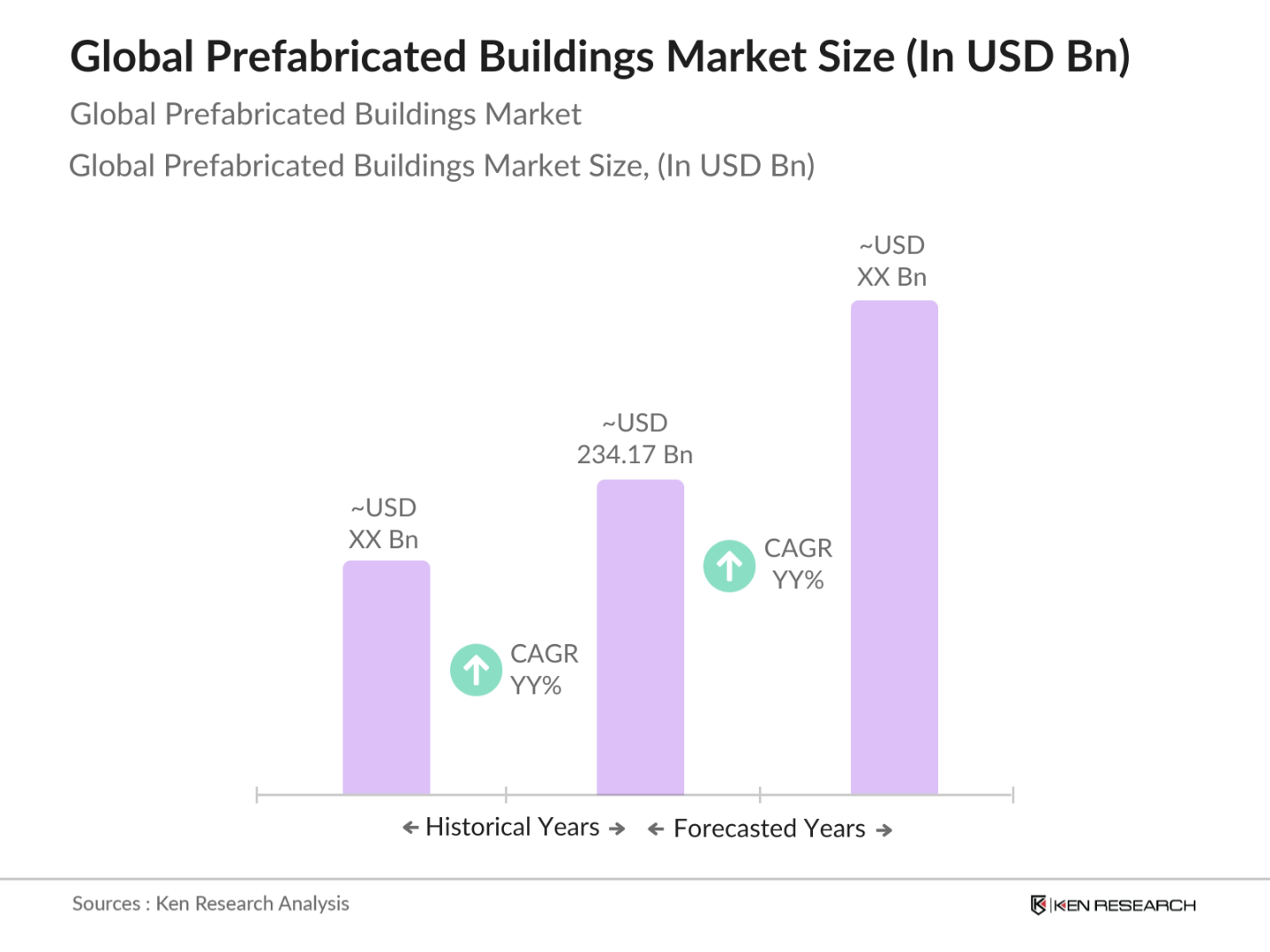
- Countries like China, India, and the United States dominate the prefabricated buildings market due to their large-scale infrastructure projects, increasing urban populations, and governmental support for housing developments. Chinas dominance stems from its massive urbanization efforts, while the United States and Europe are seeing a rise in commercial real estate demand, especially for customized and turnkey solutions.
- Governments worldwide are implementing stricter building codes and standards to ensure disaster resilience in construction. In Japan, the Building Standard Law mandates that all new buildings, including prefab structures, meet earthquake-resilient standards to withstand seismic activity. Similarly, countries like the Philippines have revised their National Building Code to enforce stricter guidelines for prefab buildings in flood and typhoon-prone regions.
Global Prefabricated Buildings Market Segmentation
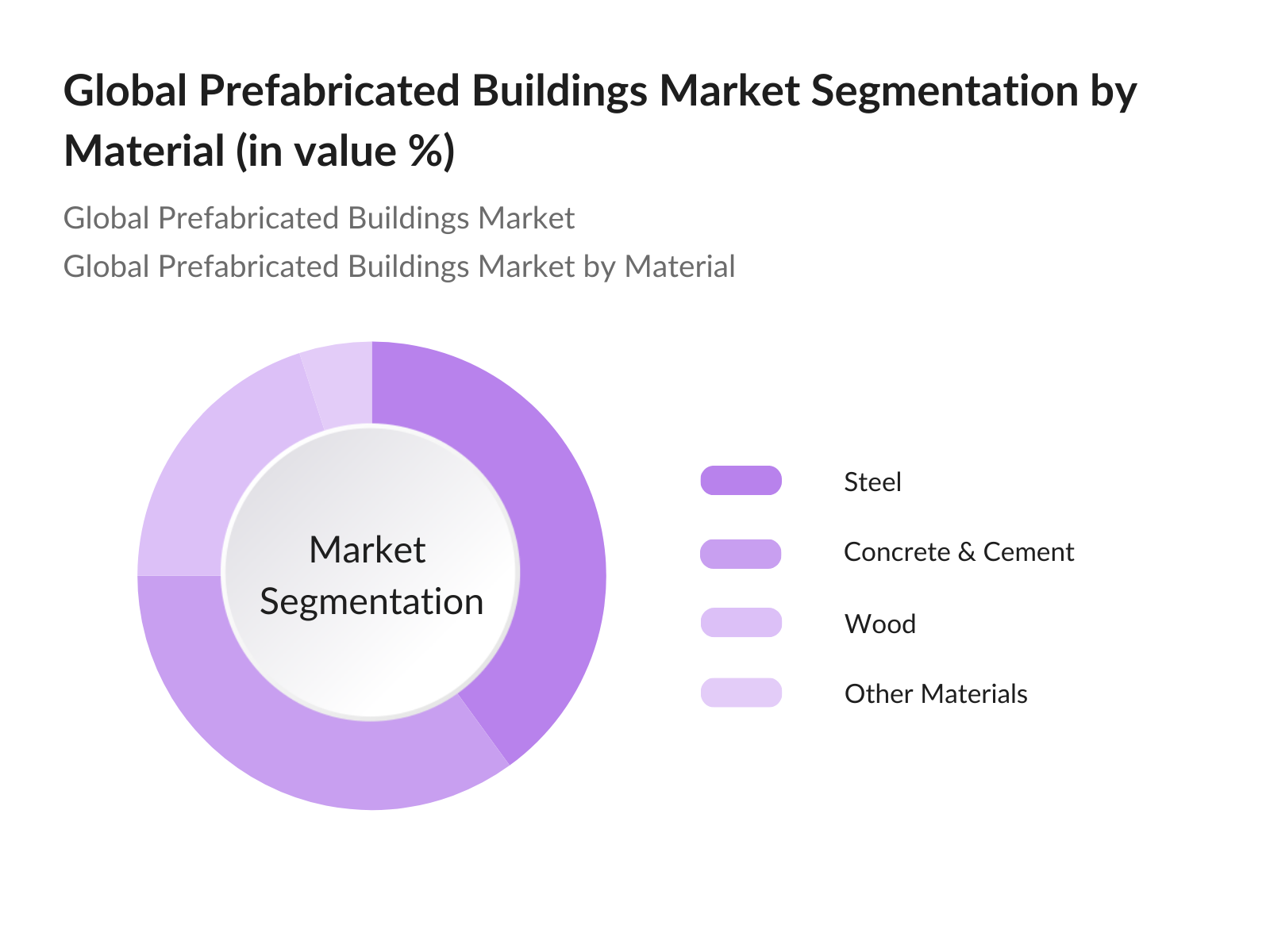
By Material: The prefabricated buildings market is segmented by material into steel, concrete & cement, wood, and other materials. Steel dominates the segment due to its durability and flexibility in construction, making it highly preferred for both commercial and industrial applications. Concrete & cement follows closely due to its widespread use in residential buildings, especially in regions where these materials are cost-effective and easily accessible. Wood holds a significant share, particularly in regions where environmental concerns prioritize sustainable building materials.
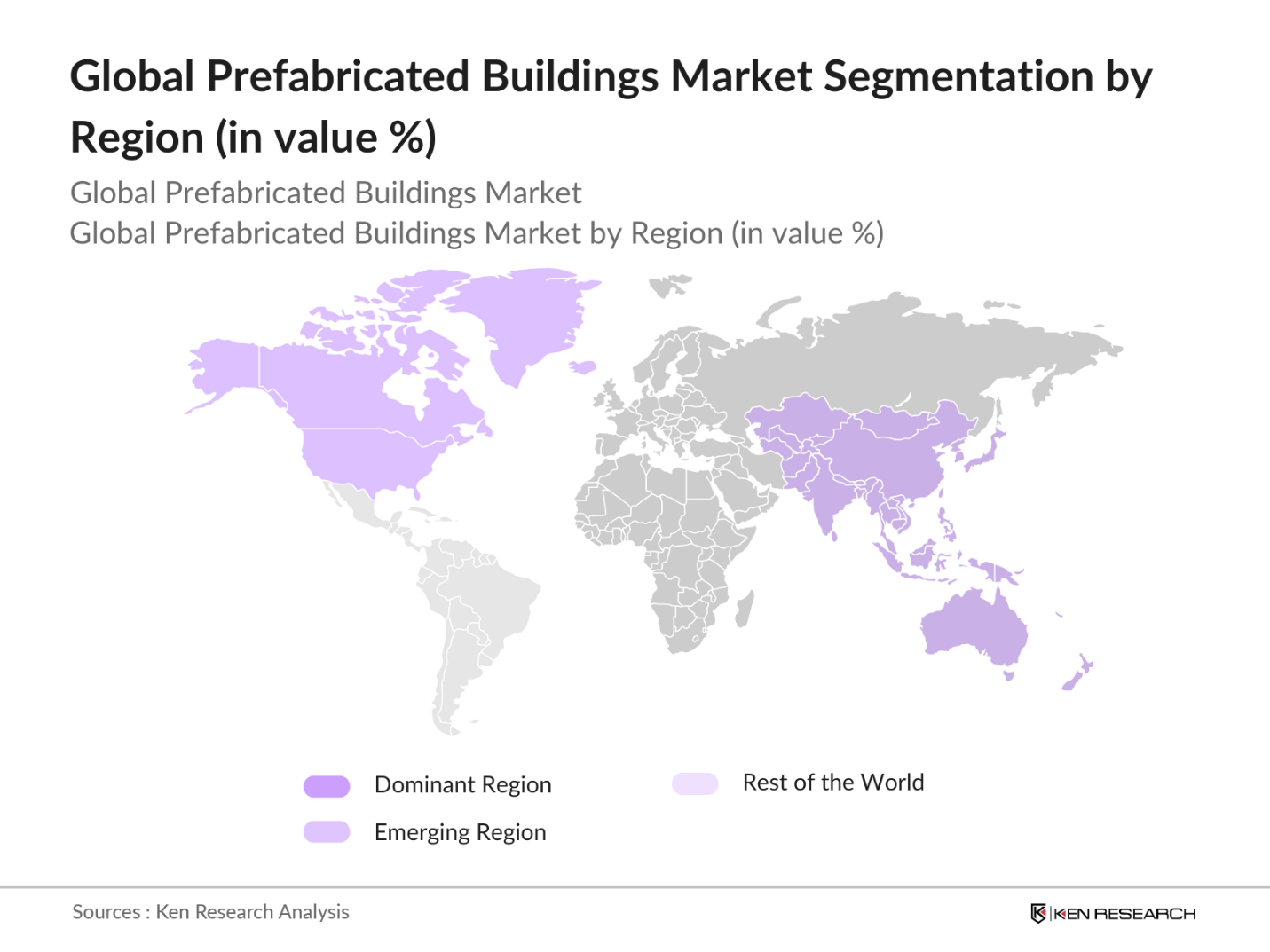
By Region: The APAC region dominates the global prefabricated buildings market, with key countries such as China and India leading due to massive government-backed infrastructure projects. North America and Europe follow due to the rising demand for commercial and residential turnkey solutions. The Middle East & Africa and Latin America are emerging markets where growing urbanization and the need for affordable housing are creating new opportunities.
Global Prefabricated Buildings Market Competitive Landscape
The global prefabricated buildings market is highly competitive, with several key players dominating the landscape. These companies leverage innovation in materials, construction methods, and turnkey solutions to maintain their market positions. Companies such as Alho Systembau and Bouygues Btiment International are known for their technological advancements, while firms like Red Sea Housing Services focus on rapid deployment in the Middle East. The consolidation of key players underscores the competitive dynamics of the market.
|
Company |
Establishment Year |
Headquarters |
Product Innovation |
Sustainability Initiatives |
Key Market |
Revenue |
No. of Employees |
|
Alho Systembau |
1967 |
Germany |
Modular Systems |
||||
|
Bouygues Btiment International |
1929 |
France |
Commercial Prefab |
||||
|
Red Sea Housing Services |
1976 |
Saudi Arabia |
Housing Solutions |
||||
|
Berkeley Group |
1976 |
UK |
Luxury Prefab Homes |
||||
|
Skanska Group |
1887 |
Sweden |
Green Prefab Buildings |
Global Prefabricated Buildings Market Analysis
Market Growth Drivers:
- Expansion of Mass Township Projects: The global demand for prefabricated buildings is significantly driven by the expansion of mass township projects in developing economies. According to the World Bank, urban populations in emerging markets like India and Brazil are growing by over 50 million annually, fueling the need for affordable housing. Prefabrication offers cost and time efficiency for large-scale projects. For example, India has announced over 200 smart city initiatives, where prefabricated technologies are employed to meet aggressive timelines. This aligns with government-backed housing schemes that require quick construction solutions.
- Surge in High-End & Customized Buildings Demand: The growing trend for high-end, customized prefabricated buildings is contributing to the market's expansion. Countries such as the UAE and China are witnessing a surge in luxury prefab home construction due to a preference for energy-efficient and aesthetic designs. In 2022, the UAE launched over 25 luxury residential prefab projects catering to expatriates and high-net-worth individuals (HNWIs). Prefabricated technologies also allow for customization, which has become a key differentiator in the housing market, offering both speed and bespoke designs.
- Increasing Construction Opportunities in Developing Countries: Developing nations are key growth markets for prefabricated buildings, driven by rapid urbanization and the increasing need for affordable housing. As of 2024, Nigerias housing deficit is estimated at over 22 million units, according to government reports, creating a major opportunity for prefabricated construction due to its cost efficiency and speed. Similarly, in Southeast Asia, Indonesias construction sector is set to reach $330 billion by 2025, with prefabricated technologies playing a critical role in addressing the growing demand for residential and commercial spaces.
Market Challenges:
- High Initial Costs Associated with Prefab Structures: Despite their long-term benefits, the high upfront capital required for prefabricated structures poses a significant barrier. The cost of prefab building materials and technologies can be higher than traditional construction in initial phases. This has deterred smaller developers and individual buyers from adopting prefab solutions, despite potential long-term savings in labor and operational costs.
- Supply Chain Management Complications: Supply chain disruptions, exacerbated by global political tensions, continue to challenge the prefabricated buildings market. A World Bank report highlighted that in 2023, global supply chain disruptions led to a 40% increase in lead times for key prefabrication materials like steel and concrete. With ongoing geopolitical tensions and natural disasters, manufacturers and developers face delays that hinder project timelines, particularly in regions with less-developed infrastructure.
Global Prefabricated Buildings Market Future Outlook
The prefabricated buildings market is expected to experience significant growth over the next five years, driven by advancements in modular construction technology and increased focus on sustainability. The rise of urban populations and government initiatives supporting affordable housing and green buildings will continue to propel market expansion. Additionally, the growing adoption of turnkey solutions for both residential and commercial sectors will fuel demand for prefabricated structures.
Market Opportunities:
- Modular Expansion in Urbanization Projects: As global urbanization accelerates, modular construction offers a viable solution to housing crises. Governments are increasingly investing in modular prefabricated units for residential development to address urban housing shortages. This focus on modular expansion is essential for meeting the growing demand for housing and infrastructure in rapidly urbanizing regions.
- Public Sector Infrastructure Investments: Increased investments in public infrastructure are creating significant growth avenues for prefabricated construction. Governments are focusing on public sector projects that emphasize the use of prefabricated modular structures to enhance efficiency and reduce construction timelines. This trend is driving the demand for prefabricated buildings in infrastructure development globally.
Scope of the Report
|
By Material |
Steel Concrete Wood, Others |
|
By System |
Cellular Panel Skeleton Combined Systems |
|
By Application |
Residential Commercial Hospitality Government Education |
|
By End-User |
Non-Residential (Commercial Hospitality Government, Education) Residential |
|
By Region |
APAC North America Europe Middle East & Africa Latin America |
Products
Key Target Audience
Prefabricated Building Manufacturers
Government Agencies (Housing and Urban Development Authorities)
Real Estate Developers
Construction and Infrastructure Companies
Investment and Venture Capitalist Firms
Urban Planning and Design Agencies
Green Building Certification Bodies
Government and Regulatory Bodies (Environmental Protection Agencies)
Companies
Players Mention in the Report
Alho Systembau
Bouygues Btiment International
Red Sea Housing Services
Berkeley Group
Skanska Group
Ilke Homes
Katerra
Modulaire Group
Astron Buildings
Fertighaus Weiss
Laing ORourke
HUF HAUS
Champion Home Builders
Lendlease Corporation
Segexha Group
Table of Contents
1. Global Prefabricated Buildings Market Overview
1.1 Definition and Scope
1.2 Market Taxonomy
1.3 Market Growth Rate
1.4 Market Segmentation Overview
2. Global Prefabricated Buildings Market Size (In USD Bn)
2.1 Historical Market Size
2.2 Year-On-Year Growth Analysis
2.3 Key Market Developments and Milestones
3. Global Prefabricated Buildings Market Analysis
3.1 Growth Drivers
- Expansion of Mass Township Projects
- Surge in High-End & Customized Buildings Demand
- Increasing Construction Opportunities in Developing Countries
3.2 Market Challenges - High Initial Costs Associated with Prefab Structures
- Supply Chain Management Complications
- Political and Economic Uncertainty
3.3 Opportunities - Turnkey Solutions
- Modular Expansion in Urbanization Projects
- Public Sector Infrastructure Investments
3.4 Trends - Rising Adoption of Sustainable Building Materials
- Technological Advancements in Automation
- Prefab in Disaster-Resilient Construction
3.5 Regulatory Environment - Government Standards for Disaster Preparedness
- Research and Development Incentives (For innovation in materials and techniques)
- Environmental Policies Encouraging Sustainable Construction
3.6 Competitive Landscape (SWOT, Porters Five Forces)
3.7 Value Chain Analysis - Raw Material Suppliers
- Manufacturers & Developers
- Distributors & End-Users
4. Global Prefabricated Buildings Market Segmentation
4.1 By Material (In Value %)
- Steel
- Concrete & Cement
- Wood
- Others
4.2 By System (In Value %) - Cellular Systems
- Panel Systems
- Skeleton Systems
- Combined Systems
4.3 By Application (In Value %) - Residential
- Non-Residential (Commercial, Government, Education, Hospitality)
4.4 By Region (In Value %) - APAC (China, India, Japan, Australia, South Korea)
- North America (U.S., Canada)
- Europe (Germany, U.K., France)
- Middle East & Africa (Saudi Arabia, UAE, South Africa)
- Latin America (Brazil, Mexico, Argentina)
5. Global Prefabricated Buildings Market Competitive Analysis
5.1 Profiles of Major Companies (In-depth)
- Alho Systembau
- Bouygues Btiment International
- Red Sea Housing Services
- Berkeley Group
- Astron Buildings
- DFH Group
- Skanska Group
- HUF HAUS
- Laing O'Rourke
- Modulaire Group
- Champion Home Builders
- Ilke Homes
- Katerra
- Lendlease Corporation
- Segexha Group
5.2 Cross Comparison Parameters (Revenue, Market Share, Manufacturing Capabilities, Global Presence)
5.3 Market Share Analysis
5.4 Strategic Initiatives (Partnerships, Mergers & Acquisitions)
5.5 Innovation & Investment Trends (R&D, Automation in Construction)
5.6 Investment Analysis (Government Grants, Private Equity Investments)
6. Global Prefabricated Buildings Market Regulatory Framework
6.1 Government Policies for Sustainable Construction
6.2 Disaster-Preparedness Standards
6.3 Building Code Certifications & Compliance Requirements
7. Global Prefabricated Buildings Future Market Size (In USD Bn)
7.1 Market Size Projections
7.2 Key Factors Driving Future Market Growth
8. Future Market Segmentation
8.1 By Material (Steel, Concrete, Wood, Others)
8.2 By System (Cellular, Panel, Skeleton, Combined Systems)
8.3 By Application (Residential, Non-Residential)
8.4 By Region (APAC, North America, Europe, Middle East & Africa, Latin America)
9. Market Analysts Recommendations
9.1 Total Addressable Market (TAM), Serviceable Addressable Market (SAM), and Serviceable Obtainable Market (SOM) Analysis
9.2 Market Entry Strategy
9.3 Innovation and White Space Opportunity
Research Methodology
Step 1: Identification of Key Variables
The initial stage of the research involved creating an ecosystem map that included major stakeholders in the global prefabricated buildings market. A combination of secondary and proprietary databases was utilized to identify key variables affecting market dynamics.
Step 2: Market Analysis and Construction
This phase involved gathering historical data on market penetration, the ratio of service providers, and revenue generation. Service quality metrics were analyzed to ensure reliability in the revenue projections.
Step 3: Hypothesis Validation and Expert Consultation
Hypotheses were formulated and validated through consultations with industry experts, using computer-assisted telephone interviews (CATIs). This provided insights into the operational landscape and helped refine the data.
Step 4: Research Synthesis and Final Output
Data collected from industry practitioners and key players were used to ensure the accuracy of the final output. Insights into consumer preferences, sales performance, and market challenges were synthesized for a comprehensive analysis
Frequently Asked Questions
01. How big is the Global Prefabricated Buildings Market?
The global prefabricated buildings market was valued at USD 234.17 billion, driven by increasing demand for modular construction solutions across residential and commercial sectors.
02. What are the challenges in the Global Prefabricated Buildings Market?
Challenges include high initial costs, supply chain disruptions, and political and economic uncertainties, particularly in emerging markets. Additionally, overcoming stigma around prefab quality remains a significant hurdle.
03. Who are the major players in the Global Prefabricated Buildings Market?
Key players include Alho Systembau, Bouygues Btiment International, Red Sea Housing Services, Skanska Group, and Berkeley Group, all leading in technological innovations and sustainable practices.
04. What are the growth drivers of the Global Prefabricated Buildings Market?
Growth is driven by the expansion of mass township projects, the increasing demand for high-end, customizable buildings, and rising construction opportunities in rapidly urbanizing countries.
Why Buy From Us?

What makes us stand out is that our consultants follows Robust, Refine and Result (RRR) methodology. i.e. Robust for clear definitions, approaches and sanity checking, Refine for differentiating respondents facts and opinions and Result for presenting data with story

We have set a benchmark in the industry by offering our clients with syndicated and customized market research reports featuring coverage of entire market as well as meticulous research and analyst insights.

While we don't replace traditional research, we flip the method upside down. Our dual approach of Top Bottom & Bottom Top ensures quality deliverable by not just verifying company fundamentals but also looking at the sector and macroeconomic factors.

With one step in the future, our research team constantly tries to show you the bigger picture. We help with some of the tough questions you may encounter along the way: How is the industry positioned? Best marketing channel? KPI's of competitors? By aligning every element, we help maximize success.

Our report gives you instant access to the answers and sources that other companies might choose to hide. We elaborate each steps of research methodology we have used and showcase you the sample size to earn your trust.

If you need any support, we are here! We pride ourselves on universe strength, data quality, and quick, friendly, and professional service.