
Global Smart Clothing Market Outlook to 2030
Region:Global
Author(s):Vijay Kumar
Product Code:KROD2157
December 2024
85
About the Report
Global Smart Clothing Market Overview
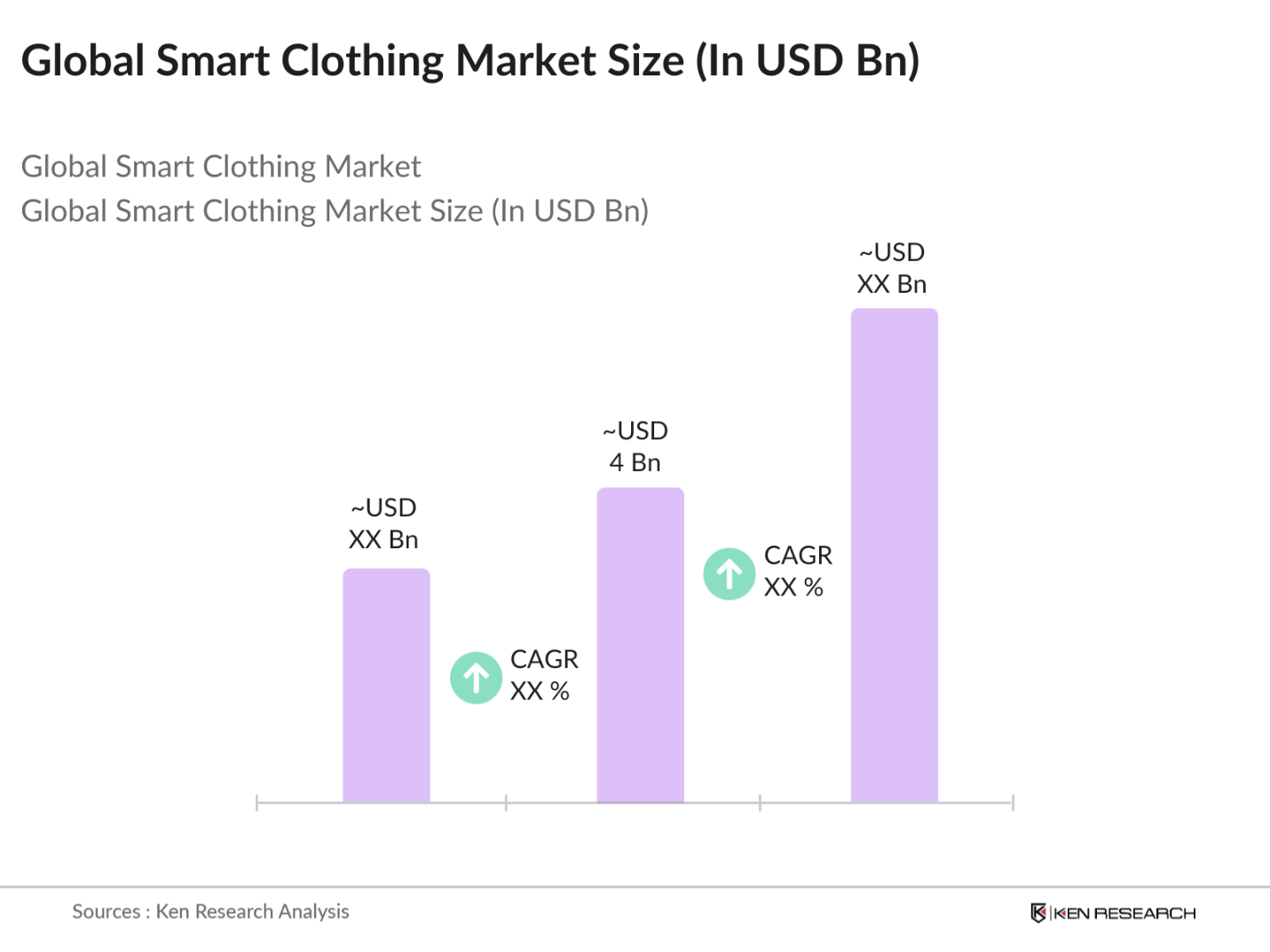
- The global smart clothing market reached a valuation of USD 4 billion, driven by the increasing integration of sensor-based technologies for health monitoring, sports performance enhancement, and military applications. The market's growth is supported by the rise in demand for wearables in healthcare and fitness sectors, along with advancements in textile technologies that enable smart functionalities. The growing focus on real-time health data monitoring and IoT-enabled garments has accelerated market expansion across various regions.
- Major players in the global smart clothing market include Google, Adidas, Samsung, Levis, and Under Armour. These companies dominate the market by investing heavily in research and development, fostering strategic partnerships, and expanding their product portfolios to cater to the evolving demands of health-conscious consumers and athletes. Their ability to innovate and integrate advanced technologies into smart fabrics has kept them at the forefront of the competitive landscape.
- In 2023, Samsung launched its Body Compass 2.0 smart shirt, which focuses on healthcare applications by monitoring vital signs such as heart rate and respiration. This product has gained traction in the healthcare sector, particularly in the U.S. and South Korea. Additionally, Adidas expanded its line of smart sportswear, introducing gear equipped with biometric sensors to improve athletic performance, further solidifying its position in the sportswear market.
- North America leads the global smart clothing market, primarily due to the strong presence of key players, high levels of technological adoption, and the growing demand for wearable health devices. The region's focus on health and fitness, combined with a tech-savvy consumer base, has contributed to its leadership position. Government initiatives such as the U.S. Department of Healths funding for wearable health technologies are also driving the adoption of smart clothing in the region.
Global Smart Clothing Market Segmentation
The Global Smart Clothing Market can be segmented based on Product Type, Application, and Region.
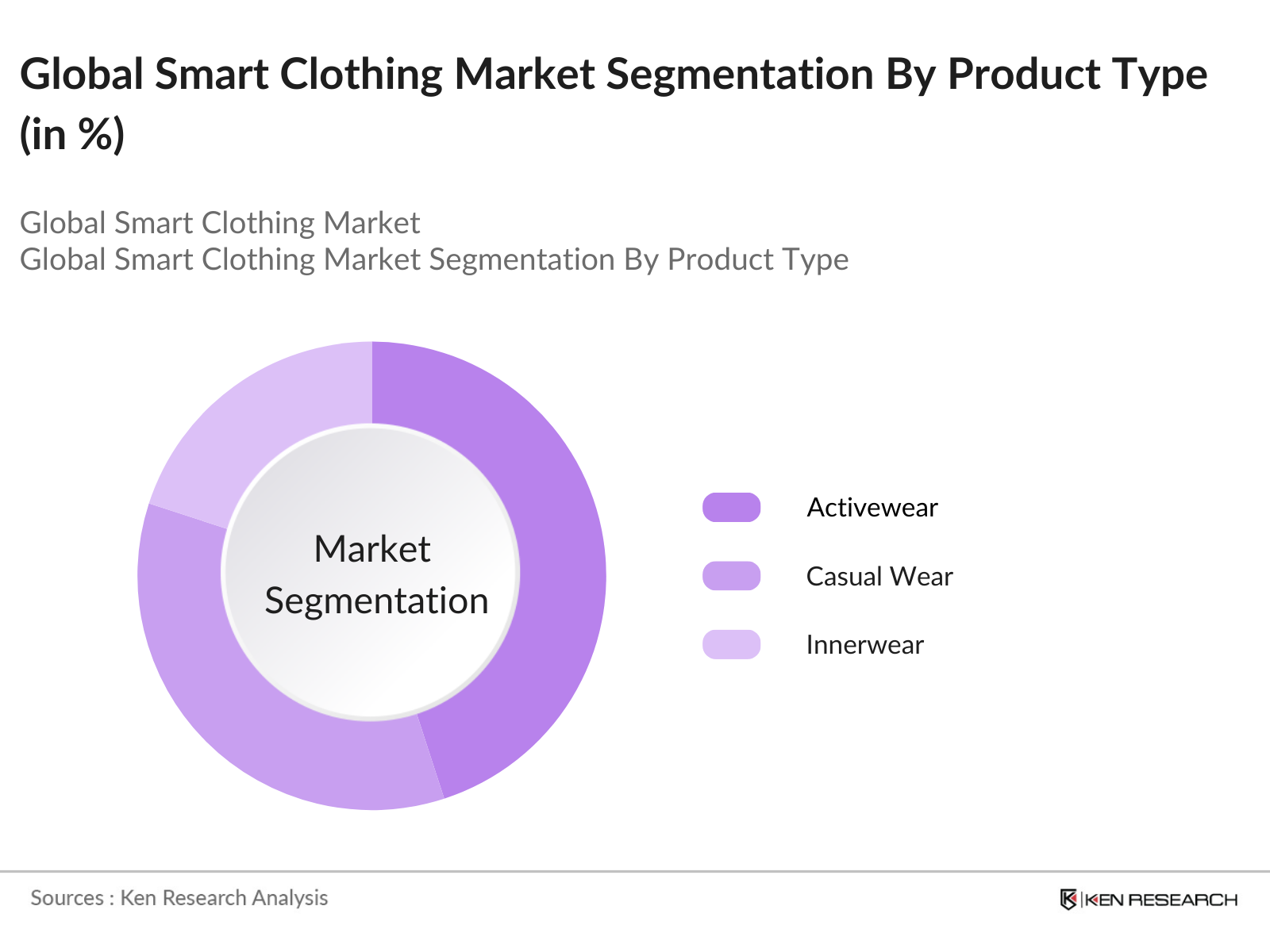
By Product Type: The market is segmented by product type into activewear, casual wear, and innerwear. In 2023, activewear dominated the market share due to its widespread use in fitness and sports. The increasing demand for fitness tracking devices and performance-enhancing wearables among athletes has propelled the growth of this segment.
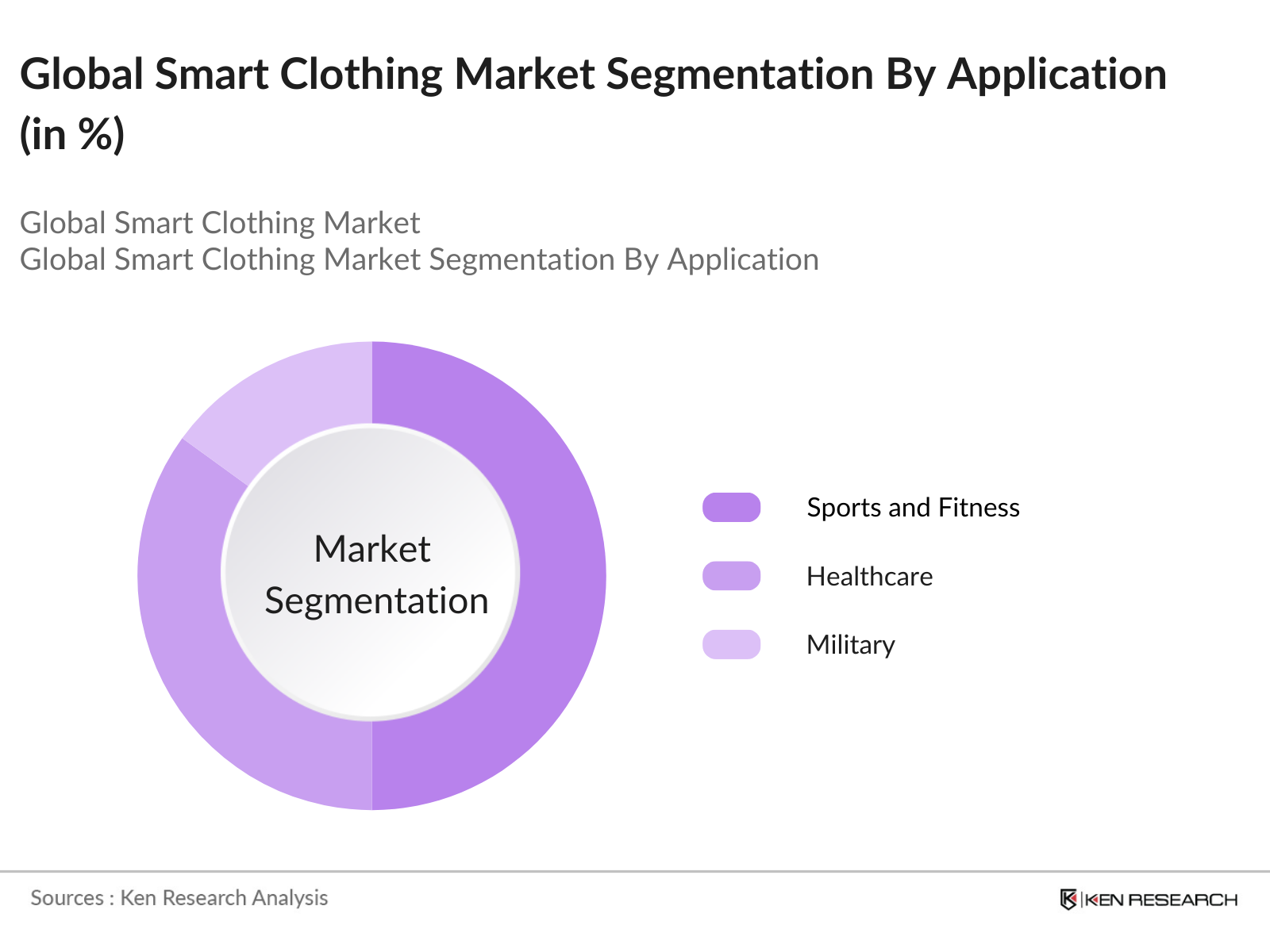
By Application: The market is further segmented by application into sports and fitness, healthcare, and military. In 2023, the sports and fitness segment held the largest market share, driven by the high demand for performance-monitoring smart clothing. Athletes and fitness enthusiasts are increasingly adopting smart clothing products that track vital signs and provide real-time feedback.
By Region: Geographically, the smart clothing market is segmented into North America, Europe, Asia-Pacific, Latin America, and MEA. In 2023, North America dominated the market, driven by the regions high consumer demand for wearable technology and the presence of leading companies such as Google and Levis.
Global Smart Clothing Market Competitive Landscape
|
Company Name |
Headquarters |
Establishment Year |
|
|
Mountain View, USA |
1998 |
|
Adidas |
Herzogenaurach, Germany |
1949 |
|
Samsung |
Seoul, South Korea |
1938 |
|
Levis |
San Francisco, USA |
1853 |
|
Under Armour |
Baltimore, USA |
1996 |
- Samsung (2023): Samsung's latest wearable tech innovation, Body Compass 2.0, released in 2023, focuses on healthcare applications, providing real-time monitoring of heart rates, breathing, and posture. Samsung also expanded its R&D investments in smart fabrics to include projects in military and healthcare sectors, enabling smart textiles to be used in remote health diagnostics and physical rehabilitation.
- Levis: Levis continued its partnership with Google in 2023, introducing the latest version of its Jacquard-powered smart jacket, which allows users to control their smartphones through gesture-based interactions. The jacket is gaining popularity in Europe and North America, appealing to consumers seeking fashion-forward wearable tech solutions.
Global Smart Clothing Market Analysis
Market Growth Drivers
- Rising Demand for Wearable Health Technologies: With the increasing prevalence of chronic diseases and the growing elderly population, wearable health monitoring devices are seeing increased adoption. The healthcare sector is investing heavily in smart clothing solutions that provide real-time monitoring of vital signs, enabling early detection and intervention in medical conditions. Hospitals in North America and Europe are incorporating smart garments for patient monitoring, particularly for those with cardiovascular diseases.
- Technological Advancements in Smart Fabrics: Technological advancements in smart textiles, such as the integration of flexible sensors and conductive materials, are driving the growth of the smart clothing market. These innovations are enabling the development of garments that are not only functional but also comfortable and aesthetically appealing. In 2024, companies are focusing on developing lightweight and breathable fabrics that enhance user comfort while offering advanced features like biometric tracking.
- Increasing Military Adoption of Smart Wearables: Militaries around the world are increasingly adopting smart wearables to enhance soldier performance and safety. Smart clothing equipped with sensors that monitor health parameters, track location, and provide environmental feedback are being integrated into military uniforms. In 2024, the U.S. Department of Defense announced a $200 million investment in smart wearables for soldiers, driving the adoption of smart clothing in the defense sector.
Global Smart Clothing Market Challenges
- High Cost of Smart Clothing Products: The high cost of integrating advanced technologies into fabrics makes smart clothing products expensive, limiting their adoption among price-sensitive consumers. The average cost of a smart garment with integrated sensors can exceed $150, which makes it unaffordable for many consumers, especially in emerging markets. This price barrier is expected to remain a challenge in the near future.
- Limited Consumer Awareness in Emerging Markets: Despite growing interest in wearable technology, many consumers in emerging markets are unaware of the benefits and functionalities of smart clothing. In regions like Latin America and Africa, traditional apparel dominates the market, and there is limited access to smart clothing products. This lack of awareness and access hampers the growth of the market in these regions.
Global Smart Clothing Market Government Initiatives
- U.S. National Institutes of Health (NIH) Wearable Health Program (2024): The NIH is funding research and development of wearable health technologies, including smart clothing, aimed at improving patient care and chronic disease management. This initiative is driving innovation in the healthcare sector and boosting the adoption of smart clothing in medical applications across the United States.
- European Commission's Financial Support for Smart Textiles: The European Commission, through initiatives like Horizon 2020, has provided financial backing to SMEs and startups for innovative smart textile solutions. For instance, the SmartX Europe project was awarded USD 2.4 million in funding to boost the development of advanced smart textile prototypes, fostering collaboration and accelerating innovation in the sector.
Global Smart Clothing Market Future Outlook
The global smart clothing market is poised for significant growth, driven by advancements in technology, increased consumer demand for health-monitoring devices, and a focus on sustainability and energy-efficient solutions.
Future Market Trends
- Increased Focus on Sustainable Smart Fabrics: By 2028, sustainability will be a key focus in the smart clothing market. Leading companies are expected to introduce eco-friendly smart fabrics made from recycled materials, appealing to environmentally conscious consumers. These sustainable products will not only help reduce waste but also cater to the growing demand for eco-friendly solutions in the fashion and technology industries.
- Advancements in Biometric Sensor Technology: The development of next-generation biometric sensors that provide more accurate and comprehensive health data will drive the growth of smart clothing in the healthcare and fitness sectors. By 2028, smart clothing is expected to offer features such as continuous glucose monitoring and advanced cardiovascular tracking, making it a vital tool in managing chronic diseases and improving overall health.
Scope of the Report
Products
Key Target Audience Organizations and Entities Who Can Benefit by Subscribing This Report:
Investment and venture capitalist firms
Government and regulatory bodies
Sportswear manufacturers
Healthcare technology providers
Military and defense agencies
Fashion and textile manufacturers
IoT and wearable technology developers
Retail chains and e-commerce platforms
Hospitals and healthcare providers
Athletic training institutions
Biometric sensor manufacturers
Time Period Captured in the Report:
Historical Period: 2018-2023
Base Year: 2023
Forecast Period: 2023-2028
Companies
Players Mentioned in the Report
Google
Adidas
Samsung
Levis
Under Armour
Ralph Lauren
Hexoskin
Sensoria
Table of Contents
1. Global Smart Clothing Market Overview
1.1. Definition and Scope
1.2. Market Taxonomy
1.3. Market Growth Rate
1.4. Market Segmentation Overview
2. Global Smart Clothing Market Size (in USD Billion), 2018-2023
2.1. Historical Market Size
2.2. Year-on-Year Growth Analysis
2.3. Key Market Developments and Milestones
3. Global Smart Clothing Market Analysis
3.1. Growth Drivers
3.1.1. Rising Demand for Health Monitoring Wearables
3.1.2. Technological Advancements in Smart Fabrics
3.1.3. Expansion in Military and Defense Applications
3.2. Restraints
3.2.1. High Production Costs
3.2.2. Data Privacy and Security Concerns
3.2.3. Limited Consumer Awareness in Emerging Markets
3.3. Opportunities
3.3.1. Expansion of Smart Clothing in Healthcare
3.3.2. Emerging Markets in Asia-Pacific and Latin America
3.3.3. Integration with IoT and 5G
3.4. Trends
3.4.1. Sustainable Smart Fabrics
3.4.2. AI and Machine Learning Integration
3.4.3. Growing Use in Industrial Safety Applications
3.5. Government Initiatives
3.5.1. U.S. NIH Wearable Health Program
3.5.2. EU Horizon 2024 Smart Textiles Initiative
3.5.3. Japans Smart Healthcare Innovation Program
3.6. SWOT Analysis
3.7. Stakeholder Ecosystem
3.8. Competition Ecosystem
4. Global Smart Clothing Market Segmentation, 2023
4.1. By Product Type (in Value %)
4.1.1. Activewear
4.1.2. Casual Wear
4.1.3. Innerwear
o 4.2. By Application (in Value %)
4.2.1. Sports and Fitness
4.2.2. Healthcare
4.2.3. Military
4.3. By End-User Industry (in Value %)
4.3.1. Athletes and Sports Professionals
4.3.2. Healthcare Providers
4.3.3. Military Personnel
4.3.4. Consumers
4.4. By Region (in Value %)
4.4.1. North America
4.4.2. Europe
4.4.3. Asia-Pacific
4.4.4. Latin America
4.4.5. MEA
5. Global Smart Clothing Market Cross Comparison
5.1. Detailed Profiles of Major Companies
5.1.1. Google
5.1.2. Adidas
5.1.3. Samsung
5.1.4. Levis
5.1.5. Under Armour
5.2. Cross Comparison Parameters (No. of Employees, Headquarters, Inception Year, Revenue)
6. Global Smart Clothing Market Competitive Landscape
6.1. Market Share Analysis
6.2. Strategic Initiatives
6.3. Mergers and Acquisitions
6.4. Investment Analysis
6.4.1. Venture Capital Funding
6.4.2. Government Grants
6.4.3. Private Equity Investments
7. Global Smart Clothing Market Regulatory Framework
7.1. Health Data Privacy and Security Regulations
7.2. Compliance Requirements for Wearable Technology
7.3. Certification Processes for Smart Textiles
8. Global Smart Clothing Future Market Size (in USD Billion), 2023-2028
8.1. Future Market Size Projections
8.2. Key Factors Driving Future Market Growth
9. Global Smart Clothing Market Future Segmentation, 2028
9.1. By Product Type (in Value %)
9.2. By Application (in Value %)
9.3. By End-User Industry (in Value %)
9.4. By Region (in Value %)
10. Global Smart Clothing Market Analysts Recommendations
10.1. TAM/SAM/SOM Analysis
10.2. Customer Cohort Analysis
10.3. Marketing Initiatives
10.4. White Space Opportunity Analysis
Disclaimer
Contact Us
Research Methodology
Step 1: Identifying Key Variables
Creating an ecosystem for all major entities within the Global Smart Clothing Market and referencing a combination of secondary and proprietary databases to conduct desk research. This process includes gathering industry-level information, market trends, technological developments, and assessing the competitive landscape to ensure a comprehensive analysis of the market.
Step 2: Market Building
Collating statistics on the Global Smart Clothing Market over the years, analyzing market penetration across various segments such as product type, application, and region. This step also evaluates the performance of key market players in terms of innovation, partnerships, and revenue generation. The analysis includes reviewing production capacities, technological innovations, and consumer demand to accurately compute market size. Quality checks are conducted at each stage to ensure the reliability and accuracy of the data.
Step 3: Validating and Finalizing
Developing market hypotheses and conducting Computer Assisted Telephone Interviews (CATIs) with industry experts and stakeholders from leading companies in the smart clothing market. These interviews help validate collected data, refine market forecasts, and obtain direct operational and financial insights. The information gathered is cross-checked with secondary sources to ensure consistency.
Step 4: Research Output
Engaging with multiple key players and stakeholders in the smart clothing industry to understand product dynamics, customer needs, and market challenges. This involves using a bottom-up approach to validate data and forecast market growth. The final research output ensures that all data points and insights accurately reflect current market conditions and provide actionable intelligence for strategic decision-making by key stakeholders.
Frequently Asked Questions
1. How big is the Global Smart Clothing Market?
The global smart clothing market reached a valuation of USD 4 billion in 2023, driven by the increasing integration of sensor-based technologies for health monitoring, sports performance enhancement, and military applications.
2. What are the challenges in the Global Smart Clothing Market?
Challenges in the global smart clothing market include high production costs, lack of standardization across devices, and concerns regarding data privacy and cybersecurity. These factors hinder widespread adoption and create barriers for new market entrants.
3. Who are the major players in the Global Smart Clothing Market?
Key players in the global smart clothing market include Google, Adidas, Samsung, Levis, and Under Armour. These companies lead the market due to their innovative product offerings and strong foothold in the wearable technology and fashion sectors.
4. What are the growth drivers of the Global Smart Clothing Market?
The market is driven by the increasing integration of health monitoring technologies, expanding applications in the military for soldier safety and performance, and the growing consumer demand for performance-enhancing fitness wearables. These drivers are fueling market expansion across different sectors.
Why Buy From Us?

What makes us stand out is that our consultants follows Robust, Refine and Result (RRR) methodology. i.e. Robust for clear definitions, approaches and sanity checking, Refine for differentiating respondents facts and opinions and Result for presenting data with story

We have set a benchmark in the industry by offering our clients with syndicated and customized market research reports featuring coverage of entire market as well as meticulous research and analyst insights.

While we don't replace traditional research, we flip the method upside down. Our dual approach of Top Bottom & Bottom Top ensures quality deliverable by not just verifying company fundamentals but also looking at the sector and macroeconomic factors.

With one step in the future, our research team constantly tries to show you the bigger picture. We help with some of the tough questions you may encounter along the way: How is the industry positioned? Best marketing channel? KPI's of competitors? By aligning every element, we help maximize success.

Our report gives you instant access to the answers and sources that other companies might choose to hide. We elaborate each steps of research methodology we have used and showcase you the sample size to earn your trust.

If you need any support, we are here! We pride ourselves on universe strength, data quality, and quick, friendly, and professional service.