
India Flow Cytometry Market Outlook to 2030
Region:India
Author(s):Shreya Garg
Product Code:KROD11323
Region:India
Author(s):Shreya Garg
Product Code:KROD11323
December 2024
99
By Technology: The market is segmented by technology into fluorescence-based flow cytometry, image-based flow cytometry, and bead-based flow cytometry. Fluorescence-based flow cytometry holds a dominant share in the market, primarily due to its widespread application in diagnosing infectious diseases, immunophenotyping, and cell sorting. This technology offers high sensitivity and specificity, making it a preferred choice in clinical diagnostics and research laboratories. The ability to analyze multiple parameters simultaneously also boosts its adoption in academic and research institutions.

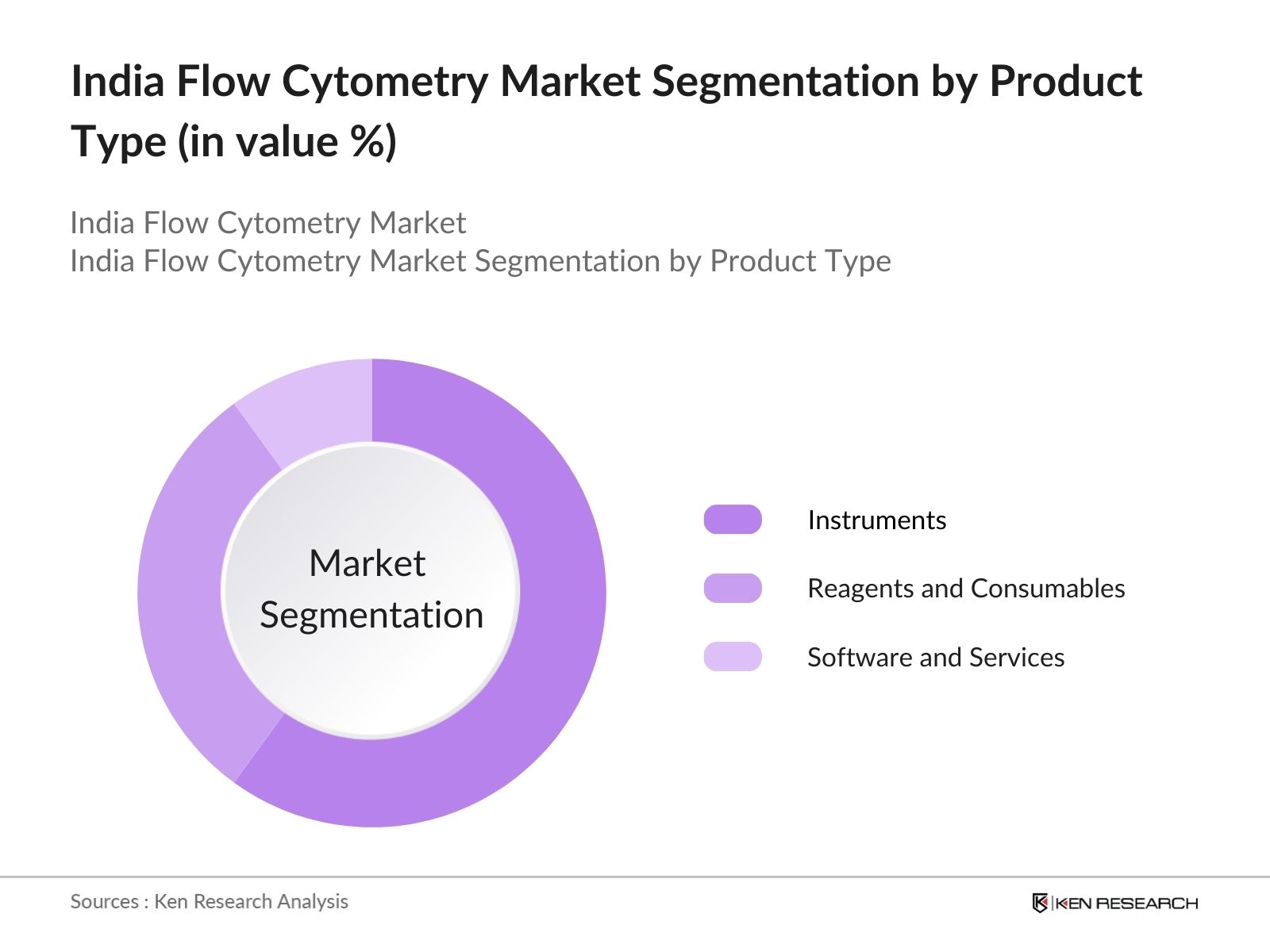
By Product Type: The market is segmented by product type into instruments, reagents and consumables, and software and services. Instruments dominate this segment with the largest market share, attributed to the growing installation of high-throughput flow cytometry systems in both hospitals and research laboratories. These instruments are vital for conducting complex assays in immunology and oncology. Major investments in upgrading diagnostic facilities have also driven the demand for advanced flow cytometry instruments.
The India Flow Cytometry market is characterized by a strong presence of both global and regional players. Companies with robust R&D investments, product innovation, and strategic partnerships dominate the competitive landscape. The competitive landscape in the India Flow Cytometry market is dominated by a few key players with a significant focus on R&D, strategic partnerships, and product innovation. Global leaders such as Becton, Dickinson and Co. and Thermo Fisher Scientific have consolidated their position through continuous product development and collaborations with healthcare institutions.
|
Company Name |
Establishment Year |
Headquarters |
Revenue |
R&D Investment |
Global Presence |
Product Portfolio |
Strategic Initiatives |
Market Penetration |
Certifications |
|
Becton, Dickinson and Co. |
1897 |
Franklin Lakes, USA |
|||||||
|
Beckman Coulter (Danaher) |
1935 |
Brea, USA |
|||||||
|
Thermo Fisher Scientific |
1956 |
Waltham, USA |
|||||||
|
Luminex Corporation |
1995 |
Austin, USA |
|||||||
|
Sysmex Corporation |
1968 |
Kobe, Japan |
Over the next five years, the India Flow Cytometry market is expected to show significant growth, driven by the expanding demand for personalized medicine, increasing prevalence of chronic diseases, and advancements in biotechnology. Government support for healthcare infrastructure development and the growing importance of precision diagnostics will further fuel market expansion. With the integration of artificial intelligence and machine learning into flow cytometry data analysis, the market is poised for substantial technological innovation.
|
By Technology |
Fluorescence-Based Image-Based Bead-Based |
|
By Product Type |
Instruments Reagents Software & Services |
|
By Application |
Clinical Diagnostics Research Drug Discovery Immunology |
|
By End-User |
Hospitals Pharmaceuticals Research Institutes |
|
By Region |
North India South India East India West India |
1.1. Definition and Scope
1.2. Market Taxonomy
1.3. Market Growth Rate
1.4. Market Segmentation Overview
2.1. Historical Market Size
2.2. Year-On-Year Growth Analysis
2.3. Key Market Developments and Milestones
3.1. Growth Drivers
3.1.1. Rising Prevalence of Chronic Diseases
3.1.2. Increased Research and Development in Life Sciences
3.1.3. Expansion of Biotechnology and Pharmaceuticals Industries
3.1.4. Government Initiatives to Promote Advanced Diagnostics
3.2. Market Challenges
3.2.1. High Cost of Flow Cytometry Instruments
3.2.2. Lack of Skilled Professionals for Flow Cytometry Operation
3.2.3. Complexity of Flow Cytometry Data Analysis
3.3. Opportunities
3.3.1. Emerging Applications in Immunology and Cancer Diagnostics
3.3.2. Technological Advancements in Flow Cytometry Instrumentation
3.3.3. Increasing Adoption in Academic Research Institutions
3.4. Trends
3.4.1. Adoption of Microfluidic Flow Cytometry
3.4.2. Integration of AI and Machine Learning in Flow Cytometry Data Analysis
3.4.3. Shift Toward Single-Cell Analysis Technologies
3.5. Government Regulation
3.5.1. Clinical Trials and Research Approval Processes
3.5.2. Import and Export Regulations for Flow Cytometry Instruments
3.5.3. Healthcare and Diagnostic Standards
3.6. SWOT Analysis
3.7. Stakeholder Ecosystem
3.8. Porters Five Forces Analysis
3.9. Competition Ecosystem
4.1. By Technology (In Value %)
4.1.1. Fluorescence-Based Flow Cytometry
4.1.2. Image-Based Flow Cytometry
4.1.3. Bead-Based Flow Cytometry
4.2. By Product Type (In Value %)
4.2.1. Instruments
4.2.2. Reagents and Consumables
4.2.3. Software and Services
4.3. By Application (In Value %)
4.3.1. Clinical Diagnostics
4.3.2. Research and Development
4.3.3. Drug Discovery
4.3.4. Immunology and Vaccine Development
4.4. By End-User (In Value %)
4.4.1. Hospitals and Clinics
4.4.2. Pharmaceutical and Biotechnology Companies
4.4.3. Academic and Research Institutes
4.5. By Region (In Value %)
4.5.1. North India
4.5.2. South India
4.5.3. East India
4.5.4. West India
5.1. Detailed Profiles of Major Companies
5.1.1. Becton, Dickinson and Company
5.1.2. Beckman Coulter (Danaher Corporation)
5.1.3. Thermo Fisher Scientific
5.1.4. Merck KGaA
5.1.5. Agilent Technologies Inc.
5.1.6. Luminex Corporation
5.1.7. Bio-Rad Laboratories, Inc.
5.1.8. Miltenyi Biotec
5.1.9. Sysmex Corporation
5.1.10. Stratedigm
5.1.11. Cytek Biosciences
5.1.12. Sony Biotechnology
5.1.13. Apogee Flow Systems
5.1.14. Nexcelom Bioscience LLC
5.1.15. ACEA Biosciences (Agilent Technologies)
5.2. Cross Comparison Parameters
(Revenue, Number of Patents, Global Presence, Market Share, R&D Investments, Strategic Collaborations, Product Launches, Licensing Agreements)
5.3. Market Share Analysis
5.4. Strategic Initiatives
5.5. Mergers and Acquisitions
5.6. Investment Analysis
5.7. Government Grants and Support
6.1. Healthcare Accreditation and Compliance
6.2. Regulatory Approvals for Flow Cytometry in Clinical Use
6.3. Laboratory Certification and Quality Standards
7.1. Future Market Size Projections
7.2. Key Factors Driving Future Market Growth
8.1. By Technology
8.2. By Product Type
8.3. By Application
8.4. By End-User
8.5. By Region
9.1. Total Addressable Market (TAM), Serviceable Available Market (SAM), Serviceable Obtainable Market (SOM) Analysis
9.2. White Space Opportunity Analysis
9.3. Customer Segment Identification
9.4. Sales and Marketing Initiatives
Disclaimer Contact UsThe initial phase involves identifying the main drivers, challenges, and opportunities influencing the India Flow Cytometry market. Desk research, secondary sources, and proprietary databases were utilized to gather industry-level information, which is further validated through primary research. This step aims to define key variables, including market drivers, growth potential, and market penetration rates.
This phase focuses on analyzing historical data and evaluating the market dynamics of flow cytometry, such as the demand for instruments and reagents, as well as the penetration of various end-users in the Indian market. The data was derived from credible sources, and the market share of key players was thoroughly assessed to estimate revenue generation trends.
Our market hypotheses were validated through expert interviews with leading professionals in the flow cytometry field, including researchers, manufacturers, and healthcare providers. These consultations provided valuable insights that helped refine market estimates and projections for future growth.
The final phase involved synthesizing all research data, consolidating insights from primary and secondary research, and producing a comprehensive report that provides an accurate, well-rounded view of the India Flow Cytometry market. All findings were cross-validated with industry experts to ensure reliability and accuracy.
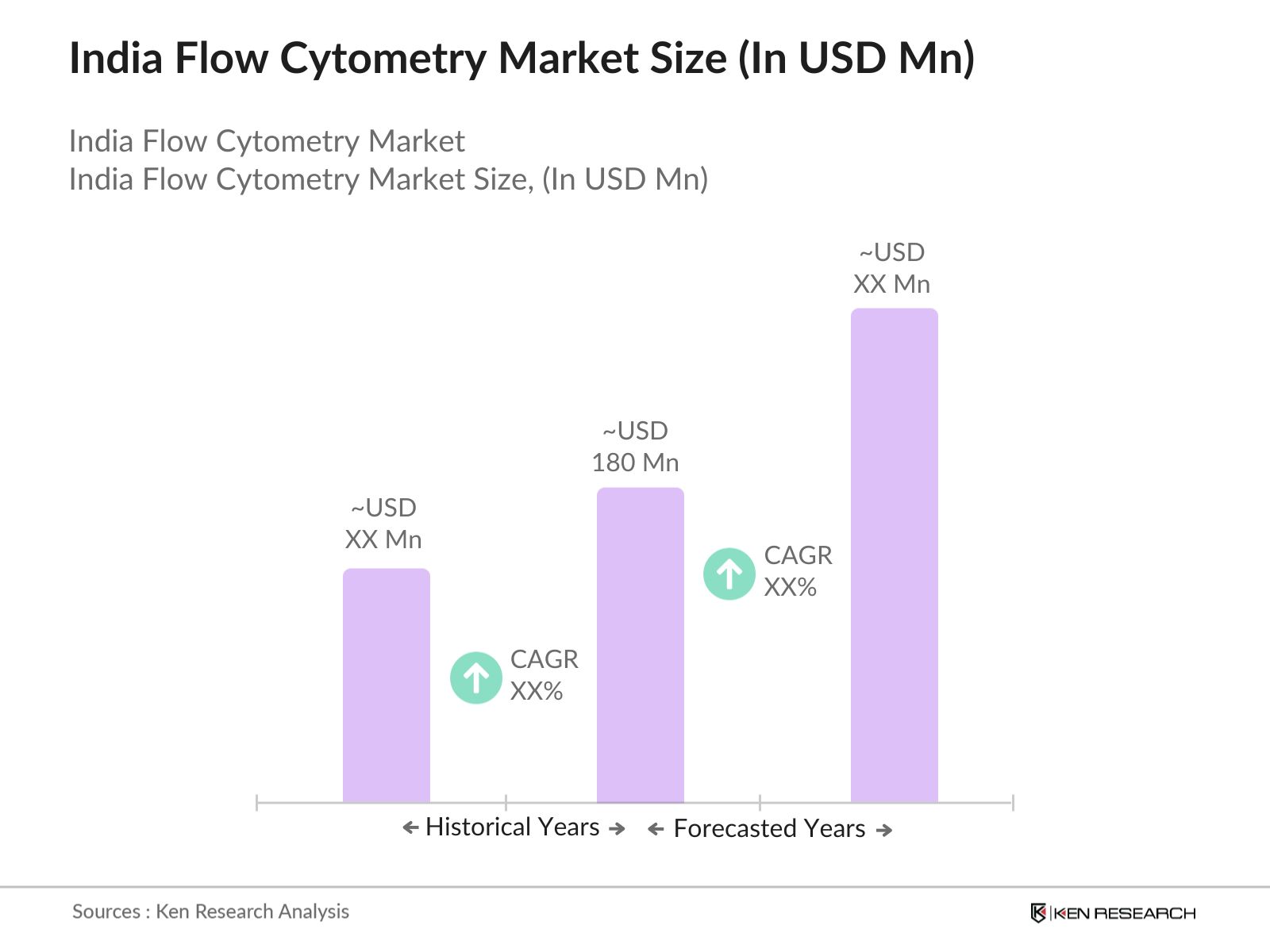
The India Flow Cytometry market was valued at USD 180 million, driven by advancements in personalized medicine and increasing demand for advanced diagnostic tools in healthcare.
Key challenges in the India Flow Cytometry market include the high cost of instruments, lack of skilled professionals, and the complexity involved in analyzing flow cytometry data, which limits its adoption in smaller healthcare facilities.
The major players in the India Flow Cytometry market include Becton, Dickinson and Co., Beckman Coulter, Thermo Fisher Scientific, Luminex Corporation, and Sysmex Corporation, who dominate due to their extensive product portfolios and R&D investments.
The India Flow Cytometry market is propelled by the rising prevalence of chronic diseases, increasing adoption of personalized medicine, and continuous advancements in biotechnology and flow cytometry instrumentation.
Flow cytometry is widely used in immunophenotyping, cancer diagnostics, and infectious disease detection. It plays a critical role in both clinical diagnostics and research applications, particularly in immunology and oncology in the India Flow Cytometry market.

What makes us stand out is that our consultants follows Robust, Refine and Result (RRR) methodology. i.e. Robust for clear definitions, approaches and sanity checking, Refine for differentiating respondents facts and opinions and Result for presenting data with story

We have set a benchmark in the industry by offering our clients with syndicated and customized market research reports featuring coverage of entire market as well as meticulous research and analyst insights.

While we don't replace traditional research, we flip the method upside down. Our dual approach of Top Bottom & Bottom Top ensures quality deliverable by not just verifying company fundamentals but also looking at the sector and macroeconomic factors.

With one step in the future, our research team constantly tries to show you the bigger picture. We help with some of the tough questions you may encounter along the way: How is the industry positioned? Best marketing channel? KPI's of competitors? By aligning every element, we help maximize success.

Our report gives you instant access to the answers and sources that other companies might choose to hide. We elaborate each steps of research methodology we have used and showcase you the sample size to earn your trust.

If you need any support, we are here! We pride ourselves on universe strength, data quality, and quick, friendly, and professional service.