
India Recreational Vehicle Market Outlook to 2030
Region:India
Author(s):Sanjeev
Product Code:KROD10588
Region:India
Author(s):Sanjeev
Product Code:KROD10588
November 2024
100
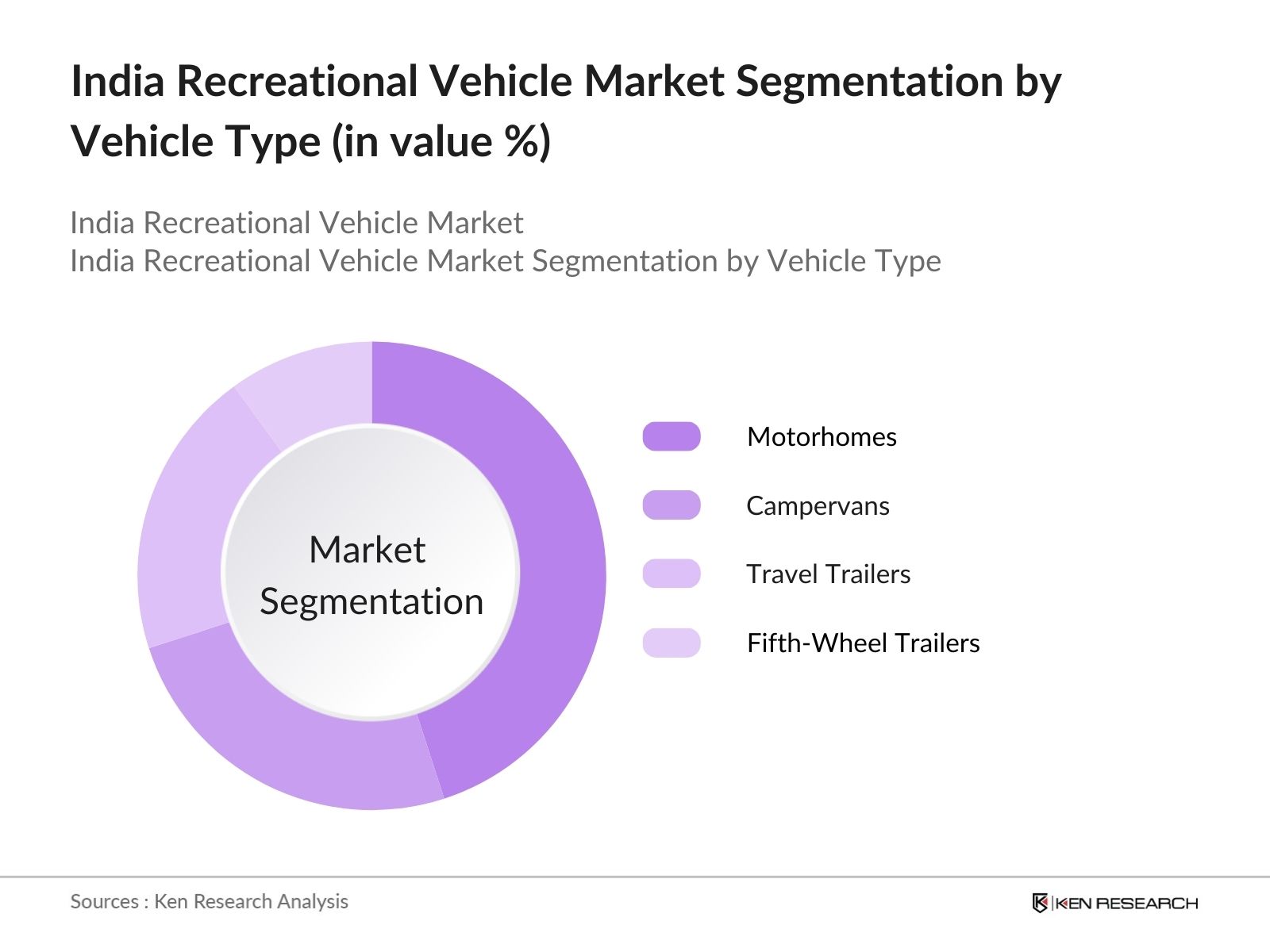
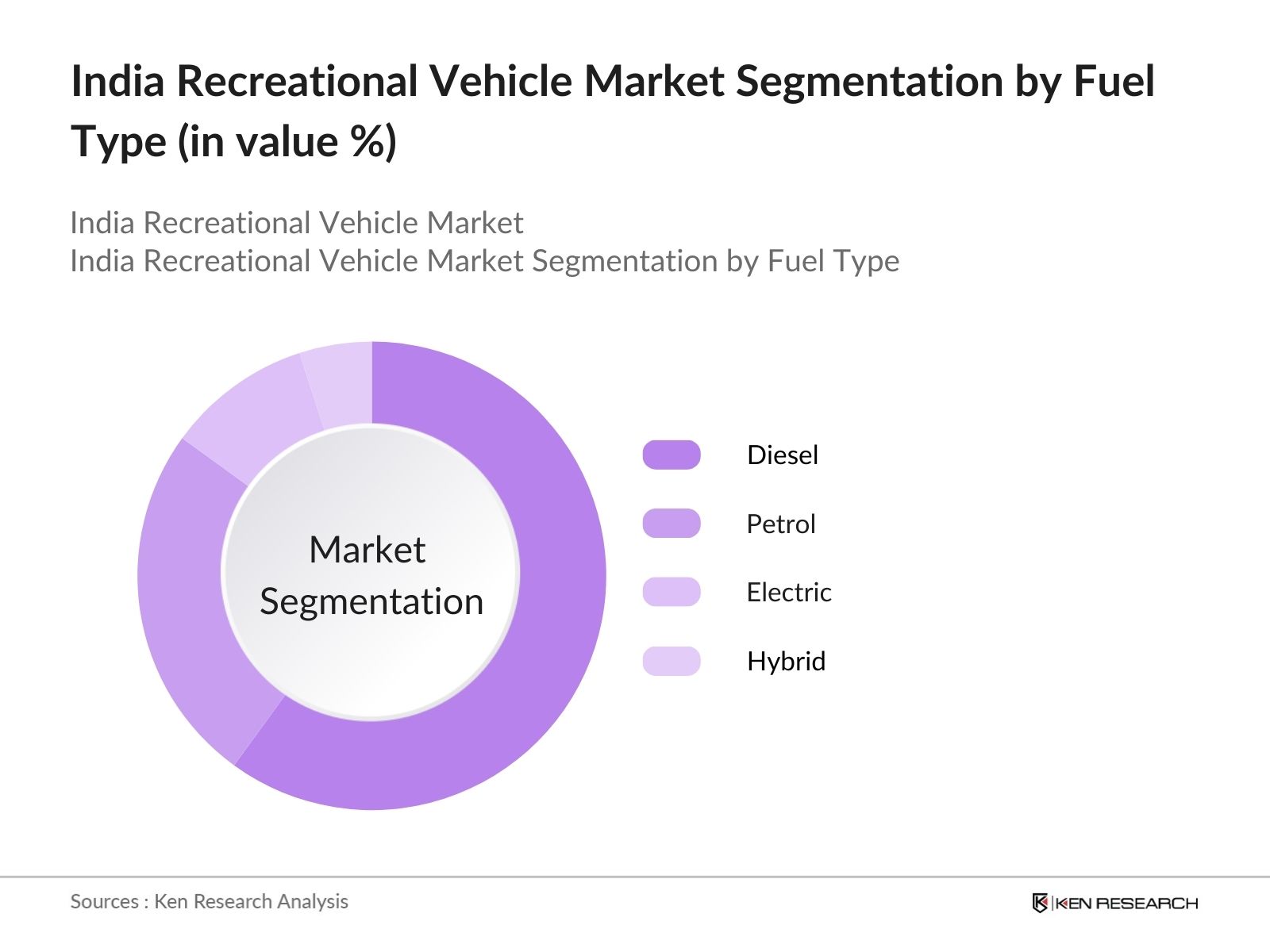
Indias RV market is segmented by vehicle type and by fuel type.
The India RV market is led by a few prominent players who dominate in terms of technology innovation, vehicle customization, and customer service. The market features a combination of domestic manufacturers and international brands, leading to a competitive landscape characterized by a focus on eco-friendly features, advanced technology integration, and robust after-sales service.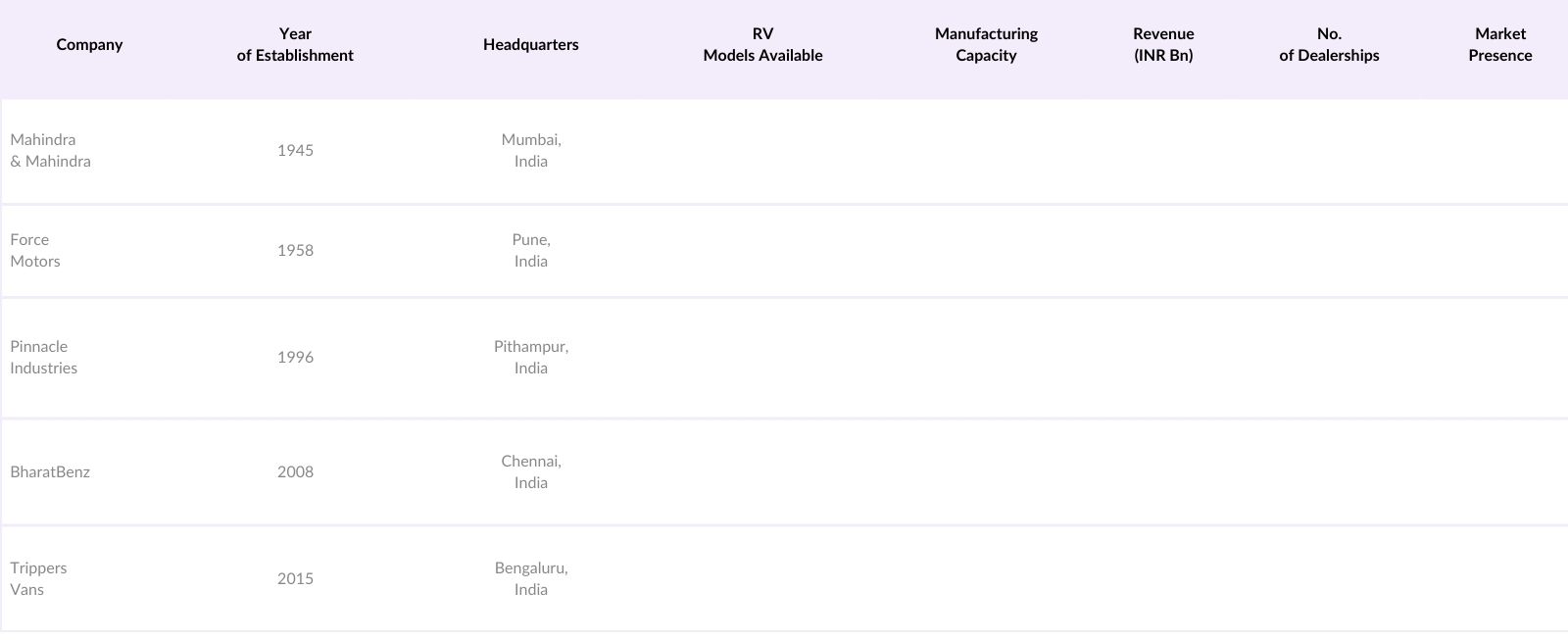
High Initial Investment Costs (Financial Metrics): High upfront investment costs limit RV ownership in India, with prices for basic models starting from INR 20 lakh, making it unaffordable for many middle-income households Although the government provides subsidies on electric and hybrid vehicles, RVs lack financial incentives, impacting affordability. Moreover, high interest rates, which averaged 8.3% in 2023 for vehicle loans , further inhibit potential buyers from investing in RVs, restraining market penetration in lower economic segments.
Lack of Dedicated RV Infrastructure (Infrastructure Analysis): India lacks the necessary infrastructure to support RV travel, such as designated RV parks, charging stations, and campgrounds. Currently, only a few states, like Maharashtra and Kerala, have dedicated RV parking zones and related facilities . This infrastructure gap limits RV travel, particularly in rural regions and smaller towns. The absence of maintenance stations and campsites along highways discourages potential RV buyers, as they often face logistical challenges and limited accessibility, impacting the overall RV ownership experience.
Over the next five years, the India Recreational Vehicle market is anticipated to experience significant growth driven by evolving travel preferences toward RV tourism, increasing affordability, and growing interest in eco-tourism. Government initiatives supporting infrastructure development for camping sites and eco-friendly travel options will further bolster the adoption of RVs. Additionally, advances in technology, such as the introduction of electric RVs, are expected to shape the markets trajectory, appealing to environmentally-conscious consumers and paving the way for new market entrants.
|
Motorhomes, Campervans, Travel Trailers, Pop-Up Campers, Fifth-Wheel Trailers |
|
|
By End User |
Leisure Travel, Business Travel Family Camping Festival & Event Attendees Off-Grid Travel Enthusiasts |
|
By Fuel Type |
Diesel, Petrol Electric Hybrid Solar-Powered |
|
By Ownership Model |
Ownership Rental Subscription-Based Leasing Timeshare |
|
By Region |
North East West South |
1.1 Definition and Scope
1.2 Market Taxonomy
1.3 Market Growth Rate
1.4 Market Segmentation Overview
2.1 Historical Market Size
2.2 Year-On-Year Growth Analysis
2.3 Key Market Developments and Milestones
3.1 Growth Drivers
3.1.1 Rising Disposable Income (Economic Indicator)
3.1.2 Growth in Domestic Tourism (Tourism Data)
3.1.3 Increased Awareness of RV Benefits (Consumer Insights)
3.1.4 Shift Towards Sustainable Travel (Environmental Awareness)
3.2 Market Challenges
3.2.1 High Initial Investment Costs (Financial Metrics)
3.2.2 Lack of Dedicated RV Infrastructure (Infrastructure Analysis)
3.2.3 Limited Awareness in Rural Regions (Market Penetration)
3.3 Opportunities
3.3.1 Partnerships with Travel Agencies (Strategic Alliances)
3.3.2 Integration of Advanced Technology in RVs (Tech Advancements)
3.3.3 Market Expansion in Untapped Regions (Geographical Expansion)
3.4 Trends
3.4.1 Rising Popularity of Van Life (Lifestyle Shifts)
3.4.2 Preference for Eco-Friendly RVs (Green Technology)
3.4.3 Customized RV Interiors (Customization Trends)
3.5 Government Regulation
3.5.1 Regulations on Vehicle Dimensions (Government Compliance)
3.5.2 Emission Standards (Environmental Regulations)
3.5.3 Road Safety Standards (Transportation Safety)
3.5.4 Licensing Requirements for RV Owners (Legal Compliance)
3.6 SWOT Analysis
3.7 Stake Ecosystem
3.8 Porters Five Forces
3.9 Competitive Ecosystem
4.1 By Type (In Value %)
4.1.1 Motorhomes
4.1.2 Campervans
4.1.3 Travel Trailers
4.1.4 Pop-Up Campers
4.1.5 Fifth-Wheel Trailers
4.2 By End User (In Value %)
4.2.1 Leisure Travel
4.2.2 Business Travel
4.2.3 Family Camping
4.2.4 Festival & Event Attendees
4.2.5 Off-Grid Travel Enthusiasts
4.3 By Fuel Type (In Value %)
4.3.1 Diesel
4.3.2 Petrol
4.3.3 Electric
4.3.4 Hybrid
4.3.5 Solar-Powered
4.4 By Ownership Model (In Value %)
4.4.1 Ownership
4.4.2 Rental
4.4.3 Subscription-Based
4.4.4 Leasing
4.4.5 Timeshare
4.5 By Region (In Value %)
4.5.1 North
4.5.2 South
4.5.3 East
4.5.4 West
5.1 Detailed Profiles of Major Companies
5.1.1 Mahindra & Mahindra
5.1.2 Force Motors
5.1.3 Tata Motors
5.1.4 Caravan Outfitters
5.1.5 Pinnacle Industries
5.1.6 BharatBenz
5.1.7 JCBL Group
5.1.8 Winnebago India
5.1.9 Trippers Vans
5.1.10 Campertrail
5.1.11 Airstream India
5.1.12 RV-On-Call
5.1.13 Travellers Inn
5.1.14 Eicher Motors
5.1.15 Jayco India
5.2 Cross Comparison Parameters
5.2.1 Revenue
5.2.2 Market Share
5.2.3 Number of Dealerships
5.2.4 Fleet Size
5.2.5 Technology Integration (Fuel Type, IoT, Navigation)
5.2.6 Manufacturing Capacity
5.2.7 Customer Base
5.2.8 Regional Presence
5.3 Market Share Analysis
5.4 Strategic Initiatives
5.5 Mergers and Acquisitions
5.6 Investment Analysis
5.7 Venture Capital Funding
5.8 Government Grants
5.9 Private Equity Investments
6.1 Road Safety Regulations
6.2 Vehicle Size Compliance
6.3 Emission Standards
6.4 RV Parking and Campground Regulations
6.5 Licensing and Registration Requirements
7.1 Future Market Size Projections
7.2 Key Factors Driving Future Market Growth
8.1 By Type (In Value %)
8.2 By End User (In Value %)
8.3 By Fuel Type (In Value %)
8.4 By Ownership Model (In Value %)
8.5 By Region (In Value %)
9.1 TAM/SAM/SOM Analysis
9.2 Customer Cohort Analysis
9.3 Marketing Initiatives
9.4 White Space Opportunity Analysis
Disclaimer Contact UsThe initial step involves mapping the entire ecosystem of stakeholders within the India Recreational Vehicle Market. This phase includes extensive desk research and consultation with industry reports to identify critical market influencers, consumer demographics, and policy impacts on RV adoption.
This phase focuses on gathering and analyzing historical data relevant to the India Recreational Vehicle Market. It includes evaluating the growth in vehicle ownership, the rise in domestic tourism, and identifying key growth drivers such as fuel preference and technology integration.
Using a combination of CATIs and face-to-face interviews, insights are gathered from industry experts, RV manufacturers, and campground operators. This validation process ensures that the report is grounded in real-world perspectives and current industry practices.
The final stage involves synthesizing data from primary and secondary sources, verified through cross-referencing with stakeholders in the RV market. This ensures that the analysis is comprehensive, accurate, and reflective of current trends and future projections.
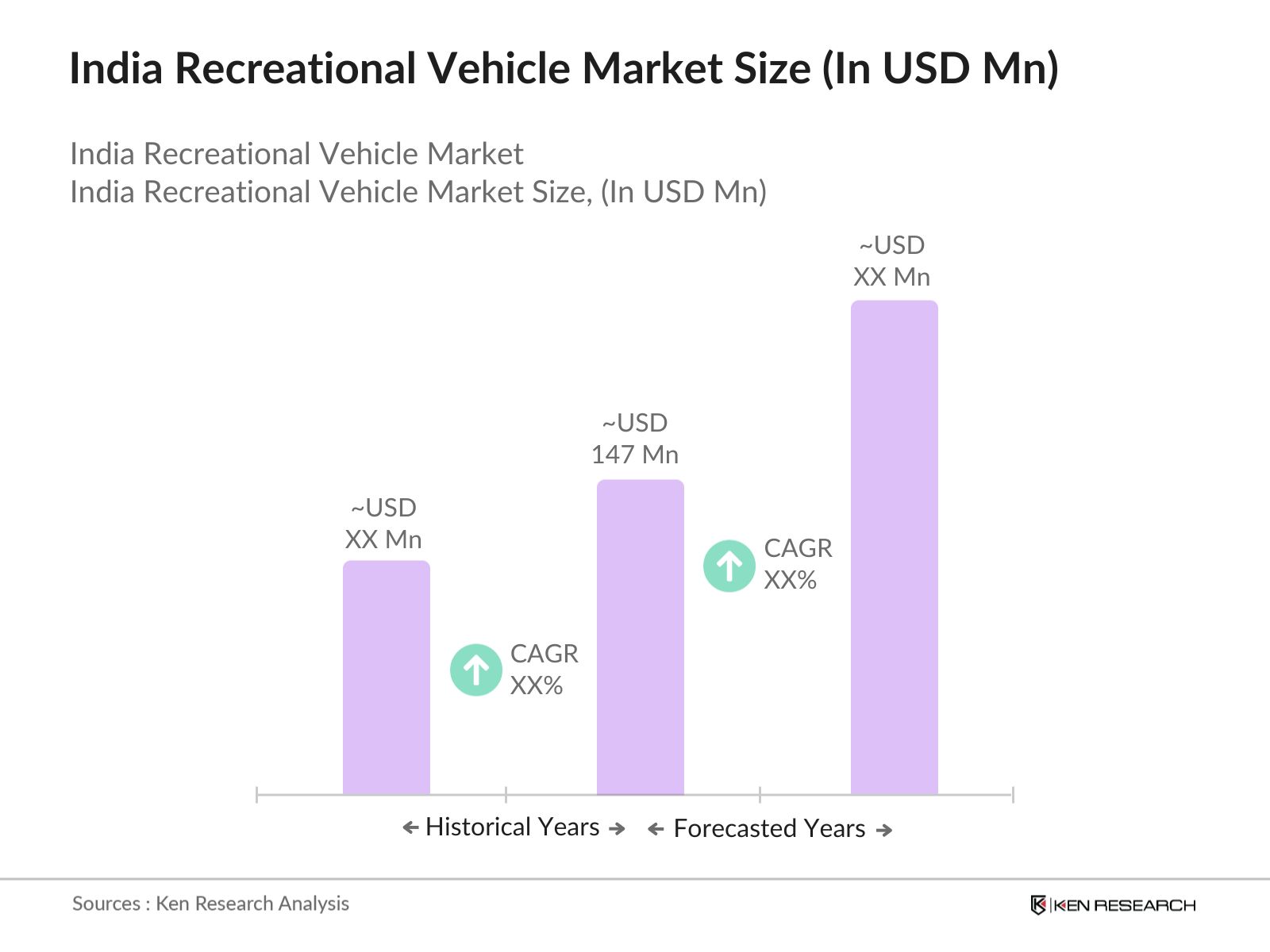
The India Recreational Vehicle Market is valued at USD 147 million, largely driven by the rise in domestic tourism and increasing consumer interest in affordable travel options.
Challenges in India Recreational Vehicle Market include high initial costs, limited RV infrastructure, and regulatory constraints related to vehicle dimensions and emission standards.
Key players in India Recreational Vehicle Market include Mahindra & Mahindra, Force Motors, Tata Motors, Pinnacle Industries, and BharatBenz, with each bringing unique offerings and advantages in terms of regional presence, customer base, and innovation.
The India Recreational Vehicle Market growth is propelled by increasing consumer demand for flexible travel options, government support for eco-tourism, and advancements in RV technology.
Motorhomes dominate due to their integrated amenities and convenience, appealing to families and long-distance travelers who prefer self-sufficient travel solutions.

What makes us stand out is that our consultants follows Robust, Refine and Result (RRR) methodology. i.e. Robust for clear definitions, approaches and sanity checking, Refine for differentiating respondents facts and opinions and Result for presenting data with story

We have set a benchmark in the industry by offering our clients with syndicated and customized market research reports featuring coverage of entire market as well as meticulous research and analyst insights.

While we don't replace traditional research, we flip the method upside down. Our dual approach of Top Bottom & Bottom Top ensures quality deliverable by not just verifying company fundamentals but also looking at the sector and macroeconomic factors.

With one step in the future, our research team constantly tries to show you the bigger picture. We help with some of the tough questions you may encounter along the way: How is the industry positioned? Best marketing channel? KPI's of competitors? By aligning every element, we help maximize success.

Our report gives you instant access to the answers and sources that other companies might choose to hide. We elaborate each steps of research methodology we have used and showcase you the sample size to earn your trust.

If you need any support, we are here! We pride ourselves on universe strength, data quality, and quick, friendly, and professional service.