
Indonesia LED Market Outlook to 2030
Region:Indonesia
Author(s):Yogita Sahu
Product Code:KROD2533
Region:Indonesia
Author(s):Yogita Sahu
Product Code:KROD2533
October 2024
91
The market is segmented into various factors like product, application, and region.
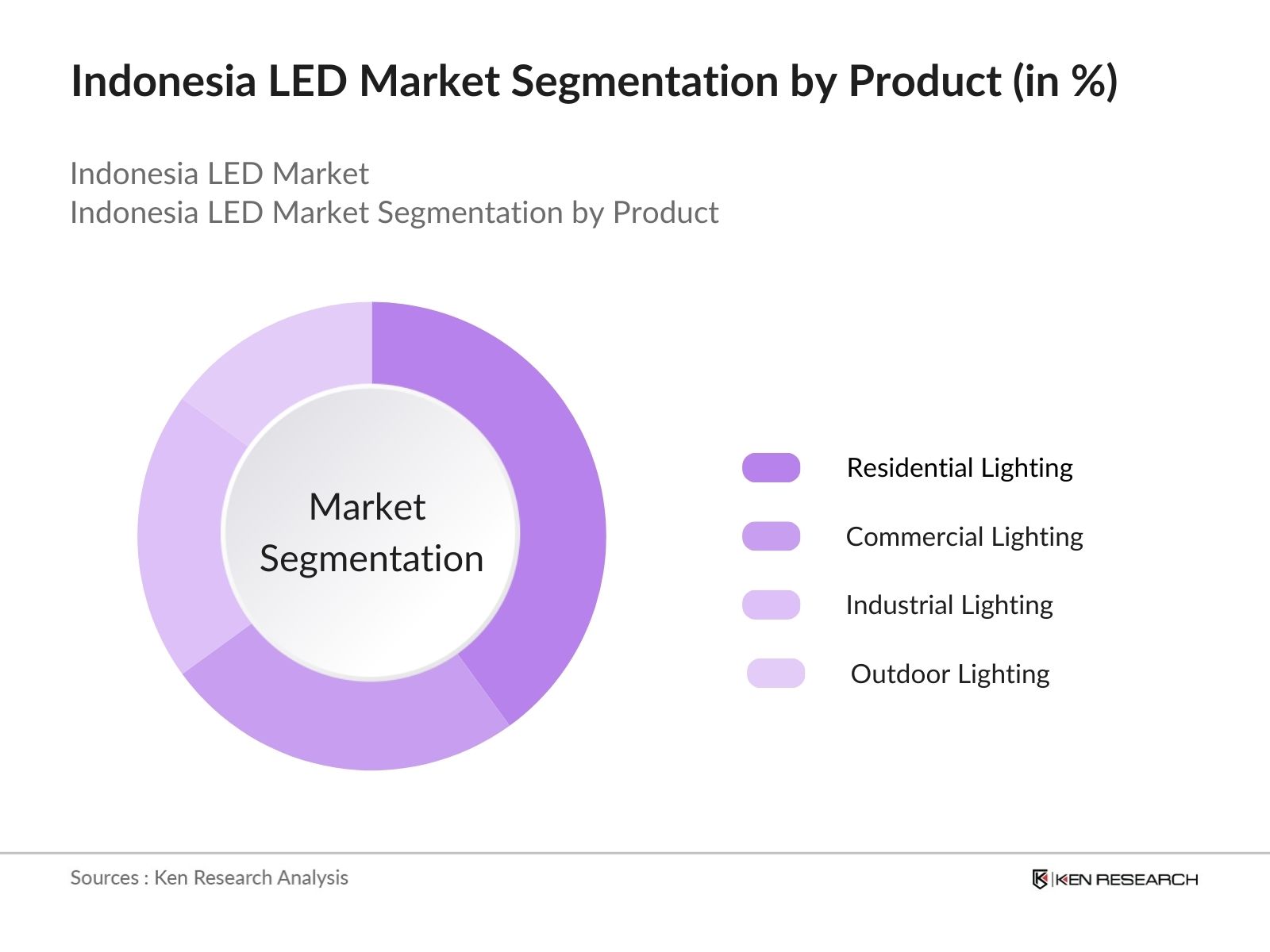
By Product: The market is segmented by product into residential lighting, commercial lighting, industrial lighting, and outdoor lighting. Residential lighting held a dominant market due to the rapid adoption of LED bulbs in households. The demand is driven by government incentives and increased consumer awareness about energy savings.
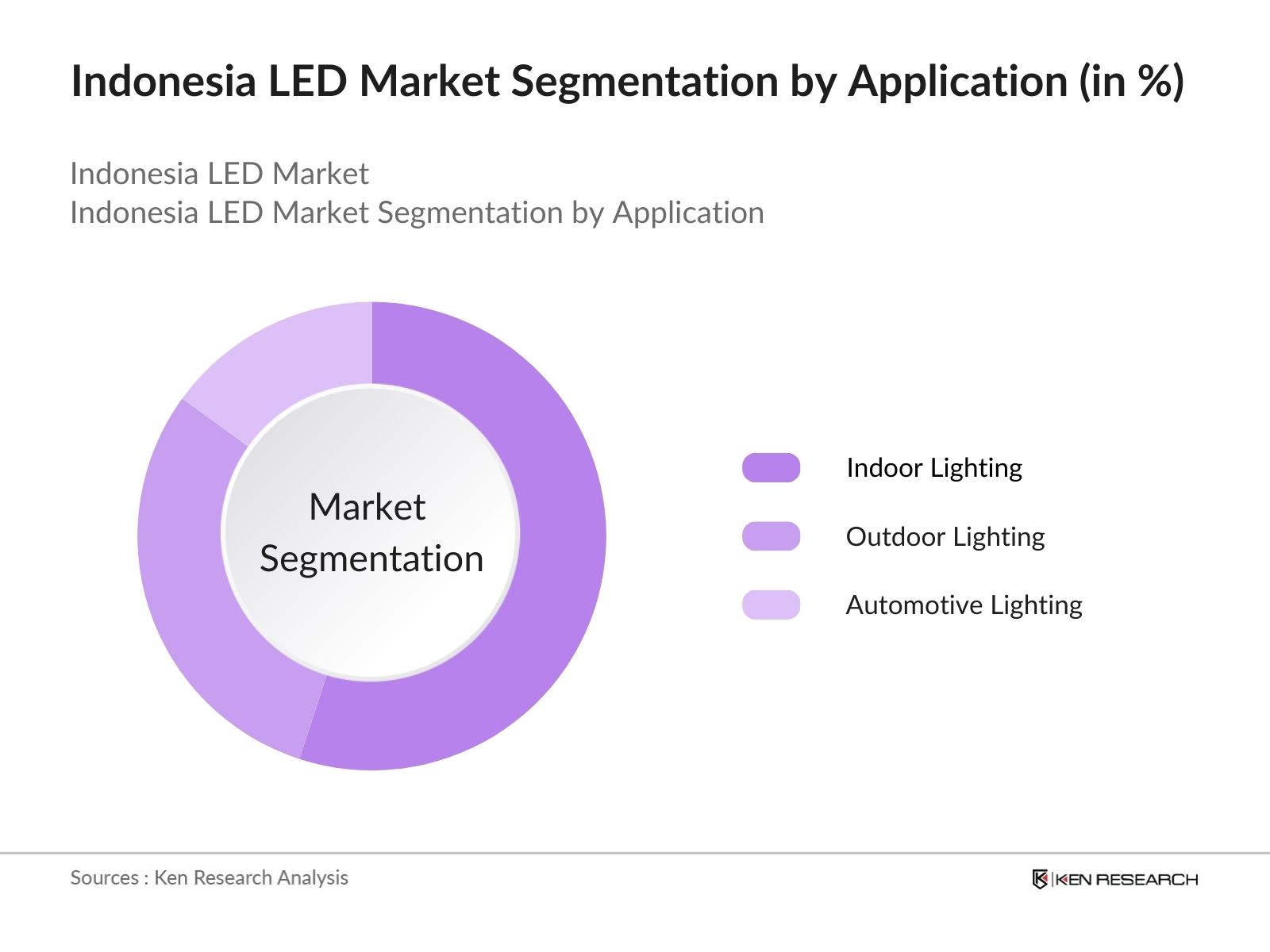
By Application: The market is segmented by application into indoor lighting, outdoor lighting, and automotive lighting. Indoor lighting held a dominant market due to the growth of the construction sector, especially in residential and commercial buildings, has led to a surge in indoor LED installations.
By Region: The market is segmented by region into north, east, west, and south. North Indonesia led the market share due to the concentration of urban development and industrial zones. The presence of major cities, including Jakarta and Bandung, along with government infrastructure projects, has boosted the demand for LED lighting solutions.
|
Company Name |
Year of Establishment |
Headquarters |
|
Philips Lighting |
1891 |
Eindhoven, Netherlands |
|
Osram GmbH |
1919 |
Munich, Germany |
|
Samsung Electronics |
1969 |
Suwon, South Korea |
|
PT Harapan Sejahtera |
1985 |
Jakarta, Indonesia |
|
Cree Inc. |
1987 |
Durham, USA |
Future trends in the Indonesia LED industry include increased smart city projects, widespread adoption of OLEDs, expansion in automotive LED lighting, and greater integration of smart LED systems in industrial facilities.
|
By Product |
Residential Lighting Commercial Lighting Industrial Lighting Outdoor Lighting |
|
By Application |
Indoor Lighting Outdoor Lighting Automotive Lighting |
|
By Region |
North East West South |
1.1 Definition and Scope
1.2 Market Structure and Taxonomy
1.3 Market Size (Financial Metrics: Revenue, Units Sold)
1.4 Overview of Market Growth Drivers and Restraints
2.1 Historical Market Size
2.2 Year-on-Year Growth (Revenue, Volume, Installations)
2.3 Key Market Milestones and Developments
2.4 Future Projections (Unit Sales, Financial Metrics)
3.1 Growth Drivers
3.1.1 Government Energy Efficiency Programs
3.1.2 Industrial Adoption of Smart Lighting Systems
3.1.3 Expansion in Public Infrastructure Projects
3.1.4 Retail and Commercial Sector Adoption
3.2 Market Challenges
3.2.1 High Initial Investment Costs
3.2.2 Supply Chain Disruptions
3.2.3 Limited Awareness in Rural Areas
3.2.4 Counterfeit Products
3.3 Opportunities
3.3.1 Expansion in Smart Cities
3.3.2 Green Building Certifications
3.3.3 Adoption in Automotive Sector
3.3.4 Technological Advancements (OLED, IoT)
4.1 By Product Type (in value %)
4.1.1 Residential Lighting
4.1.2 Commercial Lighting
4.1.3 Industrial Lighting
4.1.4 Outdoor Lighting
4.2 By Application
4.2.1 Indoor Lighting
4.2.2 Outdoor Lighting
4.2.3 Automotive Lighting
4.3 By Region
4.3.1 North Indonesia
4.3.2 South Indonesia
4.3.3 East Indonesia
4.3.4 West Indonesia
5.1 Comparative Metrics (Revenue, Market Share, Innovation Index)
5.2 Company Profiles
5.2.1 Philips Lighting
5.2.2 Osram GmbH
5.2.3 Samsung Electronics
5.2.4 PT Harapan Sejahtera
5.2.5 Cree Inc.
5.2.6 GE Lighting
5.2.7 LG Electronics
5.2.8 Sharp Corporation
5.2.9 Panasonic Corporation
5.2.10 PT Surya Jaya Group
5.2.11 Citizen Electronics
5.2.12 Everlight Electronics
5.2.13 Nichia Corporation
5.2.14 Havells Indonesia
5.2.15 FSL Group
6.1 Market Share Analysis
6.2 Recent Strategic Initiatives (Acquisitions, Product Launches)
6.3 Mergers and Acquisitions
6.4 Investment Analysis (Private Equity, Venture Capital)
7.1 Energy Efficiency Standards
7.2 Compliance Requirements
7.3 Certification and Licensing Procedures
8.1 Market Size Projections (2028 and beyond)
8.2 Key Factors Influencing Future Growth
8.3 Forecast of Market Segments (Residential, Commercial, Industrial)
8.4 Emerging Technologies Impacting the Market (OLED, IoT-Enabled Lighting)
4.1 By Product
4.2 By Application
4.3 By Region
10.1 TAM/SAM/SOM Analysis
10.2 Growth Strategies for New Entrants
10.3 Competitive Differentiation Strategies
10.4 Investment and Expansion Opportunities
Ecosystem creation for all the major entities and referring to multiple secondary and proprietary databases to perform desk research around market to collate industry level information.
Collating statistics on this industry over the years, penetration of marketplaces and service providers ratio to compute revenue generated for Indonesia LED industry. We will also review service quality statistics to understand revenue generated which can ensure accuracy behind the data points shared.
Building market hypothesis and conducting CATIs with industry experts belonging to different companies to validate statistics and seek operational and financial information from company representatives.
Our team will approach multiple LED manufacturers companies and understand nature of product segments and sales, consumer preference and other parameters, which will support us validate statistics derived through bottom to top approach from such LED manufacturers companies.
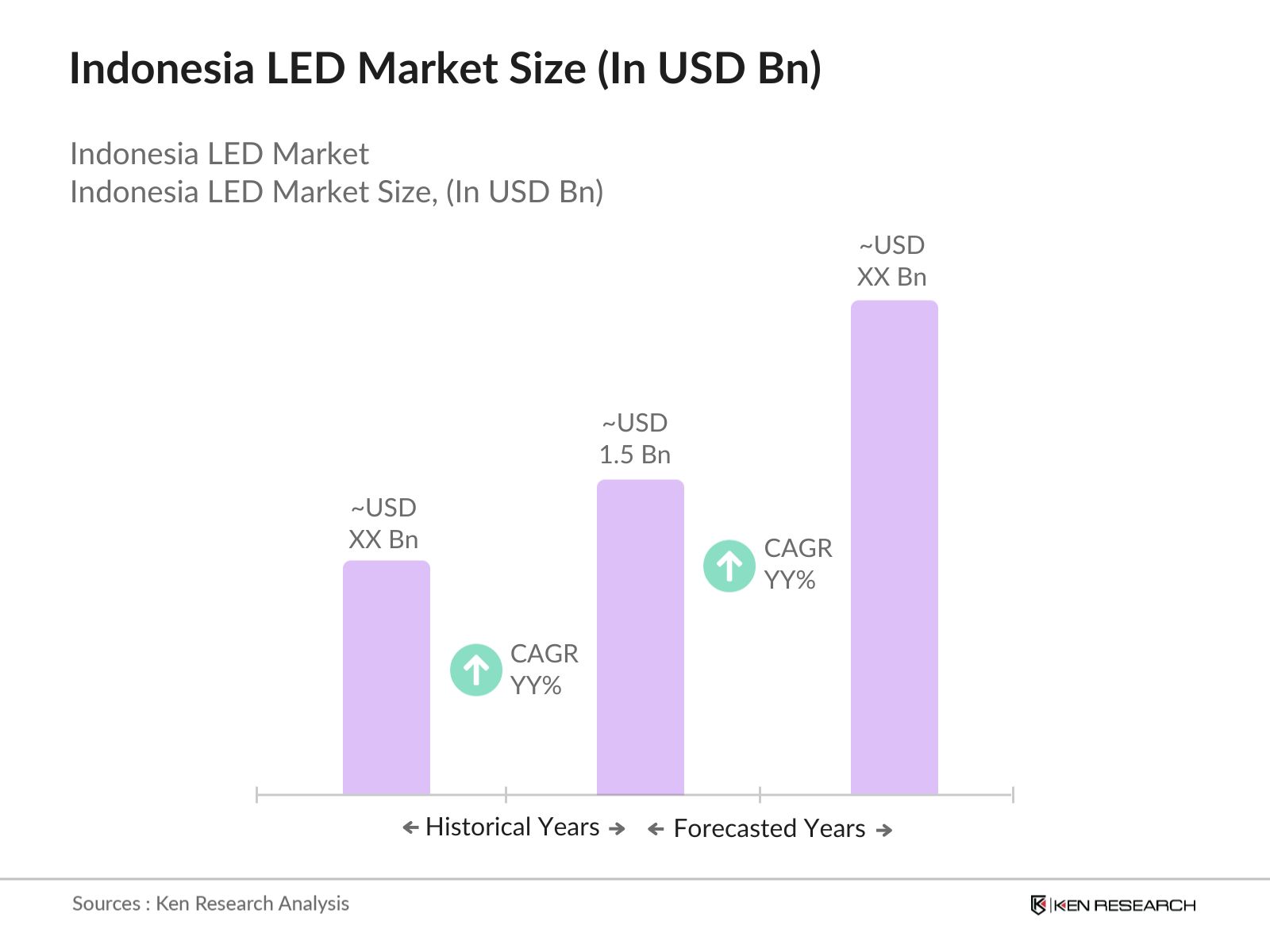
The Indonesia LED Market was valued at USD 1.5 billion. The market has been primarily driven by the need for energy-efficient solutions and the phasing out of conventional lighting systems.
Challenges in the Indonesia LED market high initial costs, supply chain disruptions, lack of awareness in rural areas, and counterfeit products.
Key players in the Indonesia LED market include Philips Lighting, Osram GmbH, Samsung Electronics, PT Harapan Sejahtera, and Cree Inc.
The growth of the Indonesia LED market is driven by government energy efficiency programs, expanding industrial adoption of smart lighting, and rising demand in the construction sector.

What makes us stand out is that our consultants follows Robust, Refine and Result (RRR) methodology. i.e. Robust for clear definitions, approaches and sanity checking, Refine for differentiating respondents facts and opinions and Result for presenting data with story

We have set a benchmark in the industry by offering our clients with syndicated and customized market research reports featuring coverage of entire market as well as meticulous research and analyst insights.

While we don't replace traditional research, we flip the method upside down. Our dual approach of Top Bottom & Bottom Top ensures quality deliverable by not just verifying company fundamentals but also looking at the sector and macroeconomic factors.

With one step in the future, our research team constantly tries to show you the bigger picture. We help with some of the tough questions you may encounter along the way: How is the industry positioned? Best marketing channel? KPI's of competitors? By aligning every element, we help maximize success.

Our report gives you instant access to the answers and sources that other companies might choose to hide. We elaborate each steps of research methodology we have used and showcase you the sample size to earn your trust.

If you need any support, we are here! We pride ourselves on universe strength, data quality, and quick, friendly, and professional service.