
Indonesia Medical Device Contract Manufacturing Market Outlook to 2030
Region:Indonesia
Author(s):Abhinav kumar
Product Code:KROD9016
Region:Indonesia
Author(s):Abhinav kumar
Product Code:KROD9016
December 2024
95
Listen to the audio summary
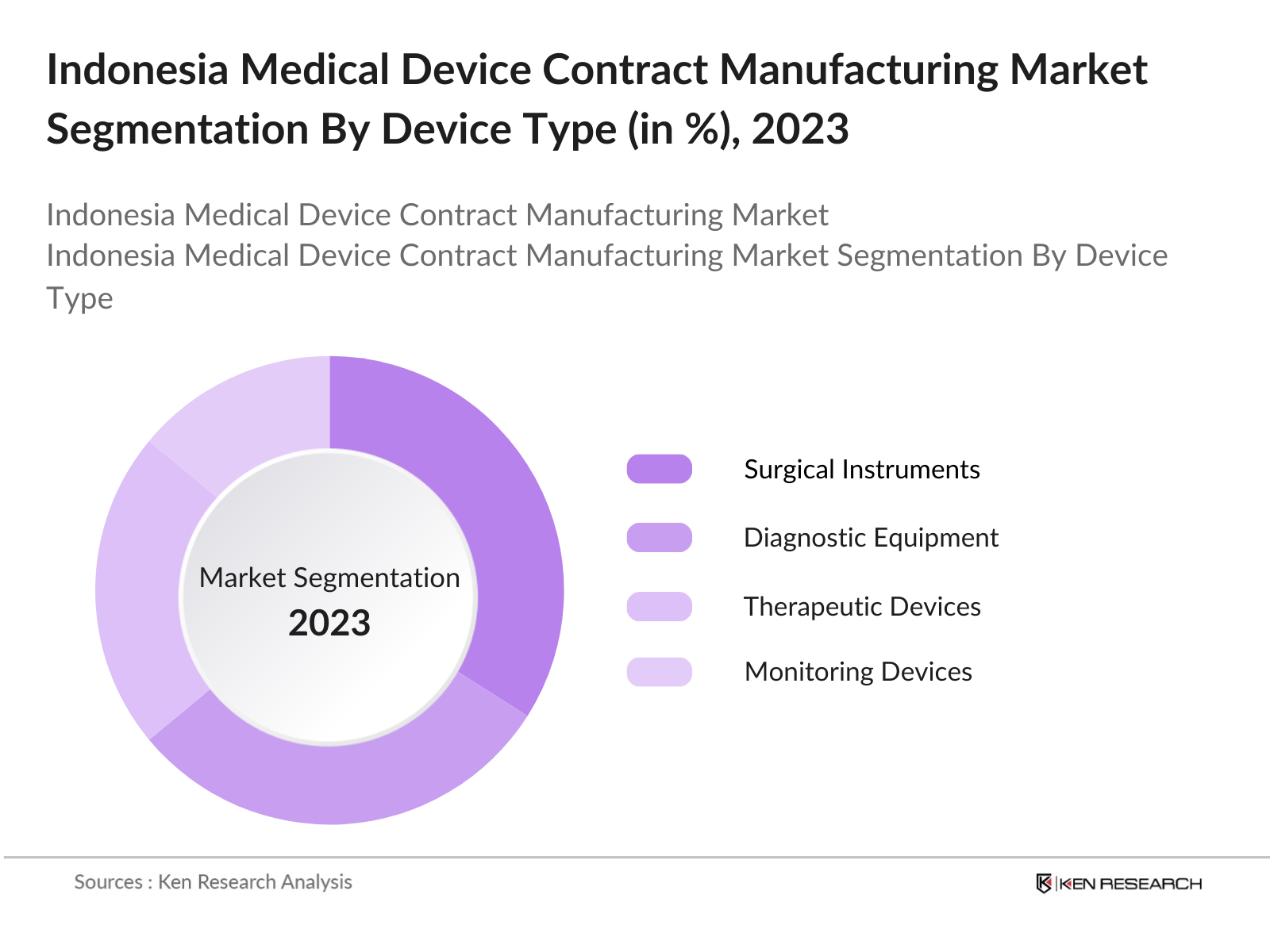
By Device Type: Indonesias medical device contract manufacturing market is segmented by device type into Surgical Instruments, Diagnostic Equipment, Therapeutic Devices, Monitoring Devices, and Others. Recently, Surgical Instruments have captured the dominant share within this segmentation, primarily due to the increasing demand for minimally invasive procedures. Additionally, surgical instruments benefit from high-quality manufacturing standards and steady demand across public and private healthcare providers, cementing their lead in the segment.
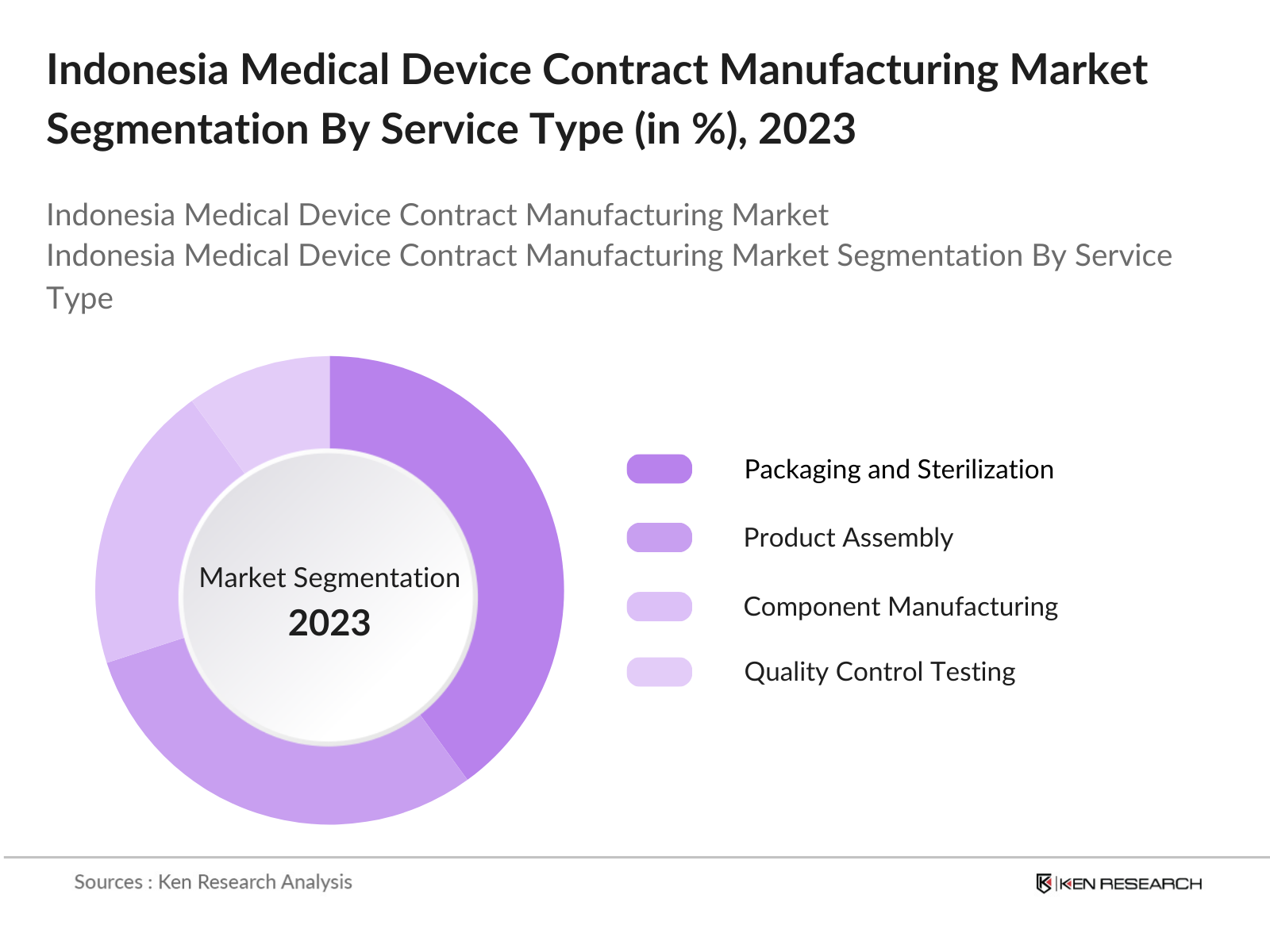
By Service Type: In terms of service type, the market is categorized into Product Assembly, Packaging and Sterilization, Component Manufacturing, Quality Control Testing, and Regulatory Consulting. The Packaging and Sterilization segment dominates due to stringent regulatory requirements ensuring safety and compliance. This segment is crucial, particularly for medical device exports, which require high levels of sterility and secure packaging for international distribution. Consequently, manufacturers invest heavily in packaging and sterilization processes.
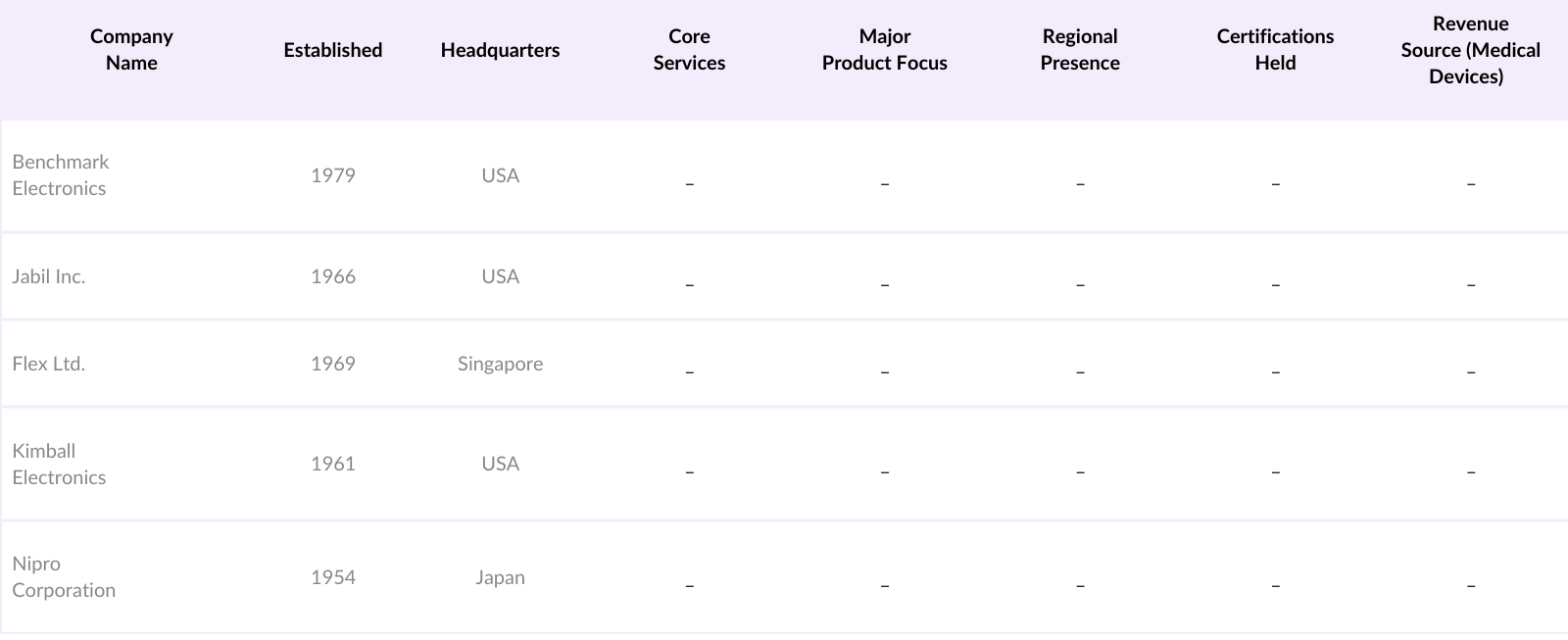
The Indonesia Medical Device Contract Manufacturing Market is led by a mix of local and international companies, with significant contributions from both multinational giants and local SMEs. These players maintain competitive positions through strategic alliances, investments in R&D, and regulatory compliance.
The Indonesia Medical Device Contract Manufacturing Market is projected to witness sustained growth over the next five years, driven by increasing outsourcing requirements, regulatory alignment with global standards, and government support to develop domestic manufacturing capabilities. Indonesias strategic position in Southeast Asia further supports its attractiveness for contract manufacturing, with manufacturers focusing on cost reduction and operational efficiency in response to rising healthcare demands.
|
Device Type |
Surgical Instruments Diagnostic Equipment Therapeutic Devices Monitoring Devices Others |
|
Service Type |
Product Assembly Packaging and Sterilization Component Manufacturing Quality Control Testing Regulatory Consulting |
|
Manufacturing Process |
Injection Molding Machining Laser Processing 3D Printing Others |
|
End-User |
OEMs Healthcare Providers CROs |
|
Region |
Java Sumatra Sulawesi Kalimantan Bali & Nusa Tenggara |
1.1 Definition and Scope
1.2 Market Taxonomy
1.3 Key Market Developments
1.4 Industry Value Chain Analysis
2.1 Historical Market Size
2.2 Year-On-Year Growth Analysis
2.3 Key Developments and Milestones
3.1 Growth Drivers
3.1.1 Regulatory Support for Outsourcing (Government Policy)
3.1.2 Increasing Demand for Medical Devices (Healthcare Expansion)
3.1.3 Cost-Efficiency Benefits (Cost Savings)
3.1.4 Technological Advancements (Automation in Manufacturing)
3.2 Market Challenges
3.2.1 Quality Control Issues (Compliance Standards)
3.2.2 Limited Access to Skilled Workforce (Labor Constraints)
3.2.3 High Dependency on Imports (Raw Material Access)
3.3 Opportunities
3.3.1 Expansion into Emerging Medical Segments (Diagnostics & Therapeutics)
3.3.2 Development of Local Supply Chains (Supply Chain Localization)
3.3.3 Investment in Advanced Manufacturing Techniques (3D Printing, Robotics)
3.4 Trends
3.4.1 Rise in Minimally Invasive Device Demand (Product Innovation)
3.4.2 Increase in Private Sector Investments (Investment Surge)
3.4.3 Collaborations with Healthcare Providers (Strategic Alliances)
3.5 Government Regulations
3.5.1 Standards for Medical Device Quality (ISO Compliance)
3.5.2 Manufacturing Certifications (GMP, FDA Certifications)
3.5.3 Import-Export Regulations (Trade Policies)
4.1 By Device Type (In Value %)
4.1.1 Surgical Instruments
4.1.2 Diagnostic Equipment
4.1.3 Therapeutic Devices
4.1.4 Monitoring Devices
4.1.5 Others
4.2 By Service Type (In Value %)
4.2.1 Product Assembly
4.2.2 Packaging and Sterilization
4.2.3 Component Manufacturing
4.2.4 Quality Control Testing
4.2.5 Regulatory Consulting
4.3 By Manufacturing Process (In Value %)
4.3.1 Injection Molding
4.3.2 Machining
4.3.3 Laser Processing
4.3.4 3D Printing
4.3.5 Others
4.4 By End-User (In Value %)
4.4.1 OEMs (Original Equipment Manufacturers)
4.4.2 Healthcare Providers
4.4.3 Contract Research Organizations (CROs)
4.5 By Region (In Value %)
4.5.1 Java
4.5.2 Sumatra
4.5.3 Sulawesi
4.5.4 Kalimantan
4.5.5 Bali & Nusa Tenggara
5.1 Profiles of Major Companies (15 Competitors)
5.1.1 Benchmark Electronics
5.1.2 Jabil Inc.
5.1.3 Flex Ltd.
5.1.4 Sanmina Corporation
5.1.5 Integer Holdings Corporation
5.1.6 West Pharmaceutical Services, Inc.
5.1.7 Celestica Inc.
5.1.8 TE Connectivity Ltd.
5.1.9 Plexus Corp.
5.1.10 Nipro Corporation
5.1.11 Kimball Electronics
5.1.12 Elos Medtech AB
5.1.13 Creganna Medical
5.1.14 Phillips-Medisize Corporation
5.1.15 Providien LLC
5.2 Cross Comparison Parameters (Production Capacity, Market Share, Facility Locations, Core Specialization, Revenue Contribution from Medical Device Sector, Product Diversification, Regulatory Compliance, Certifications)
5.3 Market Share Analysis (Competitive Market Share Distribution)
5.4 Strategic Initiatives
5.5 Mergers and Acquisitions (M&A Activity)
5.6 Investment Analysis
5.7 Joint Ventures & Partnerships
5.8 R&D Expenditure
5.9 Manufacturing Capacity Expansions
6.1 Quality Assurance Standards (ISO 13485)
6.2 Compliance with GMP (Good Manufacturing Practices)
6.3 Device Approval Process
6.4 Environmental Regulations
6.5 Export and Import Compliance
7.1 Projected Market Size and Forecasts
7.2 Key Factors Influencing Future Growth
8.1 By Device Type (In Value %)
8.2 By Service Type (In Value %)
8.3 By Manufacturing Process (In Value %)
8.4 By End-User (In Value %)
8.5 By Region (In Value %)
9.1 Target Addressable Market (TAM)
9.2 Serviceable Available Market (SAM)
9.3 Strategic Recommendations for Market Entry
9.4 Opportunity Mapping & White Space Identification
Disclaimer Contact UsThis initial step involves mapping the industrys key stakeholders and identifying critical factors affecting the Indonesia Medical Device Contract Manufacturing Market. The research process utilizes extensive desk research and database analyses to uncover essential market dynamics and build a preliminary industry framework.
We collect and analyze historical data to gauge market penetration levels, assess the ratio of OEMs to contract manufacturers, and study revenue trends. This analysis includes detailed comparisons across service categories to ensure reliable revenue estimates.
Insights from industry experts are obtained through CATI (computer-assisted telephone interviews) and consultations with senior professionals from prominent contract manufacturing firms. This step aids in validating our market hypotheses, enriching the market insights with operational data.
In the final phase, insights from medical device OEMs are combined with validated data to provide a holistic analysis. This process ensures comprehensive coverage of market dynamics, offering a robust overview of the Indonesia Medical Device Contract Manufacturing Market.
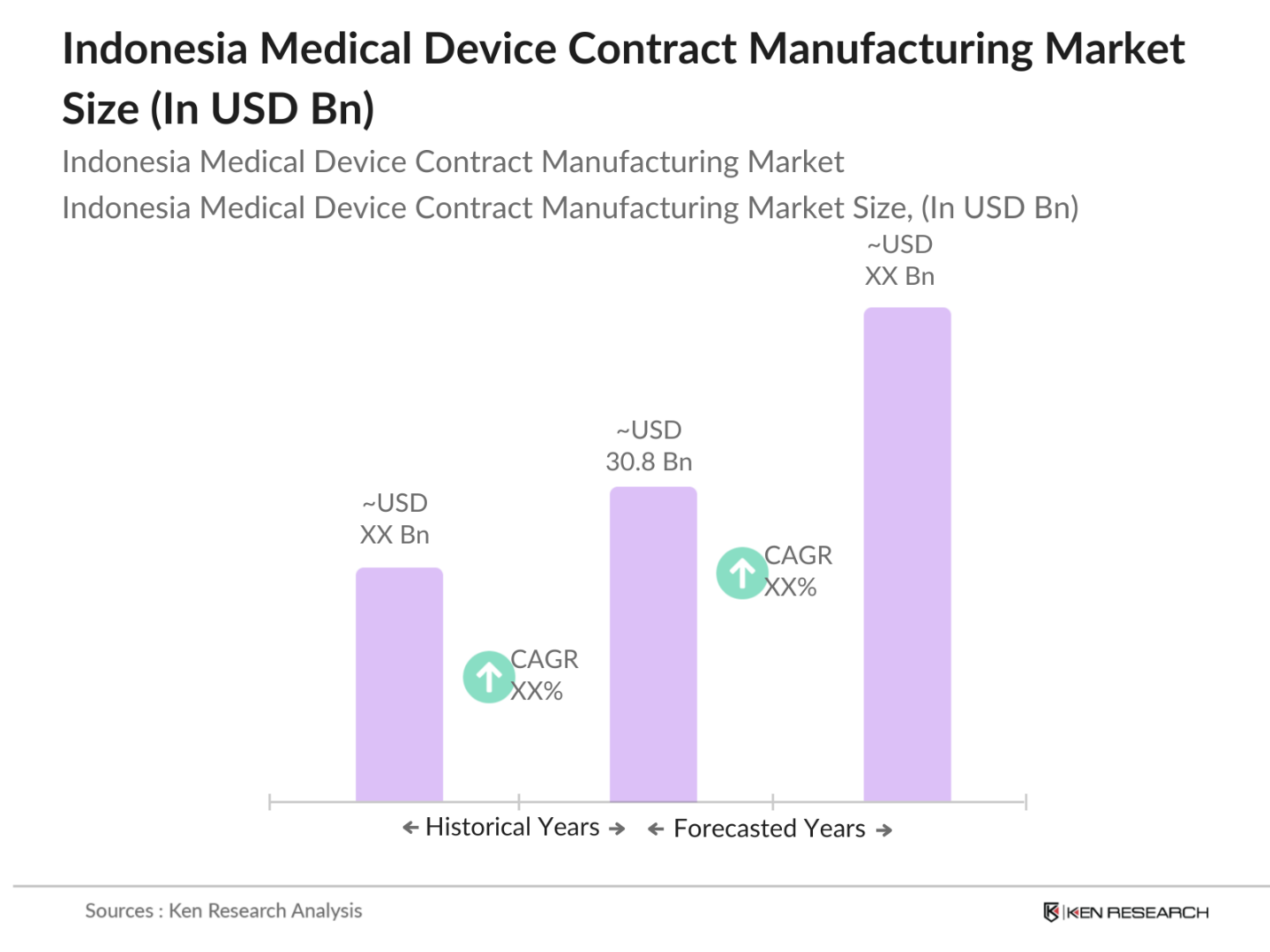
The Indonesia Medical Device Contract Manufacturing Market is valued at USD 30.8 billion, driven by cost savings, high-quality production standards, and growing healthcare needs.
Challenges include regulatory compliance, quality control issues, and limited access to skilled workforce. The reliance on imported raw materials also poses potential risks.
Key players include Benchmark Electronics, Jabil Inc., Flex Ltd., Kimball Electronics, and Nipro Corporation. These companies dominate the market due to their strong capabilities and adherence to global standards.
The market is primarily driven by the need for cost-efficient manufacturing, technological advancements in production processes, and the rising demand for medical devices in healthcare.

What makes us stand out is that our consultants follows Robust, Refine and Result (RRR) methodology. i.e. Robust for clear definitions, approaches and sanity checking, Refine for differentiating respondents facts and opinions and Result for presenting data with story

We have set a benchmark in the industry by offering our clients with syndicated and customized market research reports featuring coverage of entire market as well as meticulous research and analyst insights.

While we don't replace traditional research, we flip the method upside down. Our dual approach of Top Bottom & Bottom Top ensures quality deliverable by not just verifying company fundamentals but also looking at the sector and macroeconomic factors.

With one step in the future, our research team constantly tries to show you the bigger picture. We help with some of the tough questions you may encounter along the way: How is the industry positioned? Best marketing channel? KPI's of competitors? By aligning every element, we help maximize success.

Our report gives you instant access to the answers and sources that other companies might choose to hide. We elaborate each steps of research methodology we have used and showcase you the sample size to earn your trust.

If you need any support, we are here! We pride ourselves on universe strength, data quality, and quick, friendly, and professional service.