
KSA Cosmetics Products Market Outlook to 2030
Region:Saudi Arabia
Author(s):Abhinav kumar
Product Code:KROD9080
Region:Saudi Arabia
Author(s):Abhinav kumar
Product Code:KROD9080
December 2024
84
By Product Type: The KSA cosmetics market is segmented by product type into skin care, hair care, makeup, fragrances, and hygiene products. Recently, skin care has shown a dominant market share due to its popularity among consumers concerned with maintaining healthy and radiant skin. The demand for anti-aging products and solutions addressing skin issues is particularly high, driven by rising awareness and marketing campaigns by brands emphasizing the benefits of quality skincare.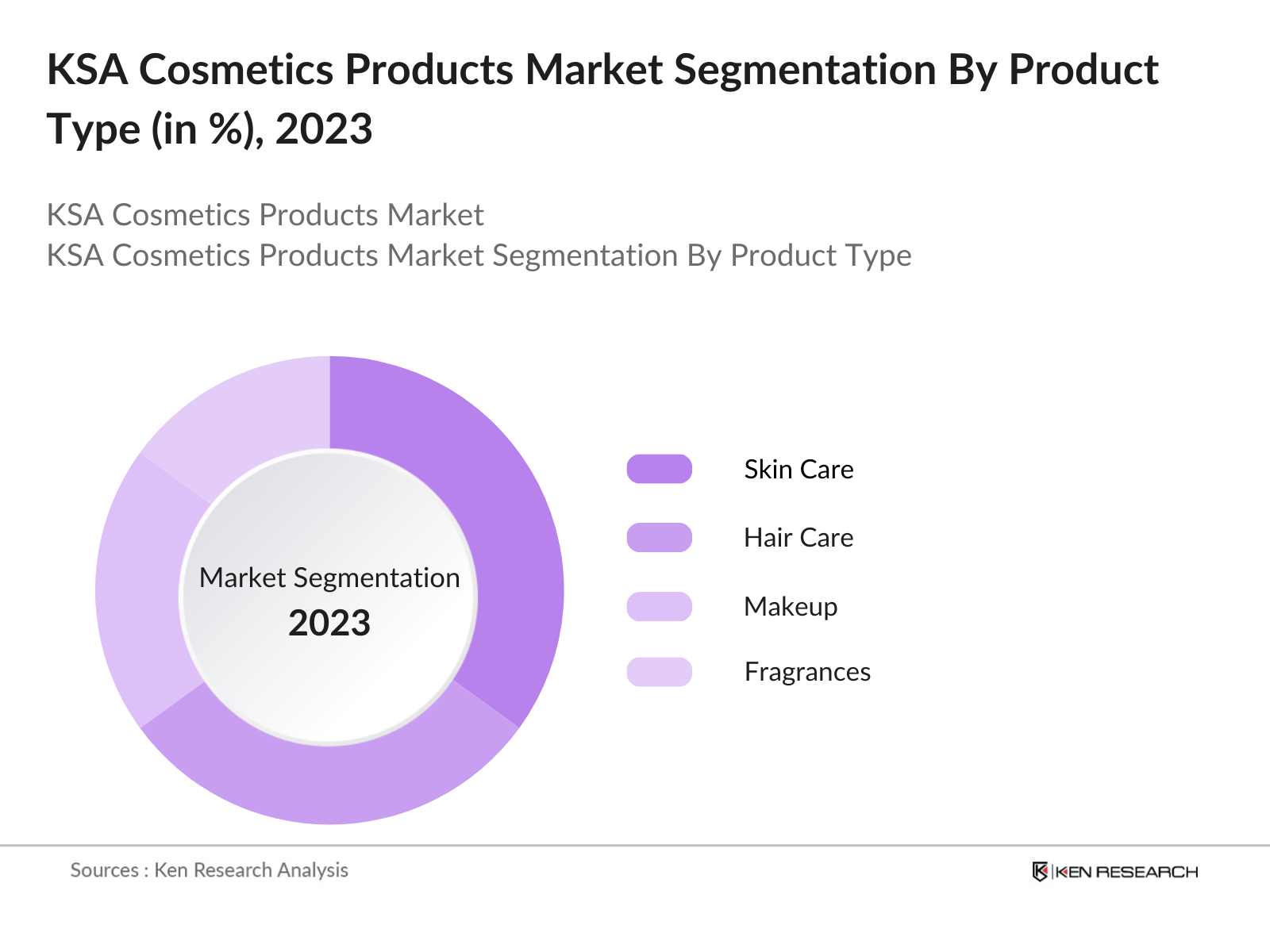
By Distribution Channel: The cosmetics market is also segmented by distribution channel, including online channels and offline channels, such as specialist retailers, hypermarkets/supermarkets, pharmacies, and department stores. Specialist retailers hold the largest share due to their focus on cosmetic products, with trained staff who assist consumers in making informed choices. The increased preference for in-store experiences where consumers can try products firsthand contributes significantly to this segment's dominance.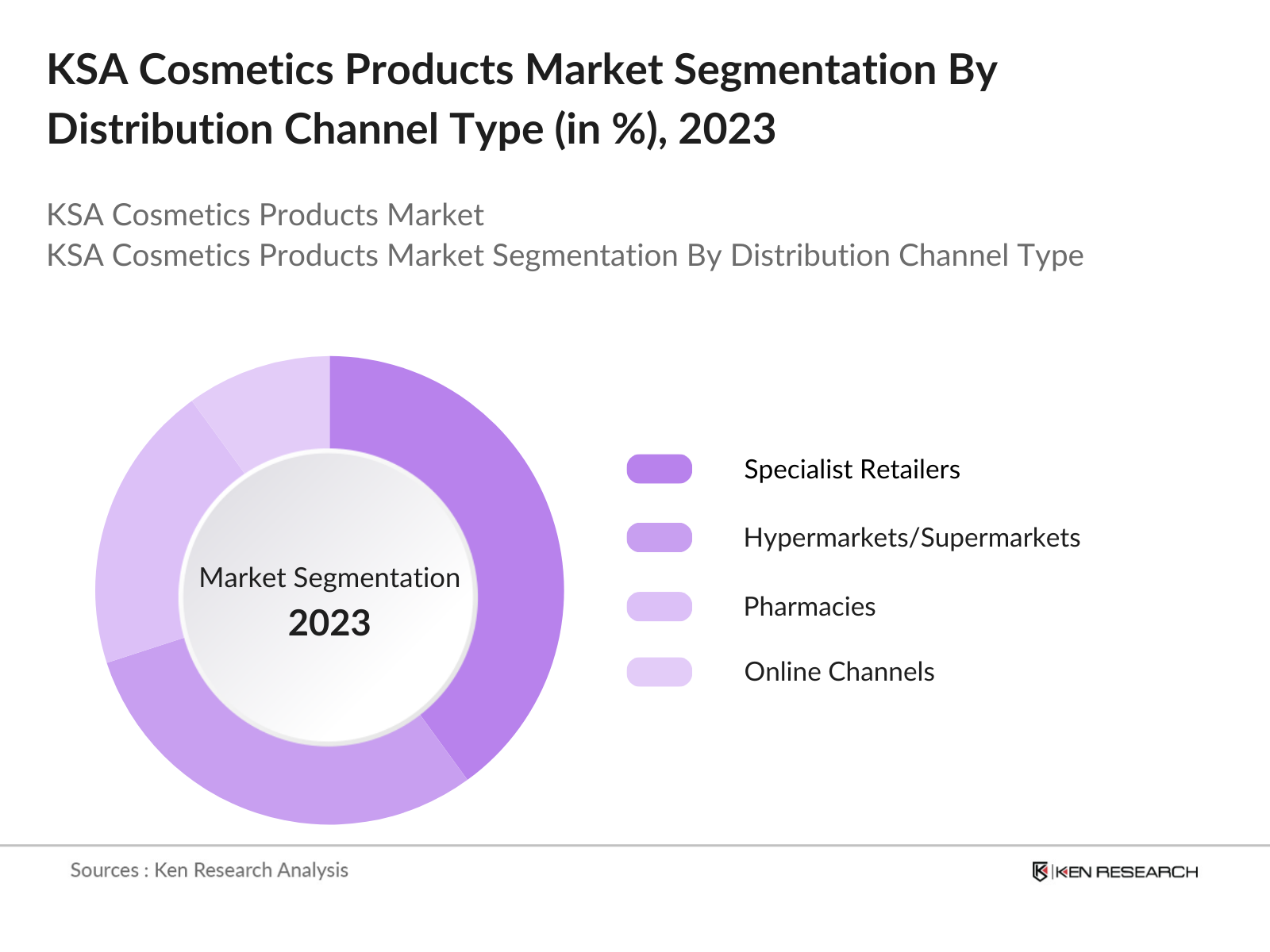
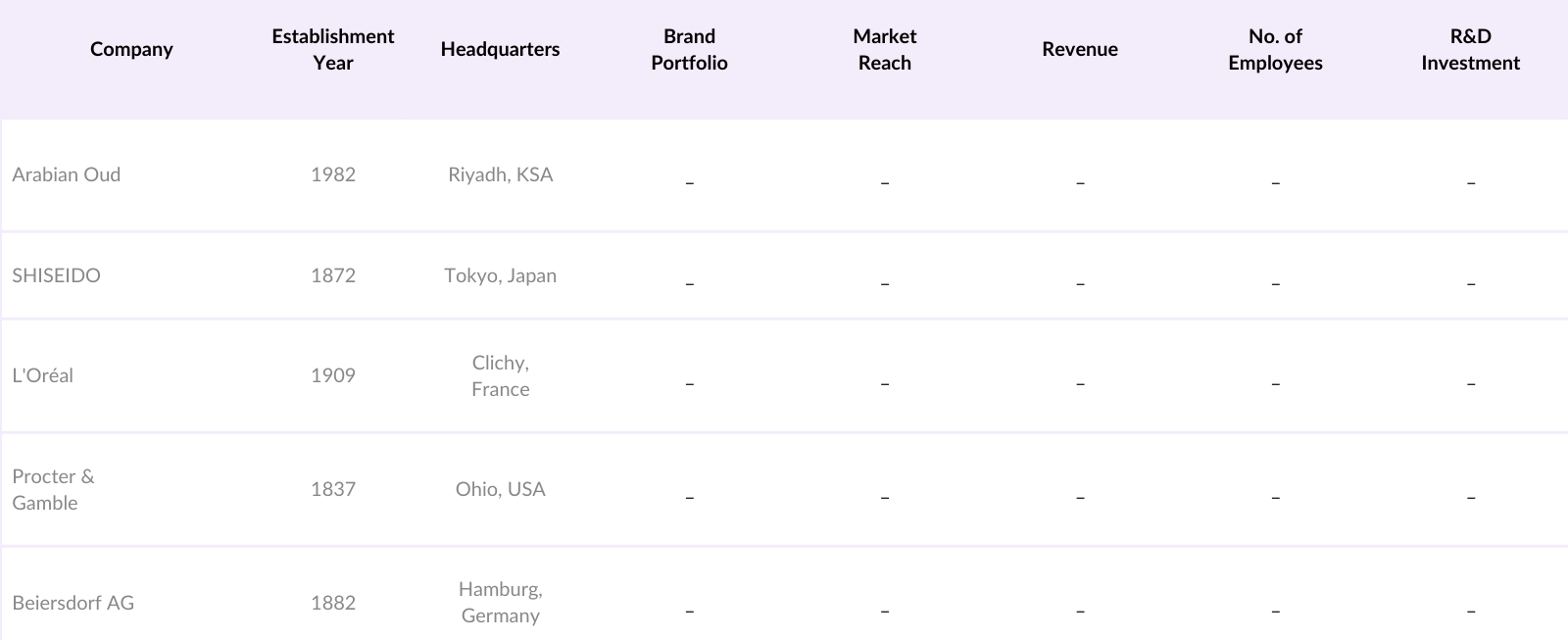
The KSA cosmetics market is dominated by both local and international brands, creating a competitive landscape. Key players emphasize innovation, brand visibility, and alignment with cultural values, such as the use of halal-certified ingredients. The competitive landscape shows a mixture of local brands with a strong cultural influence and global brands leveraging their international reputation to expand in the market.
Growth Drivers
Market Challenges
Over the next five years, the KSA cosmetics products market is expected to experience consistent growth, driven by a shift in consumer preferences toward premium products, increased e-commerce adoption, and the launch of new products tailored to meet cultural and halal standards. Technological advancements in product formulation and packaging will also support market expansion.
Opportunities
|
Segment |
Sub-segments |
|
Product Type |
Skin Care |
|
Demography |
Women Cosmetic Products |
|
Distribution Channel |
Online Channels |
|
End-User |
Premium Customers |
|
Region |
Northeast |
1.1. Definition and Scope
1.2. Market Taxonomy
1.3. Market Growth Rate
1.4. Market Segmentation Overview
2.1. Historical Market Size
2.2. Year-On-Year Growth Analysis
2.3. Key Market Developments and Milestones
3.1. Growth Drivers
3.1.1. Rising Disposable Income
3.1.2. Increasing Urbanization
3.1.3. Influence of Social Media and Beauty Influencers
3.1.4. Growing Demand for Halal and Organic Products
3.2. Market Challenges
3.2.1. Stringent Regulatory Framework
3.2.2. High Competition from International Brands
3.2.3. Economic Fluctuations
3.3. Opportunities
3.3.1. Expansion of E-commerce Platforms
3.3.2. Innovation in Product Formulations
3.3.3. Untapped Rural Markets
3.4. Trends
3.4.1. Preference for Natural and Organic Ingredients
3.4.2. Rise of Men's Grooming Products
3.4.3. Adoption of Sustainable Packaging
3.5. Government Regulations
3.5.1. Saudi Food and Drug Authority (SFDA) Guidelines
3.5.2. Import Tariffs and Duties
3.5.3. Compliance with Halal Certification
3.6. SWOT Analysis
3.7. Stakeholder Ecosystem
3.8. Porter’s Five Forces Analysis
3.9. Competitive Landscape
4.1. By Product Type (In Value %)
4.1.1. Skin Care
4.1.2. Hair Care
4.1.3. Makeup
4.1.4. Fragrances
4.1.5. Hygiene Products
4.2. By Demography (In Value %)
4.2.1. Women Cosmetic Products
4.2.2. Men Cosmetic Products
4.3. By Distribution Channel (In Value %)
4.3.1. Online Channels
4.3.2. Offline Channels
4.3.2.1. Specialist Retailers
4.3.2.2. Hypermarkets/Supermarkets
4.3.2.3. Pharmacies
4.3.2.4. Department Stores
4.4. By End-User (In Value %)
4.4.1. Premium Customers
4.4.2. Mass-Market
4.4.3. Professional
4.5. By Region (In Value %)
4.5.1. Northeast
4.5.2. Midwest
4.5.3. West
5.1. Detailed Profiles of Major Companies
5.1.1. Arabian Oud
5.1.2. Al Quraishi
5.1.3. SHISEIDO
5.1.4. UNILEVER
5.1.5. Chanel
5.1.6. Dior
5.1.7. Guerlain
5.1.8. MAC
5.1.9. Procter & Gamble
5.1.10. Lancôme
5.1.11. Estée Lauder
5.1.12. L'Oréal
5.1.13. Coty Inc.
5.1.14. Beiersdorf AG
5.1.15. Avon Products Inc.
5.2. Cross Comparison Parameters (No. of Employees, Headquarters, Inception Year, Revenue, Product Portfolio, Market Share, Regional Presence, R&D Investment)
5.3. Market Share Analysis
5.4. Strategic Initiatives
5.5. Mergers and Acquisitions
5.6. Investment Analysis
5.7. Venture Capital Funding
5.8. Government Grants
5.9. Private Equity Investments
6.1. SFDA Cosmetic Product Regulations
6.2. Compliance Requirements
6.3. Certification Processes
7.1. Future Market Size Projections
7.2. Key Factors Driving Future Market Growth
8.1. By Product Type (In Value %)
8.2. By Demography (In Value %)
8.3. By Distribution Channel (In Value %)
8.4. By End-User (In Value %)
8.5. By Region (In Value %)
9.1. Total Addressable Market (TAM), Serviceable Available Market (SAM), and Serviceable Obtainable Market (SOM) Analysis
9.2. Customer Cohort Analysis
9.3. Marketing Initiatives
9.4. White Space Opportunity Analysis
The initial phase involves constructing an ecosystem map encompassing major stakeholders in the KSA Cosmetics Market. This step includes extensive desk research to gather comprehensive industry-level data and identify the critical variables influencing market trends.
In this phase, historical data for the cosmetics market is analyzed, including product penetration and distribution channels. This helps assess market dynamics and refine the revenue estimates.
Market hypotheses are developed and validated through consultations with industry experts, leveraging their insights to validate and corroborate market data.
The final phase involves synthesizing insights from cosmetic manufacturers to ensure an accurate analysis. This engagement complements the findings derived from the data analysis, providing a validated overview of the market.
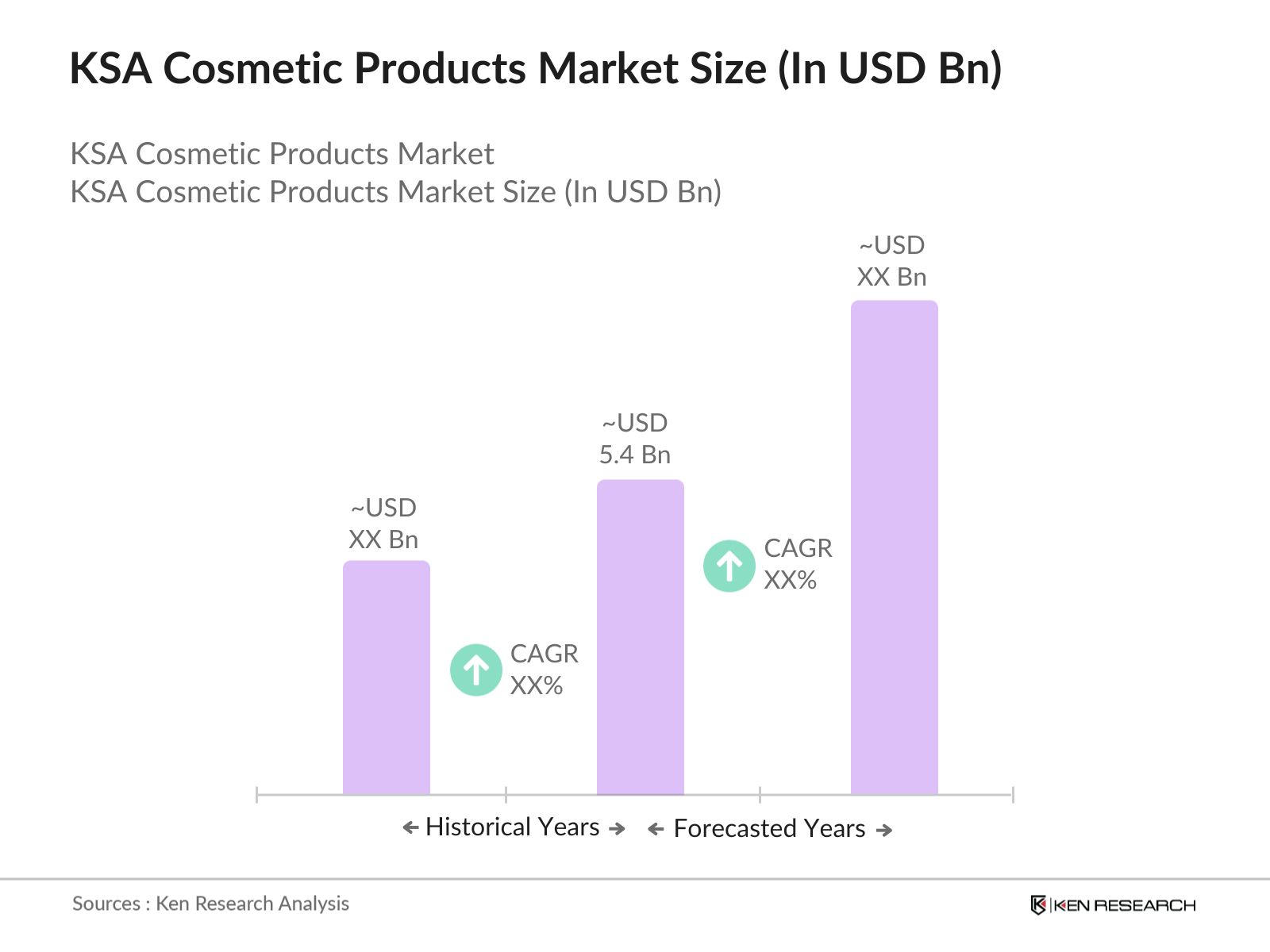
The KSA cosmetics market is valued at USD 5.4 billion, with a strong demand for skincare, halal-certified, and premium products driving its growth.
Challenges include strict regulatory frameworks, intense competition from international brands, and fluctuations in the economy affecting consumer spending patterns.
Major players in the market include Arabian Oud, SHISEIDO, L'Oréal, Procter & Gamble, and Beiersdorf AG, dominating with strong brand presence and extensive distribution.
The market is propelled by rising disposable incomes, a growing preference for premium products, and the demand for halal-certified cosmetics among consumers.

What makes us stand out is that our consultants follows Robust, Refine and Result (RRR) methodology. i.e. Robust for clear definitions, approaches and sanity checking, Refine for differentiating respondents facts and opinions and Result for presenting data with story

We have set a benchmark in the industry by offering our clients with syndicated and customized market research reports featuring coverage of entire market as well as meticulous research and analyst insights.

While we don't replace traditional research, we flip the method upside down. Our dual approach of Top Bottom & Bottom Top ensures quality deliverable by not just verifying company fundamentals but also looking at the sector and macroeconomic factors.

With one step in the future, our research team constantly tries to show you the bigger picture. We help with some of the tough questions you may encounter along the way: How is the industry positioned? Best marketing channel? KPI's of competitors? By aligning every element, we help maximize success.

Our report gives you instant access to the answers and sources that other companies might choose to hide. We elaborate each steps of research methodology we have used and showcase you the sample size to earn your trust.

If you need any support, we are here! We pride ourselves on universe strength, data quality, and quick, friendly, and professional service.