
KSA Protective Clothing Market Outlook to 2030
Region:Middle East
Author(s):Shubham Kashyap
Product Code:KROD5321
Region:Middle East
Author(s):Shubham Kashyap
Product Code:KROD5321
December 2024
80
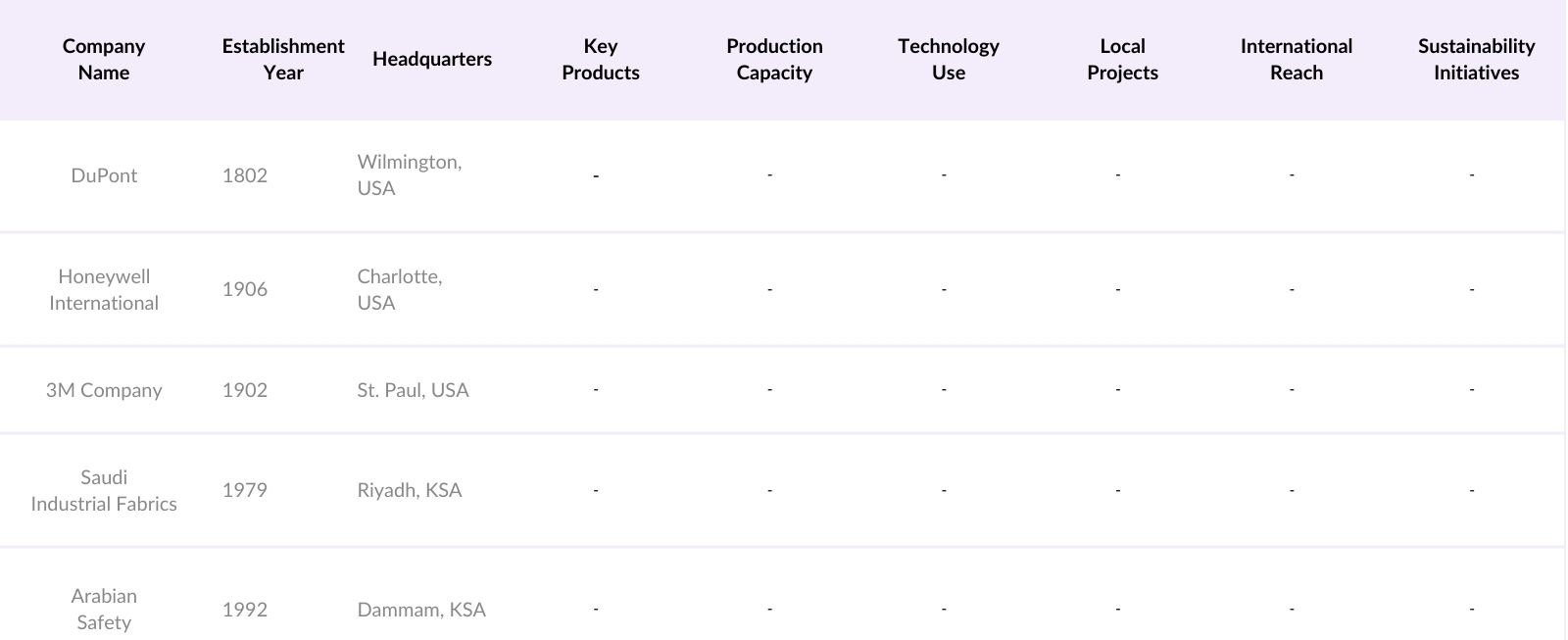
The KSA protective clothing market is highly competitive, with key players including DuPont, Honeywell International, 3M, and local manufacturers such as Saudi Industrial Fabrics and Arabian Safety. These companies have built a strong market presence through their focus on safety innovation, particularly in the oil and gas industry. International players dominate in advanced fabric technologies, while local firms are gaining traction by offering cost-effective alternatives tailored to regional industrial requirements. The presence of multinational corporations alongside a growing local manufacturing base highlights the diverse nature of the competitive landscape.
Growth Drivers
Market Challenges:
The KSA protective clothing market is expected to grow steadily, driven by government-backed infrastructure initiatives, increased enforcement of worker safety standards, and the rapid industrialization of key sectors such as oil & gas, construction, and manufacturing. The market is likely to witness further technological advancements, particularly in the development of lightweight, durable, and sustainable protective clothing materials. Additionally, the push for local manufacturing to reduce dependency on imports, coupled with the increasing focus on environmental sustainability, will shape the future landscape of the industry.
Future Market Opportunities:
|
By Product Type |
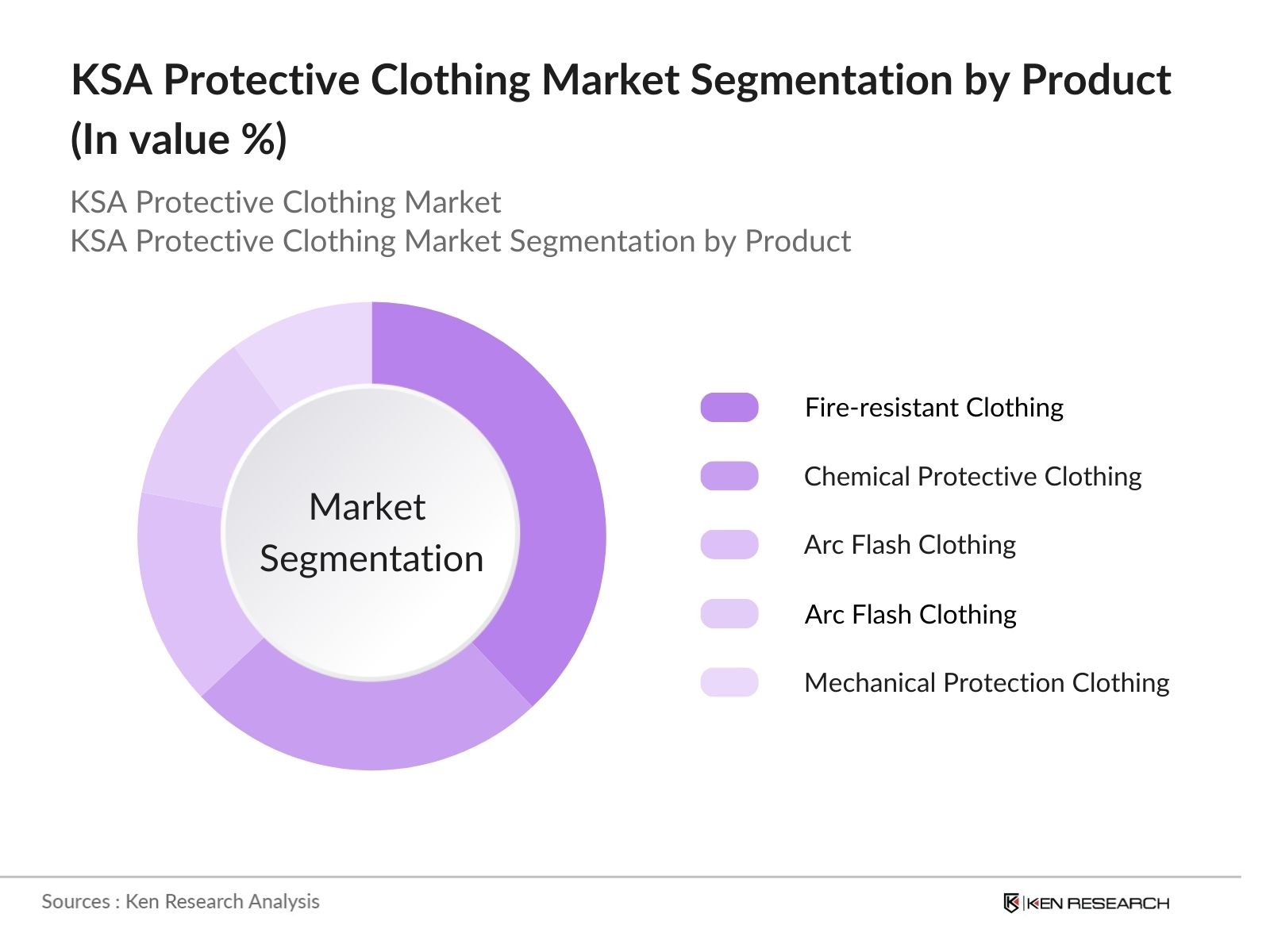
Fire-resistant Clothing Chemical Protective Clothing Arc Flash Clothing High-visibility Clothing Mechanical Protection Clothing |
|
By End-Use Industry |
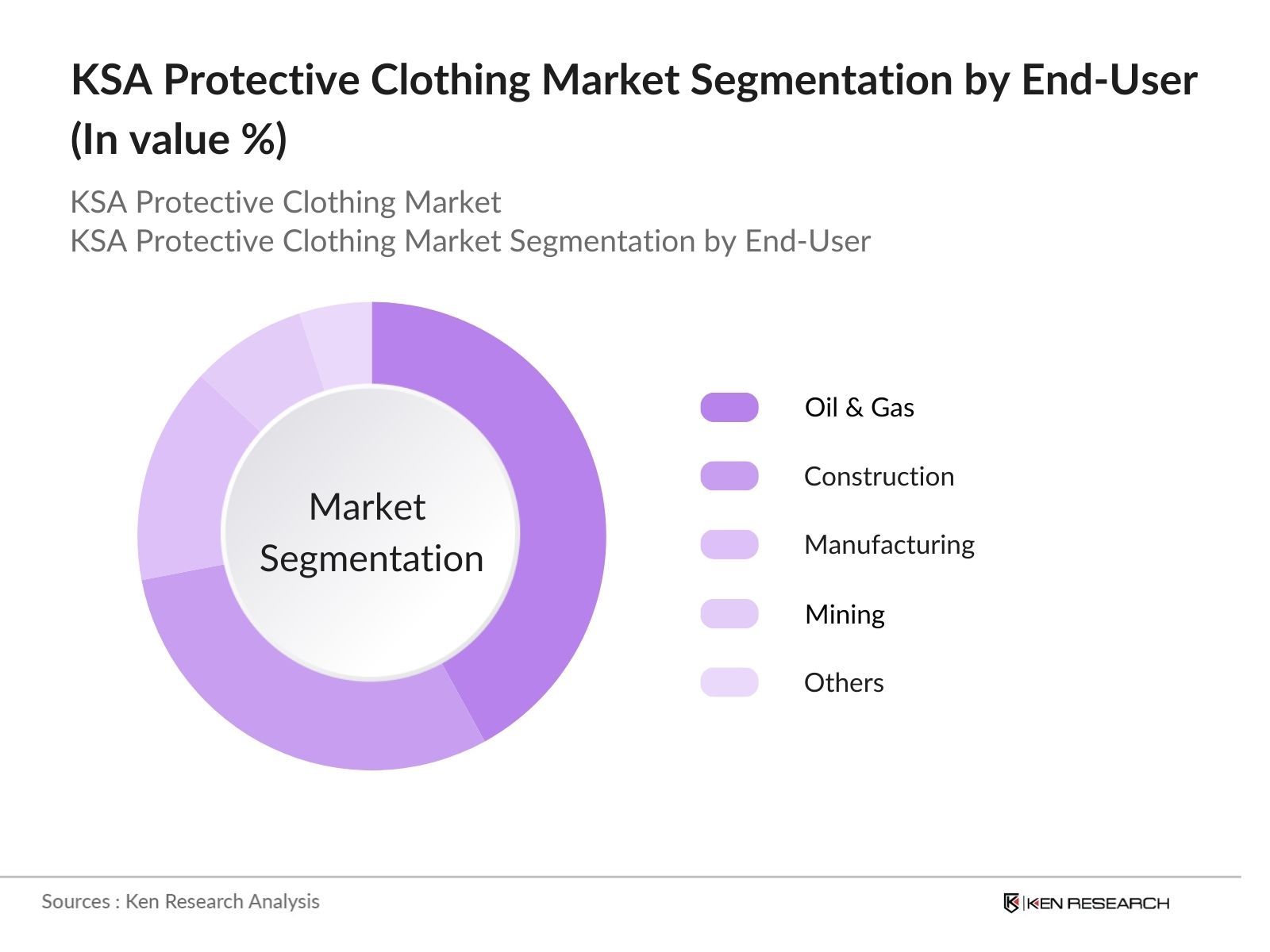
Oil & Gas Construction Manufacturing Mining Healthcare |
|
By Material Type |
Aramid Polyethylene Polypropylene Polyvinyl Chloride Cotton and blends |
|
By Protection Level |
Level A Protection Level B Protection Level C Protection Level D Protection |
|
By Region |
Riyadh Eastern Province Makkah Province Asir Province Jazan |
1.1. Definition and Scope
1.2. Market Taxonomy
1.3. Market Growth Rate
1.4. Market Segmentation Overview (Protective clothing type, end-use industry, material type, region, protection level)
2.1. Historical Market Size
2.2. Year-On-Year Growth Analysis
2.3. Key Market Developments and Milestones
3.1. Growth Drivers
3.1.1. Regulatory Mandates (Workplace safety, industry-specific standards)
3.1.2. Industrial Expansion (Oil & Gas, Construction)
3.1.3. Rising Awareness on Worker Safety
3.1.4. Technological Advancements (High-performance fabrics, smart textiles)
3.2. Market Challenges
3.2.1. High Costs of Advanced Protective Clothing
3.2.2. Supply Chain Disruptions (Raw material shortages)
3.2.3. Limited Adoption in Small Industries
3.2.4. Compliance Challenges
3.3. Opportunities
3.3.1. Emerging Smart Textile Solutions
3.3.2. Expansion in Healthcare & Pharmaceuticals
3.3.3. Government Initiatives Supporting Local Manufacturing
3.3.4. Growing Demand in Fire Protection Clothing
3.4. Trends
3.4.1. Increasing Use of Sustainable Materials (Recycled fibers, bio-based textiles)
3.4.2. Integration of Wearable Technology
3.4.3. Customization for Industry-Specific Needs
3.4.4. Shift Towards Lightweight, Durable Clothing
3.5. Government Regulation
3.5.1. KSA Labor Laws (Occupational safety guidelines)
3.5.2. Industry-Specific Compliance (Oil & Gas, Chemical)
3.5.3. Import Regulations for Protective Clothing
3.5.4. Public-Private Partnerships in Manufacturing
3.6. SWOT Analysis
3.7. Stakeholder Ecosystem (Manufacturers, Suppliers, Distributors)
3.8. Porters Five Forces
3.8.1. Supplier Power
3.8.2. Buyer Power
3.8.3. Competitive Rivalry
3.8.4. Threat of Substitutes
3.8.5. Threat of New Entrants
3.9. Competition Ecosystem (Market-specific players in KSA, distribution channels)
4.1. By Product Type (In Value %)
4.1.1. Fire-resistant Clothing
4.1.2. Chemical Protective Clothing
4.1.3. Arc Flash Clothing
4.1.4. High-visibility Clothing
4.1.5. Mechanical Protection Clothing
4.2. By End-Use Industry (In Value %)
4.2.1. Oil & Gas
4.2.2. Construction
4.2.3. Manufacturing
4.2.4. Mining
4.2.5. Healthcare
4.3. By Material Type (In Value %)
4.3.1. Aramid
4.3.2. Polyethylene
4.3.3. Polypropylene
4.3.4. Polyvinyl Chloride
4.3.5. Cotton and blends
4.4. By Protection Level (In Value %)
4.4.1. Level A Protection
4.4.2. Level B Protection
4.4.3. Level C Protection
4.4.4. Level D Protection
4.5. By Region (In Value %)
4.5.1. Riyadh
4.5.2. Eastern Province
4.5.3. Makkah Province
4.5.4. Asir Province
4.5.5. Jazan
5.1. Detailed Profiles of Major Companies
5.1.1. DuPont
5.1.2. Honeywell International
5.1.3. 3M Company
5.1.4. Lakeland Industries
5.1.5. Ansell Limited
5.1.6. Drgerwerk AG & Co. KGaA
5.1.7. Kimberly-Clark Corporation
5.1.8. MSA Safety Incorporated
5.1.9. Sioen Industries
5.1.10. Uvex Safety Group
5.1.11. Trelleborg AB
5.1.12. Bulwark FR
5.1.13. W. L. Gore & Associates
5.1.14. VF Corporation
5.1.15. Delta Plus Group
5.2. Cross Comparison Parameters (Headquarters, Production Capacity, Revenue, Market Share, R&D Investment, Distribution Channels, No. of Employees, Year of Inception)
5.3. Market Share Analysis
5.4. Strategic Initiatives (New product launches, partnerships)
5.5. Mergers and Acquisitions
5.6. Investment Analysis
5.7. Venture Capital Funding
5.8. Government Grants
5.9. Private Equity Investments
6.1. Occupational Safety Standards
6.2. Compliance Requirements (Industry-specific regulations)
6.3. Certification Processes
6.4. Import/Export Restrictions
7.1. Future Market Size Projections
7.2. Key Factors Driving Future Market Growth
8.1. By Product Type (In Value %)
8.2. By End-Use Industry (In Value %)
8.3. By Material Type (In Value %)
8.4. By Protection Level (In Value %)
8.5. By Region (In Value %)
9.1. TAM/SAM/SOM Analysis
9.2. Customer Cohort Analysis
9.3. White Space Opportunity Analysis
9.4. Marketing Initiatives
The first phase involves mapping the KSA protective clothing markets ecosystem, identifying key stakeholders such as manufacturers, suppliers, and end-users. This step leverages a combination of proprietary and publicly available databases to define variables influencing the market, including regulatory requirements and technological innovations.
Historical data on market growth and penetration are compiled to provide a comprehensive analysis of the protective clothing market in KSA. The data is cross-referenced with industrial safety protocols and sectoral demand, ensuring accurate revenue estimates for the forecast period.
Interviews with industry experts, including representatives from oil & gas and construction firms, are conducted to validate hypotheses concerning the markets performance. The insights gathered help refine the forecast model and ensure the reliability of the research.
In the final step, data from manufacturers and other stakeholders is integrated with secondary research findings to develop a comprehensive and validated market report. This phase also includes cross-verification of data with financial and operational insights from key market players.
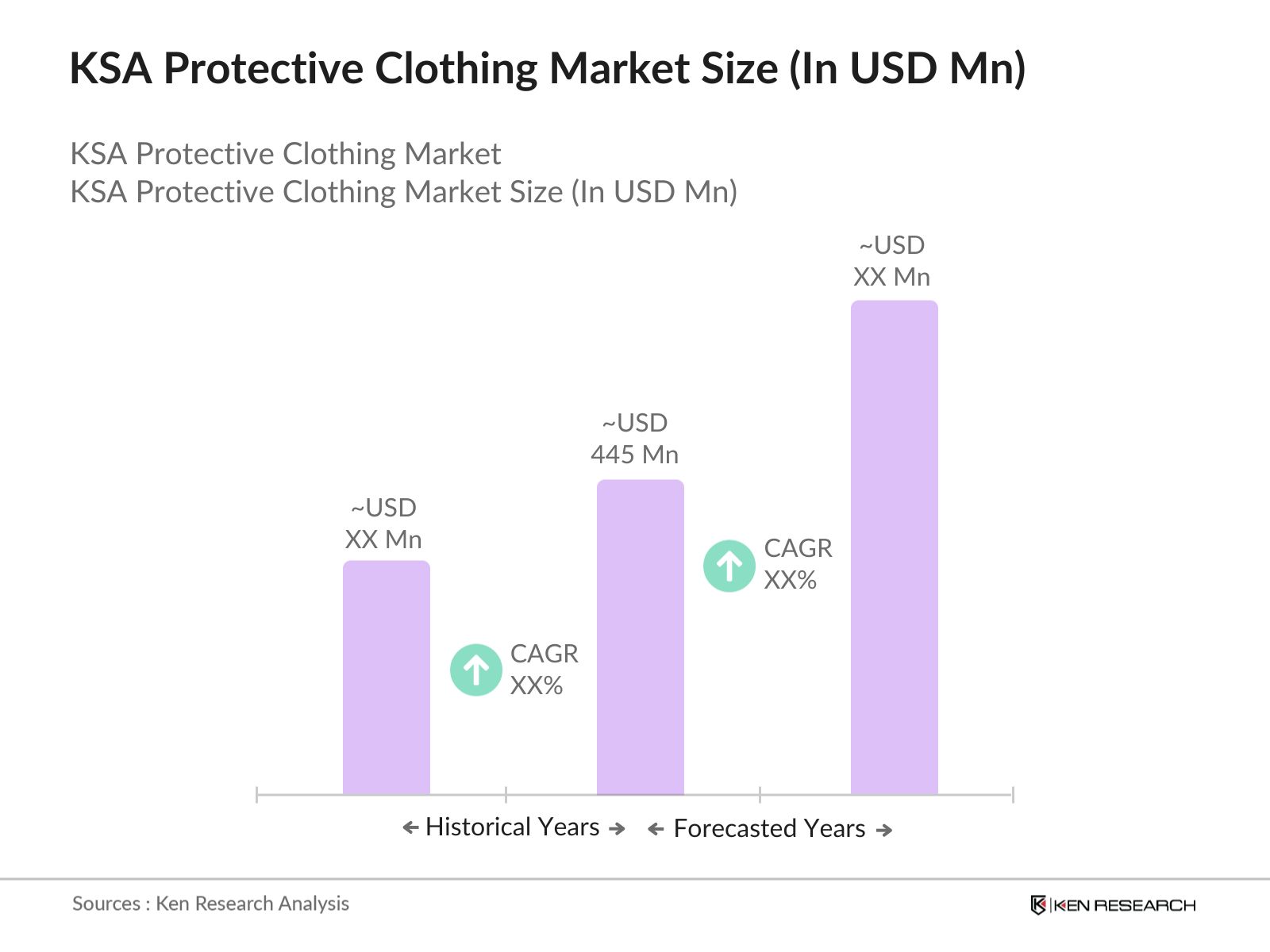
The KSA protective clothing market was valued at USD 445 million, driven by stringent safety regulations and expanding industrial operations across key sectors such as oil & gas and construction.
The KSA protective clothing market faces challenges such as high costs for advanced protective materials and compliance difficulties for smaller companies. Additionally, supply chain disruptions, particularly in raw material sourcing, impact market growth.
Key players in the KSA protective clothing market include DuPont, Honeywell International, 3M Company, Lakeland Industries, and Ansell Limited, dominating due to their technological innovations and robust global distribution networks.
The KSA protective clothing market is driven by industrial expansion in sectors such as oil & gas and construction, government safety regulations, and technological advancements in protective clothing materials.

What makes us stand out is that our consultants follows Robust, Refine and Result (RRR) methodology. i.e. Robust for clear definitions, approaches and sanity checking, Refine for differentiating respondents facts and opinions and Result for presenting data with story

We have set a benchmark in the industry by offering our clients with syndicated and customized market research reports featuring coverage of entire market as well as meticulous research and analyst insights.

While we don't replace traditional research, we flip the method upside down. Our dual approach of Top Bottom & Bottom Top ensures quality deliverable by not just verifying company fundamentals but also looking at the sector and macroeconomic factors.

With one step in the future, our research team constantly tries to show you the bigger picture. We help with some of the tough questions you may encounter along the way: How is the industry positioned? Best marketing channel? KPI's of competitors? By aligning every element, we help maximize success.

Our report gives you instant access to the answers and sources that other companies might choose to hide. We elaborate each steps of research methodology we have used and showcase you the sample size to earn your trust.

If you need any support, we are here! We pride ourselves on universe strength, data quality, and quick, friendly, and professional service.