
MEA Lubricant Market Outlook to 2030
Region:Egypt
Author(s):Naman Rohilla
Product Code:KROD3592
Region:Egypt
Author(s):Naman Rohilla
Product Code:KROD3592
November 2024
87
The MEA lubricant market is dominated by several key players, who leverage their strong production capacities, established distribution networks, and industry expertise to maintain a competitive edge. Saudi Arabias ARAMCO and the UAEs ADNOC are among the regional leaders, while global giants like Shell and ExxonMobil continue to make their mark through innovation and expansion.
|
Company Name |
Establishment Year |
Headquarters |
Production Capacity |
Product Range |
R&D Investments |
Sustainability Initiatives |
Regional Presence |
Strategic Partnerships |
|
Shell |
1907 |
Netherlands |
- |
- |
- |
- |
- |
- |
|
ExxonMobil |
1870 |
USA |
- |
- |
- |
- |
- |
- |
|
ARAMCO |
1933 |
Saudi Arabia |
- |
- |
- |
- |
- |
- |
|
TotalEnergies |
1924 |
France |
- |
- |
- |
- |
- |
- |
|
ADNOC |
1971 |
UAE |
- |
- |
- |
- |
- |
- |
Over the next five years, the MEA lubricant market is expected to experience steady growth driven by the continuous rise in industrial activities, increased vehicle ownership, and the development of sustainable and bio-based lubricants. The region's commitment to infrastructure development, particularly in the GCC, will further stimulate demand for lubricants used in heavy machinery and construction equipment. Sustainability initiatives, coupled with growing awareness of the benefits of synthetic and bio-lubricants, will be key drivers of market growth. The transition towards greener products, along with the expansion of industries such as aviation and marine, will create new opportunities for lubricant manufacturers across the region.
|
By Product Type |
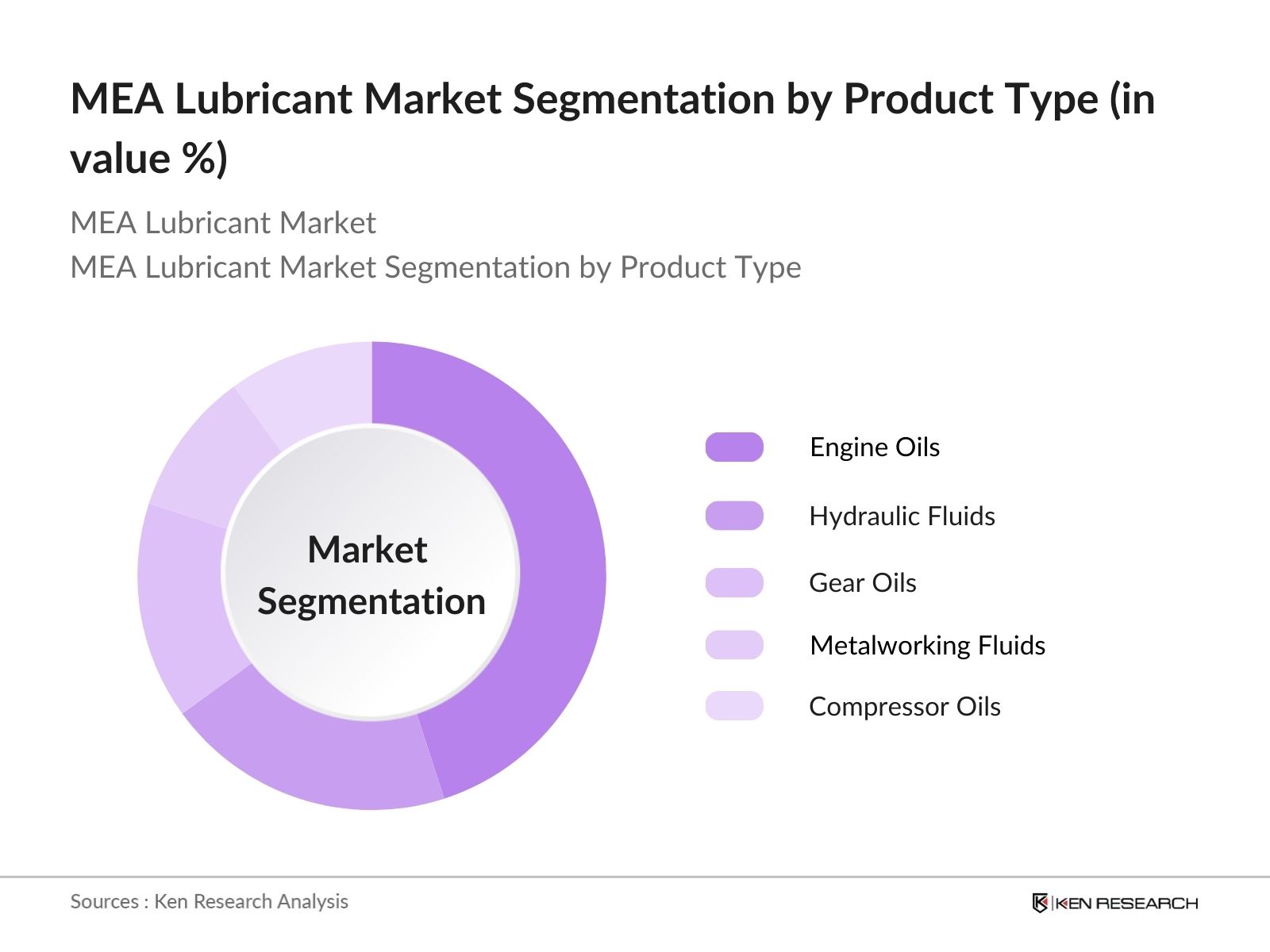
Engine Oils Hydraulic Fluids Gear Oils Metalworking Fluids Compressor Oils |
|
By Application |
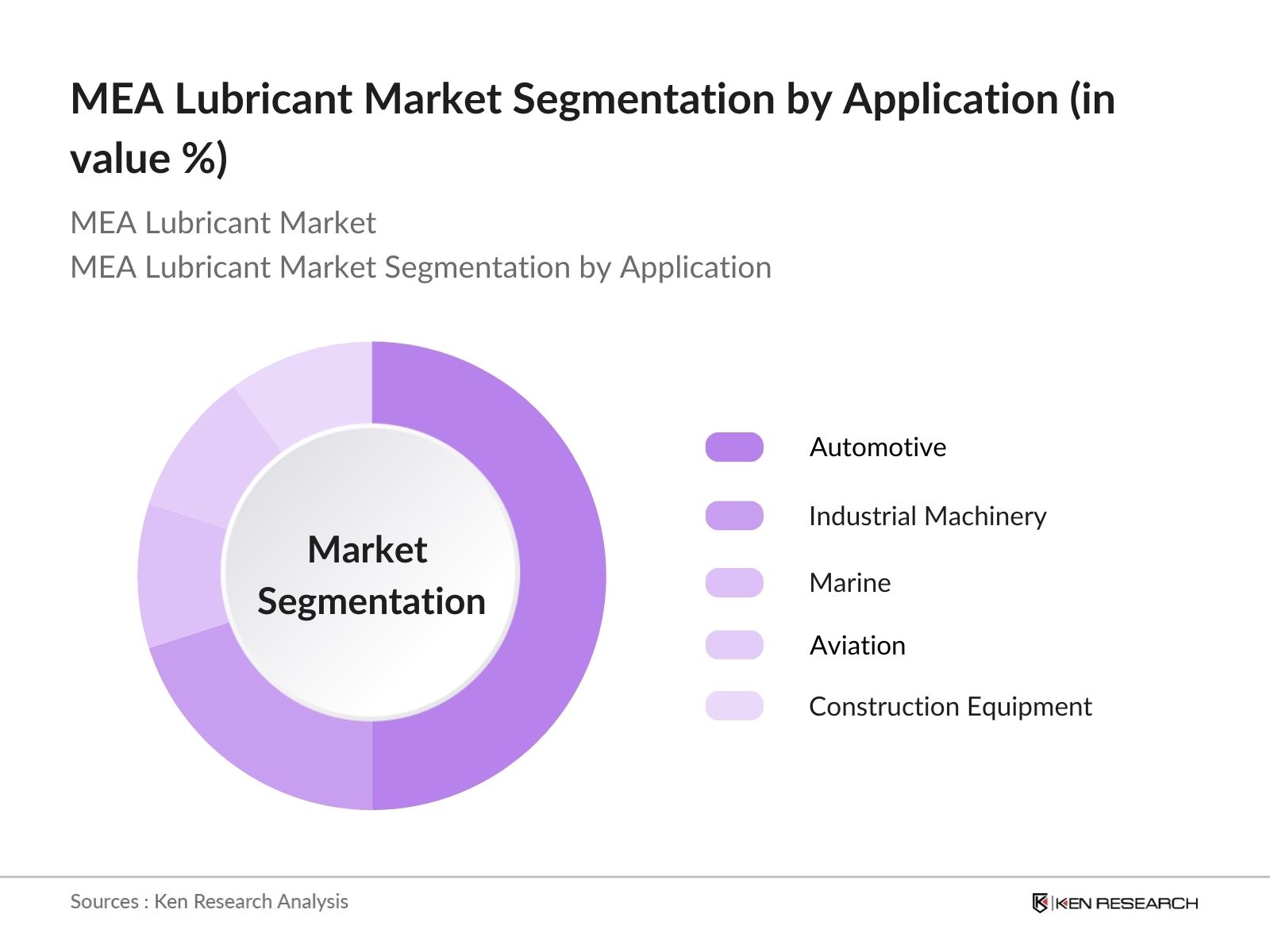
Automotive Industrial Machinery Marine Aviation Construction Equipment |
|
By Base Oil Type |
Mineral Oils Synthetic Oils Semi-Synthetic Oils Bio-Based Lubricants |
|
By End-Use Industry |
Transportation Power Generation Oil & Gas Mining Manufacturing |
|
By Region |
GCC North Africa East Africa West Africa Sub-Saharan Africa |
Key Target Audience
Major Players in MEA Lubricant Market
1.1. Definition and Scope
1.2. Market Taxonomy
1.3. Market Growth Rate
1.4. Market Segmentation Overview
2.1. Historical Market Size
2.2. Year-On-Year Growth Analysis
2.3. Key Market Developments and Milestones
3.1. Growth Drivers
3.1.1. Rise in Automotive Sector Demand
3.1.2. Expansion of Industrial Activities (Region-Specific Industries)
3.1.3. Increased Vehicle Ownership
3.1.4. Government Investments in Infrastructure (Region-Specific Investments)
3.2. Market Challenges
3.2.1. Volatility in Crude Oil Prices
3.2.2. Supply Chain Disruptions
3.2.3. Rising Environmental Concerns (Impact on Lubricant Composition)
3.2.4. Shift Toward Electric Vehicles
3.3. Opportunities
3.3.1. Growth in Bio-Based Lubricants
3.3.2. Technological Advancements in Additives and Base Oils
3.3.3. Expansion in Middle Eastern Refinery Capacity
3.3.4. Emerging Markets in Africa (Country-Specific Opportunities)
3.4. Trends
3.4.1. Increasing Use of Synthetic and Semi-Synthetic Lubricants
3.4.2. Focus on Fuel Efficiency and Emissions Reduction
3.4.3. Growing Demand for Low-Viscosity Engine Oils
3.4.4. Adoption of Digital Monitoring in Lubricant Management
3.5. Government Regulations
3.5.1. Emission Standards (Regional Differences in Lubricant Regulations)
3.5.2. Environmental Protection Laws (Influence on Manufacturing Processes)
3.5.3. National Standards for Lubricants (Certification and Compliance)
3.5.4. Waste Oil Management Policies
3.6. SWOT Analysis
3.7. Stakeholder Ecosystem
3.8. Porters Five Forces Analysis
3.9. Competition Ecosystem
4.1. By Base Oil (In Value %)
4.1.1. Mineral Oil
4.1.2. Synthetic Oil
4.1.3. Semi-Synthetic Oil
4.1.4. Bio-Based Oil
4.2. By Application (In Value %)
4.2.1. Automotive Lubricants
4.2.2. Industrial Lubricants
4.2.3. Marine Lubricants
4.2.4. Aviation Lubricants
4.2.5. Agriculture Lubricants
4.3. By Product Type (In Value %)
4.3.1. Engine Oils
4.3.2. Transmission Fluids
4.3.3. Hydraulic Fluids
4.3.4. Gear Oils
4.3.5. Greases
4.4. By End-Use Industry (In Value %)
4.4.1. Automotive
4.4.2. Manufacturing
4.4.3. Construction
4.4.4. Mining
4.4.5. Power Generation
4.5. By Region (In Value %)
4.5.1. Middle East (UAE, Saudi Arabia, Qatar, Others)
4.5.2. North Africa (Egypt, Morocco, Tunisia, Others)
4.5.3. Sub-Saharan Africa (South Africa, Nigeria, Kenya, Others)
5.1. Detailed Profiles of Major Competitors
5.1.1. Shell
5.1.2. ExxonMobil
5.1.3. BP (Castrol)
5.1.4. Chevron
5.1.5. TotalEnergies
5.1.6. Lukoil
5.1.7. ENOC
5.1.8. FUCHS
5.1.9. Caltex
5.1.10. Petronas
5.1.11. Saudi Aramco
5.1.12. Phillips 66
5.1.13. Gulf Oil
5.1.14. Engen Petroleum
5.1.15. Repsol
5.2. Cross Comparison Parameters (Inception Year, Market Share, Product Portfolio, Sustainability Initiatives, Technological Innovations, Regional Presence, Strategic Alliances, R&D Investments)
5.3. Market Share Analysis
5.4. Strategic Initiatives
5.5. Mergers and Acquisitions
5.6. Investment Analysis
5.7. Venture Capital and Private Equity Investments
6.1. Environmental Standards and Regulations
6.2. Compliance Requirements for Industrial Lubricants
6.3. Certifications (ISO, API, SAE Compliance)
7.1. Future Market Size Projections
7.2. Key Factors Driving Future Market Growth
8.1. By Product Type (In Value %)
8.2. By Application (In Value %)
8.3. By Base Oil Type (In Value %)
8.4. By End-Use Industry (In Value %)
8.5. By Region (In Value %)
9.1. TAM/SAM/SOM Analysis
9.2. Customer Cohort Analysis
9.3. White Space Opportunity Analysis
9.4. Marketing Initiatives
The first step involves constructing an ecosystem map encompassing all major stakeholders within the MEA Lubricant Market. Extensive desk research is conducted, utilizing secondary and proprietary databases to gather comprehensive information on industry trends, market size, and growth drivers. Key variables that influence market dynamics, such as industrialization rates and automotive sector growth, are identified.
In this phase, historical data related to the MEA Lubricant Market is analyzed to evaluate market penetration and consumption patterns across key segments. This process includes assessing the revenue generation of various market segments such as automotive and industrial applications. In addition, service quality statistics and usage trends are analyzed to ensure the reliability of the market revenue estimates.
Hypotheses based on market trends and key drivers are developed and validated through expert consultations. These are conducted via computer-assisted telephone interviews (CATIs) with professionals from lubricant manufacturers, industrial users, and regional distributors. Their insights are instrumental in refining market forecasts and verifying key data points.
The final phase involves engaging directly with leading lubricant manufacturers to acquire detailed insights into product categories, consumer preferences, and sales performance. This information is used to verify and complement data gathered through bottom-up and top-down approaches, ensuring the accuracy and comprehensiveness of the market analysis.
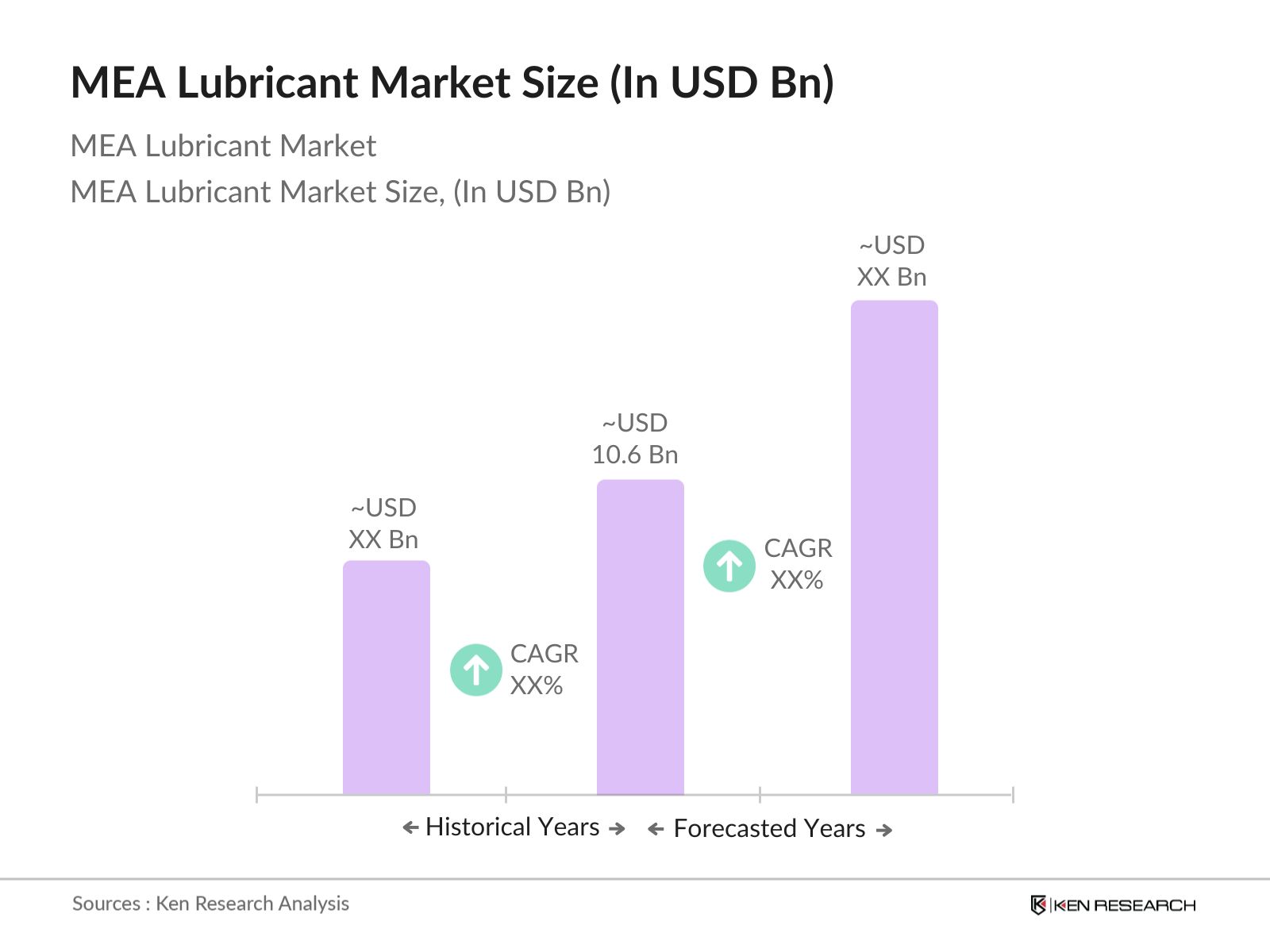
The MEA lubricant market is valued at USD 10.6 billion, driven by industrial growth, infrastructure development, and rising vehicle ownership rates in key countries like Saudi Arabia, the UAE, and Egypt.
Challenges in the MEA lubricant market include crude oil price volatility, stringent environmental regulations, and growing competition from unorganized players and counterfeit products, which threaten profitability and market share.
Key players in the MEA lubricant market include Shell, ExxonMobil, ARAMCO, ADNOC, and TotalEnergies. These companies dominate due to their robust production capacities, strong distribution networks, and commitment to R&D and sustainability.
The MEA lubricant market is driven by increased industrial activity, the rise in automotive ownership, and the demand for high-performance lubricants in sectors like construction and manufacturing. The development of bio-based lubricants and synthetic products also contributes to market growth.

What makes us stand out is that our consultants follows Robust, Refine and Result (RRR) methodology. i.e. Robust for clear definitions, approaches and sanity checking, Refine for differentiating respondents facts and opinions and Result for presenting data with story

We have set a benchmark in the industry by offering our clients with syndicated and customized market research reports featuring coverage of entire market as well as meticulous research and analyst insights.

While we don't replace traditional research, we flip the method upside down. Our dual approach of Top Bottom & Bottom Top ensures quality deliverable by not just verifying company fundamentals but also looking at the sector and macroeconomic factors.

With one step in the future, our research team constantly tries to show you the bigger picture. We help with some of the tough questions you may encounter along the way: How is the industry positioned? Best marketing channel? KPI's of competitors? By aligning every element, we help maximize success.

Our report gives you instant access to the answers and sources that other companies might choose to hide. We elaborate each steps of research methodology we have used and showcase you the sample size to earn your trust.

If you need any support, we are here! We pride ourselves on universe strength, data quality, and quick, friendly, and professional service.