
Middle East and Africa Pipe Market Outlook to 2030
Region:Egypt
Author(s):Shreya Garg
Product Code:KROD2374
Region:Egypt
Author(s):Shreya Garg
Product Code:KROD2374
November 2024
90
The Middle East and Africa Pipe Market is valued at USD 8.1 billion, driven by the region's increasing investments in infrastructure development, especially in sectors such as oil & gas, construction, and water management. A robust pipeline infrastructure is essential for transportation, contributing significantly to market demand. In particular, large-scale oil extraction and refining projects in countries like Saudi Arabia and UAE, as well as water management projects across the region, are key drivers behind the market's growth. These investments are backed by government initiatives to modernize and expand infrastructure to meet rising population needs and industrial expansion.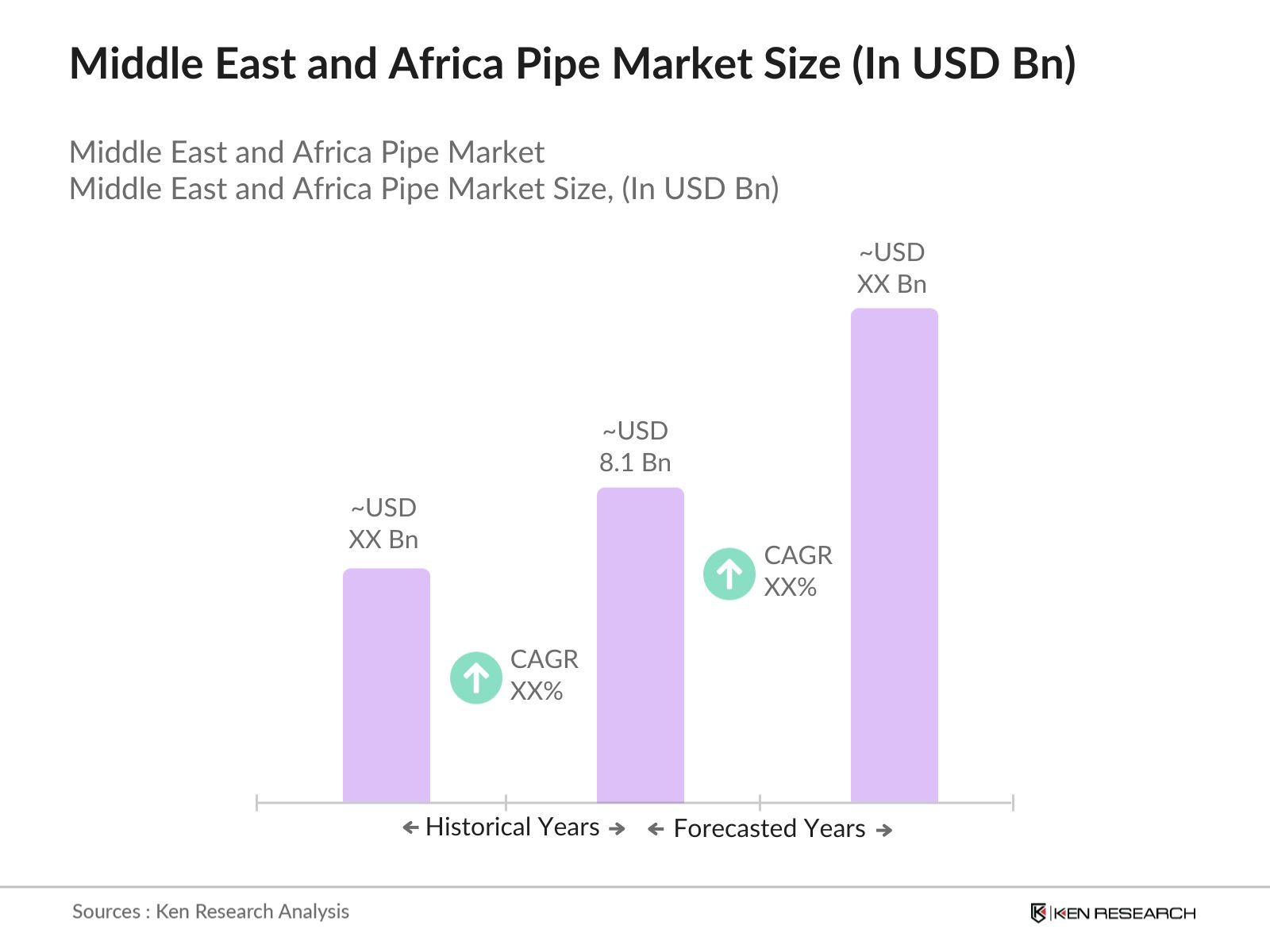
The Middle East, particularly Saudi Arabia, UAE, and Qatar, dominates the market due to their substantial oil & gas industry, which demands large quantities of specialized pipes. These countries are major players in global energy markets, and their robust infrastructure projects for oil transportation and water desalination provide significant demand. In Africa, Egypt and South Africa lead the market, driven by rapid urbanization and the need for efficient water and sanitation systems.
Trade policies in the MEA region significantly affect the pipe market, particularly in terms of import-export regulations. In 2024, countries like Nigeria have introduced higher tariffs on steel imports, while GCC countries enjoy lower tariffs due to regional trade agreements. These trade policies create disparities in raw material costs across different regions, affecting pricing strategies and project execution timelines. The variation in trade policies also impacts manufacturers ability to source materials and export finished products to other countries.
By Material Type: The market is segmented by material type into steel pipes, plastic pipes, concrete pipes, copper pipes, and composite pipes. Among these, plastic pipes hold a dominant share due to their low cost, ease of installation, and resistance to corrosion, making them ideal for water distribution and sewage systems. The demand for PVC and HDPE pipes has surged with the increasing focus on water management and the construction sector in countries like Saudi Arabia and Egypt, where large-scale projects require flexible yet durable piping solutions.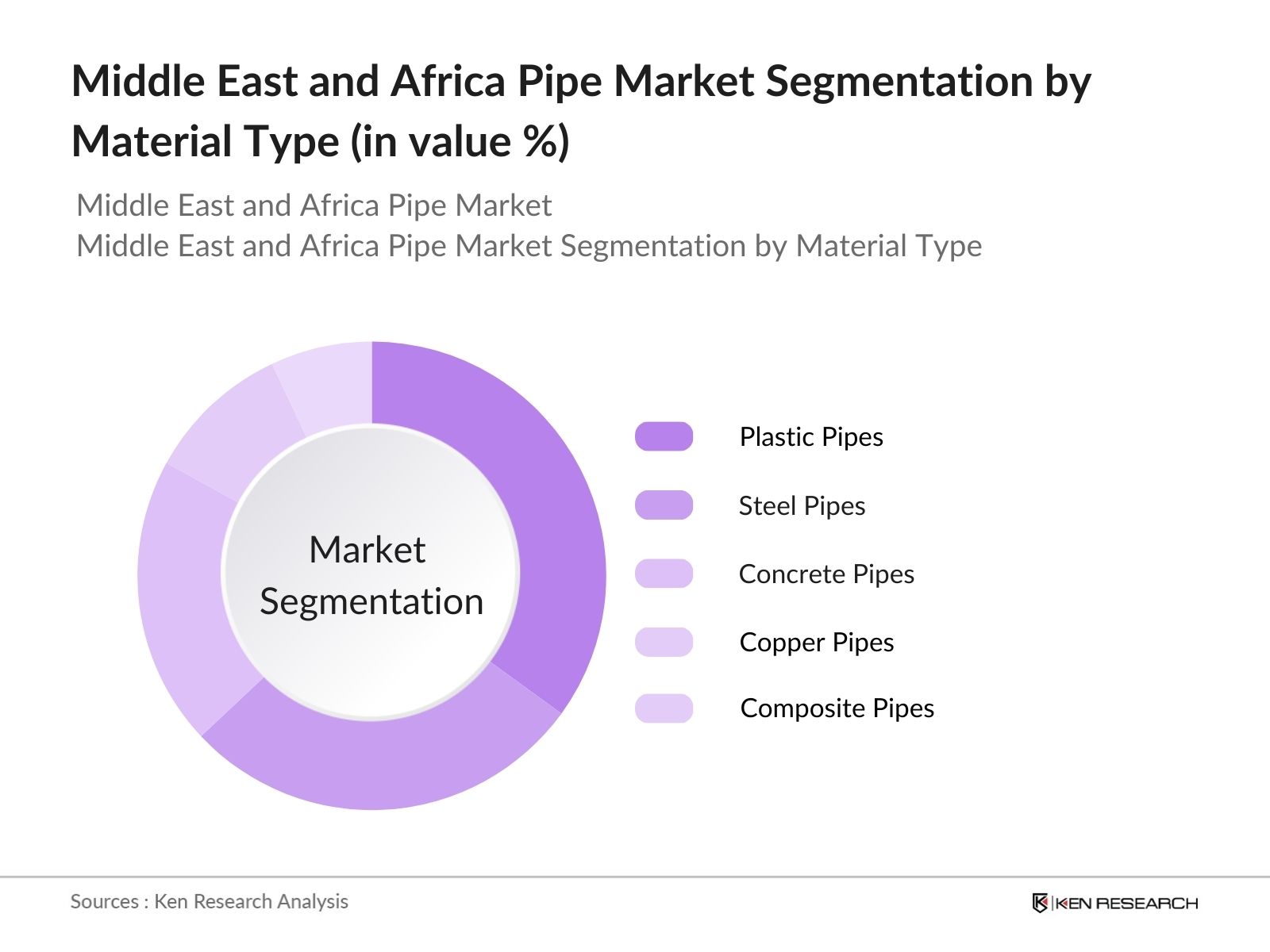
By Application: The market is also segmented by application into oil & gas, water & wastewater management, building & construction, agriculture, and industrial. The oil & gas segment dominates the market due to the critical role pipes play in the transportation of crude oil and natural gas across vast distances. Countries like Saudi Arabia and the UAE, being major oil producers, require a continuous supply of specialized pipes to maintain and expand their oil transportation networks. Additionally, the growing demand for natural gas, coupled with advancements in pipe technology, supports the dominance of this segment.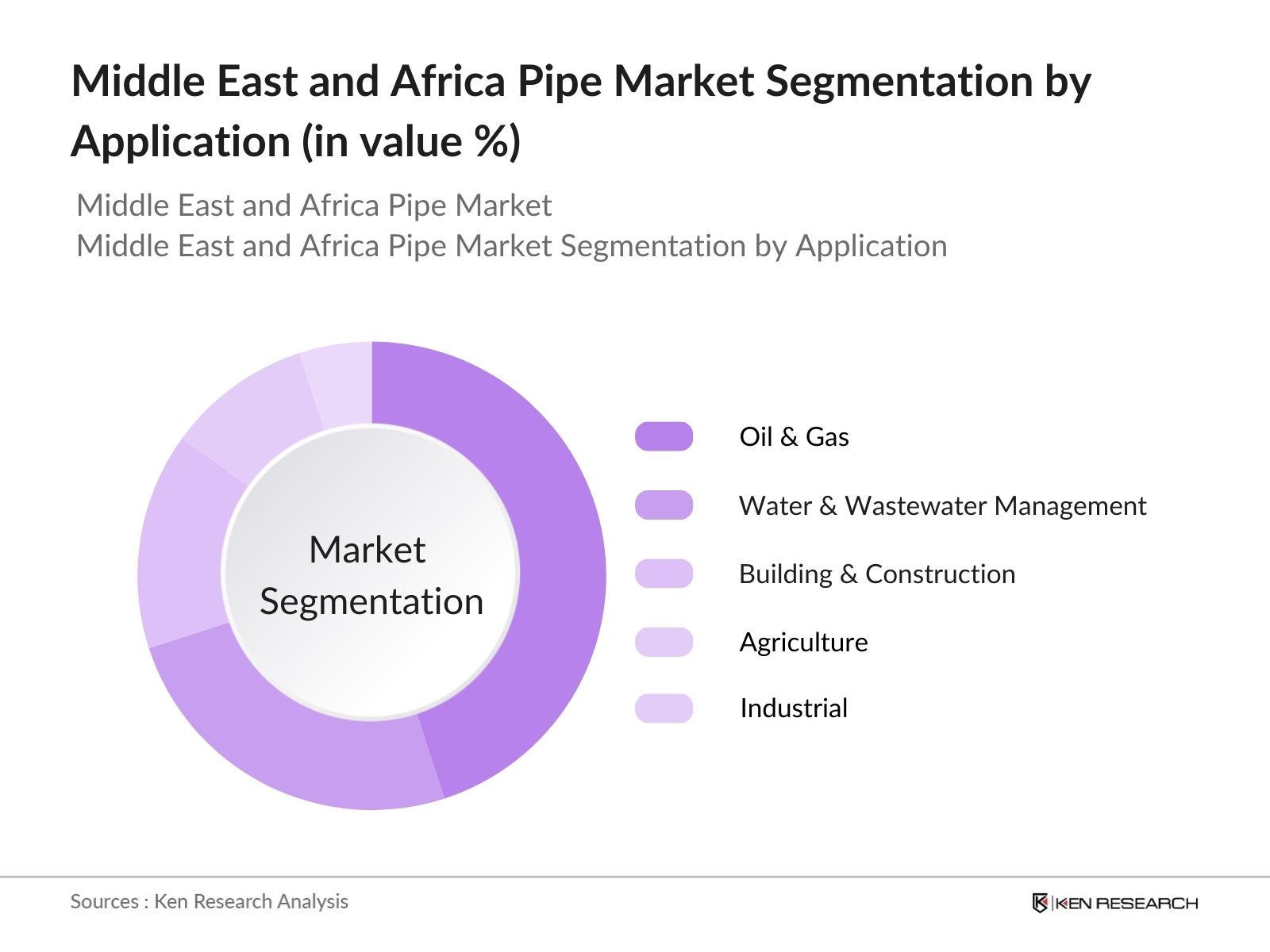
The Middle East and Africa Pipe Market is characterized by the presence of both regional and global players. Key companies operating in this market leverage their experience, technological capabilities, and strong distribution networks to maintain dominance. Major players such as Saudi Arabian Amiantit Company and Future Pipe Industries are leading the market due to their specialization in pipe production for oil and water infrastructure projects.
|
Company Name |
Establishment Year |
Headquarters |
Specialization |
Number of Employees |
Annual Revenue (USD bn) |
Geographic Presence |
Key Markets Served |
|---|---|---|---|---|---|---|---|
|
Saudi Arabian Amiantit Company |
1968 |
Dammam, Saudi Arabia |
Pipe Manufacturing (Oil, Water) |
3,500 |
1.5 |
GCC, Africa |
Oil & Gas, Water |
|
Future Pipe Industries |
1984 |
Dubai, UAE |
Fiberglass Pipe Systems |
4,000 |
1.2 |
MEA, Europe |
Oil & Gas, Industrial |
|
Jindal SAW Gulf |
1984 |
Abu Dhabi, UAE |
Steel Pipe Manufacturing |
2,500 |
0.8 |
GCC, North Africa |
Oil & Gas |
|
Saint-Gobain PAM |
1853 |
Paris, France |
Ductile Iron Pipes |
3,000 |
1.7 |
MEA, Europe |
Water & Construction |
|
AlMunif Pipe |
1987 |
Riyadh, Saudi Arabia |
Plastic Pipe Manufacturing |
2,000 |
0.5 |
GCC, Africa |
Water & Construction |
Industrial Expansion: The Middle East and Africa (MEA) region is witnessing robust industrial expansion, particularly in the oil & gas, construction, and water infrastructure sectors. In 2023, the oil & gas sector accounted for approximately 40% of the region's GDP. Countries like Saudi Arabia and the UAE are investing heavily in their construction industries, contributing to rising demand for durable and cost-effective pipes. Moreover, over $80 billion has been allocated to water infrastructure projects in the Gulf countries, as per the World Banks 2023 economic data, ensuring a sustained demand for piping systems.
Urbanization and Population Growth: Urbanization is another key driver of the MEA pipe market, with the region's urban population growing by approximately 50 million from 2022 to 2024, according to World Bank data. This rapid urban growth fuels demand for residential and commercial infrastructure, particularly in countries like Nigeria, where the urbanization rate is increasing at 4% annually. The UAEs population is expected to hit 10 million by 2025, increasing the need for modern residential infrastructure, supported by a $32 billion construction boom.
Technological Advancements: Technological advancements in piping solutions, particularly corrosion-resistant materials, are reshaping the market. The adoption of advanced materials such as HDPE (high-density polyethylene) and PVC (polyvinyl chloride) has surged due to their durability and lower maintenance costs. According to the World Bank, technological innovations in pipe materials have increased installation efficiency in water infrastructure projects across the MEA region in 2024, particularly in water-stressed regions like Saudi Arabia and South Africa.
Fluctuations in Raw Material Prices: The MEA pipe market faces significant challenges due to fluctuating raw material prices, especially for steel, copper, and plastics. In 2023, global steel prices fluctuated between $810 and $730 per ton, impacting pipe manufacturing costs in the region. The volatility of copper prices, which ranged from $8,500 to $9,200 per ton in 2023, further strained manufacturers. These price fluctuations hinder consistent production and procurement, affecting both small-scale and large-scale projects, as reported by the World Bank.
Trade Restrictions and Import/Export Tariffs: Trade restrictions and fluctuating import/export tariffs across the MEA region pose challenges to the pipe market. For instance, the imposition of a 5-10% tariff on imported pipes by countries like South Africa and Nigeria in 2023 raised costs for domestic construction projects. According to IMF data, regional variations in trade policies, such as those between the GCC and Sub-Saharan Africa, make it difficult for companies to standardize their pricing and product availability.
Over the next five years, the Middle East and Africa Pipe Market is expected to experience steady growth driven by sustained investments in infrastructure development, particularly in the oil & gas and water sectors. Governments across the region are focusing on enhancing their water supply systems and expanding oil transportation infrastructure, leading to an increased demand for high-quality pipes. Additionally, technological advancements in pipe materials, such as corrosion-resistant plastic and composite pipes, will further fuel market expansion.
Growth of the Water Desalination Industry: The growing water desalination industry in the MEA region offers a significant opportunity for the pipe market. According to World Bank data, the region produces 50% of the worlds desalinated water, with Saudi Arabia alone investing $23 billion in desalination plants in 2023. These projects require highly specialized piping systems made from corrosion-resistant materials such as stainless steel and advanced composites, offering a lucrative market opportunity.
Expansion into Emerging Markets: Expansion into emerging markets like North Africa and Sub-Saharan Africa offers significant growth potential for the pipe industry. According to World Bank data, over $60 billion was allocated to infrastructure development in Sub-Saharan Africa in 2023, with a large portion dedicated to water infrastructure and construction projects. This development has spurred demand for durable and cost-effective piping solutions, particularly in countries like Kenya and Ethiopia.
|
Material Type |
Steel Pipes Plastic Pipes (PVC, HDPE, PEX) Concrete Pipes Copper Pipes Composite Pipes |
|
Application |
Oil & Gas Water & Wastewater Management Building & Construction Industrial |
|
Diameter |
Small Diameter Pipes Medium Diameter Pipes Large Diameter Pipes |
|
End-User |
Residential Commercial Industrial |
|
Region |
GCC Countries North Africa Sub-Saharan Africa East Africa Southern Africa |
1.1. Definition and Scope
1.2. Market Taxonomy
1.3. Market Growth Rate
1.4. Market Segmentation Overview
2.1. Historical Market Size
2.2. Year-On-Year Growth Analysis
2.3. Key Market Developments and Milestones
3.1. Growth Drivers
3.1.1. Industrial Expansion (Oil & Gas, Construction, Water Infrastructure)
3.1.2. Government Infrastructure Projects (Regional Economic Development, Water Supply & Sanitation Initiatives)
3.1.3. Urbanization and Population Growth (Impact on Residential and Commercial Demand)
3.1.4. Technological Advancements (Piping Solutions, Corrosion Resistance Materials)
3.2. Market Challenges
3.2.1. Fluctuations in Raw Material Prices (Steel, Copper, Plastics)
3.2.2. Stringent Environmental Regulations (Sustainability Compliance)
3.2.3. Trade Restrictions and Import/Export Tariffs (Regional Variations)
3.3. Opportunities
3.3.1. Growth of the Water Desalination Industry (Increasing Demand for Specialized Piping)
3.3.2. Rising Investment in Smart City Projects (Demand for Smart Piping Systems)
3.3.3. Expansion into Emerging Markets (North Africa, Sub-Saharan Africa)
3.4. Trends
3.4.1. Shift Toward Lightweight and Durable Materials (Plastic Pipes, Composite Pipes)
3.4.2. Increased Use of Prefabricated Piping Systems (Faster Installations)
3.4.3. Adoption of Digital Technologies in Pipe Monitoring (Smart Pipelines)
3.5. Government Regulations
3.5.1. National Building Codes and Standards (Regulatory Requirements for Piping in Construction)
3.5.2. Environmental Protection Policies (Impact on Material Selection)
3.5.3. Trade Policies (Import-Export Regulations)
3.5.4. Public-Private Partnerships in Water Management Projects
3.6. SWOT Analysis
3.7. Stakeholder Ecosystem
3.8. Porters Five Forces Analysis (Bargaining Power of Buyers, Threat of Substitutes, etc.)
3.9. Competition Ecosystem
4.1. By Material Type (In Value %)
4.1.1. Steel Pipes
4.1.2. Plastic Pipes (PVC, HDPE, PEX)
4.1.3. Concrete Pipes
4.1.4. Copper Pipes
4.1.5. Composite Pipes
4.2. By Application (In Value %)
4.2.1. Oil & Gas
4.2.2. Water & Wastewater Management
4.2.3. Building & Construction
4.2.4. Agriculture
4.2.5. Industrial
4.3. By Diameter (In Value %)
4.3.1. Small Diameter Pipes
4.3.2. Medium Diameter Pipes
4.3.3. Large Diameter Pipes
4.4. By End-User (In Value %)
4.4.1. Residential
4.4.2. Commercial
4.4.3. Industrial
4.5. By Region (In Value %)
4.5.1. GCC Countries
4.5.2. North Africa
4.5.3. Sub-Saharan Africa
4.5.4. East Africa
4.5.5. Southern Africa
5.1. Detailed Profiles of Major Companies
5.1.1. Saudi Arabian Amiantit Company
5.1.2. National Pipe Company Ltd.
5.1.3. Union Pipes Industry L.L.C
5.1.4. Hepworth
5.1.5. Future Pipe Industries
5.1.6. Gulf Plastic Industries
5.1.7. Jindal SAW Gulf
5.1.8. Saint-Gobain PAM
5.1.9. AlMunif Pipe
5.1.10. Arabian Pipes Company
5.1.11. Emirates Steel Pipes
5.1.12. Advanced Plastic Industries (API)
5.1.13. Al-Bilad Concrete Pipe Co.
5.1.14. Modern Plastic Industry LLC
5.1.15. Union Pipes & Fittings Co.
5.2. Cross Comparison Parameters (No. of Employees, Headquarters, Inception Year, Revenue, Material Type Focus, Key Market Segments, Market Share, Presence in MEA)
5.3. Market Share Analysis (Competitor-wise, Regional Analysis)
5.4. Strategic Initiatives
5.5. Mergers and Acquisitions
5.6. Investment Analysis
5.7. Venture Capital Funding
5.8. Government Grants and Incentives
5.9. Private Equity Investments
6.1. Environmental Standards (Emissions, Material Sustainability)
6.2. Compliance Requirements (Quality Certifications, ISO Standards)
6.3. Certification Processes (Product Approvals, Testing Requirements)
7.1. Future Market Size Projections
7.2. Key Factors Driving Future Market Growth
8.1. By Material Type (In Value %)
8.2. By Application (In Value %)
8.3. By Diameter (In Value %)
8.4. By End-User (In Value %)
8.5. By Region (In Value %)
9.1. TAM/SAM/SOM Analysis
9.2. Customer Cohort Analysis
9.3. Market Entry Strategies
9.4. White Space Opportunity Analysis
Disclaimer Contact UsThe first step involves mapping the ecosystem of the Middle East and Africa Pipe Market. This is achieved through in-depth secondary research using reputable databases and proprietary tools. Key variables influencing market trends, such as material demand, application areas, and regulatory impacts, are identified.
This phase entails the collection of historical data related to market size, material consumption, and revenue generation across different application areas. The data is then analyzed to understand market penetration and identify key growth drivers.
Key market assumptions are tested through consultations with industry experts and pipe manufacturers. These experts provide insights into material innovations, evolving regulatory standards, and operational efficiencies, ensuring data accuracy.
The final step combines all the gathered data and expert insights into a cohesive report. Detailed analyses of market segmentation, key players, and growth projections are provided, ensuring a comprehensive and validated market assessment.
The Middle East and Africa Pipe Market is valued at USD 8.1 billion, with demand largely driven by the oil & gas and water management sectors.
Challenges include fluctuating raw material prices, environmental regulations regarding plastic and steel pipes, and trade restrictions across different countries.
Key players include Saudi Arabian Amiantit Company, Future Pipe Industries, Jindal SAW Gulf, Saint-Gobain PAM, and AlMunif Pipe.
Key growth drivers include the increasing demand for oil & gas transportation infrastructure, rapid urbanization, and government investments in water management systems.
Plastic pipes dominate due to their cost-effectiveness, corrosion resistance, and wide application in water and sewage systems.

What makes us stand out is that our consultants follows Robust, Refine and Result (RRR) methodology. i.e. Robust for clear definitions, approaches and sanity checking, Refine for differentiating respondents facts and opinions and Result for presenting data with story

We have set a benchmark in the industry by offering our clients with syndicated and customized market research reports featuring coverage of entire market as well as meticulous research and analyst insights.

While we don't replace traditional research, we flip the method upside down. Our dual approach of Top Bottom & Bottom Top ensures quality deliverable by not just verifying company fundamentals but also looking at the sector and macroeconomic factors.

With one step in the future, our research team constantly tries to show you the bigger picture. We help with some of the tough questions you may encounter along the way: How is the industry positioned? Best marketing channel? KPI's of competitors? By aligning every element, we help maximize success.

Our report gives you instant access to the answers and sources that other companies might choose to hide. We elaborate each steps of research methodology we have used and showcase you the sample size to earn your trust.

If you need any support, we are here! We pride ourselves on universe strength, data quality, and quick, friendly, and professional service.