
Middle East Asia Industrial Robot Market Outlook to 2030
Region:Middle East
Author(s):Shreya Garg
Product Code:KROD3833
November 2024
96
About the Report
MEA Industrial Robot Market Overview
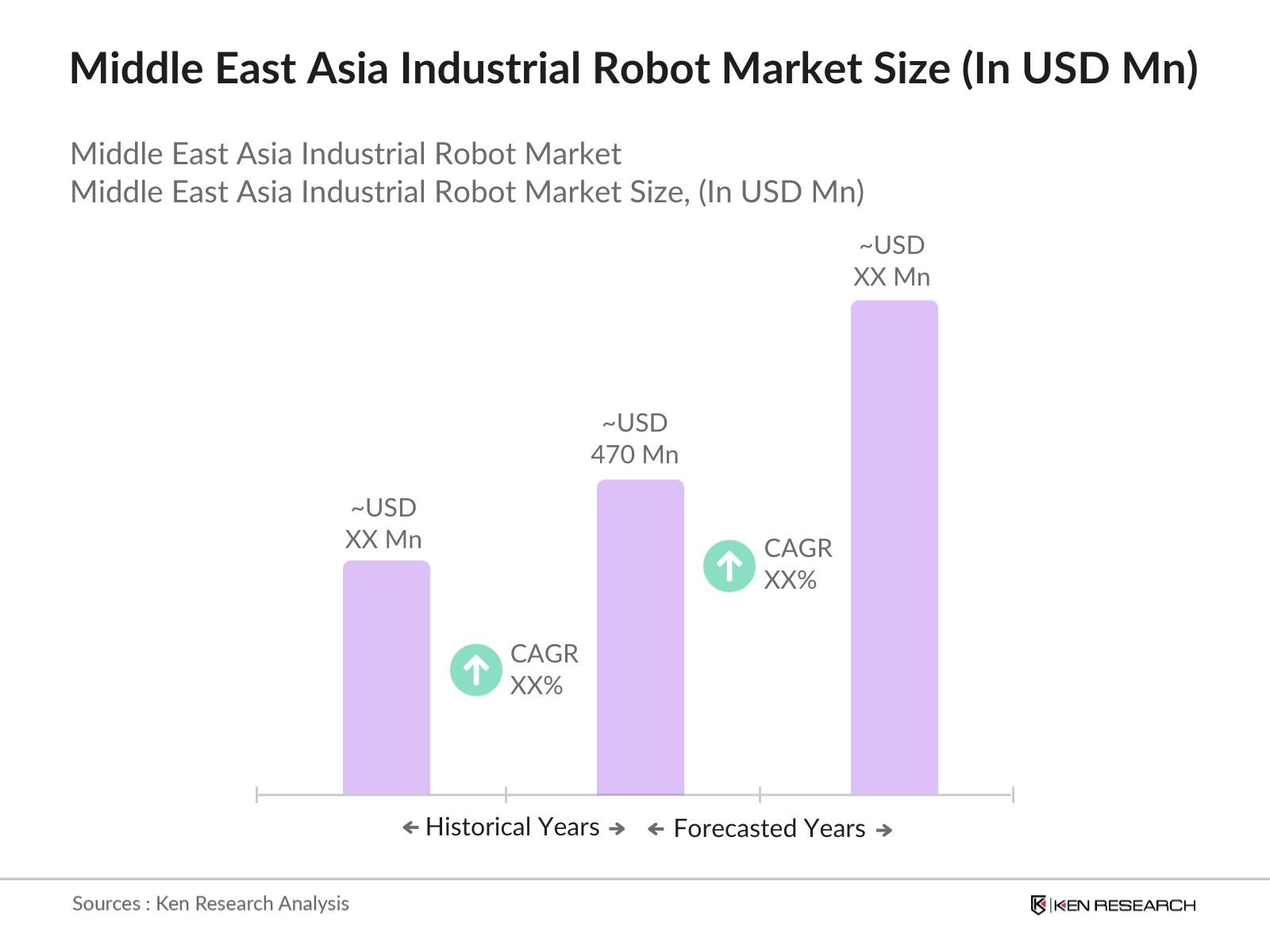
- The MEA industrial robot market is valued at USD 470 million based on a five-year historical analysis. This market has been driven by the adoption of advanced technologies such as automation and artificial intelligence in manufacturing sectors. Industries in the region are increasingly focusing on improving productivity, reducing operational costs, and enhancing product quality through robotic solutions. The growing demand for flexible and efficient manufacturing processes has further accelerated market growth.
- Countries like Saudi Arabia, the UAE, and South Africa dominate the MEA industrial robot market. These countries have heavily invested in automation technologies to reduce reliance on manual labor, particularly in sectors like automotive, electronics, and logistics. The strong industrial base and increasing demand for industrial automation have led these nations to lead the region in terms of market share. In particular, the UAE's advanced infrastructure and its focus on smart manufacturing have made it a regional hub for industrial robots.
- Several MEA governments have introduced incentives to encourage the adoption of automation technologies in the industrial sector. In 2024, Saudi Arabia and the UAE launched new subsidy programs that offer companies financial assistance of up to USD 100,000 for integrating robotics into their operations. These incentives aim to drive technological advancement and increase the competitiveness of local industries on the global stage.
MEA Industrial Robot Market Segmentation
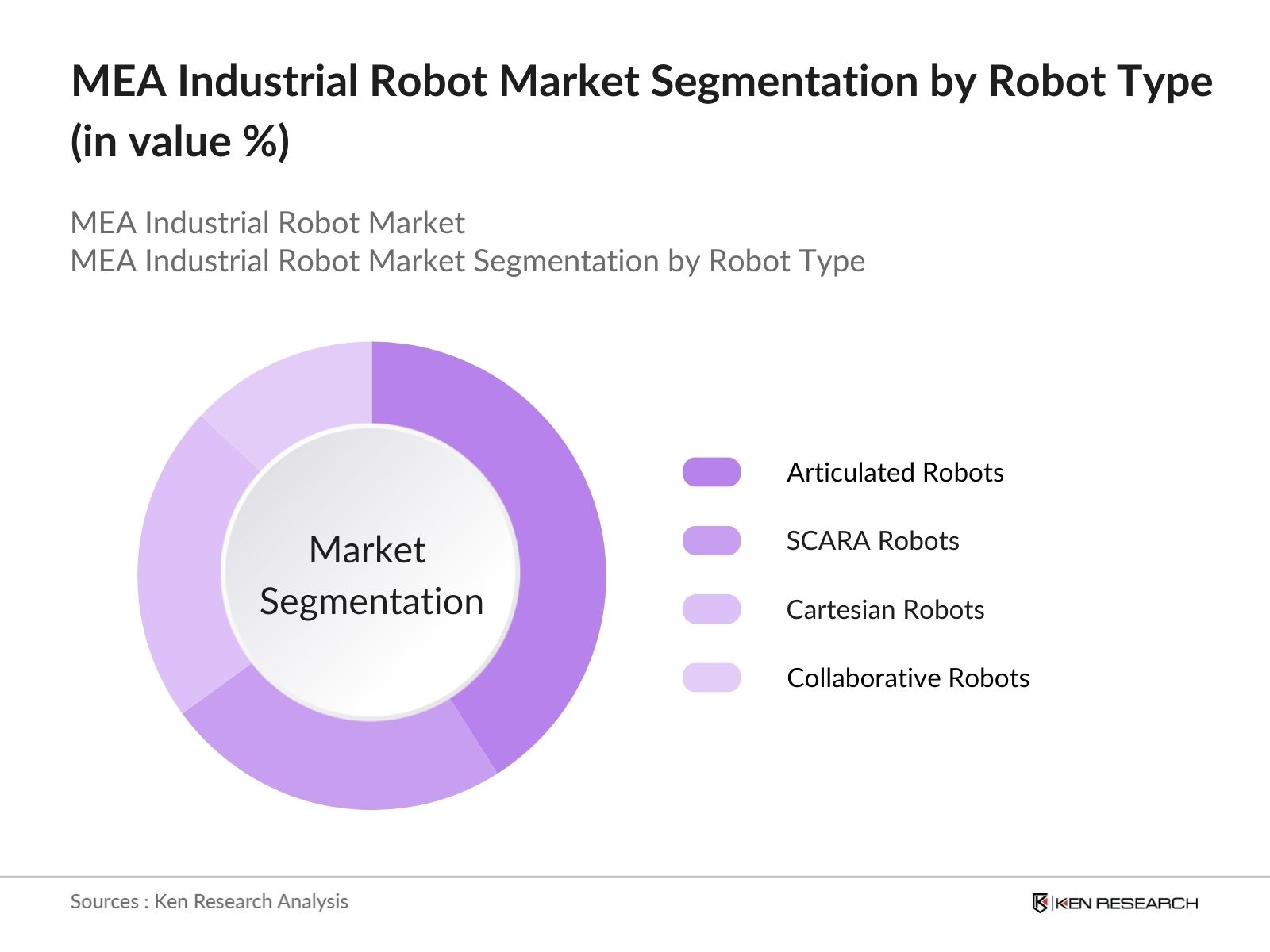
By Robot Type: The market is segmented by robot type into articulated robots, SCARA robots, cartesian robots, and collaborative robots. Articulated robots dominate the market due to their flexibility and versatility across multiple industries, including automotive and electronics. These robots are ideal for tasks like welding, painting, and assembly, which require a wide range of motion. Companies are increasingly adopting articulated robots to enhance their operational efficiency and reduce production time, contributing to their market share.
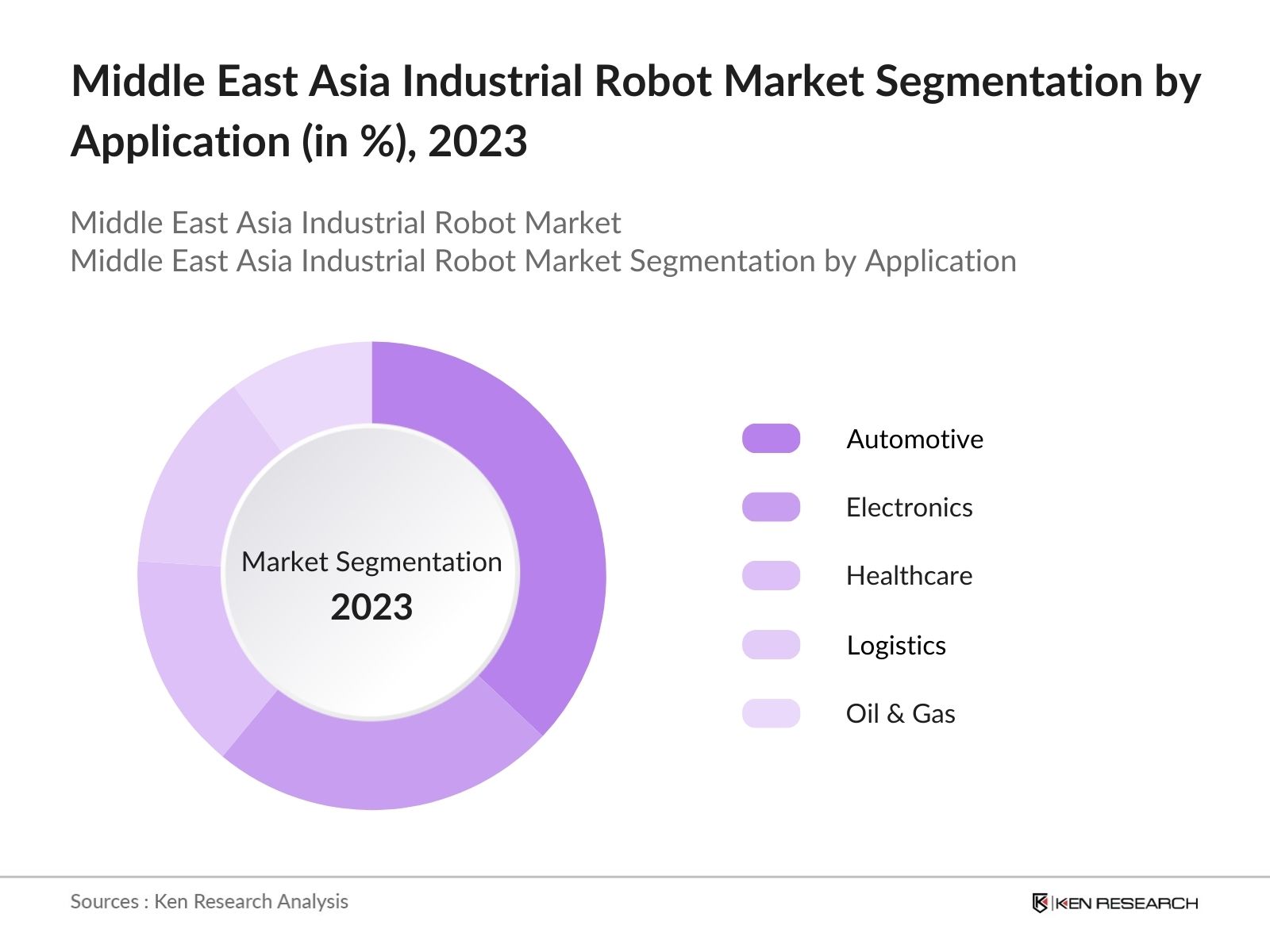
By Application: The market is also segmented by application into automotive, electronics, healthcare, logistics, and oil & gas. The automotive industry holds a dominant market share under this segmentation. Industrial robots are widely used in automotive manufacturing for assembly, painting, and welding processes. The high level of automation in automotive plants and the demand for precision and efficiency in production have made the automotive sector the largest contributor to the industrial robot market in the MEA region.
 MEA Industrial Robot Market Competitive Landscape
The MEA industrial robot market is dominated by a few major players, both global and regional, such as ABB, KUKA, and FANUC. These companies have established strong distribution networks and R&D centers across the region, providing cutting-edge robotic solutions to industries. The presence of local players and global giants has created a competitive environment where innovation and technology are key drivers.
|
Company |
Establishment Year |
Headquarters |
No. of Employees |
R&D Investment |
Revenue (USD Bn) |
Global Market Presence |
Product Range |
Technology Focus |
M&A Activities |
|---|---|---|---|---|---|---|---|---|---|
|
ABB Ltd. |
1988 |
Zurich, Switzerland |
|||||||
|
KUKA AG |
1898 |
Augsburg, Germany |
|||||||
|
FANUC Corporation |
1972 |
Yamanashi, Japan |
|||||||
|
Yaskawa Electric Corp |
1915 |
Kitakyushu, Japan |
|||||||
|
Universal Robots A/S |
2005 |
Odense, Denmark |
MEA Industrial Robot Industry Analysis
Growth Drivers
- Adoption of Industry 4.0: The MEA region is witnessing rapid digital transformation driven by the adoption of Industry 4.0 technologies. The integration of advanced robotics, the Internet of Things (IoT), and data analytics has enhanced productivity across manufacturing sectors. In Saudi Arabia, automation initiatives have led to increased efficiency in sectors such as automotive and electronics. According to the World Bank, the manufacturing value added in the MEA region reached USD 75 billion in 2024, indicating a rise in automation-driven productivity. This growth is further supported by governmental initiatives focused on fostering digital economies in the UAE and South Africa.
- Increasing Automation in Manufacturing: Automation in manufacturing is becoming critical for MEA's industrial sector, particularly in economies like the UAE, where the non-oil sector has grown substantially. In 2024, the UAE government reported that its non-oil GDP was valued at over USD 315 billion, with investment in automation within the automotive and aerospace industries. Additionally, Egypt has also seen industrial automation enhance productivity in its electronics sector, reducing labor costs. The UAE's Ministry of Industry and Advanced Technology (MoIAT) is actively promoting automation across industries, driving the growth of industrial robots in the region.
- Technological Advancements in Robotics: Technological advancements, particularly in the development of more adaptive and efficient robots, are driving industrial robotics adoption in the MEA region. Modern robots are equipped with AI-based decision-making systems, allowing them to perform complex tasks. In 2024, the Saudi Ministry of Industry reported the introduction of AI-driven robotic systems in automotive and logistics manufacturing, increasing productivity by 40%. The World Bank data indicates that the investment in technology-based industries in the MEA region reached USD 50 billion in 2024, further driving technological advancements in robotics across industries.
Market Challenges
- High Initial Capital Investment: The initial cost of purchasing and integrating industrial robots remains a major barrier for manufacturers in the MEA region. Many SMEs, which form a portion of the industrial landscape, find it difficult to allocate the required capital. For example, the average cost of an industrial robot in 2023 ranges from USD 50,000 to USD 100,000, not including installation and maintenance costs. This high upfront investment deters many manufacturers, especially in sectors like textiles and agriculture, where profit margins are slim.
- Integration with Existing Systems: Integrating industrial robots with legacy systems remains a challenge for manufacturers across the MEA region. Many factories in sectors such as food processing and textiles still rely on outdated machinery, making it difficult to seamlessly incorporate modern robotic solutions. In South Africa, it was reported in 2023 that over 40% of manufacturing firms faced difficulties when integrating new robotic technologies, resulting in delayed productivity improvements.
MEA Industrial Robot Market Future Outlook
Over the next five years, the MEA industrial robot market is expected to witness growth. This growth will be driven by factors such as increased adoption of Industry 4.0 technologies, a growing emphasis on automation in the manufacturing and logistics sectors, and ongoing advancements in robotic technology. The continued push for automation to improve efficiency and productivity, combined with government initiatives supporting technological advancements, will play a crucial role in shaping the future of this market.
Future Market Opportunities
- Growth of Robotics in SMEs: While large corporations have been early adopters of robotics, there is increasing opportunity for growth in small and medium-sized enterprises (SMEs) across the MEA region. In 2023, SMEs accounted for 63.5% of the UAEs GDP, yet their adoption of automation technologies was low. Government incentives aimed at promoting automation within SMEs, such as grants and subsidies, present a significant growth opportunity. Programs in Saudi Arabia are particularly noteworthy, offering SMEs up to USD 50,000 in subsidies for adopting industrial automation technologies.
- Expansion into Untapped Sectors: The agriculture and oil & gas sectors in the MEA region remain largely untapped for robotic integration, providing a significant opportunity for market expansion. The agricultural sector in Egypt, which contributes 12% to the countrys GDP, is now beginning to experiment with autonomous farming equipment. Similarly, robotic systems are increasingly being deployed in the oil & gas sector for tasks like pipeline inspection and maintenance in countries like Saudi Arabia and Nigeria.
Scope of the Report
|
Robot Type |
Articulated Robots |
|
Application |
Automotive |
|
Payload Capacity |
Less than 10 kg |
|
Component |
Hardware (Robot Arms, Controllers, Sensors) |
|
Region |
GCC Countries |
Products
Key Target Audience
Automotive Manufacturers
Electronics Manufacturers
Healthcare Facilities
Logistics Providers
Government and Regulatory Bodies (Ministries of Industry, Technology, and Automation)
Oil & Gas Companies
Banks and Financial Institutes
Investments and Venture Capitalist Firms
System Integrators
Companies
Major Players
ABB Ltd.
KUKA AG
FANUC Corporation
Yaskawa Electric Corporation
Mitsubishi Electric Corporation
Kawasaki Heavy Industries, Ltd.
Universal Robots A/S
Epson Robots
Omron Adept Technologies, Inc.
Denso Corporation
Hyundai Robotics
Toshiba Machine Co., Ltd.
Stubli International AG
Nachi-Fujikoshi Corp.
AUBO Robotics
Table of Contents
1. MEA Industrial Robot Market Overview
1.1. Definition and Scope
1.2. Market Taxonomy
1.3. Market Growth Rate (CAGR, Industry-specific growth metrics)
1.4. Market Segmentation Overview
2. MEA Industrial Robot Market Size (In USD Bn)
2.1. Historical Market Size
2.2. Year-On-Year Growth Analysis (Value & Volume)
2.3. Key Market Developments and Milestones
3. MEA Industrial Robot Market Analysis
3.1. Growth Drivers
3.1.1. Adoption of Industry 4.0
3.1.2. Increasing Automation in Manufacturing
3.1.3. Technological Advancements in Robotics
3.1.4. Demand for Efficiency and Productivity in Manufacturing
3.2. Market Challenges
3.2.1. High Initial Capital Investment
3.2.2. Shortage of Skilled Labor for Operation
3.2.3. Integration with Existing Systems
3.3. Opportunities
3.3.1. Growth of Robotics in SMEs
3.3.2. Expansion into Untapped Sectors (Agriculture, Oil & Gas)
3.3.3. Increase in Government Initiatives for Industrial Automation
3.4. Trends
3.4.1. Collaborative Robots (Cobots)
3.4.2. AI Integration in Robotics
3.4.3. Autonomous Mobile Robots (AMRs)
3.5. Government Regulations
3.5.1. Robotics Standards in MEA
3.5.2. Incentives for Automation Adoption
3.5.3. Import/Export Regulations on Robotics Technology
3.6. SWOT Analysis
3.7. Stakeholder Ecosystem (Manufacturers, System Integrators, End-users)
3.8. Porters Five Forces
3.9. Competition Ecosystem
4. MEA Industrial Robot Market Segmentation
4.1. By Robot Type (In Value %)
4.1.1. Articulated Robots
4.1.2. SCARA Robots
4.1.3. Cartesian Robots
4.1.4. Collaborative Robots (Cobots)
4.1.5. Others
4.2. By Application (In Value %)
4.2.1. Automotive
4.2.2. Electronics
4.2.3. Healthcare
4.2.4. Logistics
4.2.5. Oil & Gas
4.3. By Payload Capacity (In Value %)
4.3.1. Less than 10 kg
4.3.2. 10-50 kg
4.3.3. 50-100 kg
4.3.4. 100 kg and Above
4.4. By Component (In Value %)
4.4.1. Hardware (Robot Arms, Controllers, Sensors)
4.4.2. Software (Robot Programming, AI Integration)
4.4.3. Services (Maintenance, Training)
4.5. By Region (In Value %)
4.5.1. GCC Countries
4.5.2. South Africa
4.5.3. North Africa
4.5.4. Rest of MEA
5. MEA Industrial Robot Market Competitive Analysis
5.1. Detailed Profiles of Major Companies
5.1.1. ABB Ltd.
5.1.2. KUKA AG
5.1.3. FANUC Corporation
5.1.4. Yaskawa Electric Corporation
5.1.5. Mitsubishi Electric Corporation
5.1.6. Kawasaki Heavy Industries, Ltd.
5.1.7. Universal Robots A/S
5.1.8. Epson Robots
5.1.9. Omron Adept Technologies, Inc.
5.1.10. Denso Corporation
5.1.11. Hyundai Robotics
5.1.12. Toshiba Machine Co., Ltd.
5.1.13. Stubli International AG
5.1.14. Nachi-Fujikoshi Corp.
5.1.15. AUBO Robotics
5.2. Cross Comparison Parameters (Revenue, R&D Investment, Global Market Presence, Product Range, Innovation Index, Technology Integration, Market Share, M&A Activities)
5.3. Market Share Analysis
5.4. Strategic Initiatives
5.5. Mergers and Acquisitions
5.6. Investment Analysis (Robotic Startups, Industry Collaborations)
5.7. Venture Capital Funding
5.8. Government Grants
5.9. Private Equity Investments
6. MEA Industrial Robot Market Regulatory Framework
6.1. Robotics Standards and Certifications
6.2. Compliance Requirements (Occupational Health and Safety, ISO Standards)
6.3. Certification Processes
7. MEA Industrial Robot Future Market Size (In USD Bn)
7.1. Future Market Size Projections
7.2. Key Factors Driving Future Market Growth
8. MEA Industrial Robot Future Market Segmentation
8.1. By Robot Type (In Value %)
8.2. By Application (In Value %)
8.3. By Payload Capacity (In Value %)
8.4. By Component (In Value %)
8.5. By Region (In Value %)
9. MEA Industrial Robot Market Analysts' Recommendations
9.1. TAM/SAM/SOM Analysis
9.2. Customer Cohort Analysis
9.3. Marketing Initiatives
9.4. White Space Opportunity Analysis
DisclaimerContact Us
Research Methodology
Step 1: Identification of Key Variables
The initial phase involves constructing an ecosystem map encompassing all major stakeholders within the MEA Industrial Robot Market. This step is underpinned by extensive desk research, utilizing a combination of secondary and proprietary databases to gather comprehensive industry-level information. The primary objective is to identify and define the critical variables that influence market dynamics.
Step 2: Market Analysis and Construction
In this phase, we will compile and analyze historical data pertaining to the MEA Industrial Robot Market. This includes assessing market penetration, the ratio of robot installations to service providers, and the resultant revenue generation. Furthermore, an evaluation of service quality statistics will be conducted to ensure the reliability and accuracy of the revenue estimates.
Step 3: Hypothesis Validation and Expert Consultation
Market hypotheses will be developed and subsequently validated through computer-assisted telephone interviews (CATIs) with industry experts representing a diverse array of companies. These consultations will provide valuable operational and financial insights directly from industry practitioners, which will be instrumental in refining and corroborating the market data.
Step 4: Research Synthesis and Final Output
The final phase involves direct engagement with multiple robot manufacturers to acquire detailed insights into product segments, sales performance, consumer preferences, and other pertinent factors. This interaction will serve to verify and complement the statistics derived from the bottom-up approach, thereby ensuring a comprehensive, accurate, and validated analysis of the MEA Industrial Robot Market.
Frequently Asked Questions
01. How big is the MEA Industrial Robot Market?
The MEA industrial robot market is valued at USD 470 million, driven by increasing demand for automation across multiple industries such as automotive, electronics, and healthcare.
02. What are the challenges in the MEA Industrial Robot Market?
Challenges in the MEA industrial robot include the high initial cost of robotic solutions, a lack of skilled labor to operate and maintain robots, and integration issues with existing industrial systems.
03. Who are the major players in the MEA Industrial Robot Market?
Key players in the MEA industrial robot include ABB Ltd., KUKA AG, FANUC Corporation, Yaskawa Electric Corporation, and Universal Robots A/S. These companies dominate due to their strong R&D investments and advanced technological solutions.
04. What are the growth drivers of the MEA Industrial Robot Market?
The MEA industrial robot is propelled by the adoption of Industry 4.0 technologies, increasing automation in manufacturing processes, and advancements in AI and robotics that improve productivity and efficiency.
05. What are the future opportunities in the MEA Industrial Robot Market?
The MEA industrial robot offers future opportunities in expanding automation to untapped sectors like agriculture and oil & gas, as well as increased adoption of collaborative robots (Cobots) in small and medium enterprises.
Why Buy From Us?

What makes us stand out is that our consultants follows Robust, Refine and Result (RRR) methodology. i.e. Robust for clear definitions, approaches and sanity checking, Refine for differentiating respondents facts and opinions and Result for presenting data with story

We have set a benchmark in the industry by offering our clients with syndicated and customized market research reports featuring coverage of entire market as well as meticulous research and analyst insights.

While we don't replace traditional research, we flip the method upside down. Our dual approach of Top Bottom & Bottom Top ensures quality deliverable by not just verifying company fundamentals but also looking at the sector and macroeconomic factors.

With one step in the future, our research team constantly tries to show you the bigger picture. We help with some of the tough questions you may encounter along the way: How is the industry positioned? Best marketing channel? KPI's of competitors? By aligning every element, we help maximize success.

Our report gives you instant access to the answers and sources that other companies might choose to hide. We elaborate each steps of research methodology we have used and showcase you the sample size to earn your trust.

If you need any support, we are here! We pride ourselves on universe strength, data quality, and quick, friendly, and professional service.