
North America Industrial Sewing Machine Market Outlook to 2030
Region:North America
Author(s):Shreya Garg
Product Code:KROD5715
November 2024
81
About the Report
North America Industrial Sewing Machine Market Overview
- The North America industrial sewing machine market is valued at USD 1.03 billion, driven by demand across the apparel and automotive industries. Over the past five years, this market has seen growth due to rising investments in advanced automation technologies in garment manufacturing. Key drivers include increased production capacities in the textile sector and the adoption of automation for precision sewing in industries like footwear, upholstery, and automotive parts manufacturing. Government support for domestic manufacturing initiatives further strengthens the market's expansion.
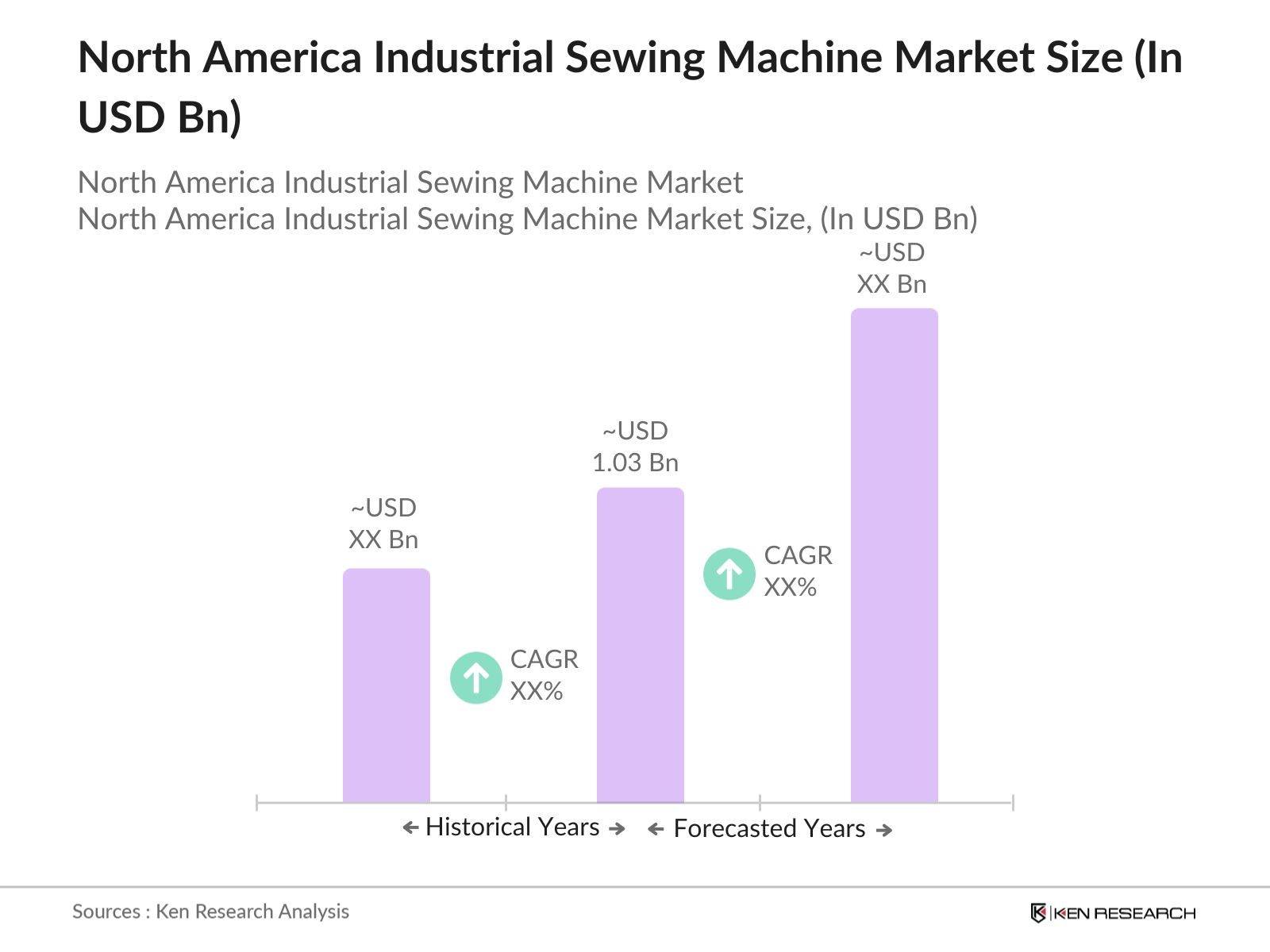
- In terms of dominance, the United States leads the market due to its established apparel and automotive manufacturing base. The country benefits from a well-developed textile infrastructure and advanced technological adoption in industrial sewing. Canada also contributes to the market, especially in specialized applications like upholstery and leather goods. The dominance of these regions is largely due to their advanced manufacturing sectors and the presence of global industry leaders with strong R&D capabilities.
- Government policies in the U.S. and Canada aimed at promoting domestic manufacturing have a impact on the industrial sewing machine market. The U.S. federal government allocated $100 billion to support manufacturing innovation in 2023, encouraging the adoption of advanced technologies, including automated sewing machines. State-specific initiatives, such as Californias green manufacturing policies, further push manufacturers to adopt energy-efficient equipment. These regulations create a favorable environment for the growth of the industrial sewing machine market.
North America Industrial Sewing Machine Market Segmentation
By Machine Type: The market is segmented by machine type into lockstitch machines, overlock machines, chainstitch machines, and coverstitch machines. Lockstitch machines dominate the market due to their versatility and wide use in garment manufacturing and automotive upholstery. Their efficiency and precision make them essential in high-speed sewing applications. Lockstitch machines are particularly favored for their durability and the ability to produce strong, secure seams across a variety of materials, driving their dominance in this segment.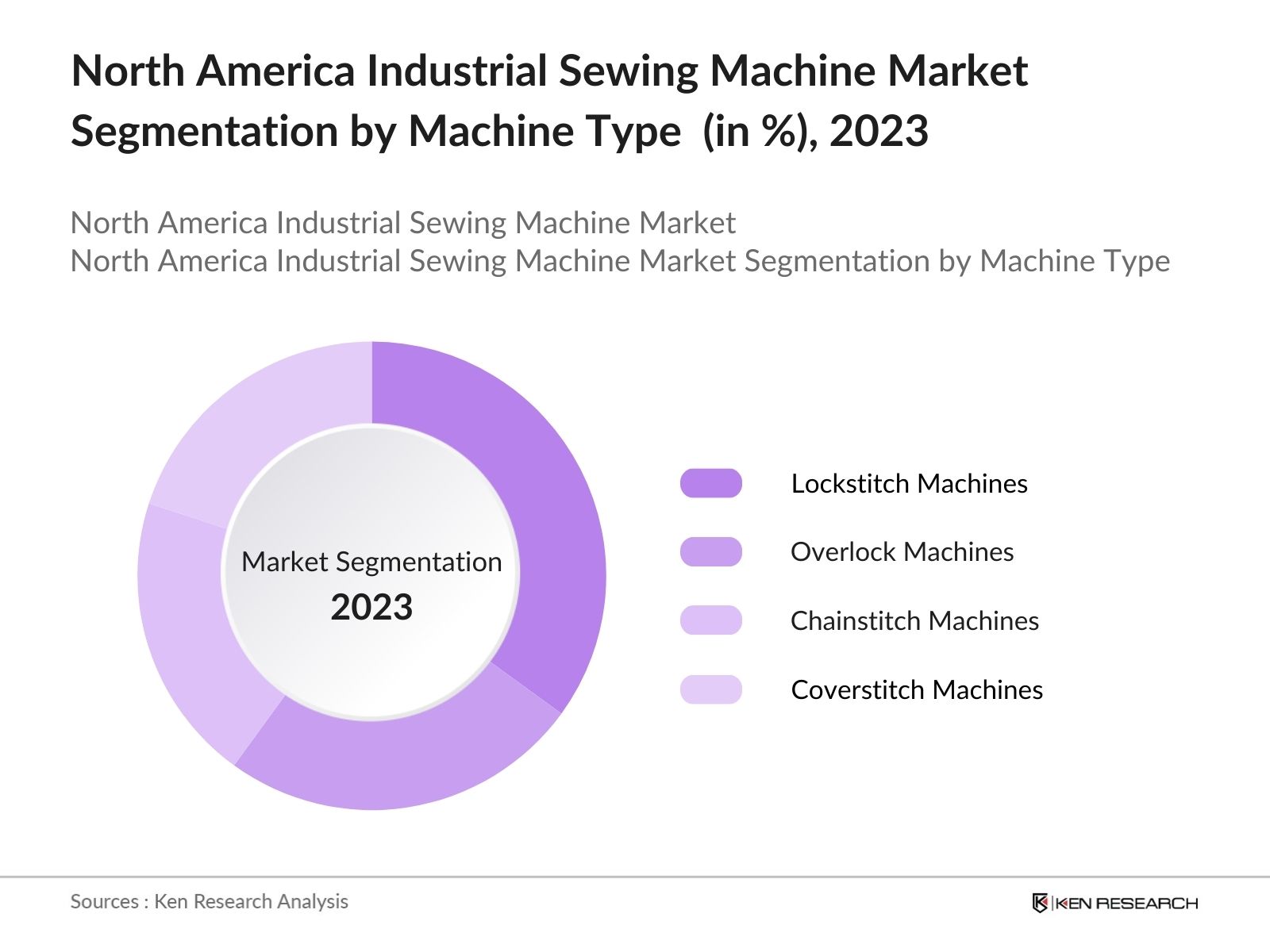
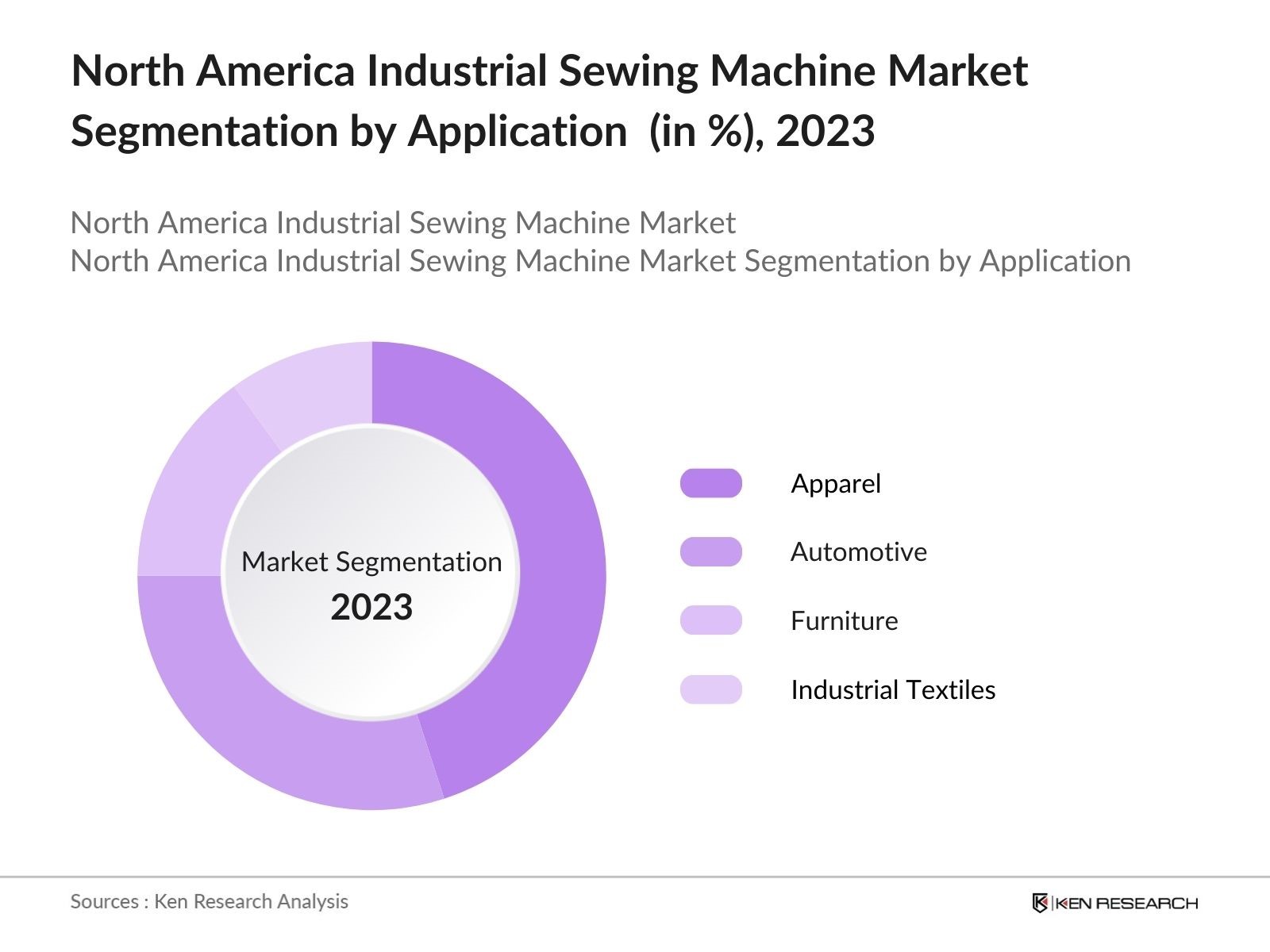
By Application: The market is also segmented by application into apparel, automotive, furniture, and industrial textiles. The apparel segment holds a dominant share due to the high demand for mass-produced garments. Industrial sewing machines are integral to the production of ready-made garments in large quantities, catering to fast fashion trends. The increasing demand for quick turnaround times in fashion and the need for specialized machines to handle various fabrics contribute to the dominance of this segment.
North America Industrial Sewing Machine Market Competitive Landscape
The North America industrial sewing machine market is dominated by a mix of global and regional players. Companies like Brother Industries and JUKI Corporation have a strong foothold, leveraging technological advancements and expansive distribution networks. These players have consistently invested in R&D, enabling them to introduce highly efficient and automated sewing machines tailored to industrial needs. The consolidation of these companies emphasizes their influence in shaping the market's competitive landscape.
|
Company Name |
Establishment Year |
Headquarters |
Market Penetration |
Technological Innovation |
Revenue (USD Bn) |
Global Presence |
R&D Investments |
Product Portfolio |
|
Brother Industries, Ltd. |
1908 |
Nagoya, Japan |
||||||
|
JUKI Corporation |
1938 |
Tokyo, Japan |
||||||
|
Pegasus Sewing Machine Co. |
1914 |
Osaka, Japan |
||||||
|
Singer Sewing Machine Co. |
1851 |
Tennessee, USA |
||||||
|
Bernina International AG |
1893 |
Steckborn, Switzerland |
North America Industrial Sewing Machine Industry Analysis
Growth Drivers
- Increasing Demand for Textile Manufacturing: The North American textile manufacturing industry is seeing steady growth driven by increasing demand from various sectors like fashion, healthcare, and automotive. In 2023, the United States produced 17 million bales of cotton, which contributes to the growing demand for textile products in the region. This rise in demand is creating a surge in the requirement for industrial sewing machines. The textile and apparel industry, valued at $70 billion in exports, plays a key role in sustaining the demand for automated and semi-automated industrial sewing machines. Industrial automation helps boost productivity in textile production.
- Rising Automation in Garment Industry: Automation in the garment industry is becoming a pivotal growth driver in North America, where the labor cost is relatively high. According to the U.S. Department of Commerce, the U.S. garment and textile industry accounted for nearly 1.3 million jobs in 2023, with industrial automation reducing manual labor dependency. This shift toward automated production lines has increased the need for programmable industrial sewing machines, which contribute to faster turnaround times in garment production. As manufacturers adopt these machines, productivity improves, supporting the demand for advanced machines in the North American region.
- Adoption of Industrial 4.0 Practices: The introduction of Industry 4.0 practices into textile and garment manufacturing has led to the adoption of advanced industrial sewing machines. These machines integrate technologies such as IoT, machine learning, and robotics, optimizing production workflows. North American manufacturers have embraced smart factories, supported by policies encouraging innovation. According to the World Economic Forum, digital transformation in the manufacturing sector is expected to boost production output by over 15% by 2025. The industrial sewing machines market benefits from this push as manufacturers invest in these technologies to remain competitive.
Market Challenges
- High Initial Investment in Advanced Machines: The cost of investing in advanced industrial sewing machines can be prohibitive for small and medium-sized enterprises (SMEs). Automated programmable machines can cost between $20,000 to $80,000, depending on their functionality. While these machines boost productivity, their high initial cost poses a challenge, especially for companies without the capital to invest upfront. This financial barrier limits the accessibility of such technology for many smaller manufacturers in the North American region, delaying their adoption of industrial automation.
- Skill Gap in Machine Handling: The transition to advanced industrial sewing machines requires operators with specialized skills to handle complex programming and machine maintenance. According to a 2023 report by the U.S. Department of Labor, there is a growing skill gap in the textile and apparel industries, with over 60,000 vacancies for machine operators requiring specialized training. This skill shortage hampers the full utilization of advanced machinery, as companies struggle to find adequately trained workers. As a result, the adoption of these machines may be slower due to the lack of available talent.
North America Industrial Sewing Machine Market Future Outlook
Over the next five years, the North America industrial sewing machine market is expected to experience robust growth driven by continuous technological innovations, increased demand for automated sewing solutions, and growing applications in diverse industries. The apparel sector will continue to lead, bolstered by the rise of fast fashion trends. Additionally, industries such as automotive and industrial textiles are projected to increase their demand for specialized sewing machines, enhancing the need for advanced stitching technologies.
Future Market Opportunities
- Technological Advancements in Industrial Sewing Machines: Technological innovations, including the integration of IoT and artificial intelligence (AI), are enhancing the functionality of industrial sewing machines. New models allow manufacturers to monitor machine performance remotely and predict maintenance needs, reducing downtime. With over 5 million IoT-enabled machines already in operation globally by 2023, the adoption of smart sewing machines in North America presents an opportunity for manufacturers to boost efficiency and stay competitive. The continued evolution of sewing machine technology offers opportunities for growth in this market.
- Integration with Smart Manufacturing: The integration of industrial sewing machines into smart manufacturing systems offers growth potential in North America. Smart factories utilizing data-driven processes and automation are becoming prevalent. A 2023 survey from the International Federation of Robotics reported that 72% of manufacturers in North America are planning to integrate smart manufacturing technologies into their production lines within the next five years. This trend supports the adoption of highly automated, efficient sewing machines, which can seamlessly integrate into these digital production systems, providing a competitive advantage to early adopters.
Scope of the Report
|
By Machine Type |
Lockstitch Machines Overlock Machines Chainstitch Machines Coverstitch Machines |
|
By Application |
Apparel Automotive Furniture Industrial Textiles |
|
By Operation Type |
Manual Semi-Automatic Fully-Automatic |
|
By Sales Channel |
Direct Sales Distributors Online Sales |
|
By Region |
United States Canada Mexico |
Products
Key Target Audience
Investors and Venture Capitalist Firms
Apparel Manufacturers
Automotive Upholstery Manufacturers
Furniture Manufacturers
Government and Regulatory Bodies (U.S. Department of Commerce, Canada Innovation, Science and Economic Development)
Textile Machinery Suppliers
Automation and Robotics Companies
Banks and Financial Institutes
Footwear Manufacturers
Companies
Major Players
Brother Industries, Ltd.
JUKI Corporation
Pegasus Sewing Machine Co., Ltd.
Singer Sewing Machine Company
Bernina International AG
Janome America, Inc.
AMF Reece Inc.
Yamato Sewing Machine Mfg. Co., Ltd.
Durkopp Adler AG
Global International Sewing Machines
Seiko Sewing Machine Co., Ltd.
Jack Sewing Machine Co., Ltd.
Merrow Sewing Machine Company
Pfaff Industrial Sewing Machines
Consew Industrial Sewing Machines
Table of Contents
1. North America Industrial Sewing Machine Market Overview
1.1. Definition and Scope
1.2. Market Taxonomy
1.3. Market Growth Rate
1.4. Market Segmentation Overview
2. North America Industrial Sewing Machine Market Size (In USD Bn)
2.1. Historical Market Size
2.2. Year-On-Year Growth Analysis
2.3. Key Market Developments and Milestones
3. North America Industrial Sewing Machine Market Analysis
3.1. Growth Drivers
3.1.1. Rise in Apparel Manufacturing (Domestic Production Increase)
3.1.2. Technological Advancements in Sewing Automation
3.1.3. Growing Demand for Customized Products (Customization Capabilities)
3.1.4. Adoption of Eco-Friendly Manufacturing Practices (Sustainability Initiatives)
3.2. Market Challenges
3.2.1. High Capital Investment (Cost of Advanced Machines)
3.2.2. Skilled Labor Shortage (Availability of Technicians)
3.2.3. Intense Competition from Low-Cost Markets (Price Pressure from Imports)
3.3. Opportunities
3.3.1. Expansion in the Technical Textiles Industry (New Applications in Textiles)
3.3.2. Automation and Industry 4.0 Integration (Smart Manufacturing)
3.3.3. Increased Demand in Automotive and Aerospace Sectors (Specialized Sewing Solutions)
3.4. Trends
3.4.1. Integration of AI and IoT in Sewing Machines (Smart Features Adoption)
3.4.2. Growth in E-commerce Apparel Sector (Increased Demand for Apparel Manufacturing)
3.4.3. Demand for High-Speed, High-Efficiency Machines (Productivity Enhancement)
3.5. Government Regulation
3.5.1. Manufacturing Incentives and Subsidies (Federal and State Programs)
3.5.2. Labor and Safety Regulations (Compliance with Occupational Standards)
3.5.3. Environmental Standards (Sustainability Requirements for Equipment Manufacturing)
3.6. SWOT Analysis
3.7. Stakeholder Ecosystem
3.8. Porters Five Forces Analysis
3.9. Competition Ecosystem
4. North America Industrial Sewing Machine Market Segmentation
4.1. By Machine Type (In Value %)
4.1.1. Lockstitch Sewing Machines
4.1.2. Chainstitch Sewing Machines
4.1.3. Overlock Sewing Machines
4.1.4. Coverstitch Sewing Machines
4.1.5. Others
4.2. By Application (In Value %)
4.2.1. Apparel Manufacturing
4.2.2. Upholstery and Furniture
4.2.3. Automotive & Transportation
4.2.4. Industrial Fabrics & Textiles
4.2.5. Others
4.3. By Operation (In Value %)
4.3.1. Manual
4.3.2. Semi-Automatic
4.3.3. Fully Automatic
4.4. By Sales Channel (In Value %)
4.4.1. Direct Sales
4.4.2. Distributors
4.4.3. Online Sales
4.5. By Region (In Value %)
4.5.1. United States
4.5.2. Canada
4.5.3. Mexico
5. North America Industrial Sewing Machine Market Competitive Analysis
5.1. Detailed Profiles of Major Companies
5.1.1. Brother Industries, Ltd.
5.1.2. Juki Corporation
5.1.3. Pegasus Sewing Machine Mfg. Co., Ltd.
5.1.4. Janome Sewing Machine Co., Ltd.
5.1.5. Bernina International AG
5.1.6. Mitsubishi Electric Corporation
5.1.7. Singer Corporation
5.1.8. Durkopp Adler AG
5.1.9. Global Industrial Sewing Machines
5.1.10. Mauser Spezial GmbH
5.1.11. Zoje Sewing Machine Co., Ltd.
5.1.12. Yamato Sewing Machine Mfg. Co., Ltd.
5.1.13. PFAFF Industriesysteme und Maschinen GmbH
5.1.14. Consew
5.1.15. SEIKO Sewing Machine Co., Ltd.
5.2. Cross Comparison Parameters (No. of Employees, Headquarters, Revenue, Product Specialization, R&D Investment, Global Presence, Sustainability Initiatives, Market Share)
5.3. Market Share Analysis
5.4. Strategic Initiatives
5.5. Mergers and Acquisitions
5.6. Investment Analysis
5.7. Venture Capital Funding
5.8. Government Grants
5.9. Private Equity Investments
6. North America Industrial Sewing Machine Market Regulatory Framework
6.1. Industry Compliance Requirements
6.2. Safety Certifications
6.3. Quality Control Standards
7. North America Industrial Sewing Machine Future Market Size (In USD Bn)
7.1. Future Market Size Projections
7.2. Key Factors Driving Future Market Growth
8. North America Industrial Sewing Machine Future Market Segmentation
8.1. By Product Type (In Value %)
8.2. By Application (In Value %)
8.3. By Operation (In Value %)
8.4. By Sales Channel (In Value %)
8.5. By Region (In Value %)
9. North America Industrial Sewing Machine Market Analysts Recommendations
9.1. TAM/SAM/SOM Analysis
9.2. Customer Cohort Analysis
9.3. White Space Opportunity Analysis
9.4. Marketing Initiatives
Research Methodology
Step 1: Identification of Key Variables
The initial phase involved identifying the major stakeholders and key variables within the North America Industrial Sewing Machine Market. This was done through comprehensive desk research, leveraging secondary databases and proprietary reports to gain insights into market dynamics.
Step 2: Market Analysis and Construction
In this phase, historical data was gathered and analyzed to evaluate the market's penetration, assessing the balance between industrial sectors and service providers. This analysis also included an in-depth review of revenue generation from different segments.
Step 3: Hypothesis Validation and Expert Consultation
Hypotheses developed during the analysis phase were validated through interviews with industry professionals and experts. This allowed us to fine-tune the insights and reinforce our market estimates.
Step 4: Research Synthesis and Final Output
The last phase involved synthesizing all collected data and insights to deliver a comprehensive and validated report. Final market figures were cross-referenced with direct industry consultations to ensure accuracy and relevancy.
Frequently Asked Questions
01. How big is the North America Industrial Sewing Machine Market?
The North America industrial sewing machine market is valued at USD 1.03 billion, driven by substantial demand across the apparel, automotive, and industrial textile sectors. This market has grown due to the increasing adoption of automated and high-speed machines.
02. What are the major challenges in the North America Industrial Sewing Machine Market?
Challenges in the market include the high initial cost of advanced sewing machines, a growing skill gap for handling modern equipment, and the volatility in raw material prices, which affects the production costs.
03. Who are the major players in the North America Industrial Sewing Machine Market?
Key players include Brother Industries, JUKI Corporation, Pegasus Sewing Machine Co., Singer Sewing Machine Company, and Bernina International AG. These companies lead due to their technological innovation, global distribution, and strong R&D investments.
04. What drives the growth of the North America Industrial Sewing Machine Market?
Growth drivers include rising demand in the apparel industry, adoption of advanced sewing technologies, and government incentives for domestic manufacturing. The expansion of the automotive and industrial textile sectors also contributes to market growth.
05. Which segment dominates the North America Industrial Sewing Machine Market?
The apparel segment dominates due to the continuous demand for mass-produced garments, driven by fast fashion trends. Lockstitch machines are also widely used across multiple industries for their precision and versatility.
Why Buy From Us?

What makes us stand out is that our consultants follows Robust, Refine and Result (RRR) methodology. i.e. Robust for clear definitions, approaches and sanity checking, Refine for differentiating respondents facts and opinions and Result for presenting data with story

We have set a benchmark in the industry by offering our clients with syndicated and customized market research reports featuring coverage of entire market as well as meticulous research and analyst insights.

While we don't replace traditional research, we flip the method upside down. Our dual approach of Top Bottom & Bottom Top ensures quality deliverable by not just verifying company fundamentals but also looking at the sector and macroeconomic factors.

With one step in the future, our research team constantly tries to show you the bigger picture. We help with some of the tough questions you may encounter along the way: How is the industry positioned? Best marketing channel? KPI's of competitors? By aligning every element, we help maximize success.

Our report gives you instant access to the answers and sources that other companies might choose to hide. We elaborate each steps of research methodology we have used and showcase you the sample size to earn your trust.

If you need any support, we are here! We pride ourselves on universe strength, data quality, and quick, friendly, and professional service.