CHAPTER 1 - MARKET SUMMARY
Market Overview
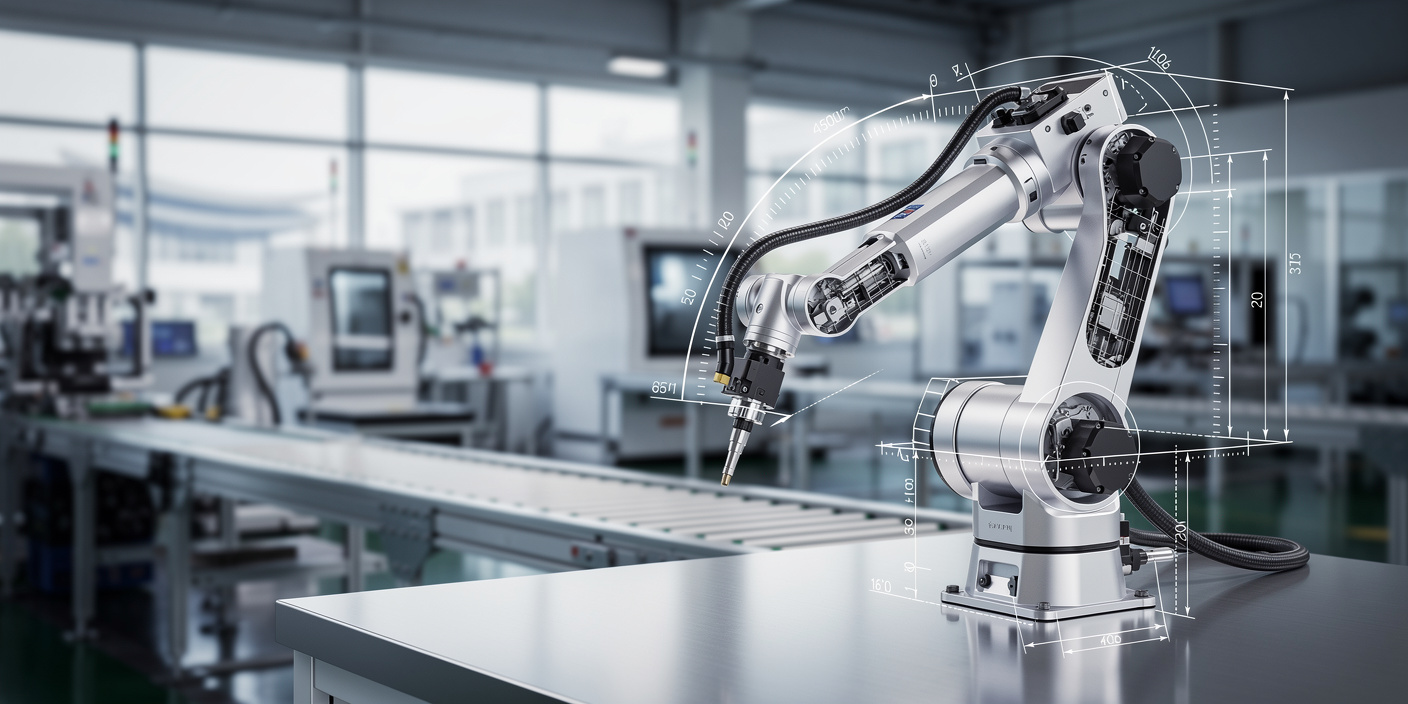
The South Korea AI in Manufacturing Market operates across industrial software, machine vision, data platforms, edge inference, digital twins, predictive maintenance, process control and systems integration. South Korea recorded 1,012 industrial robots per 10,000 manufacturing employees in 2023, the highest density globally. This installed automation base provides machine data, control interfaces and production environments suitable for advanced AI deployment.
Public manufacturing digitization programs have supported more than 32,000 smart factory projects across nearly 24,000 firms since 2014. In 2025, targeted programs were designed to introduce robots, data-driven factories and digital-twin-enabled autonomous systems to more than 1,700 manufacturing SMEs. These programs expand the addressable customer base beyond major conglomerates and create recurring demand for deployment, integration and managed services.
Market Value
USD 3.84 billion
2025
Dominant Region
Capital and Gyeonggi Industrial Belt
2025
Dominant Segment
Application, led by Computer Vision and Quality Inspection
2025
Estimated Number of Active Market Participants
510
Future Outlook
The South Korea AI in Manufacturing Market is projected to increase from USD 3.84 billion in 2025 to USD 11.60 billion by 2031, representing a forecast CAGR of 20.23%. Expansion will be supported by national manufacturing-AI investment, smart factory upgrading, industrial-data infrastructure, edge-computing deployment and adoption of AI agents across engineering, production, quality, maintenance and supply-chain functions. Large electronics, semiconductor, automotive and materials companies will continue to fund complex private deployments, while government-supported packages and managed services will lower adoption barriers for mid-sized manufacturers and SMEs.
Active AI production use cases are projected to rise from approximately 16,800 in 2025 to 54,700 by 2031. Average annual revenue per deployment is expected to moderate from USD 228,600 to USD 212,100 as standardized applications, reusable models and shared infrastructure reduce implementation costs. This price effect will be offset by broader deployment volumes, higher inference usage and expansion into physical AI. Computer vision should remain the largest application, while robotics orchestration, autonomous process control and industrial AI agents record the fastest growth.
20.23%
Forecast CAGR
USD 11,600 Mn
2030 Projection
Base Year
2025
Historical Period
2020-2025
Forecast Period
2026-2031
Historical CAGR
17.70%
CHAPTER 2 - SCOPE OF REPORT
Scope of the Market
CHAPTER 4 - Market Size & Growth
Market Size and Growth Trajectory
This section evaluates historical market expansion, active production deployments and forecast growth using vendor revenue, manufacturer spending, smart factory activity, industrial AI adoption, infrastructure investment and application-level unit economics.
Historical & Projected Market Size ($ Million)
Year-over-Year Growth Rate (%)
Market Value vs Volume Growth (%)
Historical Market Performance
The market expanded from USD 1.70 billion in 2020 to USD 3.84 billion in 2025, representing a historical CAGR of 17.70%. Active production use cases increased from approximately 6,100 to 16,800 as manufacturers moved beyond pilot analytics toward operational machine vision, equipment monitoring and process optimization. Average annual revenue per deployment declined from USD 278,700 to USD 228,600 because reusable models, lower-cost edge hardware and standardized integration packages improved accessibility. Electronics and automotive manufacturers accounted for the largest commercial deployments, while public smart factory programs widened SME participation.
Forecast Market Outlook
Annual market growth is projected to strengthen to between 18.8% and 20.8% during 2026-2031. AI-enabled manufacturer penetration is expected to increase from 13.2% in 2025 to 41.6% by 2031. Industrial agents, physical AI, autonomous process control and shared manufacturing-data infrastructure will add new revenue layers beyond conventional analytics. Deployment growth will remain the principal expansion driver, while pricing stabilizes as customers purchase broader model portfolios, higher inference volumes, cybersecurity controls and managed operations. The forecast assumes sustained policy execution, continued capital investment and no prolonged semiconductor or export-manufacturing downturn.
CHAPTER 5 - Market Data
Market Breakdown
The KPI framework below reconciles market value with active AI production use cases, manufacturer penetration and annual deployment economics across the historical and forecast periods.
Year | Market Size (USD Mn) | YoY Growth (%) | Active AI Production Use Cases | AI-Enabled Manufacturer Penetration (%) | Average Annual Spend per Deployment (USD 000) | Period |
|---|---|---|---|---|---|---|
| 2020 | $1,700 Mn | +- | 6,100 | 4.8% | Forecast | |
| 2021 | $1,980 Mn | +16.5% | 7,300 | 5.8% | Forecast | |
| 2022 | $2,330 Mn | +17.7% | 9,000 | 7.1% | Forecast | |
| 2023 | $2,780 Mn | +19.3% | 11,100 | 8.8% | Forecast | |
| 2024 | $3,260 Mn | +17.3% | 13,700 | 10.8% | Forecast | |
| 2025 | $3,840 Mn | +17.8% | 16,800 | 13.2% | Forecast | |
| 2026 | $4,560 Mn | +18.8% | 20,500 | 16.0% | Forecast | |
| 2027 | $5,460 Mn | +19.7% | 25,200 | 19.6% | Forecast | |
| 2028 | $6,590 Mn | +20.7% | 30,900 | 23.9% | Forecast | |
| 2029 | $7,960 Mn | +20.8% | 37,700 | 29.0% | Forecast | |
| 2030 | $9,600 Mn | +20.6% | 45,600 | 34.9% | Forecast | |
| 2031 | $11,600 Mn | +20.8% | 54,700 | 41.6% | Forecast |
Active AI Production Use Cases
16,800 deployments, 2025, South Korea. The metric represents AI applications operating in production environments, including inspection, maintenance, optimization, planning, robotics and safety systems. Growth depends on manufacturers expanding from single-use-case pilots to portfolios spanning multiple production lines and facilities.
AI-Enabled Manufacturer Penetration
13.2%, 2025, addressable South Korean manufacturers. Large enterprises have substantially higher adoption than SMEs, leaving a large expansion pool for standardized applications, regional delivery partners, shared edge infrastructure and government-supported implementation packages.
Average Annual Spend per Deployment
USD 228,600, 2025, South Korea. The benchmark combines software subscriptions, integration, edge systems, inference, model operations and recurring support. Standardization reduces initial cost, while broader model portfolios and managed operations support lifetime revenue.
CHAPTER 6 - Segmentation
Market Segmentation Framework
Comprehensive segmentation across solution architecture, deployment, industrial demand, buyer scale, application, monetization and manufacturing geography provides an integrated view of revenue concentration and adoption priorities.
No of Segments
7
Dominant Segment
Application
Fastest Growing Segment
Robotics and Autonomous Operations
Solution Type
Deployment Model
End-Use Industry
Enterprise Size
Application
Pricing Model
Geography
Key Segmentation Takeaways
Solution Type
Industrial AI Applications account for 31% of revenue because buyers fund use cases tied directly to operational performance. Data and model platforms are becoming more important as manufacturers need common infrastructure to deploy, monitor and govern hundreds of models across equipment, production lines and facilities.
Deployment Model
On-premise and private-cloud environments represent 40% of spending because manufacturers protect production recipes, process parameters and equipment data. Hybrid deployment should gain share as training, fleet management and simulation move to centralized cloud environments while time-sensitive inference remains inside factories.
End-Use Industry
Electronics and Semiconductors lead with 34% of revenue, followed by Automotive and Mobility at 23%. Both industries combine high capital intensity, strict quality requirements, large sensor datasets and globally distributed facilities, enabling vendors to scale proven applications across multiple sites.
Geography
The Capital and Gyeonggi Industrial Belt leads at 29%, while the Chungcheong corridor benefits from semiconductor, display and battery investment. Ulsan, Busan and the southeast provide differentiated opportunities in automotive, shipbuilding, steel, petrochemicals and exportable full-stack AI factories.
CHAPTER 7 - Regional Analysis
Regional and Country Analysis
Focus Country Ranking:
Focus Country Market Size:
Focus Country CAGR:
Focus Country Ranking:
Focus Country Market Size:
Focus Country CAGR:
Regional and Country Analysis (Current Year)
Regional and Country Analysis Comparison
Market Position
South Korea ranks third among selected peers with USD 3.84 billion in 2025, supported by semiconductor, electronics, automotive, battery and heavy-industry value chains.
Growth Advantage
South Korea's 20.23% forecast CAGR exceeds Japan's 16.8% and Germany's 15.6%, although China and Taiwan benefit from larger or faster semiconductor-driven investment cycles.
Competitive Strengths
South Korea combines 1,012 robots per 10,000 workers, more than 32,000 smart factory projects and a USD 14.5 billion manufacturing-AI investment strategy.
CHAPTER 8 - INDUSTRY ANALYSIS
Growth Drivers, Challenges and Opportunities
Comprehensive analysis of key factors shaping the South Korea AI in Manufacturing Market, including adoption catalysts, operational constraints and monetizable opportunities across industrial technology and manufacturing value chains.
Growth Drivers
Manufacturing AI 2030 Investment Program
- The program targets more than USD 72 billion of economic value creation by 2030, encouraging manufacturers to prioritize applications with measurable effects on yield, productivity, energy use and safety.
- A national manufacturing-data library, industry-specific models and full-stack AI factories will create commercial opportunities for platform providers, systems integrators, edge-computing vendors and cybersecurity specialists.
- The strategy includes training 30,000 manufacturing-AI professionals, expanding the workforce available to deploy, operate and scale industrial models across factories and regional clusters.
Advanced Automation and Smart Factory Base
- More than 32,000 smart factory projects across nearly 24,000 firms have created connected equipment, manufacturing execution systems and production datasets suitable for AI applications.
- South Korean factories installed approximately 30,600 industrial robots in 2024, sustaining demand for machine vision, task orchestration, predictive maintenance and safety intelligence.
- Electronics and automotive remain the two largest robot-consuming industries, concentrating high-value AI demand among manufacturers with repeatable processes and multisite deployment potential.
Clustered High-Technology Manufacturing Ecosystem
- Industrial complexes also represent approximately half of manufacturing employment, making shared testbeds, edge-computing centers and regional AI support economically scalable.
- Semiconductor, automotive, battery, steel, chemicals and shipbuilding clusters create domain-specific datasets that support specialized models with stronger performance than generic enterprise AI.
- Export-oriented manufacturers can commercialize validated AI factory architectures internationally, allowing Korean vendors to earn integration, licensing and managed-service revenue outside the domestic market.
Market Challenges
SME Adoption and Investment Gap
- SMEs account for more than 80% of national employment, so limited adoption constrains the scale of productivity gains and the addressable market for advanced applications.
- Small manufacturers often lack clean equipment data, internal AI teams and capital for customized projects, increasing sales costs and delaying vendor payback.
- Government programs targeting more than 1,700 manufacturing SMEs in 2025 help reduce the gap, but sustained operating support is required after initial implementation.
Industrial Data Security and Governance Complexity
- Manufacturing datasets contain process recipes, equipment parameters and product specifications, creating strong demand for private-cloud, edge and air-gapped operation rather than unrestricted public-cloud deployment.
- Approximately 56.3% of surveyed Korean workers reported no involvement in workplace AI-adoption discussions, increasing change-management and acceptance risk.
- Vendors must integrate model documentation, access controls, monitoring, explainability and incident response into product architecture, raising fixed development and compliance costs.
Pilot-to-Production Scalability
- Models trained on limited pilot data may deteriorate when equipment, materials, products or environmental conditions change, requiring continuous monitoring and retraining.
- Legacy programmable controllers, proprietary machine protocols and fragmented data structures increase integration cost, particularly in older SME production facilities.
- The national target to train 30,000 specialists reflects the present shortage of professionals combining AI engineering, operational technology and manufacturing-domain expertise.
Market Opportunities
Semiconductor and Electronics Yield Intelligence
- Vendors can price inspection, anomaly detection and parameter-optimization systems according to avoided scrap, higher throughput and improved production yield.
- Semiconductor manufacturers, equipment suppliers, vision-system vendors, edge-chip developers and industrial data-platform providers capture value from high-frequency production decisions.
- Cross-equipment data standards, secure model-transfer processes and physics-informed validation must improve before models can scale across fabs and product generations.
Physical AI and Autonomous Factory Systems
- Full-stack systems can combine robot orchestration, vision, digital twins, edge inference and safety controls through platform licenses, integration fees and recurring support.
- Automotive, shipbuilding, steel and machinery manufacturers gain from autonomous handling, hazardous-process substitution and reduced dependence on scarce skilled labor.
- Low-latency networks, machine interoperability, fail-safe control, industrial cybersecurity and certification must mature before factories permit broader autonomous decision authority.
Managed AI Packages for Manufacturing SMEs
- Providers can combine edge appliances, pre-trained models, subscriptions and remote monitoring into affordable recurring contracts with limited upfront customization.
- Regional systems integrators, industrial software startups, equipment distributors and cloud providers gain access to customers that cannot maintain internal AI teams.
- Government-backed procurement, reusable industry templates, outcome measurement and post-installation support must convert subsidized pilots into sustainable commercial subscriptions.
CHAPTER 9 - Competitive Landscape
Competitive Landscape Overview
The South Korea AI in Manufacturing Market combines large information-technology service providers, industrial systems integrators, cloud platforms, manufacturing-group affiliates and specialized industrial AI startups. Large vendors lead complex multisite programs, while specialists compete through domain models, edge optimization, machine vision and rapid deployment.
Market Share Distribution
Top 5 Players
Market Dynamics
8 new entrants in the past 5 years, indicating strong market attractiveness and growth potential.
Company Name | Estimated Market Share, 2025 | Headquarters | Founding Year | Core Market Focus |
|---|---|---|---|---|
Samsung SDS | 10.5% | Seoul, South Korea | 1985 | Cloud, data platforms, AI, intelligent manufacturing and enterprise integration |
LG CNS | 8.2% | Seoul, South Korea | 1987 | Smart factory platforms, AI transformation, cloud and industrial systems integration |
POSCO DX | 6.0% | Pohang, South Korea | 1989 | Steel, materials, logistics, industrial control and smart factory systems |
Hyundai AutoEver | 5.4% | Seoul, South Korea | 2000 | Automotive manufacturing systems, enterprise platforms, cloud and factory software |
SK AX | 4.7% | Seongnam, South Korea | 1991 | Enterprise AI transformation, manufacturing analytics, cloud and digital operations |
Naver Cloud | 3.5% | Seongnam, South Korea | 2009 | Cloud infrastructure, AI platforms, foundation models and GPU services |
MakinaRocks | 2.4% | Seoul, South Korea | 2017 | Vertical AI, MLOps, predictive operations, control and machine vision |
OnePredict | 1.8% | Seoul, South Korea | 2016 | Industrial asset intelligence, predictive maintenance and reliability analytics |
Nota AI | 1.4% | Daejeon, South Korea | 2015 | AI-model optimization, edge AI, industrial safety and embedded vision |
DEEPX | 1.1% | Seongnam, South Korea | 2018 | Edge AI processors, inference acceleration and embedded industrial intelligence |
Cross Comparison Parameters
The report provides detailed cross-comparison of key players across 10 performance parameters to identify competitive strengths and weaknesses.
Analysis Covered
Market Share Analysis:
Assesses concentration among large integrators, platforms and specialized industrial AI providers.
Cross Comparison Matrix:
Benchmarks installed base, platform breadth, private deployment and domain-model depth.
SWOT Analysis:
Evaluates strategic capabilities, commercial constraints, opportunities and competitive risks.
Pricing Strategy Analysis:
Compares projects, subscriptions, consumption contracts, managed services and outcome-linked models.
Company Profiles:
Reviews market focus, manufacturing specialization, platform position and delivery capability.
CHAPTER 10 - REPORT TOC
Market Report Structure
Comprehensive coverage across three strategic phases — Market Assessment, Go-To-Market Strategy, and Survey — delivering end-to-end insights from market analysis and execution roadmap to customer demand validation.
Market Assessment Phase
Supply-side and competitive intelligence covering market sizing, segmentation, competitive dynamics, regulatory landscape, and future forecasts.
Go-To-Market Strategy Phase
15 chapters
Entry strategy evaluation, execution roadmap, partner recommendations, and profitability outlook.
Survey Phase
8 chapters
Demand-side primary research conducted through structured interviews and online surveys with end users across priority metros and Tier 2/3 cities to capture consumption behavior, unmet needs, and purchase drivers.
Complete Report Coverage
201+ detailed sections covering every aspect of the market
143
Assessment Sections
58
Strategy Sections
CHAPTER 11 - Our Approach
Research Methodology
Desk Research
- Reviewed manufacturing and AI policies
- Mapped smart factory adoption programs
- Analyzed industrial robot deployment data
- Reviewed vendor filings and solutions
Primary Research
- Interviewed smart factory technology directors
- Surveyed manufacturing operations executives
- Consulted industrial AI product leaders
- Engaged automation and reliability specialists
Validation and Triangulation
- Used 400-response validation panel
- Reconciled vendor and buyer spending
- Checked deployment and pricing assumptions
- Validated segment and company allocations
CHAPTER 12 - FAQ
FAQs
Still have questions?
Our research team is here to help you find the right solution
CHAPTER 13 - Related Research
Explore Related Reports
Expand your market intelligence with complementary research across regions and adjacent markets.
Regional/Country ReportsRelated market analysis across key regions
Related market analysis across key regions
Adjacent ReportsRelated markets and complementary research
Related markets and complementary research
- Singapore Smart Factory Solutions Market
- Thailand Edge Computing Technology Market
- Oman Industrial Data Platforms Market
- Vietnam Process Automation Software Market
- Mexico Robotics Orchestration Market
500+
Market Research Reports
50+
Countries Covered
15+
Industry Verticals