U.S. LED Market Outlook to 2030

Region:North America

Author(s):Sanjeev

Product Code:KROD3125

Published On

December 2024

Total pages

96

About the Report

U.S. LED Market Overview

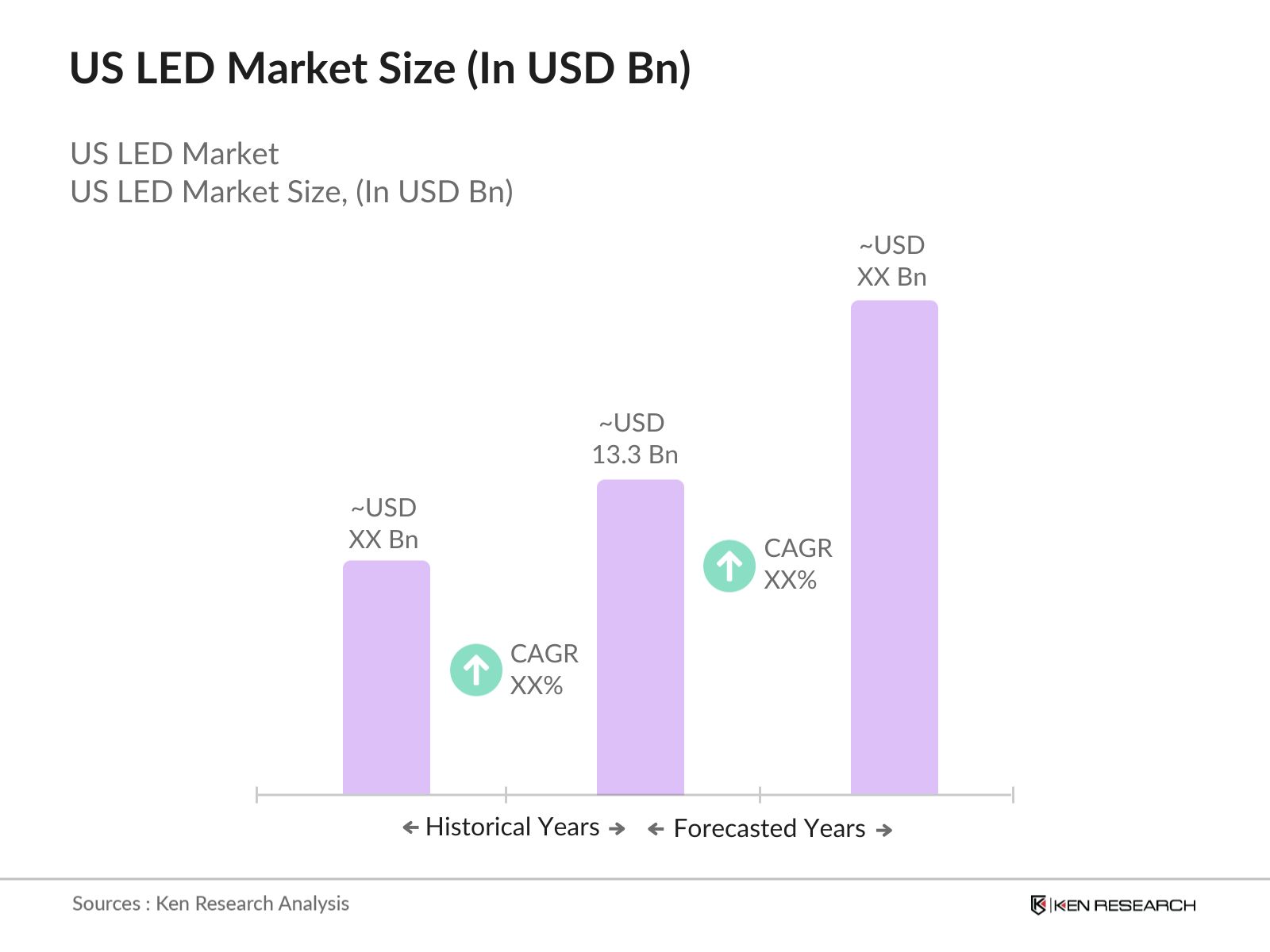
  • The U.S. LED market was valued at USD 13.3 billion, driven by increasing demand for energy-efficient lighting solutions, government support for energy savings, and rising applications across various sectors such as residential, commercial, and industrial. This growth has been supported by the phasing out of traditional lighting technologies, leading to a sharp rise in LED adoption. Innovations in smart lighting and connectivity have also contributed to the expansion of the market.
  • In terms of geographical dominance, cities like New York, Los Angeles, and Chicago play a leading role in the U.S. LED market due to their focus on smart city initiatives and large-scale infrastructure projects. These cities, with higher urbanization rates and more progressive policies on sustainability, have accelerated the adoption of LED technologies, contributing significantly to the overall market demand.
  • The U.S. Department of Energys Solid-State Lighting (SSL) program has been crucial in advancing the adoption of LED technologies. The program has funded extensive research and development efforts aimed at improving LED efficiency, performance, and affordability. As of 2024, the program has led to the deployment of over 1 million SSL installations in public and private sectors across the country. These efforts contribute to significant energy savings and promote further market growth. market overviews

U.S. LED Market Segmentation

The U.S. LED market is segmented by product type and segmented by application.
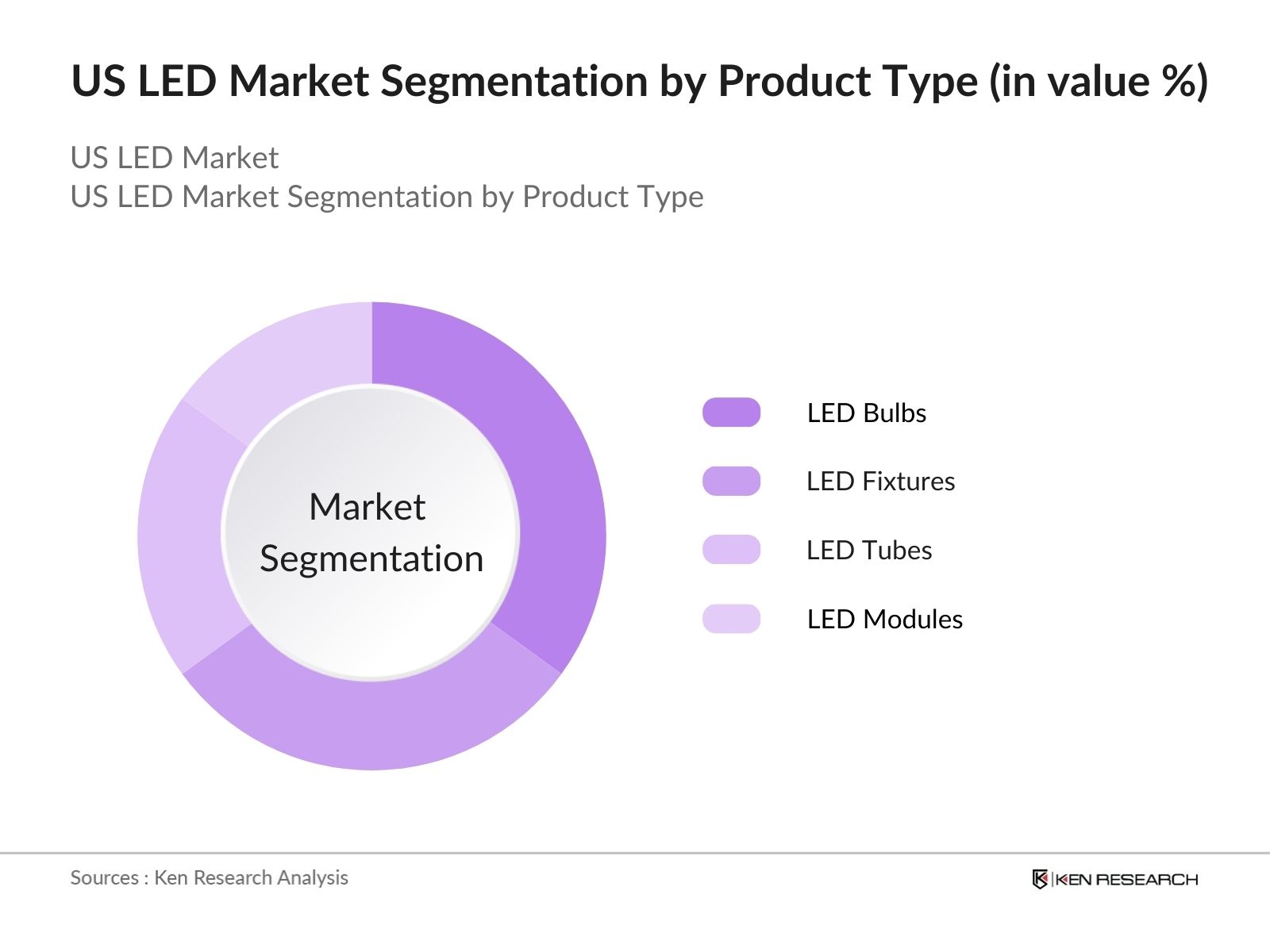
  • By Product Type: The market is segmented by product type into LED bulbs, LED fixtures, LED tubes, and LED modules. Recently, LED bulbs have had a dominant market share due to their widespread application in residential and commercial settings. The affordability and efficiency of LED bulbs have made them the preferred choice for homeowners and businesses looking to reduce energy consumption while improving lighting quality.market overviews
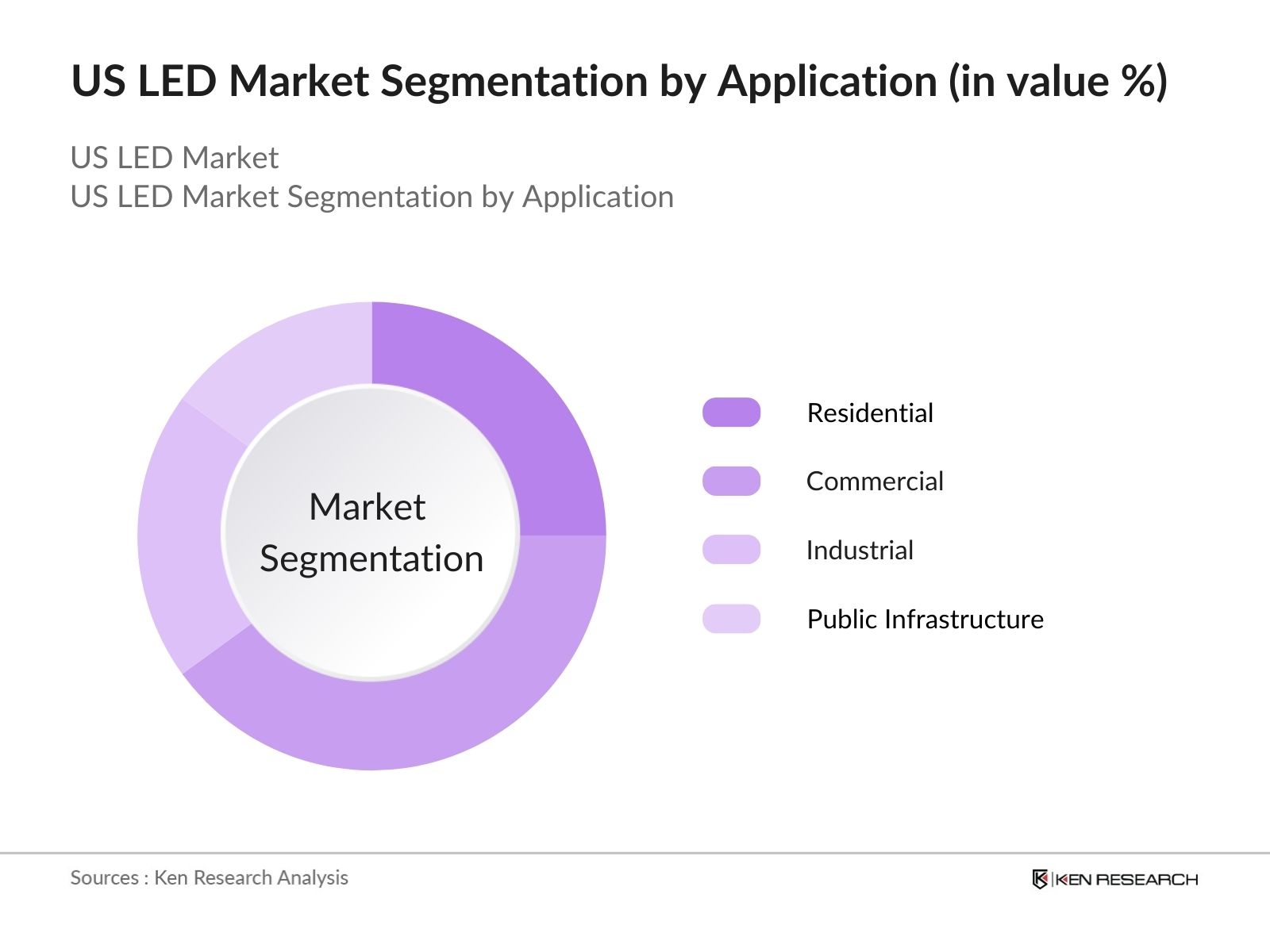
  • By Application: The market is also segmented by application into residential, commercial, industrial, and public infrastructure. The commercial sector has dominated the U.S. LED market, largely driven by retrofitting of office spaces and public buildings to meet energy efficiency standards. Businesses are increasingly adopting LEDs for long-term cost savings, improved light quality, and environmental benefits, making this segment the most lucrative.market overviews

U.S. LED Market Competitive Landscape

The U.S. LED market is highly competitive and consolidated with a mix of global giants and domestic players. The competition is driven by product innovation, energy efficiency, and smart lighting solutions. Key companies are focusing on R&D investments, strategic partnerships, and expanding their presence in new market sectors, such as horticulture lighting and connected lighting solutions.

Company

Establishment Year

Headquarters

R&D Investment

Product Portfolio

Revenue (2023)

Acuity Brands Lighting

2001

Atlanta, GA, USA


Cree Lighting

1987

Durham, NC, USA


GE Current (Daintree)

2015

Cleveland, OH, USA


Signify N.V. (Philips)

1891

Somerset, NJ, USA


Hubbell Lighting

1888

Greenville, SC, USA


U.S. LED Industry Analysis

Growth Drivers

  • Energy Efficiency and Sustainability: The U.S. LED lighting market is significantly driven by energy efficiency and sustainability goals. LEDs use up to 75% less energy than traditional incandescent lighting, according to the U.S. Department of Energy (DOE). Replacing conventional lighting with LED lighting in public infrastructures can save up to 300 terawatt-hours (TWh) annually. This results in reduced electricity consumption, aligning with the U.S. energy policy aimed at lowering energy dependency on fossil fuels. The adoption of LEDs plays a key role in achieving sustainability goals, making it an attractive solution across both commercial and residential sectors.
  • Government Incentives and Regulations: Government incentives and regulations act as powerful drivers for the LED lighting market in the U.S. Federal and state programs like the Energy Efficiency and Conservation Block Grant (EECBG) provide substantial financial support for LED installations. Additionally, the Infrastructure Investment and Jobs Act of 2021 allocates billions for energy-efficient lighting projects across urban and rural areas, further pushing LED adoption. The DOEs regulations ensure that new lighting products meet stringent energy efficiency standards, leading to widespread LED adoption in both public and private sectors.
  • Rising Adoption of Smart City Projects: The increasing adoption of smart city initiatives across the U.S. is boosting demand for energy-efficient LED lighting systems. Over 100 cities have already launched smart city projects integrating advanced LED streetlights with IoT systems for enhanced energy savings and real-time data collection. New York City, for example, has retrofitted over 250,000 streetlights with LEDs, contributing to annual savings of over $14 million in energy and maintenance costs. These projects emphasize sustainable urban development, further driving demand for LED technologies.

Market Challenges

  • High Initial Setup Costs: One of the primary challenges in the U.S. LED market is the high initial setup cost. While LEDs offer long-term savings, the upfront cost for installation, especially for large commercial projects, remains substantial. A typical LED retrofit for a large commercial building can cost between $150,000 and $500,000, which is prohibitive for some small- to medium-sized enterprises. Though prices for LEDs have declined over the years, the cost of replacing or retrofitting outdated lighting systems still poses a barrier for many sectors, especially in less funded municipalities.
  • Complex Retrofits in Existing Infrastructures: Retrofitting older infrastructure with LED systems can be technologically complex and expensive. Many U.S. cities, particularly those with outdated grids or public buildings, find it difficult to integrate new LED technologies without comprehensive infrastructure overhauls. For example, New York City had to allocate additional funds to upgrade electrical systems alongside LED installations, costing millions more than anticipated. This complexity poses a significant hurdle for full-scale implementation, particularly in rural and less economically developed regions.

U.S. LED Market Future Outlook

Over the next few years, the U.S. LED market is expected to experience significant growth, driven by advancements in smart lighting systems, IoT-enabled lighting solutions, and energy-efficient technologies. The market will also be influenced by increasing government regulations aimed at reducing carbon emissions and energy consumption. Further expansion in sectors such as horticulture, healthcare, and public infrastructure will provide new growth opportunities for LED manufacturers.

Future Market Opportunities

  • Smart Lighting Solutions & IoT Integration: The integration of smart lighting solutions with IoT represents a significant opportunity in the U.S. LED market. These systems enable real-time monitoring, automated dimming, and energy optimization, which can reduce energy consumption by up to 30%. In 2024, major U.S. cities such as Los Angeles and Chicago have launched smart lighting pilot projects, aiming to upgrade thousands of streetlights to smart, connected systems. Such initiatives create opportunities for expansion in both public and private sectors.
  • Expansion in Residential and Commercial Sectors: The LED market is experiencing significant growth in both residential and commercial sectors, driven by increased demand for energy efficiency. In 2024, approximately 60% of U.S. households have already switched to LED lighting, while major commercial real estate projects are incorporating LEDs to meet sustainability goals. Commercial sectors are increasingly investing in LED retrofitting to comply with federal energy regulations, further expanding market opportunities.

Scope of the Report

By Product Type

LED Bulbs

LED Fixtures

LED Tubes

LED Modules

By Application

Residential

Commercial

Industrial

Public Infrastructure

By Technology

OLED

PLED

Mini-LED

Micro-LED

By Distribution Channel

Online Sales

Retail Stores

Distributors and Wholesalers

By Region

North

East

West

South

Products

Key Target Audience

  • LED Manufacturers

  • Lighting Solution Providers

  • Energy Management Companies

  • Real Estate Developers

  • Public Infrastructure Authorities

  • Government and Regulatory Bodies (U.S. Department of Energy, Environmental Protection Agency)

  • Investors and Venture Capital Firms

  • Smart City Project Developers

Companies

Players Mention in the Report:

  • Acuity Brands Lighting

  • Cree Lighting

  • GE Current (Daintree)

  • Signify N.V. (Philips Lighting)

  • Hubbell Lighting

  • Cooper Lighting Solutions

  • Lumileds Holding B.V.

  • Dialight PLC

  • Eaton Corporation

  • Legrand S.A.

  • Nichia Corporation

  • Zumtobel Group

  • LSI Industries Inc.

  • Osram Licht AG

  • Soraa Inc.

Table of Contents

1. U.S. LED Market Overview

1.1. Definition and Scope
1.2. Market Taxonomy
1.3. Market Growth Rate
1.4. Market Segmentation Overview

2. U.S. LED Market Size (In USD Bn)

2.1. Historical Market Size
2.2. Year-On-Year Growth Analysis
2.3. Key Market Developments and Milestones

3. U.S. LED Market Analysis

3.1. Growth Drivers (Energy Efficiency, Government Initiatives, Demand for Smart Lighting Solutions, Reduced Prices)
3.1.1. Energy Efficiency and Sustainability
3.1.2. Government Incentives and Regulations
3.1.3. Rising Adoption of Smart City Projects
3.1.4. Technological Advancements in Lighting Systems
3.2. Market Challenges (High Initial Installation Costs, Technological Complexities)
3.2.1. High Initial Setup Costs
3.2.2. Complex Retrofits in Existing Infrastructures
3.2.3. Lack of Awareness in Some Sectors
3.3. Opportunities (Internet of Things [IoT], Advanced Control Systems, Integration with Renewable Energy)
3.3.1. Smart Lighting Solutions & IoT Integration
3.3.2. Expansion in Residential and Commercial Sectors
3.3.3. Increasing Focus on Energy-efficient Buildings
3.4. Trends (Smart Homes, Expansion in Horticulture, Connected Lighting)
3.4.1. Adoption of Smart Homes and Offices
3.4.2. LED Lighting in Horticulture and Agriculture
3.4.3. Increased Adoption in Street Lighting and Public Spaces
3.5. Government Regulation (Energy Standards, Subsidies for Energy-efficient Solutions)
3.5.1. U.S. Department of Energys SSL Program
3.5.2. Energy Star Certification for LEDs
3.5.3. State and Federal Incentives for LED Installations
3.6. SWOT Analysis
3.7. Stakeholder Ecosystem
3.8. Porters Five Forces Analysis
3.9. Competition Ecosystem

4. U.S. LED Market Segmentation

4.1. By Product Type (In Value %)
4.1.1. LED Bulbs
4.1.2. LED Fixtures
4.1.3. LED Tubes
4.1.4. LED Modules
4.2. By Application (In Value %)
4.2.1. Residential
4.2.2. Commercial
4.2.3. Industrial
4.2.4. Public Infrastructure
4.3. By Technology (In Value %)
4.3.1. OLED (Organic LED)
4.3.2. PLED (Polymer LED)
4.3.3. Mini-LED
4.3.4. Micro-LED
4.4. By Distribution Channel (In Value %)
4.4.1. Online Sales
4.4.2. Retail Stores
4.4.3. Distributors and Wholesalers
4.5. By Region (In Value %)
4.5.1. North
4.5.2. West
4.5.3. South
4.5.4. East

5. U.S. LED Market Competitive Analysis

5.1. Detailed Profiles of Major Companies
5.1.1. Acuity Brands Lighting
5.1.2. Cree Lighting
5.1.3. GE Current (A Daintree Company)
5.1.4. Eaton Corporation
5.1.5. Nichia Corporation
5.1.6. Osram Licht AG
5.1.7. Signify N.V. (Philips Lighting)
5.1.8. Zumtobel Group
5.1.9. Hubbell Lighting
5.1.10. Cooper Lighting Solutions
5.1.11. Lumileds Holding B.V.
5.1.12. Dialight PLC
5.1.13. Legrand S.A.
5.1.14. LSI Industries Inc.
5.1.15. Soraa Inc.
5.2. Cross Comparison Parameters (Revenue, Employee Count, Headquarters, Manufacturing Capacity, Market Share, R&D Expenditure, Key Clients, New Product Launches)
5.3. Market Share Analysis
5.4. Strategic Initiatives
5.5. Mergers and Acquisitions
5.6. Investment Analysis
5.7. Government Grants and Subsidies
5.8. Private Equity Investments and Venture Capital

6. U.S. LED Market Regulatory Framework

6.1. Energy Efficiency Standards
6.2. Certification and Compliance Requirements
6.3. Environmental Regulations and Incentives
6.4. Lighting Codes and Building Regulations

7. U.S. LED Future Market Size (In USD Bn)

7.1. Future Market Size Projections
7.2. Key Factors Driving Future Market Growth

8. U.S. LED Future Market Segmentation

8.1. By Product Type (In Value %)
8.2. By Application (In Value %)
8.3. By Technology (In Value %)
8.4. By Distribution Channel (In Value %)
8.5. By Region (In Value %)

9. U.S. LED Market Analysts Recommendations

9.1. Total Addressable Market (TAM), Serviceable Available Market (SAM), Serviceable Obtainable Market (SOM) Analysis
9.2. Market Penetration Strategies
9.3. Strategic Partnership and Collaborations
9.4. White Space Opportunities

DisclaimerContact Us

Research Methodology

Step 1: Identification of Key Variables

The research process begins by identifying key variables influencing the U.S. LED market, such as energy consumption trends, lighting standards, and product adoption rates. Desk research is conducted using industry reports, government databases, and proprietary data sources.

Step 2: Market Analysis and Construction

Historical market data from the past five years is analyzed to establish growth trends and market dynamics. The ratio of product types and application segments is studied to provide detailed insights into revenue generation and adoption.

Step 3: Hypothesis Validation and Expert Consultation

Market assumptions are validated through interviews with industry experts and manufacturers. These consultations help refine market estimates and ensure that key trends and factors are accurately represented.

Step 4: Research Synthesis and Final Output

The final stage involves compiling data from primary and secondary sources, validating projections with market leaders, and delivering a comprehensive report. This process ensures accuracy and relevance in the analysis of the U.S. LED market.

Frequently Asked Questions

01. How big is the U.S. LED market?

The U.S. LED market was valued at USD 13.3 billion, supported by strong demand for energy-efficient lighting and government policies promoting sustainable technologies.

02. What are the challenges in the U.S. LED market?

Challenges in U.S. LED market include the high initial installation costs of LED lighting systems, technological complexities in retrofitting older buildings, and limited awareness in rural areas.

03. Who are the major players in the U.S. LED market?

Key players in the U.S. LED market include Acuity Brands Lighting, Cree Lighting, GE Current (Daintree), Signify N.V. (Philips), and Hubbell Lighting, driven by innovation and energy efficiency.

04. What are the growth drivers of the U.S. LED market?

Growth drivers in U.S. LED market include the rising demand for energy-efficient lighting, government support through subsidies and regulations, and increasing applications in smart city projects.

05. How is the market segmented by product type?

The U.S. LED market is segmented into LED bulbs, LED fixtures, LED tubes, and LED modules, with LED bulbs holding the largest share due to their affordability and widespread use in residential lighting.

Why Buy From Us?

RRR
Refine Robust Result (RRR) Framework

What makes us stand out is that our consultants follows Robust, Refine and Result (RRR) methodology. i.e. Robust for clear definitions, approaches and sanity checking, Refine for differentiating respondents facts and opinions and Result for presenting data with story

Our Reach Is Unmatched

We have set a benchmark in the industry by offering our clients with syndicated and customized market research reports featuring coverage of entire market as well as meticulous research and analyst insights.

Research
Shifting the Research Paradigm

While we don't replace traditional research, we flip the method upside down. Our dual approach of Top Bottom & Bottom Top ensures quality deliverable by not just verifying company fundamentals but also looking at the sector and macroeconomic factors.

Insite
More Insights-Better Decisions

With one step in the future, our research team constantly tries to show you the bigger picture. We help with some of the tough questions you may encounter along the way: How is the industry positioned? Best marketing channel? KPI's of competitors? By aligning every element, we help maximize success.

Trust
Transparency and Trust

Our report gives you instant access to the answers and sources that other companies might choose to hide. We elaborate each steps of research methodology we have used and showcase you the sample size to earn your trust.

support
Round the Clock Support

If you need any support, we are here! We pride ourselves on universe strength, data quality, and quick, friendly, and professional service.

Why Client Choose Us?

400000+ Reports in repository
150+ Consulting project a year
100+ Analysts
8000+ Client Queries in 2022