
US Luxury Hotel Market Outlook 2030
Region:United States
Author(s):Shivani Mehra
Product Code:KROD11477
Region:United States
Author(s):Shivani Mehra
Product Code:KROD11477
December 2024
87
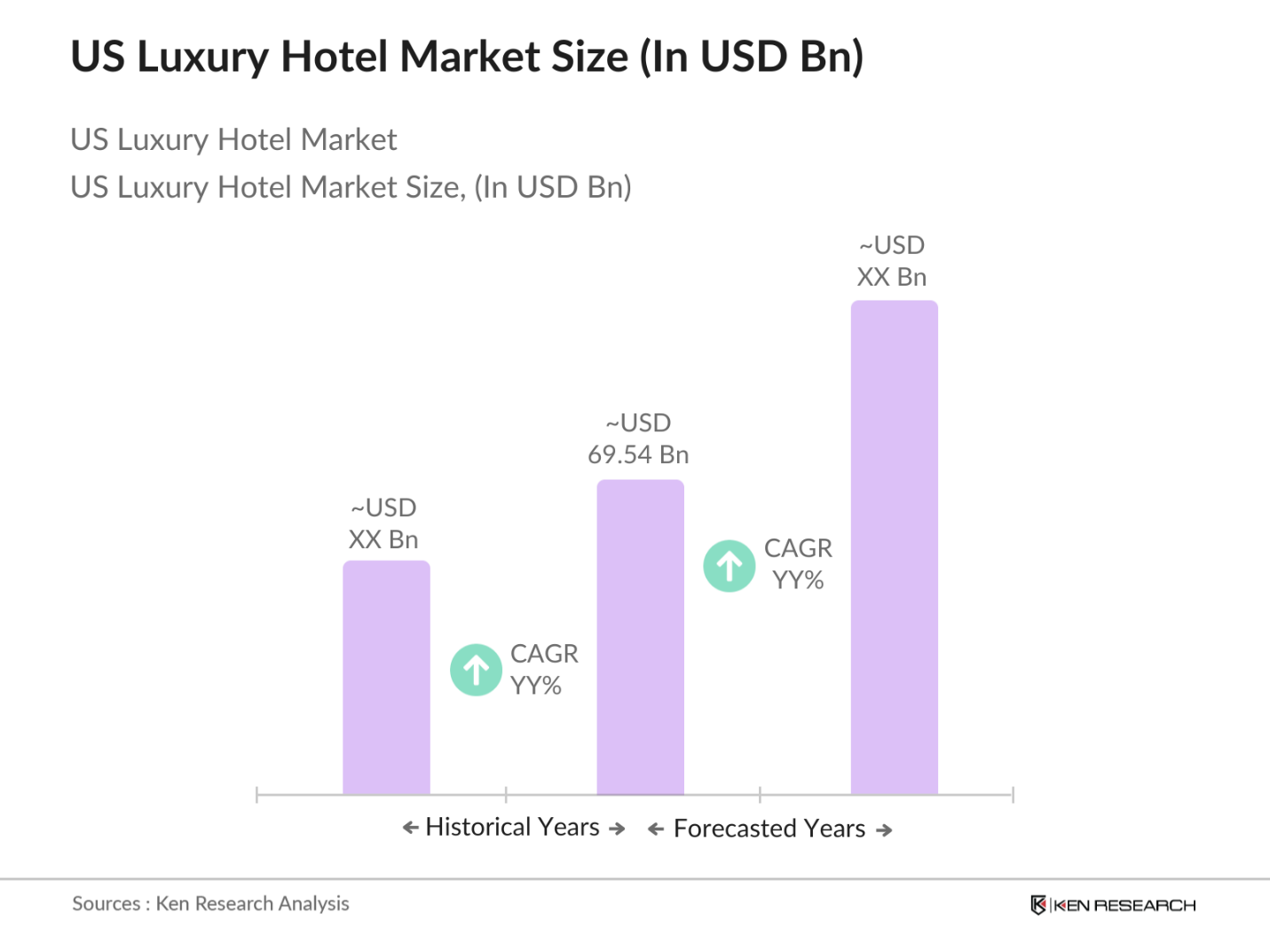
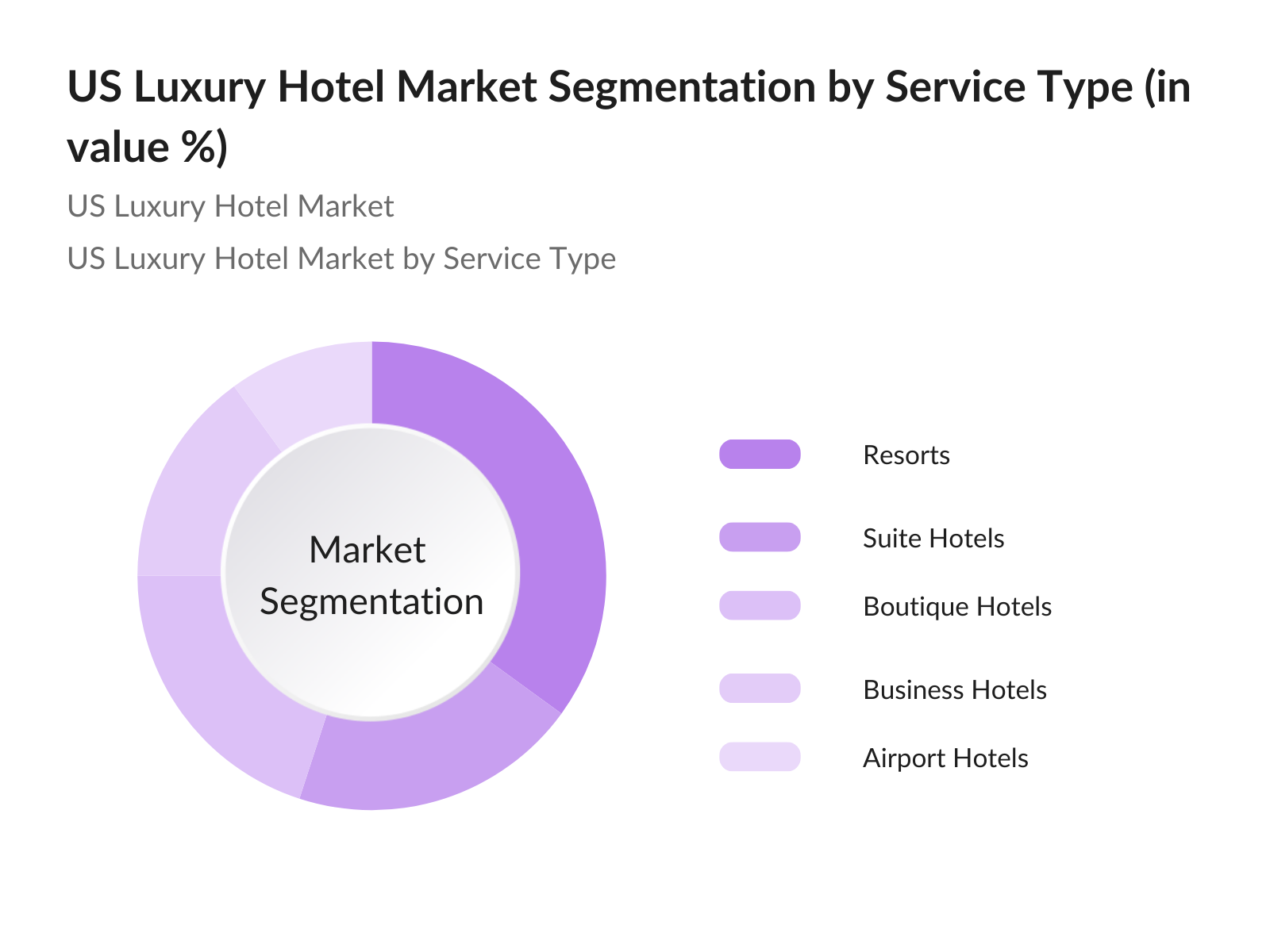
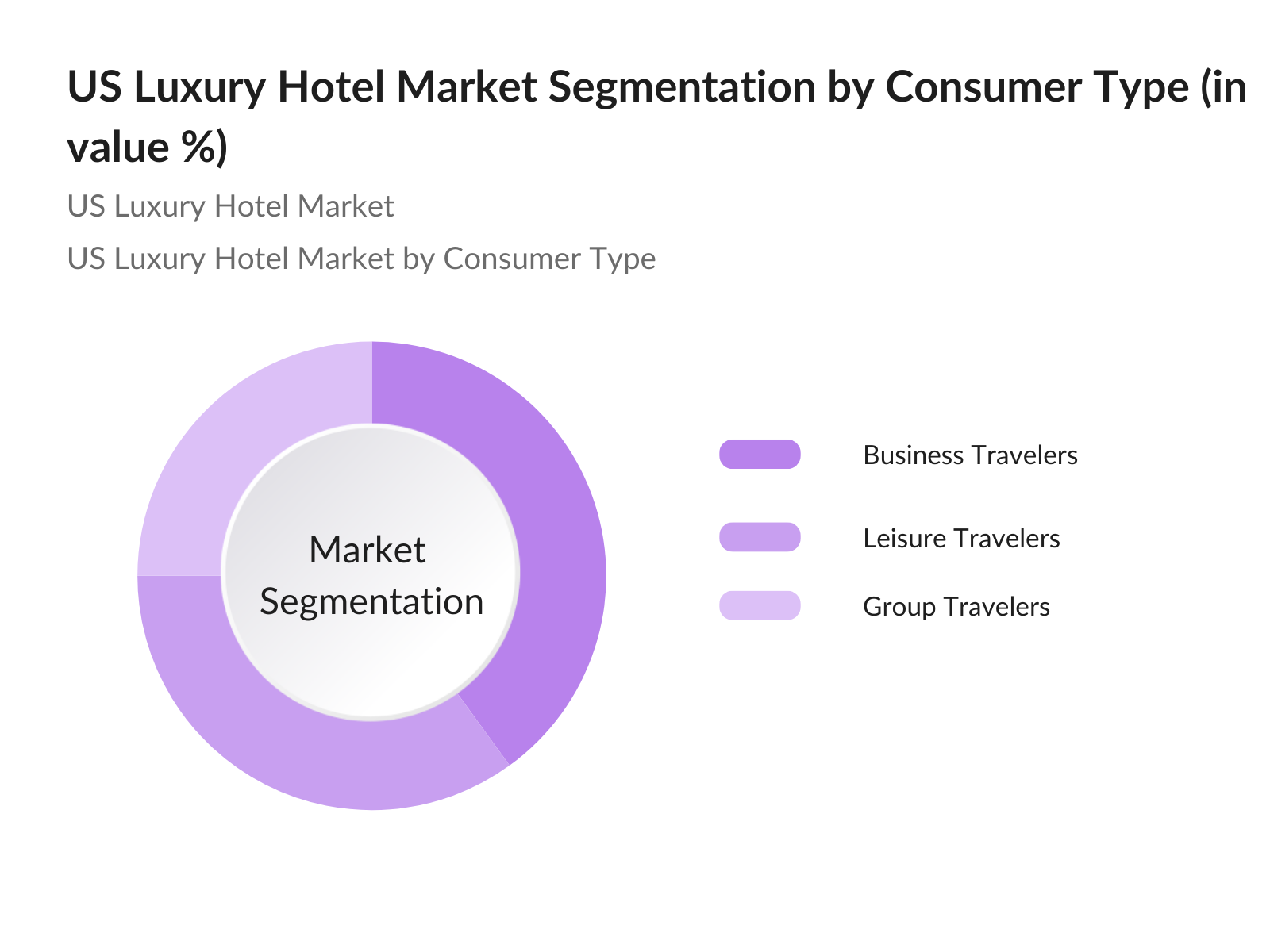
The US luxury hotel market is dominated by several key players that shape the competitive landscape. These companies maintain their market positions through strong brand presence, exceptional service offerings, and continuous investments in luxury properties. High brand loyalty and diverse property portfolios help these players capture a significant portion of the market.
|
Company Name |
Establishment Year |
Headquarters |
No. of Properties |
Global Presence |
Revenue (USD) |
Loyalty Programs |
Customer Ratings |
ESG Initiatives |
|
Marriott International |
1927 |
Bethesda, Maryland |
800+ |
- |
- |
- |
- |
- |
|
Hyatt Hotels Corporation |
1957 |
Chicago, Illinois |
550+ |
- |
- |
- |
- |
- |
|
Hilton Worldwide |
1919 |
McLean, Virginia |
600+ |
- |
- |
- |
- |
- |
|
Ritz-Carlton Hotel Company |
1983 |
Chevy Chase, Maryland |
130+ |
- |
- |
- |
- |
- |
|
Four Seasons Hotels Limited |
1960 |
Toronto, Canada |
100+ |
- |
- |
- |
- |
- |
Market Growth Drivers
Market Challenges:
Over the next five years, the US luxury hotel market is expected to see substantial growth, driven by the expansion of high-net-worth individuals, an increase in domestic and international travel, and the rise of wellness tourism. Luxury hotels are likely to introduce more personalized services and sustainable offerings to cater to the evolving preferences of affluent travelers. Business-related travel, paired with high demand for leisure experiences in prime tourist destinations, will sustain the growth trajectory of the market.
Market Opportunities:
|
By Service Type |
Business Hotels Airport Hotels Suite Hotels Resorts Other Service Types |
|
By Theme |
Heritage Contemporary Modern |
|
By Consumer Type |
Business Travelers Leisure Travelers |
|
By Room Category |
Standard Rooms Executive Suites Presidential Suites Villas |
|
By Region |
North America Europe Asia-Pacific Middle East & Africa South America |
1.1 Definition and Scope
1.2 Market Taxonomy
1.3 Key Market Developments and Drivers
1.4 Market Segmentation Overview
2.1 Historical Market Size
2.2 Year-on-Year Growth Analysis
2.3 Key Milestones and Market Transformations
3.1 Market Drivers (e.g., Growth in High-Net-Worth Individuals, Urbanization, Changing Travel Preferences)
3.2 Market Challenges (e.g., Rising Operational Costs, Shifts in Consumer Preferences)
3.3 Market Opportunities (e.g., Expansion of Resort Chains, Investments in Sustainable Tourism)
3.4 Market Trends (e.g., Digital Concierge Services, Personalization, Sustainable Luxury)
3.5 Regulatory Impact (e.g., Impact of US Hotel Taxation, ESG Compliance)
3.6 Porters Five Forces
3.6.1 Threat of New Entrants
3.6.2 Bargaining Power of Suppliers
3.6.3 Bargaining Power of Consumers
3.6.4 Threat of Substitutes
3.6.5 Competitive Rivalry
3.7 SWOT Analysis
4.1 By Service Type (In Value %)
4.1.1 Business Hotels
4.1.2 Airport Hotels
4.1.3 Suite Hotels
4.1.4 Resorts and Spas
4.1.5 Other Service Types
4.2 By Theme (In Value %)
4.2.1 Heritage Hotels
4.2.2 Contemporary Hotels
4.2.3 Modern Hotels
4.3 By Consumer Type (In Value %)
4.3.1 Business Travelers
4.3.2 Leisure Travelers
4.4 By Region (In Value %)
4.4.1 North America
4.4.2 Europe
4.4.3 Asia-Pacific
4.4.4 Middle East and Africa
4.4.5 South America
5.1 Detailed Profiles of Major Competitors
5.1.1 Marriott International Inc.
5.1.2 Hilton Worldwide
5.1.3 Hyatt Hotels Corporation
5.1.4 Ritz-Carlton Hotel Company LLC
5.1.5 Four Seasons Hotels Limited
5.1.6 Accor SA
5.1.7 InterContinental Hotels Group PLC
5.1.8 Rosewood Hotels & Resorts
5.1.9 Belmond Ltd
5.1.10 Shangri-La International Hotel Management
5.1.11 ITC Hotels
5.1.12 The Peninsula Hotels
5.1.13 Aman Resorts
5.1.14 Waldorf Astoria Hotels & Resorts
5.1.15 The St. Regis
5.2 Cross Comparison Parameters (No. of Properties, Revenue, Target Segments, Global Presence, Loyalty Programs, ESG Ratings, Room Rates, Services)
5.3 Market Share Analysis
5.4 Key Strategic Initiatives
5.5 Recent Mergers & Acquisitions
5.6 Investment and Expansion Analysis
6.1 Federal and State Regulations (Impact of Taxation Policies, Labor Laws)
6.2 Industry Certification Standards (Sustainability Certifications, ADA Compliance)
7.1 Market Size Projections
7.2 Key Growth Factors Driving Future Expansion
8.1 Market Penetration Strategies (TAM/SAM/SOM Analysis)
8.2 Consumer Experience Enhancement Strategies
8.3 White Space Opportunities in Luxury Travel and Stay
The research process begins by mapping all relevant stakeholders in the US luxury hotel market. This includes identifying critical factors such as consumer preferences, luxury property developments, and evolving travel trends. Proprietary databases and extensive desk research are used to compile industry information.
Historical data on luxury hotel occupancy rates, average daily rates, and traveler demographics is analyzed. This involves evaluating demand in major metropolitan cities and key tourist destinations. The outcome is a robust understanding of the revenue generation capacity of various hotel segments.
Industry experts are consulted via structured interviews to validate hypotheses around market expansion, service preferences, and operational challenges. Their insights provide context to data trends and forecast models.
In the final stage, insights gathered from key hotel operators are synthesized with quantitative data. This process ensures that the final report offers an accurate, validated analysis of the US luxury hotel market, capturing consumer behaviors and emerging trends.
The US luxury hotel market was valued at USD 69.54 billion. The market's growth is fueled by increased spending on premium travel experiences and rising demand among affluent tourists and business travelers.
Challenges include rising operational costs, increased competition among global luxury brands, and shifting consumer preferences toward sustainable and wellness-focused travel options.
Key players include Marriott International, Hyatt Hotels Corporation, Hilton Worldwide, Ritz-Carlton, and Four Seasons Hotels, with these brands maintaining a strong presence due to extensive global portfolios and luxury offerings.
Growth drivers include increasing demand for exclusive travel experiences, rising wealth among high-net-worth individuals, and corporate demand for high-end accommodations for business purposes.

What makes us stand out is that our consultants follows Robust, Refine and Result (RRR) methodology. i.e. Robust for clear definitions, approaches and sanity checking, Refine for differentiating respondents facts and opinions and Result for presenting data with story

We have set a benchmark in the industry by offering our clients with syndicated and customized market research reports featuring coverage of entire market as well as meticulous research and analyst insights.

While we don't replace traditional research, we flip the method upside down. Our dual approach of Top Bottom & Bottom Top ensures quality deliverable by not just verifying company fundamentals but also looking at the sector and macroeconomic factors.

With one step in the future, our research team constantly tries to show you the bigger picture. We help with some of the tough questions you may encounter along the way: How is the industry positioned? Best marketing channel? KPI's of competitors? By aligning every element, we help maximize success.

Our report gives you instant access to the answers and sources that other companies might choose to hide. We elaborate each steps of research methodology we have used and showcase you the sample size to earn your trust.

If you need any support, we are here! We pride ourselves on universe strength, data quality, and quick, friendly, and professional service.