
USA Plant Factory Market Outlook to 2030
Region:North America
Author(s):Yogita Sahu
Product Code:KROD6199
November 2024
92
About the Report
USA Plant Factory Market Overview
- The USA Plant Factory market, is valued at USD 1.4 billion, driven primarily by technological advancements in controlled environment agriculture (CEA) and the growing demand for sustainable food production methods. This demand is fueled by rising concerns over climate change, food security, and resource optimization.
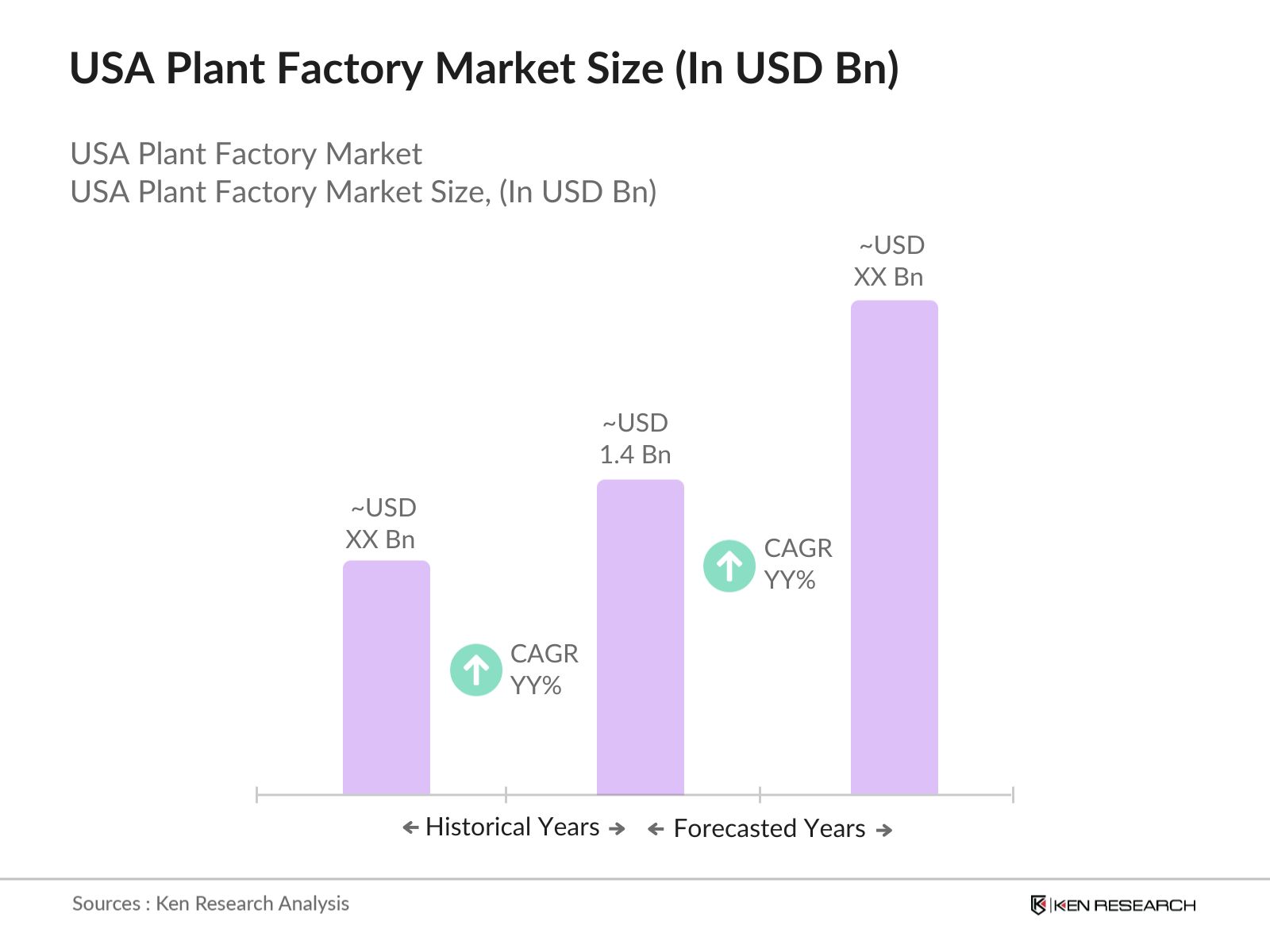
- The USA is home to key dominant regions such as California, New York, and Texas, where urban agriculture is rapidly expanding due to large population centers and government incentives to support sustainable farming practices. These regions have invested heavily in indoor vertical farming facilities to reduce reliance on traditional agriculture.
- In 2024, the U.S. Department of Agriculture (USDA) introduced a $500 million grant program specifically targeted at promoting urban agriculture, including plant factories. This initiative is focused on improving food security in metropolitan areas and reducing the carbon footprint of food transportation. Cities such as Detroit and Philadelphia have already benefited from these grants, with 300 new indoor farming units planned for construction by 2026.
USA Plant Factory Market Segmentation
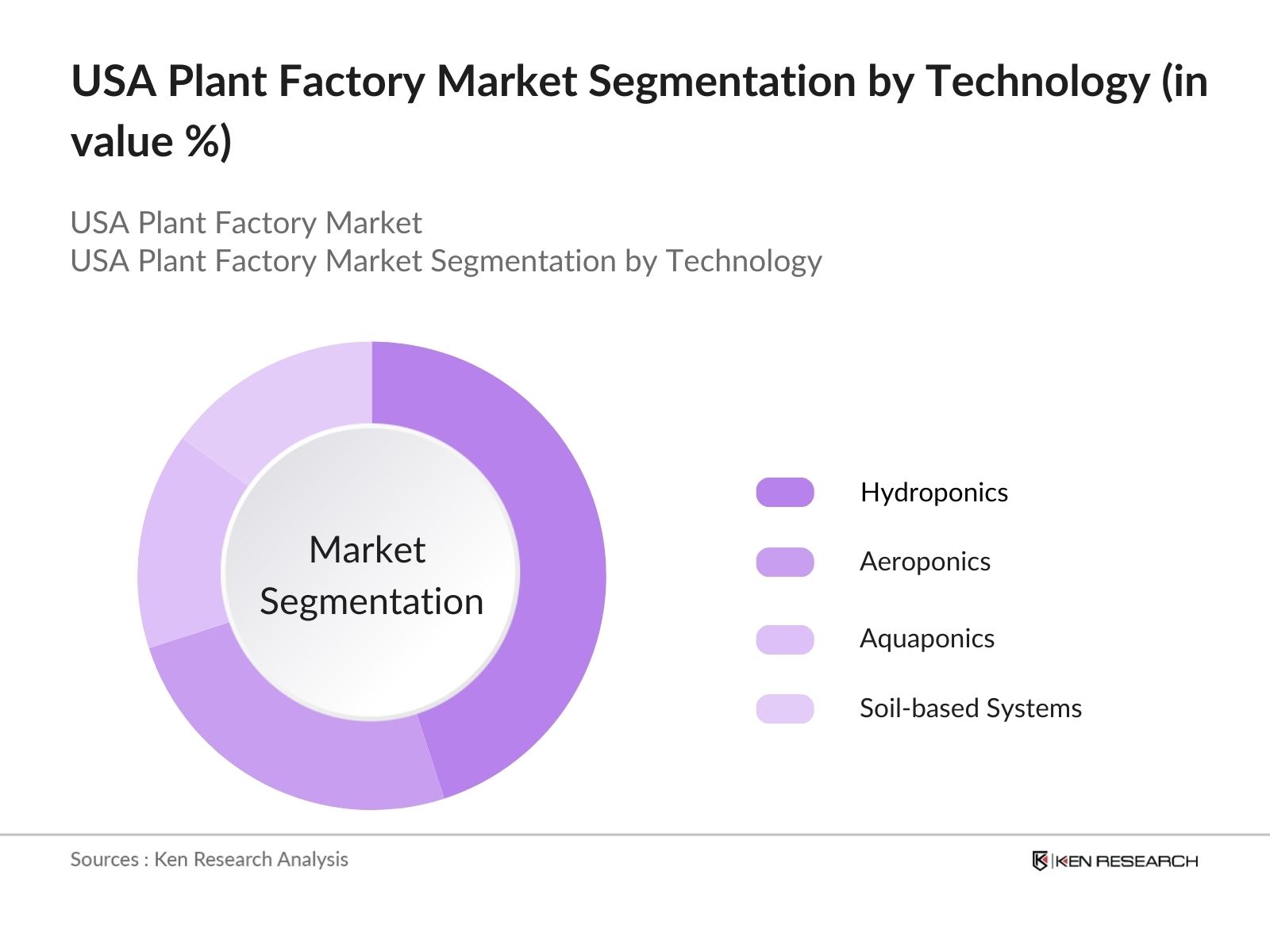
By Technology: The market is segmented by technology into hydroponics, aeroponics, aquaponics, and soil-based systems. Hydroponics currently holds a dominant market share due to its efficiency in water usage and its adaptability to various plant species, especially leafy greens and herbs. This method allows for precise control over nutrient delivery, which enhances plant growth while reducing resource wastage.
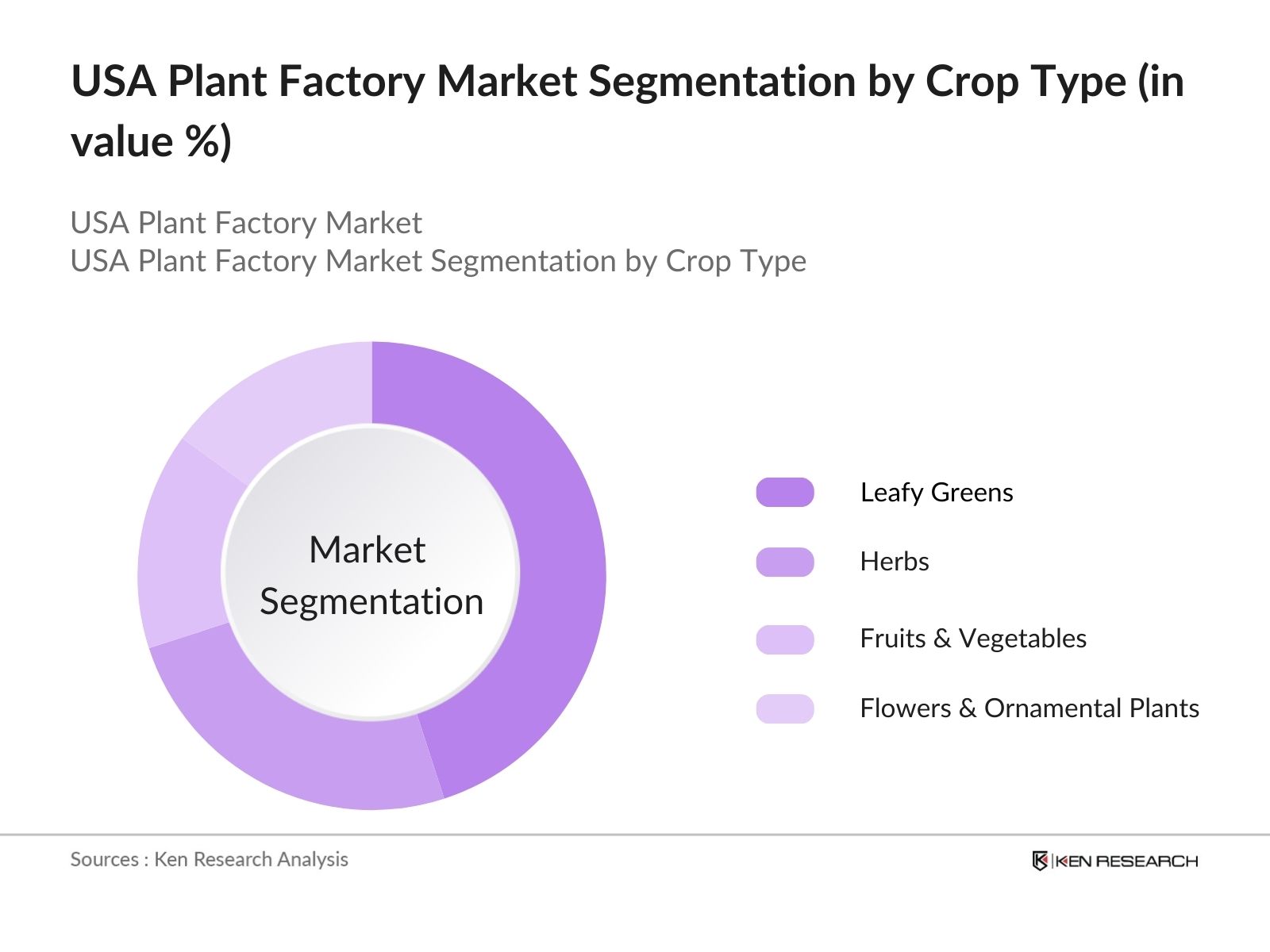
By Crop Type: The market is also segmented by crop type into leafy greens, herbs, fruits & vegetables, and flowers & ornamental plants. Leafy greens dominate the crop type segment with the highest market share, primarily due to their fast growth cycle, high demand in the fresh produce market, and suitability for indoor farming methods like hydroponics and vertical farming. Major plant factory operators prioritize the cultivation of lettuce, spinach, and kale as these crops provide consistent returns on investment and meet the growing consumer demand for healthy, locally sourced food options.
USA Plant Factory Market Competitive Landscape
The market is dominated by several key players, each contributing to the overall market landscape through innovation, technological advancements, and strategic collaborations. The competitive environment is highly consolidated, with companies focusing on vertical farming, hydroponics, and smart technology integration to differentiate themselves.
|
Company Name |
Establishment Year |
Headquarters |
Technology Used |
Greenhouse Area (Sq. Ft.) |
Revenue (2023) |
R&D Investments |
Partnerships |
Crop Focus |
|
AeroFarms |
2004 |
Newark, New Jersey |
||||||
|
BrightFarms |
2011 |
Irvington, New York |
||||||
|
Plenty |
2014 |
San Francisco, California |
||||||
|
Gotham Greens |
2009 |
Brooklyn, New York |
||||||
|
Bowery Farming |
2015 |
New York City, New York |
USA Plant Factory Market Analysis
Market Growth Drivers
- Rising Demand for Locally Produced, Pesticide-Free Food: In 2024, the increasing consumer demand for locally grown, pesticide-free, and sustainably produced food is driving the growth of plant factories. With the growing awareness of health and environmental sustainability, consumers are turning towards these food sources, supported by an increase in urban population which is expected to grow by 4 million in 2024. This demand is being fueled by major urban centers, including New York and California, where over 6,000 indoor farming units are operational.
- Scarcity of Arable Land in Urban Areas: The U.S. faces constraints in terms of arable land in urbanized regions. In cities like Los Angeles and Chicago, traditional agricultural land is becoming scarce, and the number of farms decreased by over 200 units in 2024 compared to the previous year. The U.S. Department of Agriculture projects that by 2030, food production will need to be doubled to meet the growing demand.
- Technological Advancements in LED Lighting and HVAC Systems: In 2024, advancements in energy-efficient LED lighting and improved HVAC systems are driving growth in plant factories. These technologies enable precise control over temperature, humidity, and light conditions, optimizing plant growth. LED lighting systems have reduced electricity consumption in these factories by up to 30%, allowing operators to reduce operational costs while increasing yields.
Market Challenges
- Energy Consumption and Operational Costs: Energy consumption is one of the biggest challenges faced by plant factories. In 2024, the average plant factory in the U.S. consumed 400,000 kWh of electricity annually, translating to high operational costs. These factories rely on constant artificial lighting, climate control, and irrigation systems, making energy efficiency a critical issue.
- Limited Skilled Workforce: As of 2024, there is a shortage of skilled workers in the U.S. capable of managing and operating plant factories. The indoor farming sector requires expertise in fields such as biotechnology, horticulture, and agronomy, but educational institutions are not producing enough qualified graduates.
USA Plant Factory Market Future Outlook
Over the next five years, the USA Plant Factory industry is expected to experience robust growth driven by the increasing adoption of indoor farming technologies, government subsidies for sustainable agriculture, and the expanding market for organic and locally sourced food.
Future Market Opportunities
- Expansion of Urban Plant Factories in Major Cities: Over the next five years, plant factory facilities are expected to expand rapidly across urban centers such as New York, Chicago, and Los Angeles, driven by increasing demand for locally sourced fresh food. By 2029, the number of plant factories in these cities is projected to reach over 10,000, addressing the growing food demands of a projected 350 million urban population. This expansion will significantly reduce food transportation costs, making fresh produce more affordable for consumers.
- Increased Integration of Renewable Energy in Operations: By 2028, over 50% of plant factories in the U.S. are expected to transition to renewable energy sources, such as solar and wind power, in response to rising energy costs. New investments in energy-efficient technologies, combined with government subsidies, will enable facilities to cut their electricity consumption by an additional 40,000 kWh annually, reducing operational costs and contributing to the market's sustainability goals.
Scope of the Report
|
By Technology |
Hydroponics Aeroponics Aquaponics Soil-based Systems |
|
By Facility Type |
Vertical Farms Container Farms Greenhouses Indoor Vertical Factories |
|
By Crop Type |
Leafy Greens Herbs Fruits & Vegetables Flowers & Ornamental Plants |
|
By Component |
Lighting Systems Climate Control Systems Sensors & Monitoring Systems Irrigation Systems |
|
By Region |
Northeast Midwest West South |
Products
Key Target Audience Organizations and Entities Who Can Benefit by Subscribing This Report:
Investors and venture capitalist firms
Government and regulatory bodies (USDA, EPA)
Food and beverage companies
Agri-tech companies
Banks and Financial Institution
Indoor farming equipment manufacturers
Companies
Players Mentioned in the Report:
AeroFarms
BrightFarms
Plenty
Green Sense Farms
Bowery Farming
Gotham Greens
Iron Ox
Fifth Season
Vertical Harvest
AppHarvest
Freight Farms
Kalera
Crop One Holdings
Little Leaf Farms
Urban Crop Solutions
Table of Contents
USA Plant Factory Market Overview
1.1. Definition and Scope
1.2. Market Taxonomy
1.3. Market Growth Rate
1.4. Market Segmentation Overview
USA Plant Factory Market Size (In USD Bn)
2.1. Historical Market Size
2.2. Year-On-Year Growth Analysis
2.3. Key Market Developments and Milestones
USA Plant Factory Market Analysis
3.1. Growth Drivers (Operational Efficiency, Resource Optimization, Urban Agriculture, Climate Resilience)
3.1.1. Rising Demand for Sustainable Food Production
3.1.2. Increasing Investment in Indoor Farming Technologies
3.1.3. Adoption of LED Lighting for Energy Efficiency
3.1.4. Government Support and Subsidies for Controlled Environment Agriculture (CEA)
3.2. Market Challenges (High Capital Expenditure, Energy Consumption, Skilled Workforce, Regulatory Compliance)
3.2.1. High Initial Setup Costs
3.2.2. Complexities in Resource Management
3.2.3. Energy Demand and Environmental Concerns
3.2.4. Lack of Skilled Operators and Technicians
3.3. Opportunities (Vertical Integration, Automation Technologies, Specialty Crops, Urban Expansion)
3.3.1. Expansion into Niche Crop Production
3.3.2. Integration with Smart Technologies (IoT, AI, Big Data)
3.3.3. Collaboration with Urban Development Projects
3.3.4. Investment in Automation and Robotics
3.4. Trends (Hydroponics, Aeroponics, Vertical Farming, AI-powered Monitoring Systems)
3.4.1. Adoption of Advanced Monitoring Technologies
3.4.2. Increased Usage of Hydroponic and Aeroponic Systems
3.4.3. Use of Artificial Intelligence in Plant Growth Optimization
3.4.4. Shift Towards Organic and Non-GMO Produce
3.5. Government Initiatives (Farm Bill, Urban Agriculture Incentives, Clean Energy Investments)
3.5.1. USDA Funding for Indoor Farming Research
3.5.2. Tax Incentives for Renewable Energy Use
3.5.3. Urban Agriculture Incentive Programs
3.5.4. Food Security and Supply Chain Enhancements
3.6. SWOT Analysis
3.7. Stakeholder Ecosystem
3.8. Porters Five Forces
3.9. Competition Ecosystem
USA Plant Factory Market Segmentation
4.1. By Technology (In Value %)
4.1.1. Hydroponics
4.1.2. Aeroponics
4.1.3. Aquaponics
4.1.4. Soil-based Systems
4.2. By Facility Type (In Value %)
4.2.1. Vertical Farms
4.2.2. Container Farms
4.2.3. Greenhouses
4.2.4. Indoor Vertical Factories
4.3. By Crop Type (In Value %)
4.3.1. Leafy Greens
4.3.2. Herbs
4.3.3. Fruits & Vegetables
4.3.4. Flowers & Ornamental Plants
4.4. By Component (In Value %)
4.4.1. Lighting Systems (LED, Fluorescent, HPS)
4.4.2. Climate Control Systems
4.4.3. Sensors & Monitoring Systems
4.4.4. Irrigation Systems
4.5. By Region (In Value %)
4.5.1. Northeast
4.5.2. Midwest
4.5.3. West
4.5.4. South
USA Plant Factory Market Competitive Analysis
5.1. Detailed Profiles of Major Companies
5.1.1. AeroFarms
5.1.2. BrightFarms
5.1.3. Plenty
5.1.4. Green Sense Farms
5.1.5. Bowery Farming
5.1.6. Gotham Greens
5.1.7. Iron Ox
5.1.8. Fifth Season
5.1.9. Vertical Harvest
5.1.10. AppHarvest
5.1.11. Freight Farms
5.1.12. Kalera
5.1.13. Crop One Holdings
5.1.14. Little Leaf Farms
5.1.15. Urban Crop Solutions
5.2. Cross Comparison Parameters (No. of Employees, Headquarters, Inception Year, Revenue, R&D Investment, Greenhouse Area, Production Output, Technological Integration)
5.3. Market Share Analysis
5.4. Strategic Initiatives
5.5. Mergers and Acquisitions
5.6. Investment Analysis
5.7. Venture Capital Funding
5.8. Government Grants
5.9. Private Equity Investments
USA Plant Factory Market Regulatory Framework
6.1. Environmental Standards
6.2. Food Safety Regulations
6.3. Certification Processes
6.4. Labor Regulations
USA Plant Factory Future Market Size (In USD Bn)
7.1. Future Market Size Projections
7.2. Key Factors Driving Future Market Growth
USA Plant Factory Future Market Segmentation
8.1. By Technology (In Value %)
8.2. By Facility Type (In Value %)
8.3. By Crop Type (In Value %)
8.4. By Component (In Value %)
8.5. By Region (In Value %)
USA Plant Factory Market Analysts Recommendations
9.1. TAM/SAM/SOM Analysis
9.2. White Space Opportunity Analysis
9.3. Marketing Initiatives
9.4. Customer Cohort Analysis
Research Methodology
Step 1: Identification of Key Variables
In this stage, an ecosystem map is developed to understand all key stakeholders in the USA Plant Factory Market. The objective is to pinpoint the factors influencing market growth, including technological advancements, consumer preferences, and resource availability.
Step 2: Market Analysis and Construction
This step involves compiling historical market data and analyzing industry trends. The aim is to understand market penetration levels and revenue generation based on the performance of different plant factory types and the success of crop yields under each method.
Step 3: Hypothesis Validation and Expert Consultation
Industry experts from various plant factory operations are consulted to validate the initial hypotheses. This is done through computer-assisted telephone interviews (CATIs) to gather insights on market operations, technological integration, and future opportunities.
Step 4: Research Synthesis and Final Output
Finally, the findings are synthesized through direct consultations with manufacturers and key players. This phase ensures a comprehensive view of the market dynamics, verifying data through a bottom-up approach.
Frequently Asked Questions
01. How big is the USA Plant Factory Market?
The USA Plant Factory market is valued at USD 1.4 billion, driven by increased consumer demand for sustainable and locally sourced produce.
02. What are the key challenges in the USA Plant Factory Market?
Key challenges in the USA Plant Factory market include high energy costs, the need for skilled labor, and maintaining consistent profitability in a competitive environment dominated by technologically advanced companies.
03. Who are the major players in the USA Plant Factory Market?
Key players in the USA Plant Factory market include AeroFarms, BrightFarms, Plenty, Gotham Greens, and Bowery Farming. These companies lead the market due to their technological innovations and partnerships with retailers.
04. What are the growth drivers of the USA Plant Factory Market?
The USA Plant Factory market is driven by advancements in hydroponics and vertical farming technologies, government support for sustainable agriculture, and the growing consumer preference for organic and locally sourced food.
05. What is the future outlook for the USA Plant Factory Market?
The USA Plant Factory market is expected to grow over the next five years due to increased investment in automation, AI-based monitoring systems, and expanded urban agriculture initiatives.
Why Buy From Us?

What makes us stand out is that our consultants follows Robust, Refine and Result (RRR) methodology. i.e. Robust for clear definitions, approaches and sanity checking, Refine for differentiating respondents facts and opinions and Result for presenting data with story

We have set a benchmark in the industry by offering our clients with syndicated and customized market research reports featuring coverage of entire market as well as meticulous research and analyst insights.

While we don't replace traditional research, we flip the method upside down. Our dual approach of Top Bottom & Bottom Top ensures quality deliverable by not just verifying company fundamentals but also looking at the sector and macroeconomic factors.

With one step in the future, our research team constantly tries to show you the bigger picture. We help with some of the tough questions you may encounter along the way: How is the industry positioned? Best marketing channel? KPI's of competitors? By aligning every element, we help maximize success.

Our report gives you instant access to the answers and sources that other companies might choose to hide. We elaborate each steps of research methodology we have used and showcase you the sample size to earn your trust.

If you need any support, we are here! We pride ourselves on universe strength, data quality, and quick, friendly, and professional service.