
Vietnam Prefabricated House Market Outlook to 2030
Region:Vietnam
Author(s):Shambhavi Awasthi
Product Code:KROD4199
Region:Vietnam
Author(s):Shambhavi Awasthi
Product Code:KROD4199
December 2024
99
The Vietnam prefabricated house market is dominated by a mix of local and international companies. These companies focus on different strategies, from innovation in modular and hybrid construction techniques to expanding their geographical presence through partnerships with real estate developers. Key players are contributing to the market by investing in advanced technologies, ensuring regulatory compliance, and driving down construction costs to appeal to both private buyers and public-sector projects.
|
Company Name |
Year Established |
Headquarters |
Revenue |
Number of Employees |
Key Projects Completed |
Market Presence (Domestic/International) |
Construction Type Specialization |
Technological Innovations |
Sustainability Initiatives |
|
Katerra |
2015 |
Menlo Park, USA |
- |
- |
- |
- |
- |
- |
- |
|
BNBM Homes |
2003 |
Beijing, China |
- |
- |
- |
- |
- |
- |
- |
|
VINCI Construction |
1899 |
Paris, France |
- |
- |
- |
- |
- |
- |
- |
|
Red Sea Housing |
1976 |
Jeddah, Saudi Arabia |
- |
- |
- |
- |
- |
- |
- |
|
PEB Steel Buildings |
1994 |
Ho Chi Minh City, VN |
- |
- |
- |
- |
- |
- |
- |
Growth drivers
Market Challenges
Over the next few years, the Vietnam prefabricated house market is poised for continuous growth driven by government-backed housing initiatives and increasing interest from private developers. As Vietnams real estate market grows, prefabricated housing is likely to play a pivotal role in reducing the housing deficit, particularly in urban areas. Innovations in materials and construction technology, along with an increased focus on sustainable and energy-efficient building practices, will shape the future of the market. Companies focusing on modular and hybrid construction methods are expected to gain the most significant traction, as they meet the demand for faster, more cost-effective construction solutions.
Market Opportunities
|
Segment |
Sub-segments |
|
By Construction Type |
Modular Construction Panelized Construction Hybrid Construction |
|
By Application |
Residential Commercial Institutional |
|
By Material Type |
Concrete Steel Wood |
|
By Region |
Red River Delta Mekong River Delta Southeast Region Central Highlands |
|
By End User |
Homeowners Government Projects Private Developers |
1.1. Definition and Scope
1.2. Market Taxonomy
1.3. Market Growth Rate
1.4. Market Segmentation Overview
2.1. Historical Market Size
2.2. Year-On-Year Growth Analysis
2.3. Key Market Developments and Milestones
3.1. Growth Drivers (Urbanization, Infrastructure Expansion, Cost Efficiency)
3.1.1. Urbanization and Population Growth
3.1.2. Infrastructure Development Initiatives
3.1.3. Cost-Effective Construction Methods
3.2. Market Challenges (Quality Standards, Regulatory Compliance)
3.2.1. Lack of Skilled Labor
3.2.2. Quality Control and Material Supply Chain Issues
3.2.3. Regulatory and Zoning Challenges
3.3. Opportunities (Affordable Housing Programs, Energy-Efficient Solutions)
3.3.1. Government-Backed Affordable Housing Projects
3.3.2. Technological Advancements in Modular Construction
3.3.3. Energy-Efficient and Sustainable Housing Initiatives
3.4. Trends (Sustainable Construction, Modular Innovations)
3.4.1. Growing Demand for Green Building Certifications
3.4.2. Adoption of Off-Site Construction Technologies
3.4.3. Rising Popularity of Hybrid Prefabrication Methods
3.5. Government Regulation (Building Codes, Sustainable Practices)
3.5.1. Compliance with Vietnam National Building Codes (QCVN)
3.5.2. Government Incentives for Sustainable Construction
3.5.3. Zoning Laws and Urban Planning Regulations
3.6. SWOT Analysis
3.7. Stakeholder Ecosystem (Government Agencies, Private Sector, Investors)
3.8. Porters Five Forces
3.9. Competition Ecosystem
4.1. By Construction Type (In Value %)
4.1.1. Modular Construction
4.1.2. Panelized Construction
4.1.3. Hybrid Construction
4.2. By Application (In Value %)
4.2.1. Residential
4.2.2. Commercial
4.2.3. Institutional
4.3. By Material Type (In Value %)
4.3.1. Concrete
4.3.2. Steel
4.3.3. Wood
4.4. By Region (In Value %)
4.4.1. Red River Delta
4.4.2. Mekong River Delta
4.4.3. Southeast Region
4.4.4. Central Highlands
4.5. By End User (In Value %)
4.5.1. Homeowners
4.5.2. Government Projects
4.5.3. Private Developers
5.1 Detailed Profiles of Major Companies
5.1.1. Katerra
5.1.2. BNBM Homes
5.1.3. Red Sea Housing
5.1.4. LafargeHolcim
5.1.5. Tata Steel
5.1.6. DORCE Prefabricated Building
5.1.7. VINCI Construction
5.1.8. CIMC Modular Building Systems
5.1.9. Hypar Prefab
5.1.10. ACS Group
5.1.11. PEB Steel Buildings
5.1.12. Phuong Nam Panel
5.1.13. Sekisui House
5.1.14. Palmatin O
5.1.15. Taisei Corporation
5.2 Cross Comparison Parameters (Revenue, Prefab Construction Techniques, Sustainability Initiatives, Key Markets Served, R&D Investments, Technological Advancements, Number of Projects Completed, Certification Standards)
5.3. Market Share Analysis
5.4. Strategic Initiatives
5.5. Mergers and Acquisitions
5.6. Investment Analysis
5.7. Venture Capital Funding
5.8. Government Grants
5.9. Private Equity Investments
6.1. Building Codes Compliance
6.2. Environmental Regulations
6.3. Certification Standards
7.1. Key Factors Driving Future Growth
7.2. Future Market Segmentation
8.1. TAM/SAM/SOM Analysis
8.2. Market Penetration Strategies
8.3. Customer Segmentation
8.4. White Space Opportunities
Disclaimer Contact UsEcosystem creation for all the major entities involved in the Vietnam Prefabricated House Market, including manufacturers, suppliers, distributors, and regulatory bodies. This step involves referring to multiple secondary and proprietary databases to perform desk research, aiming to collate industry-level information. Key variables such as market size, growth drivers, construction materials, end-use applications, and regional segmentation are identified to form the basis of further research.
Collating statistics on the Vietnam Prefabricated House Market over the years, analyzing the penetration of different types of prefabricated houses and regional distribution to compute the revenue generated. We will review data on construction trends, urbanization rates, government housing initiatives, and export-import trends of prefabricated materials. This process includes an in-depth analysis of market shares, adoption rates, and technological advancements, ensuring the accuracy of the data points shared.
Building market hypotheses and conducting CATIs (Computer Assisted Telephone Interviews) with industry experts from prefabricated house manufacturers, construction companies, and regulatory authorities. This step aims to validate the statistics and insights gathered, seeking operational and financial information from company representatives. The feedback received is used to refine the market estimates and trends.
Our team will approach multiple key players in the Vietnam Prefabricated House Market to understand the nature of product segments, sales dynamics, consumer preferences, and regional demand. This step will support the validation of statistics derived through a bottom-to-top approach, ensuring that the market data reflects current industry realities. The final research output will provide a comprehensive analysis, including market forecasts, competitive landscape, and strategic insights.
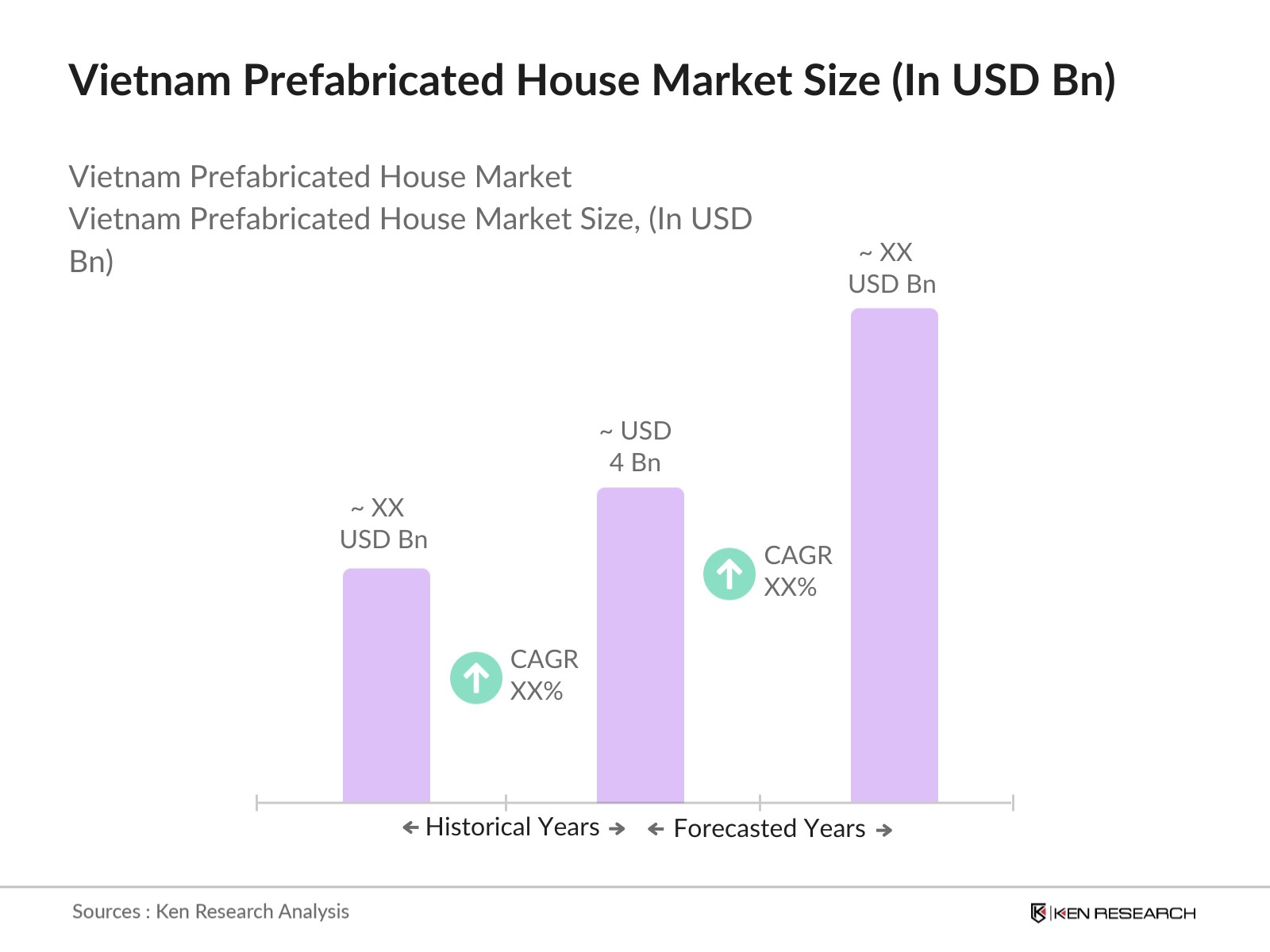
The Vietnam prefabricated house market, valued at USD 4 billion, is growing due to urbanization, government housing initiatives, and the cost-effectiveness of prefabricated construction techniques.
Challenges include regulatory hurdles related to building codes, zoning issues, and the limited availability of skilled labor in the construction and prefabrication sectors.
Key players include Katerra, BNBM Homes, VINCI Construction, Red Sea Housing, and PEB Steel Buildings, all of which have established strong market positions through technological innovation and sustainable construction practices.
Growth drivers include government support for affordable housing programs, increasing urbanization, and the rising demand for energy-efficient and sustainable housing solutions.
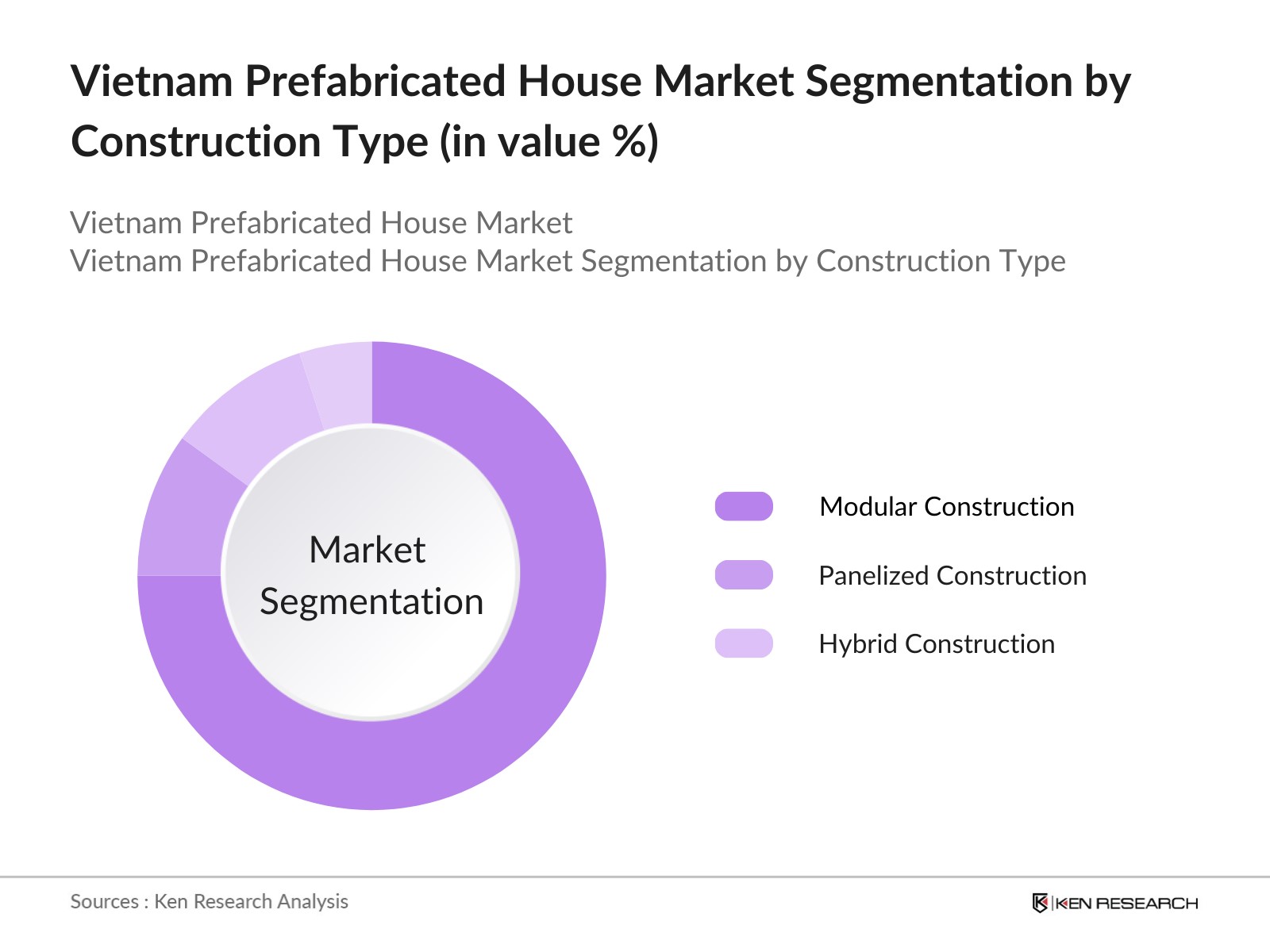
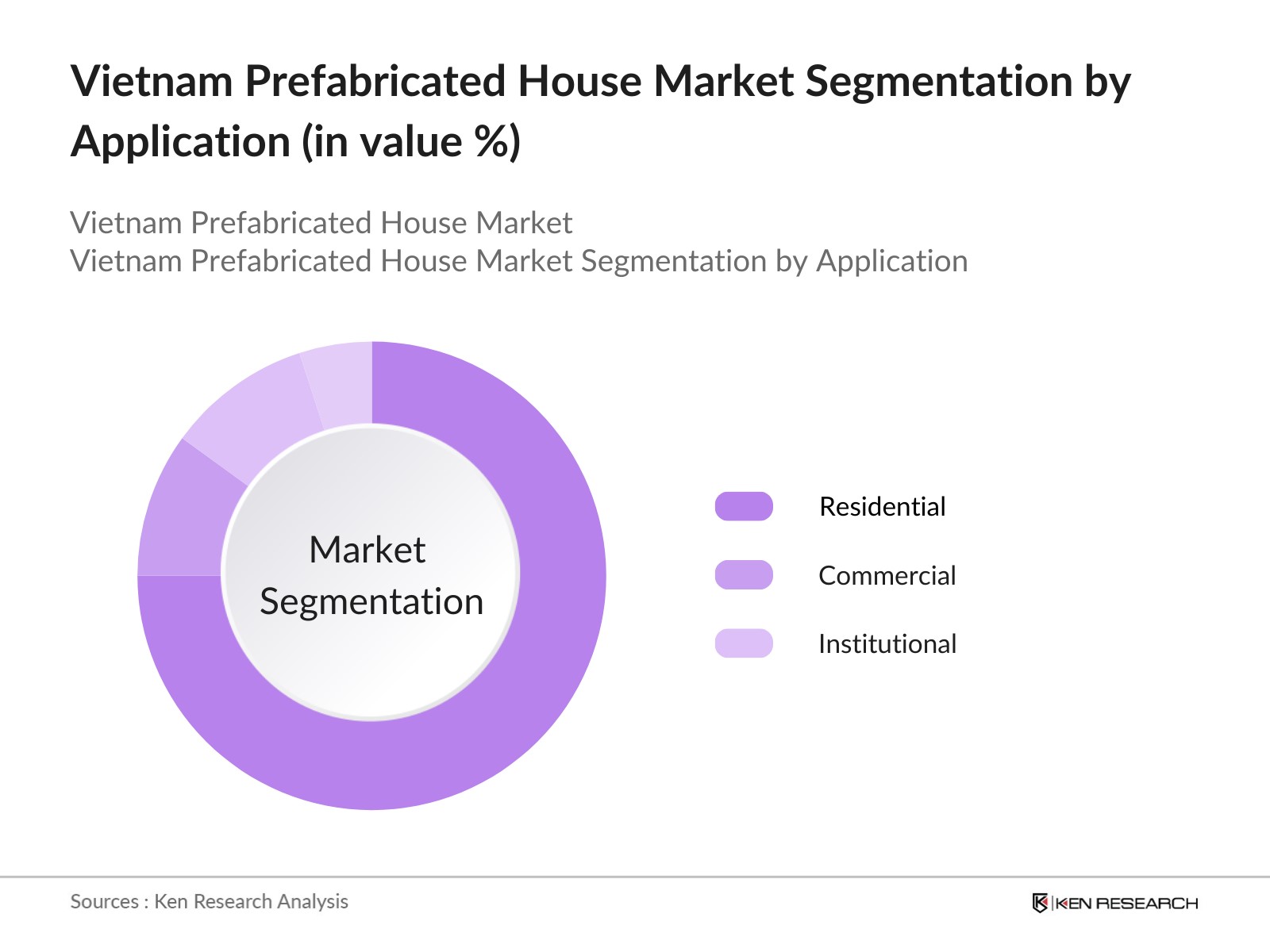
Modular construction and the residential application segment dominate the market due to their scalability, cost-effectiveness, and alignment with government housing policies.

What makes us stand out is that our consultants follows Robust, Refine and Result (RRR) methodology. i.e. Robust for clear definitions, approaches and sanity checking, Refine for differentiating respondents facts and opinions and Result for presenting data with story

We have set a benchmark in the industry by offering our clients with syndicated and customized market research reports featuring coverage of entire market as well as meticulous research and analyst insights.

While we don't replace traditional research, we flip the method upside down. Our dual approach of Top Bottom & Bottom Top ensures quality deliverable by not just verifying company fundamentals but also looking at the sector and macroeconomic factors.

With one step in the future, our research team constantly tries to show you the bigger picture. We help with some of the tough questions you may encounter along the way: How is the industry positioned? Best marketing channel? KPI's of competitors? By aligning every element, we help maximize success.

Our report gives you instant access to the answers and sources that other companies might choose to hide. We elaborate each steps of research methodology we have used and showcase you the sample size to earn your trust.

If you need any support, we are here! We pride ourselves on universe strength, data quality, and quick, friendly, and professional service.