About the Report
Base Year 2024Listen to the audio summary
Middle East Africa Safari Tourism Market Overview
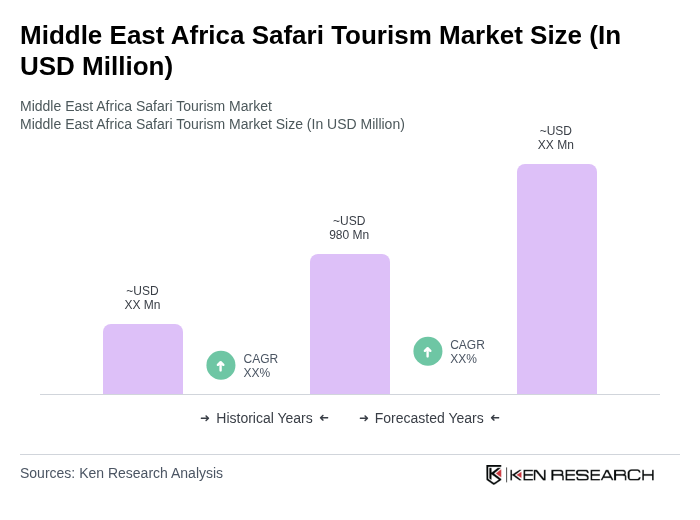
- The Middle East Africa Safari Tourism Market is valued at USD 980 million, based on a five-year historical analysis. This growth is primarily driven by rising global interest in wildlife conservation and eco-tourism, with travelers seeking authentic, immersive experiences that support biodiversity protection and conservation efforts. Infrastructure improvements, such as enhanced airports, road networks, and digital tools, have also boosted accessibility and safety in safari destinations.
- Key players in this market include Wilderness (Botswana-based ecotourism operator), Asilia Africa (East African safari camps), and Go2Africa (South African luxury safari operator). These companies contribute to market development through conservation-centric operations, sustainable practices, and premium offerings, enhancing the appeal of safari tourism in the region.
- In 2024, Kenyan officials have called for reinstating a trophy hunting exclusion zone along its border with Tanzania to protect migratory elephants crucial to Amboseli’s wildlife tourism. This reflects how conservation-linked regulation can directly influence safari tourism dynamics, ensuring the sustainability of wildlife and the tourism industry.
Middle East Africa Safari Tourism Market Segmentation
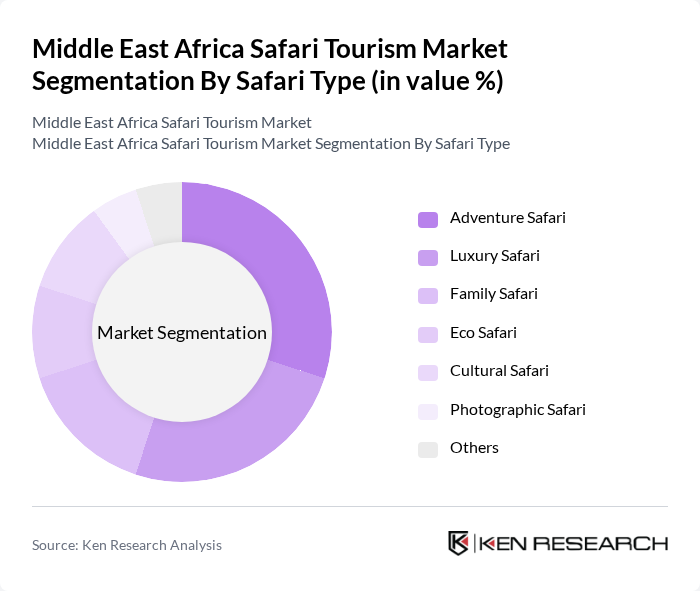
By Safari Type:The safari tourism market is segmented into various types, including Adventure Safari, Luxury Safari, Family Safari, Eco Safari, Cultural Safari, Photographic Safari, and Others. Among these, Adventure Safaris are gaining popularity due to the increasing demand for thrilling experiences and unique wildlife encounters. Luxury Safaris are also significant, catering to affluent travelers seeking exclusive and high-end experiences. The growing trend towards eco-friendly travel has bolstered the Eco Safari segment, appealing to environmentally conscious tourists.
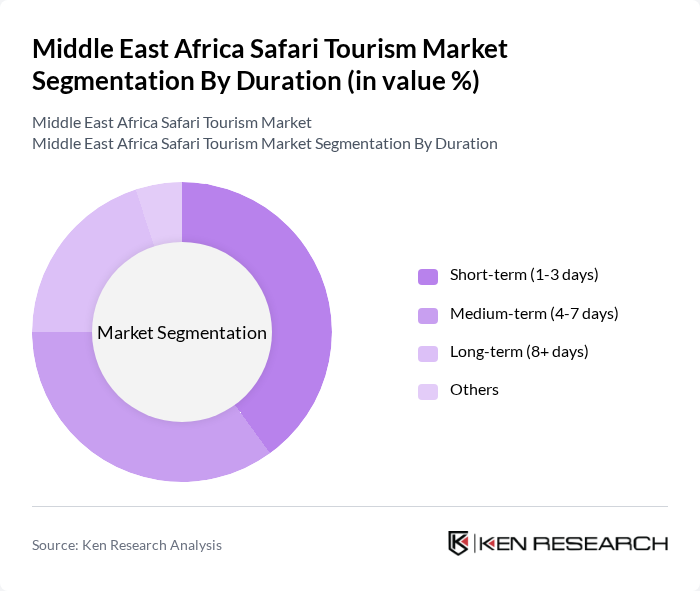
By Duration:The duration of safari trips varies, with segments including Short-term (1-3 days), Medium-term (4-7 days), Long-term (8+ days), and Others. Short-term safaris are popular among travelers with limited time, while Medium-term safaris cater to those seeking a more immersive experience. Long-term safaris attract dedicated wildlife enthusiasts who wish to explore multiple regions and engage in various activities. The trend towards experiential travel has led to an increase in demand for Medium-term safaris.
Middle East Africa Safari Tourism Market Competitive Landscape
The Middle East Africa Safari Tourism Market is characterized by a dynamic mix of regional and international players. Leading participants such as Abercrombie & Kent, Intrepid Travel, Wilderness Safaris, African Travel, Inc., Micato Safaris, Safari Consultants, &Beyond, G Adventures, Natural Habitat Adventures, Thomson Safaris, Travel Africa, The Safari Company, African Safari Company, Explore!, and SafariBookings contribute to innovation, geographic expansion, and service delivery in this space.
Middle East Africa Safari Tourism Market Industry Analysis
Growth Drivers
- Increasing Global Interest in Wildlife Experiences:The Middle East Africa region has seen a surge in wildlife tourism, with over 4 million international tourists visiting national parks in future. This interest is driven by a growing global awareness of biodiversity and conservation, as evidenced by the 15% increase in wildlife-related travel bookings reported by the World Travel & Tourism Council. The region's unique ecosystems and iconic species, such as elephants and lions, continue to attract adventure-seekers and nature enthusiasts alike.
- Growth of Eco-Tourism and Sustainable Travel:Eco-tourism in the Middle East Africa region has expanded significantly, with an estimated 30% increase in eco-friendly lodges and tours since the previous year. The United Nations Environment Programme reported that sustainable travel practices are becoming a priority for 70% of travelers, leading to a rise in demand for eco-conscious safari experiences. This trend is supported by local governments promoting conservation efforts, which further enhances the appeal of eco-tourism in the region.
- Enhanced Accessibility Through Improved Infrastructure:Infrastructure improvements, including the construction of new airports and roads, have made safari destinations more accessible. For instance, the African Development Bank invested $1.5 billion in transport infrastructure projects in future, facilitating easier access to remote wildlife areas. This investment has resulted in a 25% increase in tourist arrivals to national parks, as travelers can now reach these destinations more conveniently and comfortably than ever before.
Market Challenges
- Political Instability in Certain Regions:Political unrest in parts of the Middle East Africa region poses significant challenges for safari tourism. Countries like Sudan and parts of the Democratic Republic of Congo have experienced increased conflict, leading to a 40% decline in tourist arrivals in affected areas. This instability not only deters potential visitors but also impacts local economies reliant on tourism, creating a cycle of economic hardship and reduced investment in the sector.
- Environmental Concerns and Wildlife Conservation Issues:The safari tourism industry faces mounting pressure from environmental degradation and wildlife conservation challenges. Reports indicate that poaching rates for elephants and rhinos have increased by 20% in the last year, threatening the very wildlife that attracts tourists. Additionally, habitat loss due to agricultural expansion has reduced wildlife populations, leading to concerns about the sustainability of safari tourism in the region and its long-term viability.
Middle East Africa Safari Tourism Market Future Outlook
The future of safari tourism in the Middle East Africa region appears promising, driven by a growing emphasis on sustainable practices and technological advancements. As travelers increasingly seek personalized experiences, operators are likely to adopt innovative solutions, such as virtual reality tours and mobile booking platforms. Furthermore, the integration of wellness tourism with safari experiences is expected to attract a broader demographic, enhancing the region's appeal as a holistic travel destination while promoting conservation and community engagement.
Market Opportunities
- Development of Luxury Safari Experiences:The luxury segment of safari tourism is poised for growth, with a projected increase in high-end lodges and exclusive tours. In future, luxury safari bookings rose by 35%, indicating a strong demand for premium experiences. This trend presents opportunities for operators to create bespoke packages that cater to affluent travelers seeking unique and immersive wildlife encounters.
- Expansion of Digital Marketing Strategies:The rise of digital marketing offers significant opportunities for safari operators to reach a global audience. With over 4.5 billion active social media users worldwide, targeted online campaigns can effectively promote safari experiences. By leveraging social media platforms and influencer partnerships, businesses can enhance their visibility and attract a younger demographic interested in adventure travel and wildlife conservation.
Scope of the Report
| Segment | Sub-Segments |
|---|---|
| By Safari Type | Adventure Safari Luxury Safari Family Safari Eco Safari Cultural Safari Photographic Safari Others |
| By Duration | Short-term (1-3 days) Medium-term (4-7 days) Long-term (8+ days) Others |
| By Target Audience | Families Couples Solo Travelers Corporate Groups Educational Groups Others |
| By Geographic Region | East Africa Southern Africa North Africa Central Africa Others |
| By Booking Channel | Online Travel Agencies (OTAs) Direct Bookings Travel Agents Tour Operators Others |
| By Accommodation Type | Luxury Lodges Tented Camps Hotels Guesthouses Others |
| By Activity Type | Game Drives Walking Safaris Bird Watching Cultural Experiences Others |
Key Target Audience
Investors and Venture Capitalist Firms
Government and Regulatory Bodies (e.g., Ministry of Tourism, National Parks Authority)
Tour Operators and Safari Companies
Wildlife Conservation Organizations
Hospitality and Accommodation Providers
Travel Agencies and Booking Platforms
Local Communities and Indigenous Groups
Marketing and Advertising Agencies
Players Mentioned in the Report:
Abercrombie & Kent
Intrepid Travel
Wilderness Safaris
African Travel, Inc.
Micato Safaris
Safari Consultants
&Beyond
G Adventures
Natural Habitat Adventures
Thomson Safaris
Travel Africa
The Safari Company
African Safari Company
Explore!
SafariBookings
Table of Contents
Market Assessment Phase
1. Executive Summary and Approach
2. Middle East Africa Safari Tourism Market Overview
2.1 Key Insights and Strategic Recommendations
2.2 Middle East Africa Safari Tourism Market Overview
2.3 Definition and Scope
2.4 Evolution of Market Ecosystem
2.5 Timeline of Key Regulatory Milestones
2.6 Value Chain & Stakeholder Mapping
2.7 Business Cycle Analysis
2.8 Policy & Incentive Landscape
3. Middle East Africa Safari Tourism Market Analysis
3.1 Growth Drivers
3.1.1 Increasing global interest in wildlife experiences
3.1.2 Growth of eco-tourism and sustainable travel
3.1.3 Enhanced accessibility through improved infrastructure
3.1.4 Rising disposable incomes in emerging markets
3.2 Market Challenges
3.2.1 Political instability in certain regions
3.2.2 Environmental concerns and wildlife conservation issues
3.2.3 Competition from alternative travel destinations
3.2.4 Fluctuating currency exchange rates
3.3 Market Opportunities
3.3.1 Development of luxury safari experiences
3.3.2 Expansion of digital marketing strategies
3.3.3 Partnerships with local communities for authentic experiences
3.3.4 Growth in adventure tourism segments
3.4 Market Trends
3.4.1 Increasing use of technology in safari bookings
3.4.2 Focus on personalized travel experiences
3.4.3 Rise of wellness tourism integrated with safari experiences
3.4.4 Shift towards responsible and ethical tourism practices
3.5 Government Regulation
3.5.1 Wildlife protection laws and regulations
3.5.2 Tourism licensing requirements
3.5.3 Environmental impact assessments for safari operations
3.5.4 Regulations on land use and conservation areas
4. SWOT Analysis
5. Stakeholder Analysis
6. Porter's Five Forces Analysis
7. Middle East Africa Safari Tourism Market Size, 2019-2024
7.1 By Value
7.2 By Volume
7.3 By Average Selling Price
8. Middle East Africa Safari Tourism Market Segmentation
8.1 By Safari Type
8.1.1 Adventure Safari
8.1.2 Luxury Safari
8.1.3 Family Safari
8.1.4 Eco Safari
8.1.5 Cultural Safari
8.1.6 Photographic Safari
8.1.7 Others
8.2 By Duration
8.2.1 Short-term (1-3 days)
8.2.2 Medium-term (4-7 days)
8.2.3 Long-term (8+ days)
8.2.4 Others
8.3 By Target Audience
8.3.1 Families
8.3.2 Couples
8.3.3 Solo Travelers
8.3.4 Corporate Groups
8.3.5 Educational Groups
8.3.6 Others
8.4 By Geographic Region
8.4.1 East Africa
8.4.2 Southern Africa
8.4.3 North Africa
8.4.4 Central Africa
8.4.5 Others
8.5 By Booking Channel
8.5.1 Online Travel Agencies (OTAs)
8.5.2 Direct Bookings
8.5.3 Travel Agents
8.5.4 Tour Operators
8.5.5 Others
8.6 By Accommodation Type
8.6.1 Luxury Lodges
8.6.2 Tented Camps
8.6.3 Hotels
8.6.4 Guesthouses
8.6.5 Others
8.7 By Activity Type
8.7.1 Game Drives
8.7.2 Walking Safaris
8.7.3 Bird Watching
8.7.4 Cultural Experiences
8.7.5 Others
9. Middle East Africa Safari Tourism Market Competitive Analysis
9.1 Market Share of Key Players
9.2 Cross Comparison of Key Players
9.2.1 Company Name
9.2.2 Group Size (Large, Medium, or Small as per industry convention)
9.2.3 Customer Satisfaction Rate
9.2.4 Average Revenue per Tour
9.2.5 Market Penetration Rate
9.2.6 Pricing Strategy
9.2.7 Repeat Customer Rate
9.2.8 Online Presence and Engagement
9.2.9 Tour Variety Offered
9.2.10 Brand Recognition
9.3 SWOT Analysis of Top Players
9.4 Pricing Analysis
9.5 Detailed Profile of Major Companies
9.5.1 Abercrombie & Kent
9.5.2 Intrepid Travel
9.5.3 Wilderness Safaris
9.5.4 African Travel, Inc.
9.5.5 Micato Safaris
9.5.6 Safari Consultants
9.5.7 &Beyond
9.5.8 G Adventures
9.5.9 Natural Habitat Adventures
9.5.10 Thomson Safaris
9.5.11 Travel Africa
9.5.12 The Safari Company
9.5.13 African Safari Company
9.5.14 Explore!
9.5.15 SafariBookings
10. Middle East Africa Safari Tourism Market End-User Analysis
10.1 Procurement Behavior of Key Ministries
10.1.1 Ministry of Tourism
10.1.2 Ministry of Environment
10.1.3 Ministry of Culture
10.1.4 Others
10.2 Corporate Spend on Infrastructure & Energy
10.2.1 Investment in Eco-friendly Lodges
10.2.2 Funding for Wildlife Conservation Projects
10.2.3 Development of Tourist Infrastructure
10.2.4 Others
10.3 Pain Point Analysis by End-User Category
10.3.1 Tour Operators
10.3.2 Safari Lodges
10.3.3 Local Communities
10.3.4 Others
10.4 User Readiness for Adoption
10.4.1 Awareness of Safari Options
10.4.2 Accessibility of Information
10.4.3 Financial Readiness
10.4.4 Others
10.5 Post-Deployment ROI and Use Case Expansion
10.5.1 Customer Feedback Mechanisms
10.5.2 Repeat Business Metrics
10.5.3 Expansion into New Markets
10.5.4 Others
11. Middle East Africa Safari Tourism Market Future Size, 2025-2030
11.1 By Value
11.2 By Volume
11.3 By Average Selling Price
Go-To-Market Strategy Phase
1. Whitespace Analysis + Business Model Canvas
1.1 Market Gaps Identification
1.2 Business Model Development
2. Marketing and Positioning Recommendations
2.1 Branding Strategies
2.2 Product USPs
3. Distribution Plan
3.1 Urban Retail vs Rural NGO Tie-ups
4. Channel & Pricing Gaps
4.1 Underserved Routes
4.2 Pricing Bands
5. Unmet Demand & Latent Needs
5.1 Category Gaps
5.2 Consumer Segments
6. Customer Relationship
6.1 Loyalty Programs
6.2 After-sales Service
7. Value Proposition
7.1 Sustainability
7.2 Integrated Supply Chains
8. Key Activities
8.1 Regulatory Compliance
8.2 Branding
8.3 Distribution Setup
9. Entry Strategy Evaluation
9.1 Domestic Market Entry Strategy
9.1.1 Product Mix
9.1.2 Pricing Band
9.1.3 Packaging
9.2 Export Entry Strategy
9.2.1 Target Countries
9.2.2 Compliance Roadmap
10. Entry Mode Assessment
10.1 JV
10.2 Greenfield
10.3 M&A
10.4 Distributor Model
11. Capital and Timeline Estimation
11.1 Capital Requirements
11.2 Timelines
12. Control vs Risk Trade-Off
12.1 Ownership vs Partnerships
13. Profitability Outlook
13.1 Breakeven Analysis
13.2 Long-term Sustainability
14. Potential Partner List
14.1 Distributors
14.2 JVs
14.3 Acquisition Targets
15. Execution Roadmap
15.1 Phased Plan for Market Entry
15.1.1 Market Setup
15.1.2 Market Entry
15.1.3 Growth Acceleration
15.1.4 Scale & Stabilize
15.2 Key Activities and Milestones
15.2.1 Milestone Planning
Research Methodology
Phase 1: Approach1
Desk Research
- Analysis of tourism statistics from the World Tourism Organization (UNWTO) and regional tourism boards
- Review of market reports and white papers from industry associations focused on safari tourism in the Middle East and Africa
- Examination of demographic and economic data from national statistics agencies to understand potential tourist profiles
Primary Research
- Interviews with safari tour operators and travel agencies specializing in the Middle East and Africa
- Surveys conducted with tourists who have recently participated in safari experiences
- Focus group discussions with travel influencers and bloggers who specialize in safari tourism
Validation & Triangulation
- Cross-validation of findings through comparison with existing market studies and reports
- Triangulation of data from primary interviews, surveys, and secondary research sources
- Sanity checks through expert panel reviews involving tourism economists and market analysts
Phase 2: Market Size Estimation1
Top-down Assessment
- Estimation of total tourism expenditure in the Middle East and Africa, focusing on safari-related activities
- Segmentation of the market by type of safari (e.g., wildlife, cultural, adventure) and geographic region
- Incorporation of trends in eco-tourism and sustainable travel preferences among tourists
Bottom-up Modeling
- Collection of data on average spending per tourist on safari experiences, including accommodation, guides, and activities
- Analysis of the number of safari operators and their capacity to serve tourists in key regions
- Volume estimates based on historical tourist arrivals and projected growth rates in safari tourism
Forecasting & Scenario Analysis
- Multi-factor regression analysis incorporating variables such as economic growth, political stability, and environmental factors
- Scenario modeling based on potential changes in travel regulations and global health trends
- Development of baseline, optimistic, and pessimistic forecasts for safari tourism growth through 2030
Phase 3: CATI Sample Composition1
| Scope Item/Segment | Sample Size | Target Respondent Profiles |
|---|---|---|
| Safari Tour Operators | 100 | Business Owners, Operations Managers |
| Travel Agencies Specializing in Safari Packages | 80 | Travel Agents, Sales Managers |
| Recent Safari Tour Participants | 150 | Tourists, Travel Enthusiasts |
| Wildlife Conservation Organizations | 60 | Conservationists, Program Directors |
| Travel Influencers and Bloggers | 50 | Content Creators, Social Media Managers |
Frequently Asked Questions
What is the current value of the Middle East Africa Safari Tourism Market?
The Middle East Africa Safari Tourism Market is valued at approximately USD 980 million, reflecting a growing interest in wildlife conservation and eco-tourism, alongside improvements in infrastructure that enhance accessibility to safari destinations.
What types of safaris are popular in the Middle East Africa region?
How has eco-tourism impacted the safari tourism market?
What are the main growth drivers for safari tourism in the region?
Other Regional/Country Reports
Indonesia Safari Tourism Market
Malaysia Safari Tourism Market
KSA Safari Tourism Market
APAC Safari Tourism Market
SEA Safari Tourism Market
Other Adjacent Reports
South Africa Wildlife Conservation Market
Eco-Tourism MarketIndonesia Adventure Travel Market
Philippines Pacific Luxury Travel Market Report Size Share Growth Drivers Trends Opportunities & Forecast 2025–2030Brazil Sustainable Tourism Market
Qatar Travel Infrastructure Market
India Digital Marketing Market Outlook to 2030Qatar Wildlife Photography Market
Global wellness tourism market Size, Share, Growth Drivers, Trends, Opportunities & Forecast 2025–2030Brazil Virtual Reality Travel Market
Why Buy From Us?

What makes us stand out is that our consultants follow Robust, Refine and Result (RRR) methodology. Robust for clear definitions, approaches and sanity checking, Refine for differentiating respondents' facts and opinions, and Result for presenting data with story.

We have set a benchmark in the industry by offering our clients with syndicated and customized market research reports featuring coverage of entire market as well as meticulous research and analyst insights.

While we don't replace traditional research, we flip the method upside down. Our dual approach of Top Bottom & Bottom Top ensures quality deliverable by not just verifying company fundamentals but also looking at the sector and macroeconomic factors.

With one step in the future, our research team constantly tries to show you the bigger picture. We help with some of the tough questions you may encounter along the way: How is the industry positioned? Best marketing channel? KPI's of competitors? By aligning every element, we help maximize success.

Our report gives you instant access to the answers and sources that other companies might choose to hide. We elaborate each steps of research methodology we have used and showcase you the sample size to earn your trust.

If you need any support, we are here! We pride ourselves on universe strength, data quality, and quick, friendly, and professional service.