Region:Middle East
Author(s):Dev
Product Code:KRAA8312
Pages:87
Published On:November 2025
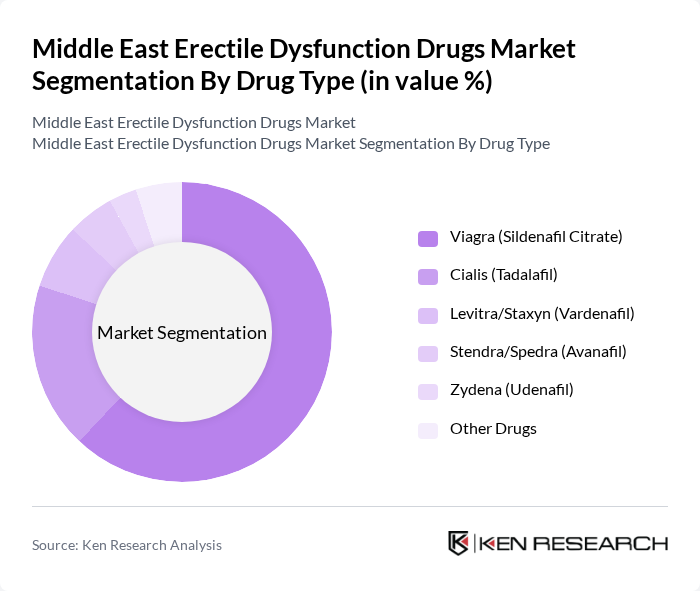
By Drug Type:The market is segmented into various drug types, including Viagra (Sildenafil Citrate), Cialis (Tadalafil), Levitra/Staxyn (Vardenafil), Stendra/Spedra (Avanafil), Zydena (Udenafil), and other drugs. Among these, Viagra remains the most recognized and widely used treatment due to its long-standing presence in the market and strong brand loyalty. Cialis follows closely, gaining popularity for its longer duration of action. The increasing acceptance of these medications, coupled with effective marketing strategies, has solidified their positions in the market. Recent market data indicates that Viagra (sildenafil citrate) holds the largest revenue share, reflecting sustained demand across the region.
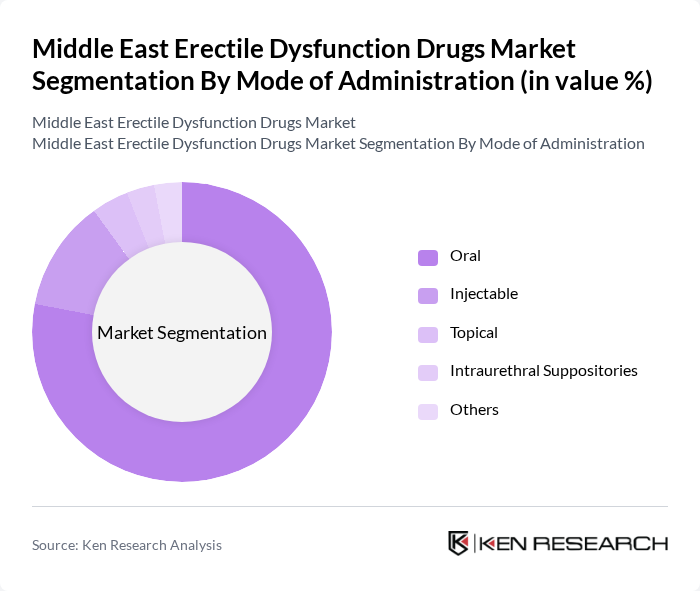
By Mode of Administration:The market is segmented by mode of administration into oral, injectable, topical, intraurethral suppositories, and others. Oral medications dominate the market due to their convenience and ease of use, making them the preferred choice for most patients. Injectable options are gaining traction among those seeking immediate results, while topical treatments are emerging as alternatives for patients who prefer non-invasive methods. The variety in administration methods caters to diverse patient preferences, enhancing overall market growth. Oral drugs account for the majority of prescriptions, reflecting global and regional trends.
The Middle East Erectile Dysfunction Drugs Market is characterized by a dynamic mix of regional and international players. Leading participants such as Pfizer Inc., Eli Lilly and Company, Bayer AG, Teva Pharmaceutical Industries Ltd., Sun Pharmaceutical Industries Ltd., Hikma Pharmaceuticals PLC, Cipla Ltd., Sanofi S.A., Sandoz (a Novartis division), Mylan N.V. (now part of Viatris Inc.), Ferring Pharmaceuticals, Endo International plc, Aurobindo Pharma, Petros Pharmaceuticals, Inc., Boston Scientific Corporation contribute to innovation, geographic expansion, and service delivery in this space.
The future of the Middle East erectile dysfunction drugs market appears promising, driven by increasing healthcare investments and a growing geriatric population. In future, the region is expected to see a rise in telemedicine services, facilitating easier access to ED treatments. Additionally, the development of over-the-counter medications will likely enhance market accessibility, allowing more men to seek treatment without the stigma associated with prescription drugs. These trends indicate a positive trajectory for the market.
| Segment | Sub-Segments |
|---|---|
| By Drug Type | Viagra (Sildenafil Citrate) Cialis (Tadalafil) Levitra/Staxyn (Vardenafil) Stendra/Spedra (Avanafil) Zydena (Udenafil) Other Drugs |
| By Mode of Administration | Oral Injectable Topical Intraurethral Suppositories Others |
| By End-User | Hospitals Clinics Homecare Settings Online Pharmacies Others |
| By Distribution Channel | Retail Pharmacies Hospital Pharmacies Online Pharmacies/E-commerce Platforms Direct Sales Others |
| By Region | GCC Countries Levant Region North Africa Others |
| By Age Group | 30 Years 50 Years 70 Years Above 70 Years Others |
| By Patient Demographics | Male Patients Female Partners Others |
| Scope Item/Segment | Sample Size | Target Respondent Profiles |
|---|---|---|
| Urologist Insights | 60 | Urologists, Sexual Health Specialists |
| Pharmacist Perspectives | 50 | Community Pharmacists, Hospital Pharmacists |
| Patient Experiences | 100 | Men aged 30-65 with diagnosed erectile dysfunction |
| Healthcare Policy Makers | 40 | Health Ministry Officials, Insurance Company Representatives |
| Market Analysts | 40 | Healthcare Market Analysts, Pharmaceutical Researchers |
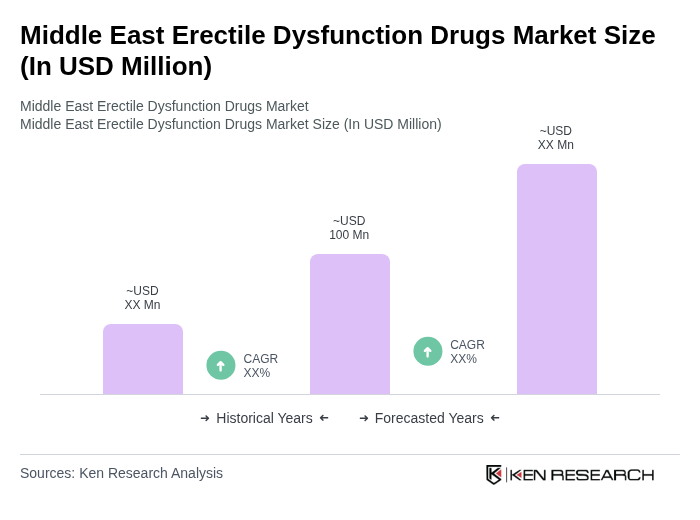
The Middle East Erectile Dysfunction Drugs Market is valued at approximately USD 100 million, reflecting a five-year historical analysis. This growth is driven by increased awareness of erectile dysfunction and rising disposable incomes among men in the region.

What makes us stand out is that our consultants follow Robust, Refine and Result (RRR) methodology. Robust for clear definitions, approaches and sanity checking, Refine for differentiating respondents' facts and opinions, and Result for presenting data with story.

We have set a benchmark in the industry by offering our clients with syndicated and customized market research reports featuring coverage of entire market as well as meticulous research and analyst insights.

While we don't replace traditional research, we flip the method upside down. Our dual approach of Top Bottom & Bottom Top ensures quality deliverable by not just verifying company fundamentals but also looking at the sector and macroeconomic factors.

With one step in the future, our research team constantly tries to show you the bigger picture. We help with some of the tough questions you may encounter along the way: How is the industry positioned? Best marketing channel? KPI's of competitors? By aligning every element, we help maximize success.

Our report gives you instant access to the answers and sources that other companies might choose to hide. We elaborate each steps of research methodology we have used and showcase you the sample size to earn your trust.

If you need any support, we are here! We pride ourselves on universe strength, data quality, and quick, friendly, and professional service.













