About the Report
Base Year 2024Middle East Iron Ore Pellets Market Overview
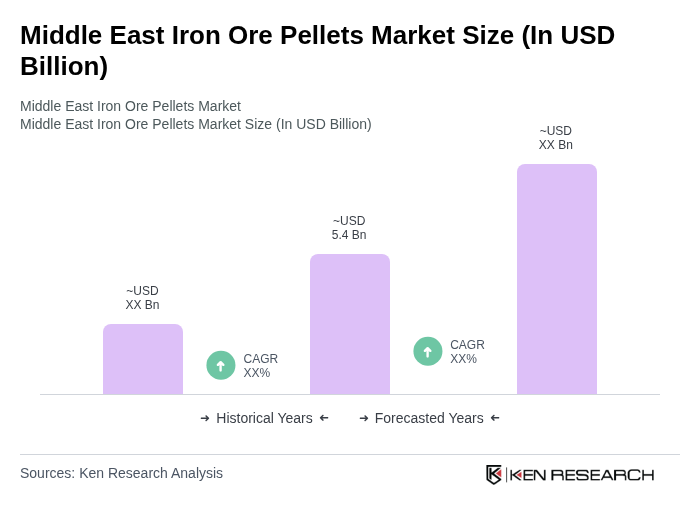
- The Middle East Iron Ore Pellets Market is valued at USD 5.4 billion, based on a five-year historical analysis. This growth is primarily driven by the increasing demand for steel in construction, automotive, and infrastructure sectors, as well as the region's abundant iron ore reserves. The market has experienced a surge in production capacities, investments in pelletizing plants, and the adoption of advanced technologies to improve pellet quality and reduce emissions, further fueling expansion.
- Key players in this market include Saudi Arabia, the United Arab Emirates, and Egypt. These countries lead the market due to their significant natural resources, strategic investments in mining and steel infrastructure, and government initiatives supporting the steel industry. The presence of major steel manufacturers and ongoing capacity expansions in these regions reinforce their market leadership.
- In 2023, the Saudi Arabian government enacted the Mining Investment Law (Royal Decree No. M/140, Ministry of Industry and Mineral Resources, 2020), which mandates that all mining operations, including iron ore pellet production, comply with rigorous environmental standards. The regulation requires operators to implement measures for emissions reduction, sustainable water use, and land rehabilitation, aligning with the country’s Vision 2030 objectives for sustainable industrial development.
Middle East Iron Ore Pellets Market Segmentation
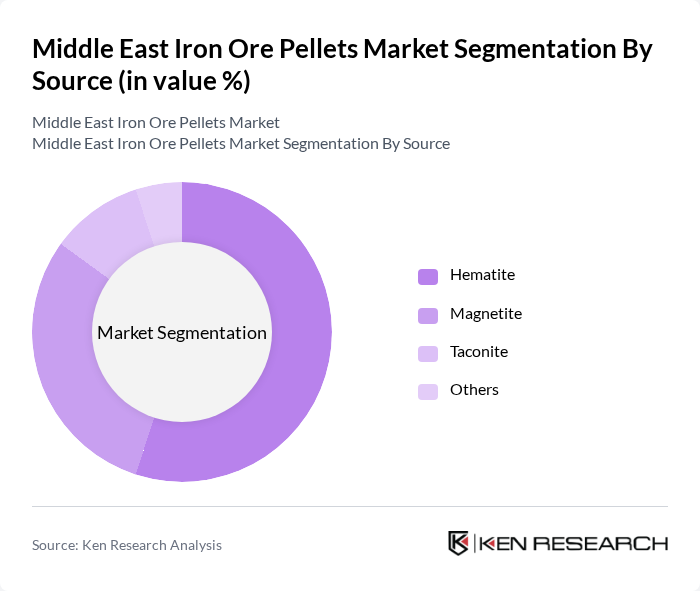
By Source:The market is segmented by the source of iron ore pellets, including hematite, magnetite, taconite, and others. Hematite remains the most widely used source owing to its high iron content and regional abundance. Magnetite is increasingly adopted for its favorable processing characteristics and suitability for direct reduction. Taconite, though less prevalent, is utilized in specialized applications requiring high-grade iron. The "Others" category covers niche sources contributing to specific industrial requirements.
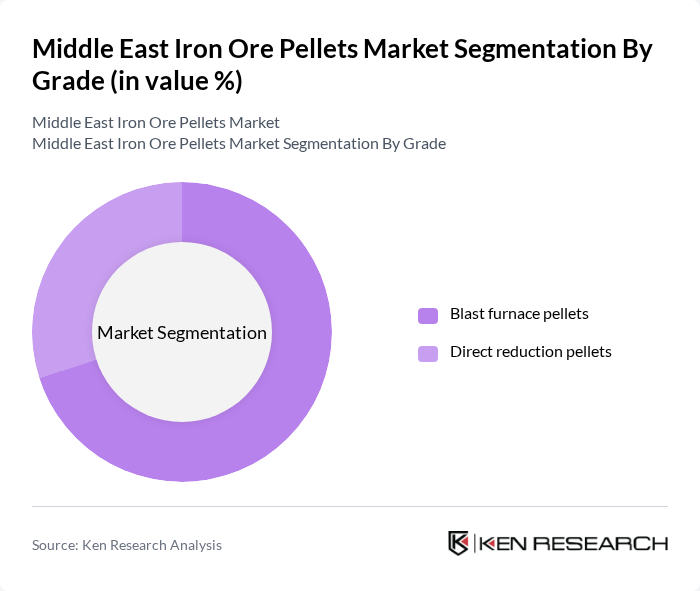
By Grade:The market is also segmented by the grade of iron ore pellets, comprising blast furnace pellets and direct reduction pellets. Blast furnace pellets are primarily used in conventional steelmaking, while direct reduction pellets are increasingly preferred for electric arc furnaces and hydrogen-based steel production due to their efficiency and lower emissions. The transition toward greener steelmaking and hydrogen-ready DRI capacity is driving demand for direct reduction pellets in the region.
Middle East Iron Ore Pellets Market Competitive Landscape
The Middle East Iron Ore Pellets Market is characterized by a dynamic mix of regional and international players. Leading participants such as Vale S.A., BHP Group, Rio Tinto, National Iranian Steel Company, Bahrain Steel, Emirates Steel Arkan, Qatar Steel Company, Jindal Shadeed Iron & Steel LLC, SAIL (Steel Authority of India Limited), ArcelorMittal, Ma'aden (Saudi Arabian Mining Company), Oman Mining Company, Gulf Mining Materials Company, KIOCL Limited, FERREXPO plc contribute to innovation, geographic expansion, and service delivery in this space.
Middle East Iron Ore Pellets Market Industry Analysis
Growth Drivers
- Increasing Demand for Steel Production:The Middle East's steel production is projected to reach 55 million tons in future, driven by rising construction activities and industrial growth. Countries like Saudi Arabia and the UAE are investing heavily in infrastructure projects, with the Saudi Vision 2030 initiative alone allocating $1 trillion for development. This surge in steel demand directly correlates with the need for iron ore pellets, which are essential for efficient steel manufacturing processes.
- Infrastructure Development Initiatives:The region is witnessing significant infrastructure investments, with over $250 billion earmarked for projects in future. Major initiatives include the construction of new railways, airports, and urban developments, particularly in Qatar and the UAE. These projects not only boost the demand for steel but also create a robust market for iron ore pellets, as they are crucial for meeting the steel requirements of these large-scale developments.
- Technological Advancements in Pellet Production:The Middle East is adopting advanced pelletizing technologies, which enhance production efficiency and reduce costs. For instance, the implementation of innovative processes has increased pellet yield by 20% in recent years. This technological shift is expected to continue, with investments in automation and digitalization projected to exceed $600 million in future, further driving the growth of the iron ore pellets market.
Market Challenges
- Fluctuating Raw Material Prices:The iron ore market is highly susceptible to price volatility, with prices fluctuating between $90 and $130 per ton in recent years. This instability poses a significant challenge for producers in the Middle East, as unpredictable costs can impact profit margins and investment decisions. The reliance on imported raw materials further exacerbates this issue, making it crucial for companies to develop strategies to mitigate price risks.
- Environmental Regulations and Compliance:Stricter environmental regulations are being enforced across the Middle East, particularly concerning emissions and waste management. Compliance costs are expected to rise, with estimates suggesting that companies may incur up to $120 million annually to meet these standards in future. This regulatory landscape presents a challenge for iron ore pellet producers, as they must balance operational efficiency with environmental sustainability.
Middle East Iron Ore Pellets Market Future Outlook
The future of the Middle East iron ore pellets market appears promising, driven by ongoing infrastructure projects and a shift towards sustainable practices. As countries in the region continue to invest in modernization and technological advancements, the demand for high-grade iron ore pellets is expected to rise. Additionally, the integration of digital technologies in production processes will enhance operational efficiency, positioning the market for significant growth in the coming years, despite existing challenges.
Market Opportunities
- Expansion of Export Markets:The Middle East has the potential to expand its iron ore pellet exports, particularly to Asia and Europe. With global demand for high-quality pellets increasing, tapping into these markets could generate additional revenue streams, estimated to be worth $400 million in future, enhancing the region's economic stability.
- Development of Sustainable Mining Practices:There is a growing opportunity for companies to invest in sustainable mining technologies. By adopting eco-friendly practices, firms can reduce operational costs and comply with stringent regulations. This shift could lead to savings of up to $70 million annually, while also improving the industry's public image and attracting environmentally conscious investors.
Scope of the Report
| Segment | Sub-Segments |
|---|---|
| By Source | Hematite Magnetite Taconite Others |
| By Grade | Blast furnace pellets Direct reduction pellets |
| By Technology | Electric arc furnace Electric induction furnace Oxygen-based/blast furnace |
| By Pelletizing Process | Straight travelling grate Grate kiln |
| By Balling Technology | Balling disc Balling drum |
| By End-User Industry | Steel manufacturing Construction Automotive Aerospace Shipping Railway Consumer goods Industrial Others |
| By Country | Saudi Arabia United Arab Emirates Egypt Israel South Africa Rest of Middle East and Africa |
Key Target Audience
Investors and Venture Capitalist Firms
Government and Regulatory Bodies (e.g., Ministry of Industry and Mineral Resources, Ministry of Energy)
Iron Ore Mining Companies
Steel Manufacturers
Logistics and Transportation Companies
Environmental Agencies (e.g., Environmental Protection Agency)
Trade Associations (e.g., Middle East Steel Association)
Financial Institutions and Banks
Players Mentioned in the Report:
Vale S.A.
BHP Group
Rio Tinto
National Iranian Steel Company
Bahrain Steel
Emirates Steel Arkan
Qatar Steel Company
Jindal Shadeed Iron & Steel LLC
SAIL (Steel Authority of India Limited)
ArcelorMittal
Ma'aden (Saudi Arabian Mining Company)
Oman Mining Company
Gulf Mining Materials Company
KIOCL Limited
FERREXPO plc
Table of Contents
Market Assessment Phase
1. Executive Summary and Approach
2. Middle East Iron Ore Pellets Market Overview
2.1 Key Insights and Strategic Recommendations
2.2 Middle East Iron Ore Pellets Market Overview
2.3 Definition and Scope
2.4 Evolution of Market Ecosystem
2.5 Timeline of Key Regulatory Milestones
2.6 Value Chain & Stakeholder Mapping
2.7 Business Cycle Analysis
2.8 Policy & Incentive Landscape
3. Middle East Iron Ore Pellets Market Analysis
3.1 Growth Drivers
3.1.1 Increasing demand for steel production
3.1.2 Infrastructure development initiatives
3.1.3 Technological advancements in pellet production
3.1.4 Rising investments in mining sector
3.2 Market Challenges
3.2.1 Fluctuating raw material prices
3.2.2 Environmental regulations and compliance
3.2.3 Limited domestic production capacity
3.2.4 Geopolitical instability in the region
3.3 Market Opportunities
3.3.1 Expansion of export markets
3.3.2 Development of sustainable mining practices
3.3.3 Strategic partnerships with global players
3.3.4 Technological innovations in pelletizing
3.4 Market Trends
3.4.1 Shift towards high-grade iron ore pellets
3.4.2 Increasing focus on sustainability
3.4.3 Adoption of digital technologies in operations
3.4.4 Growing demand for direct reduced iron (DRI)
3.5 Government Regulation
3.5.1 Emission control regulations
3.5.2 Mining licenses and permits
3.5.3 Export tariffs and trade policies
3.5.4 Safety and health regulations in mining
4. SWOT Analysis
5. Stakeholder Analysis
6. Porter's Five Forces Analysis
7. Middle East Iron Ore Pellets Market Market Size, 2019-2024
7.1 By Value
7.2 By Volume
7.3 By Average Selling Price
8. Middle East Iron Ore Pellets Market Segmentation
8.1 By Source
8.1.1 Hematite
8.1.2 Magnetite
8.1.3 Taconite
8.1.4 Others
8.2 By Grade
8.2.1 Blast furnace pellets
8.2.2 Direct reduction pellets
8.3 By Technology
8.3.1 Electric arc furnace
8.3.2 Electric induction furnace
8.3.3 Oxygen-based/blast furnace
8.4 By Pelletizing Process
8.4.1 Straight travelling grate
8.4.2 Grate kiln
8.5 By Balling Technology
8.5.1 Balling disc
8.5.2 Balling drum
8.6 By End-User Industry
8.6.1 Steel manufacturing
8.6.2 Construction
8.6.3 Automotive
8.6.4 Aerospace
8.6.5 Shipping
8.6.6 Railway
8.6.7 Consumer goods
8.6.8 Industrial
8.6.9 Others
8.7 By Country
8.7.1 Saudi Arabia
8.7.2 United Arab Emirates
8.7.3 Egypt
8.7.4 Israel
8.7.5 South Africa
8.7.6 Rest of Middle East and Africa
9. Middle East Iron Ore Pellets Market Competitive Analysis
9.1 Market Share of Key Players
9.2 KPIs for Cross Comparison of Key Players
9.2.1 Company Name
9.2.2 Production Capacity (million tons/year)
9.2.3 Revenue (USD million)
9.2.4 Market Share (%)
9.2.5 Capacity Utilization Rate (%)
9.2.6 Cost per Ton (USD/ton)
9.2.7 EBITDA Margin (%)
9.2.8 Supply Contract Tenure (years)
9.2.9 Export Share (%)
9.2.10 Product Mix (BF/DR/High-grade share)
9.2.11 Innovation Investment (% of revenue)
9.2.12 ESG Performance Score
9.3 SWOT Analysis of Top Players
9.4 Pricing Analysis
9.5 Detailed Profile of Major Companies
9.5.1 Vale S.A.
9.5.2 BHP Group
9.5.3 Rio Tinto
9.5.4 National Iranian Steel Company
9.5.5 Bahrain Steel
9.5.6 Emirates Steel Arkan
9.5.7 Qatar Steel Company
9.5.8 Jindal Shadeed Iron & Steel LLC
9.5.9 SAIL (Steel Authority of India Limited)
9.5.10 ArcelorMittal
9.5.11 Ma'aden (Saudi Arabian Mining Company)
9.5.12 Oman Mining Company
9.5.13 Gulf Mining Materials Company
9.5.14 KIOCL Limited
9.5.15 FERREXPO plc
10. Middle East Iron Ore Pellets Market End-User Analysis
10.1 Procurement Behavior of Key Ministries
10.1.1 Government procurement policies
10.1.2 Budget allocation for iron ore
10.1.3 Supplier selection criteria
10.1.4 Contract management practices
10.2 Corporate Spend on Infrastructure & Energy
10.2.1 Investment trends in infrastructure
10.2.2 Energy consumption patterns
10.2.3 Budgeting for raw materials
10.2.4 Future spending forecasts
10.3 Pain Point Analysis by End-User Category
10.3.1 Supply chain disruptions
10.3.2 Quality assurance issues
10.3.3 Cost management challenges
10.3.4 Regulatory compliance hurdles
10.4 User Readiness for Adoption
10.4.1 Awareness of iron ore pellet benefits
10.4.2 Training and skill development needs
10.4.3 Infrastructure readiness
10.4.4 Financial readiness for investment
10.5 Post-Deployment ROI and Use Case Expansion
10.5.1 Measurement of ROI
10.5.2 Case studies of successful deployments
10.5.3 Expansion into new applications
10.5.4 Long-term sustainability assessments
11. Middle East Iron Ore Pellets Market Future Size, 2025-2030
11.1 By Value
11.2 By Volume
11.3 By Average Selling Price
Go-To-Market Strategy Phase
1. Whitespace Analysis + Business Model Canvas
1.1 Market gaps identification
1.2 Value proposition development
1.3 Revenue model exploration
1.4 Customer segmentation analysis
1.5 Competitive landscape overview
1.6 Key partnerships identification
1.7 Risk assessment
2. Marketing and Positioning Recommendations
2.1 Branding strategies
2.2 Product USPs
2.3 Target market identification
2.4 Communication strategies
2.5 Digital marketing initiatives
2.6 Customer engagement tactics
2.7 Performance metrics
3. Distribution Plan
3.1 Urban retail strategies
3.2 Rural NGO tie-ups
3.3 Logistics optimization
3.4 Channel partner identification
3.5 Distribution network mapping
3.6 Inventory management practices
3.7 Performance tracking
4. Channel & Pricing Gaps
4.1 Underserved routes
4.2 Pricing bands analysis
4.3 Competitor pricing strategies
4.4 Customer willingness to pay
4.5 Price elasticity assessment
4.6 Discounting strategies
4.7 Pricing model innovation
5. Unmet Demand & Latent Needs
5.1 Category gaps identification
5.2 Consumer segments analysis
5.3 Product development opportunities
5.4 Market entry barriers
5.5 Customer feedback mechanisms
5.6 Future demand forecasting
5.7 Strategic recommendations
6. Customer Relationship
6.1 Loyalty programs
6.2 After-sales service
6.3 Customer feedback loops
6.4 Relationship management strategies
6.5 Customer satisfaction metrics
6.6 Retention strategies
6.7 Community engagement initiatives
7. Value Proposition
7.1 Sustainability initiatives
7.2 Integrated supply chains
7.3 Cost-benefit analysis
7.4 Unique selling propositions
7.5 Customer value creation
7.6 Market differentiation strategies
7.7 Long-term value delivery
8. Key Activities
8.1 Regulatory compliance
8.2 Branding initiatives
8.3 Distribution setup
8.4 Operational efficiency improvements
8.5 Training and development programs
8.6 Performance monitoring
8.7 Stakeholder engagement
9. Entry Strategy Evaluation
9.1 Domestic Market Entry Strategy
9.1.1 Product mix considerations
9.1.2 Pricing band analysis
9.1.3 Packaging strategies
9.2 Export Entry Strategy
9.2.1 Target countries identification
9.2.2 Compliance roadmap development
10. Entry Mode Assessment
10.1 Joint Ventures
10.2 Greenfield investments
10.3 Mergers & Acquisitions
10.4 Distributor Model
10.5 Risk assessment
10.6 Strategic fit evaluation
10.7 Long-term sustainability considerations
11. Capital and Timeline Estimation
11.1 Capital requirements
11.2 Timelines for market entry
11.3 Financial projections
11.4 Funding sources identification
11.5 Budget allocation strategies
11.6 Risk management plans
11.7 Milestone tracking
12. Control vs Risk Trade-Off
12.1 Ownership considerations
12.2 Partnership dynamics
12.3 Risk mitigation strategies
12.4 Control mechanisms
12.5 Long-term strategic alignment
12.6 Performance evaluation
12.7 Exit strategies
13. Profitability Outlook
13.1 Breakeven analysis
13.2 Long-term sustainability assessments
13.3 Profit margin optimization
13.4 Revenue growth strategies
13.5 Cost management practices
13.6 Financial health monitoring
13.7 Investment return analysis
14. Potential Partner List
14.1 Distributors
14.2 Joint Ventures
14.3 Acquisition targets
14.4 Strategic alliances
14.5 Industry collaborations
14.6 Research partnerships
14.7 Community engagement partners
15. Execution Roadmap
15.1 Phased Plan for Market Entry
15.1.1 Market Setup
15.1.2 Market Entry
15.1.3 Growth Acceleration
15.1.4 Scale & Stabilize
15.2 Key Activities and Milestones
15.2.1 Activity planning
15.2.2 Milestone tracking
15.2.3 Performance evaluation
15.2.4 Resource allocation
Research Methodology
Phase 1: Approach1
Desk Research
- Analysis of industry reports from the Middle East Iron and Steel Association
- Review of trade statistics from regional customs authorities and international trade databases
- Examination of market trends and forecasts published by relevant governmental and non-governmental organizations
Primary Research
- Interviews with key stakeholders in iron ore pellet production, including plant managers and operations directors
- Surveys conducted with procurement officers from steel manufacturing companies in the Middle East
- Focus group discussions with industry experts and analysts to gather qualitative insights
Validation & Triangulation
- Cross-validation of data through multiple sources, including trade publications and market analysis reports
- Triangulation of findings from primary interviews with secondary data to ensure consistency
- Sanity checks performed by an expert panel comprising industry veterans and market analysts
Phase 2: Market Size Estimation1
Top-down Assessment
- Estimation of total market size based on regional steel production statistics and iron ore consumption rates
- Segmentation of the market by end-user industries, including construction, automotive, and manufacturing
- Incorporation of macroeconomic indicators such as GDP growth and infrastructure development plans
Bottom-up Modeling
- Collection of production capacity data from major iron ore pellet producers in the region
- Analysis of operational costs and pricing strategies of key players in the market
- Volume estimates based on historical production data and projected growth rates
Forecasting & Scenario Analysis
- Development of forecasting models using historical data and market trends to project future demand
- Scenario analysis based on potential regulatory changes and shifts in global iron ore prices
- Creation of multiple forecast scenarios (baseline, optimistic, and pessimistic) through 2030
Phase 3: CATI Sample Composition1
| Scope Item/Segment | Sample Size | Target Respondent Profiles |
|---|---|---|
| Iron Ore Pellet Production | 100 | Plant Managers, Production Supervisors |
| Steel Manufacturing Sector | 90 | Procurement Managers, Operations Directors |
| Logistics and Supply Chain | 60 | Logistics Coordinators, Supply Chain Analysts |
| Market Research and Analysis | 50 | Industry Analysts, Market Researchers |
| Government and Regulatory Bodies | 40 | Policy Makers, Regulatory Affairs Managers |
Frequently Asked Questions
What is the current value of the Middle East Iron Ore Pellets Market?
The Middle East Iron Ore Pellets Market is valued at approximately USD 5.4 billion, reflecting a robust growth trajectory driven by increasing steel demand in construction, automotive, and infrastructure sectors.
Which countries are the key players in the Middle East Iron Ore Pellets Market?
What are the main growth drivers for the Middle East Iron Ore Pellets Market?
What challenges does the Middle East Iron Ore Pellets Market face?
Other Regional/Country Reports
Indonesia Iron Ore Pellets Market
Malaysia Iron Ore Pellets Market
KSA Iron Ore Pellets Market
APAC Iron Ore Pellets Market
SEA Iron Ore Pellets Market
Vietnam Iron Ore Pellets Market
Other Adjacent Reports
KSA Steel Production Market
Bahrain Iron Ore Mining Market
APAC direct reduced iron market report size, share, growth drivers, trends, opportunities & forecast 2025–2030Egypt Blast Furnace Technology Market
Global Mining Equipment MarketKSA Sustainable Mining Practices Market
Singapore Steel Export Market
Egypt Infrastructure Development Market
Vietnam Environmental Compliance Market
Egypt Mineral Processing Market
Why Buy From Us?

What makes us stand out is that our consultants follow Robust, Refine and Result (RRR) methodology. Robust for clear definitions, approaches and sanity checking, Refine for differentiating respondents' facts and opinions, and Result for presenting data with story.

We have set a benchmark in the industry by offering our clients with syndicated and customized market research reports featuring coverage of entire market as well as meticulous research and analyst insights.

While we don't replace traditional research, we flip the method upside down. Our dual approach of Top Bottom & Bottom Top ensures quality deliverable by not just verifying company fundamentals but also looking at the sector and macroeconomic factors.

With one step in the future, our research team constantly tries to show you the bigger picture. We help with some of the tough questions you may encounter along the way: How is the industry positioned? Best marketing channel? KPI's of competitors? By aligning every element, we help maximize success.

Our report gives you instant access to the answers and sources that other companies might choose to hide. We elaborate each steps of research methodology we have used and showcase you the sample size to earn your trust.

If you need any support, we are here! We pride ourselves on universe strength, data quality, and quick, friendly, and professional service.