India Healthcare Platform Bets in ₹64 Lakh Cr Market
India Healthcare’s Platform Shift: Where PE/VC Capital Should Look Beyond the Obvious Hospital Trade
A strategic POV on India’s ₹64 lakh crore healthcare market, premium platform valuations, and the underorganized care models still waiting for serious capital
India healthcare is no longer a hidden growth story.
A strategic POV on India’s ₹64 lakh crore healthcare market, premium platform valuations, and the underorganized care models still waiting for serious capital
India healthcare is no longer a hidden growth story.
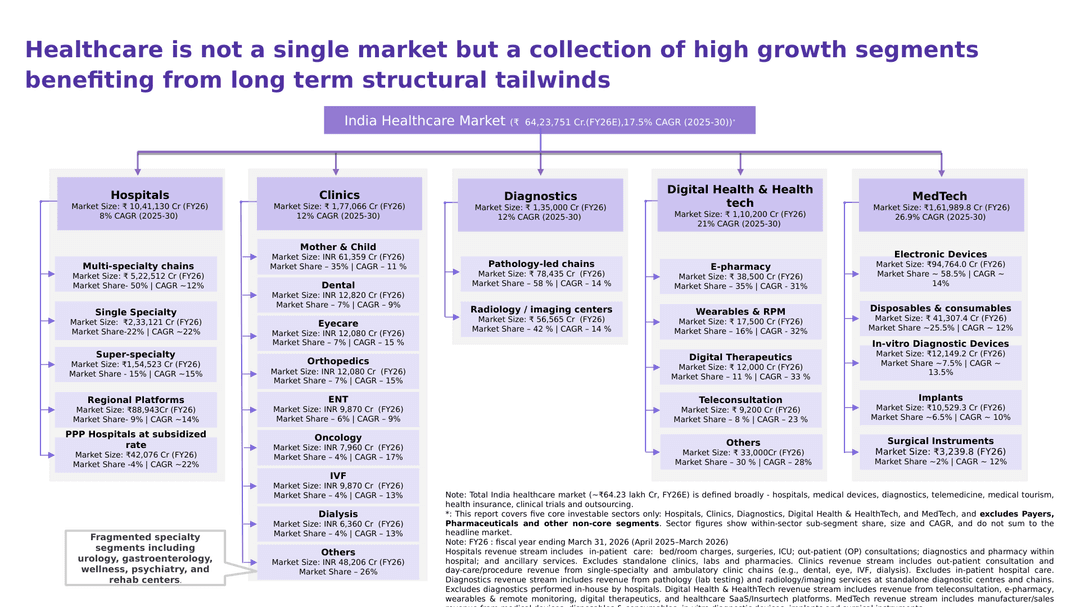
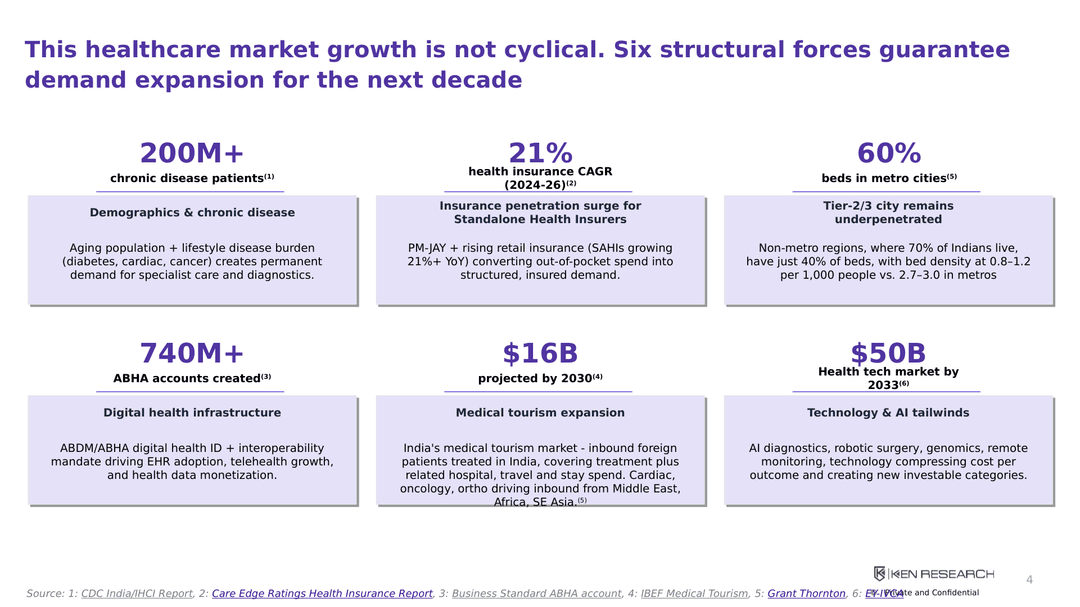
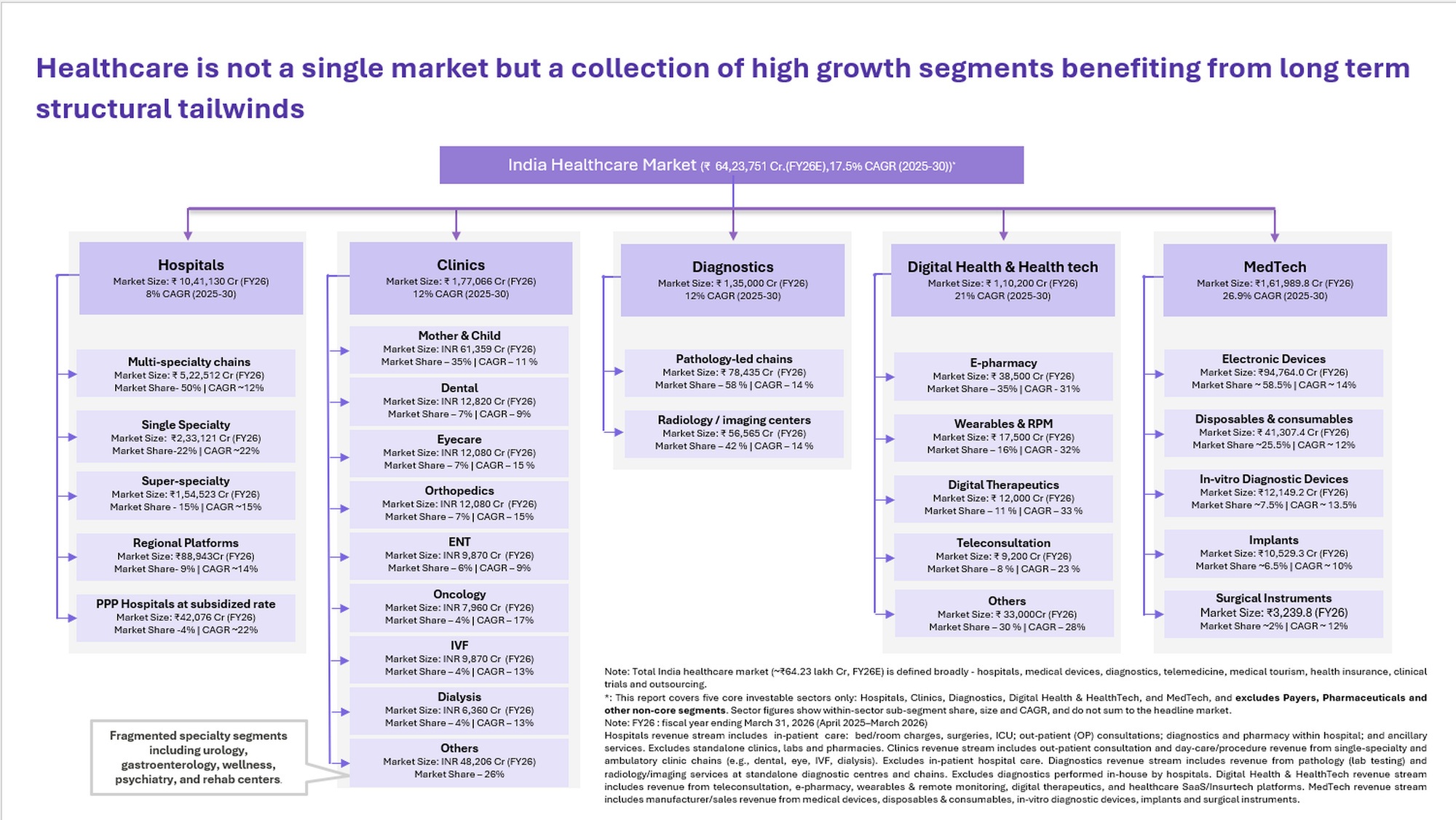
The demand thesis is already visible: rising chronic disease, insurance penetration, medical tourism, Tier-2/3 access gaps, digital health adoption, and MedTech localization. Ken Research’sIndia Healthcare – Investable Bets 2025-26estimates the broaderIndian healthcare marketat₹64,23,751 Cr in FY26E, with a projected17.5% CAGR during 2025–30.
But that is not the real investment question anymore.
The real question is where capital can still enter before the market fully prices the opportunity.
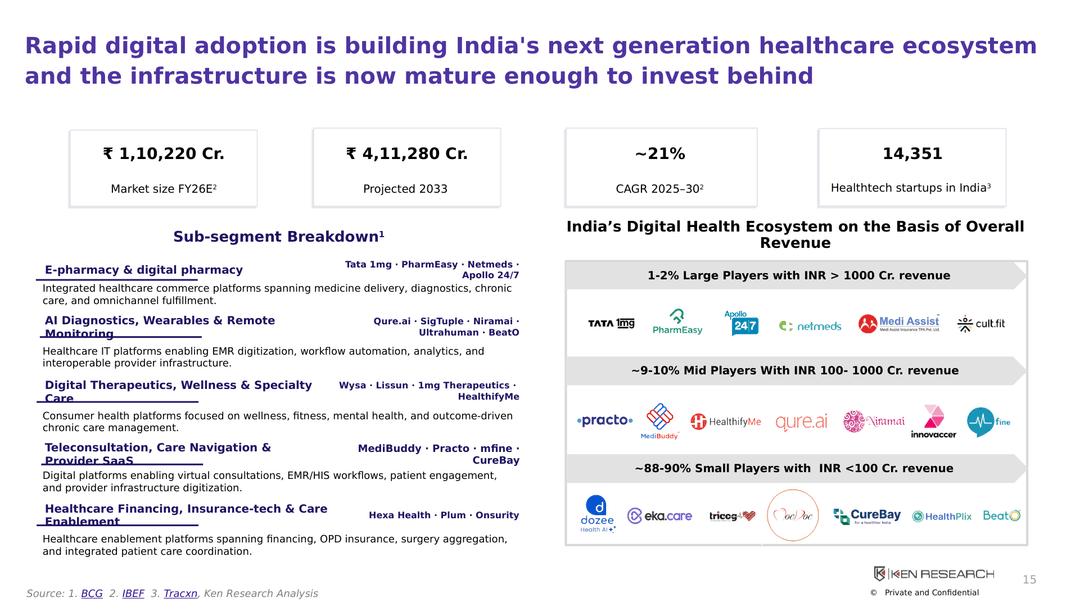
India healthcare is shifting from a broad under penetration story to aplatform-selection market. Hospitals remain important, but the next layer of value is forming across diagnostics consolidation, single-specialty clinic roll-ups, recurring digital health infrastructure, export-led MedTech, and underorganized care categories.
The implication is clear:the next healthcare alpha will not come from backing healthcare broadly. It will come from identifying which healthcare models can become scalable platforms before capital crowds in.
India healthcare’s investable opportunity is spread across hospitals, clinics, diagnostics, digital health, and MedTech, each with different growth, scale, and execution dynamics.
The Market Has Already Priced the Obvious
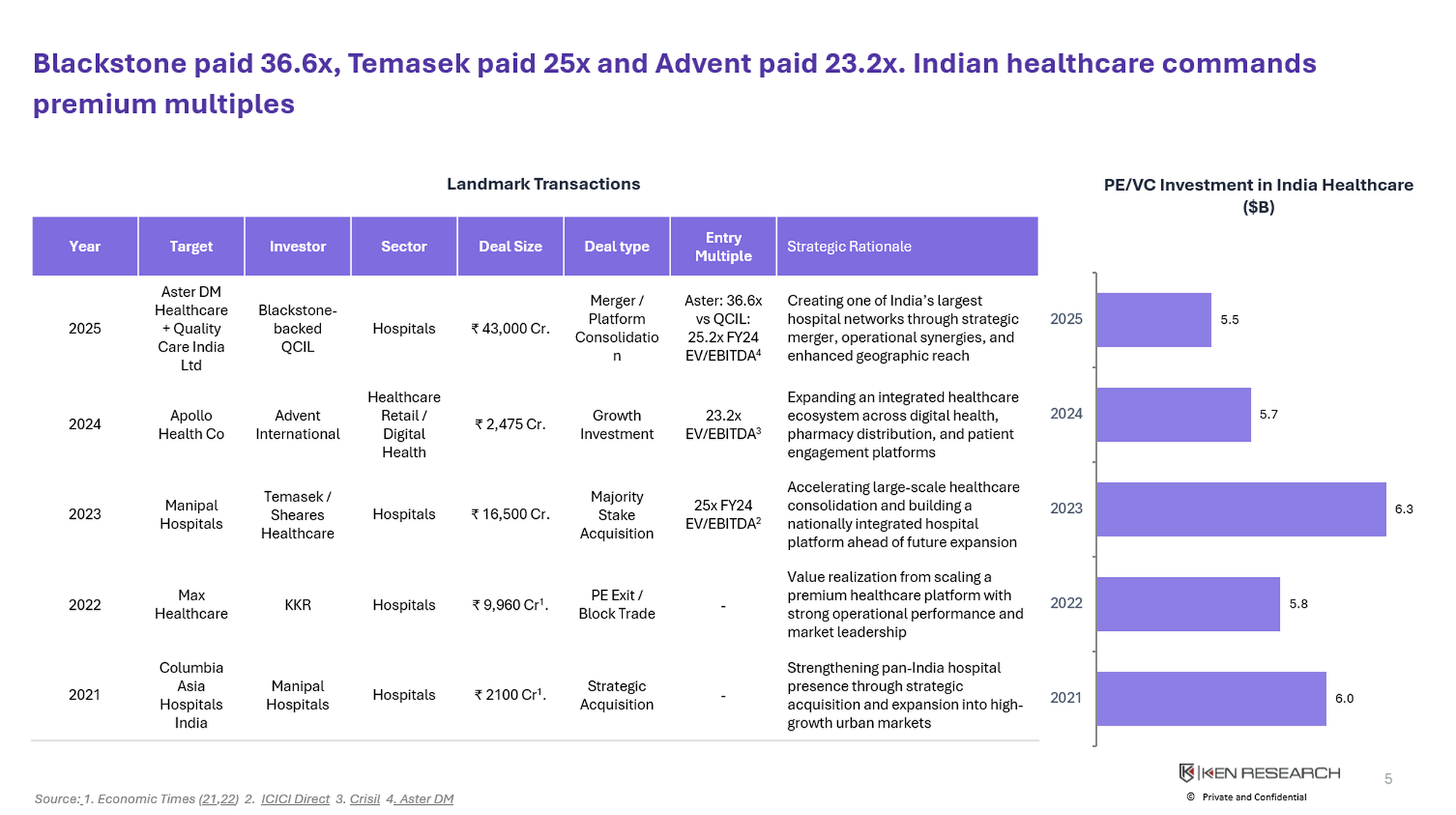
The first wave of institutional healthcare capital has already moved toward scaled hospital platforms.
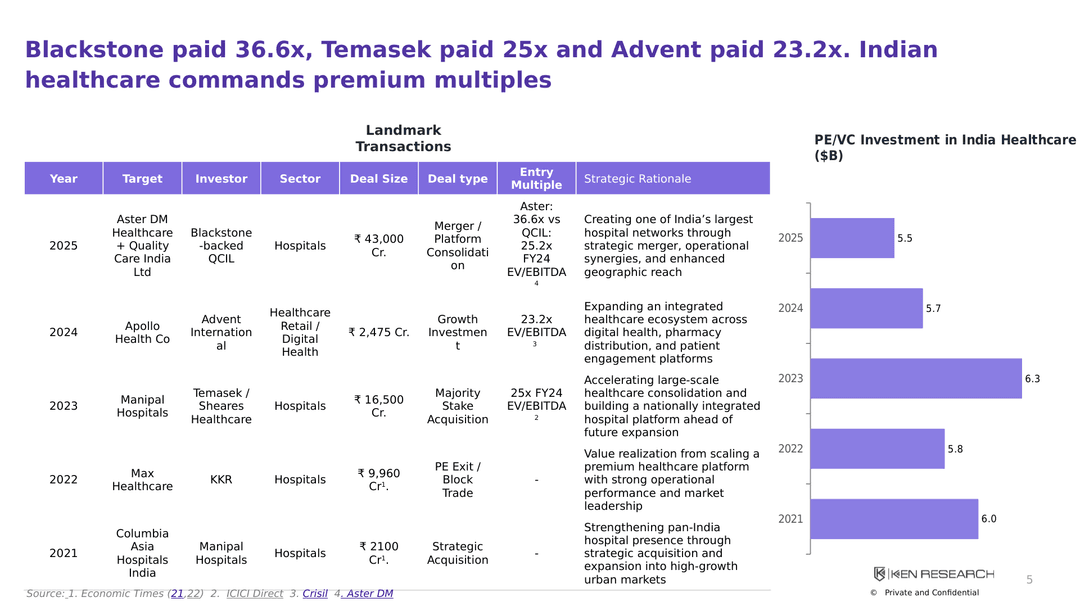
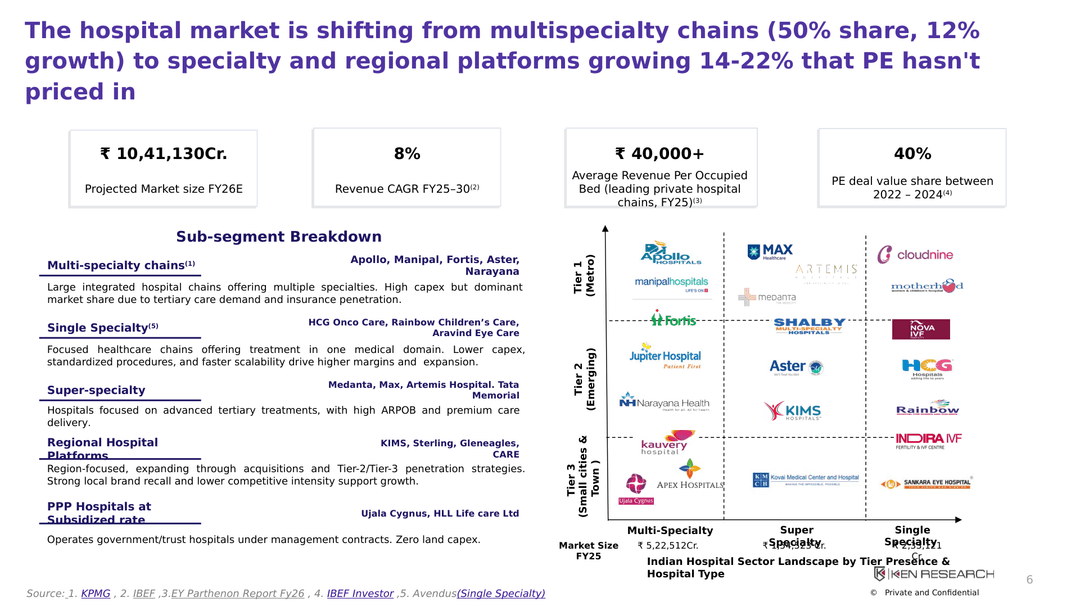
The report highlights landmark transactions involving Blackstone-backed Quality Care/Aster, Temasek/Sheares in Manipal Hospitals, Advent International in Apollo Health Co, and KKR’s exit in Max Healthcare. These deals show that high-quality healthcare platforms in India can command premium multiples when they combine scale, operating depth, governance, and exit visibility.
That creates a sharper challenge for investors.
The large, visible assets are no longer cheap discovery plays. Many are already priced for quality. The next advantage will come from finding assets that are not yet obvious, but already show the ingredients of platform economics.
This is where the market may be under-reading the opportunity.
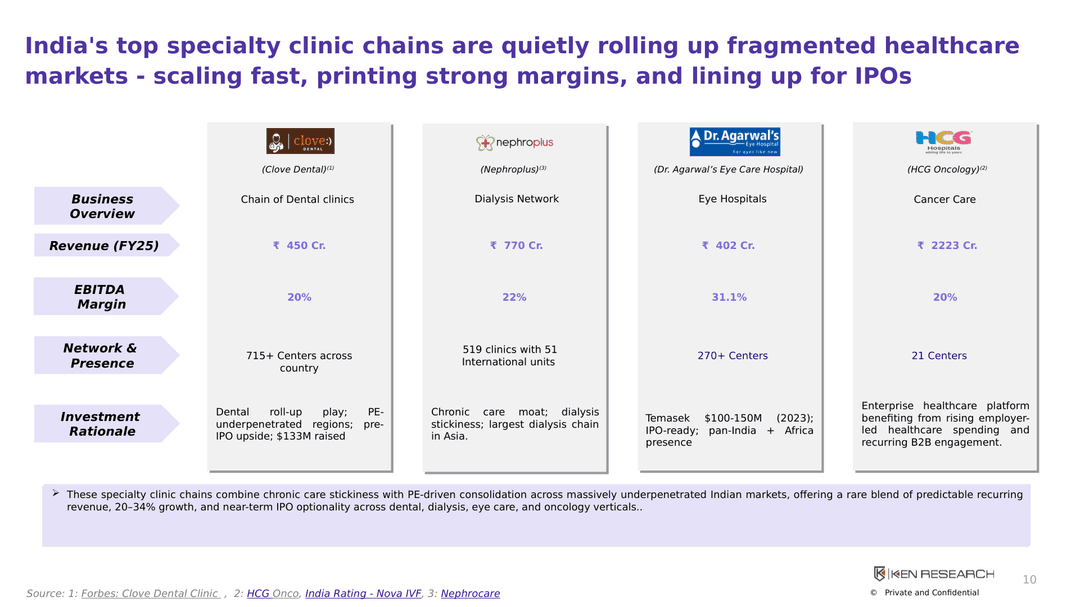
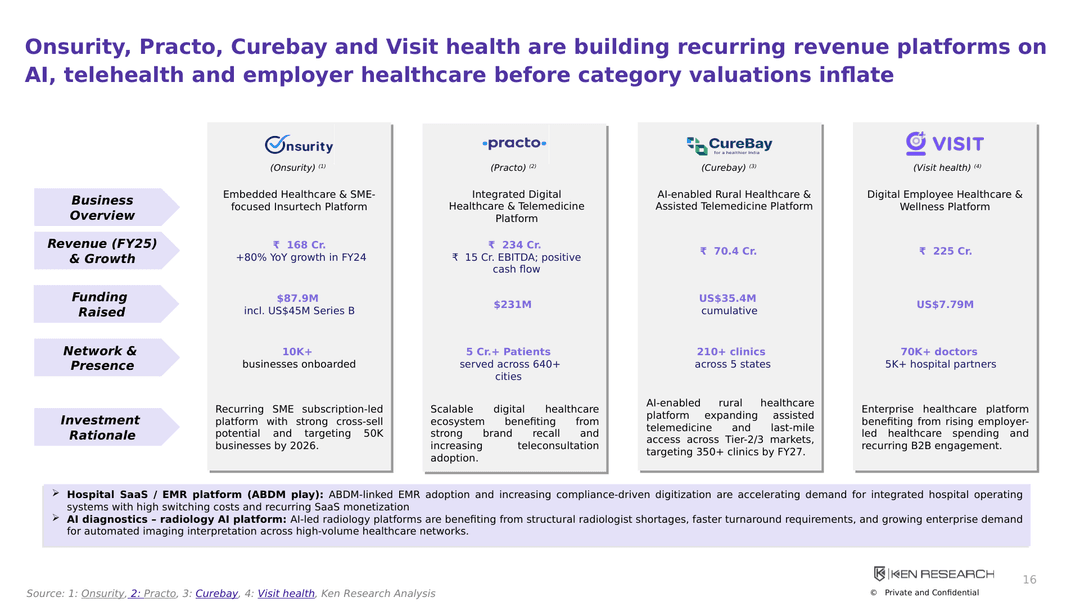
A regional hospital chain can become a national platform.A dental, dialysis, eye care, or oncology chain can become a roll-up vehicle.A diagnostics platform can consolidate fragmented pathology, radiology, home collection, and specialty testing demand.A digital health company can become infrastructure if it builds recurring employer-health, SaaS, AI diagnostics, or ABDM-linked workflows.A MedTech manufacturer can re-rate if it combines export reach, regulatory credibility, and category leadership.
Premium healthcare platforms are already being priced at institutional multiples, making early platform identification critical.
The New Investment Lens: From Care Delivery to Platform Economics
Healthcare demand is structural, but returns will be segment-specific.
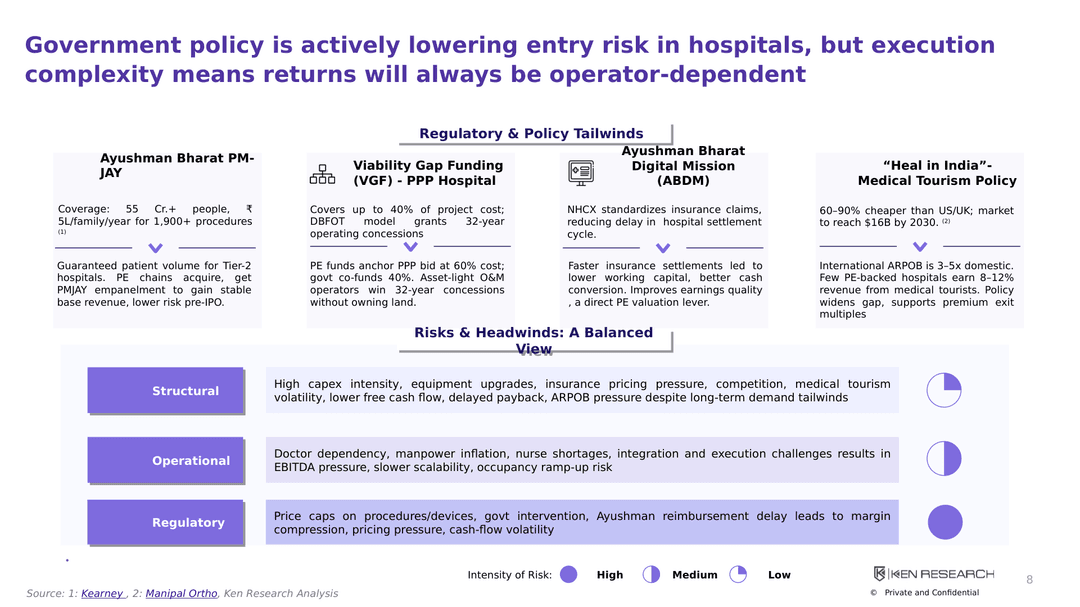
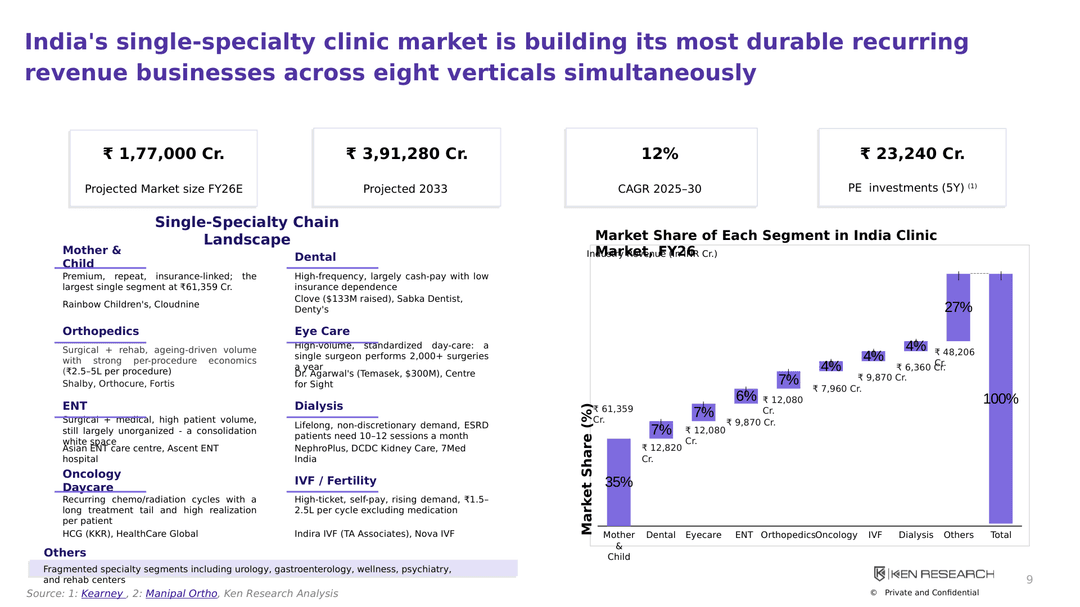
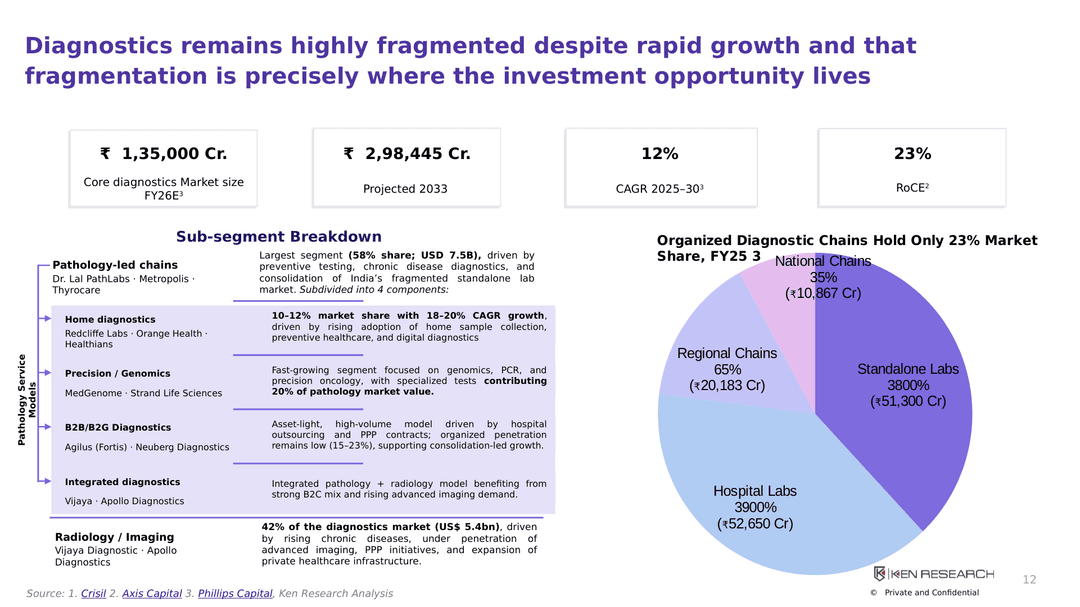
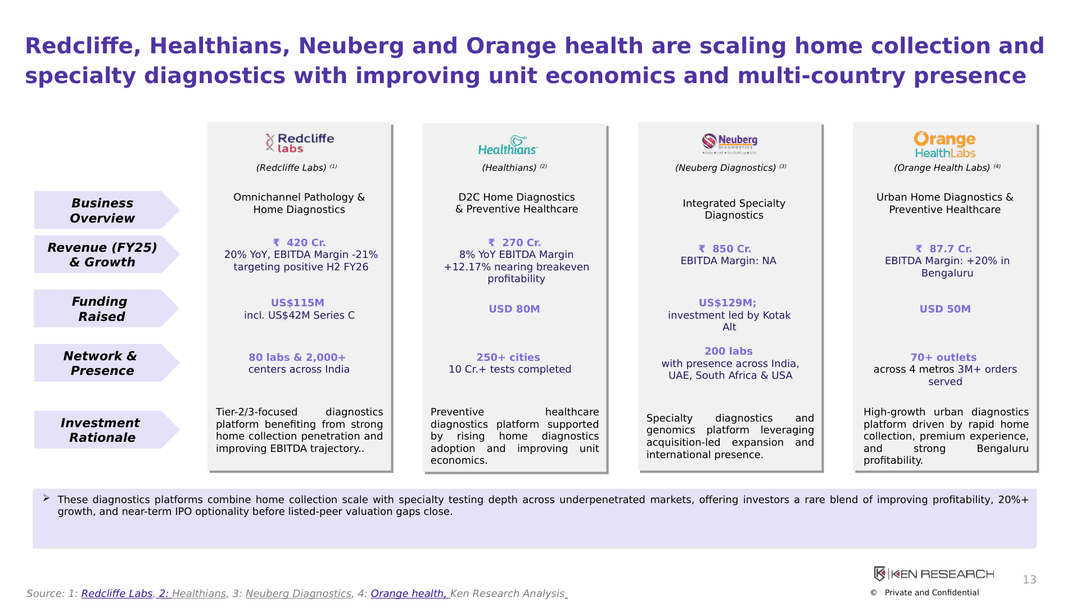
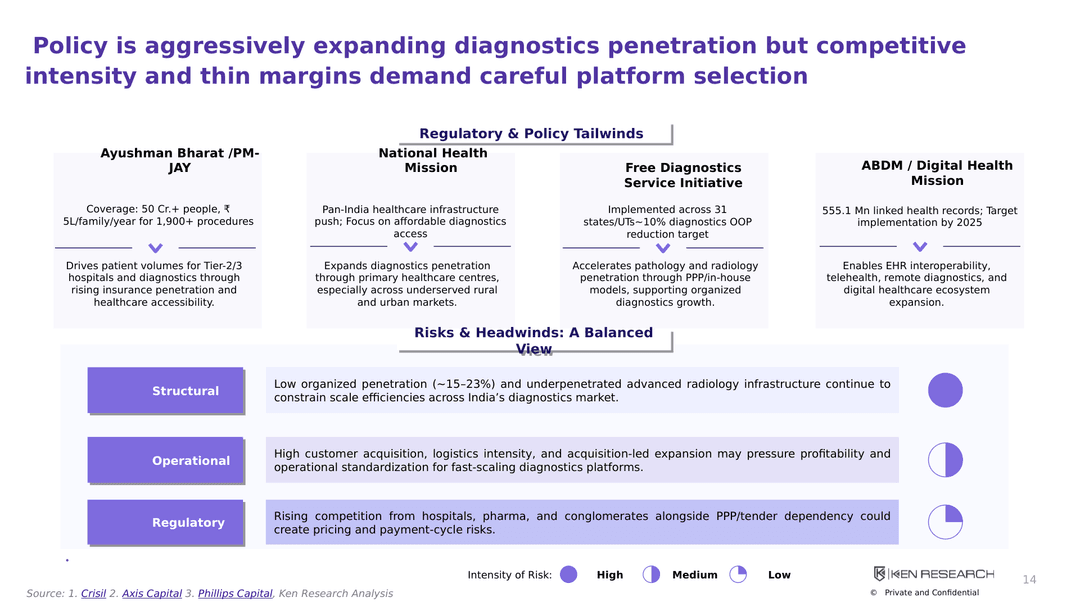
A hospital business may offer scale, but it also carries capex intensity, occupancy risk, doctor dependence, and regulatory pressure. A clinic chain may scale faster, but only if it can standardize care delivery beyond individual doctors. Diagnostics may offer one of the cleanest consolidation stories, but pricing pressure and customer acquisition costs must be underwritten carefully.Digital healthcan scale rapidly, but only models with recurring monetization deserve platform valuations. MedTech offers strong growth, but requires regulatory capability, manufacturing quality, and export credibility.
This is why India healthcare cannot be evaluated as one market.
The investment lens has to shift from “which sector is growing?” to “which model can become a repeatable, scalable, exit-ready platform?”
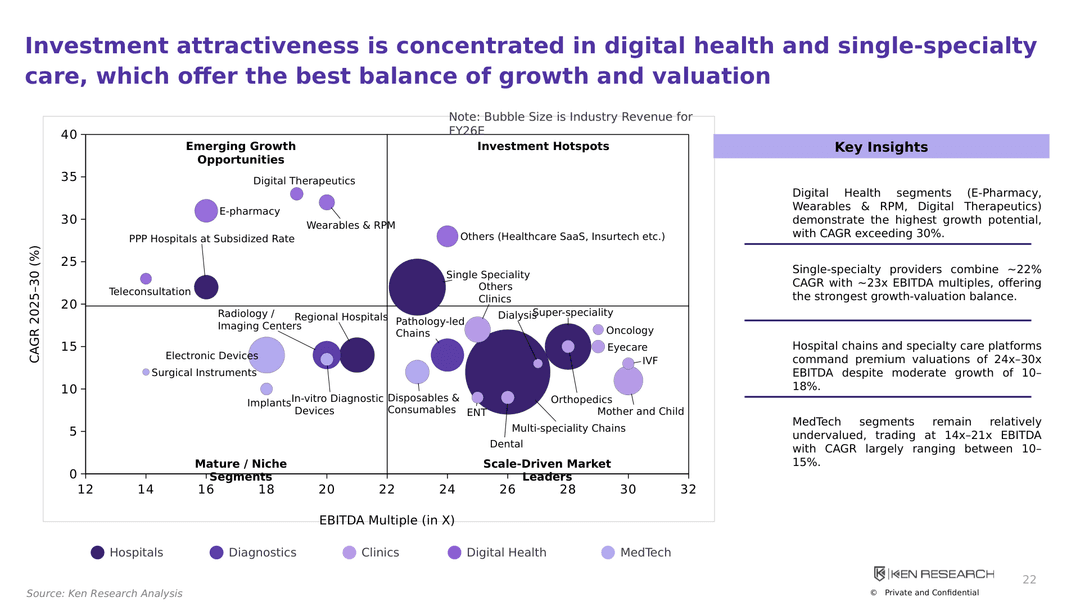
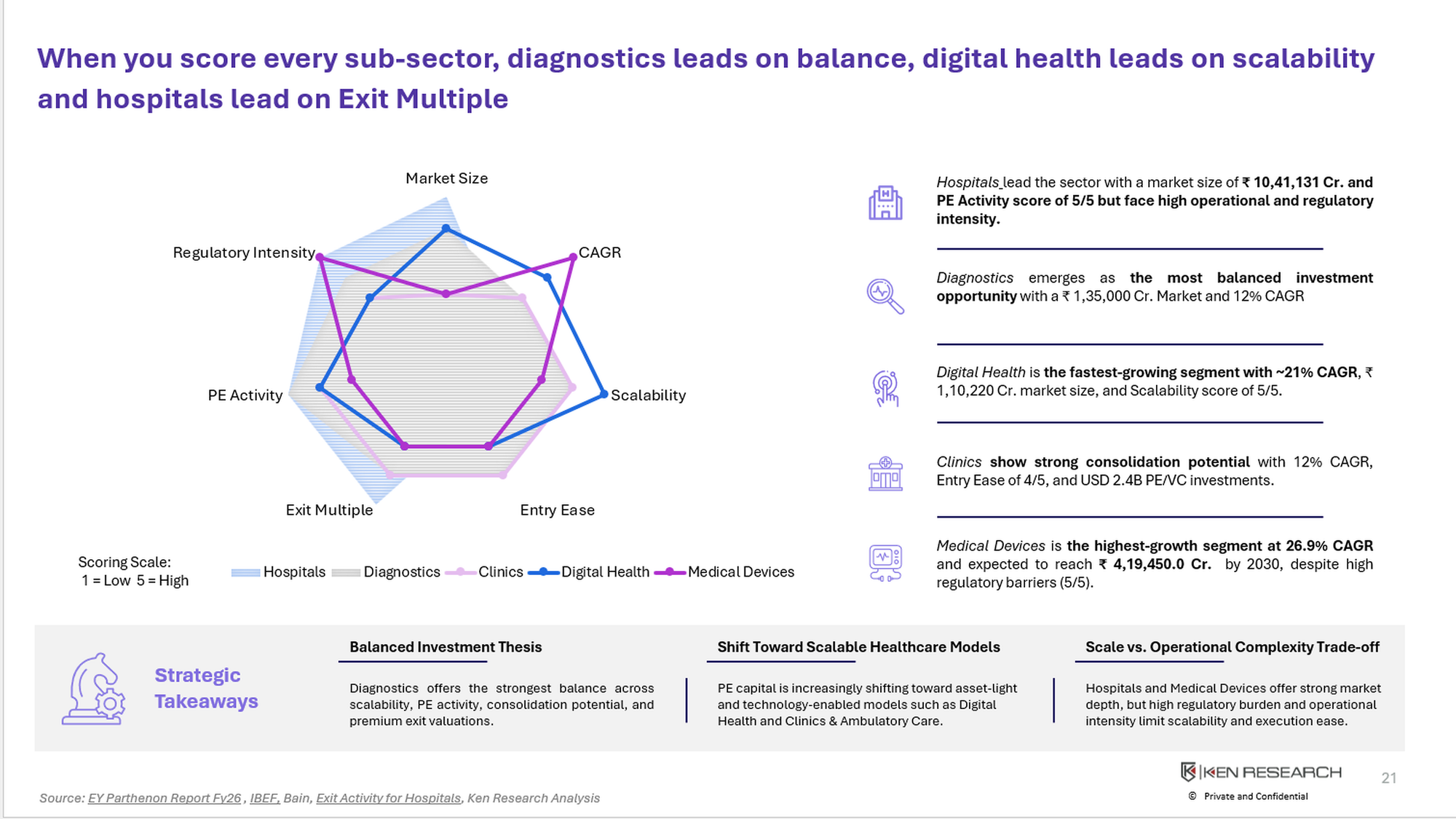
Thereport’s scoring frameworkmakes this distinction visible: diagnostics leads on balance, digital health leads on scalability, and hospitals lead on exit multiple. The opportunity is not concentrated in one sector; it is distributed across models with very different risk-return profiles.
Healthcare investment attractiveness differs sharply by sub-segment, making platform selection more important than broad sector exposure.
The White Space Is Still Underorganized
The most interesting opportunities may not sit in the most discussed categories.
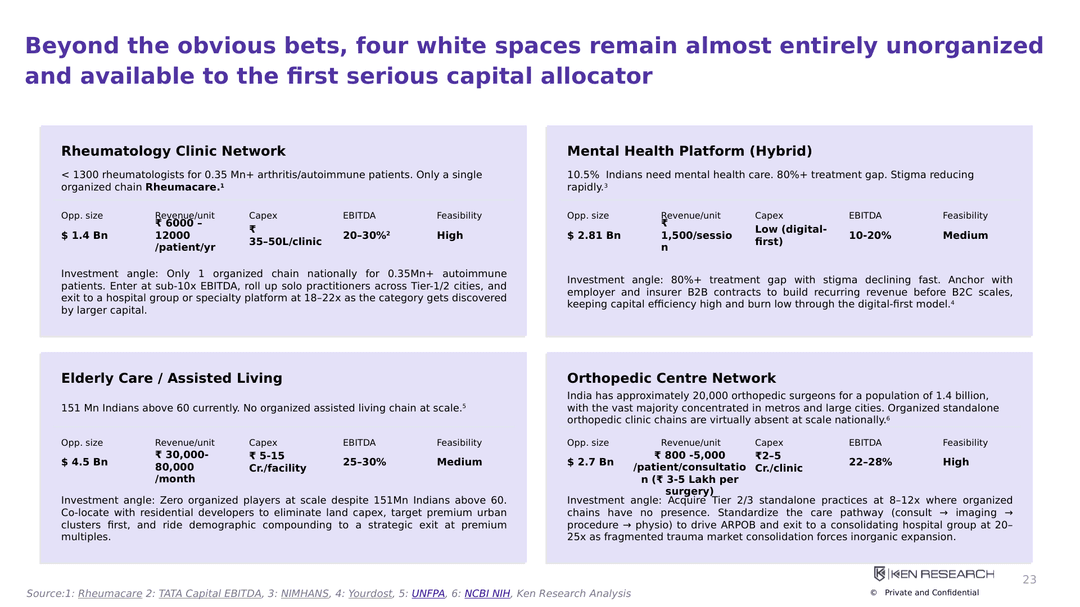
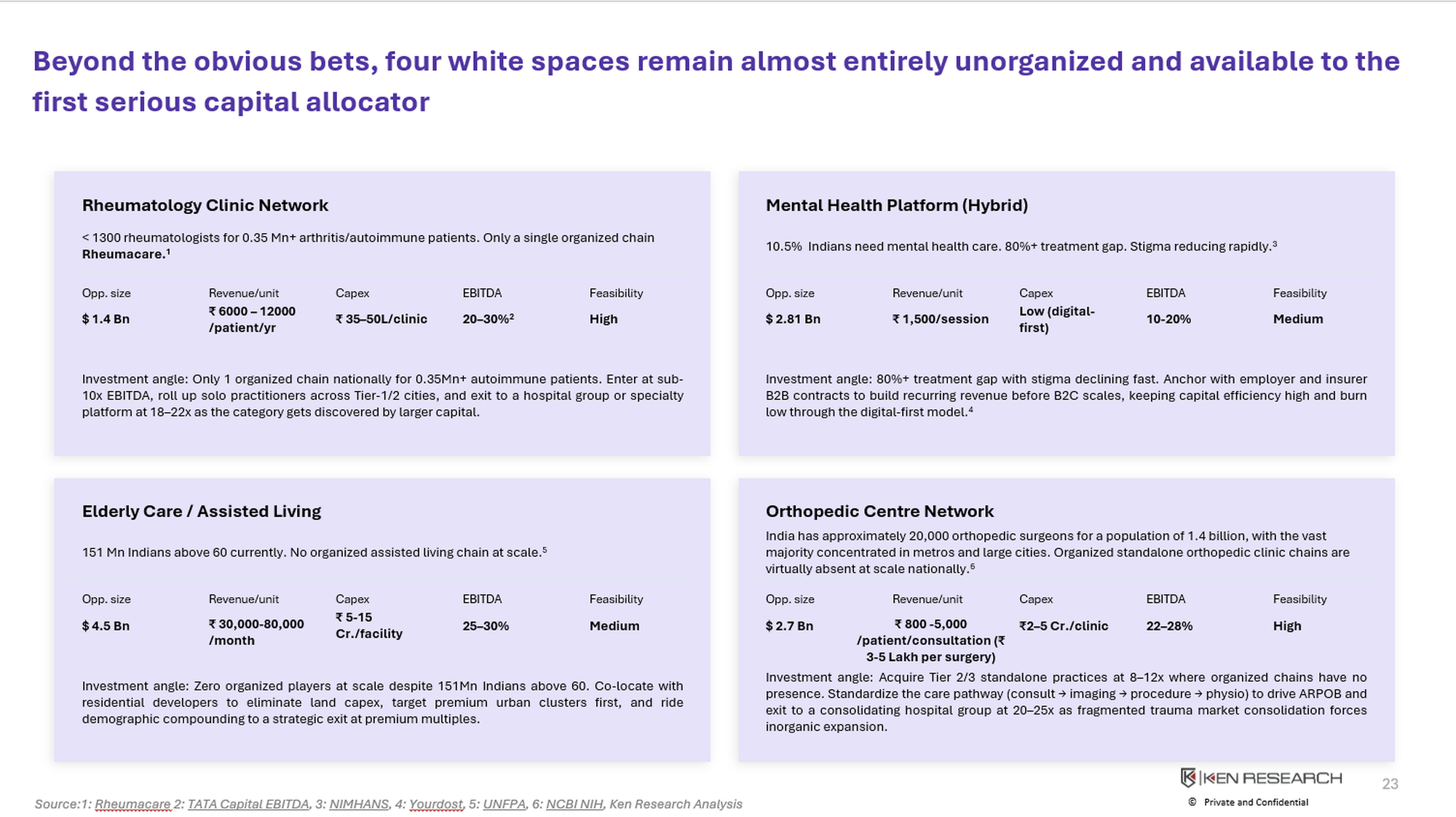
Each of these categories sits at the intersection of unmet demand and fragmented supply.
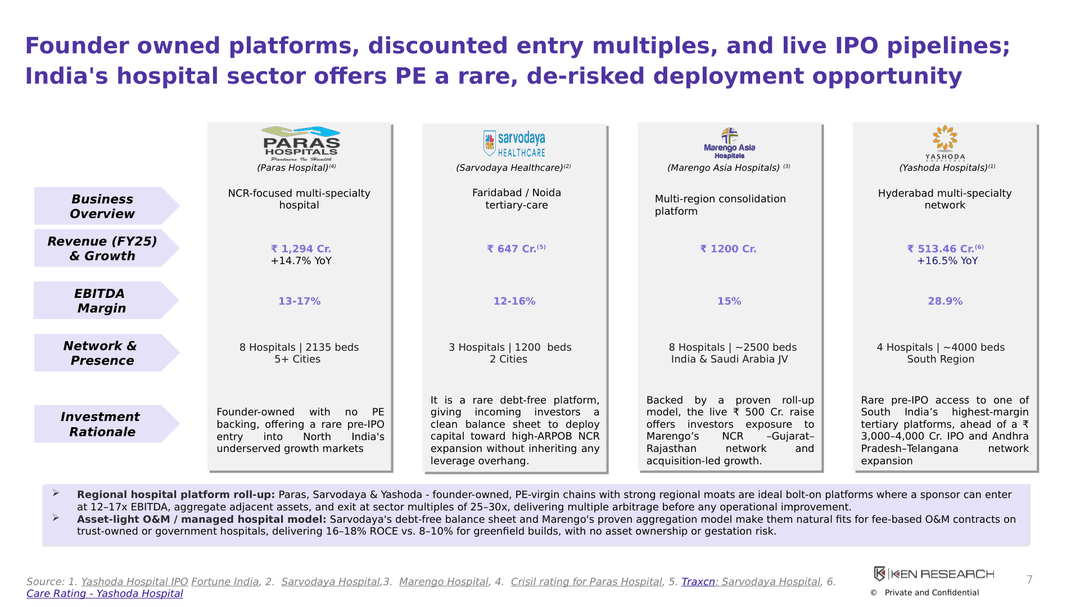
Rheumatology has a large autoimmune and arthritis patient base but limited organized infrastructure. Mental health has a large treatment gap and improving acceptance, especially through employer and hybrid-care models. Elderly care is becoming structurally relevant as India’s aging population expands, but organized assisted living remains underdeveloped. Orthopedic care remains fragmented outside metros, creating room for roll-up models around consultation, imaging, procedures, and rehabilitation.
These are not obvious hospital trades. They are early platform bets.
By the time these categories become widely visible, the entry multiple may already reflect the opportunity.
Rheumatology, mental health, elderly care, and orthopedic networks represent early-stage platform opportunities before large-scale institutional capital arrives.
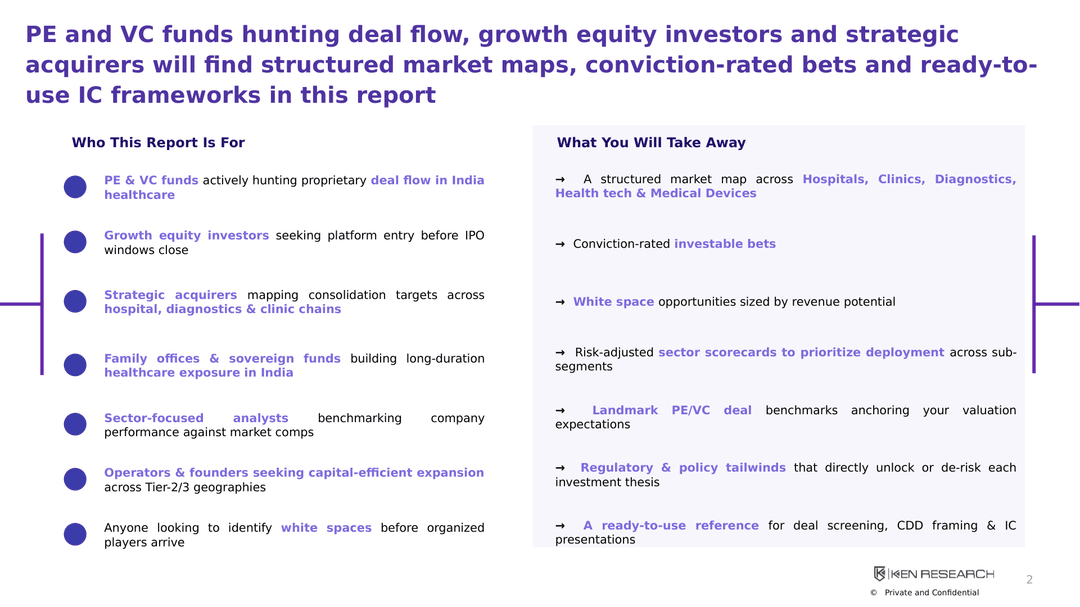
The report helps decode where healthcare demand is converting into investable value across:
Area
What the Report Helps Answer
Healthcare market map
How India’s healthcare market breaks
down across hospitals, clinics, diagnostics, digital health, and MedTech
Sector prioritization
Which segments offer the best balance
of growth, scalability, PE activity, exit multiples, and regulatory intensity
Investable company radar
Which companies show scale, margin
visibility, funding momentum, or pre-IPO potential
Diagnostics consolidation
Why fragmentation, home collection,
specialty testing, and radiology create a balanced investment thesis
Digital health models
Which platforms are shifting toward
recurring, B2B, AI-enabled, and infrastructure-led monetization
MedTech manufacturing
Where import substitution, export
scale, and policy support are creating investable device platforms
White-space opportunities
Which underorganized categories may
offer early-entry advantage
CDD and IC support
Inputs for commercial due diligence,
valuation benchmarking, and investment committee discussions
The value of the report is not in proving that Indian healthcare will grow.
That is already evident.
The value lies in identifyingwhich healthcare platforms are still early enough to enter, strong enough to scale, and credible enough to exit.
The Takeaway
India healthcare is entering a platform-selection phase.
The first wave of institutional capital has validated the sector. The next wave will be more selective. It will not reward every hospital, clinic, diagnostic chain, digital health company, or MedTech manufacturer equally.
It will reward platforms that can show scale, repeatability, margin visibility, governance, recurring demand, and a credible exit path.
The healthcare opportunity is still large. But the obvious trade is no longer the only trade.
The next advantage belongs to investors who can identify the next healthcare platforms before the market prices them like platforms.